
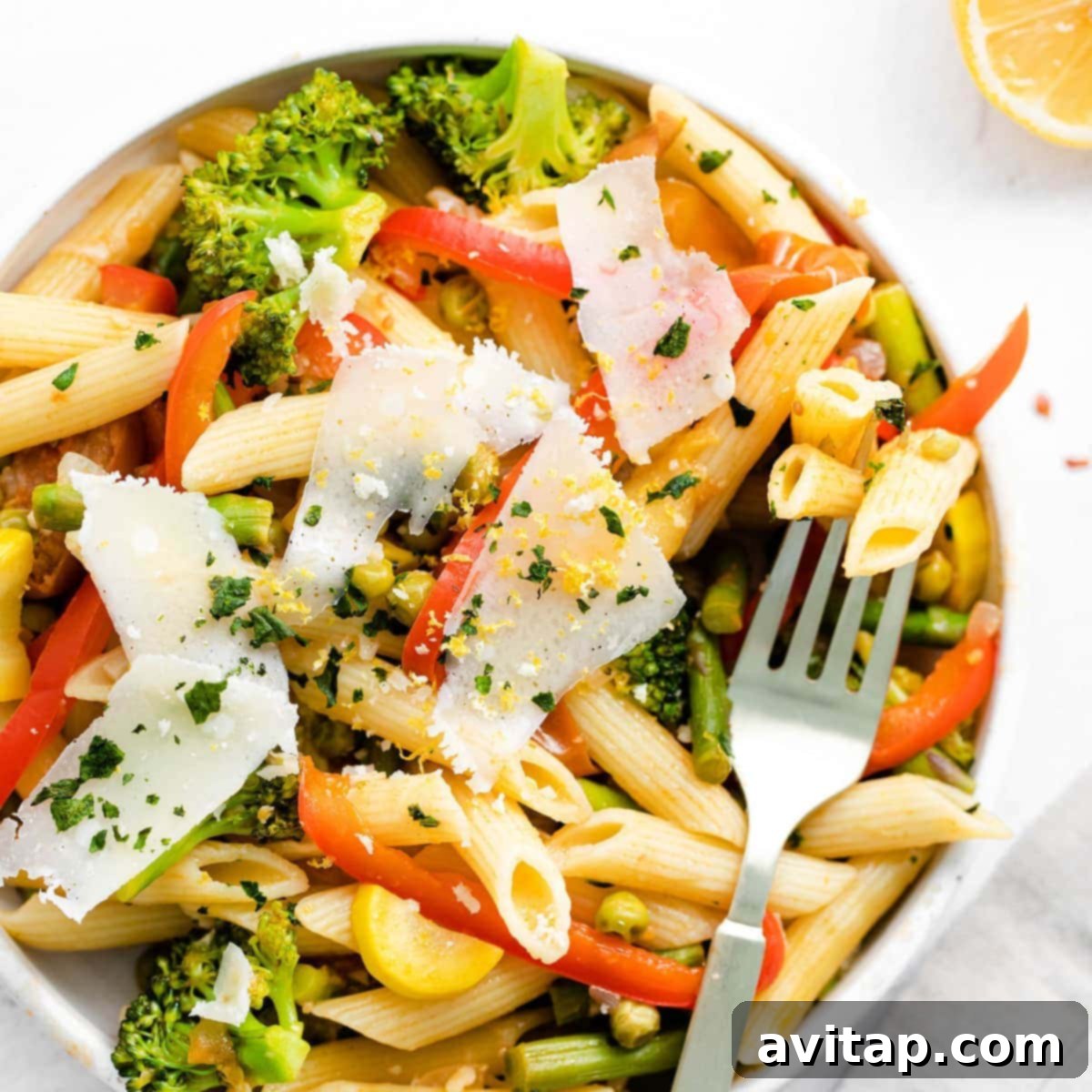
Embrace the vibrant flavors of spring with this incredible **30-Minute Pasta Primavera**, a dish bursting with an array of colorful, nutrient-rich vegetables. This recipe is designed to bring the freshness of the season right to your dinner table, making it the ultimate quick and healthy meal for any day of the week. Perfect for busy weeknights or a delightful weekend lunch, this pasta primavera delivers on both taste and convenience.
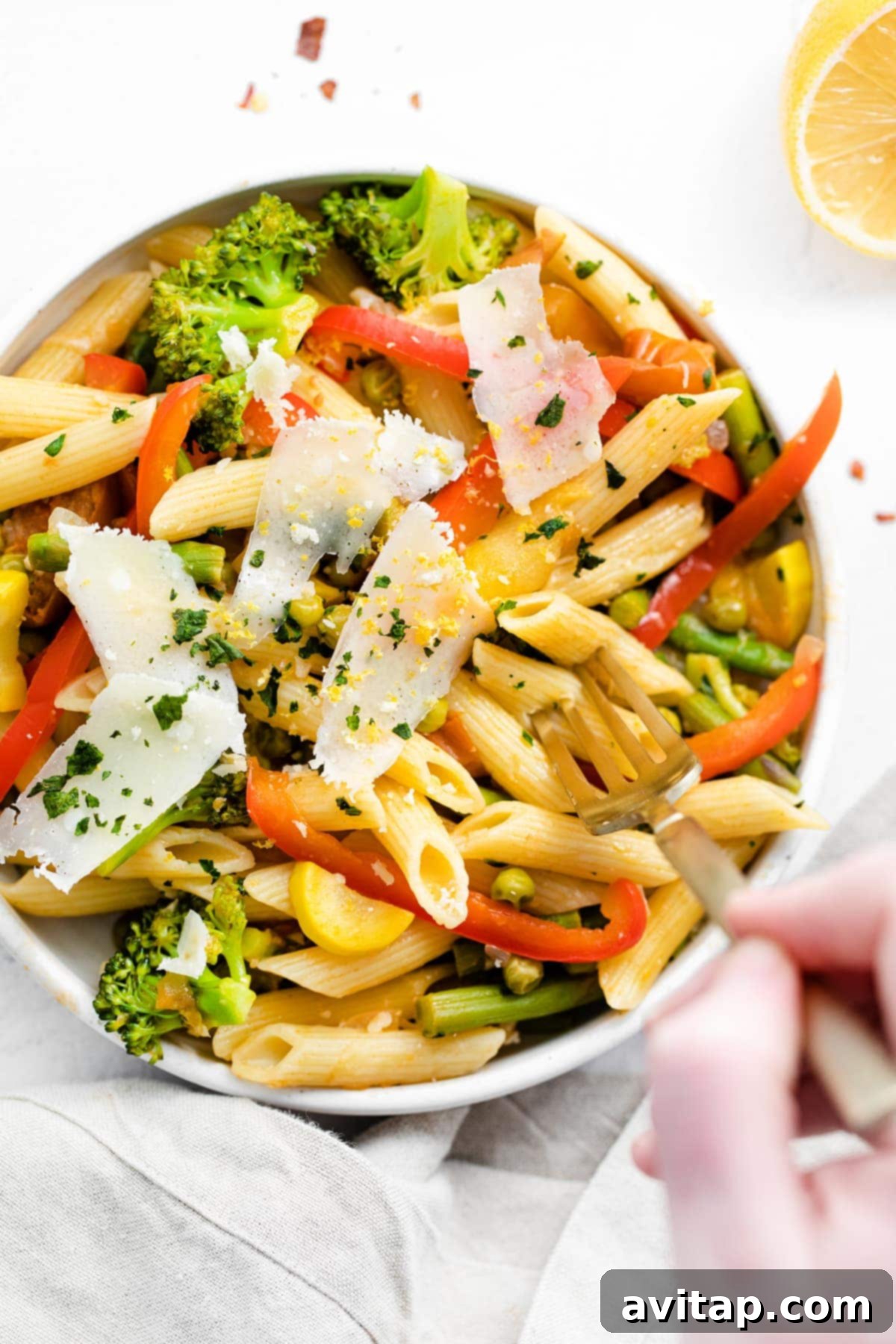
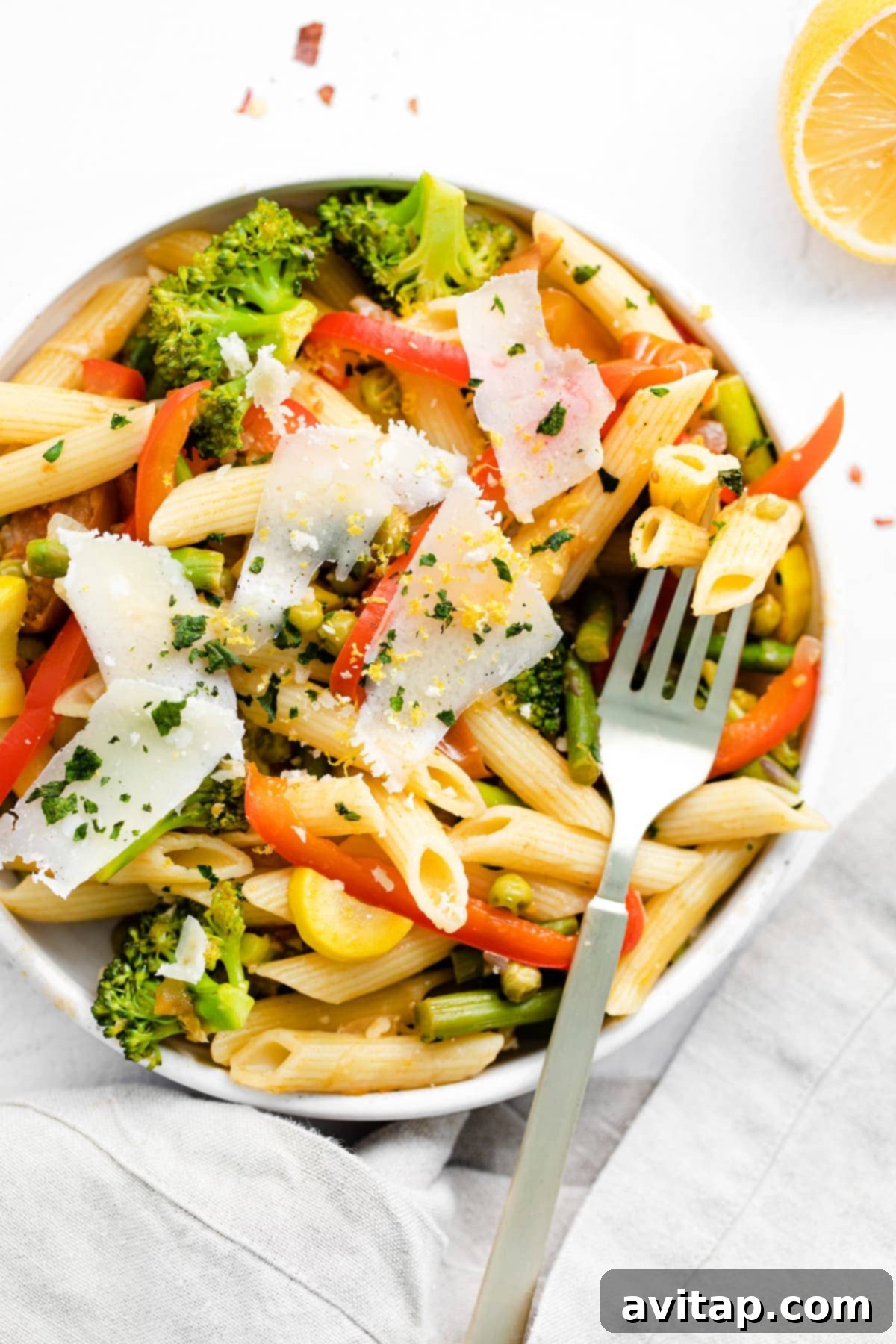
This pasta primavera truly lives up to its name, being **packed with an abundance of fresh vegetables** that celebrate the best of what spring has to offer. In just 30 minutes, you can have a wholesome, flavorful, and incredibly satisfying meal ready to serve. We believe that healthy eating should never compromise on taste or require hours in the kitchen, and this recipe perfectly embodies that philosophy.
Today, we’re not just sharing a recipe; we’re guiding you through the art of crafting this quick and delicious pasta primavera. We’ll explore exciting variations that allow you to customize the dish based on your favorite seasonal produce, and provide expert tips on the best ways to reheat leftovers, ensuring your meal remains delicious throughout the week. Get ready to transform simple ingredients into a culinary masterpiece!
What is Pasta Primavera: A Celebration of Spring’s Bounty
Pasta primavera is a classic Italian-American dish that literally translates to “spring pasta,” and it perfectly encapsulates the freshness and lightness associated with the season. Originating in the 1970s, this dish quickly gained popularity for its emphasis on fresh, tender vegetables lightly tossed with pasta in a delicate sauce. Unlike heavier, cream-based pasta dishes, primavera shines with its vibrant produce, often including asparagus, peas, broccoli, and cherry tomatoes, reflecting the first harvests of spring.
Our pasta primavera recipe takes this concept a step further, offering a healthful twist without sacrificing any of the comforting flavors. We focus on maximizing the nutritional value by loading it with an array of colorful vegetables and crafting a light, zesty sauce that perfectly complements their natural sweetness and crisp textures. This approach ensures every bite is not only delicious but also packed with vitamins and antioxidants, making it a truly wholesome and satisfying meal.
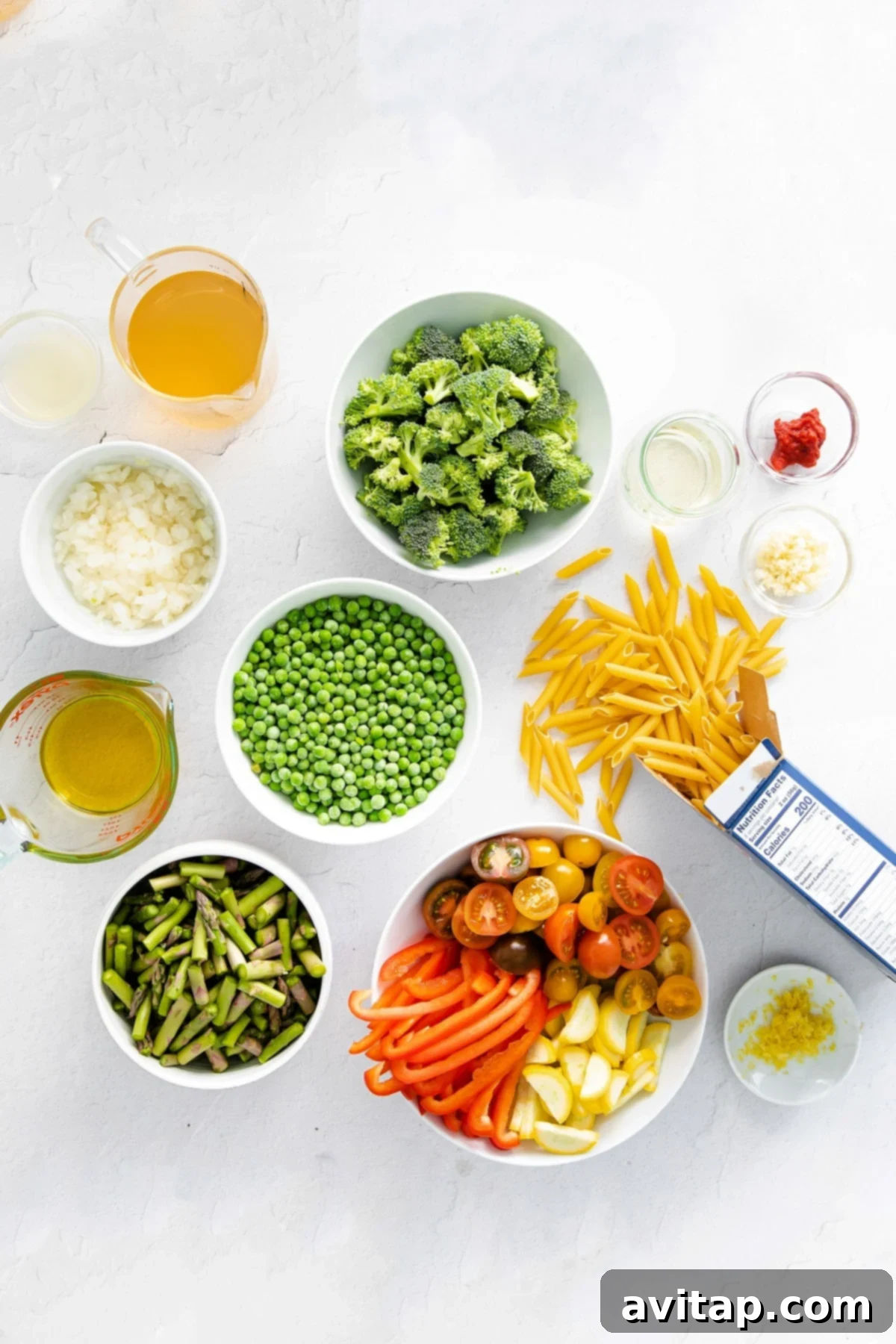
Essential Ingredients for Your Perfect Pasta Primavera
For precise measurements and detailed cooking steps, please refer to the comprehensive recipe card below.
The Star Vegetables: Fresh & Flavorful
The beauty of pasta primavera lies in its flexible use of seasonal produce. For this recipe, we’ve carefully selected a combination that offers a delightful balance of colors, textures, and flavors, each contributing essential nutrients:
- Asparagus: These tender green spears are a quintessential spring vegetable, adding a delicate, slightly earthy crunch.
- Broccoli: Florets of broccoli provide a hearty texture and a boost of vitamins, becoming tender-crisp when sautéed.
- Yellow Squash: Lending a mild, slightly sweet flavor and soft texture, yellow squash melts beautifully into the dish.
- Red Bell Pepper: A pop of vibrant red, bell peppers offer a sweet crunch and a wealth of vitamin C.
- White Onion: The aromatic base for our sauce, white onion brings a foundational savory sweetness.
- Cherry Tomatoes: Halved cherry tomatoes burst with juicy freshness, adding bright acidity and a lovely color contrast.
- English Peas: Sweet and tender, these peas are the epitome of spring and round out the vegetable medley.
Aromatic Seasonings & Zesty Sauce
The sauce is simple yet incredibly flavorful, designed to highlight the vegetables without overpowering them. It’s a light, vibrant concoction that ties all the elements together:
- Minced Garlic: The backbone of nearly any great Italian-inspired dish, garlic provides indispensable aromatic depth.
- Dry White Wine: Used to deglaze the pan, it adds a sophisticated acidity and helps build a rich flavor foundation (can be omitted for an alcohol-free version, replaced with extra broth).
- Vegetable Broth: The liquid base for our light sauce, ensuring it remains vegetarian-friendly.
- Tomato Paste: A concentrated burst of tomato flavor, it adds depth and a subtle richness to the sauce.
- Lemon Zest & Juice: The secret weapon for brightness! Lemon cuts through richness and elevates all the other flavors.
- Salt & Pepper: Essential for seasoning and balancing all the components of the dish.
Perfect Pasta Choice
While the vegetables are the star, the pasta provides the perfect canvas. We recommend a shape that can hold onto the light sauce and mingle well with the diced veggies:
- Penne Pasta: Its tubular shape and ridged surface are ideal for capturing the sauce and small pieces of vegetables, ensuring every forkful is perfectly balanced.
Enhancing Toppings for Flavor & Freshness
A few simple additions at the end can elevate your pasta primavera to gourmet status:
- We adore finishing this pasta primavera with a generous sprinkle of freshly grated parmesan cheese for a salty, umami kick, along with a scattering of fresh basil leaves for aromatic freshness. A final touch of lemon zest can also brighten the entire dish.
Crafting Your 30-Minute Pasta Primavera: Step-by-Step Guide
This pasta primavera is surprisingly straightforward to prepare, making it a perfect recipe for both novice and experienced cooks. The key to success lies in thoughtfully cooking your vegetables to perfection – no mushy textures here! We’ll guide you through a technique that ensures each vegetable maintains its ideal crisp-tender bite while mingling beautifully with our vibrant sauce. Let’s dive into the process:
Step 1: Perfectly Cook the Pasta
Begin by bringing a large pot of generously salted water to a rolling boil. Add your penne pasta and cook it just until it’s shy of al dente. This is a crucial step because the pasta will continue to cook and absorb flavors later when it’s tossed with the sauce and vegetables. Cooking it slightly underdone now prevents it from becoming overcooked or mushy. Once cooked, drain the pasta thoroughly but reserve a little of the starchy pasta water if you like, as it can be used to loosen the sauce later if needed. Set the pasta aside while you prepare the other components.
Step 2: Expertly Sauté the Vegetables
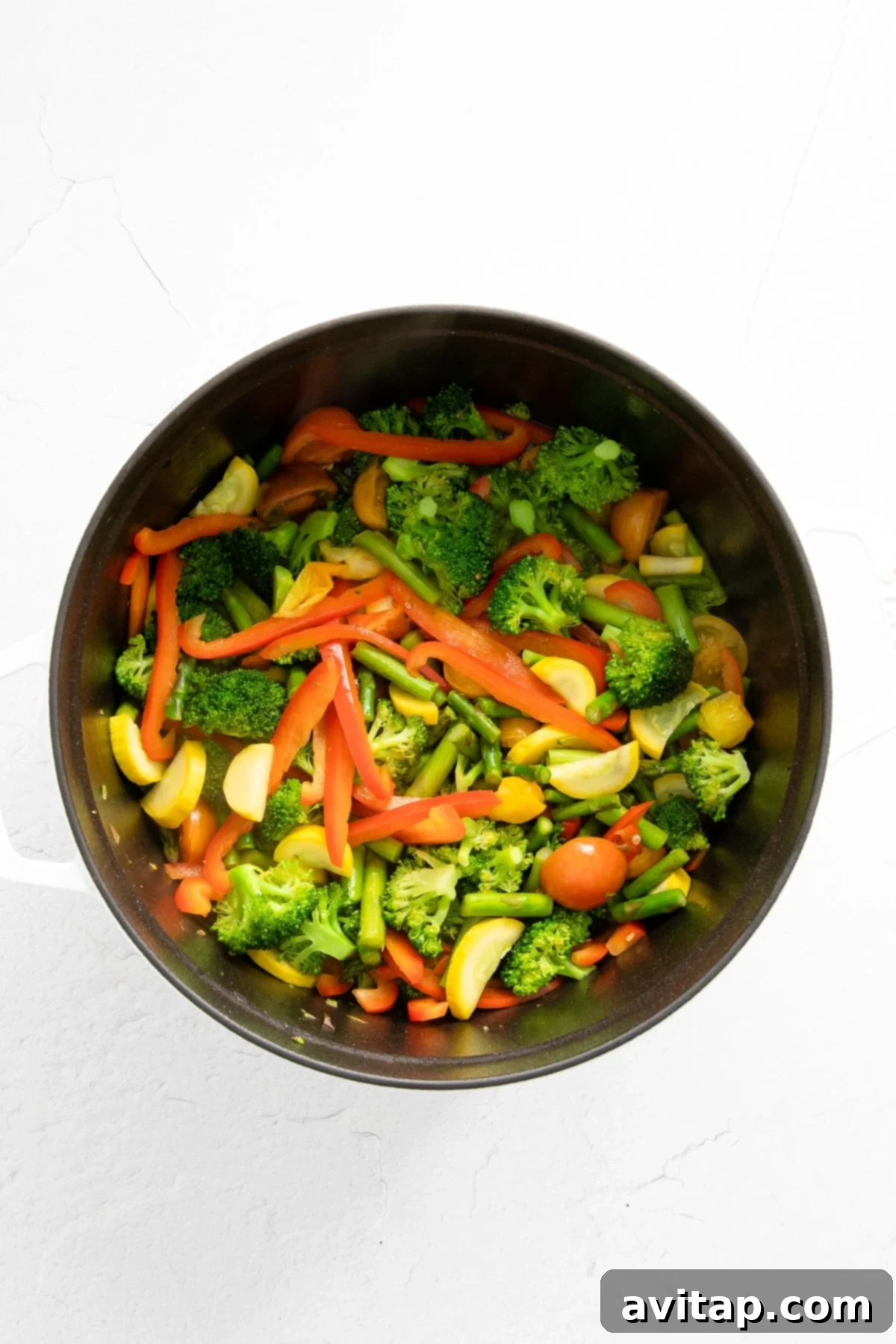
Heat about half of your olive oil in a deep pan or a Dutch oven over medium-high heat. Once the olive oil is shimmering and fragrant, add the asparagus pieces to the pot, sprinkling them with a pinch of salt. Sauté the asparagus for approximately 2-3 minutes, allowing them to brighten in color and become tender-crisp.
Next, introduce the broccoli florets to the pot. Continue to sauté for another 2-3 minutes, stirring occasionally, until the broccoli pieces start to develop a slight char or browning. This indicates they are developing a deeper flavor and perfectly tender texture.
Then, add the yellow squash, red bell pepper, and half of the cherry tomatoes to the pot, along with another small dash of salt. Sauté for an additional 2 minutes. The goal here is to cook them just enough to soften slightly but still retain their vibrant color and a pleasant bite.
Carefully transfer all the sautéed vegetables into a separate bowl and set them aside. This technique of staggering the vegetable addition is vital for achieving optimal texture for each type of vegetable.
Why is it important to add the vegetables at different times? This method ensures that each vegetable cooks to its ideal tenderness without becoming overdone or mushy. Harder vegetables like asparagus and broccoli need a bit more cooking time, while softer ones like squash and bell peppers cook much faster. By adding them in stages, you guarantee a perfect, diverse texture in your final primavera dish, preventing a bland or overly soft consistency.
Step 3: Develop the Flavorful Sauce
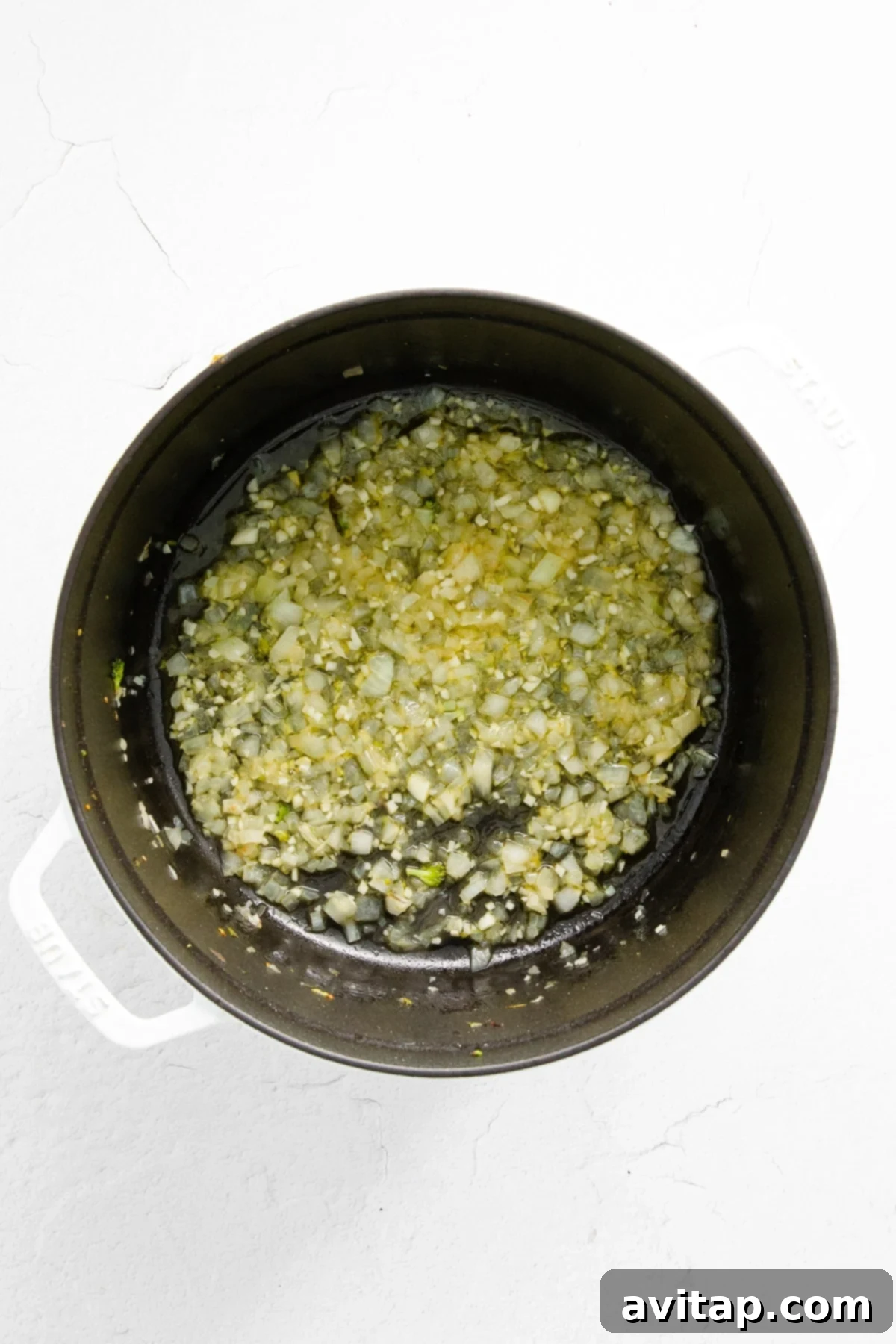
Using the same pan (no need to clean it – those browned bits are flavor!), add the remaining olive oil and heat it over medium-high heat until fragrant. Add the finely minced white onion and season it with a dash of salt. Sauté the onions, stirring periodically, for about 3-4 minutes, until they soften and begin to turn golden brown and caramelized, releasing their sweet aroma.
Next, add the minced garlic to the sautéed onions and cook for just one more minute, stirring constantly, until it becomes fragrant. Be careful not to burn the garlic, as it can quickly turn bitter.
Deglaze the pot with the dry white wine. As you pour in the wine, use a wooden spoon or spatula to scrape up any flavorful browned bits from the bottom of the pan. This process adds immense depth to your sauce.
Stir in the second half of the cherry tomatoes, tossing them with the onions and garlic until they are coated in the oil and begin to soften slightly.
Now, it’s time to build the sauce’s body: add the vegetable broth, tomato paste, fresh lemon juice, lemon zest, ground black pepper, and the final half teaspoon of salt to the pot. Whisk vigorously to fully incorporate the tomato paste into the broth, ensuring there are no clumps remaining.
Bring the sauce to a boil over high heat, then reduce the heat to medium-low. Add the English peas to the simmering sauce. Allow the sauce to gently simmer, uncovered, for approximately 10-15 minutes, or until it has reduced by about half and slightly thickened. This concentration process intensifies the flavors. Once the sauce has reduced, return all the previously sautéed vegetables to the pot and gently toss them until they are thoroughly coated in the flavorful sauce.
Step 4: Combine & Serve
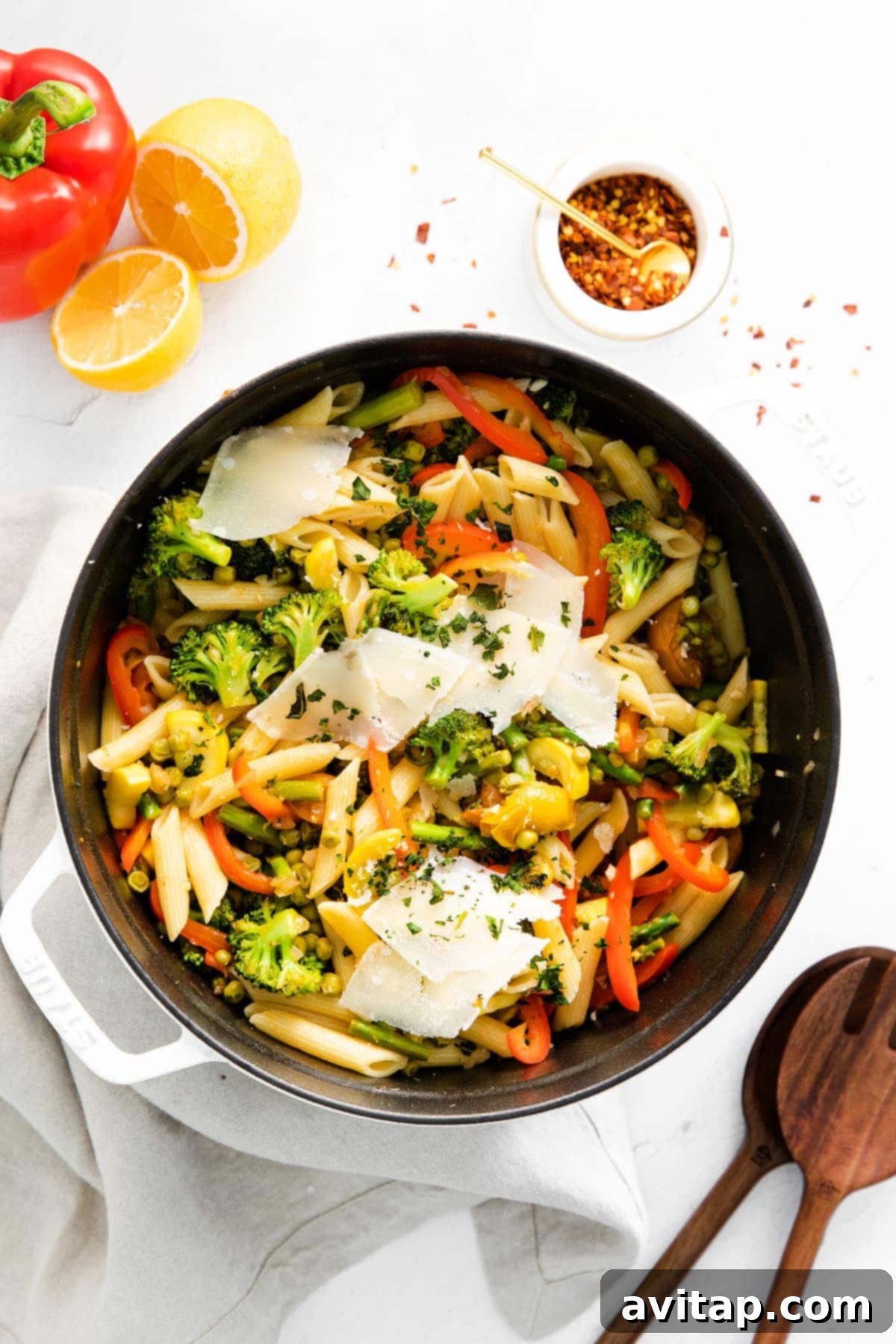
Finally, add the reserved, cooked pasta directly into the pot with the saucy vegetables. Toss everything together thoroughly, ensuring the pasta is evenly coated and mixed with all the vibrant ingredients. Heat the pasta and vegetables in the sauce over medium heat for a few minutes, just until everything is warmed through and the flavors have melded together beautifully.
To serve, ladle generous portions into bowls. Garnish with a sprinkle of freshly grated parmesan cheese, a scattering of fresh basil leaves, and an extra grating of fresh lemon zest for a bright finish. Serve immediately and enjoy the fresh taste of spring!
Pasta Primavera: Easy & Delicious Substitutions for Every Palate
One of the fantastic aspects of pasta primavera is its incredible versatility. Don’t feel limited by the ingredients listed; this recipe encourages creativity and adaptation to your personal preferences or whatever fresh produce you have on hand. Feel free to experiment with these simple 1:1 substitutions to truly make this recipe your own, or add other seasonal vegetables you love! The goal is to highlight the fresh flavors of spring, so trust your culinary instincts.
- Penne Pasta: While penne is excellent, any medium-sized pasta shape works wonderfully. Consider fusilli, rotini, farfalle (bow ties), or even a wider ribbon pasta like pappardelle or fettuccine, which can beautifully carry the light sauce and vegetables. Whole wheat pasta can also be used for an added fiber boost.
- Vegetable Broth: If you’re not strictly vegetarian, chicken broth or even a light beef broth can be used as a flavorful alternative, adding a different dimension to the sauce. Ensure it’s low sodium if you’re watching salt intake.
- Asparagus: Fresh green beans, sugar snap peas, or even thinly sliced zucchini make excellent substitutes for asparagus, offering similar textures and spring-like flavors.
- English Peas: Any variety of fresh or frozen peas will work perfectly. If using frozen, there’s no need to thaw them beforehand; just add them directly to the simmering sauce.
- Red Bell Pepper: Feel free to use any color of bell pepper – yellow, orange, or green – based on your preference for sweetness and color. Each will contribute a slightly different nuanced flavor.
- Yellow Squash: Green zucchini or pattypan squash are fantastic 1:1 substitutions, offering a similar mild flavor and tender texture when cooked.
- White Onion: Red onion or yellow onion can be used interchangeably. Red onion will offer a slightly sharper flavor and beautiful color, while yellow onion provides a robust, sweet base.
- Dry White Wine: For an alcohol-free version, simply replace the white wine with an equal amount of vegetable broth or a splash of white grape juice mixed with a teaspoon of white vinegar for acidity.
- Add Protein: For a more substantial meal, consider adding cooked chicken breast, shrimp, or chickpeas during the final step when combining the pasta and vegetables.
- Herb Alternatives: If fresh basil isn’t available, fresh parsley or mint can offer a different but equally delightful herbaceous note.
Storing & Reheating Your Pasta Primavera
Pasta primavera makes for wonderful leftovers, offering a quick and healthy meal solution for days to come. Proper storage and reheating are key to maintaining its delicious flavors and textures. Once your pasta primavera has cooled completely to room temperature (this is crucial to prevent condensation and bacterial growth), transfer it into an airtight container. Seal the container tightly and store it in the refrigerator for up to 3-5 days. The flavors often deepen overnight, making it even more enjoyable the next day.
To reheat for best results: The ideal way to reheat pasta primavera is on the stovetop. Transfer the chilled pasta primavera into a large frying pan or skillet. Add a few tablespoons of vegetable broth (or water) to the pan to help rehydrate the pasta and loosen the sauce, preventing it from drying out. Reheat over medium heat, stirring gently and frequently, until the pasta and vegetables are thoroughly warmed through. Avoid microwaving if possible, as it can sometimes lead to uneven heating and a softer pasta texture. If you must use a microwave, do so in short intervals, stirring between each, and add a splash of broth before heating.
Discover More of Our Favorite…
Explore More Delicious & Healthy Pasta Recipes
- Easy Chicken Alfredo
- Jalapeno Quinoa Mac and Cheese
- Mushroom Stroganoff
- Shrimp Scampi with Asparagus
- Creamy Tuscan Chicken and Gnocchi
- Chicken Piccata
- ALLOur Favorite Pasta Recipes
Pasta Primavera Recipe
Ingredients
- 12 oz. penne pasta
- 1/4 cup olive oil, divided
- 1 lb. asparagus, cut into bite-sized pieces
- 2 cups broccoli, cut into bite-sized pieces
- 1 medium yellow squash, cut into bite-sized pieces
- 1 large red pepper, chopped
- 1/2 white onion, minced
- 2 tablespoons minced garlic
- 1/4 cup dry white wine
- 10 oz. cherry tomatoes, halved and separated
- 1.5 cups vegetable broth
- 1 tablespoon tomato paste
- 2 tablespoons lemon juice
- 2 teaspoons lemon zest
- 1 teaspoon salt, divided
- 1/2 teaspoon ground black pepper
- 2 cups English peas, or frozen peas
- Serving suggestions: parmesan cheese and fresh basil
Instructions
-
First, cook pasta. Bring a large pot of salted water to a boil and add penne pasta. Cook the pasta until the pasta is cooked just before al dente (the pasta will continue to cook later in the recipe). Strain the water from the noodles and set aside.
-
Prepare the vegetables for the pasta primavera. Heat 2 tablespoons of olive oil in a deep pan or Dutch oven over medium/high heat. When the olive oil is fragrant, add the asparagus to the pot and sprinkle with 1/4 teaspoon of salt. Sauté the asparagus for 2-3 minutes.
-
Add broccoli to the pot and sauté for another 2-3 minutes or until the broccoli pieces begin to brown.
-
Next, add the yellow squash, red pepper, half of the cherry tomatoes, and another 1/8 teaspoon of salt to the pot and sauté for an additional 2 minutes.
-
Transfer all of the sautéed vegetables into a bowl and set the veggies aside.
-
Prepare the sauce for the pasta primavera. Add the last 2 tablespoons of olive oil to the pot heat over medium/high heat until fragrant. Then, add the onion and season with 1/8 teaspoon salt.
-
Sauté the onions (stirring periodically) until the onions begin to brown (about 3-4 minutes). Then, add the minced garlic to the onions and sauté for another minute.
-
Deglaze the pot with 1/4 cup of white wine and scrape the bottom of the pot with a spatula.
-
Add the second half of the cherry tomatoes and toss them with the onions until they are covered with oil.
-
Next, add the broth, tomato paste, lemon juice, lemon zest, pepper, and the last 1/2 teaspoon of salt to the pot. Whisk the tomato paste into the broth until there are no clumps.
-
Bring the broth to a boil over high heat and then turn the heat to medium/low and add the peas to the sauce.
-
Let the sauce simmer over medium heat until it reduces by half (10-15 minutes). When the sauce has reduced add the vegetables to the sauce and toss the vegetables in the sauce.
-
Add the pasta to the pot and toss everything together. Heat the pasta and vegetables in the sauce until everything is warm.
-
Sprinkle with parmesan cheese and garnish with fresh basil and more lemon zest.
Tips & Notes
- This recipe was updated on February 4th, 2021. For the original version, please refer to archived resources.
Nutrition
Nutrition information is automatically calculated, so should only be used as an approximation.
Love this recipe? Share your thoughts below!
Don’t forget to tag your posts on social media with the hashtag #fitfoodiefinds – we’d love to see your creations!