
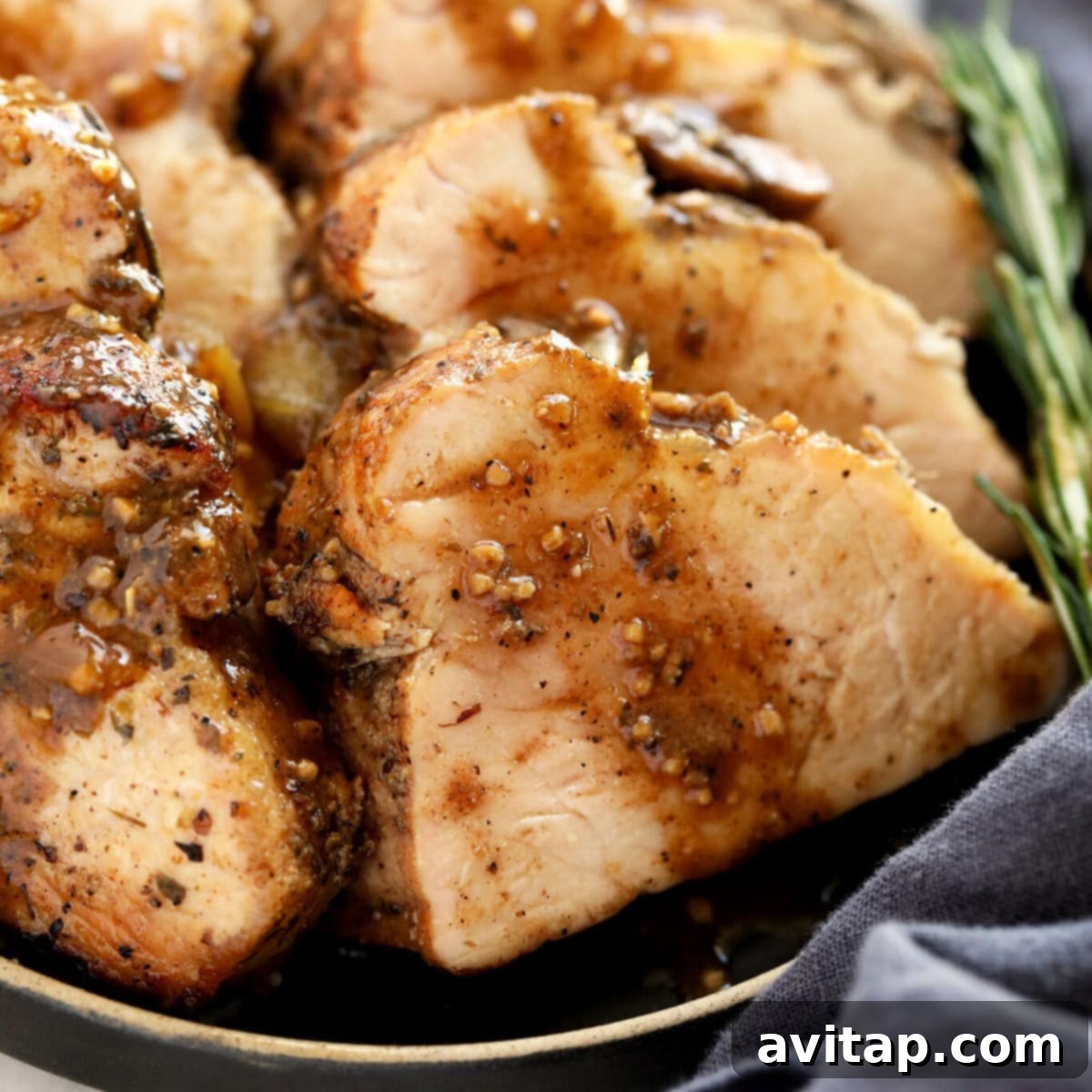
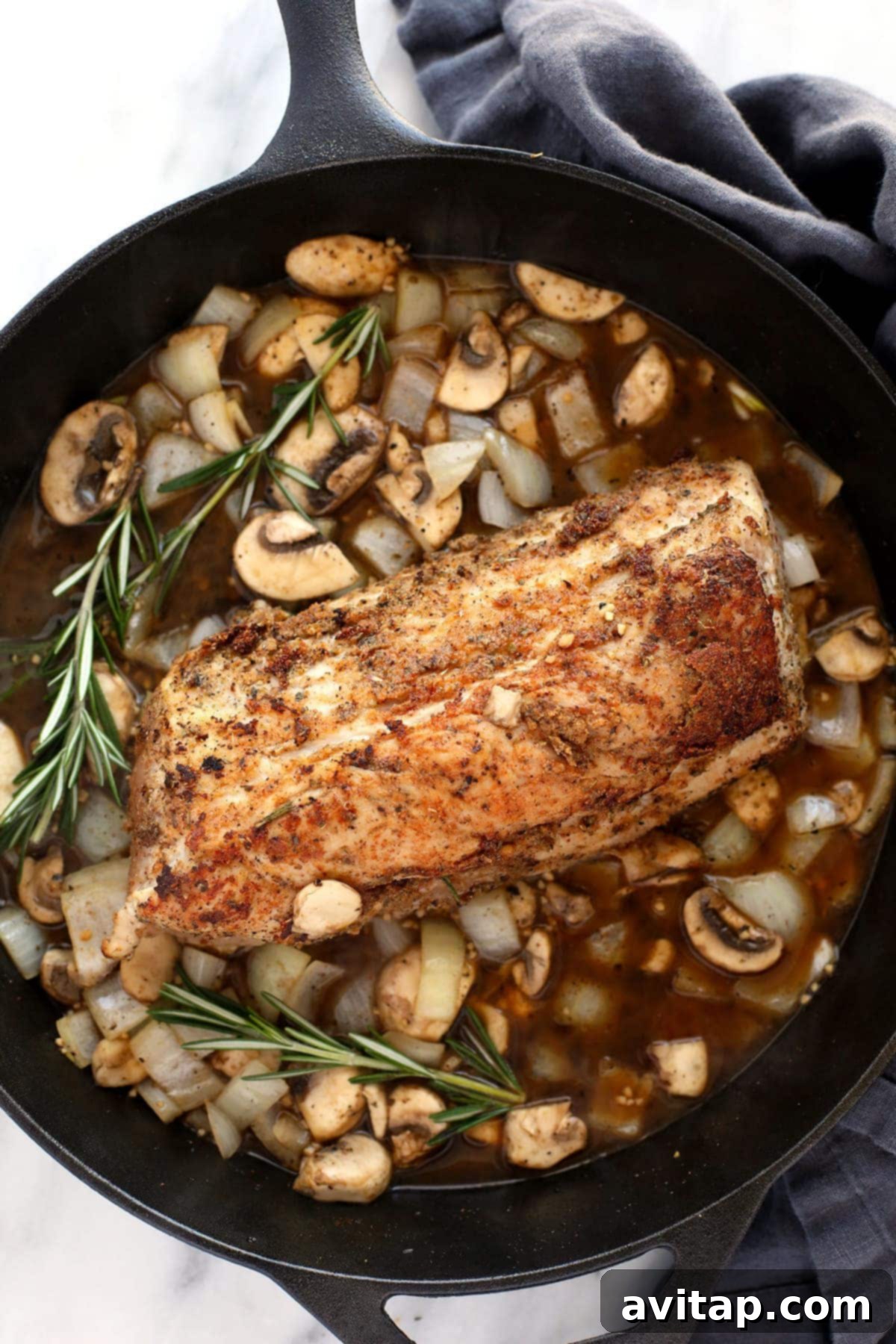
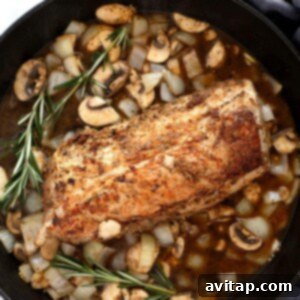
Prepare to experience the most delicious baked pork tenderloin recipe, guaranteed to be incredibly moist and bursting with flavor. This exceptional dish is crafted with an incredible mushroom gravy, all prepared conveniently in a single pan!
If you’re a fan of pork tenderloin, we invite you to explore our other fantastic recipes, including Instant Pot Pork Tenderloin, Grilled Pork Tenderloin, and Sous Vide Pork Tenderloin, for more delicious ways to enjoy this versatile cut of meat.
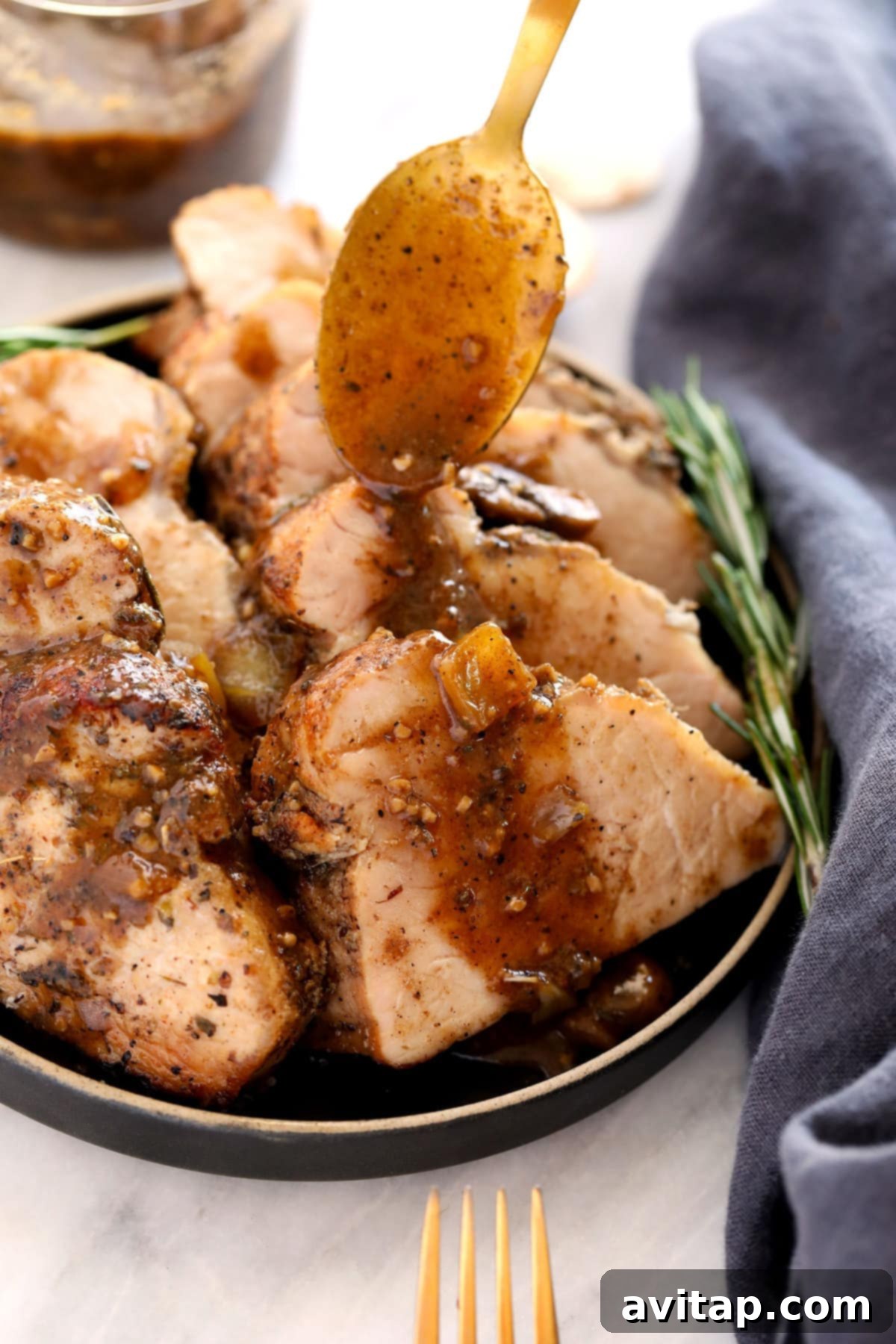
Unveiling the Best Baked Pork Tenderloin with Savory Gravy
This recipe consistently ranks as the absolute best pork tenderloin you’ll find, not just on our site, but arguably anywhere. It delivers a pork tenderloin that is remarkably tender and juicy, surprisingly easy to prepare, and features a mushroom gravy that is simply irresistible. This truly is a one-pan wonder that simplifies dinner without compromising on flavor or quality.
In this comprehensive guide, we’ll delve into everything you need to know about pork tenderloin – from understanding this choice cut of meat to mastering the art of seasoning, achieving perfect doneness, and crafting that sensational mushroom gravy. Get ready to elevate your weeknight meals or impress guests with a dish that consistently wows. Let’s get cooking!
What is Pork Tenderloin?
Pork tenderloin is a premium cut of pork, renowned for its delicate texture and lean profile. Located along the pig’s backbone, it’s a long, narrow muscle that receives minimal exercise, resulting in its signature tenderness. This makes it a highly sought-after cut in American cuisine, ideal for quick cooking methods like roasting, grilling, or pan-searing.
Its inherent leanness means pork tenderloin is a healthy choice, but also requires careful cooking to prevent it from drying out. When prepared correctly, it yields incredibly tender, melt-in-your-mouth results. Understanding this characteristic is key to mastering delicious pork tenderloin dishes, ensuring it remains juicy and flavorful every time.
Quick Tip for Purchasing Pork Tenderloin
When you’re at the grocery store, be aware that pork tenderloin is sometimes sold with two tenderloins packaged together. Always check the label for the specific weight and count to ensure you’re getting the right amount for your recipe, especially if you’re aiming for a particular serving size.
Pork Tenderloin vs. Pork Loin Roast: Understanding the Differences
While often confused, pork tenderloin and pork loin roast are distinct cuts of meat, each with unique characteristics and ideal cooking applications. Understanding these differences is crucial for selecting the right cut for your culinary needs and achieving the best results.
Pork Tenderloin: This cut is typically slender and cylindrical, usually measuring about 2 to 3 inches in diameter and weighing around 1 to 1.5 pounds. It’s exceptionally lean and incredibly tender, making it perfect for quick cooking methods at higher temperatures, such as roasting, grilling, or pan-searing, as showcased in this very recipe. Its delicate flavor readily absorbs marinades and rubs, offering great versatility in seasoning.
Pork Loin Roast: In contrast, a pork loin roast is much thicker and wider, often weighing 2 to 5 pounds or more. It can include bones or be boneless, and while it’s also lean, it generally has a thicker fat cap on one side, which contributes to moisture and flavor during longer cooking times. Pork loin is best suited for slower roasting or braising, allowing the meat to cook evenly and remain tender without drying out.
Both cuts are lean and share a similar mild pork flavor, but their shape and thickness dictate their preferred cooking methods. For a truly tender, quicker meal, tenderloin is your go-to. For a larger roast that can feed a crowd and benefits from a more extended cooking process, the pork loin roast is an excellent choice.
Looking for a pork loin recipe? Check out our Slow Cooker Pork Loin Roast Recipe.
Elevating the Flavor: How to Season Baked Pork Tenderloin
Pork tenderloin is a culinary chameleon, readily absorbing the flavors of marinades, rubs, and seasonings. Its mild profile makes it incredibly versatile, similar to how chicken breast takes on various flavor profiles. This characteristic allows you to customize your dish to your exact preferences, making it a favorite for diverse culinary creations.
For this specific baked pork tenderloin recipe, we utilize a perfectly balanced dry rub. This rub not only infuses the pork with deep, aromatic flavors but also contributes to the richness of the mushroom gravy, which cooks simultaneously in the same pan. This synergy of flavors creates a cohesive and truly delicious meal.
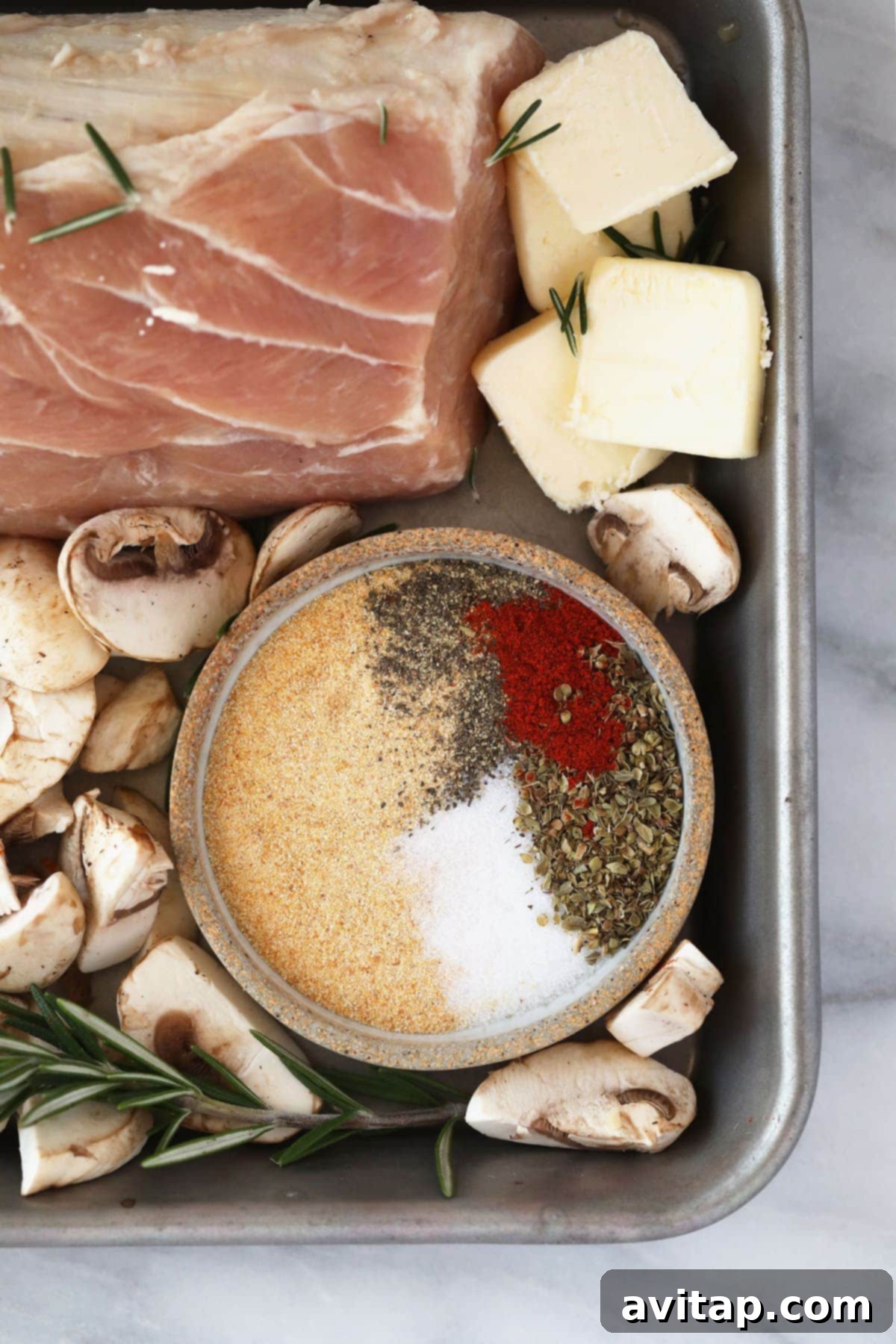
The essential spices for our simple yet potent dry rub include:
- Garlic Powder: A fundamental flavor enhancer that adds warmth and depth.
- Dried Oregano: Offers an earthy, slightly peppery Mediterranean note that complements pork beautifully.
- Smoked Paprika: Delivers a beautiful color, a hint of smokiness, and a subtle sweetness that truly elevates the dish.
- Salt and Pepper: The indispensable duo for seasoning any meat, enhancing all other flavors.
Aim to use approximately 1 to 1.5 tablespoons of this dry rub for every pound of pork tenderloin to ensure even and ample flavoring.
Expand Your Flavor Horizon!
For an even deeper flavor profile, consider using our acclaimed best pork dry rub recipe, which is a fan favorite. You’ll want to use about 1.5 to 2 tablespoons of this blend for optimal taste.
Alternatively, for an extra burst of juiciness and a different flavor dimension, you can opt for our easy pork tenderloin marinade. Marinating will infuse your pork with moisture and flavor, making it exceptionally tender.
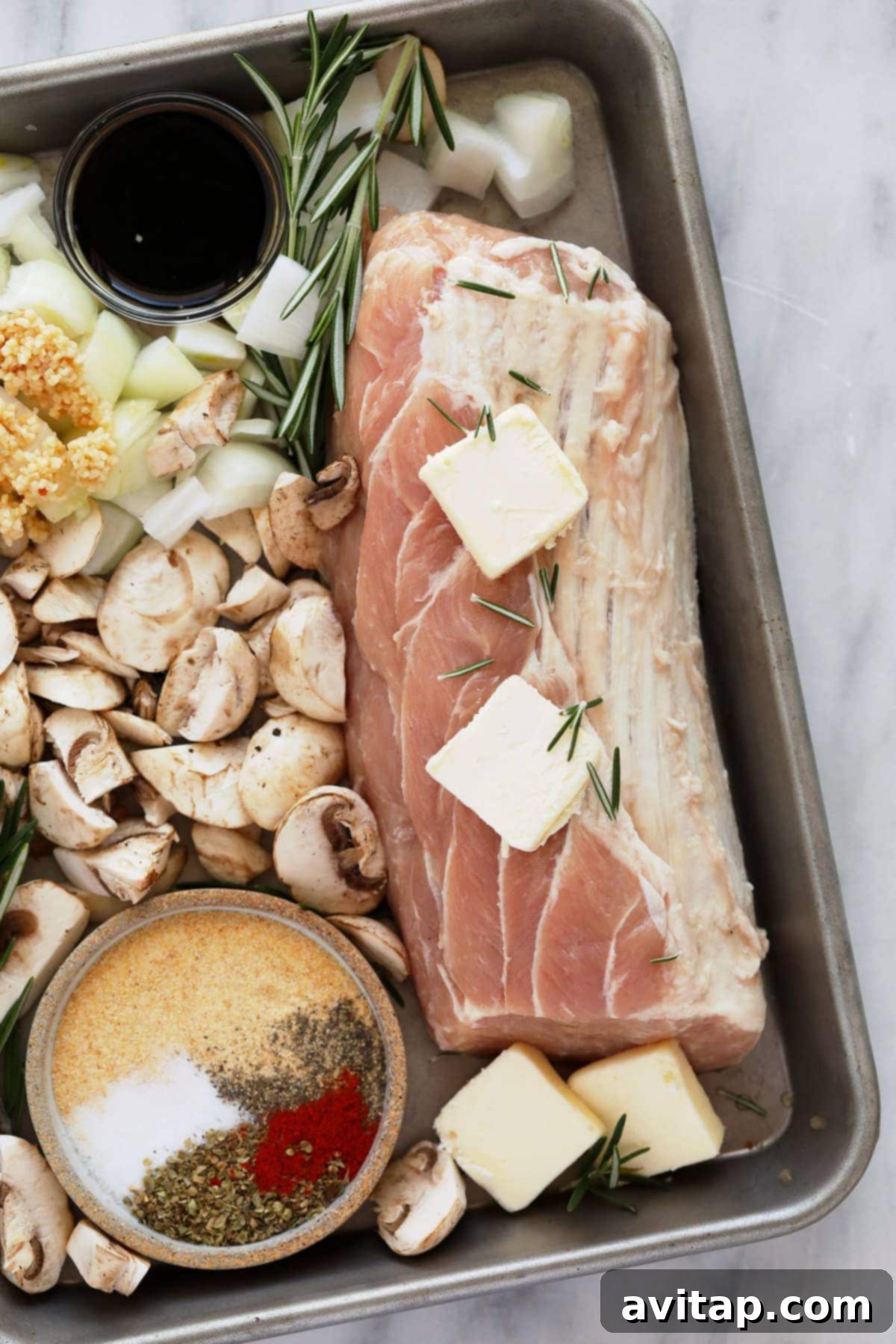
Mastering the Oven: How to Cook Pork Tenderloin to Perfection
Cooking pork tenderloin in the oven is a straightforward process that yields incredibly tender and juicy results, especially when paired with a flavorful gravy. Follow these detailed, step-by-step instructions to create a memorable meal. For a complete list of ingredients and precise measurements, please refer to the full recipe card below.
Step 1: Season Your Pork Tenderloin
The journey to a truly delicious baked pork tenderloin begins with a fantastic spice blend. This rub is incredibly similar to our popular pork dry rub recipe, combining savory notes with just the right amount of salt to enhance the pork’s natural flavor. What’s even better? You only need five simple ingredients to create this magical seasoning.
- Garlic Powder: This provides a foundational savory taste. If you’re using garlic salt, remember to reduce the amount of additional salt in your rub.
- Salt and Pepper: Essential for seasoning, bringing out the best in the pork.
- Dried Oregano: An aromatic herb that lends a classic, earthy Mediterranean touch to the pork.
- Smoked Paprika: A little goes a long way with this spice, adding a beautiful reddish hue, a touch of warmth, and a subtle smokiness that truly elevates the dish.
Thoroughly mix these spices in a small bowl, then generously pat the mixture all over the pork tenderloin, ensuring every surface is coated for maximum flavor absorption.
Step 2: Sear the Pork Tenderloin for Enhanced Flavor
Before it goes into the oven, searing your pork tenderloin is a crucial step that builds incredible flavor and creates a beautiful golden-brown crust. Heat butter or olive oil in a large, oven-safe skillet over medium-high heat. A cast-iron skillet is highly recommended as it heats evenly and retains heat exceptionally well, making it ideal for achieving a perfect sear.
Once the fat is shimmering, carefully place the seasoned pork tenderloin into the hot skillet. Sear it on all sides for approximately 2-3 minutes per side until it develops a rich, golden-brown crust. This process, known as the Maillard reaction, locks in juices and adds a complex layer of flavor that truly distinguishes this recipe. After searing, remove the pork from the skillet and set it aside momentarily.

Recommended Cookware
Cast Iron Pan
A high-quality cast iron pan is an invaluable addition to any kitchen. For searing and one-pan roasting, it’s truly unmatched. The Great Jones King Sear is a fantastic option worth considering for its superior performance and durability.
Step 3: Prepare the Luscious Gravy Base
Now, it’s time to build the foundation for your delectable mushroom gravy – because what’s a perfect pork tenderloin without a rich, flavorful sauce? The pan drippings left from searing the pork are liquid gold, packed with savory essence.
Reduce the heat in your skillet to low-medium. Add a portion of the chicken broth to deglaze the pan, using a wooden spoon or spatula to scrape up all those browned bits from the bottom. These “fonds” are crucial for developing a deep, complex flavor in your gravy. Next, add the chopped onions, minced garlic, sliced mushrooms, and a touch of balsamic vinegar to the skillet. Allow these aromatics and vegetables to cook for about 2-3 minutes, softening slightly and releasing their flavors. Turn off the heat and gently push the cooked vegetables to the sides of the skillet, creating a space in the center. Carefully place the seared pork tenderloin back into this well, surrounded by the aromatic vegetables.
Step 4: Bake the Pork Tenderloin to Perfection at 400ºF
With your pork tenderloin nestled in its flavorful bed of mushrooms and aromatics, it’s time to transfer the skillet to the preheated oven. Bake the pork at 400ºF for an initial 10 minutes. This high heat helps to finish cooking the pork while ensuring it remains juicy. After 10 minutes, carefully remove the skillet from the oven, flip the pork tenderloin over to ensure even cooking, and return it to the oven.
Continue baking for an additional 12-16 minutes. The precise cooking time will depend on the thickness of your tenderloin and your oven’s calibration. The most important factor is reaching the correct internal temperature for safe and tender results.
Achieving the Ideal Pork Tenderloin Temperature
How do you know when your pork is perfectly cooked? The key is to use a reliable meat thermometer. Insert the thermometer into the thickest part of the pork tenderloin, ensuring it doesn’t touch the pan. The internal temperature should register anywhere from 140ºF to 145ºF. This range ensures the pork is safely cooked, incredibly tender, and wonderfully juicy. Remember, pork can be slightly pink in the center at 145ºF and still be perfectly safe and delicious.
Step 5: Allow the Tenderloin to Rest
This step is non-negotiable for truly tender and juicy pork. Once your baked pork tenderloin reaches its ideal internal temperature (140ºF-145ºF), carefully remove the skillet from the oven. Transfer the pork tenderloin to a large plate or cutting board and let it rest, uncovered, for 5-10 minutes.
During this crucial resting period, the internal temperature of the pork will continue to rise by about 5ºF (this is called carryover cooking). More importantly, the muscle fibers relax, allowing the juices to redistribute evenly throughout the meat. Skipping this step would result in juices running out when you slice, leaving you with dry pork. Resting ensures every slice is ultra-tender and delightfully juicy.
Step 6: Finish Your Rich Mushroom Gravy
While the pork tenderloin is resting and becoming even more tender, you can finalize your savory mushroom gravy directly in the cast iron skillet. This utilizes all the accumulated flavors and drippings from the cooking process.
Add an additional 1/2 cup to 1 cup of chicken broth to the mushrooms and pan juices in the skillet. The exact amount depends on your desired gravy consistency and volume. Turn the heat back to medium-high and bring the mixture to a gentle simmer. Next, sprinkle in the cornstarch, and continuously whisk until it completely dissolves and the gravy begins to thicken. Reduce the heat to low and continue to simmer and whisk for another 1-2 minutes, allowing the gravy to achieve a perfect, luscious consistency. Taste and adjust seasonings if necessary.
Step 7: Slice and Serve with Gravy
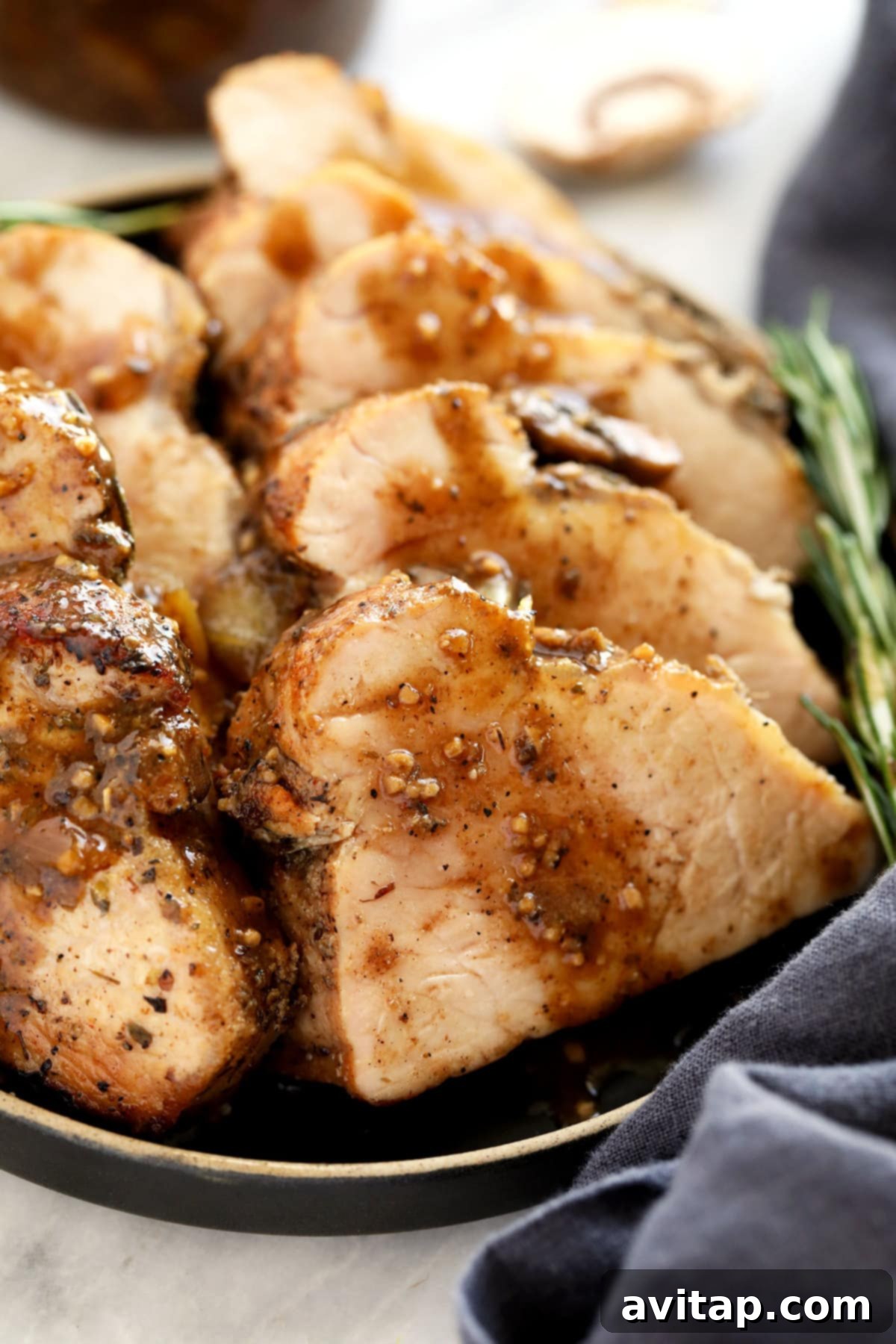
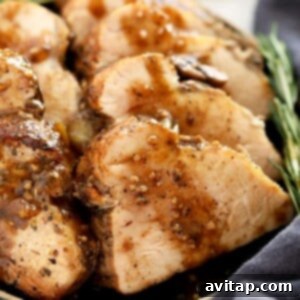
Once your baked pork tenderloin has enjoyed its 5-10 minute rest, it’s ready to be carved. Use a sharp knife to slice the tenderloin into thick medallions. Arrange the sliced pork on serving plates, then generously spoon the warm, rich mushroom gravy over each portion. Serve immediately alongside your favorite complementary side dishes and grains. We’ve included some delicious ideas below to help you create a complete and unforgettable meal!
Discover More of Our Favorite…
Pork Tenderloin Recipes
If you love the versatility and flavor of pork tenderloin, be sure to check out these other fantastic recipes:
- Grilled Pork Tenderloin
- Air Fryer Pork Tenderloin
- Pork Tenderloin Marinade
- Sous Vide Pork Tenderloin
- Instant Pot Pork Tenderloin
Pork Tenderloin Quick Tips & FAQs
The optimal oven temperature for baking pork tenderloin is 400ºF (200ºC). This temperature allows for good browning on the exterior while ensuring the interior cooks thoroughly and remains juicy. The goal is for the pork’s internal temperature, measured in the thickest part, to reach at least 145ºF (63ºC), as recommended by Food Safety guidelines. Always use a meat thermometer for accuracy.
If you opt to cook pork tenderloin at a lower temperature of 350ºF (175ºC), it will generally take longer, approximately 30-35 minutes, to reach a safe internal temperature of 145ºF (63ºC). While this method can still yield good results, searing beforehand is even more crucial to develop a flavorful crust, as the lower oven temperature won’t brown the exterior as quickly.
When baking at 400ºF (200ºC), pork tenderloin typically cooks much faster. You can expect it to be ready in about 20-25 minutes, though this can vary slightly based on thickness. Always rely on a meat thermometer to confirm it has reached 145ºF (63ºC) rather than strictly adhering to time. The initial sear followed by this higher oven temperature helps create a beautiful crust and ensures quick, even cooking.
Most recipes, including ours, do not require you to cover pork tenderloin while baking. This allows for better browning and crisping of the exterior. However, if you notice the pork tenderloin browning too quickly on top before it reaches the desired internal temperature, you can loosely cover it with aluminum foil. This will prevent excessive browning while allowing the inside to continue cooking to 145ºF (63ºC).
No, unlike fattier cuts of pork such as pork butt or shoulder, pork tenderloin is a very lean cut. Cooking it for too long will cause it to dry out, becoming tough and stringy rather than more tender. The key to its tenderness is cooking it just to the recommended internal temperature of 145ºF (63ºC) and then letting it rest. Overcooking is the quickest way to ruin a pork tenderloin, so precise temperature monitoring is essential.

Explore Different Cuts of Pork
Curious about where different cuts of pork come from and how to best prepare them? We’ve got you covered! Learn more about the various options and discover an array of delicious recipes in our comprehensive guide to favorite pork recipes.
Delectable Pairings: What to Serve with Pork Tenderloin
This baked pork tenderloin recipe, with its rich and savory mushroom gravy, is incredibly versatile and pairs wonderfully with a wide array of side dishes. Whether you prefer fresh vegetables, crisp salads, or hearty grains and potatoes, you’ll find plenty of options to create a perfectly balanced and satisfying meal. Here are some ideas to help you complete your culinary masterpiece:
Complementary Vegetable Sides
Tip! For ultimate convenience and efficiency, consider roasting your chosen vegetable sides on a separate pan at the same time as your pork tenderloin. This maximizes oven use and simplifies meal prep.
Oven Roasted Brussels Sprouts
Oven Roasted Asparagus
Amazing Cauliflower Mashed Potatoes
How to Cook Butternut Squash
Easy Roasted Delicata Squash
Fresh and Vibrant Salads
Shaved Brussels Sprout Salad
Farro Salad
Arugula Salad
Massaged Kale Fennel Salad with Lemon Vinaigrette
Favorite Thanksgiving Salad
Hearty Grains & Potatoes
How to Cook Quinoa in the Microwave
Best Healthy Mashed Potatoes
Baked Potatoes in Foil
Crock Pot Baked Potatoes
Ranch Roasted Potatoes
Storage Instructions for Leftover Pork Tenderloin
To properly store any leftover baked pork tenderloin and mushroom gravy, first ensure both components have cooled completely to room temperature. This is crucial to prevent bacterial growth. Once cooled, transfer the sliced pork tenderloin into a clean, airtight glass container. Pour the remaining mushroom gravy over the pork; the gravy will help keep the meat moist. Seal the container tightly and refrigerate for up to 3-5 days. Always ensure proper food safety by reheating thoroughly before serving again.
Reheating Your Baked Pork Tenderloin
Microwave: For a quick reheat, place a single serving of sliced pork tenderloin onto a microwave-safe plate. Spoon a generous amount of the leftover mushroom gravy over the meat. Microwave on high for 60-90 seconds, or until the pork is heated through and the gravy is bubbling. Be careful not to overcook, which can dry out the pork.
Oven: For best results, especially if reheating multiple servings or for a slightly crispier texture, use the oven. Preheat your oven to 350ºF (175ºC). Lightly spray an oven-safe baking dish with cooking spray. Arrange the cooked pork tenderloin slices in the dish and cover them with the leftover gravy. Bake, uncovered, for approximately 20 minutes, or until the center of the pork is thoroughly warm and the gravy is heated through. Covering it lightly with foil during the last few minutes can help retain moisture if needed.
Can You Freeze Leftover Pork Tenderloin?
Absolutely! Freezing leftover pork tenderloin is a great way to extend its shelf life for future meals. Ensure the pork tenderloin and gravy are completely cooled before freezing. Transfer the pork slices and gravy into a gallon-size freezer-safe plastic bag or an airtight freezer-safe container. If using a bag, remove as much air as possible before sealing to prevent freezer burn. Label the bag or container with the date. Leftover baked pork tenderloin can be safely frozen for up to 3 months. When ready to enjoy, thaw overnight in the refrigerator before reheating using the instructions above.
Explore More of Our Favorite…
Pork Roast Recipes
If you’re looking to explore other delicious cuts of pork, particularly those that are a bit fattier and benefit from slower cooking methods, check out our favorite pork roast recipes from Fit Foodie Finds. These cuts offer a different texture and richness compared to tenderloin.
- Instant Pot Pork Roast
- Slow Cooker Pork Roast
- Best Baked Pork Roast Recipe
- Slow Roasted Pork Shoulder
Perfect Baked Pork Tenderloin
This recipe delivers a tender and juicy baked pork tenderloin, bursting with flavor and served with the best homemade mushroom gravy – a true one-pan meal masterpiece.
By: Lee Funke
Prep: 15 mins
Cook: 25 mins
Total: 40 mins
Servings: 4
Ingredients
- 1.5 lb. pork tenderloin (or pork loin roast)
- 1 tablespoon garlic powder
- 1/2 teaspoon ground pepper
- 1/2 teaspoon salt
- 1 teaspoon dried oregano
- 1/4 teaspoon smoked paprika
- 3 tablespoons butter
- 2 cups chicken broth, divided
- 1/2 white onion, chopped
- 1/2 tablespoon minced garlic
- 4 oz. crimini mushrooms, diced
- 1 tablespoon balsamic vinegar
- 1.5 – 2 teaspoons cornstarch
Instructions
- First, preheat your oven to 400ºF (200ºC).
- Prepare the pork tenderloin. In a small bowl, combine the garlic powder, ground pepper, salt, dried oregano, and smoked paprika. Mix thoroughly. Gently pat the pork tenderloin dry with paper towels, then generously rub the spice mixture all over the pork, ensuring it’s completely coated.

- Heat 3 tablespoons of butter (or olive oil) in a large cast-iron skillet over medium-high heat. Once the butter is melted and shimmering, carefully place the seasoned pork tenderloin into the skillet and sear for 2-3 minutes on each side until golden brown.
- Remove the seared pork tenderloin from the cast-iron skillet and set it aside. Reduce the heat to low-medium. Pour in 1.5 cups of chicken broth to deglaze the pan, using a wooden utensil to scrape up all the delicious browned bits from the bottom of the skillet.
- Add the chopped onion, minced garlic, diced mushrooms, and balsamic vinegar to the skillet. Cook for about 3 minutes, allowing the vegetables to soften and flavors to meld.
- Turn off the heat. Return the pork tenderloin to the cast-iron skillet, gently moving the cooked vegetables and aromatics to surround the pork.
- Transfer the skillet to the preheated 400ºF (200ºC) oven. Roast for 10 minutes. Carefully remove from the oven, check the internal temperature, then flip the pork tenderloin over. Return to the oven and bake for an additional 12-16 minutes, or until the internal temperature of the thickest part reaches 145ºF (63ºC) using a meat thermometer.
- Once the pork reaches 145ºF (63ºC), remove the skillet from the oven and transfer the pork tenderloin to a large plate or cutting board to rest for 5-10 minutes.
- While the pork rests, prepare the mushroom gravy: Add the remaining 1/2 cup (or up to 1 cup, depending on desired consistency) of chicken broth to the cast-iron skillet with the mushrooms and pan drippings. Turn the heat to medium-high and bring to a simmer. Sprinkle in the cornstarch, then continually whisk until the gravy thickens to your desired consistency.
- Once the pork has rested, slice it into medallions, top generously with the rich mushroom gravy, and serve immediately with your favorite side dishes.
Nutrition Information
Nutrition information is automatically calculated and should only be used as an approximation.
- Calories: 336 kcal
- Carbohydrates: 13 g
- Protein: 39 g
- Fat: 15 g
- Fiber: 1 g
- Sugar: 3 g

Loved this recipe? Leave a comment below!
Don’t forget to tag your posts on social media with the hashtag #fitfoodiefinds – we’d love to see your delicious creations!