
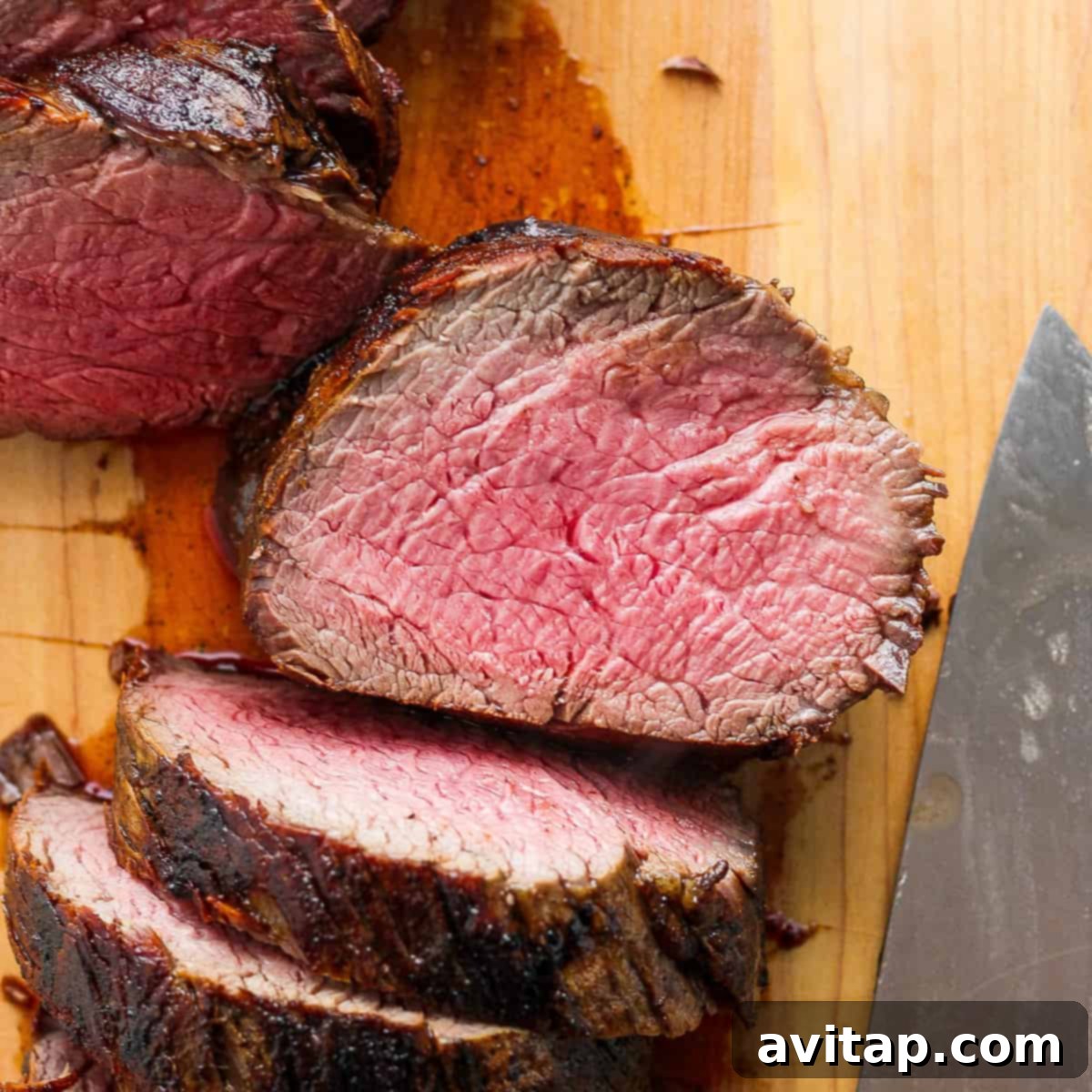
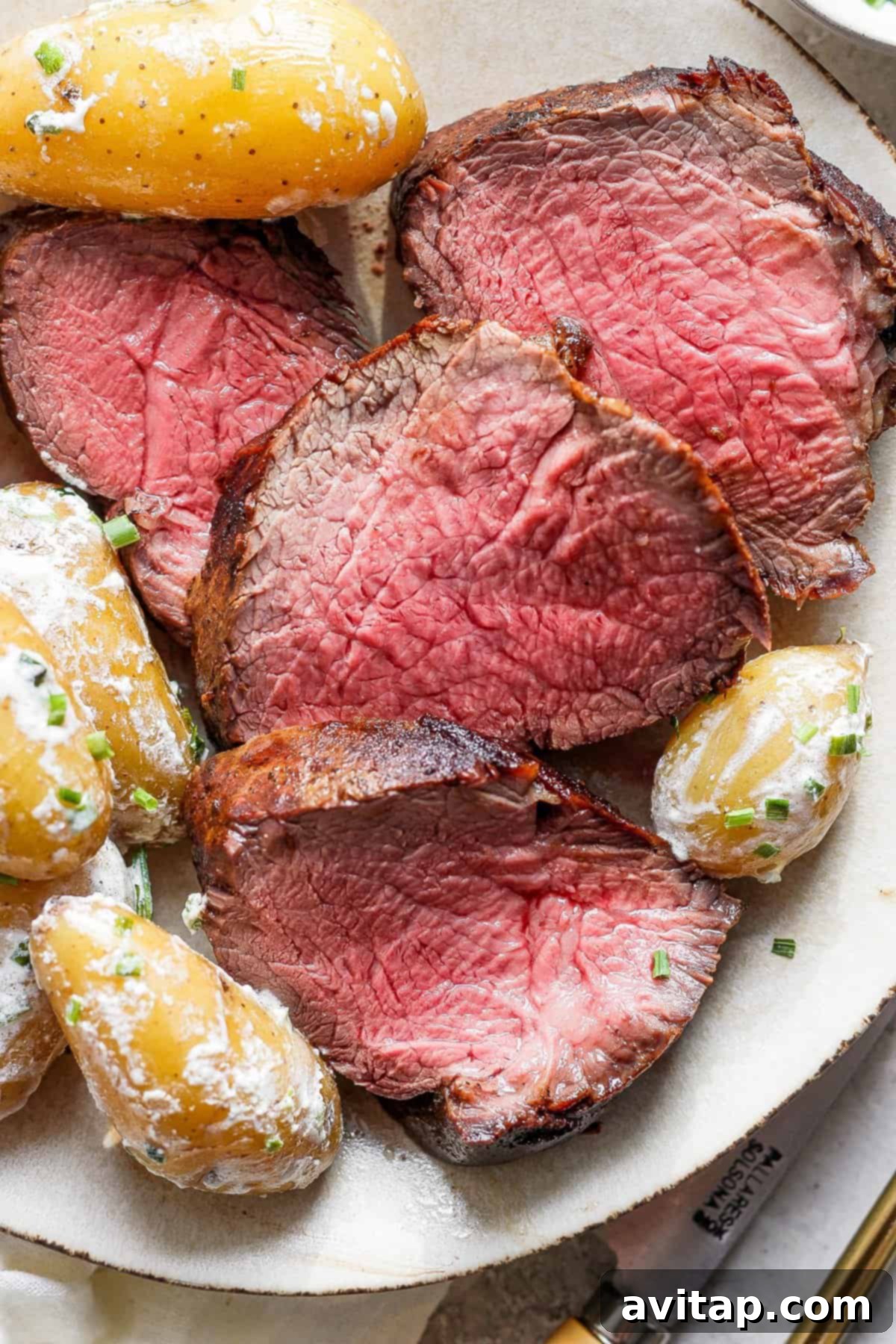
Prepare to captivate every palate this holiday season with this exquisite **seared beef tenderloin roast**. Imagine a flawlessly cooked, incredibly juicy beef tenderloin, adorned with a savory crust, perfectly complemented by creamy, herb-infused roasted fingerling potatoes. This dish isn’t just a meal; it’s an experience, promising to be the highlight of your festive spread or any special occasion.
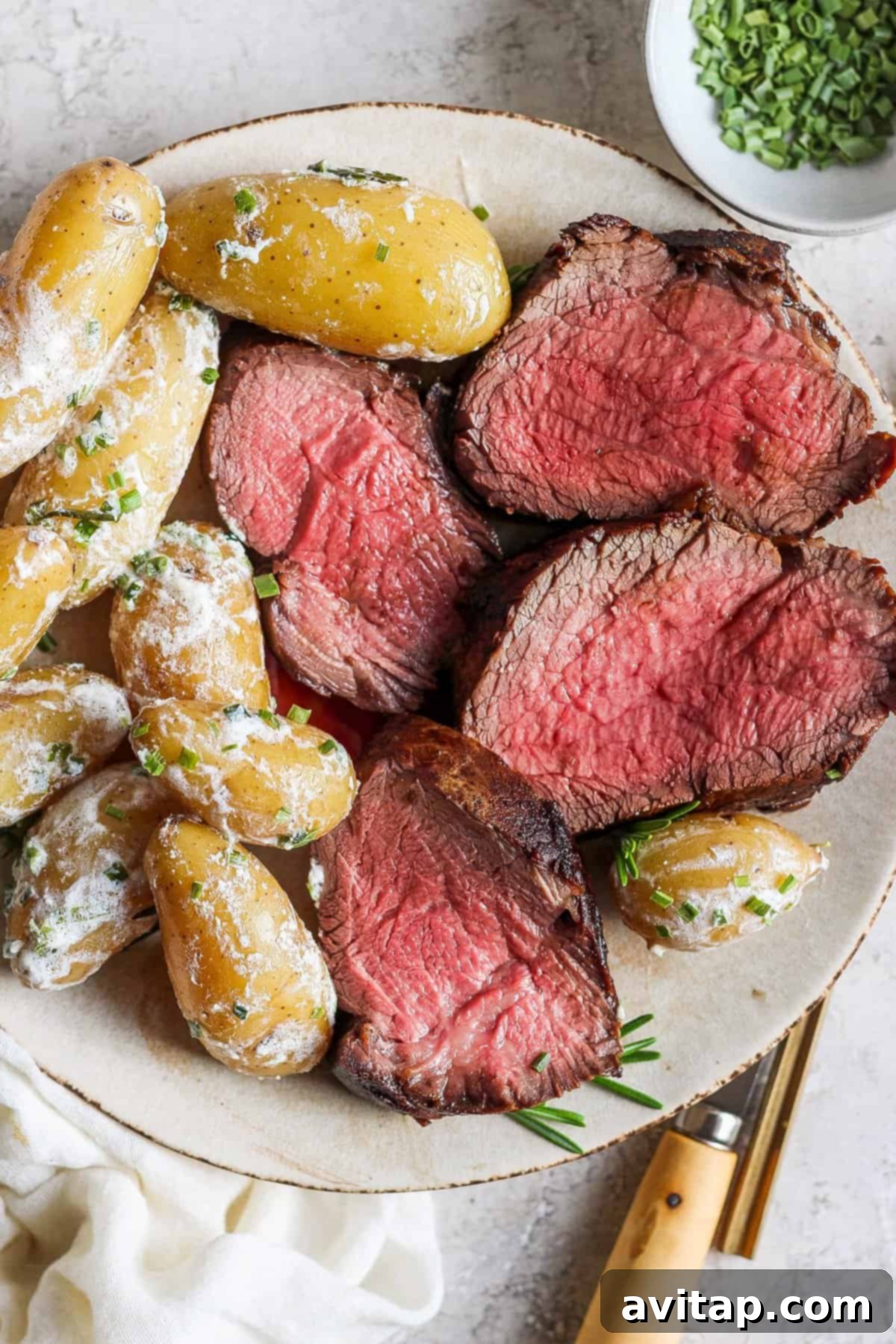
What sets our beef tenderloin roast apart is the irresistible crispy crust achieved through meticulous searing. This technique not only locks in the meat’s natural juices but also adds a depth of flavor and texture that elevates every bite. Paired with this magnificent roast are tender fingerling potatoes, roasted to perfection in a luscious mixture of melted butter, rich mayonnaise, fragrant sea salt, vibrant chives, and aromatic rosemary. This harmonious combination ensures a side dish that not only complements but truly enhances the tender beef, creating a symphony of flavors and textures.
The inspiration for this memorable recipe hails from a serene Minnesota cabin getaway. Our gracious host, Joe, prepared a beef tenderloin that left an indelible impression, truly blowing us away with its exquisite taste and perfect doneness. Joe’s culinary wisdom extended beyond the plate, as he generously shared invaluable tips on how to source high-quality beef tenderloin at exceptional prices and the transformative power of freshly grinding your own peppercorns. These insights are woven into the fabric of this recipe, helping you recreate that same extraordinary experience in your own kitchen.
We fully acknowledge that beef tenderloin is often considered one of the more luxurious and expensive cuts of meat available. This recipe is designed for those cherished special events, festive holidays, or any moment you wish to celebrate with an exceptionally indulgent meal. **Our paramount tip for making this delicacy more accessible is to cultivate a relationship with a trusted local butcher or explore larger retailers like Costco, which frequently offer competitive prices on premium beef tenderloin, especially around holidays.**
Essential Ingredients for Your Seared Beef Tenderloin Roast
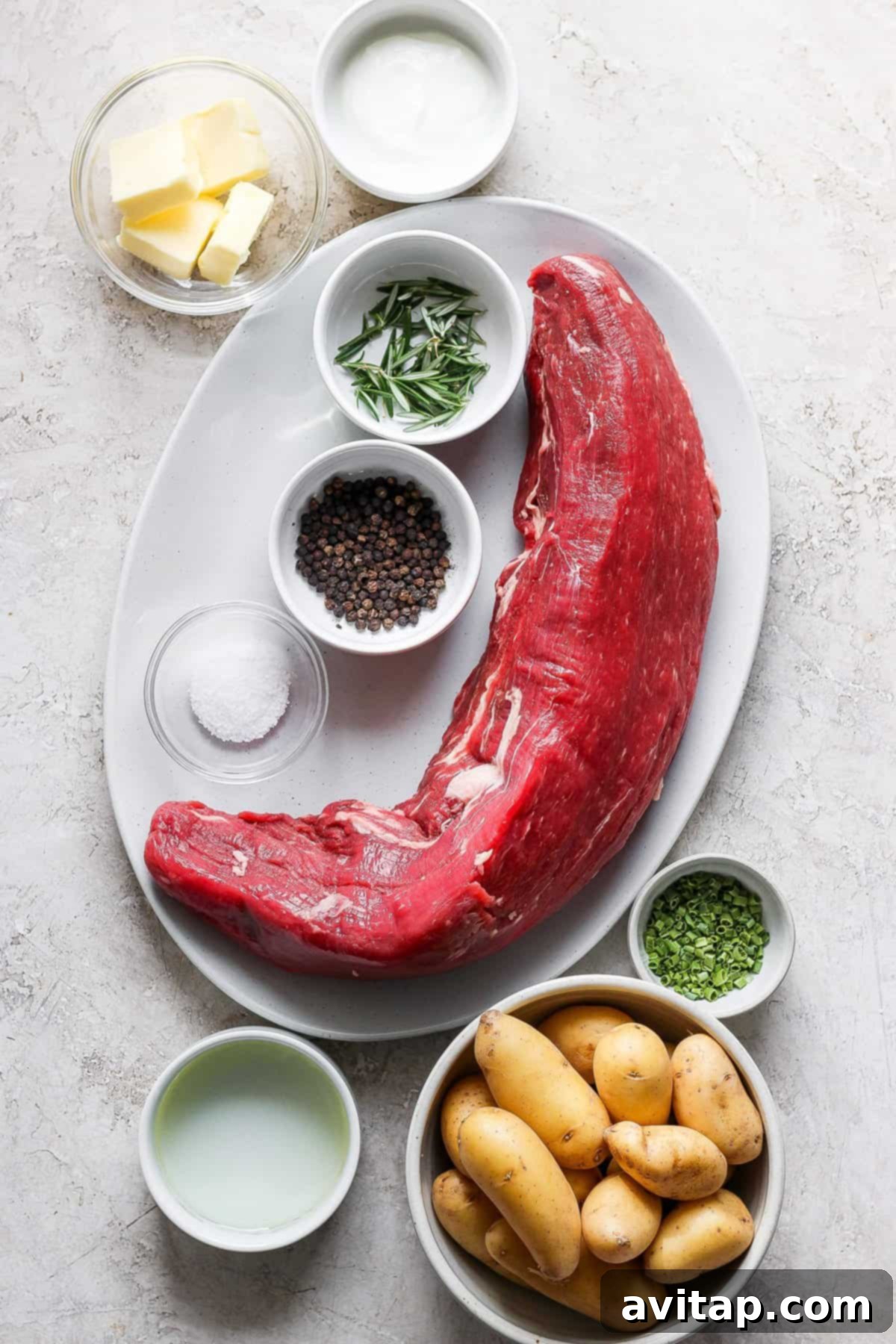
Crafting the perfect seared beef tenderloin roast requires a selection of high-quality ingredients, each playing a crucial role in the final flavor and texture. Here’s what you’ll need to create this show-stopping meal:
- Beef Tenderloin Roast: A 3-4 pound beef tenderloin roast is ideal for this recipe, serving a gathering of 8-10 people. Look for a well-marbled cut for optimal flavor and tenderness.
- Fingerling Potatoes: These slender, buttery potatoes are a superb choice for roasting, offering a delicate texture and earthy flavor that pairs beautifully with rich beef.
- Salted Butter: Melted salted butter forms the base of our potato dressing, adding a rich, savory depth that enhances their natural flavor and aids in achieving that desired crisp exterior.
- Mayonnaise: The secret to ultra-creamy, tender roasted potatoes. Mayonnaise contributes a subtle tang and helps create a beautiful golden-brown crust while keeping the interior moist.
- Dried Chives: A classic potato accompaniment, dried chives lend a mild oniony zest and a touch of freshness without overpowering the other flavors.
- Fresh Rosemary: The fragrant, piney notes of fresh rosemary are a match made in heaven for beef. It infuses both the beef and potatoes with an aromatic, sophisticated essence.
- Kosher Salt & Freshly Ground Peppercorns: Essential for seasoning the beef, providing a robust flavor profile and aiding in the formation of that coveted crust. Freshly ground peppercorns deliver a superior, more pungent flavor.
- Avocado Oil: With its high smoke point, avocado oil is perfect for searing the beef at high temperatures, ensuring a beautiful, even crust without burning.
- Roasting Rack: An indispensable tool for this recipe, a roasting rack ensures even heat circulation around the beef, preventing the bottom from steaming and promoting a consistent cook.
Creative Variations and Flavorful Substitutions
While this recipe is incredibly delicious as written, it’s also wonderfully versatile, allowing you to adapt it to your taste preferences or what you have on hand. Feel free to get creative with these variations and substitutions:
- Potato Alternatives: If fingerling potatoes aren’t available, red potatoes or small Yukon Gold potatoes can be excellent substitutes. For a slightly sweeter side, consider using sweet potatoes, which roast beautifully and offer a contrasting flavor profile to the savory beef. Adjust roasting times slightly as needed for different potato varieties.
- Healthier Potato Dressing: For those monitoring fat intake, plain Greek yogurt is a fantastic alternative to mayonnaise in the potato mixture. It provides a similar creaminess and tangy flavor with significantly less fat, without compromising on taste.
- Herb and Spice Experimentation: Don’t hesitate to explore other herbs and spices to customize the flavor. Fresh or dried thyme offers an earthy note, while a sprinkle of garlic powder or onion powder can deepen the savory essence. Smoked paprika can add a subtle smoky flavor to the potatoes, or a touch of dried oregano for an Mediterranean twist.
- Dried vs. Fresh Herbs: While fresh herbs like rosemary offer the most vibrant flavor, dried herbs can certainly be used if fresh ones are not accessible. Remember that dried herbs are typically more concentrated, so use about one-third of the amount specified for fresh herbs.
- Beef Seasoning Variations: Beyond salt and pepper, consider a dry rub for the beef. A blend of garlic powder, onion powder, paprika, and a pinch of cayenne pepper can add another layer of complexity. For a herbaceous rub, finely chopped fresh thyme, rosemary, and sage with a hint of orange zest can create a delightful aroma and taste.
Mastering the Perfect Beef Tenderloin Roast: Expert Tips
Achieving a perfectly cooked beef tenderloin roast is surprisingly straightforward with a few key techniques. Follow these expert tips to ensure your roast is incredibly juicy, tender, and cooked to your desired doneness:
- Mind the Size, Adjust the Time: The cooking time for your beef tenderloin is highly dependent on its size and thickness. If you’re using a smaller roast than recommended (e.g., a 2-pound cut instead of 3-4 pounds), the cooking time will significantly decrease. Always use a reliable meat thermometer to track the internal temperature during both searing and baking. This is the most accurate way to prevent under or overcooking.
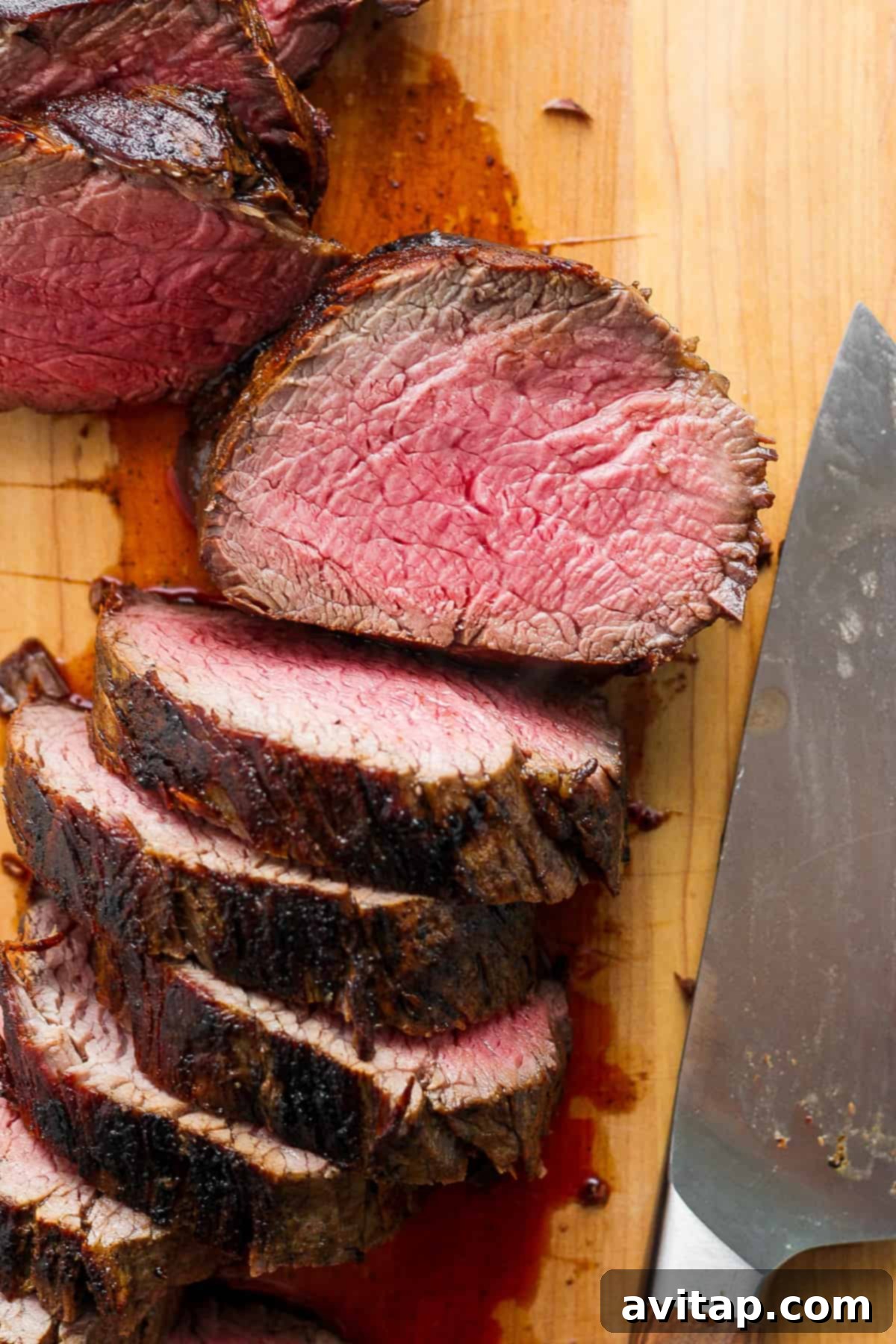
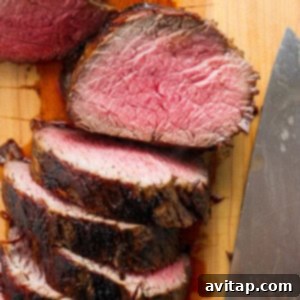
- Target Doneness for Medium-Rare: This recipe is calibrated for a luscious medium-rare roast, which typically means an internal temperature of 130-135°F (54-57°C) after resting. If you prefer your beef more done, aim for 140-145°F (60-63°C) for medium doneness. It’s crucial to remember that the meat will continue to cook a few degrees as it rests outside the oven, a phenomenon known as carryover cooking. Therefore, remove the roast from the oven 5-10 degrees *before* it reaches your target final temperature.
- Bring to Room Temperature: Before searing, allow your beef tenderloin to sit at room temperature for at least 30-60 minutes (or even longer for larger roasts, up to 2 hours). This step is vital for even cooking. A cold roast will cook unevenly, with the outside potentially overcooking before the center reaches the desired temperature.
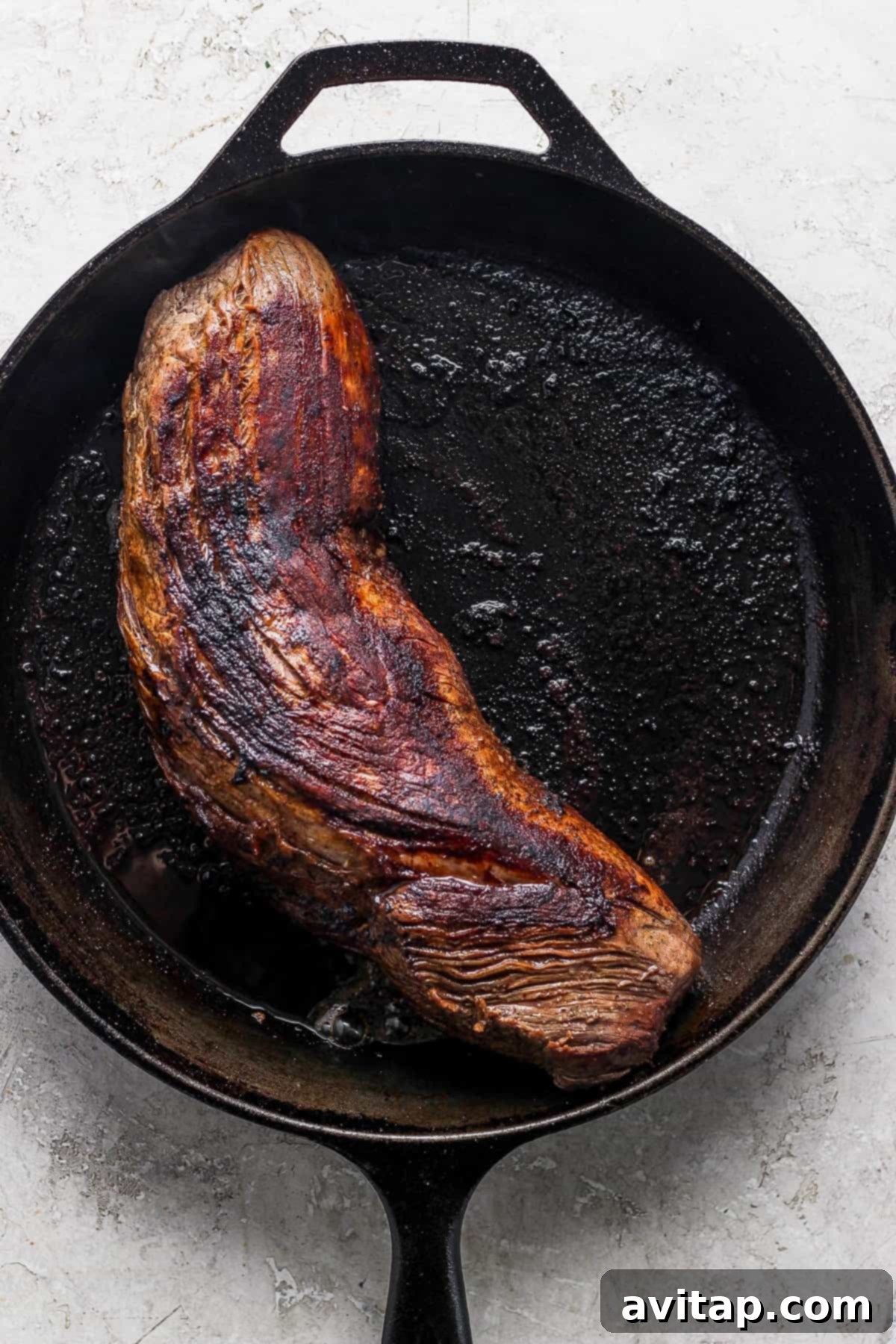
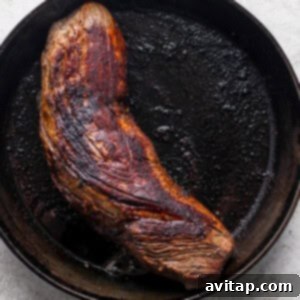
- Achieve the Ultimate Sear: High heat is key for developing that beautiful, flavorful crust. Ensure your cast iron skillet (or other heavy-bottomed, oven-safe pan) is screaming hot with the avocado oil just shimmering before adding the beef. Sear each side vigorously for 2-3 minutes until a rich, dark brown crust forms. This crust not only adds texture but also locks in juices. Good ventilation is important during this step as searing at high temperatures can create some smoke.
- The Critical Resting Period: Resist the urge to slice into your perfectly cooked roast immediately after removing it from the oven. This is perhaps the most crucial step for ensuring juicy, tender meat. Allowing the roast to rest, tented loosely with foil, for 15-20 minutes enables the muscle fibers to relax and reabsorb the juices that have migrated to the center during cooking. Cutting it too soon will result in juices flowing out, leaving you with a drier roast.
- Trimming the Tenderloin: While many tenderloins come pre-trimmed, if yours has silver skin (a tough, silvery membrane), it’s best to remove it before cooking. Use a sharp, thin knife to carefully slide it underneath the silver skin and slice it away from the meat. This will ensure every bite is tender.
Storage, Freezing, and Reheating Best Practices
Properly storing your leftover seared beef tenderloin roast and fingerling potatoes ensures you can enjoy the delicious flavors for days to come. Here’s how to manage your leftovers:
For refrigeration, place any remaining beef tenderloin roast and fingerling potatoes in an airtight container. Store them in the refrigerator, where they will stay fresh and delicious for up to 4 days. This makes for wonderful meal prep or quick, gourmet lunches throughout the week.
To freeze your roast and potatoes, allow them to cool completely first. Then, transfer the sliced beef and the potatoes into separate freezer-safe, airtight bags or containers. This separation helps maintain the quality of each component. Stored correctly, they can be kept in the freezer for up to 3 months. When ready to enjoy, thaw overnight in the refrigerator before gently reheating.
Reheating Tips: To reheat the beef tenderloin, it’s best to do so gently to avoid drying it out. Slice the beef (if not already sliced) and warm it in a preheated oven at a low temperature (around 275°F / 135°C) until just warmed through, or in a skillet with a splash of broth over medium-low heat. The potatoes can be reheated in the oven or air fryer for best texture, or gently in a microwave.
More of our Favorite…
Delicious Roast Recipes to Explore
If you love the comforting and impressive nature of a perfectly cooked roast, we have more recipes you’re sure to enjoy. Expand your culinary repertoire with these other fantastic roast dishes:
- One-Pot Pork Tenderloin Roast with Mushroom Stuffing
- Hearty Classic Pot Roast
- Tender Slow Roasted Pork Shoulder
- Easy Baked Pork Roast Recipe
Elevate Your Meal: Inspired Serving Suggestions
You’ve successfully prepared a magnificent seared beef tenderloin and delightful roasted potatoes. Now, let’s complete your gourmet meal with additional sides that perfectly complement these stars. A balanced and vibrant spread will impress your guests and enhance the overall dining experience.
Consider adding a burst of freshness and color with roasted vegetables. Their natural sweetness and tender-crisp texture make them an ideal pairing. We highly recommend:
- Crisp Roasted Green Beans: Simple yet elegant, with garlic and a touch of lemon.
- Balsamic Sea Salt Roasted Brussels Sprouts: Earthy and slightly sweet, with a lovely caramelized edge.
- Hearty Roasted Root Vegetables: A colorful medley of carrots, parsnips, and sweet potatoes for a rustic touch.
- Garlic Oven Roasted Asparagus: A vibrant green vegetable that cooks quickly and adds a delicate flavor.
For a lighter, refreshing contrast, especially during cooler months, consider a seasonal salad. The brightness and crunch can cut through the richness of the beef and potatoes:
- Roasted Butternut Squash and Blackberry Harvest Salad: A beautiful blend of sweet, savory, and tart flavors.
- Bright Shredded Brussels Sprout Salad: A surprisingly delicious and textural salad, often dressed with a light vinaigrette.
- Fresh Zucchini Salad with Lemon and Herbs: A simple, refreshing salad that’s perfect when zucchini is in season.
To further elevate your serving, a simple pan sauce made from the drippings in your searing pan (deglazed with a bit of red wine or broth) can add an extra layer of gourmet flavor. A dollop of horseradish cream sauce also offers a delightful piquant kick that beautifully complements beef.
Seared Beef Tenderloin Roast with Creamy Fingerling Potatoes
Linley Hanson
2 hours
25 minutes
2 hours 25 minutes
10
Print Recipe
Ingredients
- 4 tablespoons peppercorns, freshly ground
- 2 tablespoons kosher salt
- 3-4 pound beef tenderloin roast
- 3 tablespoons avocado oil
For the Creamy Fingerling Potatoes
- 3 lbs. fingerling potatoes, rinsed and patted dry
- 1 tablespoon kosher salt (for boiling potatoes)
- 4 tablespoons salted butter, melted
- 2 tablespoons mayo or plain Greek yogurt
- 1 teaspoon sea salt
- 1 tablespoon dried chives
- 1 tablespoon fresh rosemary, finely chopped
Instructions
-
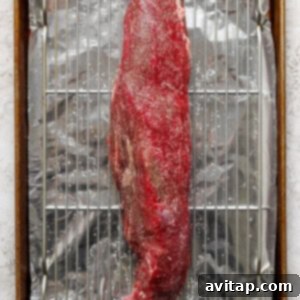
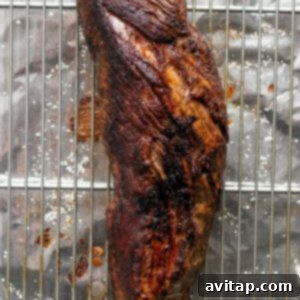
To prepare the beef for roasting, line a baking sheet with tin foil, then place a metal roasting rack on top. This setup allows for optimal air circulation.
-
Using a mortar and pestle or a spice grinder, freshly grind the peppercorns. Mix these freshly ground peppercorns with the kosher salt.
-
Place the beef tenderloin onto the prepared metal rack. Generously massage the salt and pepper mixture all over the beef. Transfer the baking sheet, uncovered, to the refrigerator to allow the beef to dry out for at least 2 hours, or ideally overnight. This step is crucial for achieving a crispy crust.

-
While the meat is chilling, begin preparing the fingerling potatoes. Transfer the rinsed and patted-dry potatoes to a large pot and cover them with water. Add 1 tablespoon of kosher salt to the water and bring it to a rolling boil over high heat.
-
Reduce the heat to medium and allow the potatoes to simmer until they are fork-tender, typically about 10-15 minutes depending on size. Drain the potatoes thoroughly and set them aside.
-
In a separate medium bowl, whisk together the melted salted butter, mayonnaise (or Greek yogurt), 1 teaspoon of sea salt, dried chives, and fresh rosemary until well combined.
-
Transfer the cooked potatoes to a large mixing bowl. Pour the prepared herb-mayo sauce over the potatoes and gently toss until all the potatoes are evenly coated. Set them aside while you prepare the beef.
-
Approximately 30-60 minutes before you plan to cook, remove the seasoned beef tenderloin from the refrigerator to allow it to come to room temperature. Preheat your oven to 425ºF (220°C).
-
Once the beef has reached room temperature, heat the avocado oil in a large cast iron skillet (or other oven-safe, heavy-bottomed pan) over high heat until it just begins to shimmer and lightly smoke. Carefully add the beef tenderloin to the hot pan.
-
Sear the beef for 6-8 minutes, rotating to brown evenly on 3-4 sides as much as possible. The objective here is to create a deep, caramelized crust on the exterior of the tenderloin, which adds immense flavor. Be aware that this high-heat searing method can produce some smoke, so ensure good ventilation by turning on your kitchen fan and opening windows if necessary.
-
After searing, check the internal temperature of the beef with an instant-read thermometer. It should be in the lower 100s or upper 90s°F (around 35-40°C) at this stage.
-
Carefully transfer the seared beef tenderloin back to the wire rack on the baking sheet. Place it in the preheated 425ºF oven and bake for 10-15 minutes, or until its internal temperature reaches 125ºF (52°C) for a medium-rare finish. Remember, the beef will continue to cook as it rests. The goal is a final internal temperature of 130-135ºF (54-57°C) after resting for a perfect medium-rare cut.
-
Once the beef reaches your desired internal temperature, remove it from the oven and immediately tent it loosely with aluminum foil. Let it rest undisturbed for at least 15-20 minutes. This resting period is critical for juicy results. After resting, slice the tenderloin into thick rounds and serve immediately alongside the creamy roasted fingerling potatoes.
Chef’s Notes & Tips for Success
- Temperature is Key: Always use a reliable meat thermometer to ensure perfect doneness. The internal temperature of the beef is the most accurate indicator, not just cooking time. For smaller roasts, significantly reduce your cooking time.
- Achieving Doneness: This recipe aims for a medium-rare roast (130-135°F after resting). For medium doneness, target 140-145°F (60-63°C) after resting, according to USDA guidelines. Be vigilant not to overcook, as tenderloin can quickly become dry. Remove the roast from the oven 5-10°F below your target temperature, as it will continue to cook as it rests.
- The Importance of Resting: Do not skip the resting step! Allowing the roast to rest for 15-20 minutes, tented loosely with foil, is paramount for juicy results. This process allows the meat’s fibers to relax and reabsorb juices, preventing them from escaping when sliced.
- Dry Brining for Flavor: The initial step of seasoning and chilling the beef uncovered acts as a dry brine, drawing moisture to the surface to create a fantastic crust and infusing the meat with flavor. Don’t rush this process.
- High Heat Searing: A very hot pan is essential for a proper sear. Make sure your cast iron skillet is smoking hot before adding the beef to achieve that beautiful, dark crust. Ensure good ventilation in your kitchen.
- Don’t Forget the Potatoes: While the beef rests, your seasoned potatoes are ready to be roasted. You can add them to the oven during the last 15-20 minutes of the beef’s cooking time, or roast them immediately after the beef is removed, while the oven is still hot.
Watch the Recipe
For a visual guide on preparing this incredible Seared Beef Tenderloin Roast, watch our step-by-step video. See how to achieve the perfect sear, roast the tenderloin to ideal doneness, and prepare the creamy fingerling potatoes.
*(Video placeholder – actual video embed removed as per instruction to remove Javascript codes.)*
Nutrition Information (Approximate Per Serving)
Calories: 691 kcal
,
Carbohydrates: 26 g
,
Protein: 36 g
,
Fat: 49 g
,
Fiber: 4 g
,
Sugar: 1 g
Nutrition information provided is automatically calculated and should be used as an approximation. Actual values may vary based on ingredient brands and preparation methods.
We’d be absolutely thrilled to see your culinary creations! Don’t forget to tag your posts on social media with the hashtag #fitfoodiefinds. Your beautiful dishes inspire us!
Photography by: The Wooden Skillet