
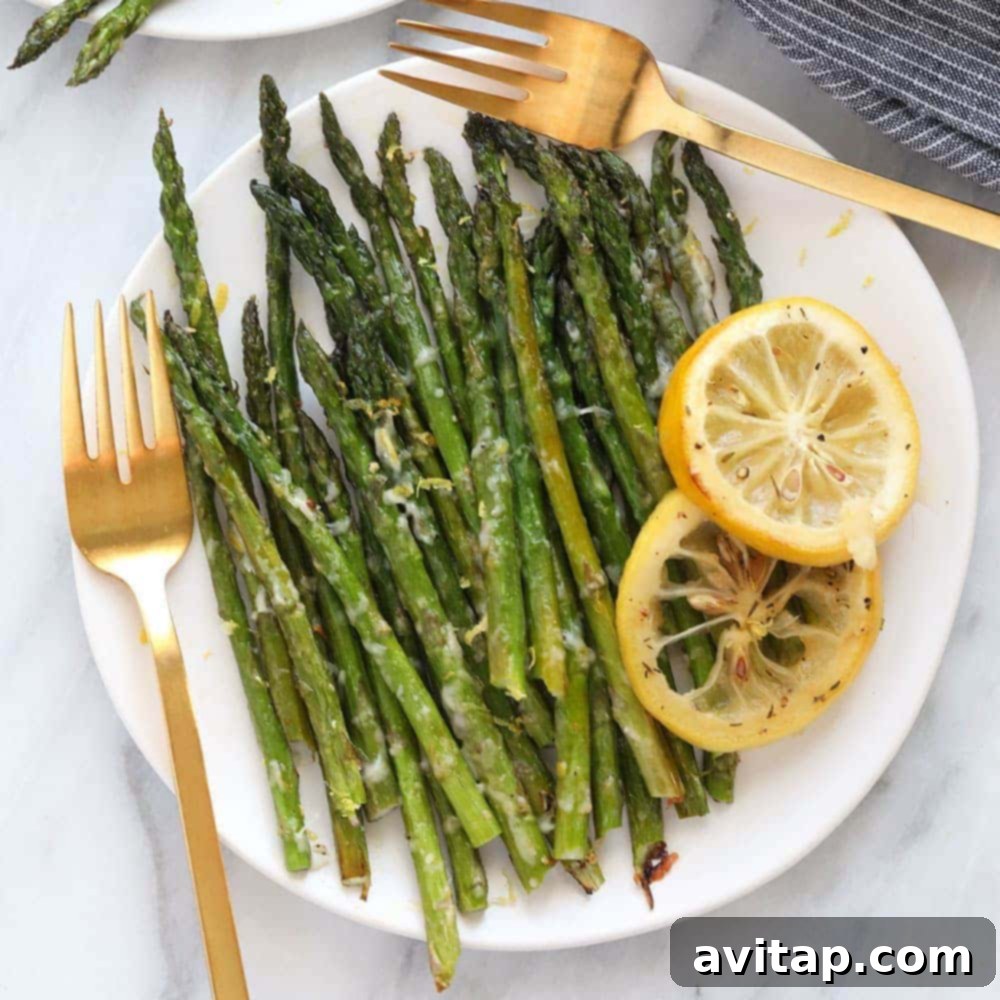
Unlock the secret to the most delicious and healthy side dish: perfectly **oven-roasted asparagus**! This guide will transform your simple green spears into a culinary delight, cooked to perfection with minimal effort. Say goodbye to soggy, bland vegetables and hello to crisp, vibrant asparagus that complements any meal.
In this comprehensive post, we’re diving deep into the art and science of achieving flawless roasted asparagus every single time. From selecting the freshest spears to mastering the ideal roasting temperature, we’ll share all the essential tips and tricks. Plus, discover a myriad of creative ways to incorporate this versatile vegetable into your favorite dishes, making healthy eating both easy and incredibly flavorful.
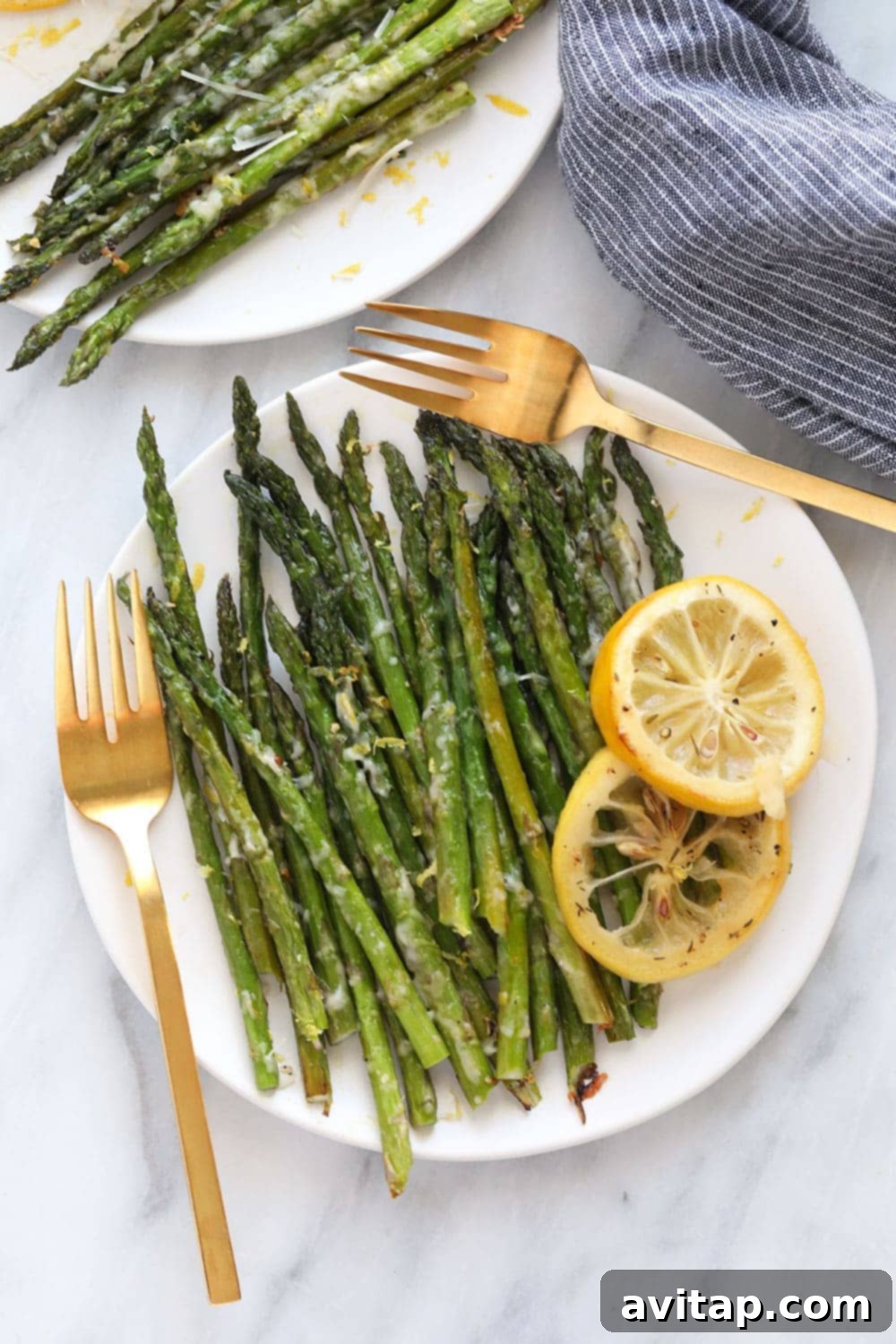
The Wholesome Goodness of Oven Roasted Asparagus
Often hailed as a superfood, asparagus is not just delicious; it’s incredibly healthy, making it an ideal choice for a nutritious side dish. These slender green spears, available in various thicknesses, are packed with essential nutrients and offer numerous health benefits.
Nutrition Highlights (per 1 cup serving): With approximately 40 calories, 4g protein, 1g fat, 4g fiber, and 5g carbohydrates, asparagus is a low-calorie, nutrient-dense vegetable that supports a balanced diet. Its impressive nutritional profile makes it a smart choice for maintaining weight and boosting overall health.
Beyond the basics, asparagus is a powerhouse of vitamins and antioxidants:
- Rich in Antioxidants: Asparagus contains a variety of powerful antioxidants, including flavonoids and polyphenols. These compounds help protect your cells from damaging free radicals, reducing the risk of chronic diseases and supporting overall well-being.
- High in Vitamins A, C, and K: Vitamin A is crucial for vision and immune function, while Vitamin C is a well-known immunity booster and vital for skin health. Vitamin K plays a critical role in blood clotting and bone health, contributing to stronger bones.
- Excellent Source of Folate: Also known as Vitamin B9, folate is essential for cell growth and DNA formation, making it particularly important during pregnancy and for overall cellular function.
- Good Source of Fiber: The dietary fiber in asparagus aids digestion, promotes gut health, and helps maintain stable blood sugar levels, contributing to a feeling of fullness and potentially assisting with weight management.
Incorporating oven-roasted asparagus into your meals is an effortless way to enhance your nutrient intake, making it a perfect, healthy, and easy side dish for any occasion. Its robust nature means it can thrive in various climates, making it a readily available vegetable in most supermarkets year-round.
Mastering Asparagus Preparation for Optimal Roasting
Oven roasting stands out as one of the simplest and most flavorful cooking methods for asparagus. The magic lies in the high heat of the oven, which caramelizes the natural sugars in the vegetable, developing a rich flavor while ensuring the spears retain a delightful crunch. No one enjoys rubbery, overcooked, or soggy asparagus, and roasting is the surest path to crisp-tender perfection.
To begin your journey to perfectly roasted asparagus, gather these essential kitchen tools:
- Large Baking Sheet: A standard-sized baking sheet is ideal for roasting approximately 1-2 pounds of asparagus spears. The key is to arrange the asparagus in a single layer without overlapping. Overcrowding the pan will steam the asparagus instead of roasting it, leading to a less desirable texture. If you have a larger batch, use two baking sheets.
- Sharp Knife or Kitchen Shears: Essential for trimming the woody ends of the asparagus. While these are traditional tools, we also have a handy, no-tool method to share!
- Optional: Parchment Paper or Aluminum Foil: While not strictly necessary, lining your baking sheet with parchment paper or foil can significantly simplify cleanup. Parchment paper also helps prevent sticking and promotes even cooking.
- Large Mixing Bowl: Useful for tossing the asparagus with olive oil and seasonings before spreading it on the baking sheet.
Effortlessly Trimming Woody Asparagus Ends
One of the most crucial steps in preparing asparagus for roasting is removing the tough, woody ends. These lower sections of the spear are fibrous and unpleasant to chew, detracting from the otherwise tender vegetable. By trimming off about 1 to 2 inches from the bottom, you ensure every bite is enjoyable and easily digestible.
There are several effective ways to remove these undesirable ends:
- The Knife Method: Lay the asparagus spears flat on a cutting board. Using a sharp chef’s knife, simply slice off the bottom 1-2 inches. For efficiency, you can align several spears and cut them simultaneously.
- Kitchen Shears: A pair of clean kitchen shears offers precise control. This method is particularly useful if you prefer to trim each spear individually or if you’re working with a smaller batch.
- The “Snap” Method (Nature’s Guide): This is a favorite, simple, and intuitive technique. Hold an asparagus spear firmly in both hands, one near the bottom and the other about halfway up. Gently bend the spear until it naturally snaps. The asparagus will naturally break at the point where the tough, woody part meets the tender, edible stalk. This method ensures you only discard what’s truly inedible, minimizing waste. Repeat this for each spear.
Once trimmed, your asparagus is ready for seasoning and roasting!
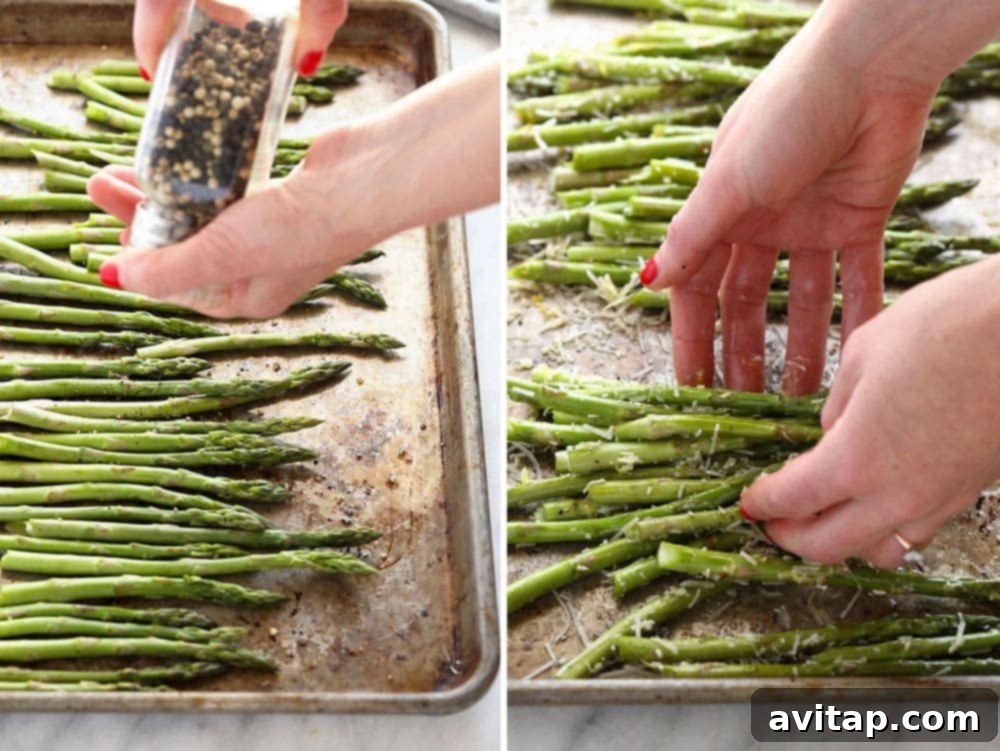
How to Achieve Perfectly Roasted Asparagus: A Simple Guide
Roasting asparagus is a straightforward process that yields incredibly flavorful results with just a few basic ingredients. The beauty of this method lies in its simplicity and versatility, allowing you to customize flavors to suit your palate. Here’s what you’ll need to create the asparagus of your dreams:
Essential Ingredients for Roasting Asparagus
- Fresh Asparagus: The foundation of this dish. When selecting asparagus, look for firm, bright green stalks with tightly closed tips. Avoid spears that appear wilted, soft, or have open, flowering tips, as these are signs of older asparagus that will lack flavor and crispness. Thinner spears tend to roast faster and become crispier, while thicker ones offer a meatier bite.
- Olive Oil: Our preferred fat for roasting vegetables. Olive oil provides a delicious flavor and helps the asparagus cook evenly and achieve a beautiful caramelization. You can also experiment with other healthy fats like avocado oil, grapeseed oil, or even melted coconut oil for a subtle tropical twist. The fat is crucial for crisping and distributing seasonings.
- Salt and Pepper: These humble seasonings are fundamental. We recommend using coarse sea salt or kosher salt and freshly cracked black pepper to enhance the asparagus’s natural flavors. Start with a moderate amount and adjust to your taste preferences.
- Grated Parmesan Cheese (Optional, but highly recommended): For an added layer of savory, nutty flavor, a sprinkle of grated Parmesan cheese is a game-changer. It creates a delicious, slightly crispy crust on the asparagus as it roasts. Freshly grated Parmesan will always yield the best results compared to pre-grated varieties.
- Lemon Zest (Optional, but brightens flavor): A touch of fresh lemon zest adds a bright, aromatic, and refreshing finish to the roasted asparagus. The citrus notes beautifully complement the earthy flavor of the vegetable. For an even more intense lemony kick, a squeeze of fresh lemon juice after roasting is delightful.
With these ingredients in hand, you’re ready to create a side dish that’s both simple and sophisticated.
Unlocking Crispness: The Best Temperature for Oven Roasted Asparagus
The secret to perfectly cooked asparagus that’s tender on the inside and delightfully crisp on the outside lies in using a high roasting temperature. High heat ensures rapid cooking, preventing the asparagus from becoming soggy and instead promoting caramelization and a pleasant snap.
While our preferred method is to roast asparagus at a scorching 425ºF, we understand that oven temperatures and personal preferences vary. Here’s a guide to achieve excellent results across a range of temperatures:
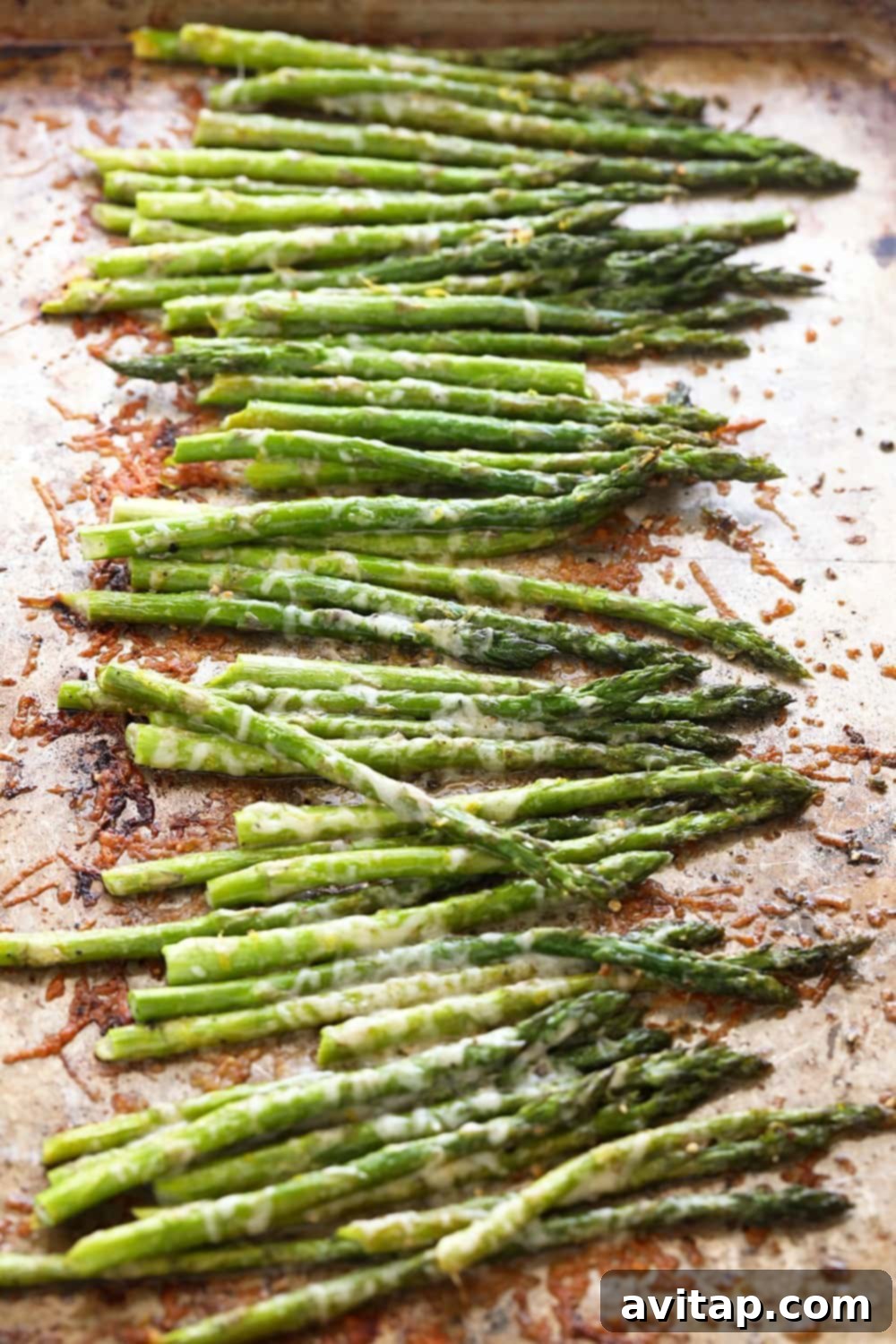
- 425ºF (220ºC): This is our top recommendation for **10 to 12 minutes**. At this temperature, the asparagus cooks quickly, yielding spears with vibrant color and a perfect tender-crisp texture. This is ideal for thinner to medium-thick spears.
- 400ºF (200ºC): If your oven runs hot or you prefer a slightly gentler roast, 400ºF for **12 to 14 minutes** will still produce fantastic results. The cooking time is slightly longer, but you’ll still get good browning and tenderness.
- 375ºF (190ºC): For thicker spears or if you’re roasting other dishes that require a lower temperature, 375ºF for **14 to 16 minutes** works well. Keep an eye on the asparagus to prevent overcooking; it might not achieve the same level of crispness but will still be delicious.
Always remember that roasting times are estimates. The actual time needed can vary based on the thickness of your asparagus spears and the specific characteristics of your oven. For optimal crispness, ensure your asparagus is spread in a single layer on the baking sheet, allowing for proper air circulation and even roasting.
Elevate Your Meals: Creative Ways to Enjoy Roasted Asparagus
Once you’ve mastered the art of perfectly roasted asparagus, a world of culinary possibilities opens up. This versatile vegetable isn’t just a stellar side dish; it can be integrated into countless meals to add flavor, texture, and a boost of nutrients. Here are some simple yet inspiring ideas to pair or mix with your delicious roasted asparagus:
- Delectable Pasta Dishes: Roasted asparagus is a fantastic addition to almost any pasta. Toss it with a light lemon-garlic butter sauce for a simple yet elegant meal. For a richer option, combine it with a creamy vegan sauce or a classic Alfredo. It also shines in dishes like our Asparagus Shrimp Scampi, where its tender-crisp texture provides a wonderful contrast to the seafood and pasta.
- Hearty Egg Bakes and Frittatas: Brighten up your breakfast, brunch, or even dinner with roasted asparagus in egg dishes. Chop the spears and fold them into a Vegetable Frittata alongside other seasonal veggies and cheese. They also work wonderfully in individual egg cups, like our Asparagus and Mushroom Egg Cups, offering a convenient and nutritious start to your day.
- Nourishing Buddha Bowls: For a vibrant, wholesome, and customizable meal, roasted asparagus is an indispensable component of any Buddha Bowl. Combine it with grains like quinoa or brown rice, your favorite protein (chicken, tofu, chickpeas), other roasted vegetables, and a delicious dressing. It’s particularly excellent in our Pesto Chicken Meal-Prep recipe, adding a fresh green element.
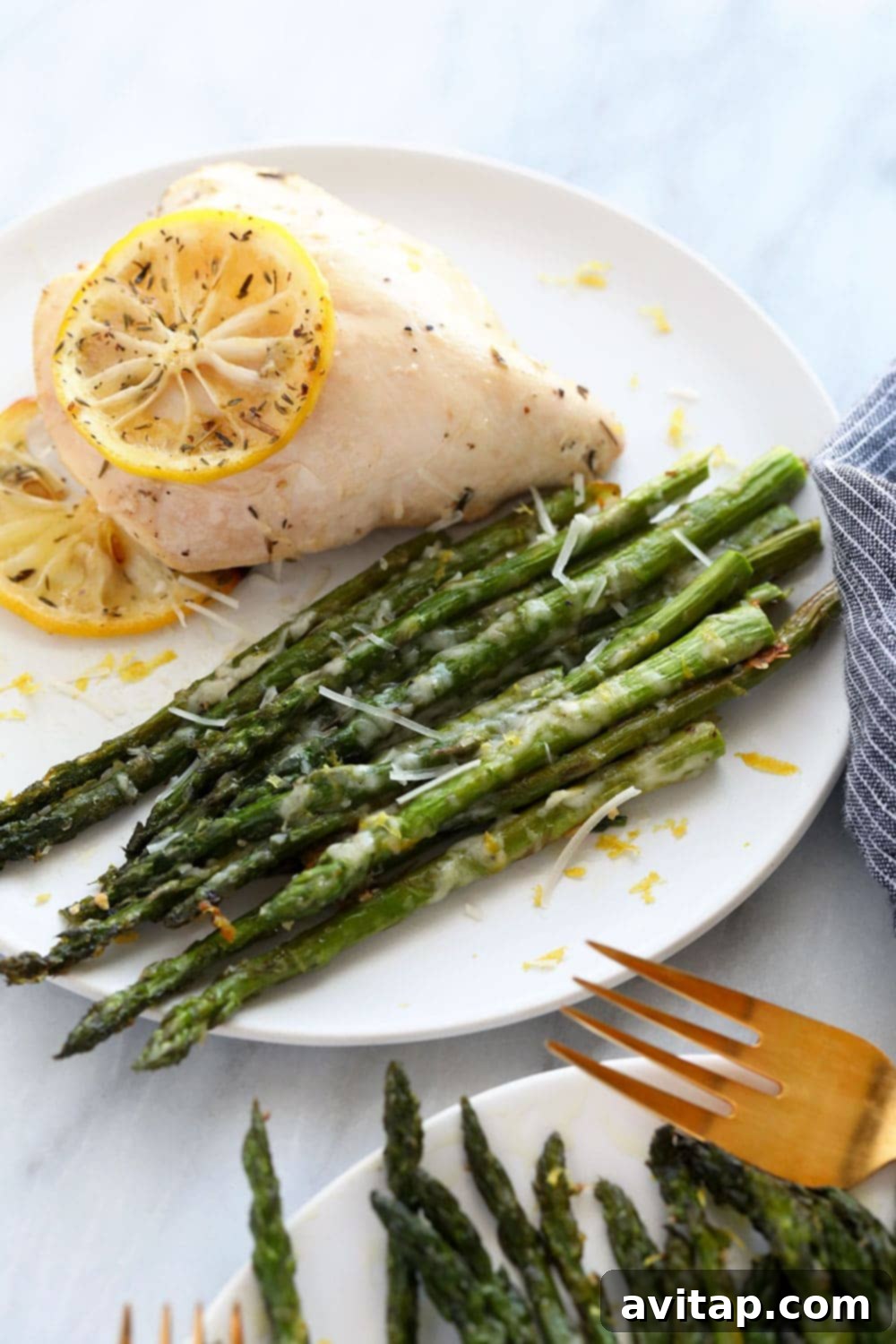
- Classic Protein Pairings: The most straightforward way to enjoy roasted asparagus is as a complementary side to your favorite protein. Its delicate flavor pairs beautifully with a wide array of meats and fish. Imagine it alongside a perfectly cooked Sous Vide Steak, a light and savory Baked Lemon Chicken, or a comforting Slow Cooker Pork Roast. It adds elegance and nutrition to any main course.
- Soups and Salads: Add chopped roasted asparagus to your favorite green salads for extra texture and flavor, or stir it into creamy vegetable soups just before serving for a fresh pop of color and taste.
With these ideas, your roasted asparagus will never go to waste, becoming a regular and beloved feature in your weekly meal rotation.
Oven Roasted Asparagus: Your Essential FAQ
Here are answers to some common questions about asparagus, helping you make the most of this fantastic vegetable.
When is Asparagus in Season?
Asparagus typically has a growing season from February to June, with its peak in April. During these months, you’ll find it at its freshest, most flavorful, and often most affordable. However, thanks to modern agriculture and global sourcing, asparagus is often available year-round in many supermarkets, particularly in the USA.
Does asparagus make your pee smell funny?
Yes, for many people, eating asparagus can cause their urine to have a distinct, somewhat pungent odor. This phenomenon is due to the asparagus breaking down a sulfur-containing compound called asparagusic acid into various volatile sulfur compounds during digestion. Not everyone notices this smell, as it depends on individual genetics that determine the presence of a specific enzyme for breaking down these compounds, as well as the ability to detect the odor.
How to Store Asparagus (Raw and Roasted)
Proper storage is key to maintaining the freshness and quality of your asparagus.
- Raw Asparagus: To keep raw asparagus fresh for longer, trim about half an inch from the bottom of the stalks. Stand the spears upright in a glass or jar with about an inch of water at the bottom. Cover the tips loosely with a plastic bag and store in the refrigerator. This method keeps them hydrated, much like a bouquet of flowers, and they can last for up to a week.
- Roasted Asparagus: Once cooked, allow roasted asparagus to cool completely to room temperature. Transfer it to an airtight container and store it in the refrigerator. This prevents moisture buildup and keeps it fresh.
How Long Does Roasted Asparagus Last?
Stored correctly in an airtight container in the refrigerator, roasted asparagus will remain fresh and delicious for 3 to 5 days. It’s excellent for meal prepping and adding to various dishes throughout the week.
How to Reheat Roasted Asparagus
Reheating roasted asparagus carefully can help retain its texture and flavor:
- Microwave: For a quick reheat, place the cooked asparagus on a microwave-safe plate. Microwave on high for 60-90 seconds, or until heated through. Be cautious not to overcook, as this can make the asparagus soft.
- Stove-Top: For a crisper result, add about 1/2 tablespoon of olive oil to a skillet and heat over medium-high heat. Add the cooked asparagus and sauté for 3-5 minutes, tossing occasionally, until warm and slightly re-crisped.
- Oven: Preheat your oven to 350ºF (175ºC). Spread the asparagus on a baking sheet and heat for 5-7 minutes, or until warmed through. This method is great for larger batches and helps bring back some of its original crispness.
More of our Favorite…
Delicious Asparagus Recipes to Explore
If you’ve fallen in love with oven-roasted asparagus, you’ll want to try these other fantastic asparagus dishes:
- Creamy Vegan Asparagus Pasta: A comforting and rich plant-based meal.
- Grilled Asparagus in Foil: Perfect for barbecue season, simple cleanup guaranteed.
- Bacon-Wrapped Asparagus: A savory and irresistible appetizer or side.
- Asparagus Shrimp Scampi: A light yet satisfying meal packed with flavor.
Oven Roasted Asparagus Recipe
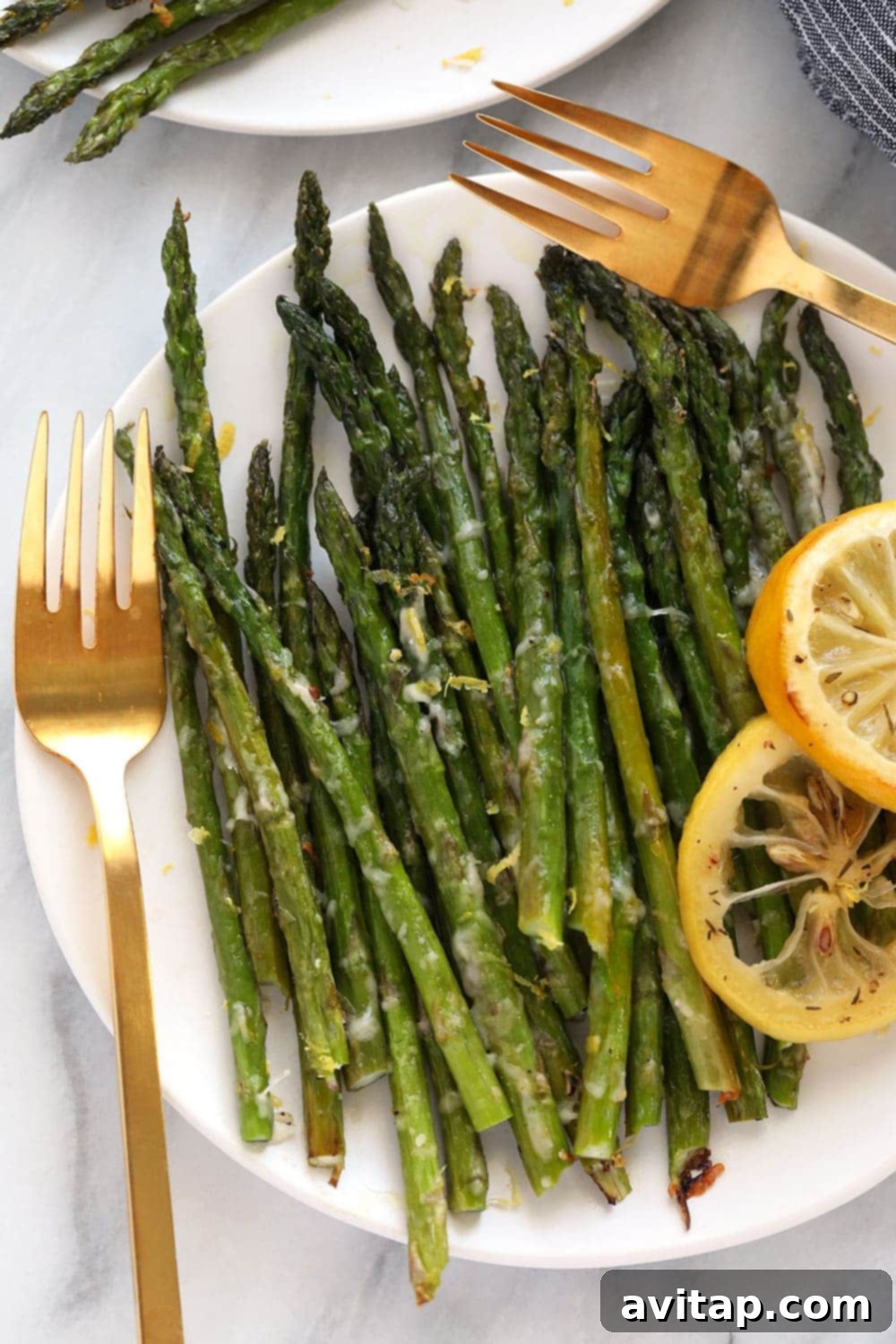
Oven roasted asparagus with Parmesan cheese is arguably the best way to enjoy asparagus! It’s a healthy side dish recipe that’s consistently cooked to perfection.
By: Lee Funke
Prep Time: 10 mins
Cook Time: 10 mins
Total Time: 20 mins
Yields: 4 servings
Ingredients
- 1 lb. asparagus (we used thinner-cut asparagus)
- 2 tablespoons olive oil
- 1/4 teaspoon salt
- 1/4 teaspoon pepper
- 1/2 cup grated Parmesan cheese, separated
- 1 tablespoon lemon zest
Instructions
- Preheat your oven to 425ºF (220ºC). Lightly spray a large baking sheet with nonstick cooking spray or line it with parchment paper for easy cleanup.
- Prepare the asparagus by trimming the woody ends. You can either use a sharp knife or kitchen shears, or simply snap off the ends with your fingers where they naturally break.
- Place the trimmed asparagus spears on the prepared baking sheet. Drizzle evenly with olive oil and toss gently to ensure all spears are lightly coated.
- Generously season the asparagus with salt and freshly cracked black pepper. Toss again to distribute the seasonings evenly.
- Sprinkle half of the grated Parmesan cheese and all of the lemon zest over the asparagus. Toss one more time to combine everything.
- Roast in the preheated oven at 425ºF for 8 minutes. Carefully remove the baking sheet from the oven, sprinkle on the remaining Parmesan cheese, and gently toss the asparagus. Return to the oven and bake for an additional 2-4 minutes, or until the asparagus is tender-crisp and lightly browned, depending on the thickness of your spears.
- Serve immediately, garnished with additional fresh lemon zest and more cracked pepper if desired. Enjoy your perfectly roasted asparagus!
Tips & Notes
Roasting Time Variation: The cooking time can vary based on the thickness of your asparagus spears. If you’re using thinner asparagus, they will cook faster, potentially needing closer to 10 minutes total. For very thick spears, you might need to extend the total baking time to 14-16 minutes to reach optimal tenderness.
Nutrition Information
Calories: 138 kcal, Carbohydrates: 5 g, Protein: 7 g, Fat: 11 g, Fiber: 2 g, Sugar: 2 g
Nutrition information is automatically calculated and should be used as an approximation.
Love this recipe? Share your thoughts below!
Don’t forget to tag your culinary creations on social media with the hashtag #fitfoodiefinds – we’d love to see what you’re cooking up!