
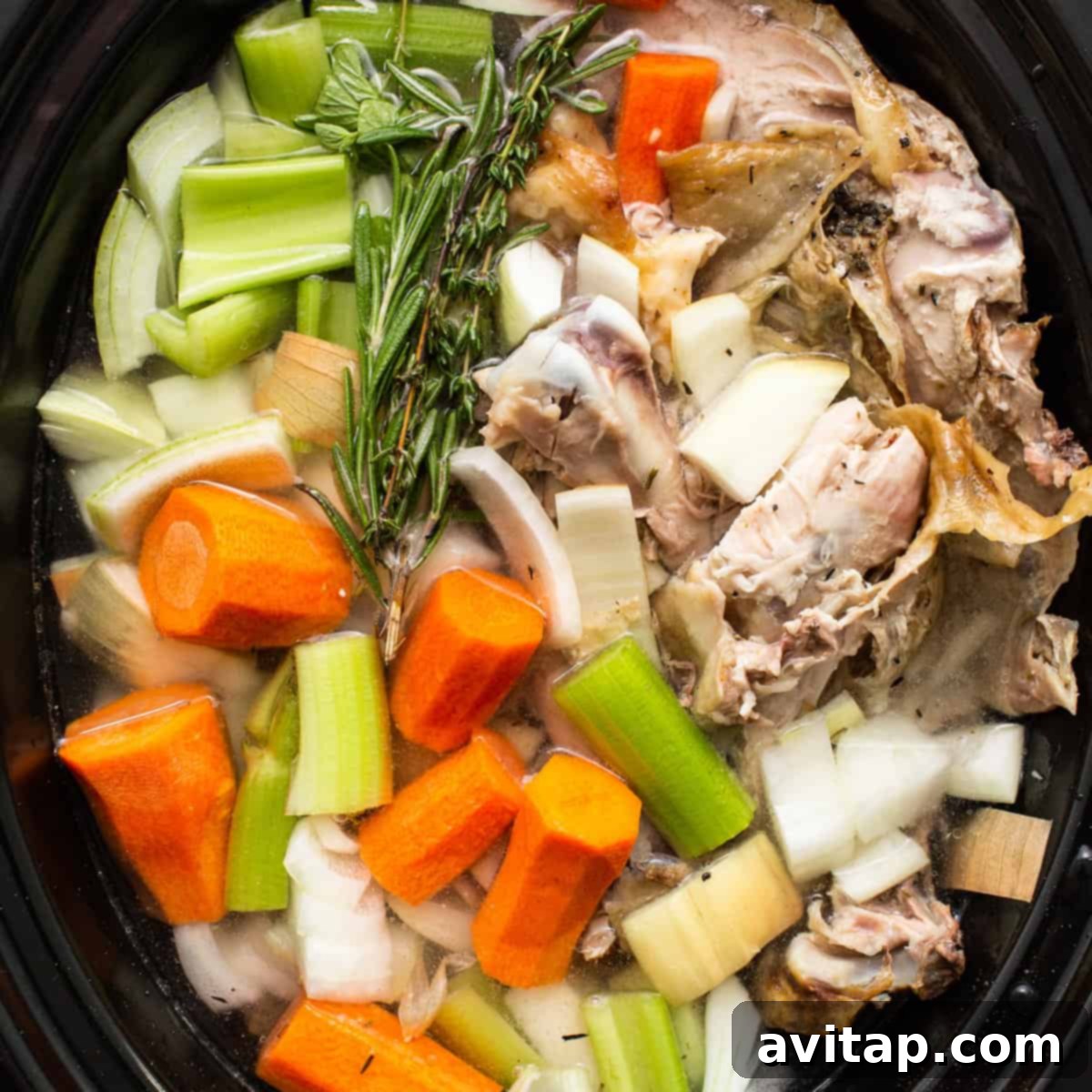
There’s nothing quite like the deep, savory flavor of homemade turkey stock. This simple recipe offers an excellent way to utilize a leftover turkey carcass and any spare vegetables, especially after festive holiday meals. Far more flavorful and customizable than store-bought varieties, this rich stock serves as the perfect base for hearty soups, sauces, and countless other dishes, or can be easily frozen for future culinary adventures.
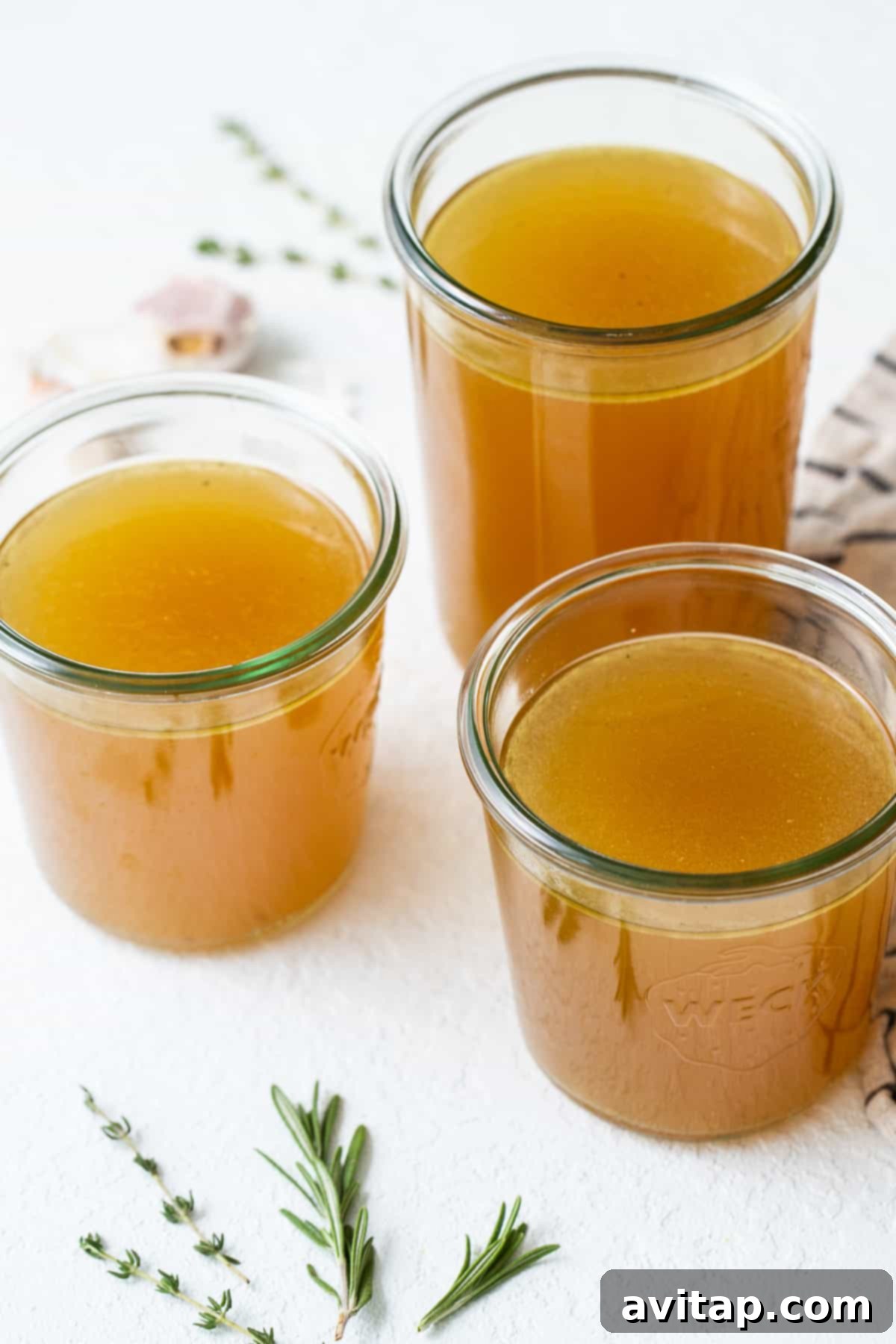
Unlock Deep Flavor with Easy Homemade Turkey Stock
Crafting your own stock or broth at home guarantees a depth of flavor that commercially produced options simply cannot match. Our homemade turkey stock recipe leverages the rich remnants of a cooked turkey carcass—think bones, skin, and any clinging meat scraps left after a holiday feast—along with an assortment of common vegetables and aromatic herbs. This process transforms what might otherwise be discarded into a liquid goldmine of taste.
By slowly simmering these ingredients together, you extract maximum flavor and nutrients, resulting in a robust and incredibly delicious stock that will elevate any dish. It’s a culinary secret weapon that truly makes a difference in your cooking.
Why You’ll Adore This Homemade Turkey Stock Recipe
There are numerous compelling reasons why this homemade turkey stock will become a staple in your kitchen:
Sustainable & Waste-Reducing: This recipe is a fantastic way to minimize food waste. Instead of discarding your turkey carcass and vegetable trimmings, you give them a second life, creating something incredibly valuable and flavorful. It’s an eco-conscious approach to cooking that yields delicious results.
Unmatched Flavor & Nutrition: Store-bought stocks often contain high sodium levels and lack the complex, nuanced flavors of a slow-simmered homemade version. By making your own, you control the ingredients and seasoning, ensuring a rich, natural taste. Plus, bone broth is known for its beneficial collagen, amino acids, and minerals, making it a truly nourishing addition to your diet.
Effortless Preparation with a Slow Cooker: The beauty of this recipe lies in its simplicity. After a brief initial setup, all you need to do is combine your turkey carcass, vegetables, and herbs in a slow cooker, cover everything with water, and let it simmer unattended for hours. It’s a truly hands-off method that allows you to “set it and forget it,” waking up or coming home to the comforting aroma of a perfectly cooked stock.
Versatile Culinary Base: This rich turkey stock forms the ideal foundation for a wide array of dishes. Whether you’re making a comforting leftover turkey soup, a creamy risotto, a savory gravy, or braising meats, its deep flavor will enhance every component. It’s also wonderful for simply sipping on its own, especially when you need a warm, soothing pick-me-up.
Key Ingredients for the Perfect Homemade Turkey Stock
Creating an exceptional homemade turkey stock requires a thoughtful selection of ingredients. While flexibility is key, these components form the heart of a truly flavorful broth:
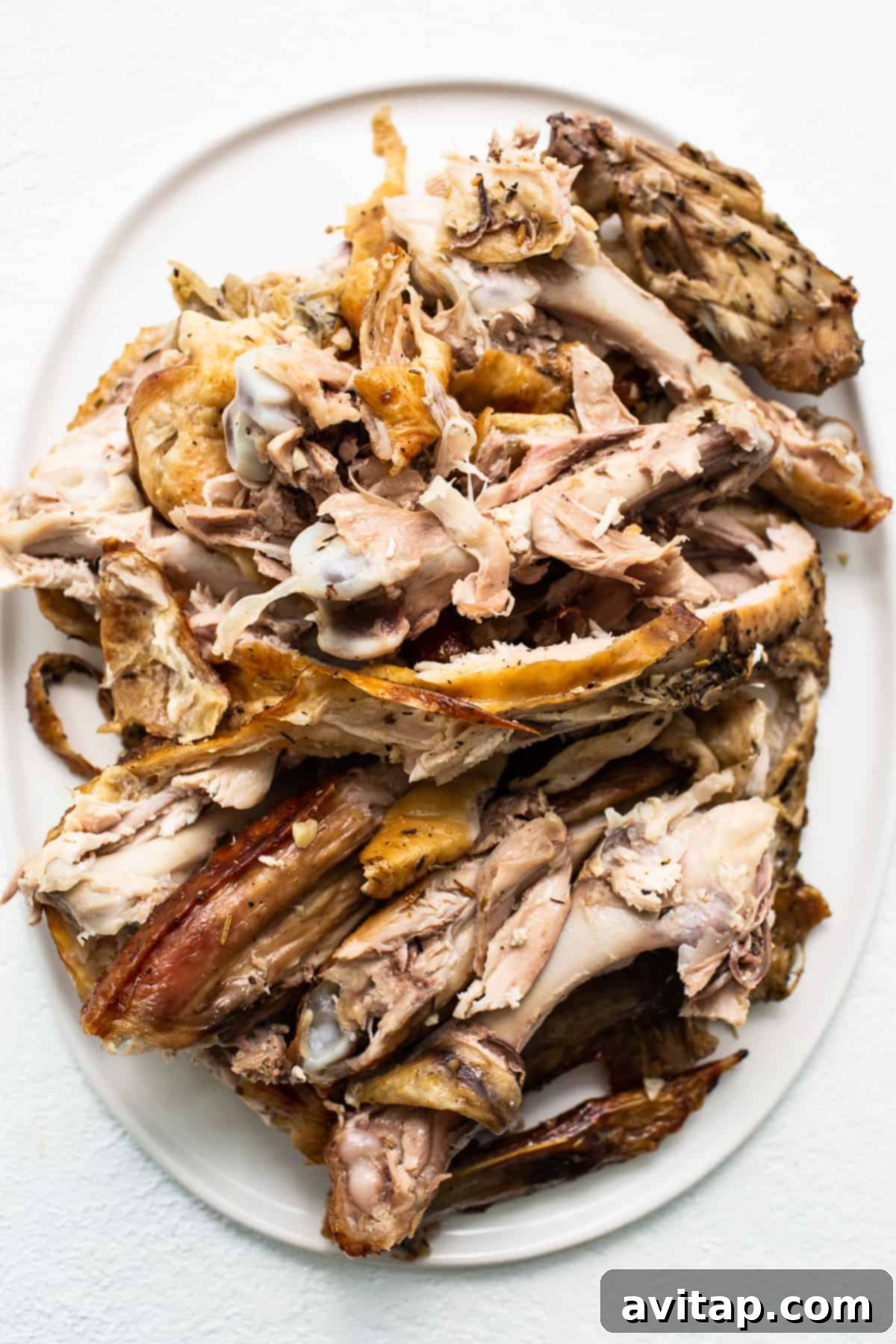
Turkey Carcass (and other turkey parts): This recipe is specifically designed to make the most of your turkey carcass after cooking a whole turkey. The bones are essential, as they release gelatin, collagen, and minerals that give the stock its body, richness, and nutritional value. Don’t worry about removing every last shred of meat; any lingering bits, skin, and fat will only add to the flavor. You can also incorporate other turkey pieces you might have frozen over time, such as turkey wings, legs, or neck. These parts are rich in bone and connective tissue, perfect for a deep, savory stock.
Pro Tip: If a turkey carcass isn’t available, this recipe works beautifully with a chicken carcass from roasting a whole chicken, or even a mix of chicken and turkey bones. The principles remain the same for any poultry bone broth.
Assorted Vegetables (Mirepoix and Scraps): The classic trio of aromatics—carrots, celery, and onion—forms the foundation of almost any great stock. We encourage using roughly chopped pieces, including onion skins, which contribute color and depth. This is also an excellent chance to use up vegetable scraps you might otherwise discard, such as carrot peels, celery ends, mushroom stems, or even the tough green parts of leeks. Freezing these scraps over time is a smart way to always have stock-making ingredients on hand.
Fresh Herbs: Fresh herbs infuse the stock with an incredible aromatic complexity. A combination of fresh thyme, rosemary, and sage is classic for poultry stock, lending an earthy and fragrant profile. Don’t hesitate to add bay leaves or parsley stems, too. These herbs don’t need to be perfectly chopped; whole sprigs work perfectly as their flavors gently release during the long simmer.
Kosher Salt: Salt is a crucial flavor enhancer in any stock. A bland stock is a missed opportunity! Adding salt both before and after cooking ensures that all the delicious ingredients are properly seasoned, bringing out their best qualities. Start with a modest amount and adjust to your taste preferences at the end of the cooking process.
Black Peppercorns: While not listed in the original, whole black peppercorns add a subtle, gentle heat and aromatic spice without being overwhelming. About 10-15 whole peppercorns are ideal for a large batch.
Apple Cider Vinegar (Optional, but Recommended): A tablespoon or two of apple cider vinegar can help extract more minerals and collagen from the turkey bones, resulting in a more nutrient-dense bone broth. Don’t worry, the vinegar flavor dissipates during the long cooking time.
Cold Water: Always start with cold water. This helps to slowly draw out impurities from the bones and vegetables, leading to a clearer, cleaner-tasting stock. The quantity will depend on your slow cooker size, but aim to fully submerge all ingredients.
Step-by-Step Guide to Making Rich Homemade Turkey Stock
Making homemade turkey stock in a slow cooker is incredibly straightforward, requiring minimal active cooking time. Follow these steps for a perfectly flavorful broth:
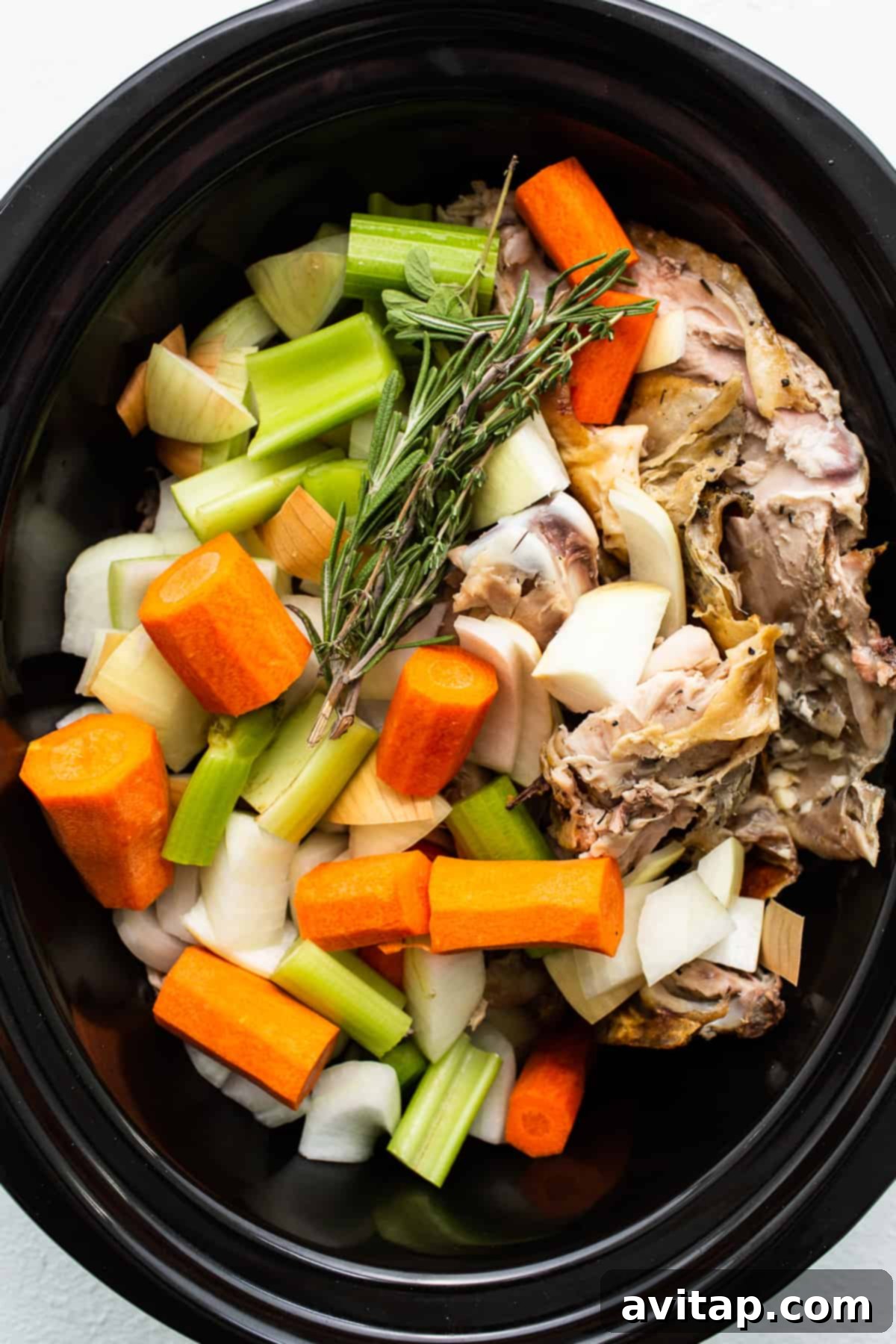
- Prepare Your Ingredients: Gather your turkey carcass (or other turkey bones/scraps), roughly chopped carrots, celery, onion, smashed garlic cloves (skins on are fine), and fresh herb sprigs. There’s no need for precise chopping; large chunks are ideal for slow cooking.
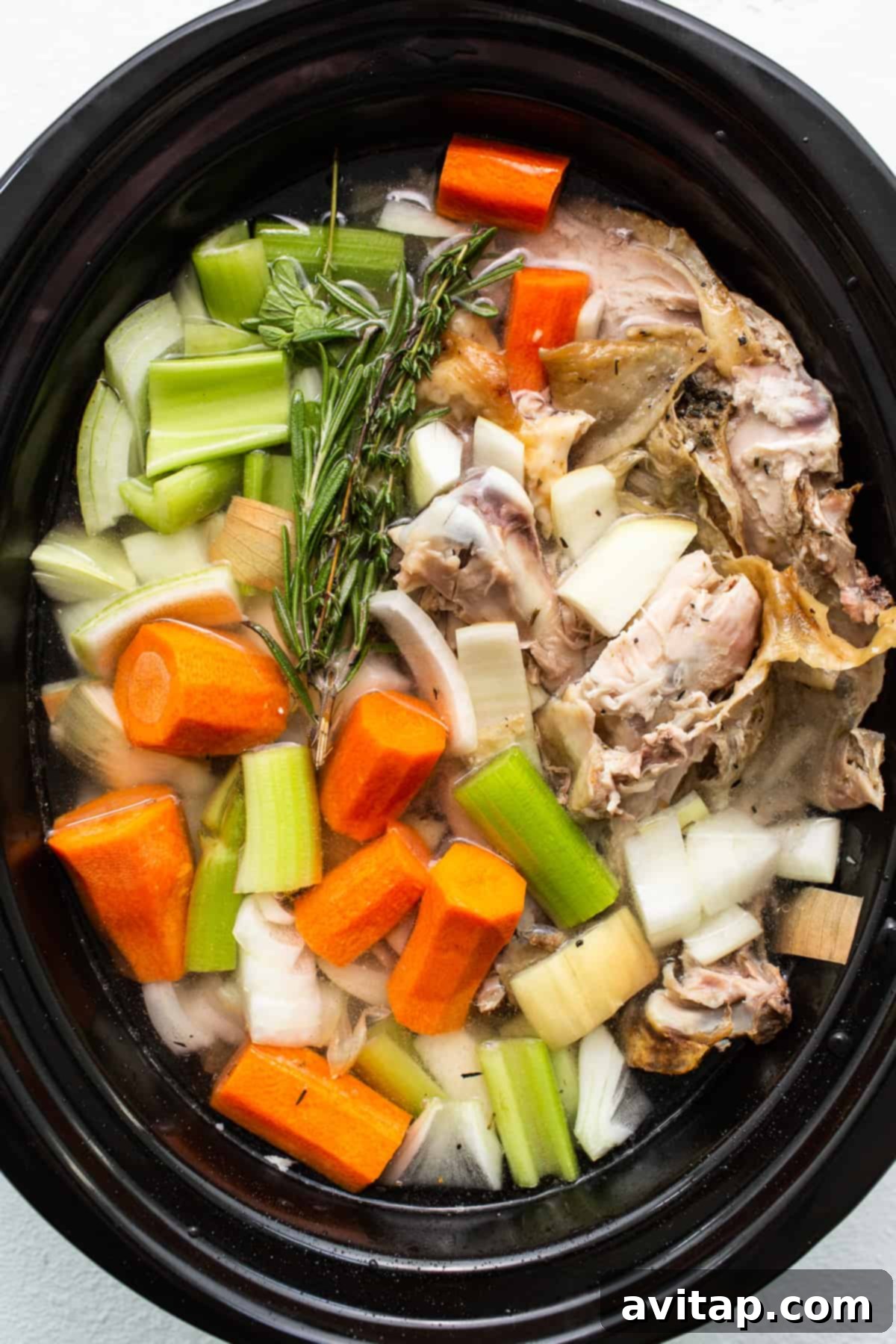
- Load the Slow Cooker: Place the turkey carcass and any other turkey pieces at the bottom of your large slow cooker. Arrange the chopped carrots, celery, onion, garlic, and fresh herbs around the turkey. This is also the perfect time to add any other vegetable scraps or spices like whole black peppercorns or a bay leaf.
- Add Water and Salt: Pour enough cold water over all the ingredients to fully submerge them. The exact amount will depend on the size of your slow cooker. Add ½ to 1 tablespoon of kosher salt. If your turkey parts were particularly salty, start with less and adjust later. If you’re using apple cider vinegar, add it now.
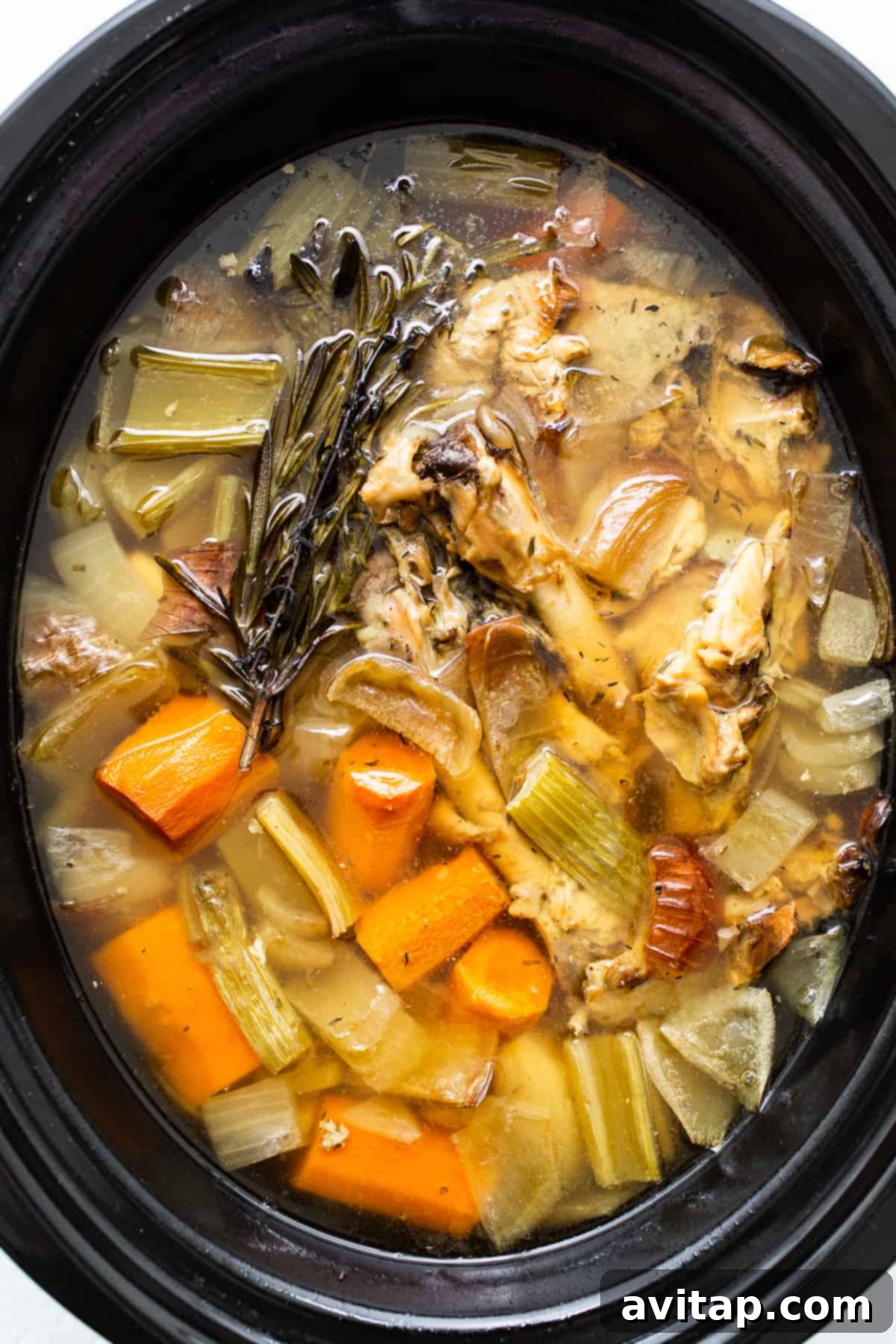
- Slow Cook to Perfection: Cover the slow cooker with its lid. Set the slow cooker to the “low” setting and let it simmer for a minimum of 8 hours, and ideally up to 12-18 hours. The longer the simmer, the more flavor and gelatin will be extracted from the bones, resulting in a richer, more robust stock.
- Skim Impurities (Optional but Recommended): In the first hour or two of cooking, you may notice foam or scum rising to the surface. You can use a ladle or spoon to gently skim this off. This step helps create a clearer, cleaner-tasting stock.
- Strain the Stock: Once the cooking time is complete, carefully remove the slow cooker lid. Place a large fine-mesh sieve or colander lined with cheesecloth over a large pot or heat-proof bowl. Slowly and carefully pour the entire contents of the slow cooker into the strainer.
- Extract Maximum Flavor: Allow the liquid to drip through the strainer into the pot. Gently press down on the solids (bones, vegetables, herbs) caught in the sieve with a spatula or the back of a spoon to extract any remaining liquid and flavor. Be thorough but avoid mashing the vegetables too vigorously, as this can make the stock cloudy.
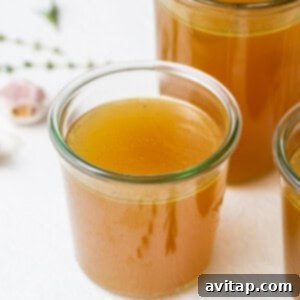
- Discard Solids and Season: Discard all the solids from the strainer. You are now left with a beautiful, golden homemade turkey stock in your pot. Taste the stock and adjust the seasoning with additional salt if needed.
- Cool and Store: Allow the turkey stock to cool completely before storing. This is crucial for food safety. Once cooled, it’s ready for immediate use or can be prepared for longer storage.
More Delicious Turkey Recipes to Explore
Easy Oven-Roasted Turkey Tenderloin
Vibrant Egg Roll in a Bowl
Italian Grinder Sliders
Egg and Croissant Breakfast Casserole
High-Protein Cottage Cheese Wraps
Top Tips for the Best Homemade Turkey Stock
Achieving the perfect turkey stock is simple with a few key tips:
Maximize Vegetable Variety: While carrots, celery, and onion are essential, don’t limit yourself. Adding a wider range of vegetables, especially vegetable scraps like leek greens, mushroom stems, or even the ends of bell peppers, will create a more delicious and complex depth of flavor in your stock. The more diverse your vegetable contributions, the richer the final taste.
Always Make a Generous Batch: You’ll never regret making too much stock. Homemade stock is an invaluable asset in the kitchen, and freezing it is incredibly easy. A large batch ensures you have nutrient-rich stock readily available for countless recipes on a busy weeknight or a “rainy day” when you need quick comfort food.
Embrace Culinary Creativity: Feel empowered to experiment with flavors and spice levels. Adding different dried spices like bay leaves, a pinch of dried sage, or a few star anise pods can introduce new aromatic dimensions. For a subtle kick, consider adding a few whole dried chili peppers or a slice of fresh ginger. Make this stock truly your own!
Roast Your Bones First (Optional but Recommended): For an even deeper, richer color and flavor, consider roasting your turkey carcass and any additional bones in the oven at 400°F (200°C) for 30-45 minutes until nicely browned before adding them to the slow cooker. This step caramelizes the bones and any remaining meat, adding another layer of savory complexity to your stock.
Use Cold Water: Always start your stock with cold water. This allows the impurities in the bones and vegetables to slowly rise to the surface as the water heats up, making them easier to skim off and resulting in a clearer, cleaner-tasting stock.
Don’t Boil, Just Simmer: A gentle simmer is key. Rapid boiling can emulsify fats and proteins, leading to a cloudy and sometimes greasy stock. Keep the heat low and steady for optimal flavor extraction and clarity.

Recipe Spotlight
Our Signature Thanksgiving Turkey
Master the art of roasting a truly spectacular Thanksgiving turkey with our renowned recipe. Learn how to achieve a juicy, tender bird with crispy skin, and even how to make an incredible homemade gravy. Get ready to impress!
Frequently Asked Questions About Turkey Stock
Turkey broth, or stock, is incredibly versatile. It serves as an excellent base for a myriad of dishes, including soups (like chicken noodle soup, minestrone, or a hearty vegetable soup), stews, risottos, gravies, and sauces. You can also use it to braise meats, cook grains like rice or quinoa for added flavor, or simply sip on it straight from a mug when you’re feeling under the weather or just craving something warm and comforting. Its rich flavor enhances almost any savory dish.
While often used interchangeably, there’s a subtle distinction between stock and broth. Traditionally, stock is made primarily with bones and some meat, often roasted, and simmered for a longer period to extract gelatin, resulting in a richer, thicker liquid that may gel when cooled. Broth, on the other hand, is typically made with more meat and vegetables, and simmered for a shorter duration, yielding a lighter, more flavorful liquid that’s often consumed on its own. Functionally, for most home cooking, they can indeed be used interchangeably, especially when discussing homemade versions.
Absolutely! Turkey broth, especially homemade bone broth, is considered very healthy. It’s rich in vitamins, minerals (like calcium, magnesium, and phosphorus), and beneficial compounds such as collagen and amino acids. These components can support gut health, joint health, and provide a warming, easily digestible source of nutrients. It’s particularly nourishing when you’re sick, need a light meal, or simply want to add a nutrient boost to your diet. It’s a low-calorie, hydrating, and satisfying beverage.
Yes, you certainly can! A large stockpot on the stovetop works just as well. Simply follow the same ingredient ratios and steps, ensuring the pot is covered and maintaining a very gentle simmer. Keep an eye on the water level periodically to ensure all ingredients remain submerged. The cooking time will be similar, typically 8-12 hours, though you’ll need to monitor it more closely than a slow cooker.
After your stock has cooled completely in the refrigerator, a layer of fat will solidify on the surface. You can easily scrape this off and discard it for a leaner stock, or save it! Turkey fat (schmaltz) is incredibly flavorful and can be used for roasting vegetables, frying eggs, or adding richness to other dishes. If you prefer a clear stock, removing the fat is recommended.
Proper Storage for Your Homemade Turkey Stock
Once your delicious homemade turkey stock has been prepared, proper cooling and storage are essential to maintain its freshness and safety. Always allow the stock to cool completely to room temperature before transferring it to storage containers. This prevents condensation and inhibits bacterial growth.
Store the cooled turkey stock in airtight containers in the refrigerator for up to 5 days. For best results and to maximize shelf life within this period, consider portioning it into smaller containers, making it easier to grab just the amount you need for a recipe.
Freezing Instructions for Long-Term Storage
Homemade turkey stock freezes beautifully, making it an ideal candidate for batch cooking and long-term storage. This ensures you always have a supply of rich, flavorful broth on hand.
After your stock has cooled completely, transfer it to freezer-safe containers. Great options include:
- Freezer Bags: Lay them flat in the freezer to save space.
- Plastic Deli Containers: Ideal for larger portions.
- Ice Cube Trays: Perfect for small, individual portions that can be easily added to sauces or quickly defrosted.
Leave a little headspace in containers or bags, as liquids expand when frozen. Freeze the turkey stock for up to 3 months for optimal flavor and quality. When ready to use, simply thaw overnight in the refrigerator or gently warm it directly from frozen in a pot over low heat.

Helpful Tutorial
Mastering How to Freeze Soup & Chili
Extend the life of your culinary creations with our comprehensive How to Freeze Soup tutorial. We share all our insider tips and tricks to perfectly freeze soups, chilis, and stocks, ensuring they taste just as fresh when you reheat them.
More of Our Favorite…
Creative Leftover Turkey Recipes
- Leftover Thanksgiving Turkey Quesadilla
- Delicious Leftover Turkey Salad
- Hearty Turkey Sweet Potato Enchilada Skillet
Homemade Turkey Stock
Linley Hanson
10 mins
12 hrs
12 hrs 10 mins
8 servings
Ingredients
- Carcass of a cooked large turkey, meat taken off (keep all the fat, skin, and parts of the turkey you didn’t eat)
- 2 large carrots, chopped into chunks
- 2 stalks celery, chopped into chunks
- 1 medium sized onion, roughly chopped (you can use the paper and skin)
- 3 garlic cloves, smashed (you can use the paper)
- 2 sprigs fresh thyme
- 2 sprigs fresh rosemary
- 2 sprigs fresh oregano
- 10-12 cups water
- ½-1 tablespoon kosher salt
Instructions
-
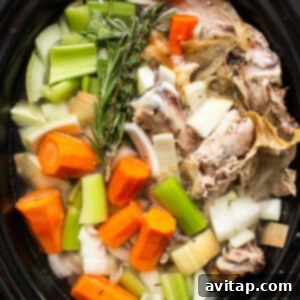
Place the turkey carcass and any other turkey parts into a large slow cooker. Then, add the carrots, celery, onion, garlic, and fresh herbs around the turkey parts.

-
Pour water over all of the ingredients. The amount of water you add will depend on how big your slow cooker is. Just be sure all of the ingredients are covered in water.
-
Add the kosher salt to the slow cooker. If you aren’t sure how salty your turkey parts are, start with ½ tablespoon and add more salt at the end.
-
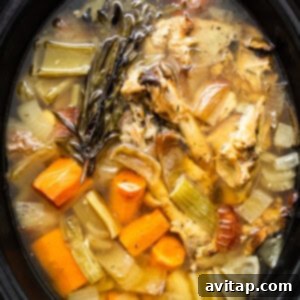
Cover the slow cooker and cook on low for 12 hours or overnight.
-
Remove the cover of the slow cooker and carefully remove large chunks of the turkey and other ingredients.
-
Place a large pot in the sink and place a fine mesh sieve over the pot. Carefully pour the broth over the sieve and allow the mesh strainer to catch any small pieces of herb or vegetable. Gently press the ingredients that were caught in the sieve with a spatula to release any broth.
-
Discard all other ingredients except for the turkey broth in the pot. Use the homemade turkey broth for gravy, soup, or anything your heart desires.
Tips & Notes
- Please feel free to make this broth your own by adding any vegetable scraps, additional herbs, or spices that you prefer. Personalizing your stock makes it even more enjoyable.
- For an extra layer of richness, consider roasting your turkey carcass and vegetables for about 30 minutes before adding them to the slow cooker. This step caramelizes them, deepening the flavor of your stock.
Nutrition
Calories:
16 kcal
,
Carbohydrates:
3 g
,
Protein:
1 g
,
Fat:
0.2 g
,
Fiber:
1 g
,
Sugar:
1 g
Nutrition information is automatically calculated and should be used as an approximation.
⭐
Enjoyed this recipe? Share your thoughts below!
We’d love to see your culinary creations! Don’t forget to tag your posts on social media with the hashtag #fitfoodiefinds.
Photography: All images featured in this post were expertly captured by Ashley McGlaughlin from The Edible Perspective.