
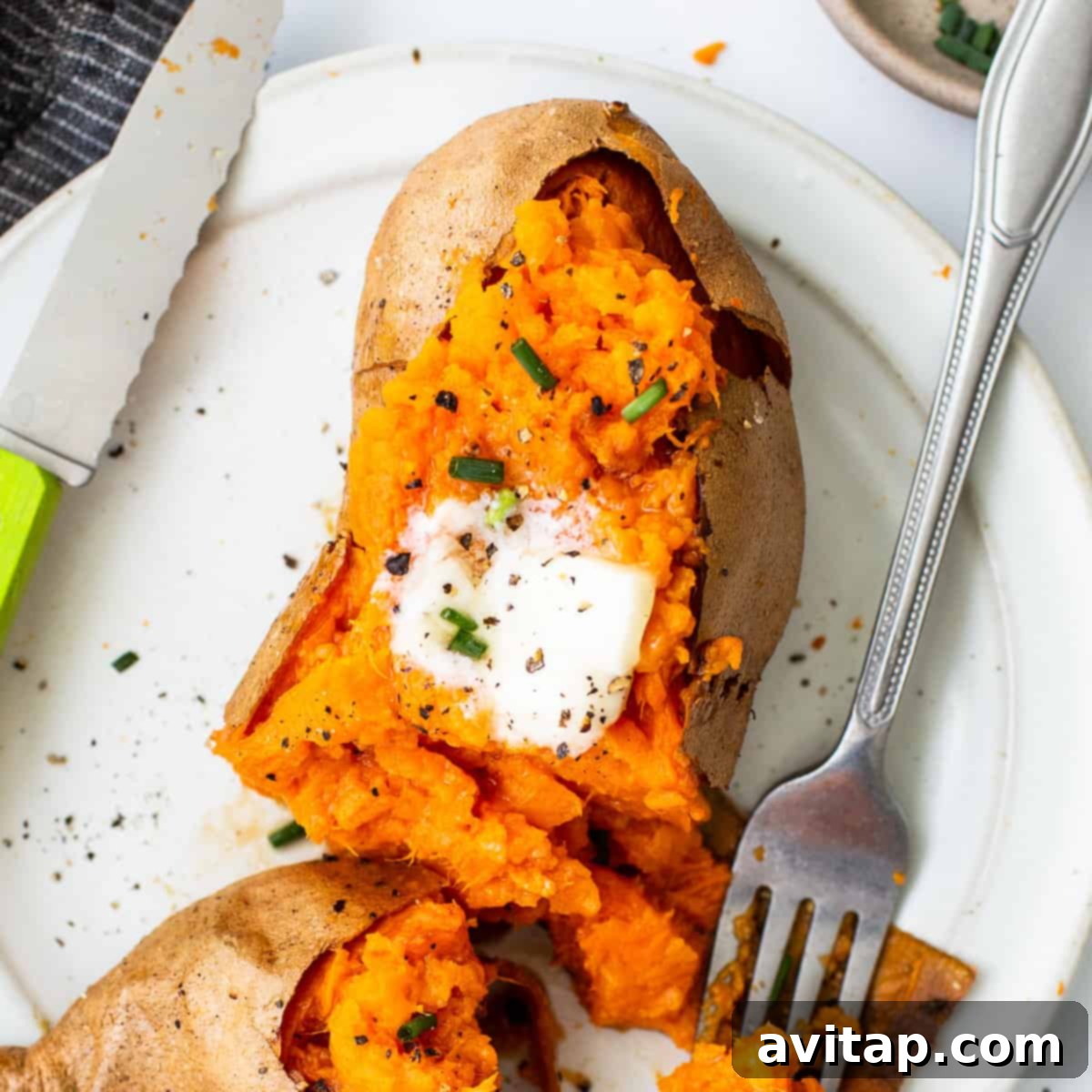
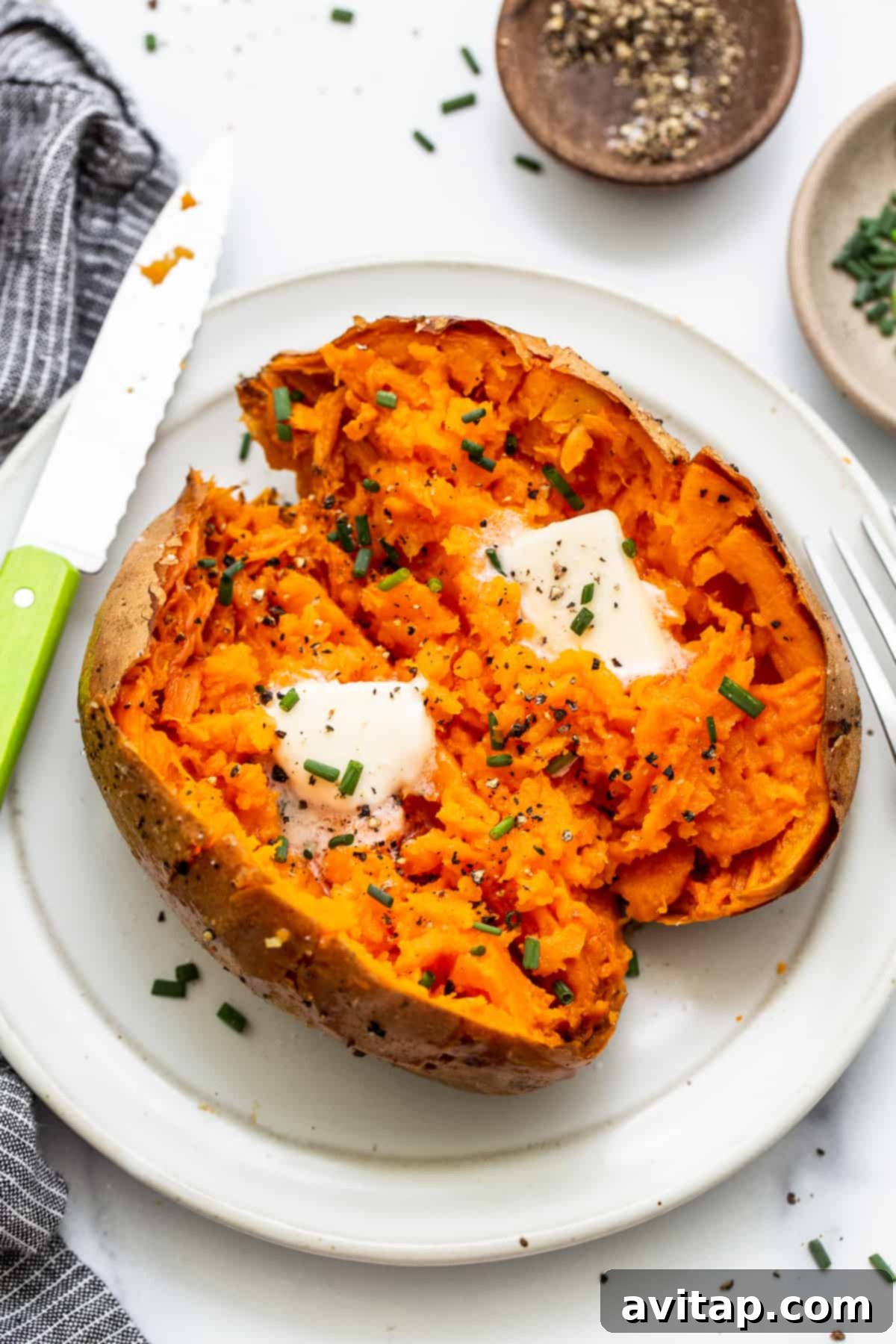
Baked sweet potatoes are a fantastic, nutrient-rich addition to virtually any meal, offering a delightful balance of sweetness and earthy flavor. Whether you’re seeking a simple side dish, a hearty lunch, or a foundation for a creative culinary masterpiece, perfectly baked sweet potatoes deliver. This comprehensive guide will walk you through how to bake sweet potatoes in 3 easy steps, ensuring they emerge from your oven with a wonderfully fluffy interior and a perfectly crispy skin every single time. Beyond the basic technique, we’ll explore seasoning secrets, creative topping ideas, and smart ways to repurpose your delicious oven-baked sweet potatoes.
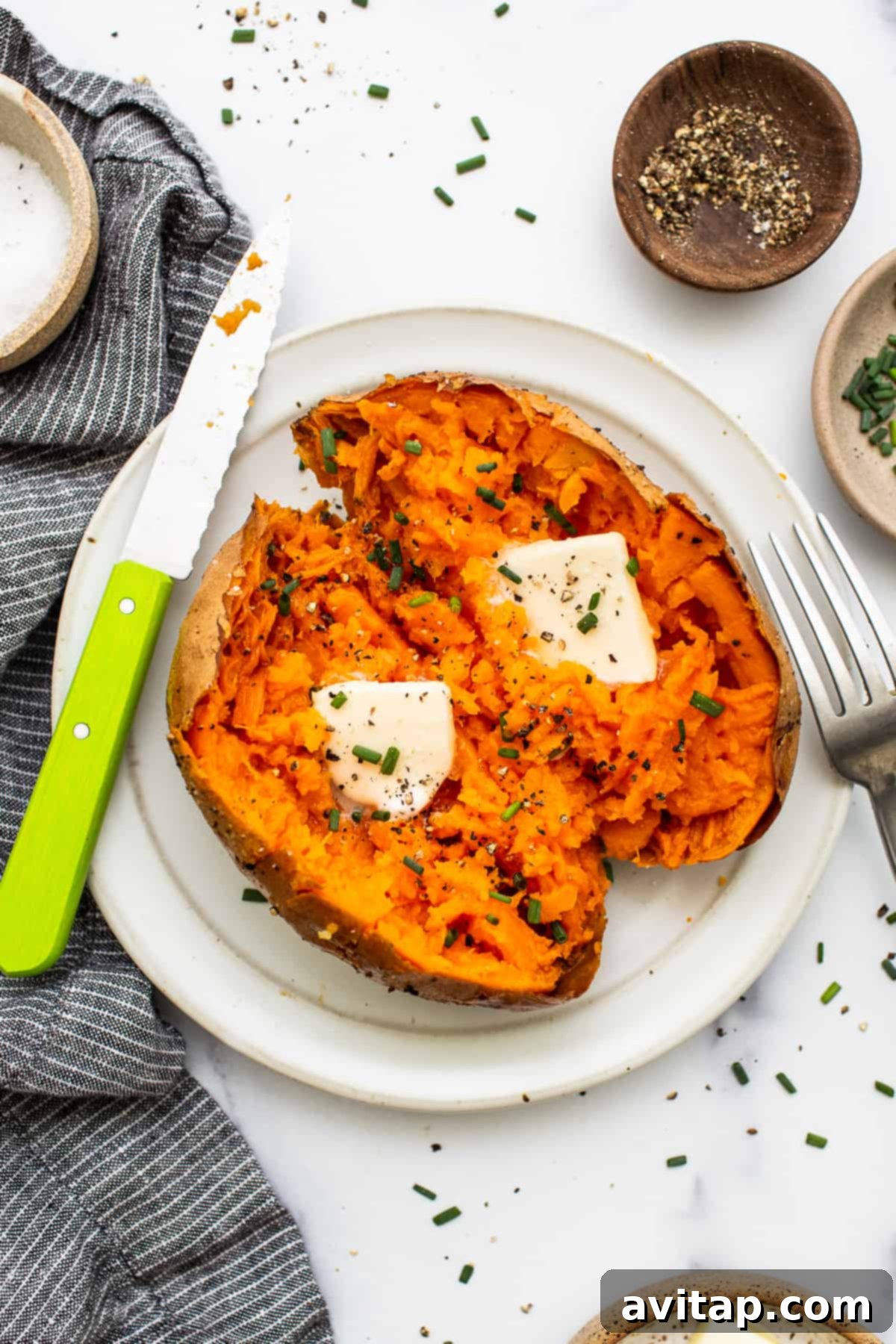
A Personal Story: During my college years, navigating a strict budget, I discovered the magic of batch-baking sweet potatoes. Each week, I’d prepare a generous supply, serving them hot with a dollop of cold cottage cheese for lunch. While this combination might sound unconventional, the contrast of warm, tender sweet potato against cool, creamy cottage cheese was surprisingly satisfying and incredibly filling. It was a simple, affordable, and nutritious way to fuel my busy student days, proving just how versatile and comforting baked sweet potatoes can be.
The Ultimate Guide to Perfectly Baked Sweet Potatoes
There’s a simple art to achieving the perfect baked sweet potato, and this recipe stands out as the best you’ll find online. Why? Because it consistently produces sweet potatoes that are incredibly tender and perfectly cooked, with a delightful crispy skin. We keep the foundational preparation minimalist, using just olive oil, salt, and pepper. This approach allows the natural sweetness of the potato to shine, while also giving you the flexibility to customize its flavor profile to suit any meal or craving. This method ensures your sweet potatoes are not just cooked, but transformed into a truly delicious culinary experience.
The process is incredibly straightforward: a few simple pokes, a generous rub with high-quality olive oil, and a sprinkle of salt and pepper are all it takes. Then, into a hot oven at 425ºF, where they roast to tender perfection. The high heat creates that sought-after crispy skin, while the internal flesh becomes wonderfully soft and fluffy, ready to absorb any toppings you desire.
Choosing the Right Sweet Potatoes for Baking
The world of sweet potatoes is wonderfully diverse, featuring varieties like vibrant red, deep purple, and creamy white. For this recipe, any type of sweet potato will yield delicious results. The key to successful, even baking lies in consistency: always select sweet potatoes that are roughly the same size and thickness. This ensures they cook uniformly, preventing some from being undercooked while others are overdone. Opting for similarly sized potatoes guarantees that each one will be perfectly tender and ready to enjoy at the same time.
Sweet Potatoes vs. Yams: Understanding the Difference
It’s a common misconception that sweet potatoes and yams are interchangeable, or even the same vegetable. However, they are distinctly different botanical species with unique characteristics. While both are root vegetables, yams typically have a much tougher, bark-like skin and a starchier, drier flesh, more akin to a traditional white potato in texture. Sweet potatoes, on the other hand, boast a thinner, edible skin and a naturally sweeter, moister flesh. Knowing this distinction can help you choose the right ingredient for your culinary needs. For comprehensive details, this informative article provides an excellent breakdown of their differences.
How to Bake Sweet Potatoes: A Simple Step-by-Step Guide
While this baked sweet potato recipe is incredibly simple, breaking it down into distinct steps ensures perfect results every time. Follow these instructions to create beautifully tender and flavorful sweet potatoes.
Step 1: Clean and Prepare Your Sweet Potatoes
The first crucial step is to thoroughly wash your sweet potatoes. Rinse them under warm running water and use a vegetable brush to gently scrub away any dirt, residue, or lingering soil. Since sweet potatoes grow in the ground, a good cleaning is essential. After washing, pat them completely dry with a clean cloth or paper towel; moisture can hinder the crisping process.
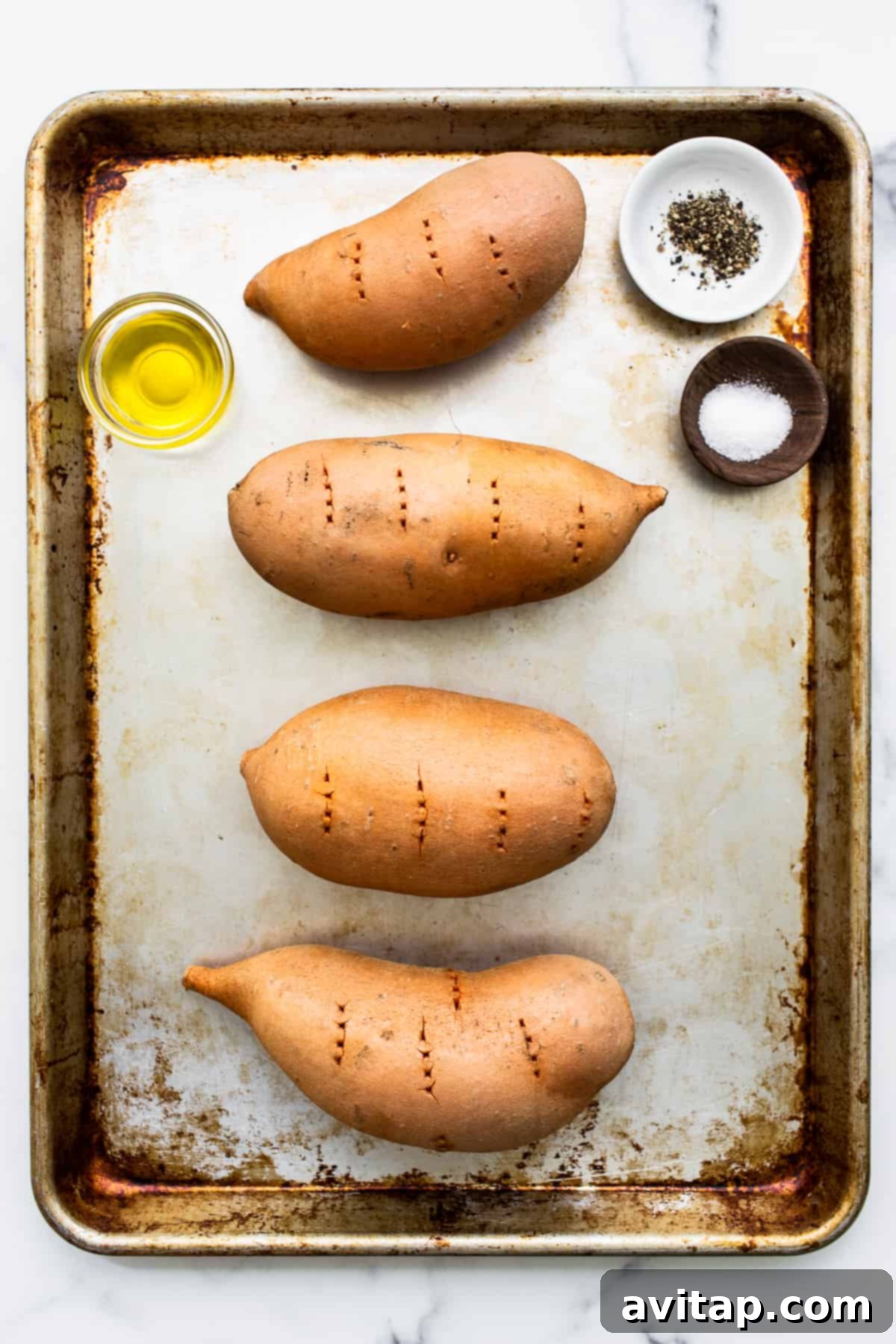
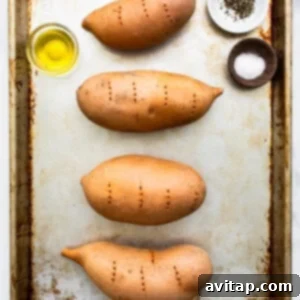
Next, take a fork and carefully pierce each sweet potato about 6-8 times all over its surface. These small holes are vital for two reasons: they help the olive oil and seasonings penetrate the potato, infusing it with flavor, and they allow steam to escape during cooking, which promotes even baking and prevents the potatoes from becoming overly pressurized. While some believe this prevents explosions, our tests show that explosions are rare; however, the holes certainly aid in better cooking circulation and moisture release.
Is Poking Holes in Sweet Potatoes Truly Necessary?
Many culinary traditions insist on piercing potatoes before baking to prevent them from “exploding” in the oven. While we’ve extensively tested this method and have never experienced a sweet potato explosion during oven baking, the holes still serve a beneficial purpose. They facilitate better steam release and allow the seasonings to permeate more deeply, contributing to a more flavorful and evenly cooked potato. It’s important to note, however, that if you plan to cook your sweet potatoes in a microwave, poking holes is indeed critical to prevent them from bursting due to rapid internal steam buildup.
Pro Tip for Even Cooking
For uniform baking results, always select sweet potatoes that are similar in size and thickness. This ensures that all your potatoes finish cooking around the same time, preventing some from being undercooked or overdone.
Step 2: Season for Flavor and Texture
Once your sweet potatoes are clean and dry, it’s time to prepare them for roasting. Drizzle each sweet potato generously with olive oil (or your preferred cooking oil, such as avocado or grapeseed oil). Rub the oil evenly over the entire surface of each potato. The oil is key; it not only helps the seasonings adhere but also plays a crucial role in creating that desirable crispy skin while keeping the interior flesh wonderfully tender and moist.
After oiling, season liberally with salt and freshly ground black pepper. Don’t be shy with the seasoning; it brings out the natural sweetness and adds depth to the overall flavor. For those planning to create a smooth sweet potato puree from their baked potatoes, you can skip the salt and pepper at this stage, as you’ll season the puree later according to your recipe.
Elevate Your Sweet Potato Flavors: Creative Seasoning Ideas
While olive oil, salt, and pepper provide a classic, delicious base, feel free to experiment with additional spices to customize your baked sweet potatoes. Here are some suggestions to enhance their flavor profile:
- Garlic Powder: Adds a savory depth that complements the potato’s sweetness.
- Paprika (Smoked or Sweet): Offers a warm, slightly smoky, or sweet undertone and a beautiful color.
- Ground Cinnamon: Perfect for a sweet-leaning potato, especially if you plan to top it with brown sugar or maple syrup.
- Chili Powder or Cayenne Pepper: For those who enjoy a subtle kick.
- Rosemary or Thyme: Earthy herbs that pair wonderfully with savory sweet potato dishes.
- Cumin: Adds a warm, distinct flavor, great for Tex-Mex inspired meals.
To Wrap or Not to Wrap: The Aluminum Foil Debate
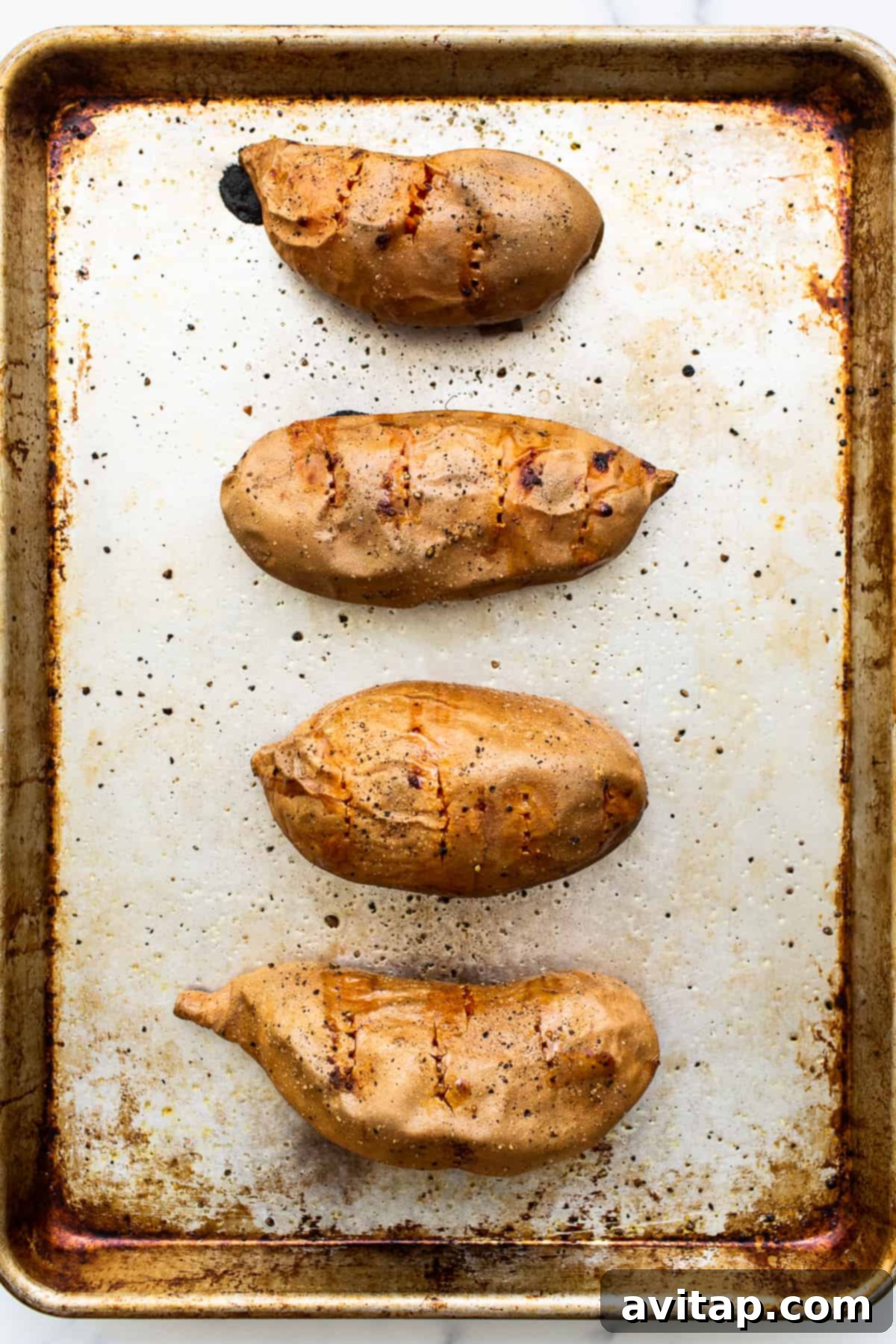
You certainly have the option to wrap your sweet potatoes in aluminum foil before baking. Doing so can help trap moisture and steam the potatoes, often resulting in a slightly faster cooking time and an incredibly soft, uniformly cooked interior—ideal if you’re planning to mash or puree them. However, if your goal is that coveted crispy, slightly chewy skin, we highly recommend baking them unwrapped. Leaving the potatoes exposed to the direct oven heat allows the skin to dry out and crisp up beautifully, adding a delightful textural contrast to the fluffy inside.
Step 3: Roast to Perfection in the Oven
For the ultimate baked sweet potato—super tender on the inside with a perfectly crispy skin—we advocate roasting them at a higher temperature. This method creates a delicious textural contrast that is truly irresistible.
Arrange your seasoned sweet potatoes on a baking sheet, ensuring they are spread out and not touching. This allows for even heat circulation, which is crucial for achieving that crispy exterior. Roast the sweet potatoes in a preheated oven at 425ºF for 45-60 minutes, or potentially longer, depending on their size. You’ll know your sweet potatoes are perfectly done when a fork can easily pierce through the thickest part of the potato with little resistance. The skin should also appear slightly shriveled and crisped.
Optimal Baking Time for Sweet Potatoes
Generally, sweet potatoes bake to perfection at 425ºF for approximately 45-60 minutes. However, baking times can vary based on the potato’s size and your oven’s calibration. Always use the fork-tender test as your most reliable indicator.
And there you have it: the internet’s most comprehensive and effective guide to baking the perfect sweet potato, yielding a truly delicious and versatile result every single time!
Important Note: Size Matters!
The cooking time for baked sweet potatoes is directly proportional to their size. Larger, thicker sweet potatoes will naturally require a longer roasting period, often extending beyond the 60-minute mark. Conversely, smaller sweet potatoes will cook more quickly. In our tests, using large sweet potatoes typically took around 60 minutes to reach optimal tenderness.

Unleash Your Creativity: Delicious Topping Ideas for Baked Sweet Potatoes
Once your beautifully baked sweet potatoes are out of the oven, the fun truly begins! While they are incredibly delicious plain, their mild sweetness and creamy texture make them a perfect canvas for a myriad of toppings. From savory and hearty to sweet and decadent, the possibilities are endless. Here are some fantastic ideas to jazz up your baked sweet potatoes:
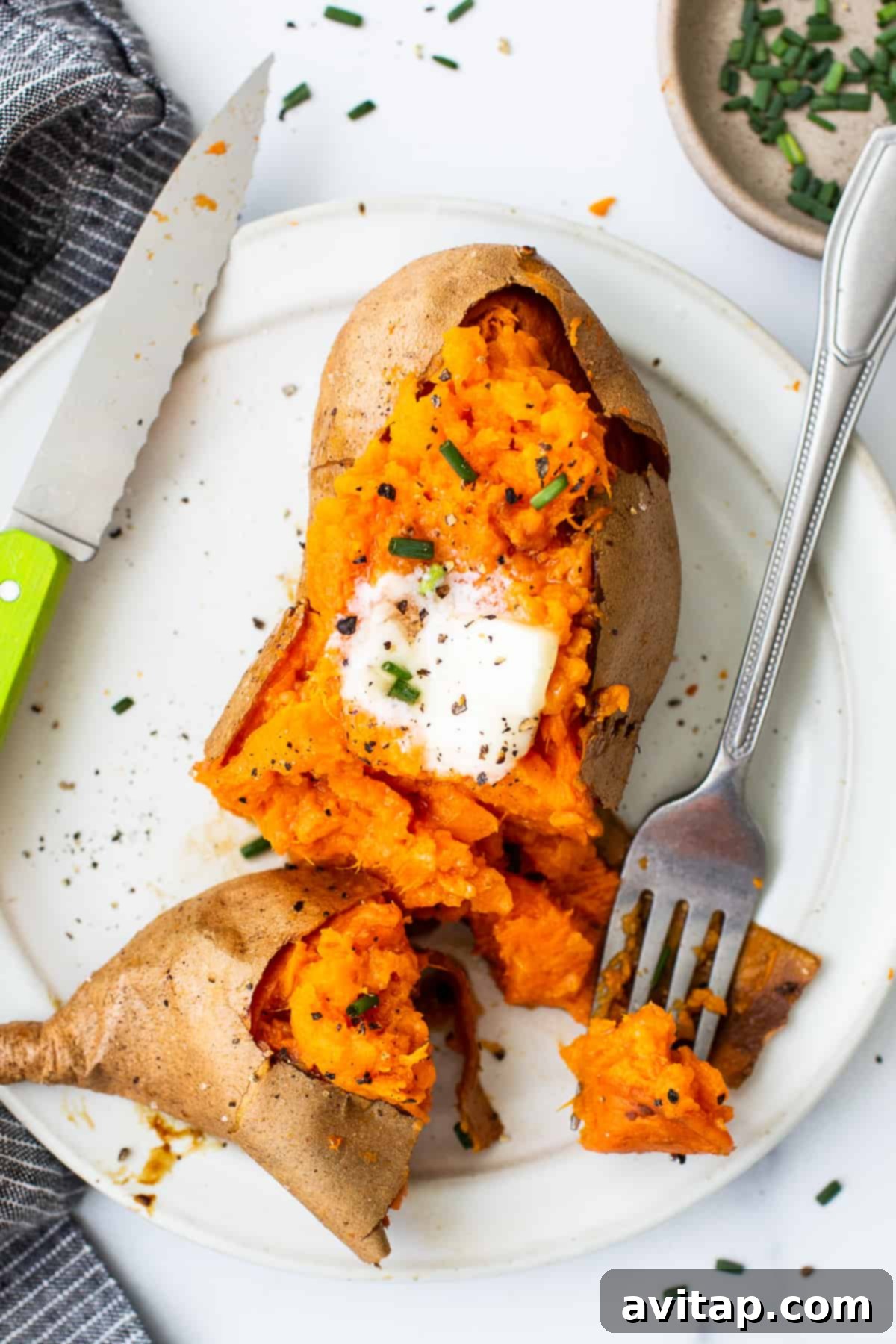
- Classic Comfort: A pat of unsalted butter, a sprinkle of sea salt, and a dash of freshly cracked black pepper.
- Creamy & Cool: A generous dollop of cottage cheese or Greek yogurt, perhaps with fresh chives or a squeeze of lemon.
- Nutty & Sweet: A drizzle of almond butter (or peanut butter), a touch of maple syrup, and a sprinkle of ground cinnamon or a pinch of sea salt.
- Hearty & Satisfying: Top with a spoonful of warm beef chili, shredded cheddar cheese, and a dollop of sour cream.
- Tex-Mex Inspired: Load up with seasoned taco meat, fresh salsa, avocado slices, and a sprinkle of cilantro.
- Decadent Dessert: A spoonful of brown sugar, toasted pecans, and a swirl of melted butter for a sweet treat.
- Kid-Friendly Favorite: A handful of mini marshmallows, briefly broiled until golden and gooey.
- Mediterranean Twist: Crumbled feta cheese, chopped Kalamata olives, diced red onion, and a drizzle of olive oil.
- Protein Powerhouse: Black beans, corn salsa, a spoonful of Greek yogurt, and a sprinkle of hot sauce.
- Herbaceous Delight: Fresh chopped rosemary, thyme, and a drizzle of garlic-infused olive oil.
Next Level Indulgence: Stuffed Sweet Potatoes!
Why stop at toppings when you can stuff them? Take your baked sweet potato experience to a gourmet level by transforming them into stuffed sweet potatoes. These hearty and complete meals are perfect for meal prepping or a satisfying dinner. For endless inspiration, be sure to check out our popular post: Stuffed Sweet Potatoes 3 Ways.

Transforming Leftovers: How to Make Sweet Potato Puree from Roasted Sweet Potatoes
Don’t let any leftover baked sweet potato go to waste! It’s incredibly easy to transform them into a smooth, versatile sweet potato puree, perfect for soups, smoothies, baby food, or baking. Here’s a quick and simple tutorial:
- Allow your roasted sweet potatoes to cool completely for about 20-30 minutes after taking them out of the oven. This makes them easier to handle and process.
- Once cooled, carefully slice each sweet potato in half lengthwise and use a spoon to scoop out the soft, cooked flesh, discarding the skin.
- Transfer the scooped sweet potato flesh into a food processor. Process on high speed for 60 seconds, or until completely smooth and free of lumps. Depending on the moisture content of your original sweet potatoes, you might need to add a tablespoon or two of water, milk, or vegetable broth to achieve your desired creamy consistency.
Storage Solutions for Baked Sweet Potatoes
To keep your baked sweet potatoes fresh and delicious for future meals, proper storage is key. First, ensure they have cooled completely to room temperature. Then, transfer the whole baked sweet potatoes into an airtight container or wrap them individually in plastic wrap. Store them in the refrigerator, where they will remain fresh and flavorful for 3-5 days. This makes them perfect for meal prepping at the beginning of the week!
Freezer Instructions: Extend the Life of Your Baked Sweet Potatoes
Baked sweet potatoes freeze exceptionally well, offering a convenient option for quick, healthy meals whenever you need them. To freeze, allow the baked sweet potato to cool completely to room temperature. Then, wrap each potato tightly in aluminum foil, ensuring it’s sealed to prevent freezer burn. Place the foil-wrapped potatoes into a freezer-safe gallon-size bag or container, removing as much air as possible. They can be stored in the freezer for up to 3 months. To reheat, simply unwrap and warm in the oven or microwave until heated through.
Beyond Baking: Discover More Ways to Cook Sweet Potatoes
Sweet potatoes are truly a culinary chameleon – an excellent, incredibly versatile vegetable that can be roasted, pureed, baked into desserts, added to savory bowls, and so much more! Their natural sweetness and nutritional benefits make them a beloved staple in kitchens worldwide. Expand your sweet potato repertoire with these fundamental cooking tutorials, perfect for exploring all the delicious possibilities:
- How to Roast Sweet Potatoes: Learn the technique for perfectly caramelized, tender roasted sweet potato cubes.
- Sweet Potato Puree: Master the art of creating smooth, creamy puree for a variety of uses, from soups to baby food.
- Crispy Baked Sweet Potato Fries: Indulge in a healthier alternative to traditional fries, baked to crispy perfection.
- How to Make Sweet Potato Hash Browns: A fantastic way to enjoy sweet potatoes for breakfast or brunch.
More of our Favorite…
Explore Even More Sweet Potato Recipes!
If you’ve fallen in love with the versatility and flavor of sweet potatoes, you’re in for a treat! Discover our extensive collection of beloved sweet potato creations from Fit Foodie Finds. Whether you’re craving something savory, sweet, or a new twist on a classic, our recipes offer endless inspiration for every meal of the day.
Check out all of our favorite Sweet Potato Recipes from Fit Foodie Finds!
- Crispy Baked Sweet Potato Fries: A healthier, equally addictive alternative to regular fries.
- Mashed Sweet Potatoes: A comforting and flavorful side dish, perfect for holidays or weeknights.
- Sweet Potato Tater Tots: A fun, homemade version of a classic, with a sweet potato twist.
- Sweet Potato Casserole: A wholesome and delicious take on a holiday favorite, without compromising on flavor.
Rating: 5 out of 5 stars (based on 3 votes)
How to Bake Sweet Potatoes (The Ultimate Baked Sweet Potato Recipe)
Lee Funke
10 mins
1 hr
1 hr 10 mins
4

Print Recipe
Ingredients
- 4 large sweet potatoes*
- 2 teaspoons olive oil
- Salt, to taste
- Pepper, to taste
Instructions
-
Preheat your oven to 425ºF (220ºC). Lightly grease a baking sheet with nonstick cooking spray or line with parchment paper; set aside.
-
Thoroughly wash the sweet potatoes under cold running water, scrubbing off any dirt. Pat them completely dry. Using a fork, puncture 6-8 holes into each sweet potato to allow steam to escape during baking.

-
Rub each dry sweet potato generously with olive oil, ensuring it’s evenly coated. Then, season liberally with salt and freshly ground black pepper.
-
Place the seasoned sweet potatoes on the prepared baking sheet, ensuring they are spaced apart and not touching. Roast in the preheated oven for 45-60 minutes, or until fork-tender. Cooking time will vary depending on the size of your potatoes.
-
Once perfectly tender, remove from the oven. Serve hot with your favorite toppings and enjoy!

Tips & Notes
- Sweet potato size: This recipe is optimized for large sweet potatoes. If you use smaller potatoes, adjust your baking time accordingly, as they will cook faster.
- Crispy Skin: For the crispiest skin, do not wrap your sweet potatoes in aluminum foil.
- Flavor Boost: Don’t hesitate to add other seasonings like garlic powder, paprika, or cinnamon for varied flavor profiles.
Watch How It’s Done
Watch “How to Roast Sweet Potatoes” Video

Nutrition Information (Approximate)
Nutrition information is automatically calculated and should be used as an approximation only.
Love this recipe? Leave a comment below!
Don’t forget to tag your delicious creations on social media with the hashtag #fitfoodiefinds – we love seeing what you’re cooking up!
The Remarkable Nutritional Benefits of Sweet Potatoes
Beyond their delightful taste and versatility, sweet potatoes are a powerhouse of nutrition, making them an excellent choice for a healthy diet. They are an abundant source of essential vitamins, minerals, and fiber, contributing significantly to overall well-being. Rich in beta-carotene, an antioxidant that the body converts into Vitamin A, sweet potatoes are vital for vision, immune function, and skin health. They also provide a substantial amount of Vitamin C, bolstering the immune system and acting as another powerful antioxidant. Furthermore, sweet potatoes offer a good supply of Vitamin B6, which is crucial for brain health, and potassium, an electrolyte important for heart health and blood pressure regulation. Their high fiber content aids in digestive health, promotes satiety, and helps regulate blood sugar levels. Incorporating sweet potatoes into your diet is a delicious and simple way to boost your nutrient intake.
Why Sweet Potatoes are a Must-Have Pantry Staple
Sweet potatoes truly deserve a permanent spot in your pantry. Their affordability, extended shelf life, and incredible versatility make them an indispensable ingredient for any home cook. They can last for several weeks in a cool, dark place, ready to be transformed into a variety of dishes at a moment’s notice. From savory main courses and hearty sides to sweet baked goods and comforting purees, sweet potatoes adapt effortlessly to almost any cuisine or mealtime. Their natural sweetness means they require less added sugar in desserts, and their robust texture holds up well to various cooking methods. Stocking up on sweet potatoes means you’ll always have a healthy, delicious, and easy-to-prepare option on hand, simplifying meal planning and adding a nutritious boost to your daily diet.
Photography: The stunning visuals in this post were captured by Ashley McGlaughlin from The Edible Perspective, beautifully illustrating the deliciousness of baked sweet potatoes.