
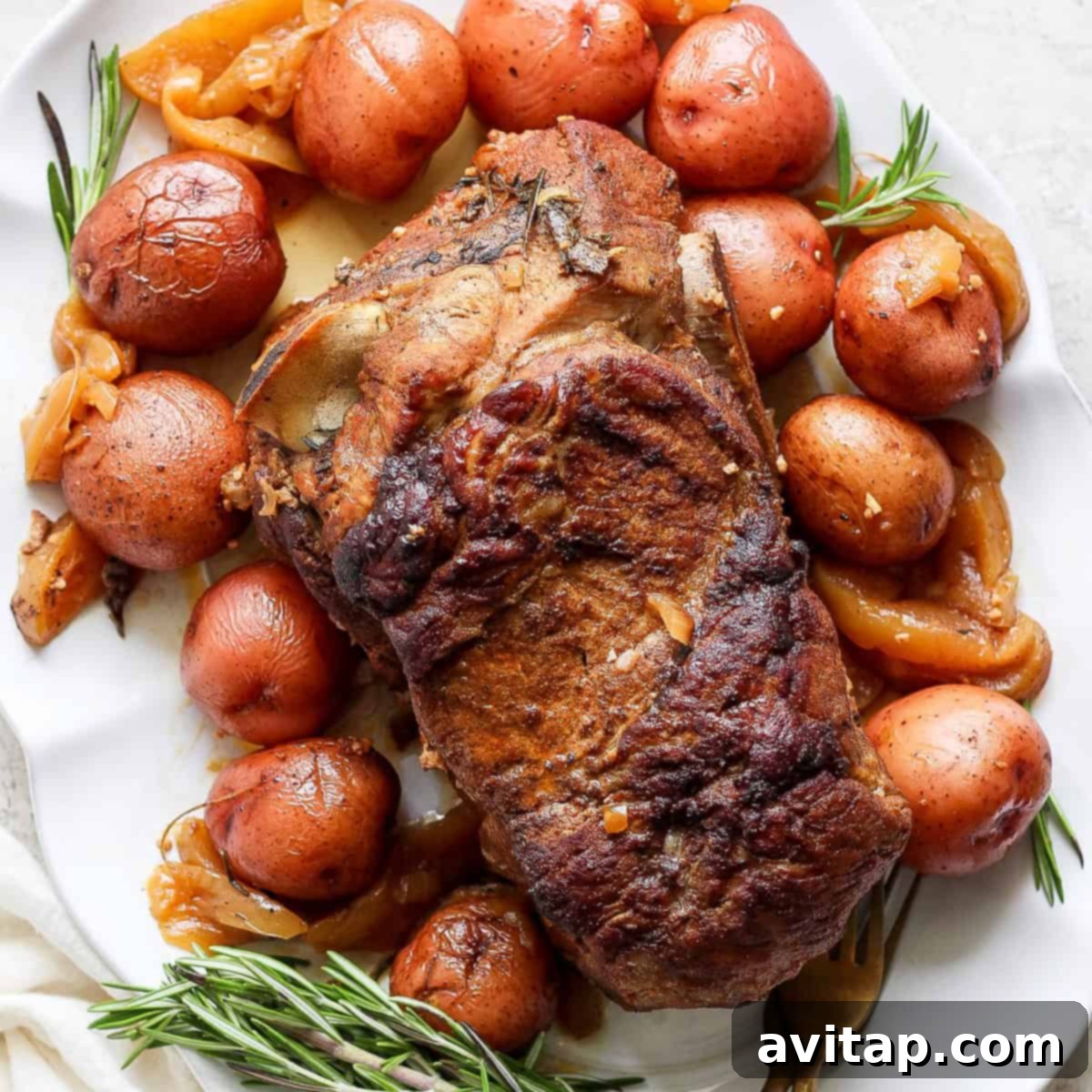
There’s nothing quite like the comforting embrace of a slow-cooked meal, especially when the crisp air of autumn descends. Our Apple Cider Braised Pork Shoulder recipe perfectly captures that essence, transforming a humble cut of pork into an extraordinary culinary masterpiece. This dish marries the rich, savory notes of perfectly seared pork with the sweet, tart, and fragrant essence of apple cider, creating a symphony of fall flavors that will tantalize your taste buds and warm your soul. Imagine a succulent pork shoulder, seared to a golden crisp, then gently braised in an aromatic apple cider bath alongside tender potatoes and sweet Honeycrisp apples, all infused with fresh rosemary and thyme. The result? Fork-tender pork that practically melts in your mouth, enveloped in a rich, flavorful sauce that beckons for a second helping. This isn’t just a meal; it’s an autumn dream come true, ideal for family dinners, holiday feasts, or a cozy weekend retreat.
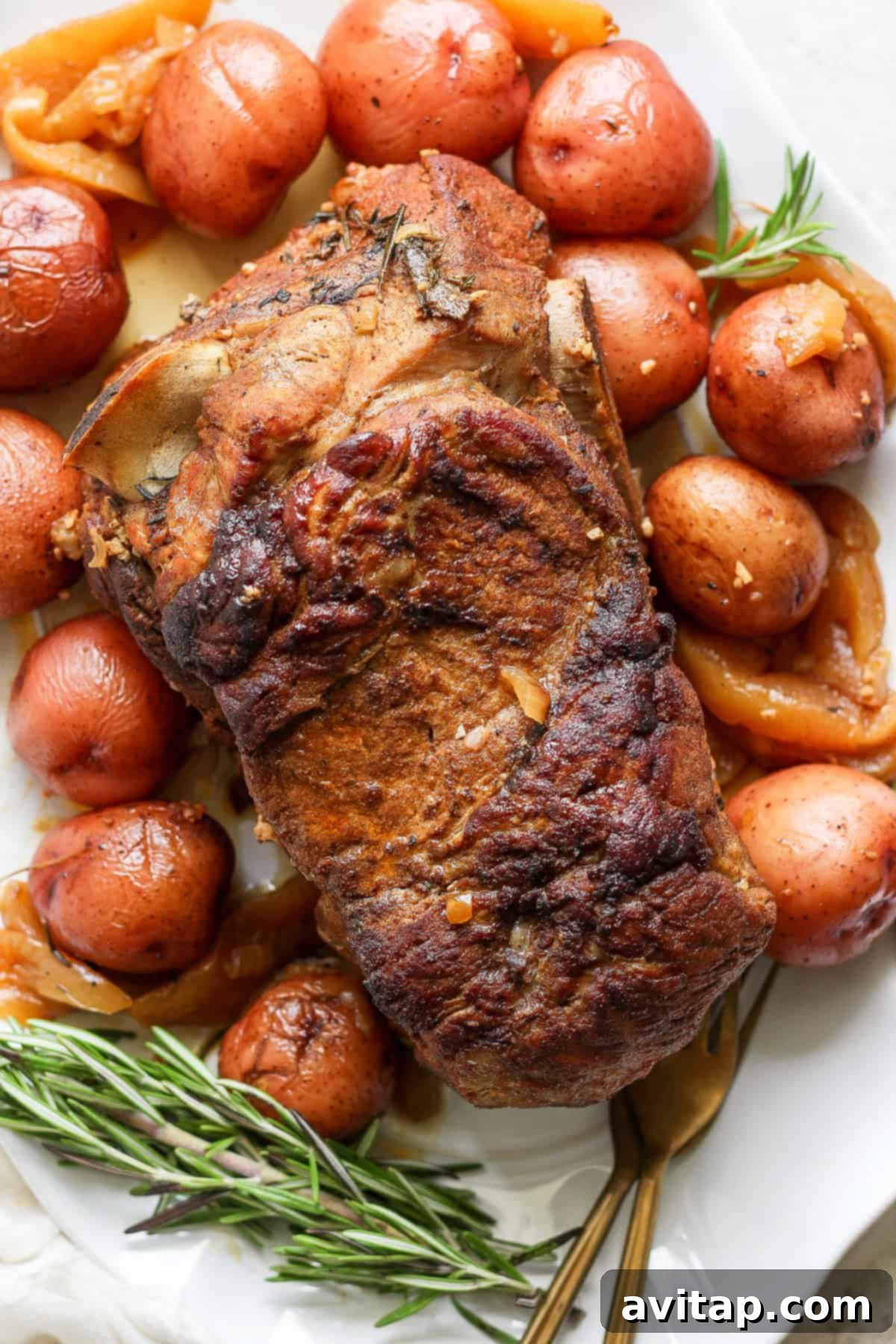
Preparing a show-stopping dish doesn’t have to be complicated, and this braised pork shoulder is a testament to that. Despite its elegant presentation and complex flavor profile, this recipe is surprisingly straightforward, making it an excellent choice for both seasoned home cooks and those looking to impress without the stress. It’s the perfect “set-it-and-forget-it” kind of pork roast, requiring minimal hands-on time once it’s in the oven. This makes it an ideal centerpiece for family gatherings, holiday meals, or a relaxing cabin weekend where you’d rather enjoy the company than be tethered to the kitchen. The magic happens slowly, as the flavors meld and the pork transforms into an incredibly tender delight.
The process is simple yet effective: begin by generously seasoning your pork shoulder to build a foundational layer of flavor, then sear it until a beautiful, crispy crust forms. This crucial step locks in juices and adds a depth of flavor that slow braising alone cannot achieve. Once seared, the pork is nestled into a Dutch oven alongside wholesome baby red potatoes, thinly sliced Honeycrisp apples, and a fragrant blend of apple cider, Worcestershire sauce, and aromatic herbs. The entire ensemble then slow-cooks to perfection in the oven, emerging lusciously fork-tender and bursting with the vibrant tastes of autumn. Get ready for an unforgettable meal that’s both impressive and effortlessly delicious!
Essential Ingredients for a Perfect Apple Cider Braised Pork Shoulder
Crafting an exceptional braised pork shoulder begins with selecting the right ingredients. Each component plays a vital role in building the layered flavors and achieving that signature tender texture. Here’s a closer look at what you’ll need and why these choices make all the difference:
- Pork Shoulder (Boston Butt): The star of our dish! A 5-6 pound bone-in or boneless pork shoulder, also known as Boston butt, is ideal for braising. This cut is rich in connective tissue and fat, which slowly breaks down during the long cooking process, resulting in incredibly moist, tender, and flavorful pork. Its marbling ensures the meat stays juicy, making it wonderfully forgiving for slow-cooking methods.
- Pork Seasoning: A robust seasoning blend is key to building a flavorful crust. While you can certainly craft your own pork rub with staples like smoked paprika, brown sugar, garlic powder, onion powder, and a touch of cayenne, a high-quality store-bought blend works just as well. For a quick and effective alternative, a simple mix of kosher salt, freshly ground black pepper, granulated garlic, and paprika will create a fantastic flavor base.
- Apple Cider: This is the heart of our braising liquid, infusing the pork with its distinctively sweet, tart, and slightly spicy notes. Opt for pure, unfiltered apple cider for the most authentic and robust flavor profile. Avoid overly sweet or artificially flavored varieties, as they can overwhelm the dish.
- Worcestershire Sauce: A secret weapon for depth! Just a couple of tablespoons of Worcestershire sauce adds an umami richness, a subtle tang, and a wonderful complexity that beautifully balances the sweetness of the apple cider, tying all the flavors together.
- Honeycrisp Apples: Thinly sliced and added directly to the braising liquid, these apples don’t just offer a sweet counterpoint; their firm texture allows them to hold their shape during cooking, contributing both flavor and a delightful textural element to the finished dish. Their characteristic sweet-tart profile is perfect for this recipe.
- Baby Red Potatoes: These small, waxy potatoes are excellent for braising. They maintain their shape beautifully and, more importantly, act like little sponges, soaking up all the rich, savory, and apple-infused braising liquid. They become incredibly tender and flavorful, providing a satisfying side dish directly from the pot.
- Fresh Herbs: A generous handful of fresh rosemary and thyme sprigs adds an aromatic, earthy, and sophisticated dimension to the pork. These herbs release their essential oils slowly, permeating the meat and sauce with their fragrant essence, elevating the entire dish.
- Avocado Oil (or other high-smoke point oil): Used for searing the pork shoulder. Avocado oil is excellent due to its high smoke point, ensuring a beautiful, golden-brown crust without burning.
- Dutch Oven: An absolute essential for this recipe! A heavy-bottomed, oven-safe Dutch oven (ideally 6-8 quart capacity) is perfect for searing the pork on the stovetop and then transferring it to the oven for slow braising. Its even heat distribution and tight-fitting lid are crucial for achieving perfectly tender results.
Can I use apple juice instead of apple cider in this recipe?
While apple juice might seem like a suitable substitute, we strongly recommend sticking with pure apple cider for this recipe. Apple cider boasts a significantly richer, more concentrated, and complex flavor profile compared to its sweeter, thinner counterpart, apple juice. This depth of flavor is crucial for creating the deeply nuanced and satisfying taste that defines our braised pork shoulder. If apple cider is absolutely unavailable, and you must use apple juice, we suggest enhancing it by adding a splash of apple cider vinegar to the braising liquid. This addition will introduce some of the tangy acidity that helps balance the sweetness and provides a closer approximation to the complexity of true apple cider.
Can I use a different kind of apple for braising?
Absolutely! While Honeycrisp apples are our preferred choice for this recipe due to their delightful sweet-tart balance and firm texture that holds up beautifully during the long braising process, you have flexibility. Feel free to use any type of apple you enjoy or have readily available. Varieties like Fuji, Gala, Braeburn, or even Granny Smith can work wonderfully. Just keep in mind that the choice of apple will subtly influence the final flavor and texture of the dish. Sweeter apples will yield a richer, sweeter sauce, while more tart varieties will provide a sharper contrast. Experiment to find your favorite!
Step-by-Step Guide: Crafting the Perfect Apple Cider Braised Pork Shoulder
Don’t let the idea of cooking an entire pork shoulder intimidate you; this recipe is designed for ease and maximum flavor with minimal effort. Follow these detailed steps, and you’ll soon be serving a truly memorable and mouthwatering dish that tastes like you spent hours slaving away!
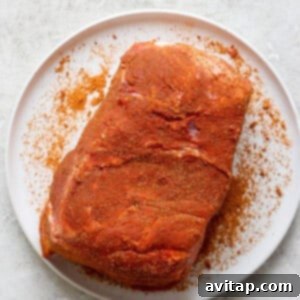
- Prepare and Season the Pork: Begin by patting your 5-6 lb. pork shoulder thoroughly dry with paper towels. This is a crucial step for achieving a perfect sear. In a small bowl, combine 1 tablespoon of kosher salt with ¼ cup of your chosen pork seasoning (either homemade or store-bought). Generously massage this spice mixture all over the pork shoulder, ensuring every surface is completely coated. This not only flavors the meat but also helps to tenderize it. Once seasoned, wrap the pork tightly in plastic wrap and refrigerate for a minimum of two hours, or ideally, overnight. This allows the flavors to penetrate deeply into the meat.
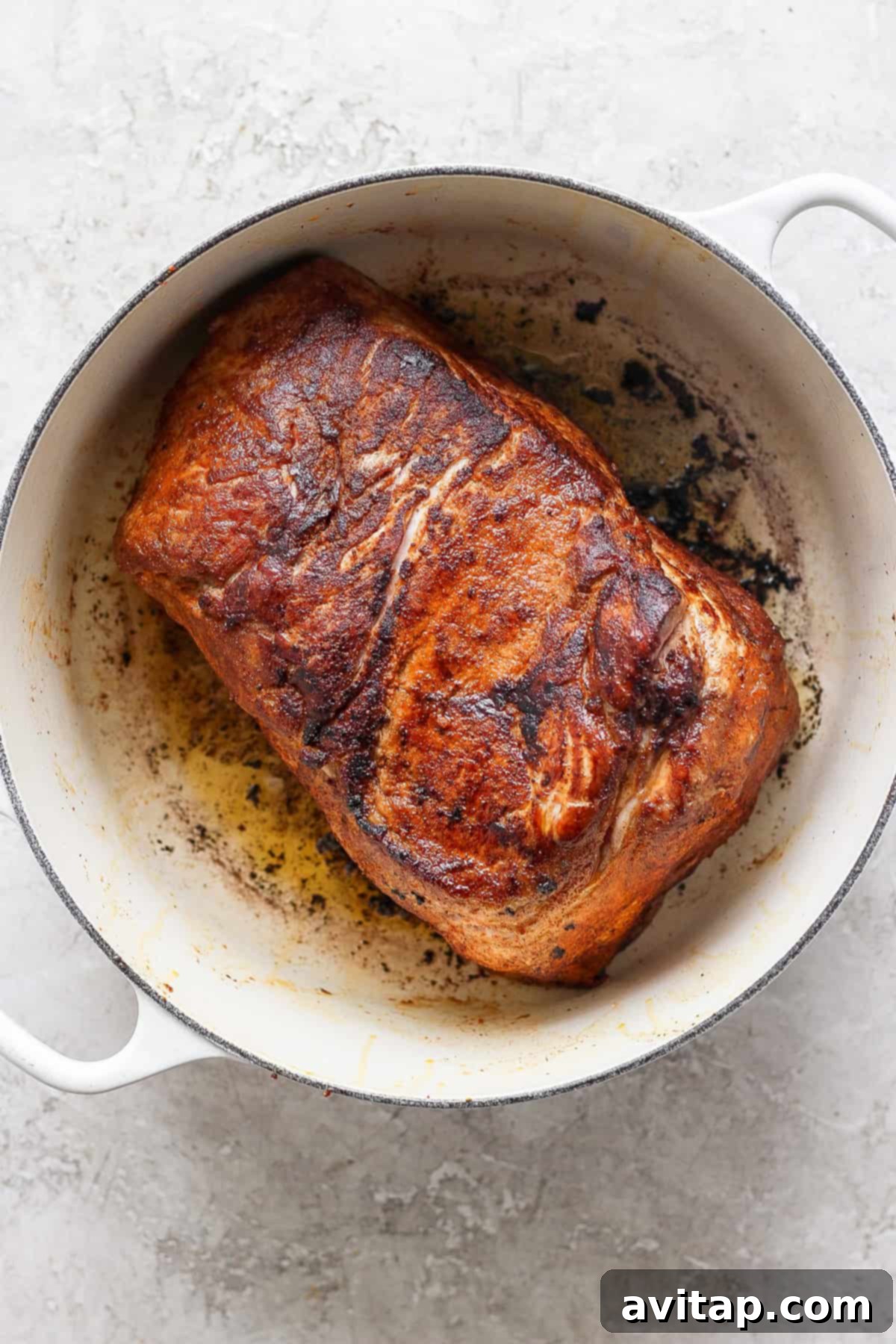
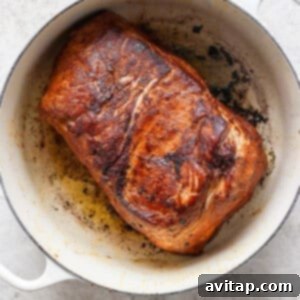
- Sear for Flavor and Texture: Preheat your oven to 325ºF (160ºC). While the oven heats, place a large, heavy-bottomed Dutch oven (suitable for both stovetop and oven use) over high heat on your stovetop. Add 3 tablespoons of avocado oil (or another high-smoke point oil) and allow it to get shimmering hot. Carefully place the seasoned pork shoulder into the hot oil. Sear each side for approximately 2-3 minutes, or until a beautiful, golden-brown crust develops. This searing step is vital for building complex flavors and creating an appealing exterior texture. Once all sides are nicely browned, remove the pork shoulder from the pot and set it aside on a plate.
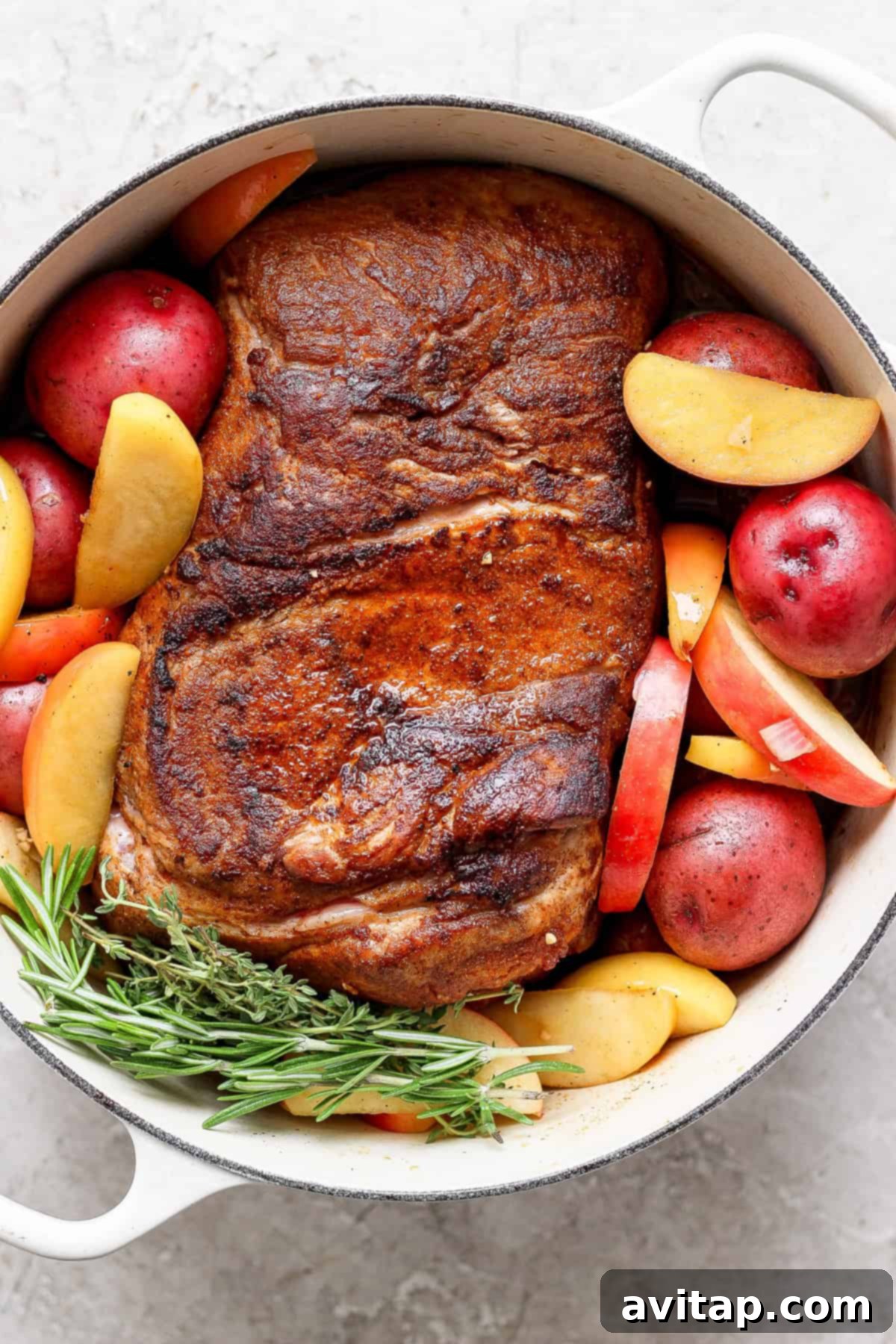
- Build the Aromatic Braising Liquid: With the pork removed, but the flavorful brown bits (fond) still clinging to the bottom of the Dutch oven, it’s time to create your braising liquid. Pour in ½ cup of apple cider vinegar to deglaze the pot. Use a wooden spoon or spatula to scrape up all those delicious browned bits from the bottom – this is where much of the flavor resides! Stir in the remaining 2 cups of apple cider, 2 tablespoons of Worcestershire sauce, ½ a large, chopped white onion, and 5 cloves of minced garlic. Whisk gently to combine all the ingredients. Next, add 3 lbs. of baby red potatoes and 1 large sliced Honeycrisp apple to the pot, tossing them gently to ensure they are well coated in the fragrant liquid.
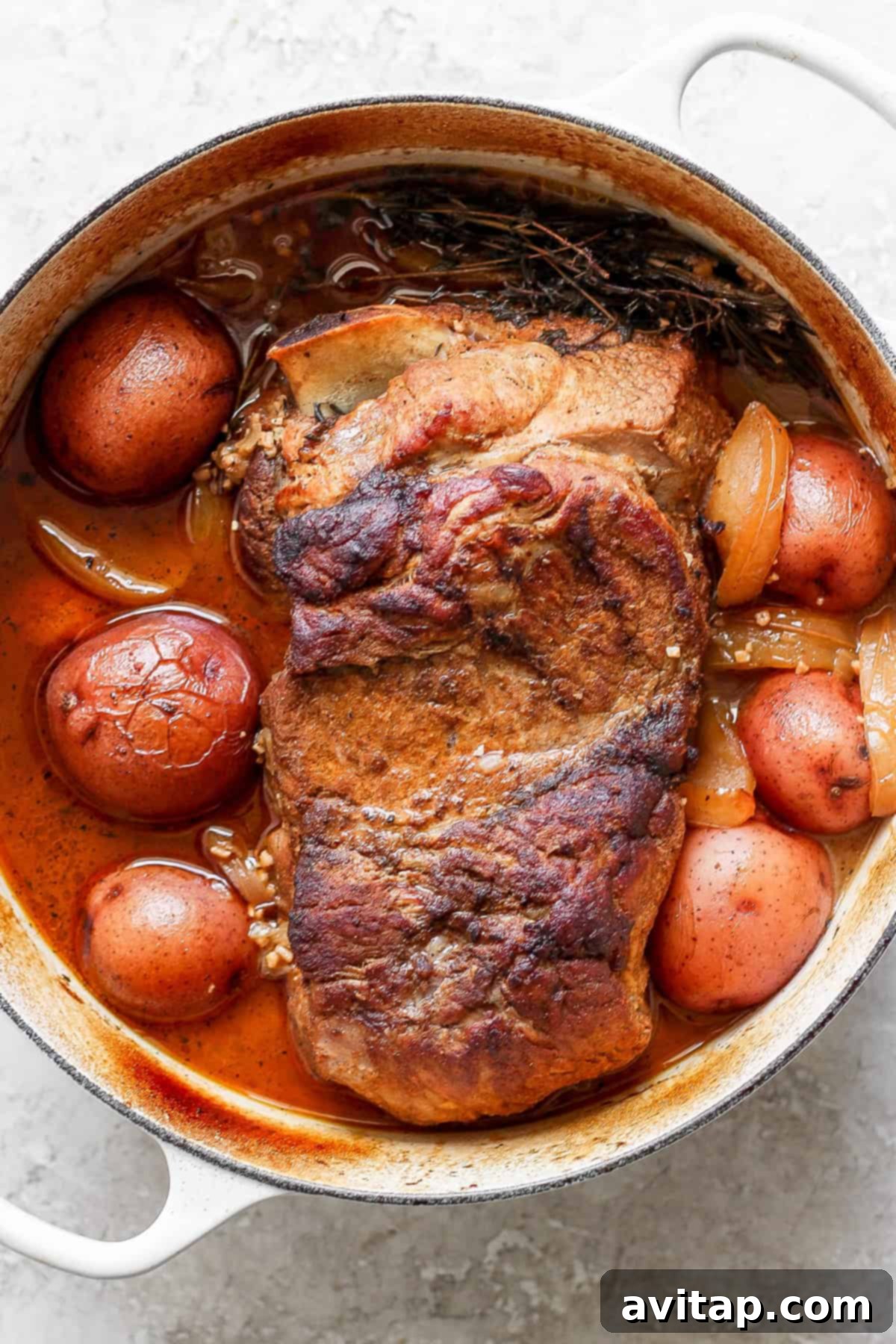
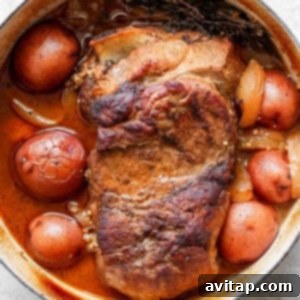
- Braise to Perfection: Carefully nestle the seared pork shoulder back into the Dutch oven, positioning it amongst the potatoes and apples. Arrange 5 sprigs of fresh rosemary and 5 sprigs of fresh thyme around the pork. Cover the Dutch oven tightly with its lid and transfer it to your preheated oven. Bake for approximately 3 to 3.5 hours. During this slow braising period, make sure to baste the pork with the apple cider liquid every hour or so. This helps to keep the meat incredibly moist and ensures it absorbs all the wonderful flavors of the braising liquid.
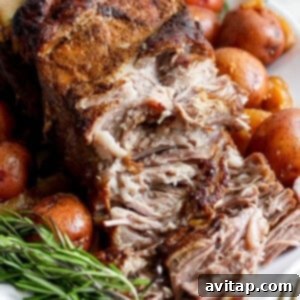
- Rest, Shred, and Serve: The pork is ready when its internal temperature reaches 200ºF (93ºC) and it is effortlessly shreddable with a fork. Once it reaches this point, carefully remove the Dutch oven from the oven. Resist the urge to cut into it immediately! Instead, let the meat rest, still covered, in the pot for at least 10-15 minutes. This resting period allows the juices to redistribute throughout the meat, ensuring maximum tenderness and flavor. After resting, remove and discard the herb stems. Using two forks, shred the pork directly in the pot, allowing it to soak up any remaining delicious apple cider sauce. Serve the tender shredded pork alongside the perfectly cooked potatoes and apples, spooning extra sauce over everything. Enjoy this incredibly flavorful and comforting autumn meal!
Why Cook Pork Shoulder to an Internal Temperature of 200°F?
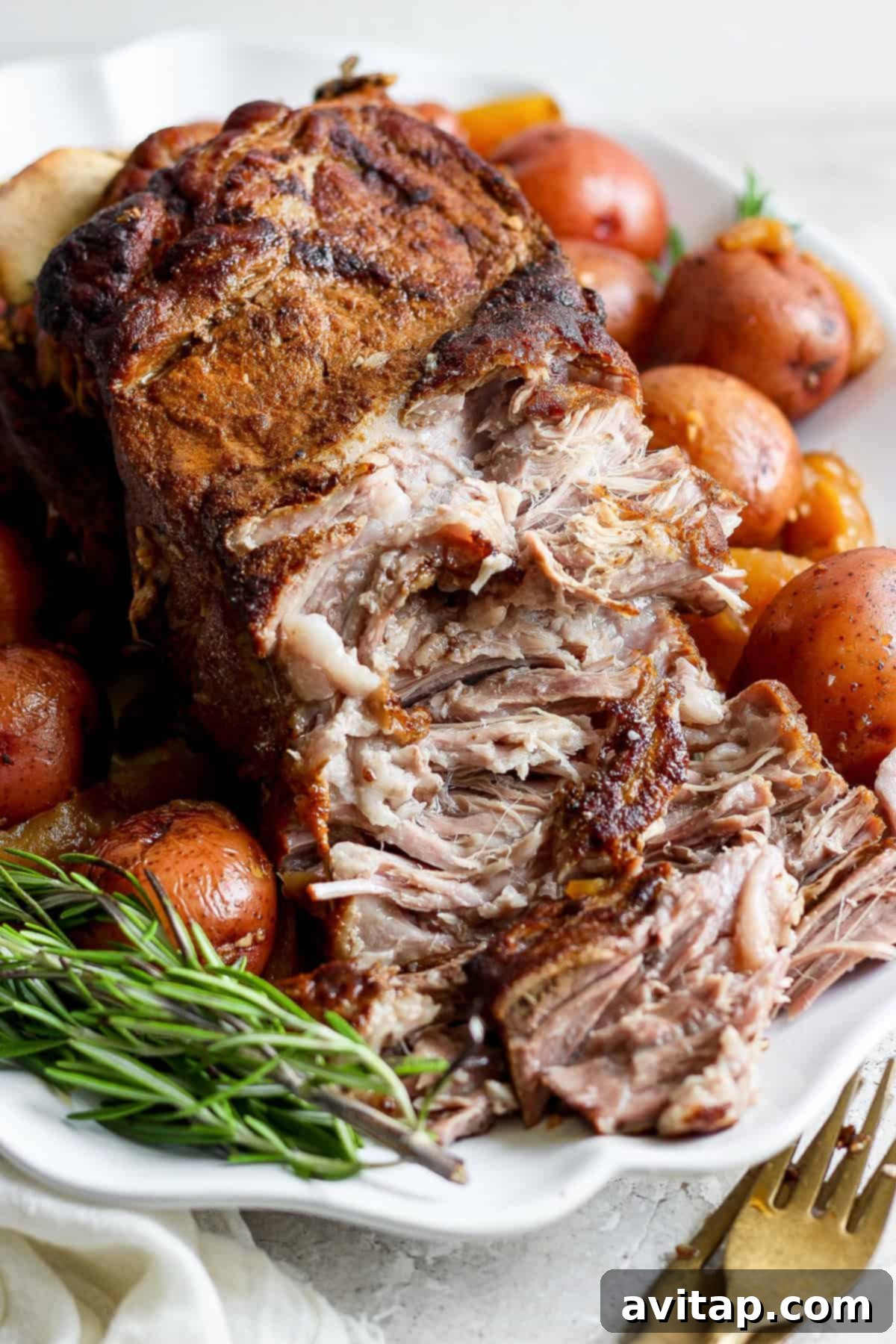
You might be familiar with the USDA’s recommended safe internal cooking temperature for pork, which is 145ºF (63ºC) with a three-minute rest for cuts like pork loin or chops. However, for a tough cut like pork shoulder, especially when braising, our goal is different. We cook the pork shoulder to a higher internal temperature of approximately 200ºF (93ºC), not for food safety, but for texture. At this temperature, the abundant collagen and connective tissues within the pork shoulder begin to break down and convert into gelatin. This transformation is what makes the meat incredibly tender, succulent, and easily shreddable. Cooking it “low and slow” to this higher temperature ensures that the pork achieves that desired fall-apart texture, allowing it to absorb maximum flavor from the braising liquid.
The Importance of Basting for a Juicy Roast
Basting is a simple yet incredibly effective technique that elevates this braised pork shoulder from good to extraordinary. Regularly spooning the flavorful apple cider braising liquid over the exposed parts of the pork shoulder during the cooking process serves several critical functions. Firstly, it keeps the pork consistently moist, preventing it from drying out over the extended cooking time. Secondly, it continually re-introduces and reinforces the delicious flavors of the apple cider, herbs, and seasonings directly onto the surface of the meat, ensuring every bite is rich and deeply flavored. Don’t skip this step – it’s a small effort that yields significant rewards in the juiciness and flavor of your final dish!
Storing and Reheating Your Delicious Leftovers
One of the many wonderful things about this apple cider braised pork shoulder is how fantastic it is as leftovers! In fact, the flavors often deepen and become even more harmonious the next day. To store any remaining pork and vegetables, transfer them to an airtight container. Make sure to include plenty of the braising liquid to keep everything moist and flavorful. Store in the refrigerator for up to 3-4 days.
When you’re ready to enjoy your leftovers, reheating is a breeze. For best results, gently warm the pork and vegetables on the stovetop over medium-low heat, adding a splash more apple cider or broth if the sauce has thickened too much. Alternatively, you can reheat individual portions in the microwave until thoroughly warmed through, stirring occasionally to ensure even heating. This dish makes for effortless future meals!
Perfect Pairings: What to Serve with Apple Cider Braised Pork Shoulder
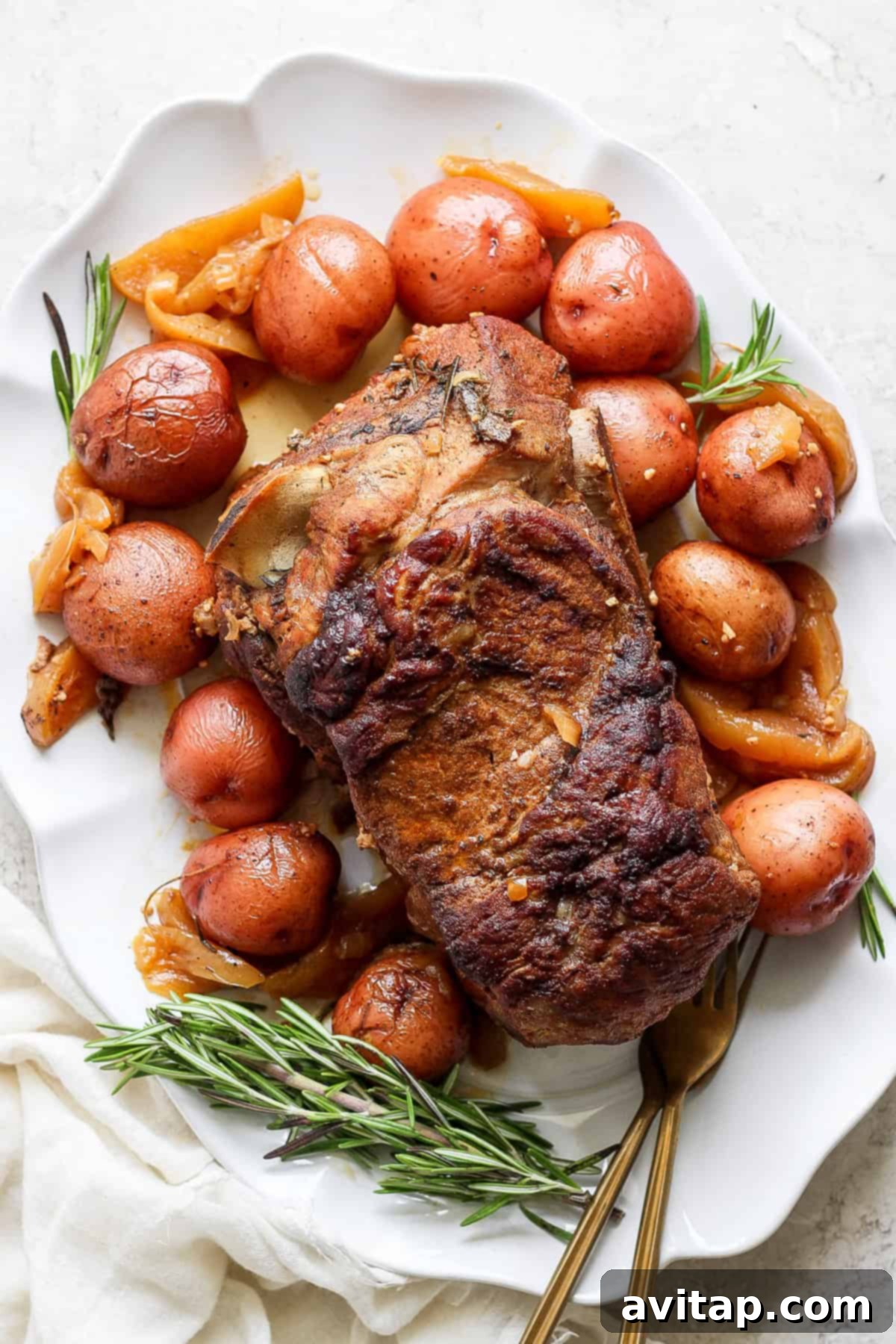
Our Apple Cider Braised Pork Shoulder is a complete meal in itself, thanks to the inclusion of tender potatoes and apples in the braising liquid. However, if you’re looking to elevate your dining experience or simply add more variety to your table, here are some delightful ideas for what to serve alongside this magnificent pork roast:
- Roasted Vegetables: Complement the rich flavors of the pork with additional roasted vegetables. Our Roasted Brussels Sprouts with Bacon offer a savory, slightly bitter crunch, while Honey Balsamic Roasted Carrots bring a sweet and tangy counterpoint. Other great options include roasted asparagus, green beans, or a medley of root vegetables.
- Fresh Salads: A light, crisp salad provides a refreshing contrast to the hearty pork. Consider a simple green salad with a vinaigrette dressing, or try our French Carrot Salad with Honey Mustard Dressing for a bright and tangy side. For an extra touch of autumnal elegance, the Apple Burrata Salad would be a perfect match, echoing the apple notes in the main dish.
- Hearty Grains or Breads: Serve with a side of creamy polenta, mashed potatoes (if you want extra potatoes!), or a wild rice pilaf to soak up every last drop of the incredible braising sauce. A crusty loaf of artisanal bread is also an excellent choice for dipping.
- Seasonal Drinks: Extend the apple theme to your beverages! For adults, a Spiked Apple Cider or a warm Apple Cider Hot Toddy makes for a festive and comforting accompaniment. For a non-alcoholic option, simply serve chilled or warm apple cider.
- Decadent Desserts: Conclude your meal on a sweet, autumnal note. An Easy Apple Crisp or a beautiful Brown Butter Apple Galette would be the perfect grand finale, reinforcing the delightful apple flavors of your main course.
Apple Cider Braised Pork Shoulder Recipe
Lee Funke
Prep:
1 hour
Cook:
3 hours
30 minutes
Total:
4 hours
30 minutes
8
Ingredients
- 5-6 lb. pork shoulder
- 1 tablespoon kosher salt
- ¼ cup pork seasoning
- 3 tablespoons avocado oil
- 2 cups apple cider
- 2 tablespoons Worcestershire sauce
- ½ large white onion
- 5 cloves garlic, minced
- 1 large Honeycrisp apple, sliced
- 3 lbs. baby red potatoes
- 5 sprigs fresh rosemary
- 5 sprigs fresh thyme
Instructions
-
Massage the pork shoulder with kosher salt and pork seasoning. Be sure the whole pork shoulder is coated in spices. Wrap in plastic wrap and transfer to the refrigerator for at least two hours.

-
Preheat the oven to 325ºF. Heat oil in a large Dutch oven over high heat. Sear each side of the pork shoulder for 2-3 minutes or until browned. Remove it from the pot once all sides have been browned.
-
Deglaze the pot with ½ cup of apple cider vinegar and scrape the brown bits from the bottom of the pot. Add the rest of the apple cider, Worcestershire, onion, and garlic to the pot and whisk to combine. Add the potatoes and apples and toss to coat.
-
Nestle the pork shoulder in between all of the vegetables and add the fresh herbs. Cover and bake for 3-3.5 hours, basting the pork with the apple cider every hour or so.
-
When the pork reaches 200ºF or is easily shreddable with a fork, remove the pork from the oven.
-
Let the meat rest for 10 minutes. Remove the herb stems from the pot and shred the pork. Serve with accompanied vegetables and any remaining apple cider sauce.


Tips & Notes
- We highly recommend using pure apple cider for the most robust and authentic flavor profile in your braised pork.
- The recommendation to cook your pork shoulder until its internal temperature reaches 200ºF (93ºC) is crucial for achieving an exceptionally tender, fall-apart texture that is perfect for shredding.
- While pork is technically safe to eat at 145ºF (63ºC) (as per USDA guidelines), braising a tough cut like pork shoulder to 200ºF allows the connective tissues to break down thoroughly, ensuring a melt-in-your-mouth experience rather than a chewy one.
- Don’t forget to baste the pork periodically during braising. This simple step keeps the meat moist and infuses it with maximum flavor from the rich apple cider sauce.
Watch It
Nutrition
Calories:
657
kcal
,
Carbohydrates:
44
g
,
Protein:
60
g
,
Fat:
26
g
,
Fiber:
5
g
,
Sugar:
11
g
Nutrition information is automatically calculated, so should only be used as an approximation.
Love this recipe? Leave a comment below!
Don’t forget to share your culinary creations! Tag your posts on social media with the hashtag #fitfoodiefinds – we’d absolutely love to see what deliciousness you’re cooking up!
Photography by: The Wooden Skillet