
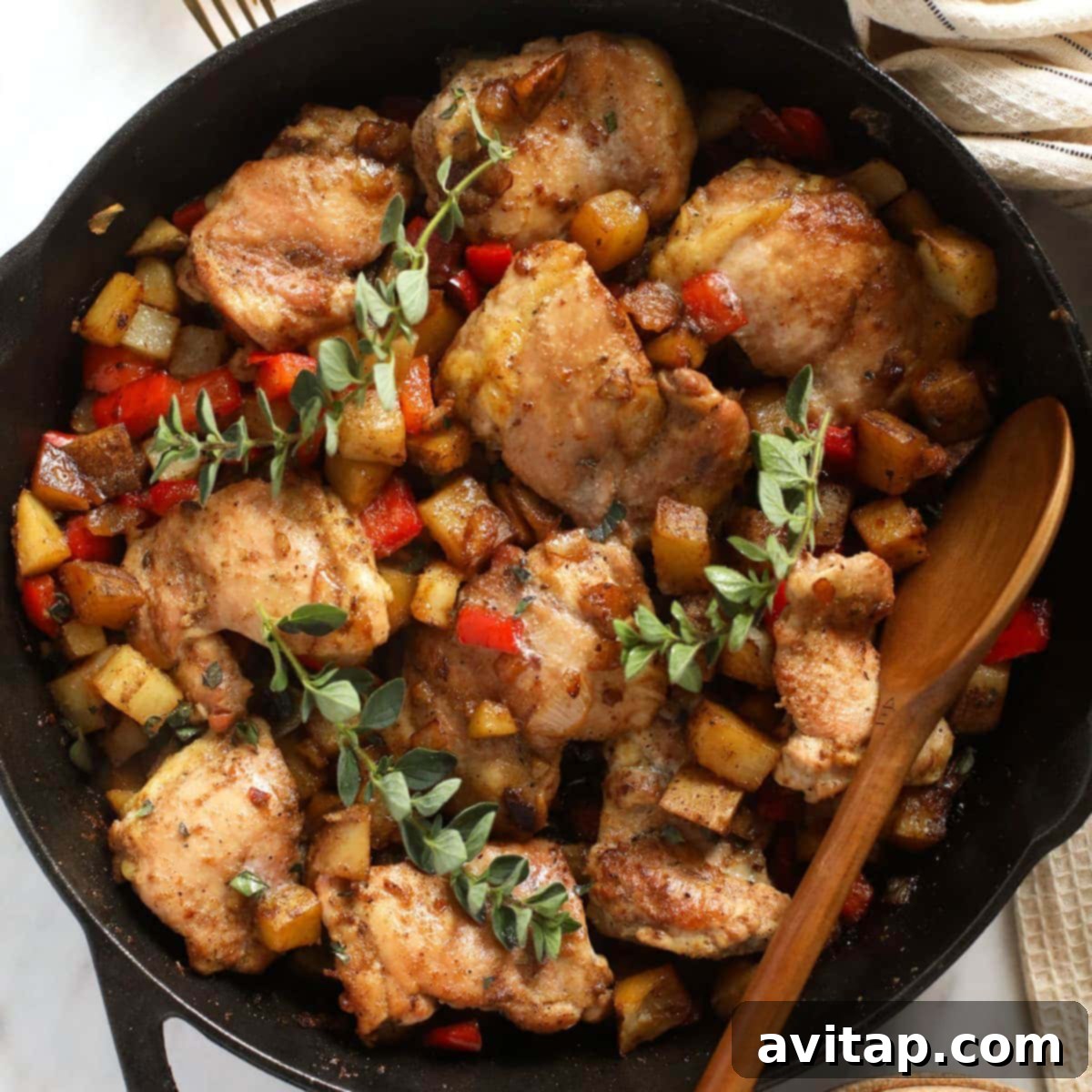
Imagine a delicious, satisfying meal that comes together in one pan, bursting with savory flavors and ready in a flash. That’s exactly what you get with this incredible Skillet Chicken and Potatoes recipe! Featuring perfectly seasoned chicken thighs and a medley of hearty fall vegetables, this dish is designed to simplify your weeknights without compromising on taste. It’s not just a meal; it’s a culinary experience that promises to become a cherished staple in your home.
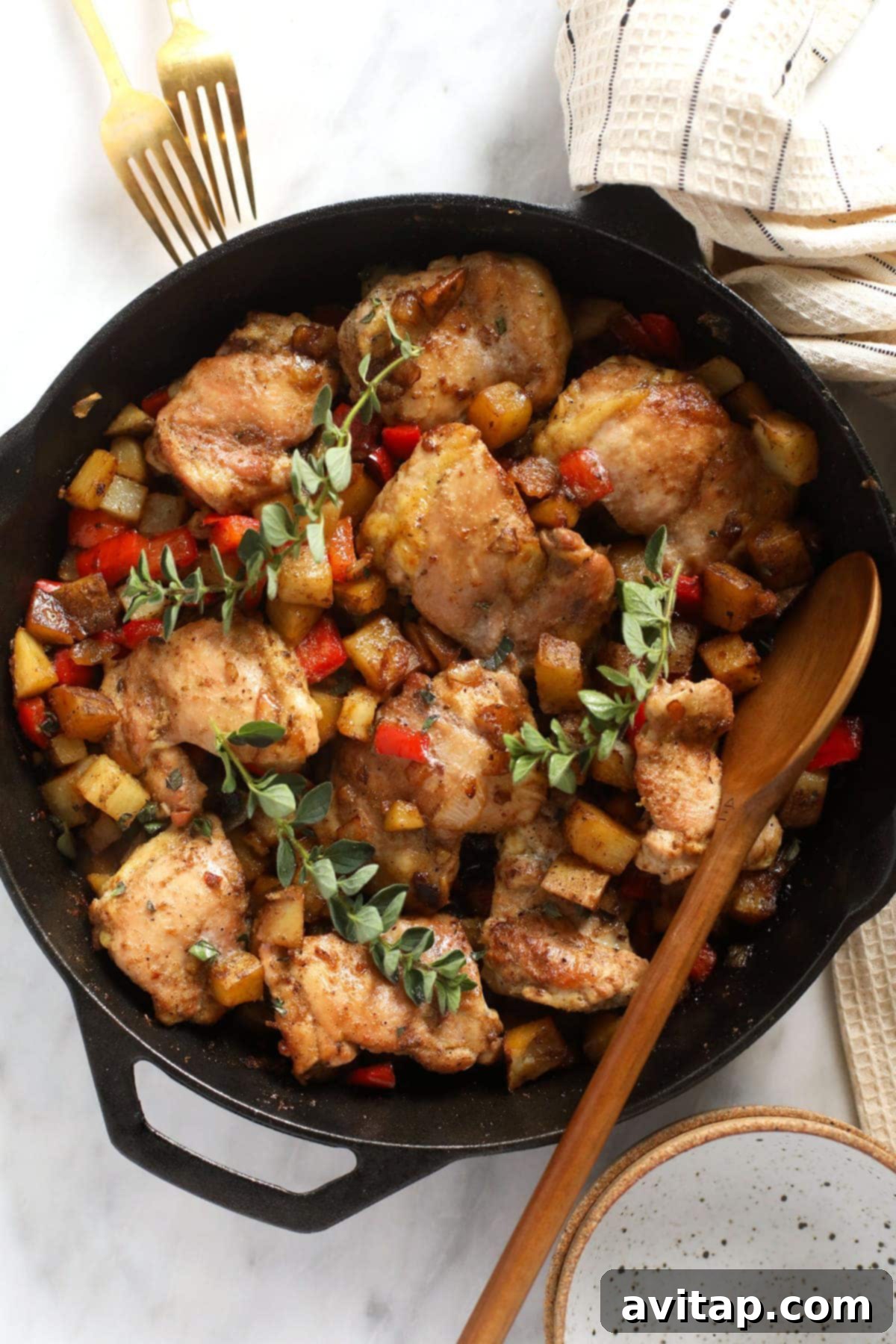
Skillet Chicken and Potatoes: Your Go-To One-Pan Weeknight Dinner Solution
In the quest for effortless yet delicious dinners, one-pan recipes stand out as true heroes. This Skillet Chicken and Potatoes dish is a prime example, offering maximum flavor with minimal cleanup. Since we first tested it, this recipe has been on constant rotation in our kitchen, captivating our taste buds with its rich, savory profile, especially as the cooler fall evenings arrive. The best part? This entire hearty meal is ready from start to finish in just about 30 minutes, making it an ideal choice for even the busiest schedules!
The Magic of One-Pan Dinners: Convenience Meets Flavor and Efficiency
Who doesn’t appreciate the simplicity and efficiency of a one-pan dinner? These meals are the ultimate solution for busy weeknights, offering a complete and satisfying dish without the mountain of dishes afterwards. Our Skillet Chicken and Potatoes recipe embodies this philosophy perfectly. By cooking everything in a single cast iron skillet, all the delicious flavors meld together beautifully, creating a depth of taste that’s often missing in multi-pot meals. This method also ensures that cleanup is a breeze, giving you more time to relax and enjoy your evening. Imagine preparing a wholesome, home-cooked meal that satisfies everyone at the table, all while saving precious time and effort in the kitchen. This recipe proves that quick and easy doesn’t mean sacrificing gourmet taste.
Choosing Your Protein: Chicken Thighs vs. Chicken Breasts for Optimal Flavor
The choice of chicken cut can significantly impact the final flavor and texture of your dish. For this particular recipe, we wholeheartedly recommend using boneless, skinless chicken thighs. Here’s why they are our top pick for a rich and savory skillet meal, along with how you can adapt the recipe if you prefer or only have chicken breasts on hand.
Why Chicken Thighs Shine in This Skillet Recipe
Boneless Chicken Thighs: We opted for boneless chicken thighs due to their inherently higher fat content compared to chicken breasts. This additional fat renders beautifully during cooking, infusing the entire dish with a rich, succulent, and intensely savory flavor that chicken breasts often can’t match. Thighs also tend to be more forgiving, staying moist and tender even if slightly overcooked, which is a huge advantage for a quick weeknight meal where precision isn’t always possible. Their robust flavor pairs wonderfully with the earthy potatoes, aromatic garlic, and the carefully selected spice blend, creating a truly comforting and deeply satisfying experience that’s hard to beat.
Bone-In Chicken Thighs: If you have bone-in, skin-on chicken thighs on hand, they will absolutely work marvelously in this recipe! The bone adds even more depth to the flavor profile, slowly releasing collagen and marrow as it cooks, enriching the sauce. The skin, when crisped to perfection during the searing and broiling stages, offers a delightful texture contrast. Just be mindful that bone-in thighs will require a slightly longer cooking time than boneless ones to reach an internal temperature of 165°F (74°C). Always use a reliable meat thermometer inserted into the thickest part of the thigh, avoiding the bone, to ensure they are safely and thoroughly cooked.
Adapting with Chicken Breasts
Chicken Breasts: If boneless, skinless chicken breasts are all you have available, don’t fret! You can certainly use them in this skillet dinner with a few minor adjustments. Chicken breasts are much leaner, which means they can dry out more quickly if overcooked. To ensure they remain tender and flavorful, especially given their leaner nature, a few considerations are key. If your chicken breasts are particularly thick, consider slicing them in half horizontally (butterflying) or pounding them to an even thickness (about 1 inch). This will help them cook more evenly and prevent them from drying out. Regardless of size, always cook chicken breasts to an internal temperature of 165°F (74°C). This may increase your overall cook time slightly compared to boneless thighs, so adjust accordingly and rely on a meat thermometer for accuracy. You might also consider a quick brine or marinate (even just 15-20 minutes in a salt water solution) to enhance their moisture and flavor before cooking, although this will add a little to your prep time.
The Versatile Skillet Veggies: A Medley of Flavors and Textures
The beauty of this skillet meal lies not only in its convenience but also in its incredible adaptability, especially when it comes to the vegetables. While our recipe features a fantastic combination of hearty, savory veggies that are perfect for the fall season, feel free to get creative and use whatever fresh produce you have on hand or what’s currently in season. The core combination for this recipe provides a robust foundation:
- Russet Potatoes: These starchy potatoes are a perfect choice for skillet cooking. They crisp up beautifully on the outside, developing a delightful texture, while remaining fluffy and tender on the inside. Their earthy flavor is a wonderful canvas for the savory seasonings, soaking up all the delicious pan juices.
- Red Bell Pepper: Adding a burst of vibrant color and a touch of sweet, mild flavor, red bell peppers soften nicely and complement the other ingredients without overpowering them. They bring a fresh brightness to the dish.
- Fresh Garlic: The backbone of so many delicious dishes, garlic provides an irresistible aromatic depth that ties all the flavors together. Its fragrance when sizzling in olive oil is simply a prelude to the amazing taste it imparts.
Optional Vegetable Add-Ins and Substitutions for Customization
This recipe is incredibly forgiving and welcomes experimentation. Don’t hesitate to add or substitute any of the following vegetables to customize your Skillet Chicken and Potatoes. Each addition can bring a unique flavor and texture profile, making every meal a little different and exciting, and helping you utilize whatever fresh produce is available:
- Onion: Sliced or diced yellow or red onions caramelize beautifully in the skillet, adding a layer of sweet and savory flavor that greatly enhances the dish.
- Mushrooms: Sautéed mushrooms (cremini, button, or shiitake) absorb flavors wonderfully and contribute a rich, umami earthiness that pairs exceptionally well with chicken and potatoes.
- Sweet Potatoes: For a slightly sweeter and more vibrant dish, consider swapping russet potatoes for diced sweet potatoes. They’ll add a lovely nutritional boost and a different flavor dimension.
- Fingerling Potatoes: These small, tender potatoes are fantastic when halved and roasted. They offer a creamy texture and delicate skin that cooks beautifully in the skillet.
- Asparagus: For a touch of green and a fresh, slightly bitter note, add asparagus spears during the last few minutes of cooking to ensure they remain crisp-tender.
- Green Beans: Another excellent green veggie option, green beans add a crisp-tender texture and a fresh, wholesome flavor to the skillet.
- Broccoli or Cauliflower Florets: These cruciferous vegetables roast well in a skillet, becoming tender with slightly crispy, charred edges.
- Zucchini or Summer Squash: Quick-cooking and mild, these are great for adding extra bulk and nutrients. Add them towards the end of the vegetable sauté to prevent them from becoming too soggy.
- Carrots: Diced carrots add natural sweetness and a vibrant orange color, and they hold up well during skillet cooking, becoming tender and flavorful.
- Spinach or Kale: For a nutrient boost, stir in a handful of fresh spinach or kale during the last few minutes; it will wilt quickly into the dish.
The key to successful vegetable additions is to consider their cooking times. Harder vegetables like carrots and parsnips should be added with the potatoes, while softer ones like zucchini or leafy greens should be added closer to the end to ensure everything reaches optimal doneness simultaneously.
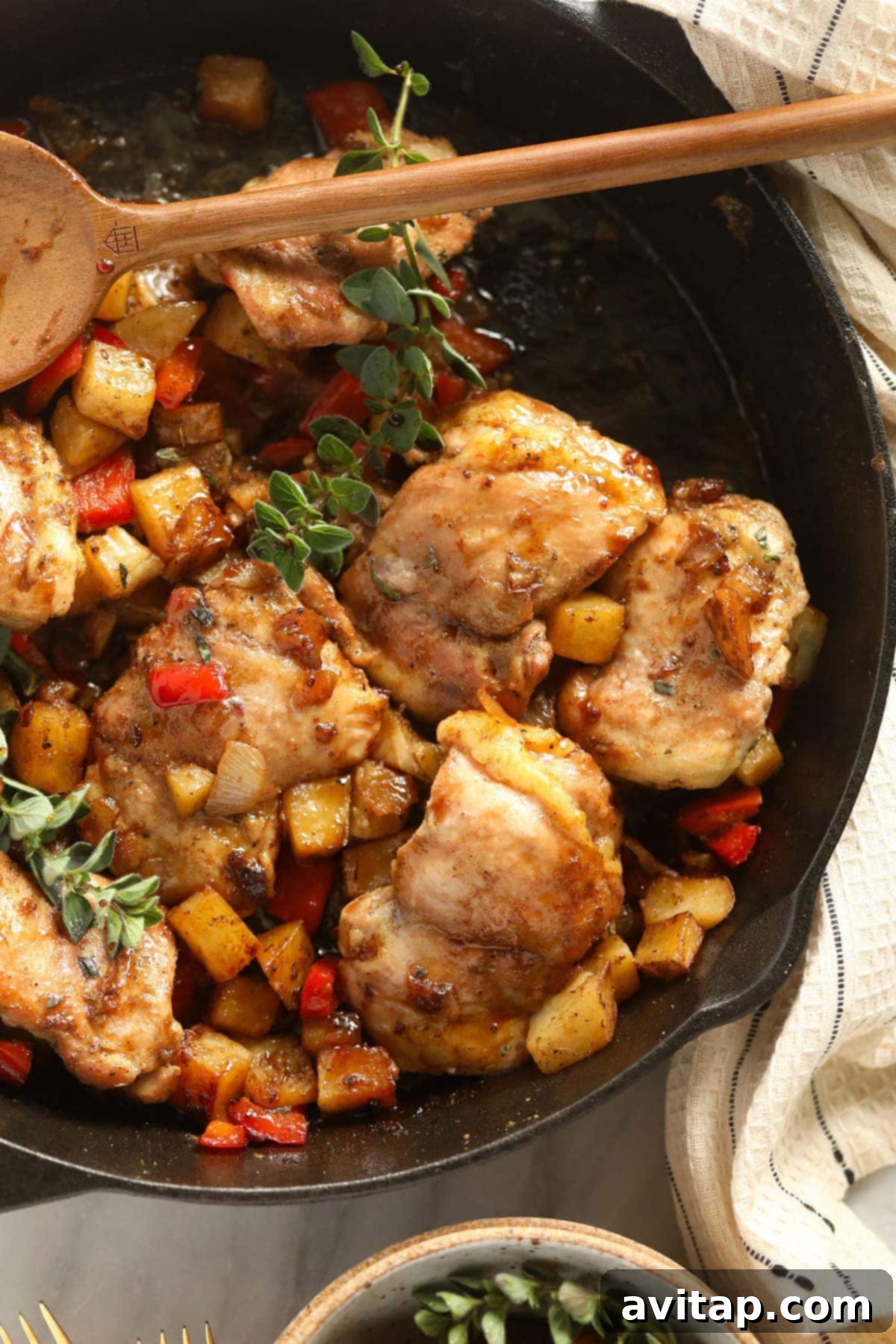
How to Master Skillet Chicken and Potatoes: A Detailed Step-by-Step Guide
Creating this flavorful Skillet Chicken and Potatoes dinner is straightforward and incredibly rewarding. Follow these detailed steps to achieve a perfectly cooked, mouth-watering meal every time. Remember, the beauty of one-pan cooking is in building layers of flavor in the same vessel, ensuring every bite is rich and satisfying.
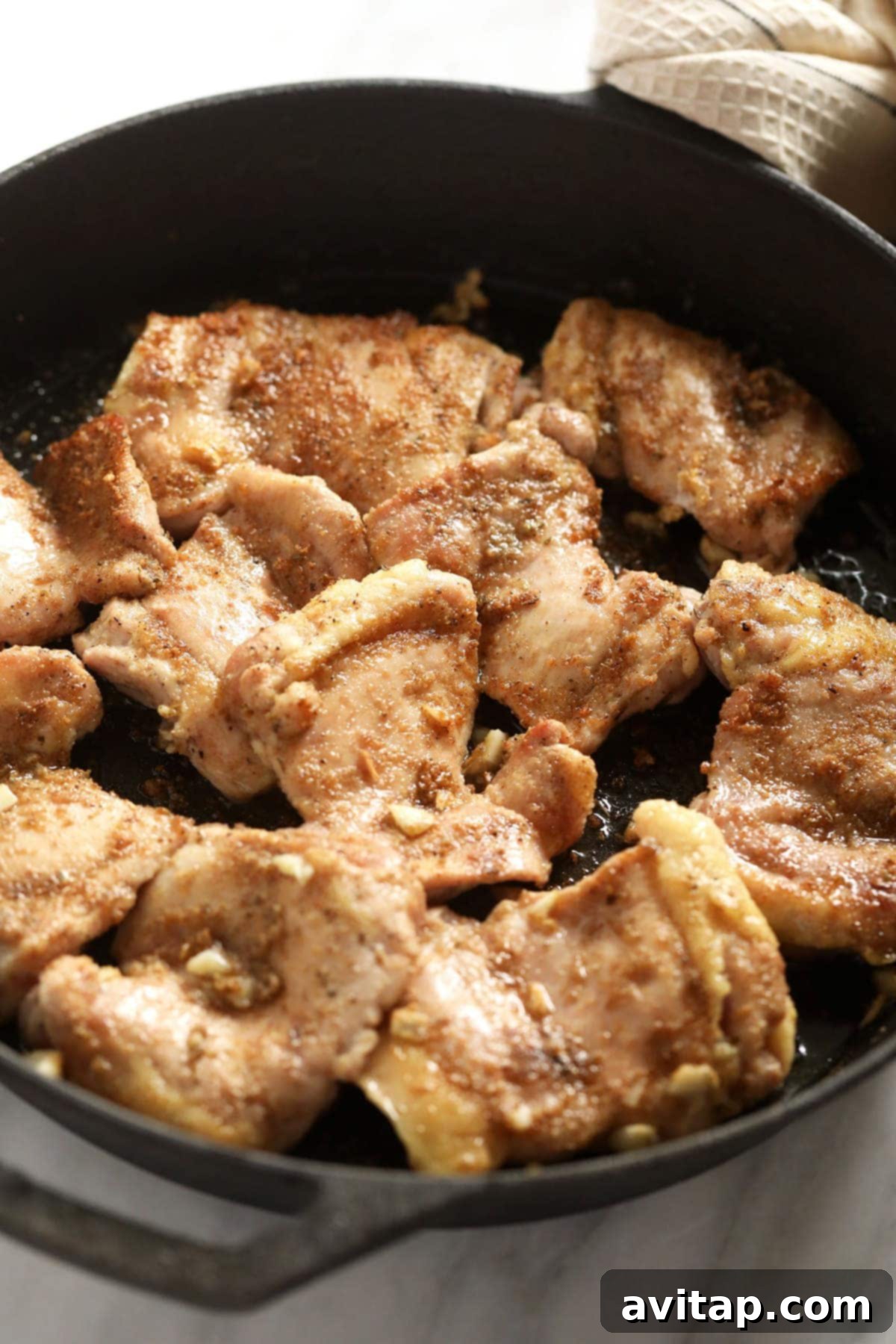
- Prepare and Season the Chicken Thighs: Begin by thoroughly patting your boneless chicken thighs dry with paper towels. This crucial step helps to remove excess moisture, which is essential for achieving a beautiful, crispy sear. In a small bowl, combine your carefully selected spices: garlic powder, ground coriander, ground black pepper, dried oregano, and salt. Generously sprinkle and rub this fragrant seasoning blend over both sides of each chicken thigh, ensuring they are thoroughly coated. The spices will adhere better to dry chicken. Set the seasoned chicken aside while you prepare the skillet.
- Sear the Chicken for Golden Perfection: Heat 2 tablespoons of olive oil in a large cast-iron skillet over medium-high heat. A cast-iron skillet is highly recommended for its excellent heat retention and ability to create a fantastic, even sear. Once the oil is shimmering and fragrant, add 1 tablespoon of the minced garlic to the pan. Let it sizzle for about one minute until it becomes aromatic, being careful not to burn it (burnt garlic can taste bitter). Then, carefully place the seasoned chicken thighs into the hot skillet. If using skin-on thighs, place them skin-side down first. Cook for 2-3 minutes per side until beautifully golden brown and a delicious crust has formed. This searing locks in juices and builds incredible foundational flavor for the entire dish. Remove the seared chicken from the pan and set it aside on a clean plate; it will finish cooking gently with the vegetables later.
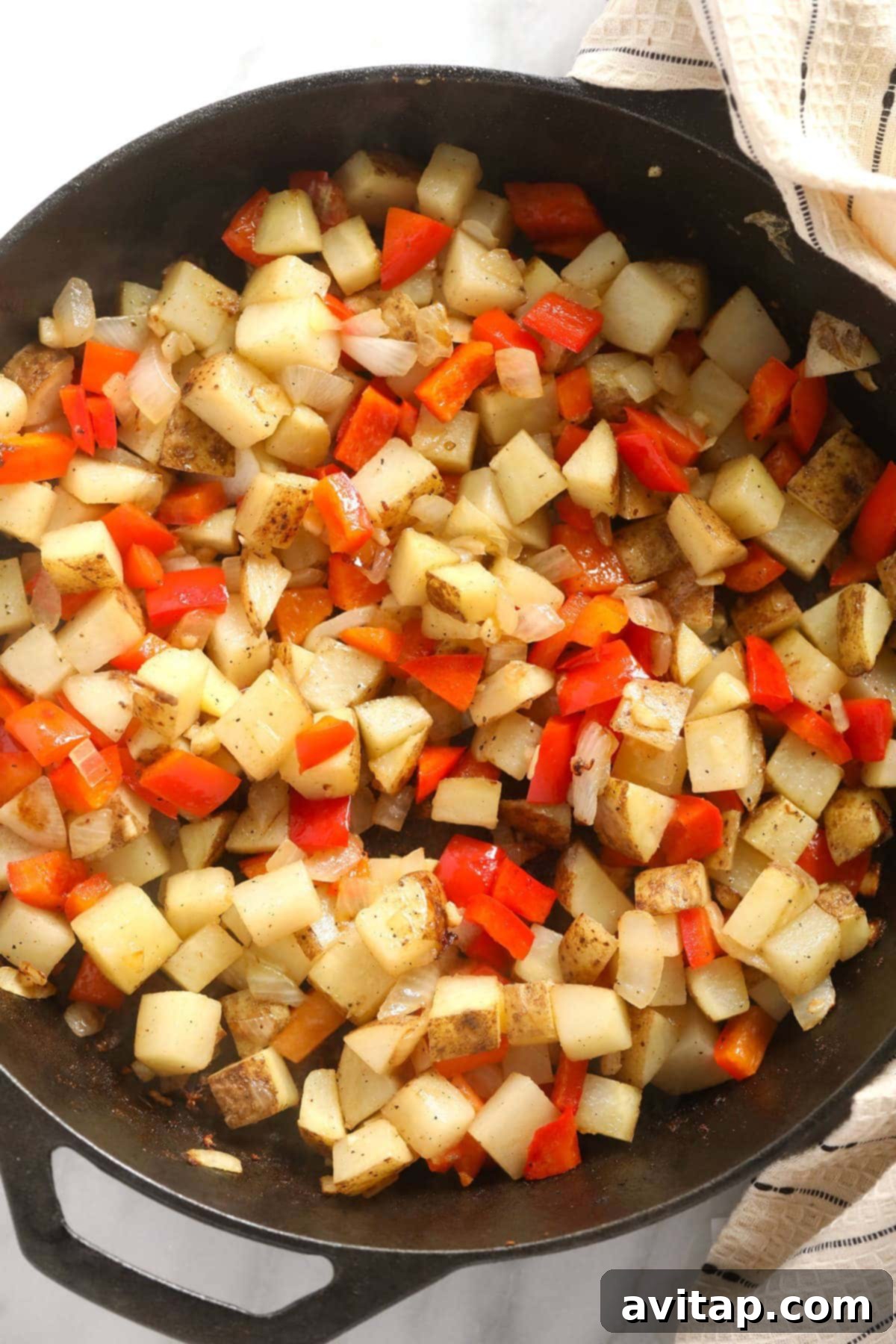
- Sauté the Hearty Veggies: With the same skillet still on medium-high heat (don’t clean it, those browned bits are flavor!), add the remaining 1 tablespoon of olive oil and the other tablespoon of minced garlic. Immediately add your diced russet potatoes and any other harder vegetables like diced onions or carrots, along with a pinch of salt and pepper. Sauté these for about 4 minutes, stirring occasionally, allowing them to soften slightly and develop some color and char. Next, add the diced red bell pepper (or other softer vegetables like mushrooms or green beans) and continue to sauté for another 4 minutes. The goal here is to get the vegetables partially cooked and tender-crisp before the final stage, ensuring they aren’t raw when the chicken returns.
- Combine, Cover, and Simmer: Once the potatoes are al dente (meaning they are mostly cooked through but still have a slight bite and aren’t mushy), it’s time to build the sauce. Pour in the balsamic vinegar and chicken broth. Use a sturdy wooden spoon or spatula to vigorously scrape up any delicious browned bits (fond) that have accumulated on the bottom of the skillet. This deglazing step is crucial as these bits are packed with concentrated flavor and will significantly enrich your sauce. Gently place the seared chicken thighs back into the skillet, nestling them on top of the sautéed vegetables. Cover the skillet tightly with a lid (or aluminum foil if you don’t have a lid that fits) and reduce the heat to medium. Let the dish simmer for 7-8 minutes, or until the chicken thighs reach an internal temperature of 160ºF (71°C) when measured with a meat thermometer. This steaming helps cook the chicken through gently and ensures the vegetables are perfectly tender.
- Finish with a Broiler Boost for Crispy Perfection: For that irresistible golden finish and a touch of extra richness, preheat your oven broiler to high. Remove the lid from the skillet. Place small pads of butter (about 1 tablespoon per thigh) directly on top of each chicken thigh. Transfer the skillet to the preheated broiler and broil on high for 1-3 minutes. Keep a very close eye on it, as broilers can quickly burn food. You’re looking for the butter to melt and the chicken to develop a beautifully browned, slightly crispy exterior. Once achieved, carefully remove the skillet from the oven. Let the dish rest for 5 minutes before serving; this allows the juices in the chicken to redistribute, ensuring maximum tenderness and flavor. Garnish with an optional drizzle of balsamic reduction and an extra sprinkle of fresh salt and pepper if desired, then enjoy immediately!
Why This Skillet Chicken and Potatoes Recipe Will Be Your New Favorite
This recipe isn’t just another dinner idea; it’s a commitment to deliciousness, convenience, and wholesome eating. Here’s why it’s poised to become a constant in your culinary repertoire:
- Speed and Efficiency: In a world where time is a precious commodity, a meal ready in 30 minutes is a game-changer. This recipe ensures you can have a home-cooked, flavorful dinner on the table without hours of prep or cooking, perfect for those demanding weeknights.
- One-Pan Wonder: The single-skillet approach drastically cuts down on cleanup. Fewer pots and pans mean more time for yourself and less time scrubbing, making it an ideal choice for busy households who value convenience.
- Bursting with Flavor: The combination of succulent, savory chicken thighs, aromatic garlic, sweet bell peppers, earthy potatoes, and a hint of tangy balsamic creates a symphony of flavors that is both comforting and sophisticated. The carefully balanced spice blend, with garlic powder, coriander, and oregano, adds a warmth perfect for any season, especially the cozy months of fall.
- Nutrient-Rich and Balanced: Packed with lean protein from chicken and essential vitamins, minerals, and complex carbohydrates from the potatoes and bell peppers, this meal is as nutritious as it is delicious. It’s a well-rounded dish that will keep you feeling full, satisfied, and energized.
- Highly Customizable: As we’ve explored, this recipe is incredibly versatile. You can easily swap out vegetables based on seasonality, personal preference, or what you have on hand. It’s a fantastic way to utilize leftover produce, reduce food waste, and adapt to different dietary needs or tastes.
- Crowd-Pleaser: The classic, comforting combination of chicken and potatoes is universally loved, making this dish a guaranteed hit with family members of all ages. It’s hearty enough for a satisfying main course and pairs beautifully with simple sides, making it perfect for both everyday dinners and casual entertaining.
- Economical: Chicken thighs and potatoes are generally affordable ingredients, making this a budget-friendly meal that doesn’t skimp on flavor or satisfaction.
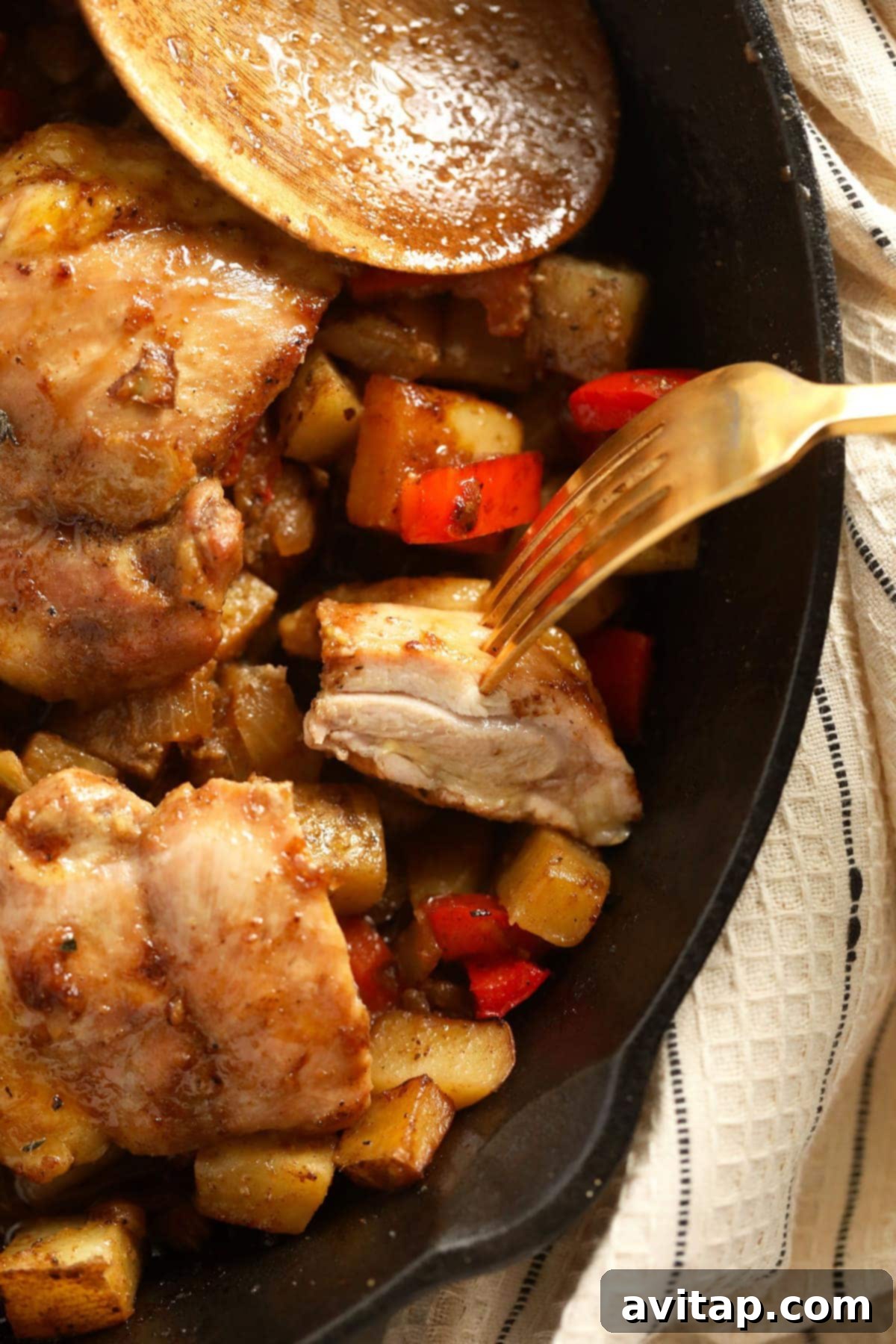
More of Our Favorite Chicken Thigh Recipes
If you’ve fallen in love with the versatility, rich flavor, and forgiving nature of chicken thighs through this skillet recipe, you’re in luck! Chicken thighs are a fantastic protein choice for a wide variety of dishes, always delivering on moisture and exceptional taste. Here are some other delicious chicken thigh recipes you might enjoy exploring and adding to your meal rotation:
- Instant Pot Honey Garlic Chicken Thighs
- Crispy Sous Vide Chicken Thighs
- Moroccan-Style Instant Pot Chicken Thighs
- Grilled Chicken Thighs with Zesty Marinade
- Baked Lemon Herb Chicken Thighs
Recipe: Skillet Chicken and Potatoes
Skillet Chicken and Potatoes
This Skillet Chicken and Potatoes is the perfect easy weeknight meal! With savory fall veggies and deliciously seasoned chicken thighs, this recipe will quickly become a staple in your kitchen!
By: Emily Richter
Prep Time: 15 minutes
Cook Time: 15 minutes
Total Time: 30 minutes
Yields: 4 servings
Ingredients
- For the Chicken Seasoning:
- 1.5 lbs. boneless chicken thighs
- 1 tablespoon garlic powder
- 1 teaspoon ground coriander
- 1/4 teaspoon ground black pepper
- 1/2 teaspoon dried oregano
- 1/4 teaspoon salt
- Other Ingredients:
- 3 tablespoons olive oil, divided
- 2 tablespoons minced garlic, divided
- 2 large russet potatoes, cut into 1/2-inch chunks
- 1/4 teaspoon salt (for veggies)
- 1/4 teaspoon ground pepper (for veggies)
- 1 large red bell pepper, diced
- 1/4 cup balsamic vinegar
- 1/2 cup chicken broth
- 2 tablespoons butter, cut into small chunks
- For Topping (Optional, but recommended for extra flavor):
- 1 tablespoon balsamic reduction
- Extra pinch of salt
- Extra pinch of pepper
Instructions
- Season Chicken: In a small bowl, combine garlic powder, ground coriander, black pepper, dried oregano, and salt. Pat chicken thighs thoroughly dry with paper towels, then generously rub the seasoning mixture over both sides of each thigh. Set the seasoned chicken aside.
- Sear Chicken: Heat 2 tablespoons of olive oil in a large cast-iron skillet over medium-high heat. Add 1 tablespoon of minced garlic and let it sizzle for 1 minute until fragrant. Place the seasoned chicken thighs into the hot skillet (skin-side down first, if applicable) and cook for 2-3 minutes per side until beautifully golden brown and a crust has formed. Remove the seared chicken from the pan and set aside on a clean plate.
- Sauté Vegetables: Add the remaining 1 tablespoon of olive oil and 1 tablespoon of minced garlic to the same skillet. Add the diced russet potatoes, along with 1/4 teaspoon of salt and 1/4 teaspoon of ground pepper. Sauté for 4 minutes, stirring occasionally. Then, add the diced red bell pepper and continue cooking for another 4 minutes, until the vegetables begin to soften.
- Simmer and Cover: Once the potatoes are al dente (tender-crisp), pour in the balsamic vinegar and chicken broth. Use a wooden utensil to scrape up any browned bits (fond) from the bottom of the pan to incorporate them into the liquid. Place the seared chicken thighs back into the skillet, nestling them on top of the vegetables. Cover the skillet tightly and reduce the heat to medium. Let the dish simmer for 7-8 minutes, or until the chicken thighs reach an internal temperature of 160ºF (71°C).
- Broil to Finish: While the chicken simmers, preheat your oven broiler to high. Once the simmering step is complete, remove the lid from the skillet. Place small pads of butter (about 1 tablespoon per thigh) on top of each chicken thigh. Transfer the skillet to the preheated broiler and broil on high for 1-3 minutes, watching very closely, until the butter melts and the chicken develops a beautifully browned, slightly crispy exterior.
- Rest and Serve: Carefully remove the skillet from the oven. Let the dish rest for 5 minutes before serving; this allows the juices in the chicken to redistribute, ensuring maximum tenderness. Garnish with an optional drizzle of balsamic reduction and an extra sprinkle of fresh salt and pepper if desired. Serve hot and enjoy!
Nutrition Facts (Approximate per serving)
- Calories: 451 kcal
- Carbohydrates: 22 g
- Protein: 36 g
- Fat: 23 g
- Fiber: 2 g
- Sugar: 6 g
Note: Nutrition information is automatically calculated and should only be used as an approximation. Actual values may vary significantly based on specific ingredients, portion sizes, and preparation methods.
Tips for the Best Skillet Chicken and Potatoes Every Time
Achieving a restaurant-quality meal at home is easier than you think with a few simple techniques. Here are our top tips to ensure your Skillet Chicken and Potatoes turns out perfectly delicious:
- Don’t Crowd the Pan: This is crucial for successful searing. When searing chicken or sautéing vegetables, ensure there’s enough space in your skillet for ingredients to make direct contact with the hot surface. Overcrowding can steam the ingredients instead of searing them, preventing that desirable golden-brown crust and flavor development. If necessary, cook the chicken in batches and set it aside.
- Pat Chicken Dry Thoroughly: Before seasoning, always pat your chicken thighs (or breasts) thoroughly dry with paper towels. This step is essential because excess moisture on the surface of the chicken will prevent it from searing properly, resulting in a steamed rather than crispy exterior. A dry surface allows the seasoning to adhere better and promotes a crispier, more flavorful crust.
- Monitor Broiler Closely: The broiler works very quickly and intensely! Stay by your oven and visually check the chicken every 30 seconds to prevent burning. The goal is to melt the butter and achieve a nice browning and slight crispness, not to char the chicken. Broilers can go from perfect to burnt in a matter of seconds.
- Use a Meat Thermometer: For perfectly cooked chicken every time, without guessing or cutting into the meat, invest in a good instant-read meat thermometer. Chicken thighs are safely cooked at 165°F (74°C). The initial simmer brings them close, and the broiler finishes them off, ensuring they are both safe and succulent.
- Deglaze for Maximum Flavor: Don’t skip the step of scraping the brown bits (fond) from the bottom of the pan when adding the balsamic vinegar and chicken broth. These bits are packed with concentrated, caramelized flavor and will enrich your sauce significantly, adding depth to the entire dish.
- Uniform Potato Size: Cut your potatoes into roughly uniform 1/2-inch chunks to ensure they cook evenly and at the same rate. Inconsistent sizing can lead to some potatoes being undercooked while others are mushy.
- Use a Quality Cast Iron Skillet: While any large oven-safe skillet will work, a cast iron skillet is highly recommended. It retains heat exceptionally well and distributes it evenly, which is ideal for searing and roasting, contributing to those perfect crispy edges on your potatoes and chicken.
Serving Suggestions for Your Skillet Meal
This Skillet Chicken and Potatoes is a hearty and complete meal on its own, but you can easily elevate it or round it out with a simple side, depending on your preferences or how much time you have. Here are some delicious additions that pair wonderfully with its rich flavors:
- Fresh Green Salad: A light, crisp green salad with a simple vinaigrette dressing provides a refreshing contrast to the rich, savory flavors of the chicken and potatoes. It adds a welcome freshness and brightens the meal.
- Crusty Bread or Dinner Rolls: Perfect for soaking up the incredibly flavorful pan juices and balsamic sauce left in the skillet. A warm, crusty baguette can turn this into an even more comforting experience.
- Steamed Green Vegetables: If you want to boost your vegetable intake beyond the skillet, a simple side of steamed asparagus, broccoli florets, or blanched green beans can add extra nutrients, color, and a gentle texture.
- Quinoa or Brown Rice: For those looking for additional complex carbohydrates, a small side of fluffy quinoa or nutty brown rice can be a great accompaniment, especially if you have an active day ahead.
- A Dollop of Sour Cream or Greek Yogurt: For an added creamy tang, a spoonful of sour cream or plain Greek yogurt on the side can be surprisingly delicious with the potatoes and chicken.
Frequently Asked Questions (FAQs) About Skillet Chicken and Potatoes
Can I use boneless, skinless chicken breasts instead of thighs?
Yes, you can! As mentioned earlier in the “Chicken Thighs vs. Chicken Breasts” section, chicken breasts are leaner and may cook faster or dry out more easily. To compensate, consider pounding them to an even thickness (about 1 inch) or butterflying larger breasts to ensure even cooking. Monitor their internal temperature closely with a meat thermometer to ensure they reach 165°F (74°C) without overcooking and becoming dry. The cook time might be slightly shorter, so adjust accordingly.
Can I prepare this meal ahead of time?
While this Skillet Chicken and Potatoes recipe is best enjoyed fresh off the stove, you can certainly prep components in advance to make weeknight cooking even quicker. You can season the chicken up to 24 hours ahead and store it in an airtight container in the fridge. Chop your vegetables (potatoes, bell peppers, onions) a day or two before and keep them in separate airtight containers. This will significantly reduce your active cooking time on a busy evening.
How should I store leftovers?
Allow any leftover Skillet Chicken and Potatoes to cool completely to room temperature (within two hours of cooking). Transfer them to an airtight container and store in the refrigerator for up to 3-4 days. Proper storage ensures freshness and safety.
What’s the best way to reheat leftovers?
For best results and to help maintain some of the original texture, reheat leftovers in a skillet over medium heat on the stovetop until warmed through. You can also use a microwave, but the chicken and potatoes may not retain their crisp texture. Adding a splash of chicken broth or water when reheating on the stovetop can help prevent drying out and create a little steam.
Can I make this recipe spicier?
Absolutely! If you enjoy a bit of heat, there are several ways to add a kick. You can include a pinch of red pepper flakes with the other spices when seasoning the chicken, or add a diced jalapeño or serrano pepper along with the bell peppers in step 3. A dash of your favorite hot sauce at the end would also work beautifully.
What if I don’t have a cast iron skillet?
While a cast iron skillet is ideal for its heat retention and ability to go from stovetop to broiler, any large, oven-safe skillet with an appropriate lid will work. Just ensure it’s heavy-bottomed to distribute heat evenly and prevent burning, and confirm it’s safe to use under a broiler.
Loved this recipe? We want to hear from you!
We’re always excited to hear how our recipes turn out in your kitchen. If you tried this Skillet Chicken and Potatoes, please take a moment to leave a comment below and share your experience and thoughts!
Don’t forget to tag your culinary creations on social media with the hashtag #fitfoodiefinds. We can’t wait to see your delicious results and how you made this incredible dish your own!