
The Ultimate Guide to Making and Using Flax Eggs for Vegan Baking
Are you exploring plant-based alternatives or navigating dietary restrictions that require an egg-free diet? Look no further than the humble flax egg! This incredible, two-ingredient substitute has revolutionized vegan baking, offering a simple, natural, and highly effective way to replace traditional eggs in a wide variety of recipes. Whether you’re a seasoned vegan chef or just beginning your journey into plant-based cooking, mastering the flax egg is an essential skill that will open up a world of delicious possibilities. This comprehensive, step-by-step tutorial will guide you through everything you need to know, ensuring your baked goods are consistently moist, perfectly bound, and absolutely delicious. Get ready to elevate your baking game with this versatile and healthy egg replacement!
What is a Flax Egg and Why Use It?
At its core, a flax egg is a simple mixture of finely ground flaxseed and water that, when combined and left to rest, forms a gelatinous, egg-like consistency. This natural gelling property comes from the mucilage, a soluble fiber found abundantly in flaxseeds, which acts as a powerful binder in baking. When ground flaxseed is mixed with water, the mucilage rapidly absorbs the liquid and creates a sticky, viscous texture that perfectly mimics the binding function of an actual egg. This makes it an invaluable staple in any plant-based kitchen.
Key Benefits of Using Flax Eggs in Your Cooking:
- Vegan & Allergy-Friendly: For those adhering to a vegan lifestyle, managing egg allergies, or avoiding eggs for health reasons, flax eggs provide a safe, natural, and highly effective substitute, allowing the enjoyment of many traditional baked goods without compromise.
- Nutrient-Rich Profile: Flaxseeds are celebrated as a superfood, packed with essential nutrients. They are an excellent source of omega-3 fatty acids (specifically alpha-linolenic acid or ALA), dietary fiber, and lignans. Incorporating flax eggs into your recipes not only binds your ingredients but also adds a significant boost of these beneficial compounds, contributing to heart health and improved digestion, all without altering flavor profiles significantly.
- Cost-Effective and Sustainable: Whole flaxseeds are typically inexpensive and readily available in most grocery stores, often found in bulk. They boast a long shelf life, making flax eggs a budget-friendly and sustainable option compared to many commercial egg replacers or specialty vegan ingredients.
- Simple & Accessible Preparation: Requiring only two common pantry staples – flaxseed and water – flax eggs are incredibly easy to prepare. The process involves minimal effort and doesn’t demand any special or obscure ingredients, making them accessible to every home cook.
- Versatility in Baking Applications: While not a one-size-fits-all solution for every recipe (for instance, they aren’t ideal for dishes where eggs provide significant leavening like meringues or very airy cakes), flax eggs excel as a binding agent. They provide moisture and help ingredients stick together beautifully in a wide array of baked goods, including cookies, muffins, quick breads, pancakes, dense cakes, and even savory items like veggie burgers.
Flax Egg Basics: Ingredients and Equipment
Crafting a perfect flax egg is incredibly straightforward, but understanding the subtle nuances of your ingredients and tools can significantly impact your success. Let’s delve into precisely what you’ll need and why each element plays a critical role in achieving the ideal egg substitute.
The Essential Ingredients You’ll Need:
- Flaxseed (Whole): This is the foundation of your flax egg. It is absolutely crucial to start with whole flaxseeds rather than pre-ground flaxseed meal for the best and most consistent results. The reason lies in freshness: once flaxseeds are ground, their delicate omega-3 fatty acids become highly susceptible to oxidation when exposed to air and light. This can lead to a slightly bitter taste and a reduction in nutritional value. Grinding them fresh, just before use, ensures maximum potency, superior gelling ability, and the purest flavor. Both golden and brown flaxseeds work equally well; they are nutritionally very similar, though brown flaxseed may have a slightly stronger, nuttier flavor, while golden flaxseed is often milder and produces a lighter-colored “egg.”
- Water (Warm): The temperature of the water, while seemingly minor, plays a small but significant role in the activation process. Warm water helps to activate the mucilage (the soluble fiber responsible for gelling) in the ground flaxseed more quickly and efficiently. This accelerates the gelling process, ensuring your flax egg achieves its thick, gelatinous consistency faster. While cold water will eventually work, using warm water simply speeds up the preparation, making your baking process smoother.
Recommended Equipment for Preparation:
- High-Speed Food Processor or Blender: These appliances are your best friends for grinding whole flaxseeds into the necessary fine meal. The key is to achieve a powdery, flour-like consistency. A less powerful appliance might result in a coarser grind, which will make a less effective flax egg, as the mucilage won’t be fully exposed to the water.
- Coffee Grinder (Dedicated): A small electric coffee grinder is an excellent tool, particularly for smaller batches of flaxseed, as it excels at producing a very fine powder. However, a crucial tip for optimal results and flavor purity is to dedicate one solely for grinding seeds and grains. If you use it for coffee, ensure it’s meticulously cleaned and free of any residual coffee grounds, as these can easily impart an unwanted, bitter flavor to your delicate baked goods.
- Small Mixing Bowl & Whisk or Fork: You’ll need a small bowl to combine your ground flaxseed meal and warm water, along with a whisk or a fork for thoroughly mixing the ingredients.
Mastering the Flax Egg: Expert Tips for Consistent Success
While the concept of making a flax egg is elegantly simple, a few expert tips can ensure a perfect result every single time. By understanding these nuances, you’ll guarantee that your vegan baking journey is smooth, consistent, and utterly delicious.
The Importance of Fine Grind Consistency:
The success and efficacy of your flax egg heavily rely on how finely you grind the flaxseeds. A super fine, powdery flaxseed meal is absolutely essential. Think of it as flour; the finer the grind, the more surface area of the flaxseed is exposed. This exposure allows the mucilage – the natural gelling agent – to readily absorb water. If the grind is too coarse, the mucilage remains largely encased within larger particles, preventing effective water absorption and resulting in a runny, ineffective binder that won’t give your baked goods the structure they need. Aim for a consistency similar to fine flour. To achieve this, grind in short, pulsed bursts and check frequently to avoid overheating the seeds, which can degrade their delicate oils and lead to a less optimal texture.
Harnessing the Magic of Resting Time:
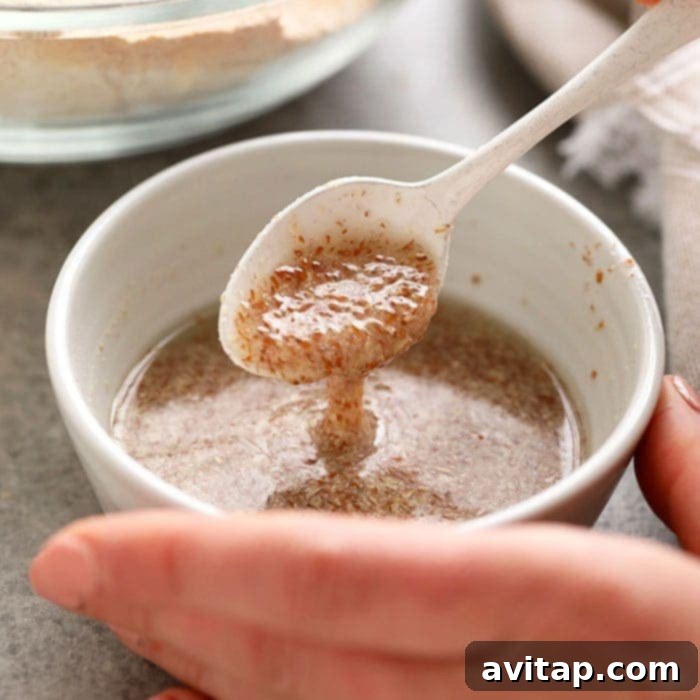
After you’ve combined the finely ground flaxseed meal and warm water, it is absolutely vital to let the mixture sit undisturbed. This resting period, ideally for at least 15 minutes, is where the magic happens. During this time, the soluble fibers (mucilage) within the flaxseed actively absorb the water, swell considerably, and create that characteristic viscous, gelatinous texture. You’ll observe a distinct transformation: the mixture will thicken noticeably, developing a consistency remarkably similar to that of a raw egg white. This gelling action is precisely what provides the flax egg with its potent binding power. Do not be tempted to rush this crucial step; patience ensures efficacy.
Adhering to the Perfect Ratio:
Consistency in baking is paramount, and the standard, most effective ratio for creating one flax egg is precisely 1 tablespoon of finely ground flaxseed meal mixed with 3 tablespoons of warm water. This specific 1:3 ratio has been extensively tested and proven to perfectly mimic the binding properties of one large chicken egg. It’s the golden rule for reliable results. If your recipe calls for multiple eggs, simply scale up the ratio proportionally. For example, if your recipe requires two eggs, you would combine 2 tablespoons of flaxseed meal with 6 tablespoons of warm water, ideally in a single bowl to ensure uniform gelling.
Thoughtful Recipe Selection for Optimal Results:
While flax eggs are an incredibly versatile substitute, it’s important to understand that they are not a universal replacement for every type of egg function in every recipe. They excel as a binding agent, providing essential moisture and helping ingredients cohere and stick together. They perform exceptionally well in:
- Cookies and Drop Cookies
- Muffins and Scones
- Quick Breads (such as banana bread, zucchini bread, or pumpkin bread)
- Pancakes and Waffles
- Brownies and Bar Cookies
- Denser Cakes (like loaf cakes or some Bundt cakes)
- Savory dishes where a binder is needed, such as veggie burgers, meatless meatballs, or plant-based loaves.
However, flax eggs generally do not provide the same leavening (rising) or emulsifying properties as traditional eggs. Therefore, they are typically not the best choice for recipes where eggs are a primary structural component, such as airy meringues, light soufflés, delicate custards, or very light, airy sponge cakes. For the most consistent and satisfying results, especially when you are new to using flax eggs, it is highly recommended to start with recipes that specifically call for flax eggs or those that are known to work well with this type of substitute. This approach ensures that the recipe developer has already tested and perfected the use of a flax egg in that particular context, significantly increasing your chances of baking success.
Proper Storage of Leftover Flax Meal:
Since you’ll often grind more flaxseed than you need for a single recipe, proper storage of the leftover flaxseed meal is crucial to maintain its freshness, potency, and nutritional integrity. Flaxseed meal, due to its exposed oils, can go rancid quickly at room temperature. To prevent this, immediately after grinding, transfer any unused fine flaxseed meal into an airtight container or a mason jar. Store it promptly in the refrigerator or, for longer preservation, in the freezer. The cold temperature helps to significantly slow down the oxidation process of the delicate omega-3 fatty acids, preserving its nutritional benefits and ensuring its fresh flavor for several weeks (in the fridge) or even months (in the freezer).
Step-by-Step Guide: How to Make a Perfect Flax Egg
Creating a perfect flax egg is a straightforward process that takes mere minutes of active preparation, followed by a brief resting period. Follow these detailed steps to prepare your ideal egg substitute, ready for any vegan baking adventure you embark upon.
- Step 1: Prepare Your Whole Flaxseed. Begin by gathering your whole flaxseeds and your chosen grinding appliance. Carefully place 1 cup of whole flaxseed into a small, high-speed food processor, a powerful blender, or, for smaller batches, a clean and dedicated coffee grinder. It is absolutely crucial to ensure your grinder is thoroughly clean and free of any residual coffee or spice grounds to avoid imparting unwanted flavors to your delicate baked goods.
- Step 2: Grind to a Fine Meal. Secure the lid of your grinding appliance. Grind the whole flaxseed on high power until it transforms into a very fine, powdery flaxseed meal. This process typically takes approximately 30-40 seconds, though the exact duration may vary depending on the power and efficiency of your appliance. The desired consistency should be very similar to that of fine flour; avoid a coarse, sandy texture, as it will not gel as effectively. Periodically pause and shake the grinder or stir the contents to ensure an even grind.
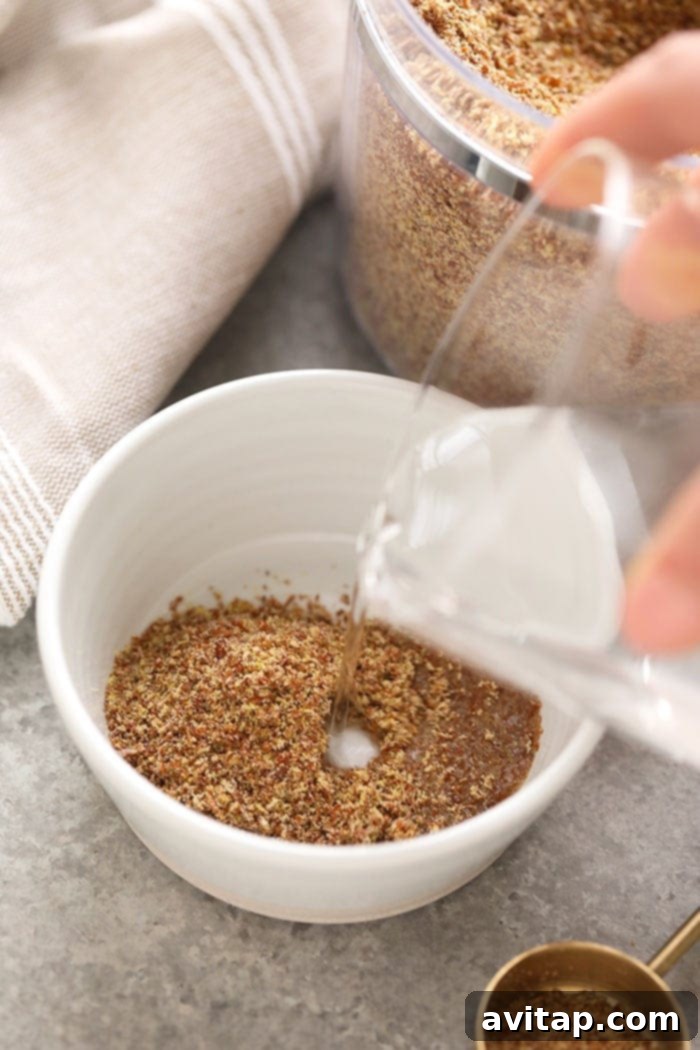
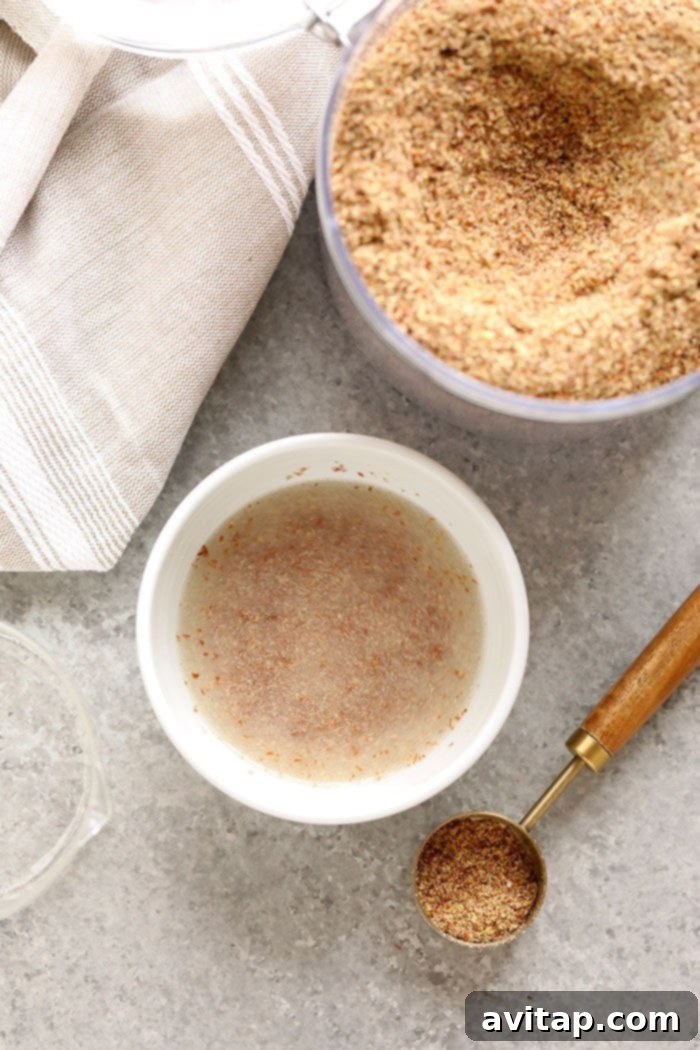
- Step 3: Combine Meal and Warm Water. Once your flaxseed is finely ground, scoop exactly 1 tablespoon of this freshly prepared flaxseed meal into a small mixing bowl. To this, precisely add 3 tablespoons of warm (not hot) water. This specific 1:3 ratio is the widely accepted and most effective equivalence for one large traditional chicken egg. If your recipe necessitates more than one egg, simply multiply these amounts accordingly. For example, for two eggs, you would combine 2 tablespoons of flaxseed meal with 6 tablespoons of warm water in the same bowl to create a double flax egg.
- Step 4: Whisk and Activate the Gel. Vigorously whisk the flaxseed meal and warm water mixture together for about 30 seconds. This ensures that the flaxseed is fully hydrated and evenly distributed throughout the water, allowing the gelling process to begin uniformly. After whisking, set the bowl aside and let the mixture sit undisturbed on your countertop for a minimum of 15 minutes. During this essential resting period, the soluble fibers (mucilage) will absorb the water, causing the mixture to visibly thicken and transform into a gelatinous, egg-like consistency. It should be thick enough to cling distinctly to a spoon, indicating it’s ready to bind your ingredients effectively.
- Step 5: Store Leftover Flaxseed Meal. While waiting for your flax egg to achieve its perfect consistency, take the opportunity to properly store any remaining finely ground flaxseed meal. Transfer it immediately into an airtight container or a clean mason jar. Store this container in the refrigerator for several weeks of freshness, or for even longer preservation, store it in the freezer. Proper storage is crucial to prevent the delicate oils in the flaxseed from oxidizing and becoming rancid, thereby maintaining its nutritional benefits and fresh flavor.
- Step 6: Integrate Your Flax Egg into Recipes. Once your flax egg has reached its desired thick, gelatinous consistency, it is officially ready to be incorporated! Use it in your favorite vegan or egg-free baking recipes precisely as you would a traditional egg. It serves as an excellent binder for a wide array of baked goods, including cozy oatmeal bakes, fluffy pancake batters, delectable cookies, and moist quick breads. Embrace your culinary creativity and enjoy all your wonderful, plant-based, egg-free creations!

Beyond Baking: Other Creative Uses for Flax Eggs
While flax eggs are predominantly celebrated in the realm of sweet baking, their impressive binding capabilities extend far beyond cakes and cookies. Their relatively neutral flavor and naturally gelatinous texture make them a valuable and versatile asset in various savory and non-baking applications, offering a simple, plant-based solution for binding, thickening, and adding nutritional value.
- Binder for Savory Dishes: Flax eggs are exceptional for holding together plant-based savory creations. They provide the necessary structure to prevent homemade veggie burgers, meatless meatballs, or vegetarian loaves from crumbling during cooking. Incorporating a flax egg helps these items maintain their shape, ensuring a firm and satisfying texture in every bite.
- Thickener for Sauces and Dressings: In certain instances, a flax egg can be used cautiously as a natural, healthy thickener for specific sauces, gravies, or salad dressings. Its gelling properties can add desirable body and emulsification. When using it for thickening, it’s often best to add gradually and whisk well, allowing the mixture to sit briefly to observe the thickening effect, as adding too much can sometimes result in an overly gummy texture.
- Nutrient Boost in Smoothies and Oats: While not used in its “egg” form, simply adding a tablespoon of freshly ground flaxseed meal to your morning smoothie, oatmeal, or yogurt can provide similar health benefits as consuming a flax egg. The mucilage helps create a slightly thicker consistency, while the omega-3s and fiber integrate seamlessly into your breakfast or snack, promoting satiety and digestive health.
Don’t limit the versatility of flax eggs to just sweet treats! Experimentation is key to discovering how these humble seeds can enhance a wider array of dishes in your kitchen, making them healthier, heartier, and entirely plant-based. Their health benefits and functional properties truly make them a smart and adaptable addition to nearly any culinary repertoire.
Frequently Asked Questions (FAQ) About Flax Eggs
Navigating the world of egg substitutes can bring up several questions. Here are clear, concise answers to some of the most common inquiries people have when first starting to use flax eggs:
- Q: Can I use whole flax seeds without grinding them first?
- A: No, it is absolutely crucial to grind the flax seeds into a fine meal. The beneficial mucilage (the natural gelling agent) that gives the flax egg its binding properties is locked within the whole seeds. This mucilage needs to be exposed by grinding to properly absorb water and create the necessary egg-like, gelatinous consistency. Whole flax seeds will pass through your digestive system mostly intact, and will not effectively thicken the mixture or act as a binder.
- Q: Is there any difference between using brown and golden flaxseed for making flax eggs?
- A: Nutritionally, brown and golden flaxseeds are very similar and both work equally well for making flax eggs. The primary difference is aesthetic and a slight flavor variation. Golden flaxseed tends to have a milder, sometimes imperceptible flavor and a lighter color, which might be preferred in lighter-colored baked goods where you don’t want any visible speckles. Brown flaxseed has a slightly stronger, nuttier flavor. Functionally, however, their binding properties are identical.
- Q: How long does a prepared flax egg last? Can I make it ahead of time?
- A: For optimal binding performance and consistency in your recipes, it is always best to use a flax egg immediately after it has thickened to its desired gelatinous state. While you can certainly prepare it a few hours in advance and store it in the refrigerator, be aware that it might become slightly stiffer or more solid. If it appears too thick when you’re ready to use it, you can often revive it by adding a tiny bit more warm water (perhaps a teaspoon or two) and whisking it vigorously again to loosen it up.
- Q: What if my flax egg isn’t thickening properly?
- A: If your flax egg isn’t gelling as expected, several factors could be at play:
- Insufficient Grind: The most common reason. Ensure your flaxseed meal is very fine, resembling flour, not coarse or sandy.
- Water Temperature: While cold water can work, warm water activates the mucilage faster. If you used cold water, simply allow more resting time.
- Insufficient Resting Time: Make sure you’ve given it at least 15 minutes. Sometimes, especially with slightly coarser grinds or colder water, it might need a bit longer, up to 20-25 minutes.
- Incorrect Ratio: Double-check that you’re using the precise ratio of 1 tablespoon of flaxseed meal to 3 tablespoons of water per egg. Deviating from this can affect consistency.
- Q: Can I use flax eggs as a substitute in all baking recipes?
- A: While incredibly versatile, flax eggs are best suited for recipes where the primary role of the egg is to act as a binder, providing moisture and holding ingredients together. This makes them ideal for cookies, muffins, quick breads, pancakes, brownies, and dense cakes. However, they do not provide significant leavening (rise) or powerful emulsifying properties as effectively as real eggs. Therefore, for recipes that rely heavily on eggs for structure, aeration (like meringues, soufflés, or very light sponge cakes), or a substantial rise, flax eggs may not be the ideal substitute. For the most consistent success, especially when first experimenting, always start with recipes known to work well with flax eggs or those that are generally more forgiving with egg substitutions.
Delicious Plant-Based Recipes to Use Your Flax Egg
Now that you’ve mastered the art of making perfect flax eggs, it’s time to put your newfound skill to delicious use! Flax eggs are a fantastic base for countless plant-based baked goods, providing that essential binding and moisture without any animal products. Here are some fantastic recipes where a flax egg shines as the perfect binder, ensuring moist, structurally sound, and utterly delectable results. These selections are known to work beautifully with flax eggs, making them an excellent starting point for your exciting egg-free baking adventures.
- Lemon Blueberry Baked Oatmeal: Start your day with this comforting and nutritious breakfast dish, where a flax egg helps create a beautifully cohesive and moist texture.
- Healthy Vegan Monster Cookies: Enjoy these classic, hearty cookies with a healthier, plant-based twist. The flax egg ensures they hold together perfectly while remaining delightfully chewy.
- Chocolate Chocolate Chip Banana Bread: This incredibly moist and flavorful banana bread relies on a flax egg to give it its superb structure and tender crumb, making it a truly satisfying treat.
- Whole Wheat Vegan Yogurt Pancakes: Achieve light, fluffy, and utterly delicious pancakes made entirely without animal products, thanks to the excellent binding power of flax. Perfect for a weekend brunch!
Quick Flax Egg Recipe Card
How to Make a Flax Egg
An easy, step-by-step tutorial to create a perfect flax egg, an essential vegan and egg-free substitute for baking. Quick to prepare and incredibly versatile!
By: Emily Richter
Prep time: 15 mins | Cook time: 0 mins | Total time: 15 mins
Yields: 1 Flax Egg (equivalent to 1 large chicken egg)

Ingredients:
- 1 tablespoon finely ground flaxseed meal (from whole flaxseed)
- 3 tablespoons warm water
Instructions:
- If using whole flaxseeds, grind approximately 1 cup of whole flaxseed into a very fine meal using a high-speed food processor, blender, or a dedicated coffee grinder (this typically takes about 30-40 seconds). Store any leftover finely ground meal in an airtight container in the refrigerator or freezer for future use.
- Scoop exactly 1 tablespoon of the freshly ground flaxseed meal into a small mixing bowl.
- Add precisely 3 tablespoons of warm water to the flaxseed meal in the bowl.
- Whisk the mixture together thoroughly with a fork or small whisk for about 30 seconds, ensuring all flaxseed meal is incorporated.
- Let the mixture sit undisturbed on your countertop for a minimum of 15 minutes, or until it visibly thickens and becomes gelatinous, resembling the consistency of a raw egg white.
- Once the flax egg has reached its desired thick consistency, it is ready to be used as a binder in your favorite vegan and egg-free baking recipes!
Nutrition (per 1 flax egg serving – approximate):
- Calories: 30 kcal
- Carbohydrates: 2 g
- Protein: 1 g
- Fat: 3 g
- Fiber: 2 g
- Sugar: 0 g
Nutrition information is automatically calculated and should be used as an approximation.
Loved this guide and made your own perfect flax eggs? We’d absolutely love to hear from you!
Don’t forget to tag your delicious creations on social media with the hashtag #fitfoodiefinds. Share your baking triumphs, inspire others to embrace the power of plant-based ingredients, and connect with a community of enthusiastic bakers!
Happy baking, and enjoy all your wonderful, wholesome, and egg-free creations!