
Transform Your Arms: An Intense Dumbbell Circuit Workout with 10-Minute Cardio HIIT
In today’s fast-paced world, finding time for effective workouts can be a challenge. Many of us grapple with fitting fitness into our busy schedules, often feeling that a productive session requires hours at the gym. However, I’ve discovered the power of short, intense workouts, and I’m thrilled to share a routine that embodies this philosophy. If you, like me, find your attention waning around the 45-minute mark, or simply prefer to “get in, get it done, and get out,” then this high-energy arm dumbbell circuit paired with a quick cardio HIIT is designed specifically for you. It’s about maximizing every minute, pushing your limits, and achieving incredible results without the need for endless hours.
This comprehensive guide will walk you through a dynamic workout that focuses on sculpting strong, defined arms while boosting your cardiovascular fitness. We’ll dive into the benefits of this approach, explore the perfect setting for your training, and break down each exercise with detailed instructions to ensure proper form and maximum effectiveness. Get ready to challenge yourself, break a sweat, and feel that satisfying muscle burn!
The Power of Short, Intense Workouts: Efficiency Meets Effectiveness
My personal philosophy when it comes to fitness has evolved considerably over the years. I’ve realized that prolonged gym sessions aren’t always necessary for achieving significant results. In fact, for many, including myself, shorter, more intense bursts of activity can be far more engaging and sustainable. There’s a certain thrill in knowing you can walk into a gym, push yourself hard for a focused period, and then carry on with your day, feeling accomplished and energized.
This approach isn’t just about saving time; it’s also about optimizing your effort. High-intensity interval training (HIIT) and circuit training are prime examples of methodologies that deliver remarkable benefits in a condensed timeframe. They elevate your heart rate, boost your metabolism, and challenge your muscles in ways that promote strength gains and endurance improvements, all within a compact format. Whether it’s a spin class where I prefer to “ride hard for 45 minutes rather than duke it out for 60,” or a weights session, the goal remains the same: quality over quantity. This workout embraces that principle, ensuring every minute counts towards your fitness goals.
Finding Your Perfect Fitness Hub: Convenience, Equipment, and Community
Choosing the right gym environment is often a crucial part of maintaining a consistent fitness routine. After spending a year and a half immersed in the fitness industry, I admit I’ve become a bit of a “gym snob.” I have high expectations when it comes to service, the quality of equipment, and the variety of classes offered. However, life often throws curveballs, and sometimes, convenience simply triumphs over all other factors.
A few months ago, I made the practical decision to join LA Fitness, primarily because it’s the closest gym to my home. While I previously commuted 20 minutes to an Anytime Fitness or stopped at one on my way to work, transitioning to full-time remote work necessitated a more accessible option. This experience highlighted an important lesson: even with high standards, sometimes the most effective gym is the one you’ll actually go to consistently. Proximity can be a powerful motivator. Similarly, having a great workout space at hand, like the one in my friend Brooke’s apartment complex, can be an absolute game-changer, especially for dynamic, circuit-style workouts like the one we’re about to dive into.
The Power of a Workout Partner: Meeting Brooke for a Sweat Session
Having a workout buddy can significantly enhance your fitness journey, providing motivation, accountability, and sometimes, just plain fun. My friend Brooke, who also happens to be my fantastic workout photographer, is the perfect partner for these intense sessions. Our schedules, much like our workout preferences, can be a bit “wonky”—Brooke works nights as a nurse, which means coordinating our gym time requires a bit of planning. But when we do link up, usually with me “dragging her out of bed” during the day, we meet at her place, and “boom goes the dynamite!” Having a dedicated space and a supportive partner ensures that when it’s time to sweat, we make every moment count.
The workout I’m about to reveal is one that Brooke and I crushed together just a few weeks ago. It’s designed to push you, leaving you drenched in sweat and with that satisfying, deep burn in your arms – the kind of burn that signals progress and strength building!
Equipment You’ll Need for This Powerful Arm & Cardio Workout
Before we dive into the specifics of the exercises, let’s ensure you have the necessary equipment ready. This workout is adaptable for both gym and home settings, making it accessible regardless of your primary fitness environment.
Required Equipment:
- Dumbbells: A pair of 10 and/or 15 lb. dumbbells. Beginners might opt for 5 lb. or 8 lb. weights, while advanced individuals may challenge themselves with heavier options. The key is to select a weight that allows you to maintain proper form throughout the entire set.
- Cardio Equipment: Access to a piece of cardio equipment such as a stair stepper, elliptical, treadmill, stationary bike, or rower. If you’re working out at home or don’t have access to machines, don’t worry – we have fantastic bodyweight alternatives!
Workout Structure: Cardio First for Maximum Impact
My personal preference, and what I find most effective, is to incorporate cardio *before* lifting. I love stepping into my strength session already sweating, with my heart rate elevated and my muscles primed. This approach ensures my body is fully warmed up and ready to tackle the resistance work ahead. However, fitness is highly personal, so if you prefer to get your cardio in *after* your lifting session, feel free to adjust the order to best suit your energy levels and personal preferences.

Phase 1: 10-Minute High-Intensity Interval Training (HIIT) Cardio
This quick burst of cardio is designed to get your heart pumping, boost your metabolism, and prepare your body for the strength training to follow. HIIT is incredibly efficient for burning calories and improving cardiovascular endurance in a short amount of time.
Instructions:
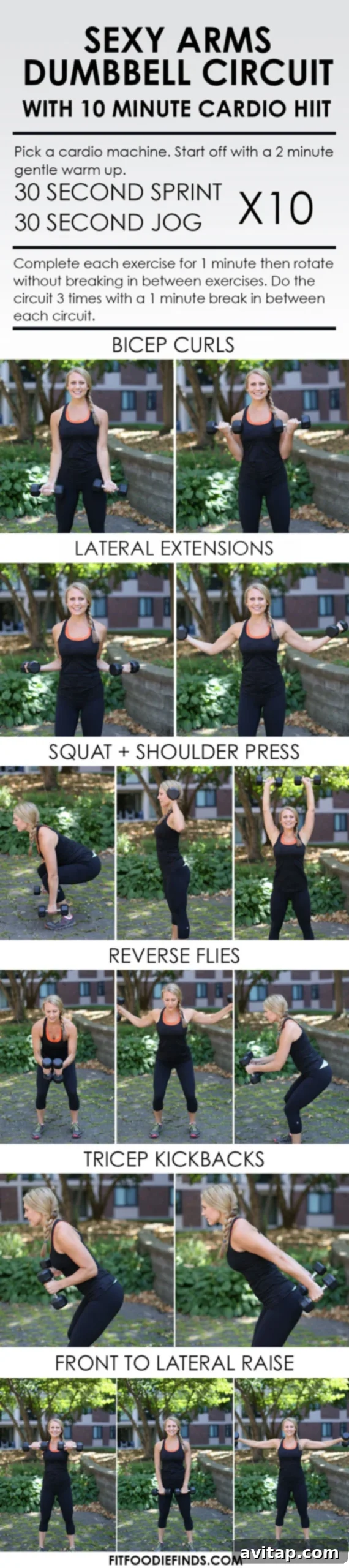
- Warm-up (2 minutes): Begin with a gentle warm-up on your chosen cardio machine. This could be a light jog on the treadmill, easy pedaling on a bike, or a low-resistance glide on the elliptical. The goal is to gradually increase blood flow to your muscles and raise your body temperature.
- HIIT Intervals (10 minutes): After your warm-up, dive into 10 minutes of high-intensity intervals. For each minute, you will alternate between:
- Sprint (30 seconds): Push your effort to approximately 90% of your maximum capacity. This should feel challenging and leave you slightly breathless.
- Recovery (30 seconds): Bring your effort down to about 60% of your maximum. This is an active recovery phase, where you continue moving but at a pace that allows your heart rate to come down slightly and prepares you for the next sprint.
I personally used an elliptical for this, setting it to a medium resistance. During my “sprint,” I focused on powerful, fast movements, and for “recovery,” I maintained a steady, controlled pace. Feel free to adjust the resistance or speed on your chosen machine to match your fitness level.
No Cardio Equipment? No Problem! Plyometric Alternatives
If you don’t have access to cardio equipment or prefer bodyweight exercises, you can still get an incredible HIIT workout using plyometrics. These exercises are fantastic for building explosive power and getting your heart rate up quickly. Choose two different plyometric exercises and perform two separate Tabata rounds.
- Tabata Structure: 20 seconds of maximum effort, followed by 10 seconds of rest. Repeat this 8 times for a total of 4 minutes per exercise.
- Recommended Plyometric Exercises:
- Jump Squats: Squat down and then explode upwards, landing softly back into a squat.
- Burpees: A full-body exercise combining a squat, plank, push-up (optional), and jump.
- Jump Lunges: Lunge forward and then explode upwards, switching legs in mid-air before landing in a lunge with the opposite leg forward.
- Diamond Jumps: Stand with feet together, jump, spreading legs wide and then bringing them back together quickly.

Phase 2: Sculpting Arms with the Dumbbell Circuit Workout
Now that your body is thoroughly warmed up, it’s time to hit those arm muscles with an intense dumbbell circuit. This circuit targets your biceps, triceps, and shoulders, ensuring a comprehensive arm workout that promotes both strength and definition. The circuit format keeps your heart rate up and minimizes rest, maximizing calorie expenditure and muscle engagement.
Circuit Instructions:
Complete each exercise for 1 minute with no breaks in between. Once you’ve completed all six exercises, that’s one round. Do the entire circuit 3 times, resting for 1 minute in between each full circuit. This means you’ll perform a total of 18 minutes of active work (6 exercises x 1 minute x 3 rounds) plus 2 minutes of rest.
The Exercises:
1. Bicep Curls (Targets: Biceps)
- Starting Position: Stand with your feet hip-width apart, holding a dumbbell in each hand. Your palms should be facing forward (supinated grip), and your arms fully extended downwards by your sides. Keep a slight bend in your knees and your core engaged.
- Execution: As you inhale, slowly curl the dumbbells upwards towards your chest, keeping your elbows tucked close to your body. Focus on squeezing your biceps at the top of the movement, aiming for about 3/4 of the way up (just before your forearms touch your biceps). Avoid swinging the weights.
- Return: As you exhale, slowly lower the dumbbells back to the starting position with control. Repeat for 1 minute.
- Common Mistake: Swinging the weights using momentum instead of muscle power. Keep the movement controlled.
2. Lateral Extensions (Targets: Shoulders, Upper Back)
- Starting Position: Stand with feet hip-width apart, holding dumbbells with palms facing your thighs. Keep a slight bend in your elbows throughout the movement.
- Execution: As you inhale, extend your arms laterally out to your sides, lifting the weights up to shoulder height. Focus on engaging your deltoids (shoulder muscles).
- Return: As you exhale, pull the weights back in, squeezing your shoulder blades together as your elbows come slightly behind your back. This helps engage the upper back muscles for better posture. Repeat for 1 minute.
- Common Mistake: Lifting weights too high or shrugging shoulders. Keep shoulders down and back.
3. Squat + Shoulder Press (Targets: Quads, Glutes, Hamstrings, Shoulders, Triceps)
- Starting Position: Stand with feet hip-width apart, holding dumbbells at shoulder height with palms facing each other (neutral grip).
- Squat Phase: As you inhale, squat down as if sitting into a chair, keeping your chest up and weight in your heels. Ensure your knees track over your toes. The dumbbells remain at your sides, just above your shoulders.
- Press Phase: As you exhale, drive through your heels to stand up, simultaneously pressing the dumbbells overhead until your arms are fully extended. Engage your core throughout the movement.
- Return: Lower the dumbbells back to shoulder height as you descend into the next squat. Repeat for 1 minute.
- Common Mistake: Rounding the back during the squat or locking out elbows excessively during the press.
4. Reverse Flies (Targets: Rear Deltoids, Rhomboids, Trapezius – Upper Back)
- Starting Position: Stand with your feet hip-width apart, hinge forward at your hips until your torso is almost parallel to the floor, maintaining a flat back. Let your arms hang straight down in front of you, holding a dumbbell in each hand, with a slight bend in your elbows. Your palms should face each other.
- Execution: As you inhale, open your arms out to the sides, lifting the dumbbells up until they are roughly in line with your shoulders. Focus on squeezing your shoulder blades together at the top of the movement. Keep that slight bend in your elbows.
- Return: As you exhale, slowly release the weights back to the starting position in front of you with control. Repeat for 1 minute.
- Common Mistake: Using heavy weights that cause you to round your back or swing the dumbbells. Light weights are key for proper form here.
5. Tricep Kickbacks (Targets: Triceps)
- Starting Position: Stand with your feet hip-width apart, hinge at your hips with a flat back, similar to the reverse fly. Bend your arms at a 90-degree angle, keeping your elbows “pinned” close to your sides and tucked towards your torso. Your palms should face each other.
- Execution: Take an inhale, and as you exhale, extend your forearms straight back, pushing the dumbbells behind you. Focus on squeezing your triceps at the top of the movement, aiming for full extension of your arms without locking your elbows. Keep your upper arms stationary throughout.
- Return: As you inhale, slowly release your forearms back to the 90-degree starting position. Repeat for 1 minute.
- Common Mistake: Swinging your entire arm or using momentum instead of isolating the triceps. Keep your upper arms still.
6. Front to Lateral Raise (Targets: Anterior and Lateral Deltoids – Front and Side Shoulders)
- Starting Position: Stand with feet hip-width apart, arms extended down by your sides, holding dumbbells with palms facing your thighs.
- Front Raise: As you inhale, lift the weights directly in front of you, stopping at shoulder height. Keep your arms relatively straight with a slight bend in the elbow.
- Lower: As you exhale, slowly release the weights back down to the front.
- Lateral Raise: As you inhale, lift your arms laterally out to the sides, stopping at shoulder height. Keep palms facing down and arms relatively straight with a slight bend in the elbow.
- Lower: As you exhale, release the weights back down to your sides. Repeat this sequence (Front Raise, Lower, Lateral Raise, Lower) for 1 minute, alternating between front and lateral raises.
- Common Mistake: Shrugging your shoulders or using heavy weights that cause you to arch your back. Focus on controlled movement.
Important Reminders: Form, Safety, and Progression
As with any exercise regimen, safety and proper technique are paramount. Remember this crucial rule:
FORM OVER WEIGHT!
This means if you find yourself compromising your form, losing control, or feeling pain, it’s a clear signal to reduce the weight. While I suggested 10 lb. and 15 lb. dumbbells, please feel free to use 5 lb. or 8 lb. weights if you are a beginner or if a lighter weight allows you to maintain perfect form. Progressing too quickly with weights can lead to injury and negate the effectiveness of the workout.
Disclaimer: Although I am a certified ACE Group Fitness Instructor and Yoga Sculpt Instructor, the content shared here is for informational purposes only. Please, please, please consult with your doctor or a qualified healthcare professional before beginning any new fitness regimen, especially if you have pre-existing health conditions or concerns. The workouts I share are based on my personal experience and training and should be used as ideas or inspiration for your own workouts, where you can modify with progressions (making it harder) and regressions (making it easier) to suit your individual needs and capabilities.
Progression and Regression Tips:
- To Make It Harder (Progression): Increase your dumbbell weight, increase the active work time for each exercise (e.g., 75 seconds instead of 60), decrease the rest time between circuits, or add an extra circuit round.
- To Make It Easier (Regression): Decrease your dumbbell weight, shorten the active work time (e.g., 45 seconds), increase the rest time between circuits, or reduce the number of circuit rounds.
Conclusion: Empowering Your Fitness Journey
This intense dumbbell arm circuit combined with a powerful 10-minute cardio HIIT is a testament to the fact that you don’t need endless hours to achieve significant fitness gains. It’s a highly efficient, challenging, and rewarding routine designed to sculpt your arms, boost your endurance, and invigorate your entire body in under 45 minutes. Whether you’re pressing for time, prefer dynamic workouts, or simply enjoy feeling a deep, satisfying burn, this routine is an excellent addition to any fitness plan.
Remember to listen to your body, prioritize proper form, and celebrate every small victory. Embrace the intensity, enjoy the process, and watch as your strength and definition grow. Get in there, get it done, and feel amazing!
Other Workouts You Might Like…
Cardio – do you prefer it before or after your strength workout, and why? Share your thoughts!
Gyms – what factors influence your choice of gym membership (e.g., convenience, equipment, classes, community)? Let us know!