
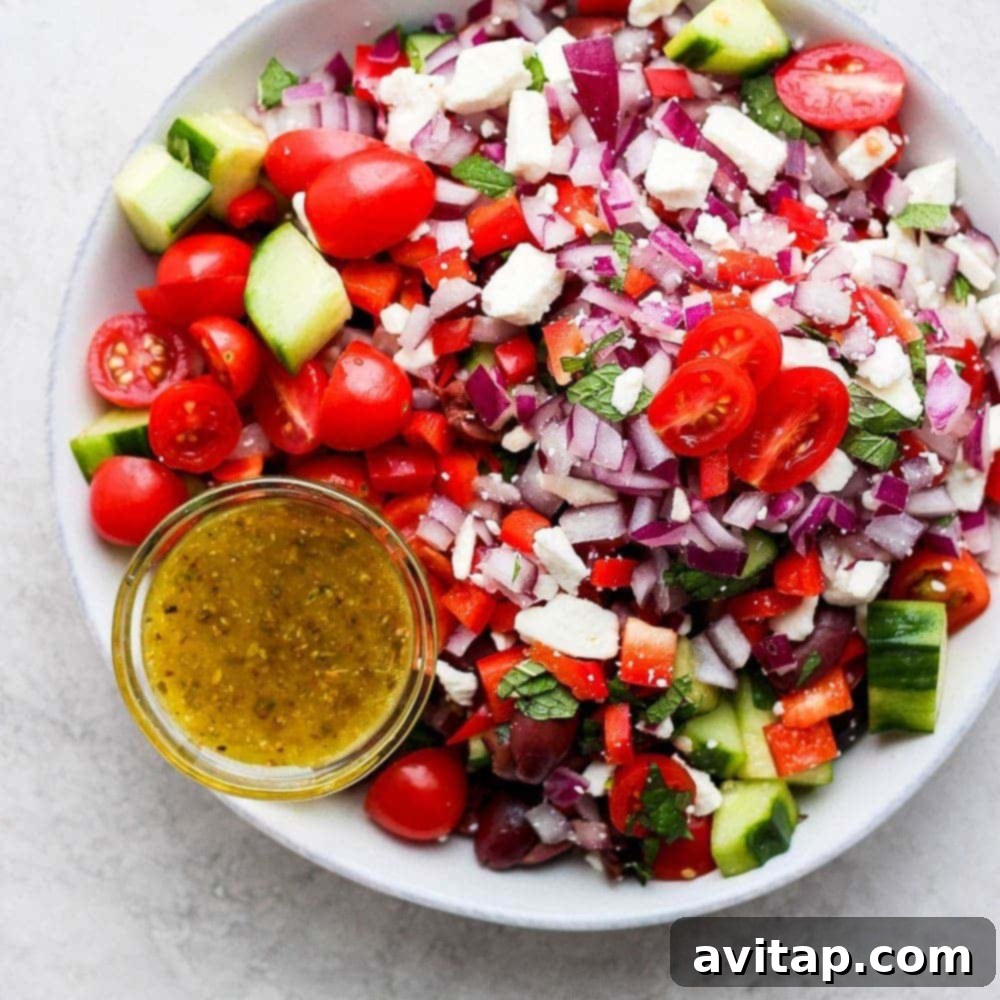
Authentic Greek Salad Recipe: Your Guide to a Fresh Mediterranean Staple
There’s a reason Greek salad, or Horiatiki Salata, has captivated palates worldwide. It’s more than just a dish; it’s a celebration of vibrant, fresh ingredients that embody the heart of Mediterranean cuisine. This classic, refreshing salad brings together the crispness of sweet cherry tomatoes and cucumber, the sharp bite of red onion, the salty tang of feta cheese, and the unmistakable zest of a homemade Greek salad dressing. Perfect for a light, healthy summer meal, a vibrant addition to any picnic spread, or an excellent component for your weekly meal prep, our Greek salad recipe promises a burst of flavor in every bite.
Unlike many other salads, the authentic Greek version foregoes leafy greens, relying instead on a robust combination of vegetables that stand up beautifully to the dressing. This traditional approach not only offers a unique texture but also makes it an ideal candidate for preparing ahead of time. Dive into the world of fresh, simple, and utterly delicious Greek cooking with this easy-to-follow recipe.
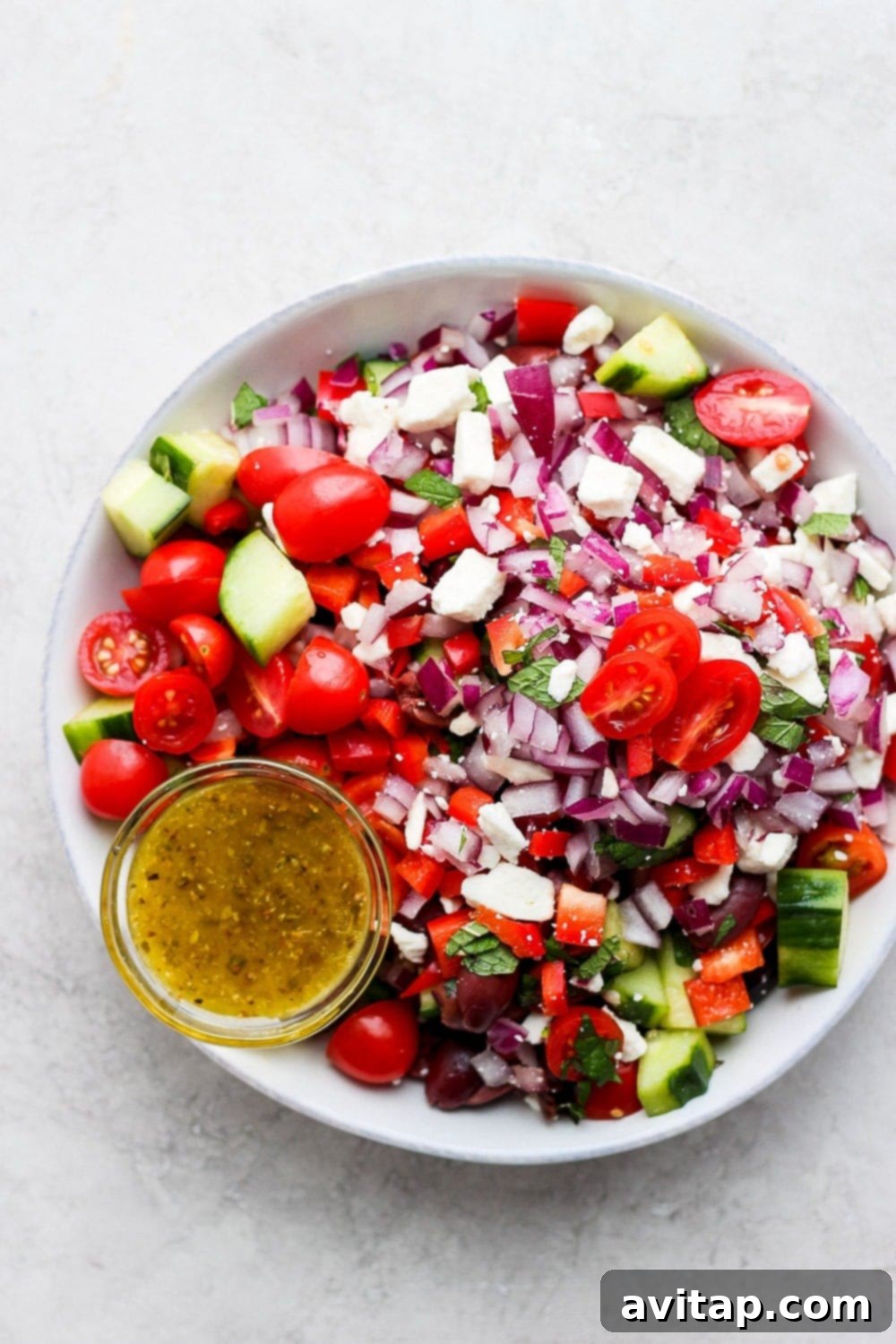
Why This Greek Salad Is Absolutely Perfect (Even Without Lettuce!)
What constitutes the “perfect” salad can be a matter of personal preference, but for many, this traditional Greek salad truly hits all the right notes. And here’s the best part: it achieves culinary perfection without a single leaf of lettuce! Its simplicity is its strength, allowing the natural flavors of high-quality produce to shine through. The absence of leafy greens also means it holds up exceptionally well, making it a fantastic choice for advanced preparation.
We adore this Greek salad recipe for numerous compelling reasons, making it a staple in our kitchen. From its delightful texture to its incredible versatility, you’ll find yourself reaching for this recipe again and again:
- Perfectly Portioned Bites: Every single ingredient in this salad is intentionally cut into uniform, bite-sized pieces. This thoughtful preparation ensures that each forkful offers a harmonious blend of flavors and textures – a little bit of juicy tomato, crunchy cucumber, pungent onion, briny olive, and creamy feta, all coated in tangy dressing. It’s a symphony for your taste buds, eliminating the need to awkwardly cut large pieces on your plate and ensuring a consistent, enjoyable experience with every mouthful.
- The Ultimate Meal Prep Companion: This salad is an absolute dream for meal prepping. Its robust, non-leafy ingredients mean it doesn’t wilt or become soggy like many other salads. You can prepare the bulk of the salad components ahead of time and store them in the refrigerator, allowing the flavors to meld beautifully. The key to successful meal prep with this recipe is to add the homemade dressing right before you’re ready to eat, preserving the salad’s freshness and crispness for days. It’s a lifesaver for busy weeks!
- A Burst of Flavor: Fresh, Salty, and Tangy: Prepare your palate for an explosion of contrasting yet complementary flavors. The inherent sweetness of ripe cherry tomatoes, the cool refreshment of crisp cucumber, the sharp kick of finely sliced red onion, the distinct saltiness of Kalamata olives and creamy feta cheese, all brought together by a bright, vinegary homemade dressing. It’s a deeply satisfying and undeniably delicious combination that’s both invigorating and comforting, truly a taste of the Mediterranean.
- Naturally Gluten-Free and Low Carb: For those following specific dietary preferences, this Greek salad naturally fits into gluten-free and lower carbohydrate eating plans. It’s packed with nutrient-dense vegetables and healthy fats, providing sustained energy and satiety without heavy starches or processed ingredients. It’s a wholesome choice you can feel good about.
- Rich in Mediterranean Goodness: Rooted deeply in the principles of the healthy Mediterranean diet, this salad is packed with antioxidants, healthy monounsaturated fats (from olive oil and olives), and essential vitamins and minerals from its fresh produce. It’s a deliciously easy way to increase your vegetable intake and contribute to overall well-being, supporting heart health and vitality.
Its versatility also extends to being served as a refreshing side dish, a light lunch, or even a flavorful component within a larger Mediterranean spread. No matter the occasion, this Greek salad recipe is sure to impress with its simplicity and incredible flavor.
Essential Ingredients for an Authentic Greek Salad
Traditional Greek salad, known as Horiatiki (meaning “village” or “peasant” salad), is celebrated for its simplicity and reliance on peak-season ingredients. While regional variations exist, the core components remain consistent, offering a harmonious blend of textures and tastes. Our recipe embraces these traditional ingredients while adding a couple of subtle enhancements to elevate the flavor profile even further, ensuring an extra delicious and memorable result.
The golden rule for this salad, regardless of the specific ingredients you choose, is to cut everything into uniform, bite-sized pieces. This isn’t just for aesthetics; it ensures a perfect balance of flavors and textures in every forkful, allowing you to experience the full symphony of the salad in each bite.
Key Ingredients You’ll Need for Your Homemade Greek Salad:
- Cucumbers: We highly recommend using English or Persian cucumbers for this recipe. These varieties are known for their thin skins, minimal seeds, and refreshingly crisp texture, which holds up wonderfully in the salad. Their cool, mild flavor provides an excellent contrast to the stronger, saltier components.
- Tomatoes: The choice of tomatoes is crucial. Sweet cherry tomatoes, halved, offer bursts of juicy sweetness that are perfectly balanced by the savory and salty elements. Alternatively, ripe Roma tomatoes, diced, also work beautifully. Always aim for the freshest, most flavorful tomatoes you can find, ideally in season.
- Red Pepper: While not always present in the most austere traditional versions, a vibrant diced red bell pepper adds a lovely crunch, a beautiful splash of color, and a subtle sweetness that complements the other vegetables wonderfully. It introduces another layer of freshness and texture.
- Feta Cheese: This is a non-negotiable star. Seek out authentic Greek feta, preferably made from sheep or goat’s milk and stored in brine. Its tangy, salty, and crumbly-yet-creamy texture is absolutely indispensable for the characteristic flavor of Greek salad. You can crumble it directly into the salad or cut it into small cubes.
- Red Onion: Finely sliced red onion provides a pungent, slightly spicy kick that adds depth and sharpness to the salad. If you find raw red onion flavor too intense, a simple trick is to soak the slices in ice water for 10-15 minutes. This process helps to mellow its sharpness significantly.
- Kalamata Olives: These dark, almond-shaped, rich, and intensely briny olives are a hallmark of Greek cuisine and absolutely essential for an authentic Greek salad. Ensure they are pitted for convenience. Their distinctive savory flavor adds a crucial layer of complexity.
- Fresh Mint: A generous handful of freshly chopped mint leaves adds an incredibly bright, aromatic, and refreshing note that truly elevates this salad from good to extraordinary. It introduces a delightful herbaceous freshness that beautifully cuts through the richness of the feta and olives.
- Homemade Greek Salad Dressing: While often overlooked, the dressing is the unifying element that ties all the components together. A vibrant, tangy, and savory homemade dressing is vastly superior to any store-bought alternative, allowing you to control the quality of ingredients and balance of flavors.
Selecting fresh, high-quality ingredients is the first step to creating a truly unforgettable Greek salad that tastes like a sunny day in the Mediterranean.
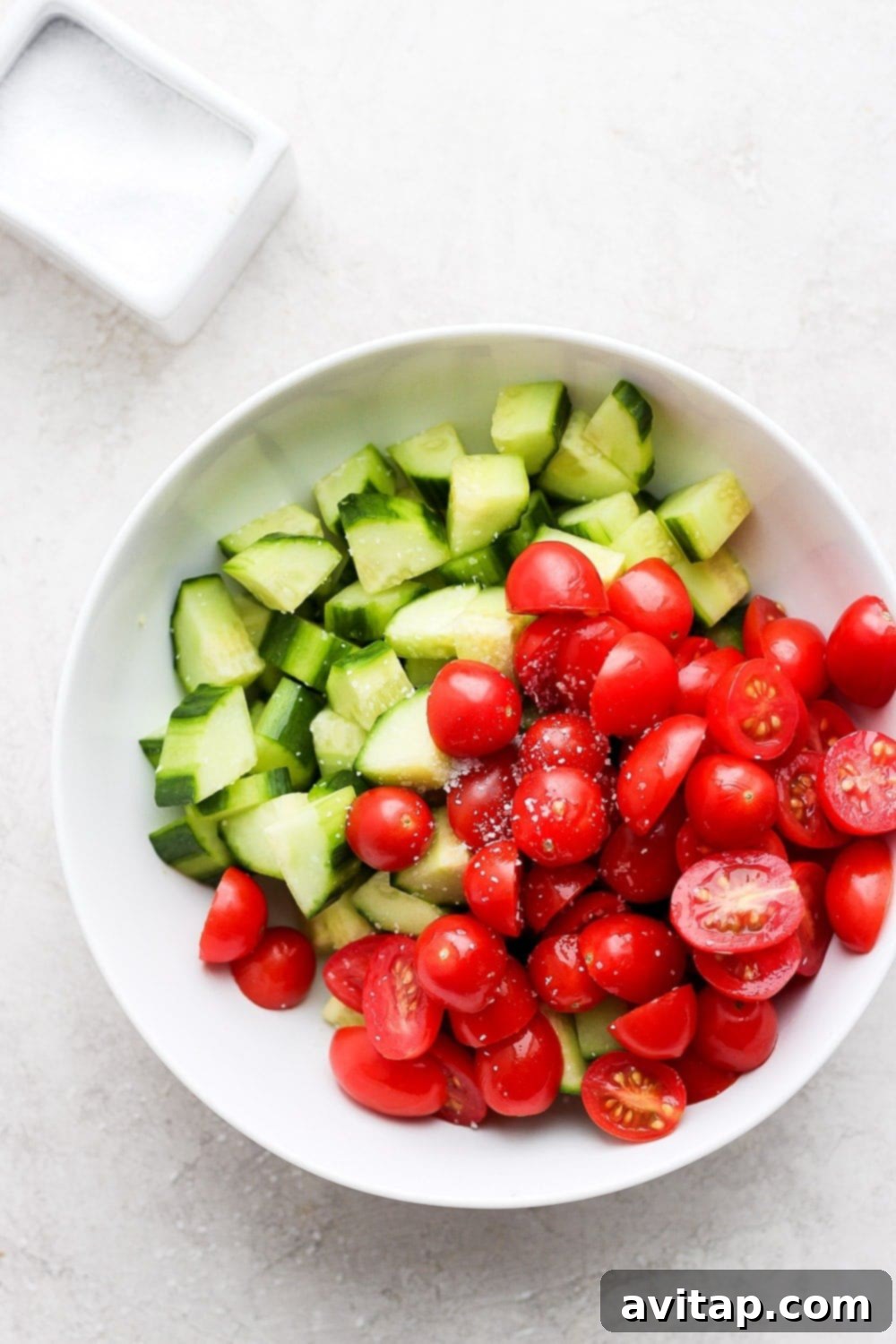
Mastering the Preparation of Tomatoes and Cucumbers
While this Greek salad is remarkably easy to prepare, there’s a simple yet crucial step that significantly impacts the final texture and flavor: managing the moisture content of your cucumbers and tomatoes. This extra step, often overlooked in rushed preparations, is the secret to preventing a watery salad and ensuring every bite is perfectly crisp, concentrated in flavor, and delightfully satisfying. Fortunately, it adds minimal active time to your overall preparation.
Why Remove Excess Moisture from Tomatoes and Cucumbers?
Both tomatoes and cucumbers are incredibly high in water content, with cucumbers being over 95% water and tomatoes typically around 90-95%. When these vegetables are cut and then tossed with salt (either from the feta, olives, or the dressing itself), they naturally release this excess moisture through a process called osmosis. If this liquid is left in the salad, it can dilute your flavorful dressing, make the other ingredients soggy, and result in a less appealing, watery consistency at the bottom of the bowl. By taking a few extra minutes to draw out this water before combining with the other ingredients, you concentrate their natural flavors and maintain a delightful, firm texture.
Simple Steps for Perfectly Prepared Produce:
- Salt and Rest: After you’ve precisely sliced your English cucumbers and halved your sweet cherry tomatoes into bite-sized pieces, place them together in a separate, clean medium-sized bowl. Sprinkle them evenly with about 1/8 teaspoon of fine-grain salt. Gently toss with your hands or a spoon to ensure all the pieces are lightly coated with the salt.
- Let Them Sweat: Allow the salted vegetables to sit undisturbed for at least 15 to 30 minutes at room temperature. During this crucial resting period, the salt will work its magic by drawing out the excess water from the cell walls of the vegetables. You’ll soon notice a visible pool of liquid accumulating at the bottom of the bowl. The exact sitting time may vary slightly depending on the ripeness, size, and specific variety of your vegetables; juicier tomatoes or larger cucumbers might require a bit more time to release sufficient moisture.
- Drain Thoroughly: Once the resting period is complete and you see a good amount of liquid released, carefully pour the cucumbers and tomatoes into a fine-mesh sieve or colander placed over a sink or another bowl. Allow them to drain thoroughly, shaking the sieve gently to encourage as much liquid as possible to escape. You can even press them lightly with the back of a spoon or your hand to extract any stubborn remaining water. It’s important not to rinse them after this step, as you want to retain the slight seasoning from the salt, which further enhances their flavor.
By conscientiously following this simple yet effective technique, you ensure your Greek salad remains beautifully crisp, vibrantly flavorful, and completely free from a watery base, guaranteeing a delightful culinary experience from the very first bite to the last. This small effort makes a huge difference in the overall quality of your salad.
Crafting the Best Homemade Greek Salad Dressing
While the quality of your fresh vegetables is paramount, the dressing is arguably the soul of any Greek salad. A truly outstanding homemade Greek salad dressing doesn’t just coat the ingredients; it elevates the entire dish, bringing all the disparate flavors into a cohesive, zesty, and unforgettable experience. Skip the bottled varieties; making your own is incredibly simple, takes mere minutes, and yields vastly superior results in terms of freshness, flavor, and control over ingredients.
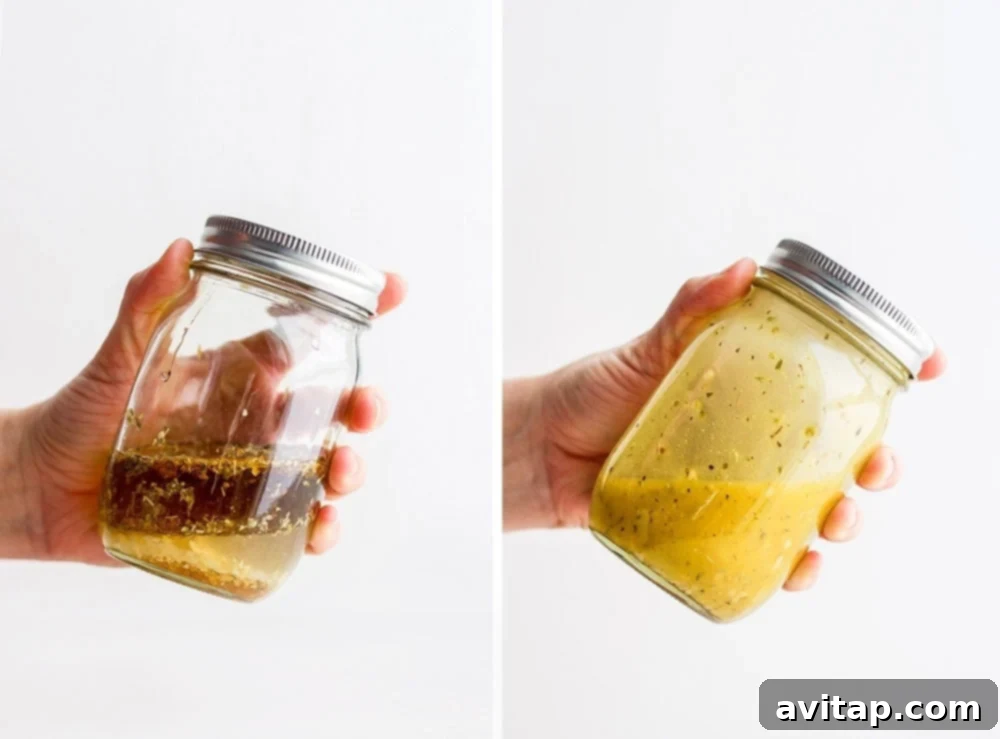
We highly recommend preparing this dressing in a container with a tight-fitting lid, such as a mason jar or a small bottle with a pour spout. This makes shaking it up to emulsify the ingredients a breeze and allows for convenient storage of any leftovers.
Ingredients for Your Zesty Homemade Greek Dressing:
- High-Quality Extra Virgin Olive Oil: This forms the rich, smooth foundation of any good Mediterranean dressing. Choose a cold-pressed extra virgin olive oil for its robust, fruity flavor and abundant health benefits, which are characteristic of Mediterranean cuisine.
- White Wine Vinegar: This provides the essential tang and bright acidity that is characteristic of an authentic Greek dressing. It’s typically lighter and milder than red wine vinegar, allowing other flavors to shine through beautifully.
- Minced Garlic: Freshly minced garlic adds a pungent, aromatic depth that is fundamental to Mediterranean flavors. Adjust the amount to your personal preference for a milder or stronger garlic note.
- Honey: A small touch of honey (or maple syrup, if you prefer a vegan option) is added to subtly balance the acidity of the vinegar and enhance the natural sweetness of the vegetables. It helps to round out the flavor profile without making the dressing overly sweet.
- Fresh Lemon Juice: A squeeze of fresh lemon juice is a game-changer. It brightens the dressing considerably and adds another layer of fresh, vibrant citrusy zest, complementing the other flavors perfectly and enhancing the overall freshness.
- Dijon Mustard: Beyond its delightful subtle flavor, Dijon mustard acts as a natural emulsifier, helping the oil and vinegar stay combined rather than separating. It also adds a slight, pleasant pungency and depth without being overpowering.
- Dried Oregano: The quintessential Greek herb. Its earthy, slightly peppery, and aromatic notes are absolutely crucial for an authentic Greek flavor profile. You can also use fresh oregano, but dried tends to hold its flavor better in dressings.
- Salt: Essential for seasoning and enhancing all the other flavors, bringing them to life. Always taste and adjust to your preference.
- Black Pepper (optional): A few turns of freshly ground black pepper can add a subtle warmth and additional layer of flavor, if desired.
How to Make the Dressing:
Making this dressing couldn’t be simpler. Simply combine all the listed ingredients – olive oil, white wine vinegar, minced garlic, honey, lemon juice, Dijon mustard, dried oregano, and salt – into your chosen container (mason jar or small bowl). If using a jar, secure the lid tightly and shake vigorously for about 30-60 seconds until all the ingredients are thoroughly combined and the mixture appears emulsified (creamy and uniform). If using a bowl, whisk energetically until the same consistency is achieved. Always taste the dressing before using it and adjust seasonings as needed – perhaps a little more salt to enhance the flavors, an extra squeeze of lemon for brightness, or a touch more honey to mellow the tang. This versatile dressing isn’t just for this Greek salad; it’s incredibly useful! Use any leftover dressing to marinate chicken, toss with pasta salad, or drizzle over roasted vegetables for an instant touch of authentic Mediterranean flair. It will keep well in the refrigerator for up to a week.
Assembling Your Delicious Greek Salad
With your ingredients perfectly prepped, including the moisture-drained cucumbers and tomatoes, and your vibrant homemade dressing ready to go, assembling this spectacular Greek salad is the final, quick step to culinary enjoyment. The process is straightforward, allowing the natural beauty and fresh flavors of the ingredients to shine through with minimal effort.
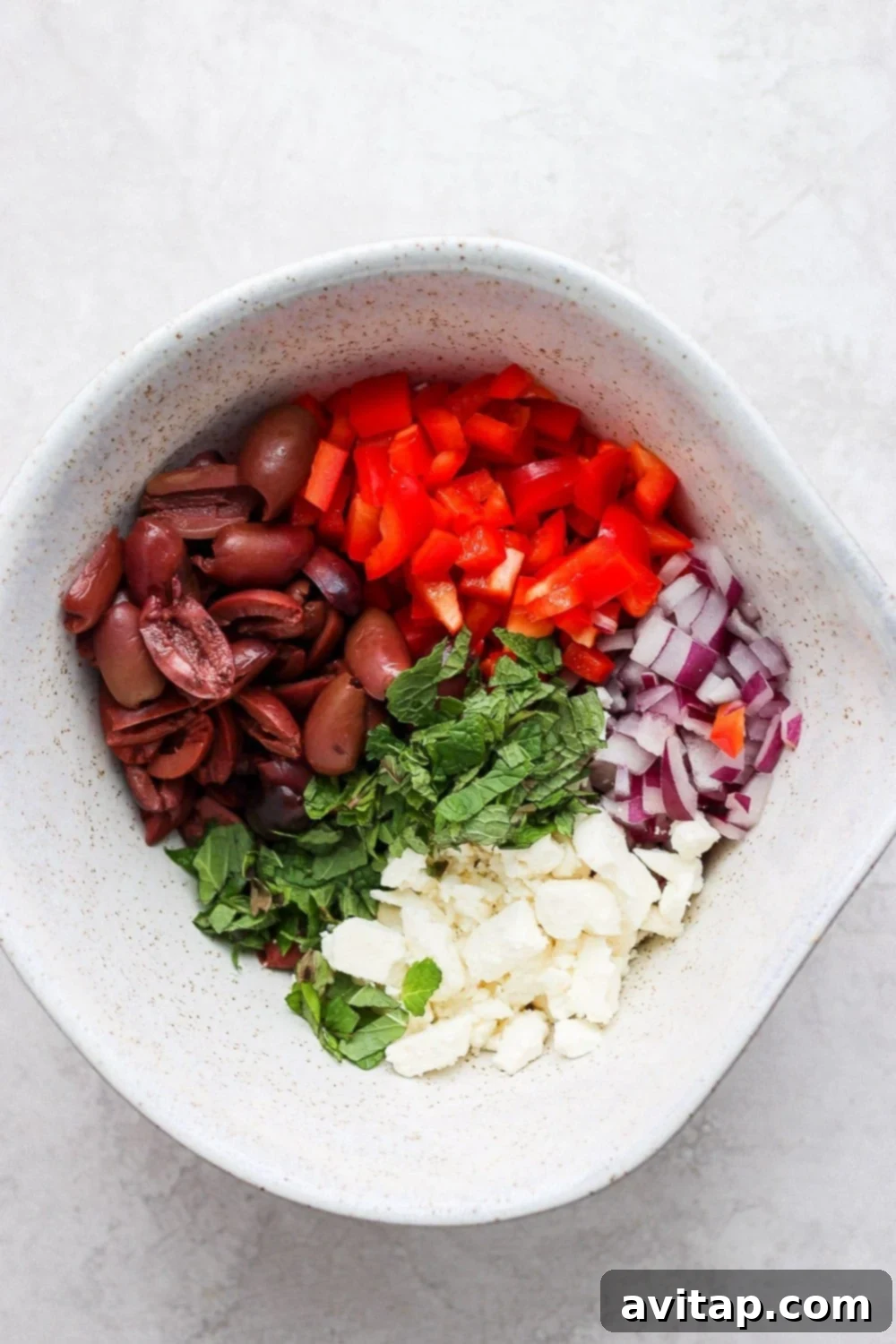
- Combine Main Dry Ingredients: In a large mixing bowl, gently combine the finely sliced red onion, diced red pepper, pitted and halved Kalamata olives, crumbled feta cheese, and the freshly chopped mint. These ingredients form the aromatic and flavorful base of your salad, providing a delightful array of textures and tastes.
- Add Prepared Cucumbers and Tomatoes: Once the cucumbers and tomatoes have been thoroughly drained of their excess liquid (as per the essential preparation step detailed above), add them to the large bowl with the other salad ingredients. This ensures your salad remains crisp and flavorful, free from any watery dilution.
- Gentle Toss: Using a large serving spoon, a pair of salad tongs, or even your clean hands, gently mix all the ingredients together. The goal here is to distribute everything evenly, ensuring that each bite offers a delightful medley of flavors and textures. Be careful not to mash the delicate cherry tomatoes or crumble the feta cheese too much during this process.
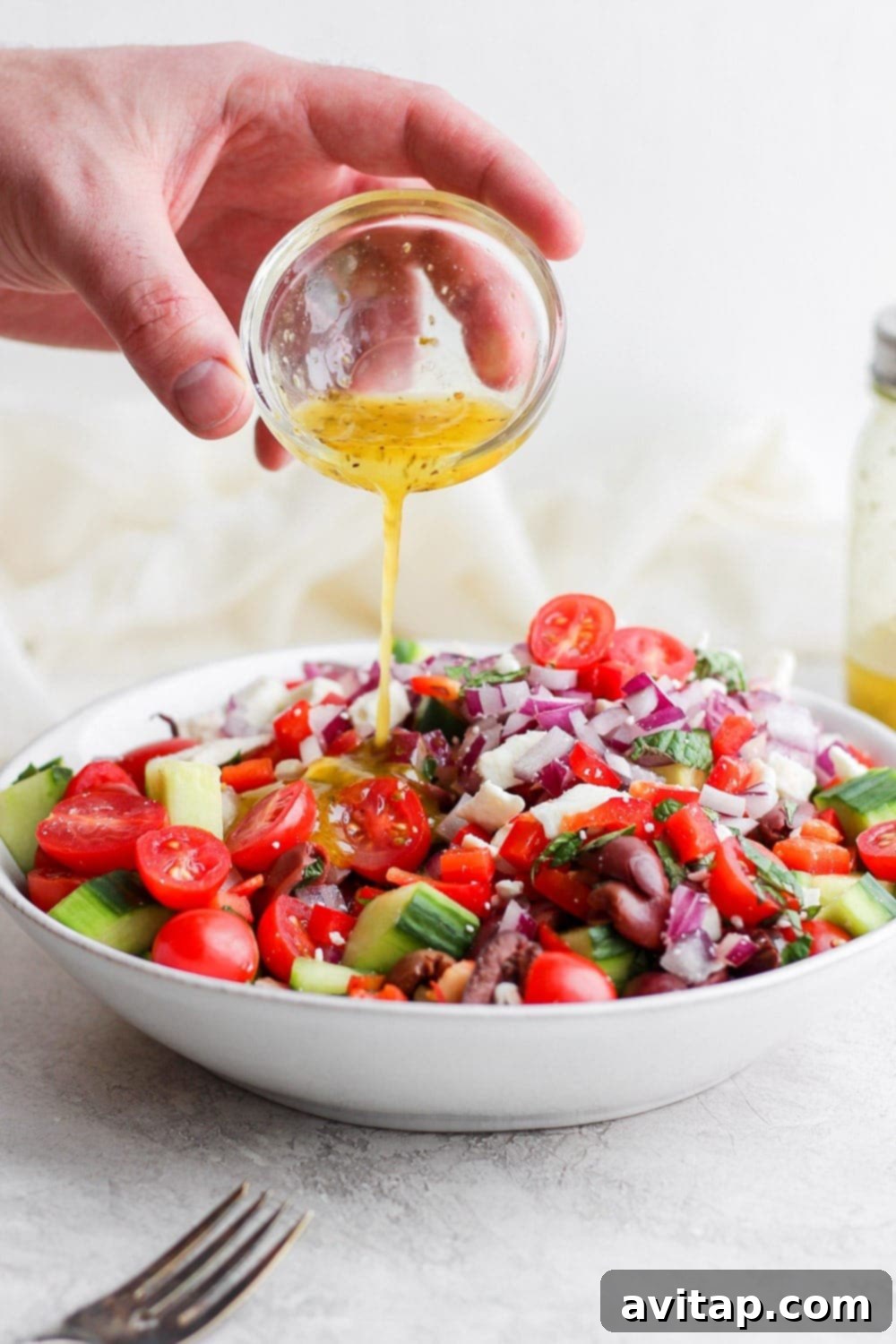
- Dress and Serve (Immediately for Best Results): Now for the grand finale! Pour 3-4 tablespoons of your freshly made homemade Greek salad dressing over the salad ingredients in the large bowl. Toss again gently until all the components are beautifully and evenly coated in the zesty dressing. For optimal flavor and texture, serve your vibrant Greek salad immediately. The dressing will awaken all the flavors, and the vegetables will be at their crispest and most refreshing.
- Meal Prep Note: If you are preparing this Greek salad as part of your meal prep plan for future enjoyment, it is highly recommended to hold off on adding the dressing until just before you plan to eat each individual portion. This crucial step preserves the salad’s integrity, prevents any sogginess, and ensures a fresh, crisp, and delicious experience every single time you enjoy it throughout the week. Store the dressing separately in the refrigerator.
Serving this salad fresh after dressing it ensures you get the full impact of its bright, bold flavors and satisfying textures. Enjoy the taste of the Mediterranean in every bite!
Perfect Pairings: What to Serve with Your Greek Salad
This vibrant Greek salad is undeniably delicious and satisfying enough to be enjoyed entirely on its own as a light and healthy lunch or a refreshing snack. However, its refreshing flavors, crisp textures, and balanced profile also make it an exceptional side dish, perfectly complementing a wide array of Mediterranean and grill-friendly meals. It adds a beautiful pop of color, a burst of fresh flavors, and a welcome lightness to virtually any main course, enhancing the overall dining experience.
Ideal Companions for Your Greek Salad:
- Grilled Greek Lemon Chicken: The zesty flavors of lemon and oregano, characteristic of grilled Greek chicken, harmonize beautifully with the tangy and herbaceous notes of the Greek salad, creating a perfectly balanced and quintessential Mediterranean meal.
- Mediterranean Salmon: The rich, omega-3 packed flavor of salmon finds a perfect counterpoint in the fresh, bright notes of the Greek salad. This pairing offers a wholesome, nutritious, and incredibly flavorful meal that’s both light and satisfying.
- Grilled Salmon: Even a simple grilled salmon fillet, seasoned minimally or with a squeeze of fresh lemon, is wonderfully elevated by the addition of this colorful and flavorful side salad. It transforms a simple protein into a complete, gourmet-level meal.
- Caprese Stuffed Chicken Breast: While Italian-inspired, the fresh flavors of tomato, basil, and mozzarella in Caprese chicken pair surprisingly well with the complementary Mediterranean elements of the Greek salad, creating a fusion of fresh, vibrant tastes.
- Grilled Lamb Chops or Souvlaki: For an even more deeply authentic Greek dining experience, serve this salad alongside succulent grilled lamb chops, flavorful chicken souvlaki skewers, or traditional pork souvlaki. The freshness of the salad cuts through the richness of the grilled meats perfectly.
- Warm Pita Bread or Creamy Hummus: Enhance your Mediterranean spread by offering warm, soft pita bread, ideal for scooping up the delicious salad components and dressing. A side of creamy, homemade hummus also makes for a wonderful accompaniment, creating a more substantial and satisfying appetizer or light meal.
- Hearty Lentil Soup or Stew: For a wholesome and comforting vegetarian meal, a bowl of nourishing lentil soup or a hearty vegetable stew pairs wonderfully with the refreshing and light crunch of the Greek salad, providing a beautiful contrast in textures and temperatures.
- Falafel or Gyro Wraps: Elevate your favorite falafel or gyro wraps by stuffing them with a generous helping of this Greek salad. Its fresh, tangy profile provides an excellent balance to the savory and often richer fillings, creating a satisfying and easy handheld meal.
No matter what you choose to pair it with, this Greek salad is guaranteed to be a crowd-pleaser and a healthy, vibrant, and incredibly flavorful addition to your table, suitable for family dinners, gatherings, or a simple solo meal.
Storage Tips for Leftover Greek Salad
One of the many fantastic advantages of this Greek salad recipe (especially when prepared without dressing until serving) is its excellent keeping quality. If you find yourself with a generous amount of leftover Greek salad, or if you’ve intentionally made a larger batch specifically for convenient meal prepping throughout the week, proper storage techniques will ensure it remains wonderfully fresh, crisp, and delicious for several days, minimizing food waste and maximizing enjoyment.
- Undressed Salad Components: If you’ve wisely followed our meal prep advice and kept the homemade Greek salad dressing separate from the main salad ingredients, the undressed components (cucumbers, tomatoes, red onion, red pepper, Kalamata olives, feta cheese, and fresh mint) can be stored beautifully. Simply transfer them into an airtight container and place it in the refrigerator. Stored this way, your salad will remain wonderfully fresh and crisp for up to 3-4 days. This method allows you the flexibility to dress individual portions as needed, guaranteeing maximum freshness and crunch every time you serve it.
- Dressed Salad (for immediate consumption): If your salad has already been tossed with the dressing, it’s best enjoyed within 1-2 days of preparation. The acidity from the dressing, combined with the inherent saltiness, can gradually cause the vegetables to soften over time, slightly diminishing their crisp texture. If you have dressed leftovers, transfer them to an airtight container and store promptly in the fridge. While still edible after two days, the texture might not be as firm and vibrant as freshly dressed salad.
- Separate Dressing Storage: Your homemade Greek salad dressing is a star in its own right and also stores exceptionally well. Pour any leftover dressing into a sealed mason jar or an airtight container and store it in the refrigerator for up to a week. Before each use, simply give the jar a good shake or whisk the dressing vigorously, as the oil and vinegar layers may naturally separate over time. This ensures a perfectly emulsified and flavorful dressing every time.
By implementing these simple and effective storage tips, you can efficiently enjoy perfectly fresh, flavorful, and crisp Greek salad throughout your week, making healthy eating both incredibly convenient and consistently enjoyable!
More of Our Favorite Recipes
Healthy and Refreshing Salad Recipes You’ll Love
If you’ve thoroughly enjoyed the fresh, vibrant flavors and wholesome goodness of our authentic Greek salad, you’re in for a treat! We have a wide array of other healthy, equally delicious, and easy-to-make salad recipes that are perfect for any occasion. From quick weeknight sides to hearty main course salads and seasonal specialties, explore new and exciting ways to incorporate nutrient-packed meals into your diet.
- Quick 15-Minute Broccoli Salad Recipe: A crunchy, creamy, and incredibly fast salad that’s perfect for a potluck or a simple side.
- Exotic Thai Chili Summer Corn Salad: A delightful fusion of sweet and spicy flavors, perfect for warmer months and adventurous palates.
- Wholesome and Hearty Farro Salad: A robust grain salad packed with vegetables, ideal for a satisfying vegetarian lunch or dinner.
- Discover ALL Our Delicious Salad Recipes: Explore our comprehensive collection for every taste, season, and dietary preference, guaranteed to inspire your next healthy meal.
Greek Salad Recipe
This authentic Greek salad is a vibrant celebration of fresh flavors: sweet cherry tomatoes, crisp cucumber, finely sliced red onion, briny Kalamata olives, creamy feta, and a burst of fresh mint, all brought together by a zesty homemade dressing. It’s the perfect light meal, refreshing side dish, or flexible meal prep component for embracing a healthy Mediterranean lifestyle. Get ready for a taste sensation!
- Prep Time: 30 minutes
- Cook Time: 0 minutes
- Total Time: 30 minutes
- Yields: 4 servings
- Author: Lee Funke
Ingredients
For the Salad:
- 3 cups sliced English cucumbers
- 1 pint cherry tomatoes, halved
- 1/8 teaspoon salt (for drawing out moisture from vegetables)
- 1/2 red onion, finely sliced
- 1 large red pepper, diced
- 1 cup Kalamata olives, pitted and halved
- 1/2 cup crumbled feta cheese
- 1/3 cup chopped fresh mint, lightly packed
For the Homemade Greek Salad Dressing:
- 1/2 cup extra virgin olive oil
- 3 tablespoons white wine vinegar
- 1 tablespoon minced garlic
- 1 teaspoon honey (or maple syrup for vegan)
- 1 tablespoon fresh lemon juice
- 1 teaspoon Dijon mustard
- 1 teaspoon dried oregano
- 1/2 teaspoon salt, or to taste
- Optional: fresh ground black pepper to taste
Instructions
- Prepare Cucumbers and Tomatoes: Begin by placing the sliced English cucumbers and halved cherry tomatoes in a separate medium-sized bowl. Sprinkle them evenly with 1/8 teaspoon of salt and toss gently to coat. Let them sit for at least 15-30 minutes at room temperature to allow excess liquid to be drawn out. This crucial step prevents the salad from becoming watery.
- Combine Dry Salad Ingredients: While the salted cucumbers and tomatoes are resting, take a large mixing bowl and add the finely sliced red onion, diced red pepper, pitted and halved Kalamata olives, crumbled feta cheese, and the freshly chopped mint.
- Drain and Add Wet Vegetables: After the resting period, carefully pour the cucumbers and tomatoes into a fine-mesh sieve or colander and discard the accumulated liquid. Add the thoroughly drained vegetables to the large bowl with the rest of the salad ingredients. Gently mix all ingredients together to combine them evenly.
- Make the Dressing: In a mason jar or a small bowl, combine all the ingredients for the homemade Greek salad dressing: olive oil, white wine vinegar, minced garlic, honey, fresh lemon juice, Dijon mustard, dried oregano, and salt. If using a jar, secure the lid and shake vigorously until well combined and emulsified. If using a bowl, whisk energetically until creamy and uniform. Taste the dressing and adjust seasonings as desired.
- Dress and Serve: Pour 3-4 tablespoons of your freshly made homemade Greek salad dressing over the salad ingredients in the large bowl. Toss gently until all components are beautifully and evenly coated in the zesty dressing. For the best fresh flavor and crisp texture, serve your vibrant Greek salad immediately.
- Meal Prep Tip: If you are preparing this Greek salad for future meals or meal prepping, store the undressed salad components in an airtight container in the refrigerator. Keep the dressing separate and add it right before serving each individual portion. This ensures that the vegetables remain crisp and fresh for days, providing a delightful culinary experience every time.
Nutrition Information (Approximate Per Serving)
Please note that nutrition information is automatically calculated and should be used as an approximation. Exact values may vary based on specific ingredients, portion sizes, and preparation methods.
- Calories: 258 kcal
- Carbohydrates: 14 g
- Protein: 4 g
- Fat: 26 g
- Fiber: 3 g
- Sugar: 4 g
Love this recipe? We’d love to hear from you!
Share Your Thoughts! Leave a Comment Below!
Your feedback brightens our day and helps other home cooks! If you tried this authentic Greek salad recipe and loved it, please consider leaving a comment and a star rating below to share your experience. Don’t forget to share your beautiful culinary creations on social media using the hashtag #fitfoodiefinds – we can’t wait to see your delicious Greek salads and celebrate your cooking successes!
Photo Credit: The Wooden Skillet