
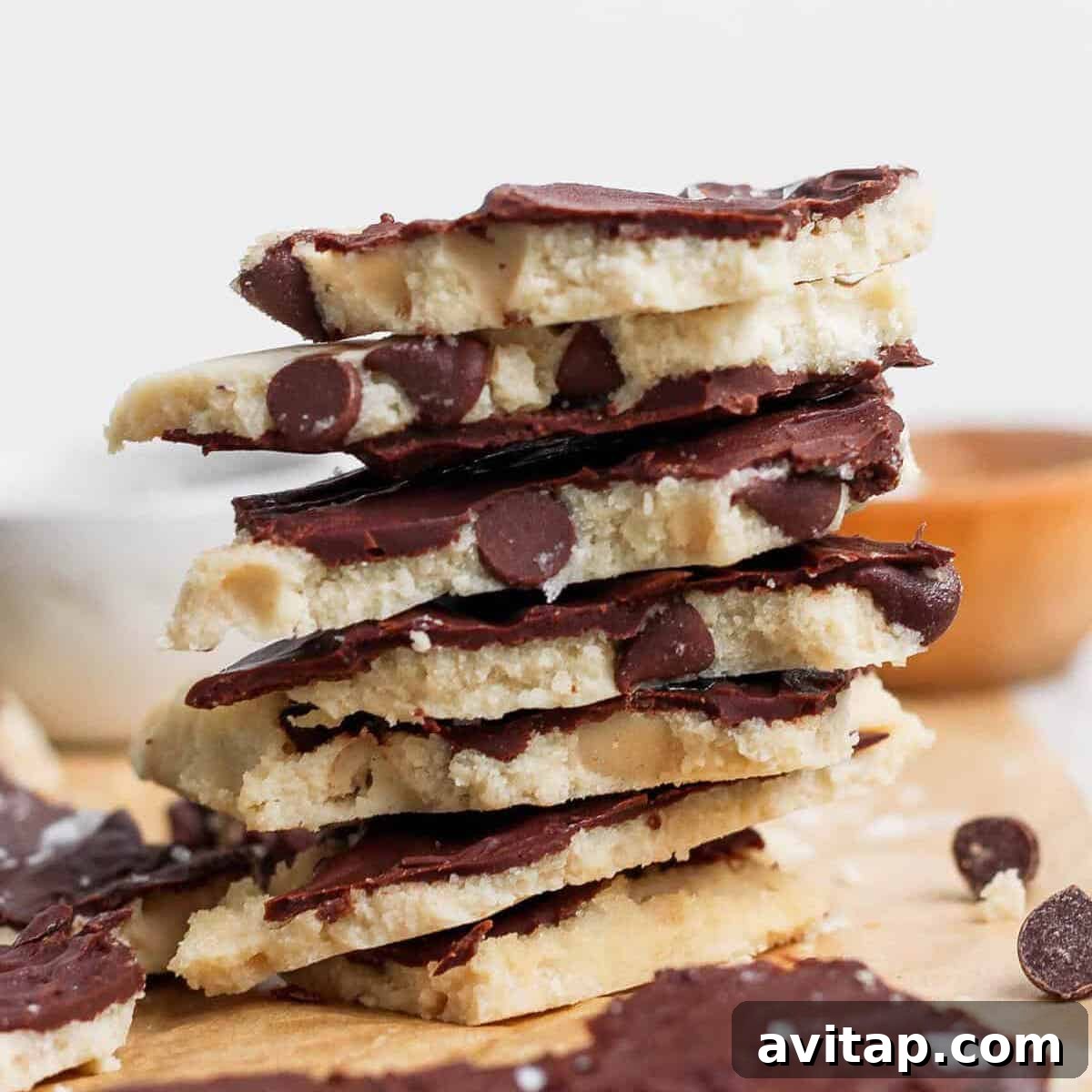
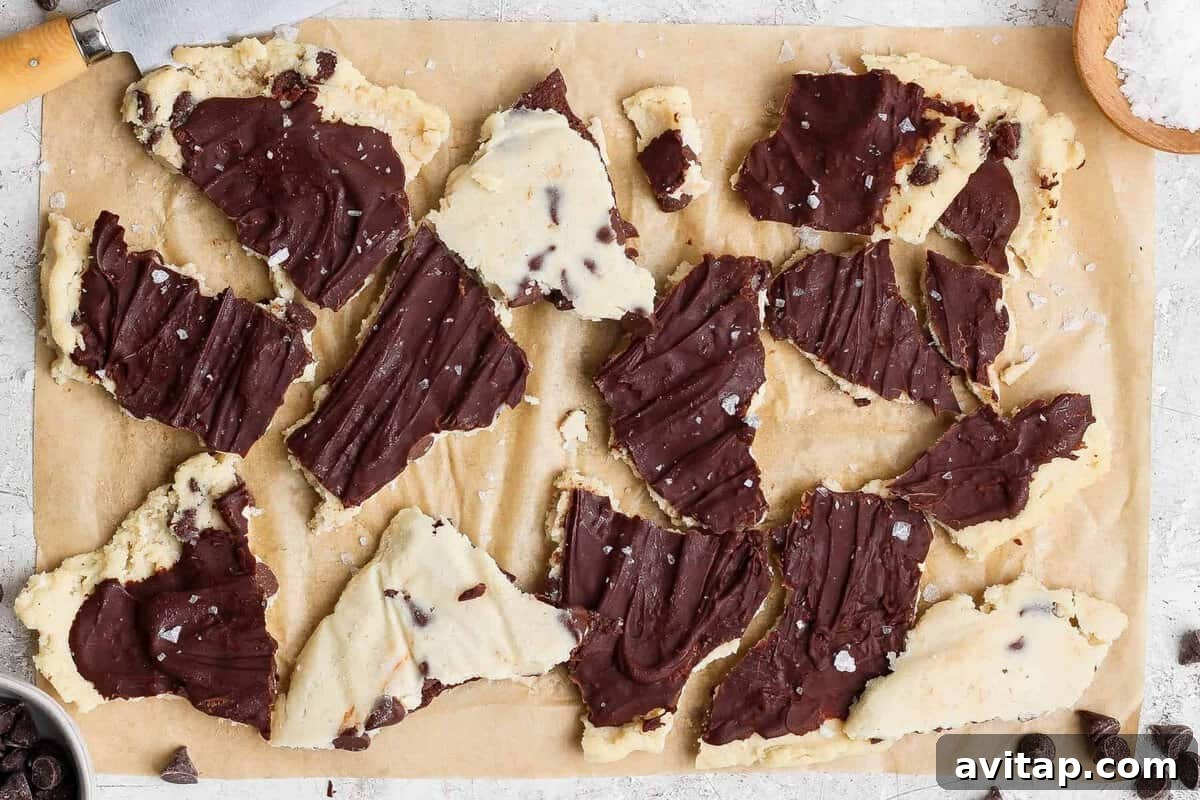
I’ve made cottage cheese cheesecake bars, cookies, brownies, and ice cream for this site, and this cottage cheese cookie dough is the easiest yet. It uses only five ingredients, no protein powder, and tastes like real cookie dough. Enjoy it straight from the bowl or freeze it into bark for a grab-and-go snack that will last all week, as shown in the photos.
This cottage cheese cookie dough is creamy, mildly sweet, and packed with protein without relying on powders or specialty ingredients. When blended until smooth, cottage cheese becomes an invisible, silky base that combines perfectly with almond flour, maple syrup, vanilla, and chocolate chips. You can scoop it cold from the fridge or spread it into a bark and freeze it for a ready-made treat. There’s no baking and the whole process takes about 15 minutes.
Why You’ll Love This Cottage Cheese Cookie Dough
- Only five simple ingredients: cottage cheese, almond flour, maple syrup, vanilla, and chocolate chips. No protein powders or specialty mixes required.
- Doesn’t taste like cottage cheese: blend it until smooth and the curd texture and tang disappear, leaving vanilla, maple, and chocolate flavors—just like classic cookie dough.
- Two enjoyable formats: serve scoopable from the bowl, or freeze as chocolate-topped bark for a crunchy-and-creamy snack.
- High in protein without additives: the cottage cheese supplies protein and creaminess, while the almond flour provides structure and keeps it gluten-free.
What You Need (Ingredient Notes)
- Cottage cheese: Full-fat or 2% yields the creamiest texture. If you see liquid in the container, drain it briefly through a fine-mesh strainer for a couple of minutes before blending. Avoid fat-free varieties — they tend to be watery and make the dough runny. Brands that separate less are preferable.
- Fine-ground almond flour: This gives body to the dough while keeping it gluten-free. Use fine-ground almond flour rather than almond meal for a smoother result.
- Maple syrup: Adds gentle sweetness. Two tablespoons keeps the flavor balanced without overpowering the cookie-dough notes. Honey can be used as a substitute.
- Vanilla extract: One teaspoon enhances the cookie-dough aroma and rounds out the flavor.
- Chocolate chips: Folded into the dough and used again melted for a topping if making bark. Mini chips distribute well in a thin bark layer.
- Coconut oil (for bark topping): A small amount blended with melted chocolate creates a thin, crisp shell that snaps cleanly when bitten.
Tips for the Best Texture
Texture makes or breaks this recipe. Follow these practical tips to get a smooth, scoopable dough or firm bark every time:
- Blend thoroughly: Use a blender or food processor and blend the cottage cheese for 60–90 seconds until it is completely smooth. Visible curds will leave a cottage-cheese taste.
- Drain excess liquid: If the cottage cheese looks watery, drain it in a fine-mesh strainer for a few minutes before blending. This prevents runny dough.
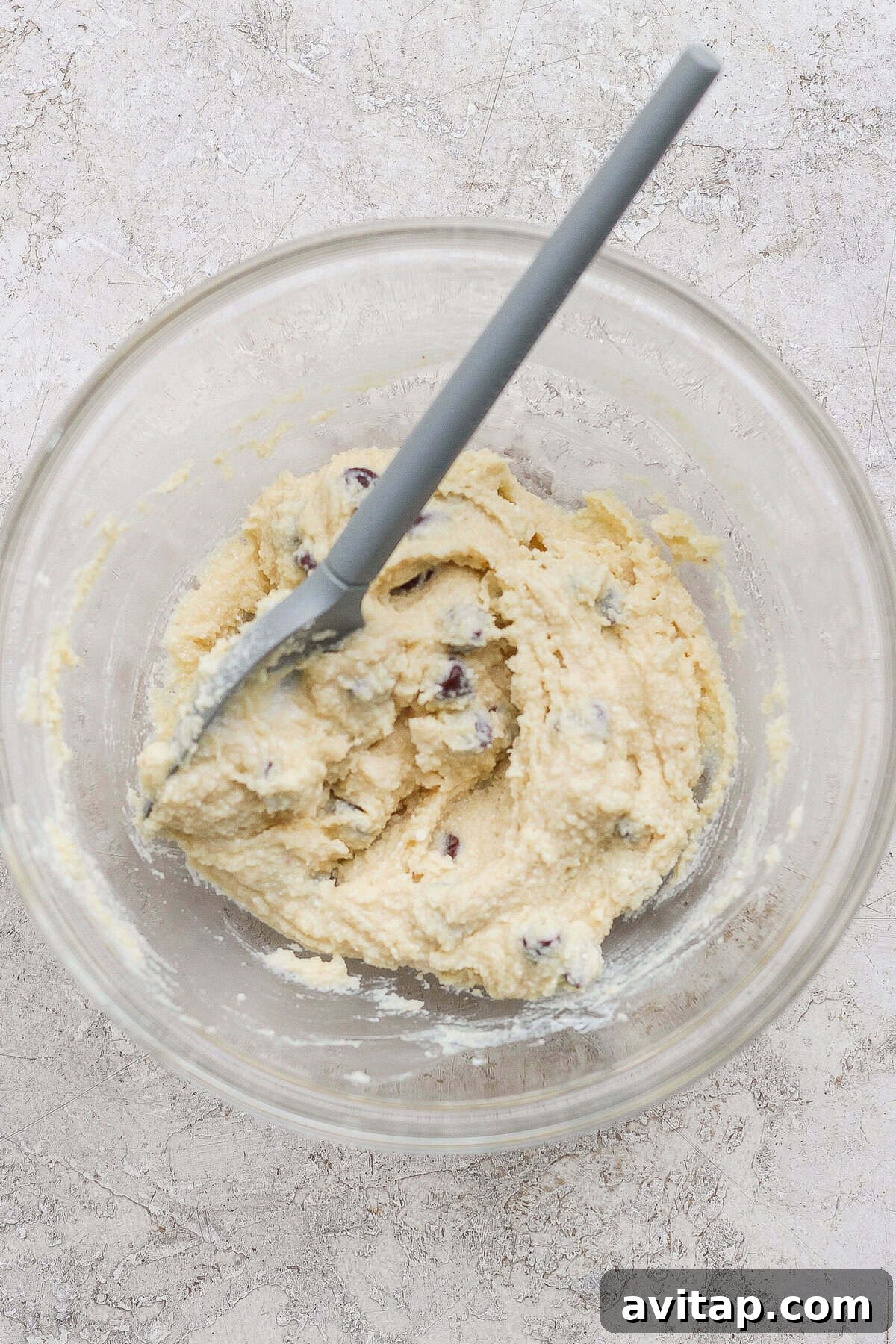
- Adjust almond flour as needed: If the mix feels loose after stirring, add one or two additional tablespoons of almond flour. Brands vary in absorption, so adjust to achieve a thick, cookie-dough consistency.
- Chill for scoopable dough: Refrigerate the mixed dough for 15–20 minutes to firm it up and let the flavors meld. It should hold its shape briefly on a spoon before slowly sliding off.
How to Make It Into Bark
Turning the dough into bark creates a freezer-friendly snack that’s easy to portion and enjoy later.
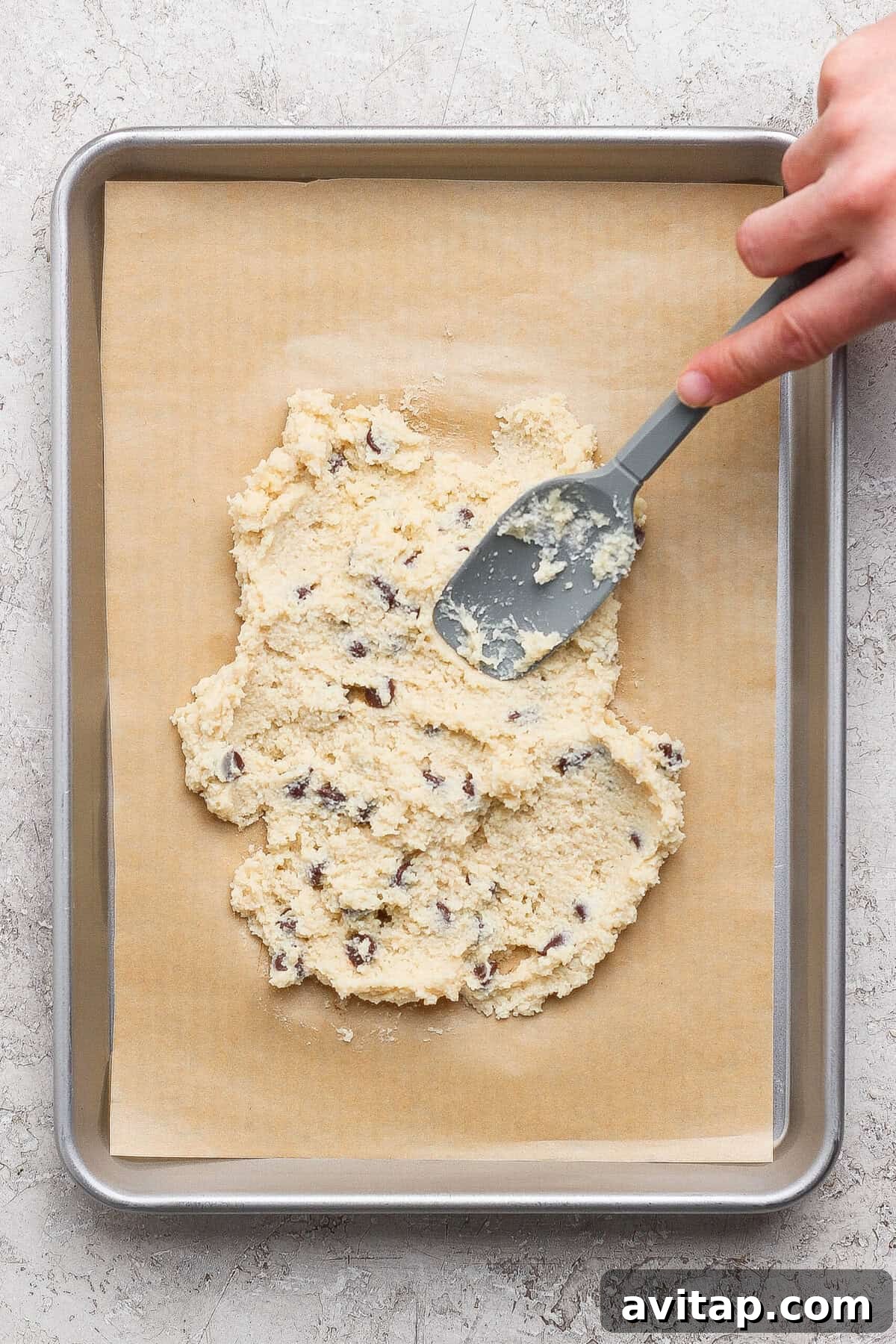
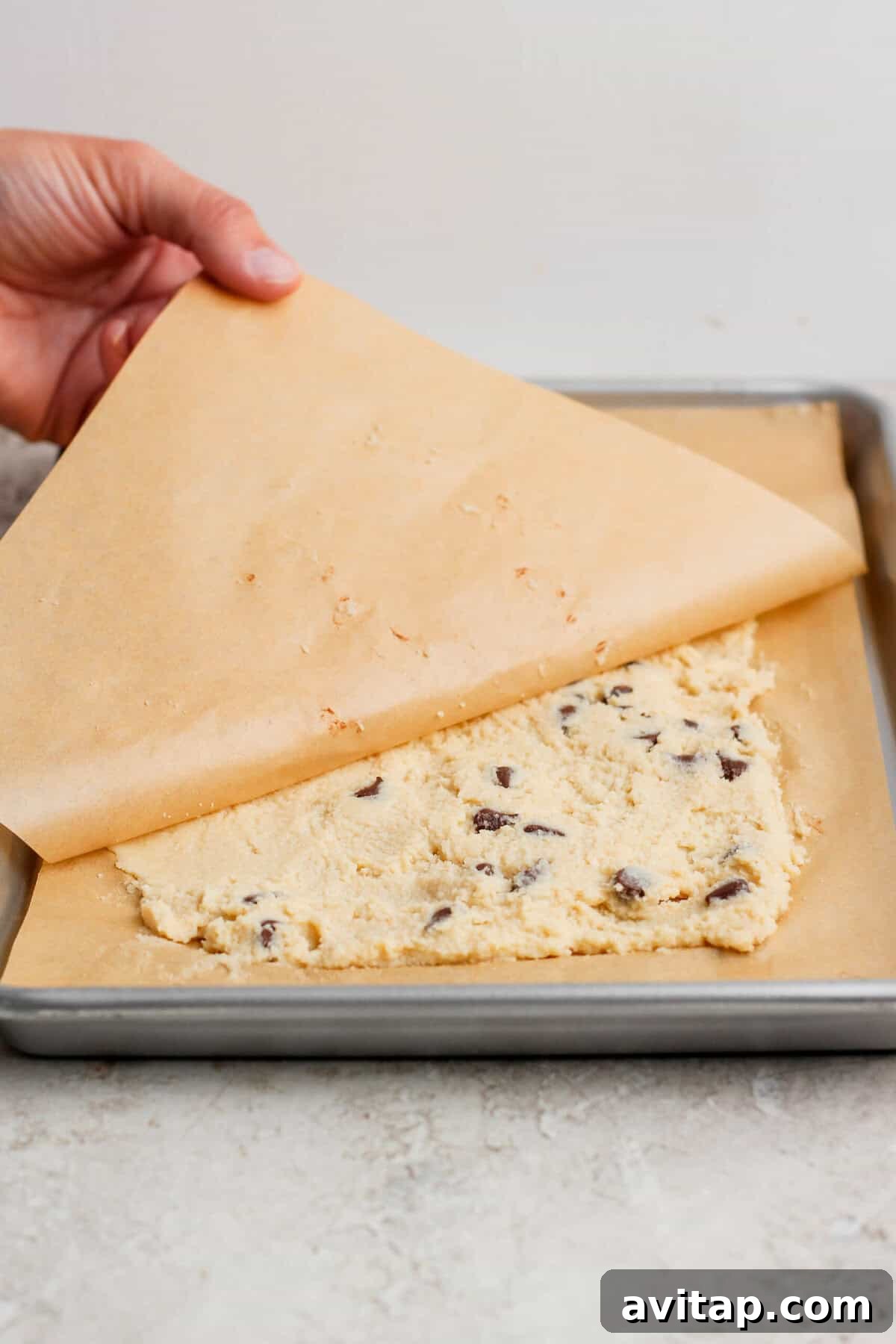
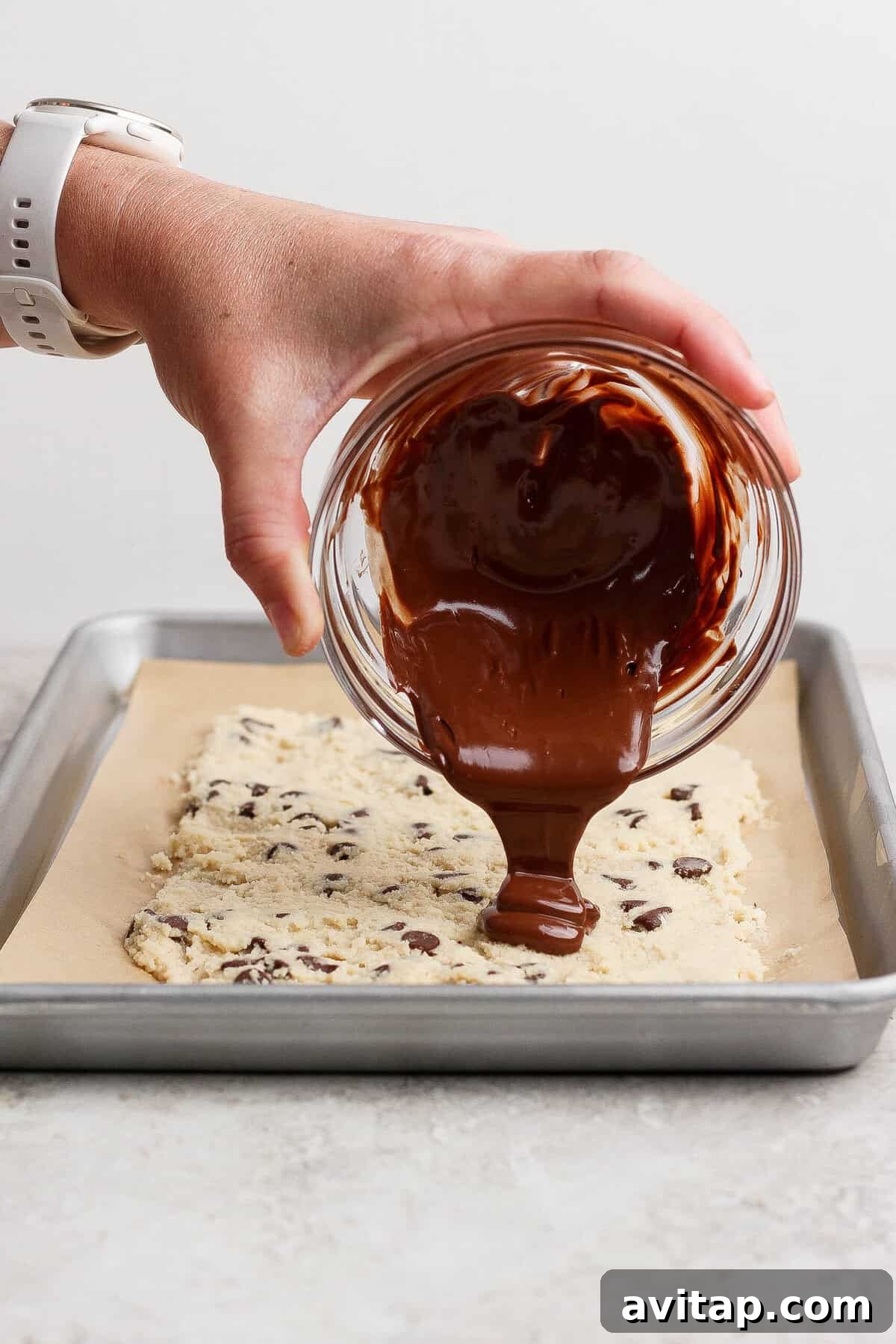
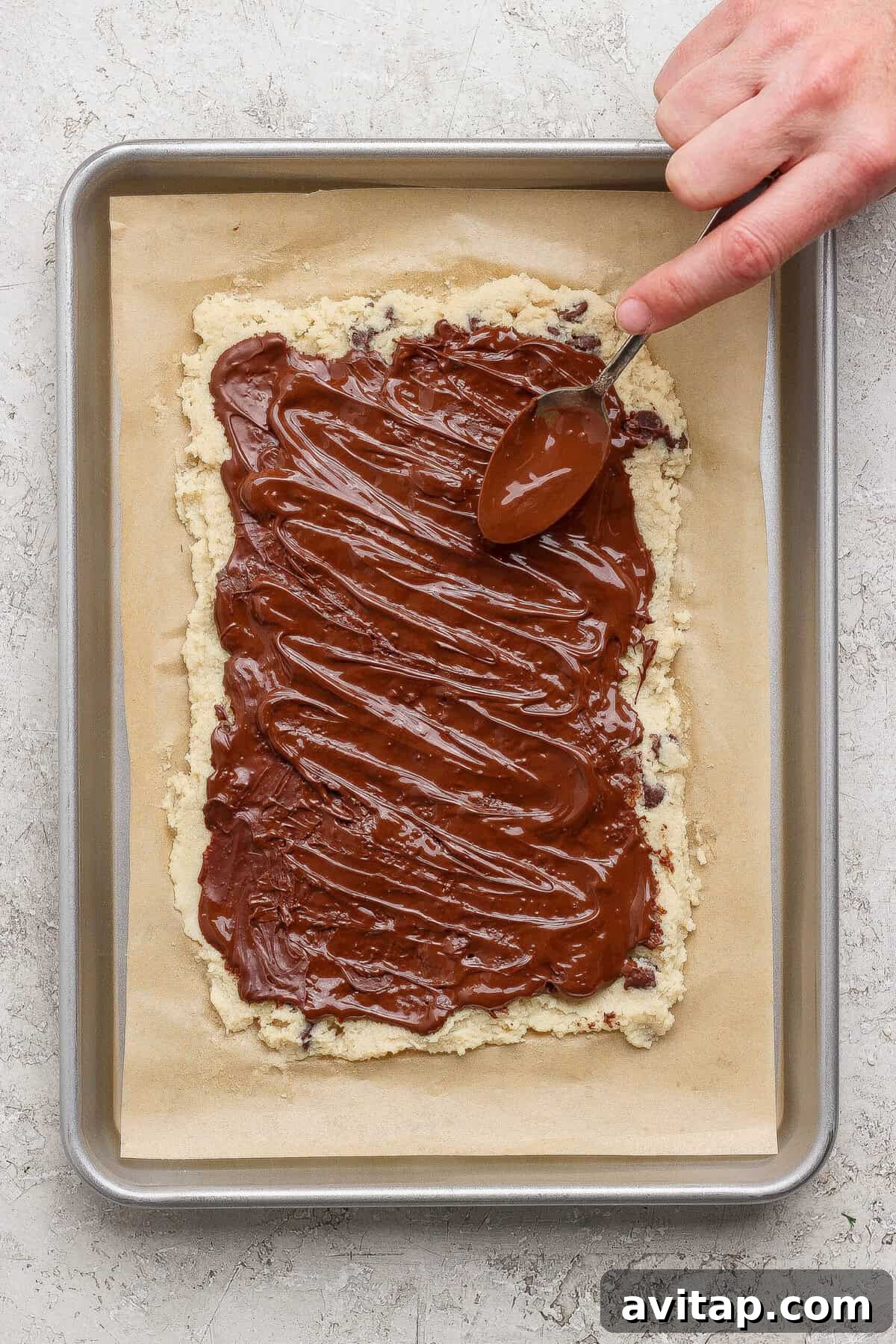
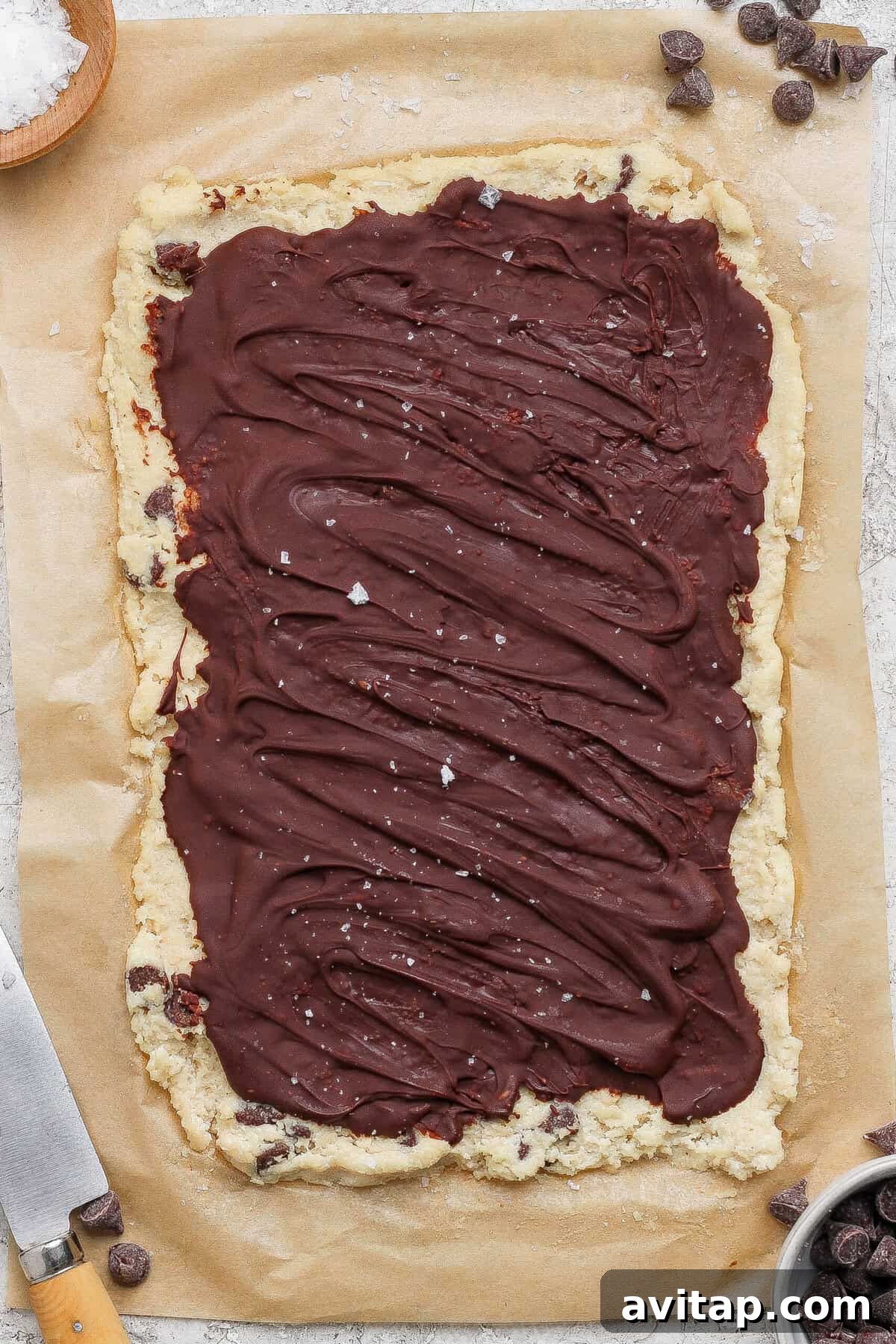
Spread the dough onto a parchment-lined baking sheet, top with another sheet of parchment, and roll to about 1/2-inch thickness. Freeze briefly — about five minutes — to help the dough set. While it chills, melt a small amount of chocolate chips with 1/2 teaspoon coconut oil until smooth. Remove the top parchment, spread the melted chocolate over the semi-frozen dough, and freeze again for about 10 minutes or until the chocolate is firm. Break or cut into pieces and store in the freezer.
Notes from testing: 1/2-inch thickness is ideal; thinner pieces can be fragile, while thicker slabs may not freeze evenly. The tiny bit of coconut oil in the melted chocolate is what produces a clean snap rather than a brittle, flaky topping.
Serving Ideas
- Straight from the bowl: Spoon it chilled and enjoy the creamy cookie-dough experience.
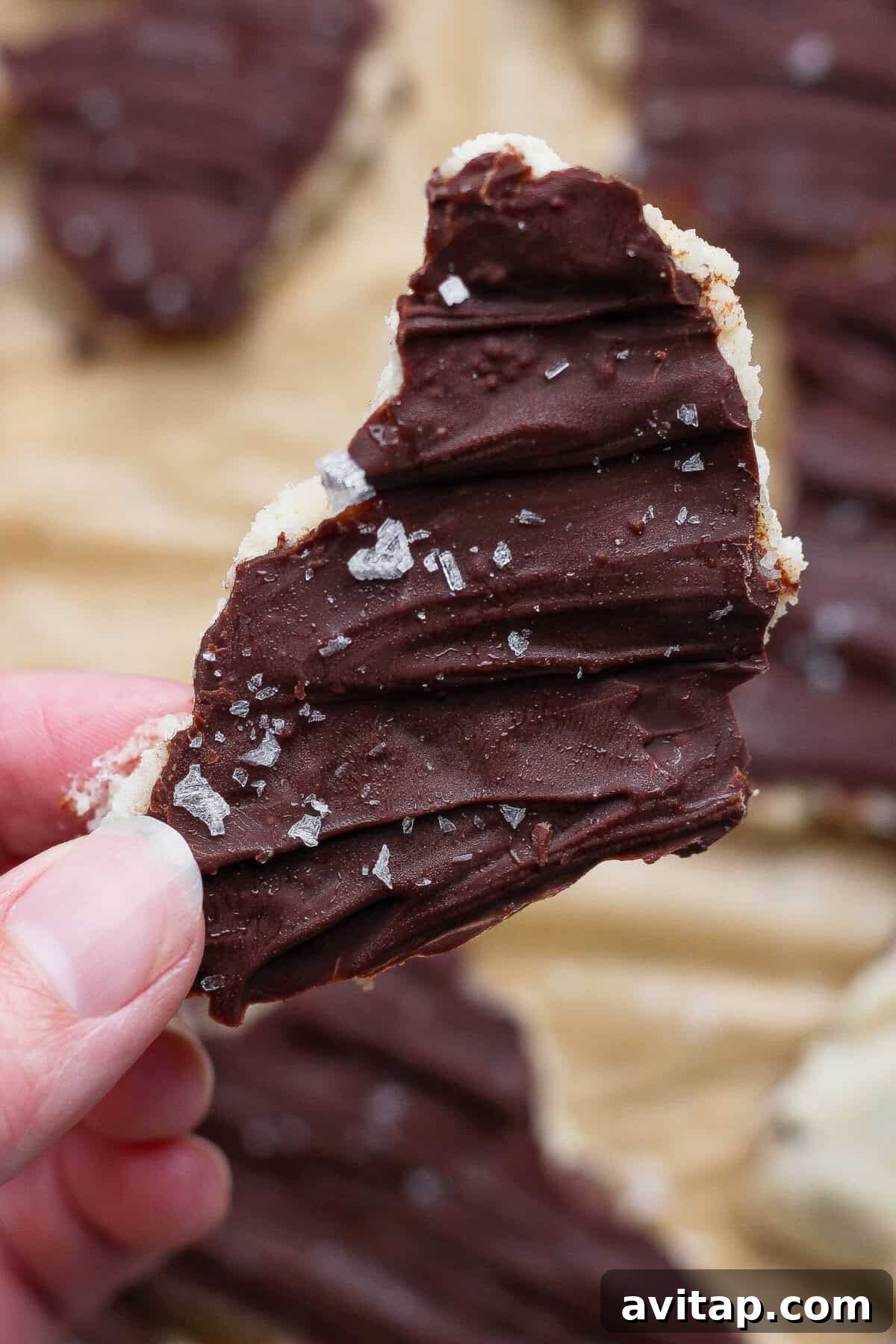
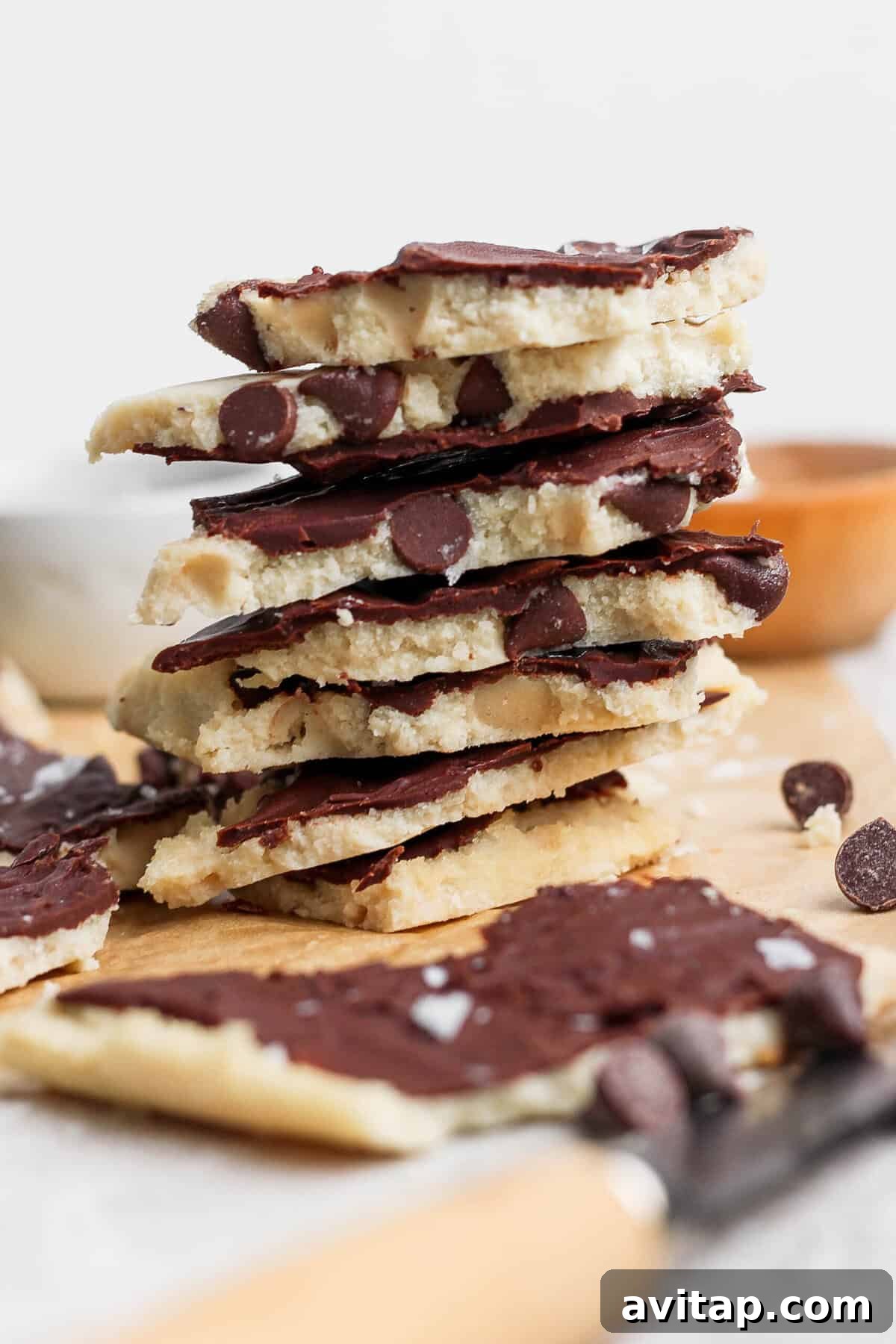
- Frozen bark pieces: A crisp chocolate shell with a soft, creamy center.
- On rice cakes: Spread a layer on rice cakes for a high-protein snack.
- Rolled into balls: Form tablespoon-sized balls, freeze, and store for quick bites.
- With fruit: Use apple slices, strawberries, or banana as dippers.
- As a topping: Crumble over yogurt or ice cream for a cookie-dough garnish with protein.
Variations and Swaps
- Sweetener: Substitute honey for maple syrup or use a sugar-free maple syrup for lower sugar.
- Flour: Oat flour can replace almond flour for a nut-free option (use about 3/4 cup oat flour for every 1 cup almond flour). Coconut flour absorbs more liquid — use roughly 1/3 cup if substituting.
- Mix-ins: Try white chocolate chips, mini candies, chopped nuts, cacao nibs, or crushed cookies as add-ins.
- Flavor changes: Replace vanilla with almond extract, add a tablespoon of cocoa for double chocolate, or stir in a tablespoon of peanut butter for a peanut-butter cookie-dough twist.
- Optional protein powder: If you prefer extra protein, stir in one scoop of vanilla protein powder with the almond flour and add an extra tablespoon of maple syrup to balance dryness.
Storage
- Fridge (scoopable): Store in an airtight container for up to five days. Stir before serving if it firms up.
- Freezer (bark): Layer pieces with parchment in a freezer-safe container or bag. Keeps up to two months.
- Freezer (scoopable balls): Freeze tablespoon-sized scoops on a lined sheet, then transfer to a bag for grab-and-go snacks; eat straight from the freezer.
FAQ
No. When blended until smooth, the cottage cheese becomes a neutral, creamy base and the dominant flavors are vanilla, maple syrup, and chocolate.
Yes. The recipe is intentionally free of protein powder — cottage cheese provides the protein while almond flour creates structure.
Excess liquid in the cottage cheese is the usual cause. Drain it in a fine-mesh strainer before blending, or add an extra tablespoon or two of almond flour to thicken the mixture.
Scoopable dough keeps up to five days in an airtight container. Bark pieces keep up to two months in the freezer.
This version is designed to be eaten raw and does not contain eggs. For bakeable cottage cheese cookies, use a recipe formulated specifically for baking that adjusts ratios for oven stability.
Commercial almond flour is processed from blanched almonds and is safe to consume without cooking. This recipe contains no raw eggs or raw wheat flour, so it is safe to eat unbaked.
Cottage Cheese Cookie Dough
Creamy, mildly sweet, and high in protein without any protein powder. Blended cottage cheese transforms into a smooth dough with almond flour, maple syrup, vanilla, and chocolate chips. Ready in about 15 minutes.
Ingredients
Cookie Dough
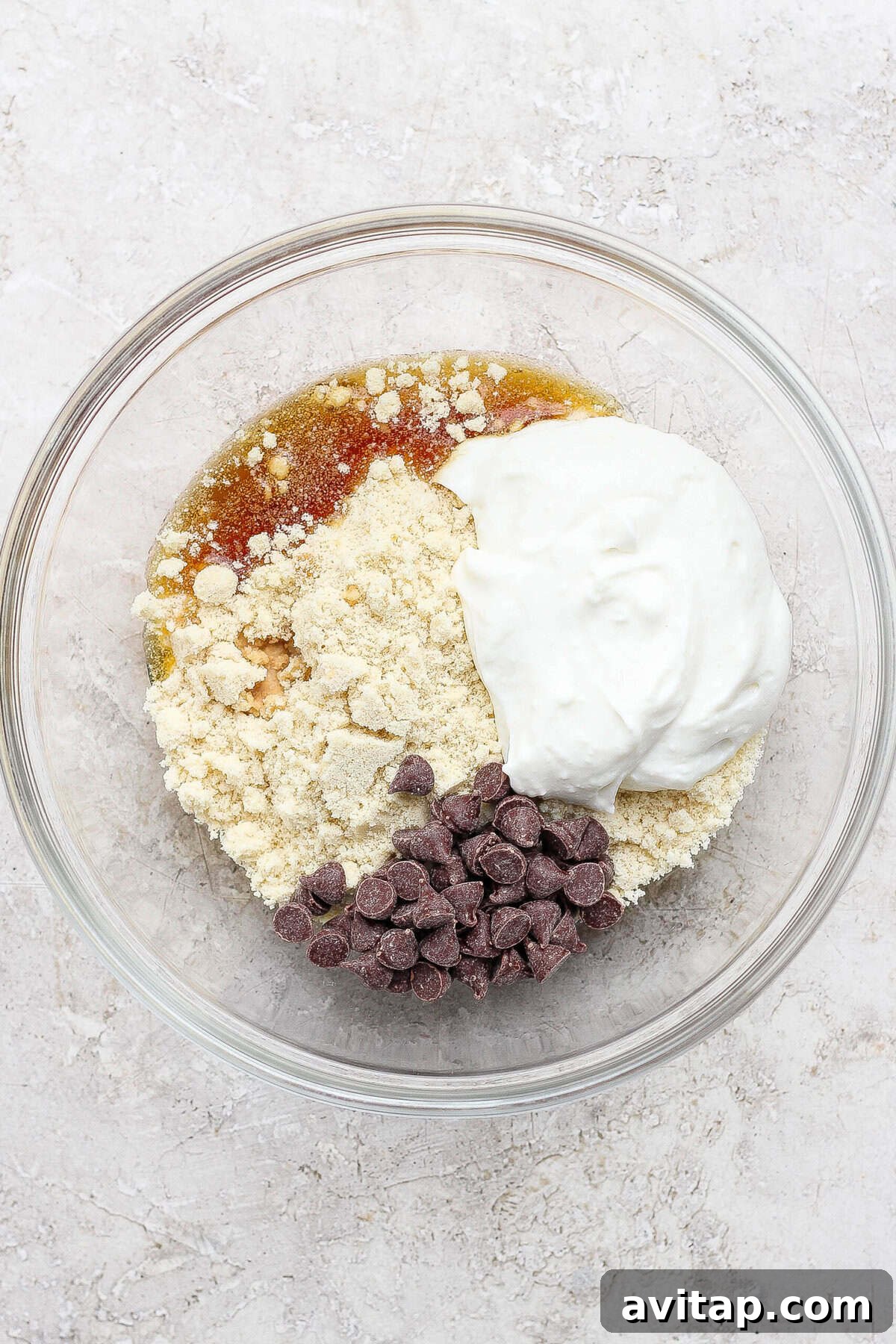
- 1/2 cup cottage cheese, blended until smooth
- 1 cup fine-ground almond flour
- 2 tablespoons maple syrup
- 1 teaspoon vanilla extract
- 1/4 cup chocolate chips
Chocolate Topping (for bark)
- 2 tablespoons chocolate chips
- 1/2 teaspoon coconut oil
Instructions
- Add the cottage cheese to a blender or food processor and blend 60–90 seconds until completely smooth and silky, with no visible curds.
- Transfer the blended cottage cheese to a mixing bowl. Add almond flour, maple syrup, and vanilla. Stir until a thick cookie-dough forms.
- Fold in 1/4 cup chocolate chips evenly.
- For scoopable dough: refrigerate in an airtight container for 15–20 minutes to firm up, then serve chilled with a spoon.
- For bark: line a baking sheet with parchment. Transfer dough to the sheet, place another parchment on top, and roll to 1/2-inch thickness. Freeze 5 minutes. Melt 2 tablespoons chocolate chips with 1/2 teaspoon coconut oil in short bursts, stirring until smooth. Spread over the chilled dough and freeze 10 minutes until set. Break or cut into pieces and store in the freezer.
Tips & Notes
Sweetener swap: Honey can replace maple syrup. For a lower-sugar option, use sugar-free maple syrup.
Flavor variation: Try almond extract instead of vanilla, or add a tablespoon of cocoa powder for a double-chocolate version.
Optional protein: Stir in one scoop of vanilla protein powder with the almond flour and add an extra tablespoon of maple syrup if needed.
Storage: Scoopable dough: fridge up to 5 days. Bark pieces: freezer up to 2 months.
Nutrition (per serving, approximate)
Calories: 208 kcal, Carbohydrates: 17 g, Protein: 6 g, Fat: 14 g, Fiber: 2 g, Sugar: 12 g
Nutrition information is automatically calculated and should be used as an approximation.