

As the crisp air of autumn arrives, so does the highly anticipated spaghetti squash season! This incredibly versatile and fun-to-cook vegetable has become a staple in kitchens around the world, celebrated for its unique texture and mild, sweet flavor. If you’re looking for a delightful, healthy, and easy-to-prepare meal that’s both satisfying and light, then you’ve come to the right place. We’ve been eagerly awaiting this season all year, and we’re thrilled to share our ultimate guide to baking spaghetti squash in the oven. It’s a method that promises perfectly tender, noodle-like strands every time, making it one of our absolute favorite dishes for the whole family.
Cooking spaghetti squash doesn’t need to be complicated. In fact, for this incredibly simple yet rewarding recipe, you truly only need a handful of basic ingredients: a fresh spaghetti squash, a good quality olive oil, and a dash of salt and pepper to enhance its natural flavors. Oh, and, of course, a reliable oven! We’ll walk you through each step, ensuring your roasted spaghetti squash turns out beautifully cooked, ready to be enjoyed as a stand-alone dish or a fantastic base for countless recipes. Get ready to discover your new favorite way to enjoy this amazing gourd.

Why Everyone Loves Spaghetti Squash
If you’re among those who once eyed spaghetti squash with skepticism, you’re not alone. Many people are initially unsure about this unique vegetable, but once you learn the proper way to prepare it, it’s truly a game-changer. I personally experienced a complete transformation, moving from indifference to absolute adoration, especially after discovering the magic of roasting. While cooking it in an Instant Pot can also be convenient, nothing quite compares to the rich flavor and tender-crisp texture achieved by baking it in the oven.
Beyond its culinary appeal, spaghetti squash has gained immense popularity as a fantastic low-carb, gluten-free alternative to traditional pasta noodles. Its ability to effortlessly transform into delicate, pasta-like strands makes it an ideal choice for those seeking healthier meal options or catering to dietary restrictions. However, for us, its appeal extends far beyond just being a substitute; we genuinely eat it because it’s simply incredibly delicious on its own, offering a delightful and satisfying experience with every forkful.
What Does Spaghetti Squash Taste Like?
Spaghetti squash possesses a wonderfully mild and subtly sweet flavor profile, making it a versatile ingredient that pairs well with a wide array of seasonings and sauces. Its sweetness is more delicate than that of a rich butternut squash, yet it carries a distinct natural sweetness that sets it apart from a savory russet potato. This balanced taste makes it an excellent canvas for various culinary creations, allowing other ingredients to shine without being overpowered.
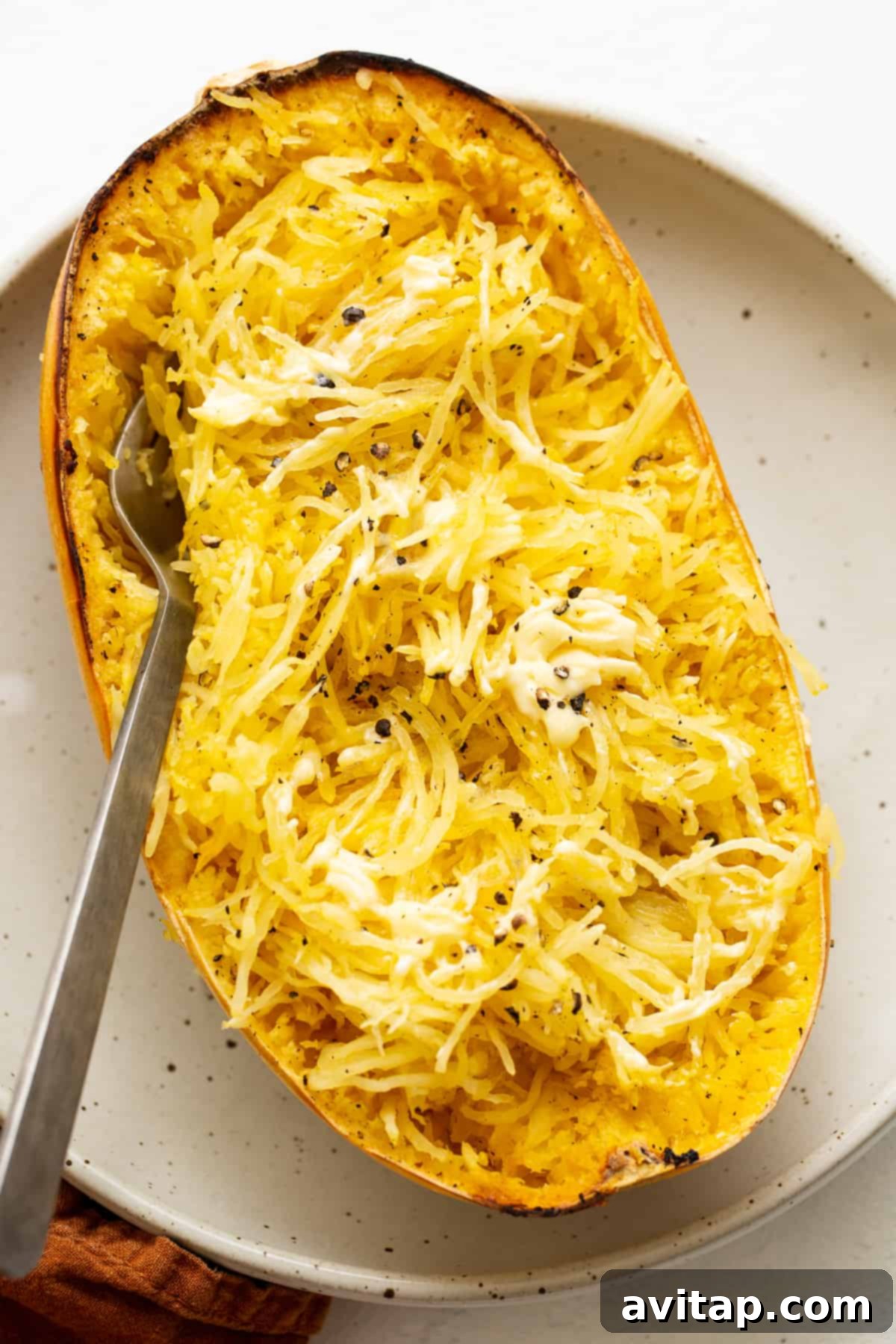
Perhaps its most distinguishing characteristic, however, is its texture. When cooked, the flesh of the spaghetti squash naturally separates into long, stringy strands that remarkably resemble traditional spaghetti noodles. These strands offer a pleasant chewiness and a delightful mouthfeel, providing a satisfying alternative to grain-based pastas. Unlike some vegetables that can become mushy, properly roasted spaghetti squash maintains a slight al dente bite, ensuring a truly enjoyable eating experience that lives up to its name.
Selecting and Storing the Perfect Spaghetti Squash
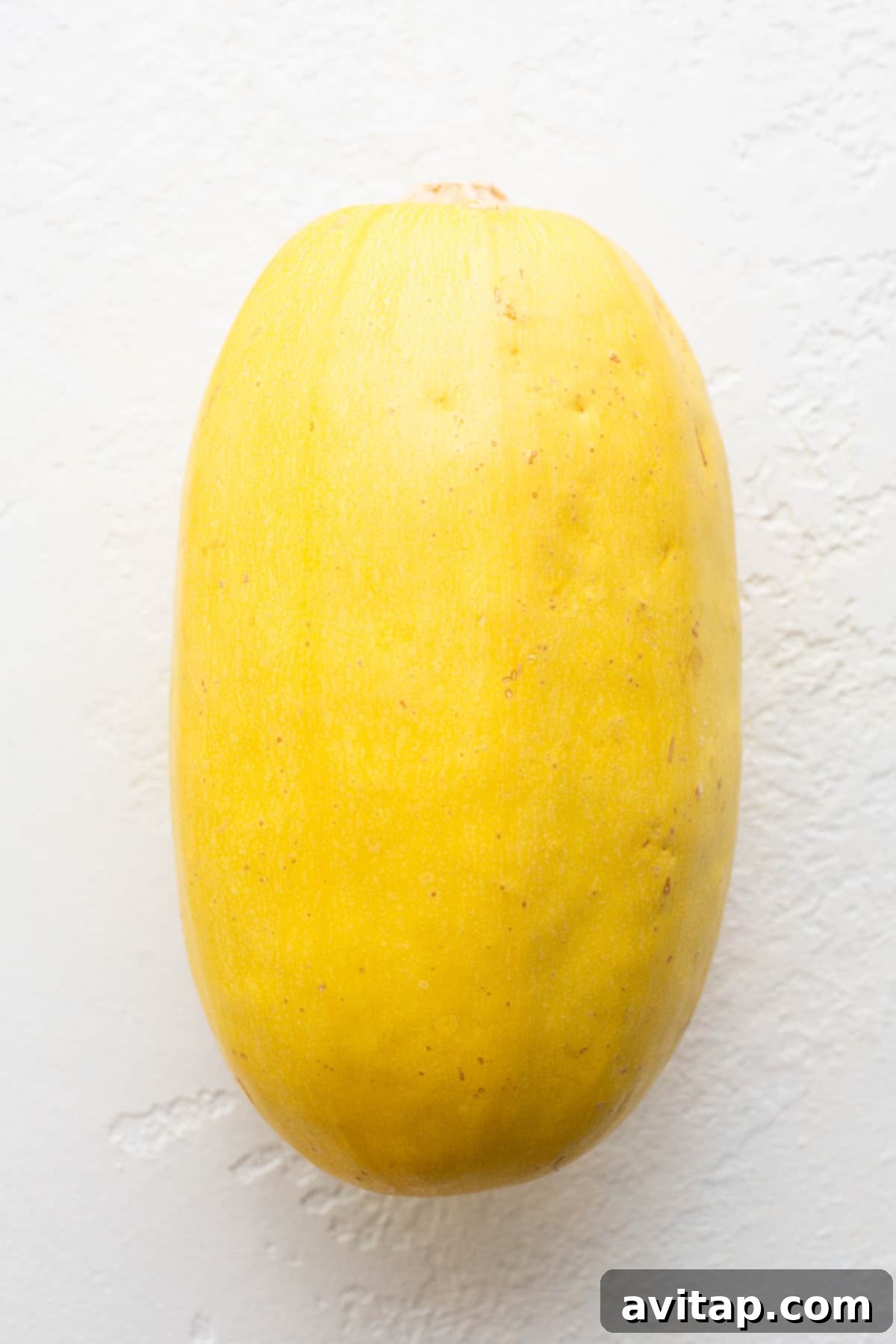
Choosing a ripe and fresh spaghetti squash is key to achieving the best flavor and texture in your dish. When at the grocery store or farmer’s market, look for a squash that feels firm and heavy for its size. The skin should be smooth and free from any soft spots, bruises, or deep cuts. A rich, uniform yellow color typically indicates ripeness; avoid any squash with significant green patches, as these may not be fully mature and could have a less developed flavor.
Once you’ve selected your perfect squash, proper storage will ensure it stays fresh until you’re ready to cook. Uncooked spaghetti squash thrives in a cool, dark, and dry place, such as a pantry or cellar. Stored correctly, it can last for several weeks, or even up to a couple of months, allowing you to enjoy this seasonal favorite at your leisure. Avoid refrigerating whole, uncooked squash, as the cold and humidity can accelerate spoilage. Only refrigerate it once it has been cooked.
Essential Ingredients for Perfect Roasted Spaghetti Squash
Roasting is, without a doubt, the absolute best way to enjoy spaghetti squash. This cooking method brings out its natural sweetness and creates a perfectly tender interior with slightly caramelized edges. Plus, it’s incredibly straightforward to prepare! Here’s a concise list of what you’ll need to achieve roasted perfection, along with a few tips on selecting the best:
- Spaghetti Squash: We typically use a spaghetti squash weighing around 1.5 to 2 pounds for our recipes. However, any size will work beautifully. Just remember that larger squashes will likely require a longer roasting time to become perfectly fork-tender. Choose one that feels heavy for its size and has a uniform, vibrant yellow color.
- Olive Oil: A good quality olive oil is our top choice for roasting squash. Its rich flavor complements the squash perfectly and helps achieve that desired golden-brown exterior. If you prefer, or if you’re looking for an alternative with a higher smoke point, avocado oil is an excellent substitute that also works wonders.
- Salt and Pepper: These foundational seasonings are truly all you need to bring out the best in roasted spaghetti squash. A generous sprinkle of sea salt and freshly ground black pepper enhances its inherent flavors without overpowering them. Feel free to add a pinch of garlic powder or dried herbs like oregano or thyme if you want to experiment with additional aromatic notes.
- Optional Seasonings: For an extra layer of flavor, consider a sprinkle of garlic powder, onion powder, dried oregano, or a dash of smoked paprika. These can elevate the simple roasted squash into a more complex side dish.
- Essential Tools: Don’t forget a sharp knife for safe slicing, a sturdy spoon for scooping, a baking sheet, and parchment paper for easy cleanup and to prevent sticking.
How Long Should You Roast Spaghetti Squash?
Achieving the perfect texture for your spaghetti squash involves understanding the ideal roasting time. We typically recommend baking your spaghetti squash for approximately 40 to 50 minutes at 400ºF (200ºC). This duration usually ensures the squash is tender enough to easily separate into strands without becoming mushy. A crucial step for even cooking and optimal browning is to flip the squash halves halfway through the roasting process.
However, it’s important to note that cooking times can vary based on the size of your squash and the specific calibration of your oven. A smaller squash might be done closer to 35-40 minutes, while a larger one could take up to 55-60 minutes. Always check for doneness by gently piercing the flesh with a fork; it should feel tender and yield easily. This flexibility allows you to adjust and achieve perfectly roasted spaghetti squash every time.
How to Bake Spaghetti Squash: A Step-by-Step Guide
Baking spaghetti squash in the oven is a straightforward process that yields consistently delicious results. Follow these simple steps for perfectly tender, noodle-like strands:
- Prepare Your Oven and Baking Sheet: Begin by preheating your oven to 400ºF (200ºC). Line a sturdy baking sheet with parchment paper. This simple step will prevent the squash from sticking and make cleanup significantly easier.
- Safely Slice the Spaghetti Squash: This is arguably the trickiest part, so proceed with caution. Place the spaghetti squash on a stable cutting board. Using an extremely sharp, large chef’s knife, carefully slice the squash in half lengthwise, from stem to blossom end (often referred to as “hot dog-style”). This method yields longer, more desirable “spaghetti” strands compared to slicing it crosswise. If the squash is particularly hard, you can microwave it for 2-3 minutes to soften the skin slightly before cutting.
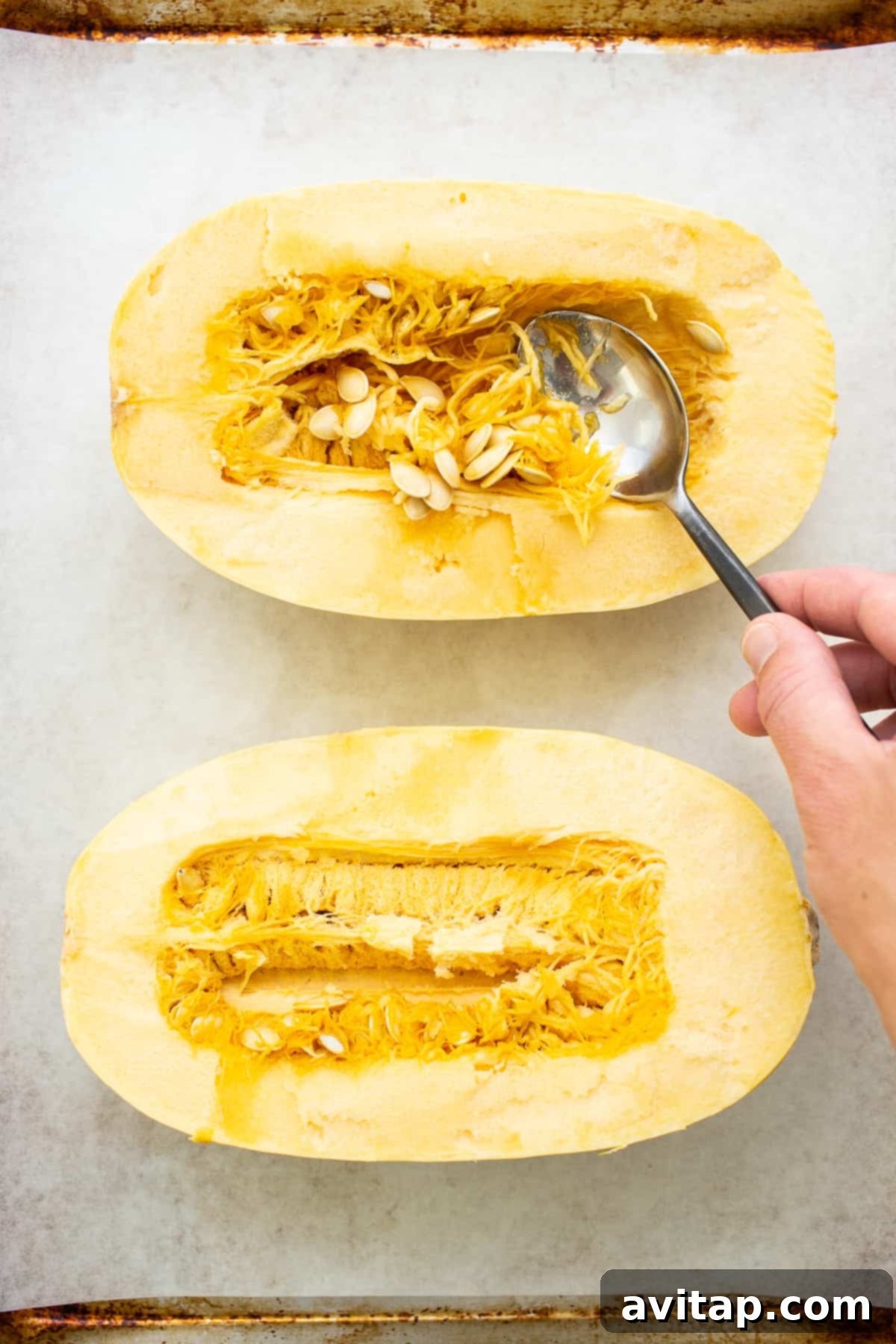
- Remove the Innards: Once halved, use a sturdy spoon, such as a metal serving spoon or an ice cream scoop, to thoroughly scoop out all the seeds and stringy, fibrous flesh from the center of each half. Discard these portions. You want a clean, smooth cavity in each half.
- Oil and Season Liberally: Place the spaghetti squash halves onto the parchment-lined baking sheet, initially flat-side up. Drizzle about 1-2 teaspoons of olive oil generously over the cut surface of each half, ensuring an even coating. Then, season both halves liberally with salt and freshly ground black pepper. You can also sprinkle with optional seasonings like garlic powder or dried herbs at this stage.
- First Roast: Flip the squash halves so they are now cut-side down on the baking sheet. Roast in the preheated oven for 20 minutes. Cooking it face-down allows the squash to steam slightly, creating a tender interior, and prevents the top from drying out.
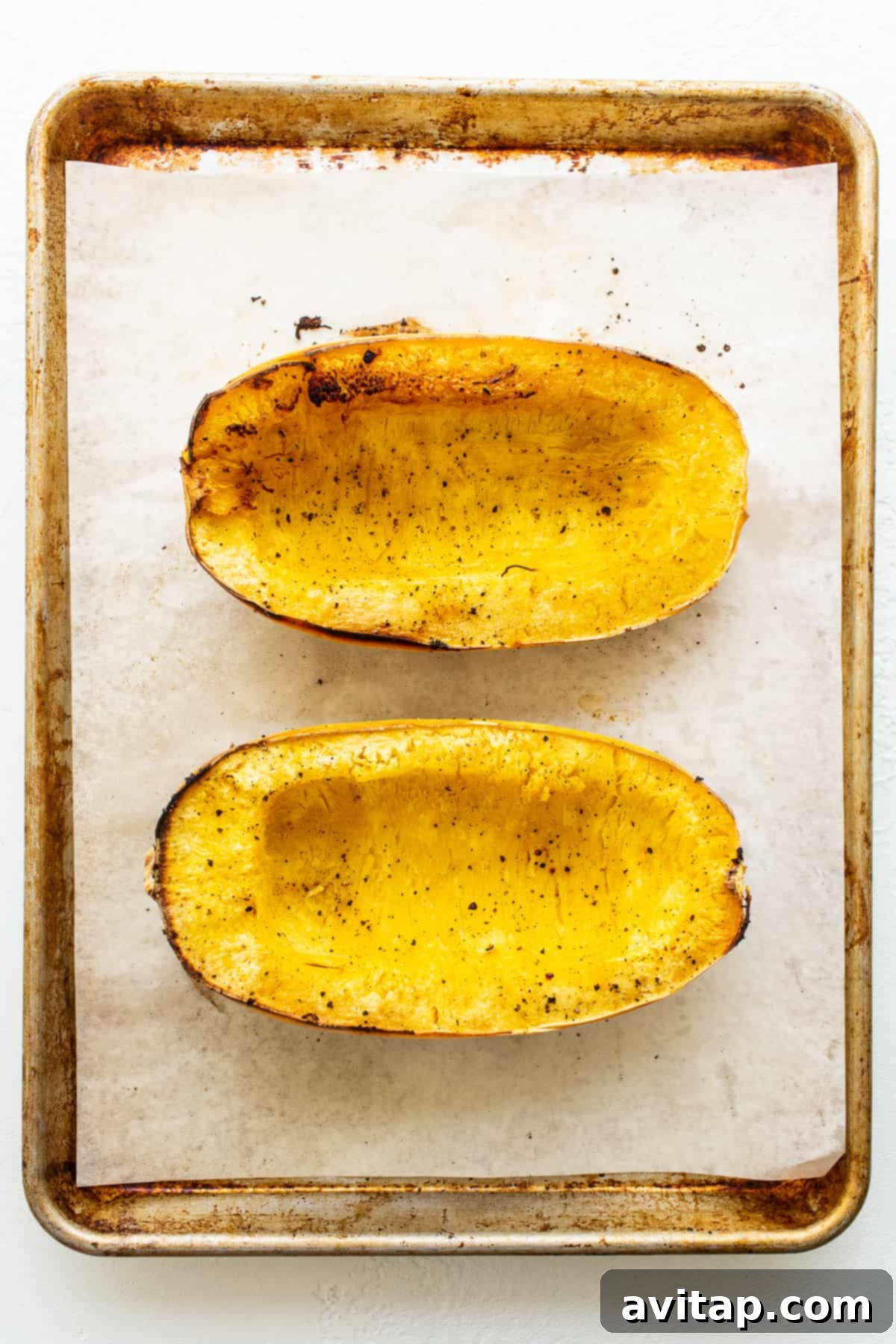
- Second Roast and Check for Doneness: After 20 minutes, carefully flip the squash halves over so they are cut-side up. Continue to roast for another 20 to 30 minutes, or until the flesh is easily pierced with a fork and appears tender. The edges might begin to lightly caramelize, adding to the flavor. Cooking time will vary based on the size of your squash, so keep an eye on it to prevent overcooking, which can lead to a watery or mushy texture.
- Let Rest: Once the squash is perfectly tender, remove the baking sheet from the oven and let the squash halves rest for about 5 to 10 minutes. This resting period allows the squash to cool slightly, making it easier and safer to handle, and also helps the strands firm up slightly.
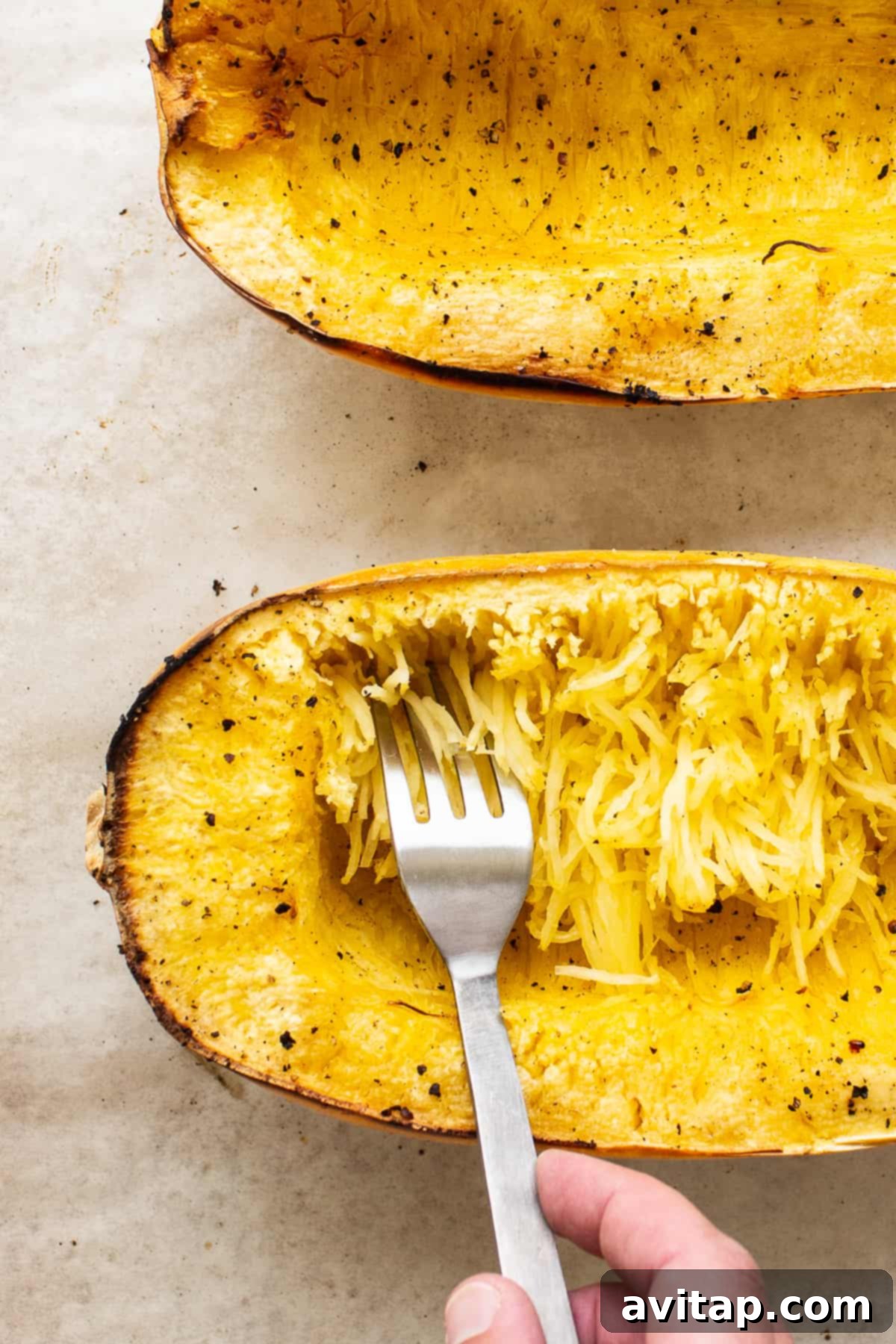
- Fluff into Spaghetti Strands: After resting, use a fork to gently “fluff” and scrape the flesh from the inside of each squash half. The cooked flesh will easily separate into long, spaghetti-like strands. Continue until all the tender flesh has been loosened from the skin.
Squash size matters: For our typical 1.5 to 2 lb. spaghetti squash, 40-50 minutes of baking is usually perfect. If you’re using a significantly larger squash, be prepared to increase your baking time by 10-20 minutes, always checking for fork-tenderness.
Can You Cook a Whole Spaghetti Squash?
While it is technically possible to cook a spaghetti squash in its whole, uncut form, we strongly recommend against it for several practical reasons. Cooking it whole will undoubtedly extend the baking time significantly, as the heat has to penetrate a much larger, denser mass. More importantly, leaving it whole means you cannot remove the seeds and stringy innards before cooking, which can make for a less pleasant eating experience.
By slicing the spaghetti squash in half lengthwise before cooking, you gain several advantages. Firstly, it allows for the easy removal of seeds and fibrous bits, ensuring a cleaner final product. Secondly, exposing the inner flesh to direct heat dramatically speeds up the cooking process. Thirdly, it enables you to season the flesh directly, enhancing the flavor as it roasts. So, while you *can* cook it whole, for optimal taste, texture, and efficiency, halving your spaghetti squash is always the superior method.
Delicious & Healthy Meal Ideas
Homemade Steak Taco Seasoning (Savory & Smoky)
Crispy Tofu Stir Fry (Better Than Takeout!)
Roasted Gnocchi Kale Salad with Garlic Parmesan Dressing
Brown Butter Chai Rice Krispie Treats
Protein-Packed Pumpkin Chia Pudding
Is Spaghetti Squash Healthy? Exploring Its Nutritional Benefits
Absolutely, spaghetti squash is an excellent addition to a healthy diet, offering a wealth of nutritional benefits. While it is considered a starchy carbohydrate, it provides a different kind of carbohydrate profile compared to grains and processed pastas, often with a lower glycemic impact. More importantly, it’s a nutrient-dense food packed with essential vitamins and minerals.
Each serving of spaghetti squash is a good source of vitamins A and C, both powerful antioxidants that support immune function and skin health. Vitamin A is crucial for vision, while Vitamin C plays a vital role in collagen formation and protecting cells from damage. Furthermore, spaghetti squash contains a healthy dose of dietary fiber – approximately 2 grams per serving – which is essential for digestive health, promoting regularity, and contributing to feelings of fullness, aiding in weight management. It also offers about 1 gram of protein per serving, along with various B vitamins and minerals like potassium and manganese, which are important for energy metabolism and overall bodily functions. Its low-calorie count and high water content make it a fantastic choice for those looking to enjoy a satisfying meal without excess calories.
When is Spaghetti Squash in Season?
Spaghetti squash, like most winter squashes, is primarily a seasonal vegetable, hitting its peak from early fall and remaining readily available throughout the colder winter months. This makes it a perfect hearty and warming ingredient for autumn and winter meals, aligning with the harvest season.
However, thanks to modern agricultural practices and efficient distribution networks, if you reside in the United States or many other regions, you can often find spaghetti squash year-round at most major grocery stores. While the freshest and most abundant supply will typically be during its peak season, you won’t have to wait for autumn to enjoy this versatile and delicious vegetable in your kitchen.
Spaghetti Squash Nutrition Facts
Per 1 cup (cubed, cooked):
- Calories: Approximately 31 kcal
- Fat: 0.6g – 1g
- Carbohydrates: 7g – 7.5g
- Fiber: 2g
- Sugar: 3g
- Protein: 1g
- Contains Vitamins A & C, and various B vitamins.
(Note: Nutrition values can vary slightly based on size, preparation, and specific squash.)
Creative Ways to Serve Baked Spaghetti Squash
Baked spaghetti squash is incredibly versatile, making it a fantastic base or side dish for a multitude of meals. Its noodle-like texture makes it a popular and healthy substitute for traditional pasta, offering a wholesome vegetable alternative to processed grains. Here are some of our favorite ways to enjoy this delightful squash:
- Classic Italian Style: Serve it simply with your favorite marinara sauce, a sprinkle of fresh Parmesan cheese, and a few fresh basil leaves. It’s also phenomenal alongside hearty Italian meatballs for a complete and satisfying meal.
- Stuffed Spaghetti Squash: Use the squash halves as edible bowls! Fill them with a savory mixture of ground meat (like turkey, beef, or sausage), vegetables, cheese, and herbs. Our Instant Pot Stuffed Spaghetti Squash recipe offers great inspiration for fillings.
- Cheesy Delight: Simply top the warm spaghetti squash strands with your favorite shredded cheese – mozzarella, cheddar, or a blend – and let it melt for a comforting and indulgent side.
- Savory Sloppy Joe Bowls: Forget the buns! Spoon delicious sloppy joe meat directly into the spaghetti squash halves for a healthier, flavorful twist on a classic.
- Garlic Butter & Herbs: A simple drizzle of melted butter or olive oil infused with minced garlic and fresh parsley or chives is a timeless way to enjoy its pure flavor.
- Pesto Power: Toss the warm strands with a vibrant basil pesto for a quick, flavorful, and aromatic dish. Add some cherry tomatoes and pine nuts for extra texture.
- Stir-Fry Base: Use it as a base for your favorite stir-fry recipes, soaking up all those delicious sauces and flavors.
- Breakfast Hash: Incorporate spaghetti squash into a breakfast hash with eggs, potatoes, and your favorite breakfast meats or vegetables for a unique morning meal.
Top Tips for Spaghetti Squash Success
Achieving perfectly cooked spaghetti squash is easy when you follow a few key tips:
Always Use a Sharp Knife: Spaghetti squash can have a tough exterior. To ensure safety and ease when slicing your squash in half, it is paramount to use an extremely sharp, sturdy knife. A dull knife is more likely to slip, leading to potential injury. Steady the squash on a flat surface, and cut carefully from stem to end.
Allow it to Rest After Baking: Once your spaghetti squash comes out of the oven, it will be piping hot and full of steam. It’s crucial to let it rest for at least 5 to 10 minutes before attempting to fork it. This short resting period allows the squash to cool slightly, making it much easier and safer to handle, and also helps the strands set, resulting in a better texture.
Don’t Overcook: While you want your squash to be tender, overcooking can lead to a watery, mushy texture. Keep an eye on it during the final 10-15 minutes of baking, and check for doneness with a fork. It should be easily pierced but still offer a slight resistance.
Evenly Season: Ensure you drizzle both halves with olive oil and season thoroughly with salt and pepper. An even coating guarantees maximum flavor and helps the exterior caramelize beautifully.
How Long Does Cooked Spaghetti Squash Last?
Cooked spaghetti squash is an excellent component for meal prepping, as it stores quite well. To maximize its freshness and flavor, store any leftover roasted spaghetti squash strands in an airtight container in the refrigerator. When properly stored, it will last for up to 3 to 5 days.
To reheat: For a quick reheat, simply place the spaghetti squash in a microwave-safe bowl and heat on high for 60-90 seconds, or until warmed through. For a slightly crispier texture, you can also reheat it in a pan on the stovetop over medium heat with a touch of olive oil, or spread it on a baking sheet and warm it in the oven at 350°F (175°C) for 10-15 minutes.
Discover More of Our Favorite…
Delicious & Healthy Squash Recipes
- Perfectly Roasted Butternut Squash
- Creamy Spaghetti Squash Mac and Cheese
- Easy Roasted Delicata Squash
- Light & Fresh Summer Squash Pasta
- Flavorful Instant Pot Stuffed Spaghetti Squash
- Hearty Roasted Butternut Squash Soup
Simple Baked Spaghetti Squash Recipe
This straightforward recipe shows you the easiest way to cook spaghetti squash in the oven, yielding tender, noodle-like strands perfect for any meal.
By: Lee Funke
Ingredients
- 1 – 2 lb. spaghetti squash
- 1 tablespoon olive oil, divided
- ½ teaspoon salt, divided
- ½ teaspoon ground black pepper, divided
Instructions
- Preheat the oven to 400ºF (200ºC) and line a baking sheet with parchment paper.
- Next, use a large sharp knife to carefully slice the spaghetti squash in half lengthwise (hotdog style). Remove all the innards, including seeds and stringy flesh, from the spaghetti squash using a spoon.
- Drizzle about 2 teaspoons of olive oil over the cut surface of each half of the spaghetti squash. Season each half evenly with ¼ teaspoon of salt and ¼ teaspoon of ground pepper.
- Place the spaghetti squash halves open side-down on the lined baking sheet and bake for 20 minutes at 400ºF (200ºC).
- After 20 minutes, carefully flip each half of the spaghetti squash over (cut-side up) and bake for another 20 minutes. We recommend checking the squash with a fork after 10 minutes of this second phase to ensure it doesn’t get mushy. Every oven is different, so cooking time may vary.
- Remove the spaghetti squash from the oven and let it rest for 5 minutes. Then, use a fork to gently “fluff” and scrape the edges of the squash, loosening the spaghetti-like strands from the skin.
- Serve immediately with a pat of butter, an extra drizzle of olive oil, or a scoop of pesto, and enjoy!
Tips & Notes
- We used a 1.75-lb squash for this recipe. The size of your squash will significantly determine how long you need to bake it. Larger squashes will require more time.
- For an extra flavor boost, try adding a pinch of garlic powder or dried Italian herbs before roasting.
Nutrition (per serving)
Calories: 204 kcal, Carbohydrates: 32 g, Protein: 3 g, Fat: 10 g, Fiber: 7 g, Sugar: 13 g
Nutrition information is automatically calculated and should only be used as an approximation.
Love this recipe? Leave a comment below!
Don’t forget to tag your posts on social media with the hashtag #fitfoodiefinds – we’d absolutely love to see your delicious creations!
Photography: Photos featured in this post were captured by Ashley McGlaughlin from The Edible Perspective.