
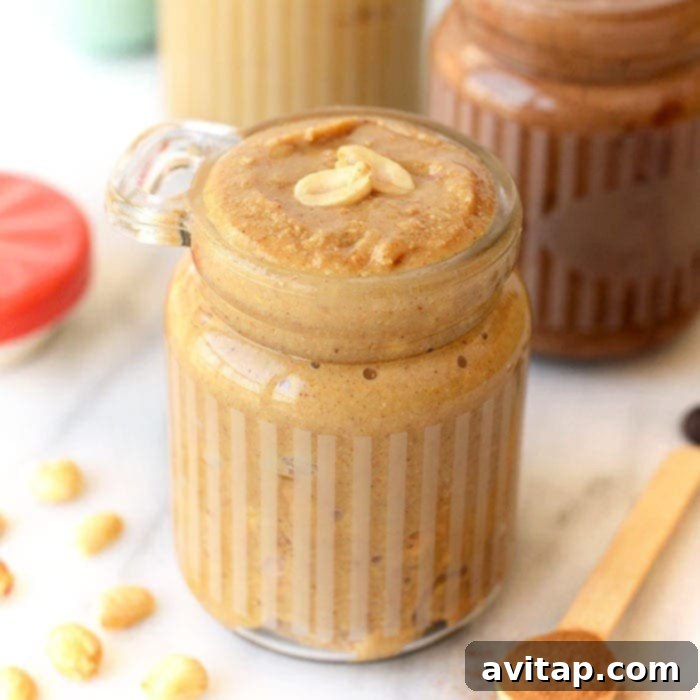
Unlock the incredible world of homemade peanut butter! Forget the endless list of unpronounceable ingredients and added sugars found in many store-bought jars. Crafting your own healthy, delicious peanut butter is surprisingly simple, requiring just one core ingredient and a few minutes of your time. This comprehensive guide will show you how to create creamy, natural peanut butter from scratch, alongside three mouth-watering flavor variations that will elevate your snacking experience.
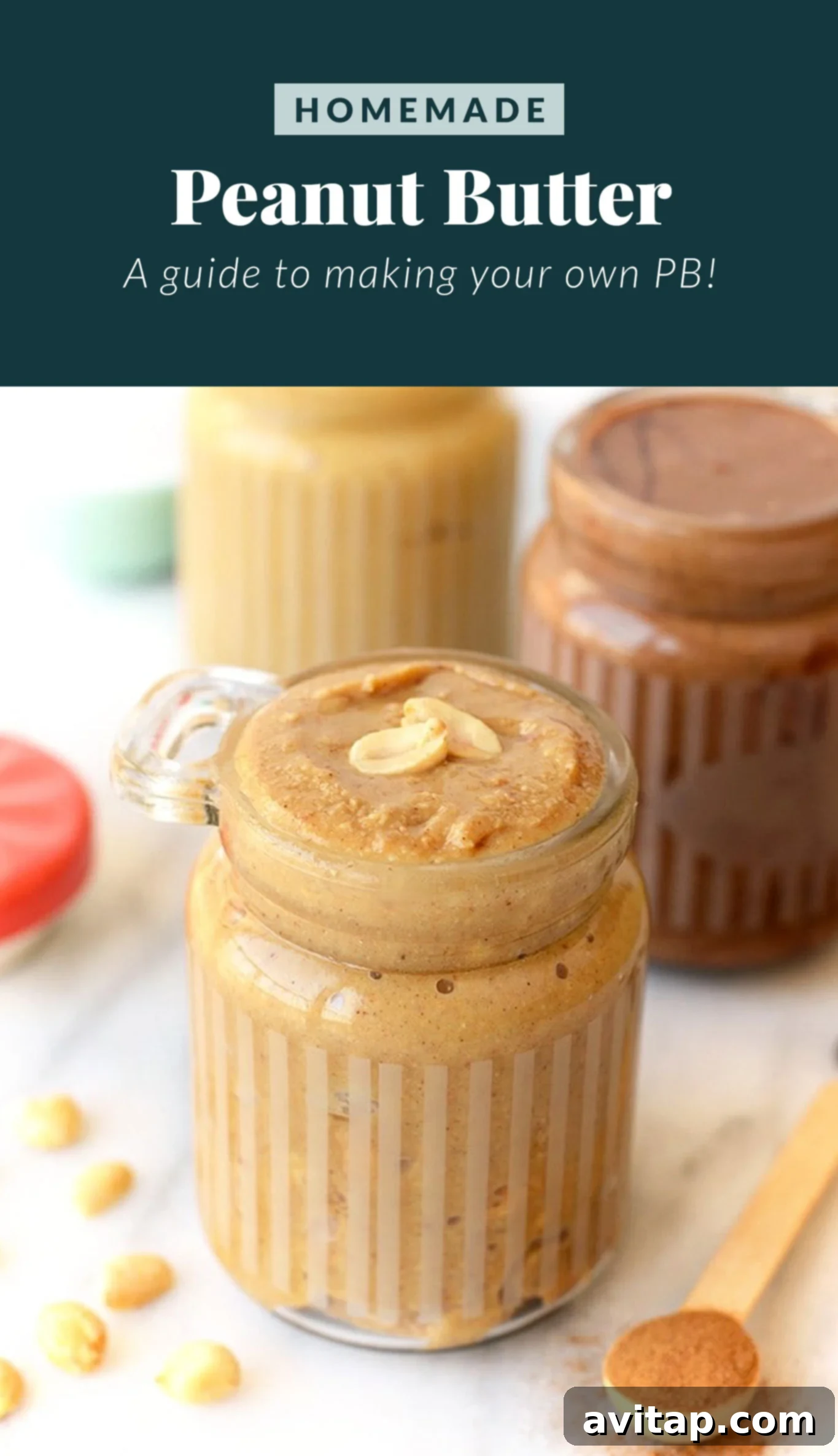
Unleash Flavor: Your Ultimate Guide to Easy Homemade Peanut Butter & Delicious Variations
Have you ever dreamed of a peanut butter that’s perfectly tailored to your taste, free from unwanted additives, and bursting with fresh flavor? Making peanut butter at home is not just a dream; it’s a wonderfully achievable reality. All you truly need is one hero ingredient: peanuts. From there, the possibilities for customization are endless. We’re here to guide you through the process, ensuring your homemade creation is a pure, unadulterated delight. So, dust off your food processor, and let’s get ready to transform humble peanuts into golden, delectable butter!
Why Choose Homemade Peanut Butter?
Beyond the sheer satisfaction of creating something from scratch, there are compelling reasons to opt for homemade peanut butter over its commercial counterparts:
- Uncompromised Purity: Store-bought peanut butters often contain hydrogenated oils, refined sugars, and preservatives to enhance shelf life and texture. Homemade versions skip these entirely, offering a product that’s 100% natural.
- Ingredient Control: You decide what goes in. Want organic peanuts? Go for it. Prefer a pinch of sea salt, or perhaps a swirl of maple syrup? The power is in your hands to create a peanut butter that perfectly suits your dietary needs and taste preferences.
- Superior Freshness: The moment peanuts are processed, their natural oils begin to oxidize. Homemade peanut butter, made on demand, guarantees peak freshness, flavor, and nutritional value.
- Cost-Effective: Buying peanuts in bulk can often be more economical than regularly purchasing premium all-natural peanut butter from the store.
- Customization Opportunities: As you’ll discover, the real fun begins when you start experimenting with different flavor combinations, transforming a simple spread into a gourmet treat.
The Nutritional Powerhouse: Benefits of Peanut Butter
When made with just peanuts, this creamy spread is not only delicious but also incredibly nutritious. It’s a staple for many health-conscious individuals and for good reason!
- High in Protein: With approximately 8 grams of protein per serving, peanut butter is an excellent plant-based protein source, crucial for muscle repair, growth, and overall satiety.
- Rich in Heart-Healthy Fats: Predominantly composed of monounsaturated and polyunsaturated fats, natural peanut butter contributes to cardiovascular health by helping to lower bad cholesterol levels.
- Packed with Essential Nutrients: Peanuts are a good source of several vitamins and minerals, including Vitamin E (an antioxidant), B vitamins (like niacin and folate), magnesium, phosphorus, and zinc, all vital for various bodily functions.
- Good Source of Fiber: Dietary fiber aids in digestion, helps regulate blood sugar levels, and contributes to a feeling of fullness, supporting weight management.
- Low in Sodium and Carbohydrates: Natural peanut butter is inherently low in sodium and has a modest carbohydrate count, making it suitable for various dietary approaches, including keto and paleo (when consumed in moderation).
- Versatile for Dietary Needs: Naturally vegan and gluten-free, homemade peanut butter fits into a wide array of dietary plans, including those focused on plant-based eating.
Per 2 tablespoon serving (Classic Homemade Peanut Butter): Approximately 190 calories, 7g carbohydrates, 3g fiber, 2g sugar, 16g fat, 8g protein.
Crafting Your Own: The Simple 2-Step Peanut Butter Recipe
Now that you’re well-versed in the numerous advantages and nutritional benefits of homemade peanut butter, let’s get down to business. The process is remarkably straightforward, requiring minimal effort for maximum reward. Alongside your chosen peanuts, the most critical piece of equipment you’ll need is a powerful food processor or a high-speed blender. The quality of your machine directly impacts the smoothness and ease of your peanut butter making.
What You’ll Need:
- High-speed food processor or Vitamix
- 3 cups of unsalted dry roasted peanuts (see notes on peanuts below)
The Easy Two Steps:
- Step 1: Place Peanuts in Processor. Carefully pour your unsalted dry roasted peanuts into the bowl of your high-speed food processor. Ensure the lid is securely fastened.
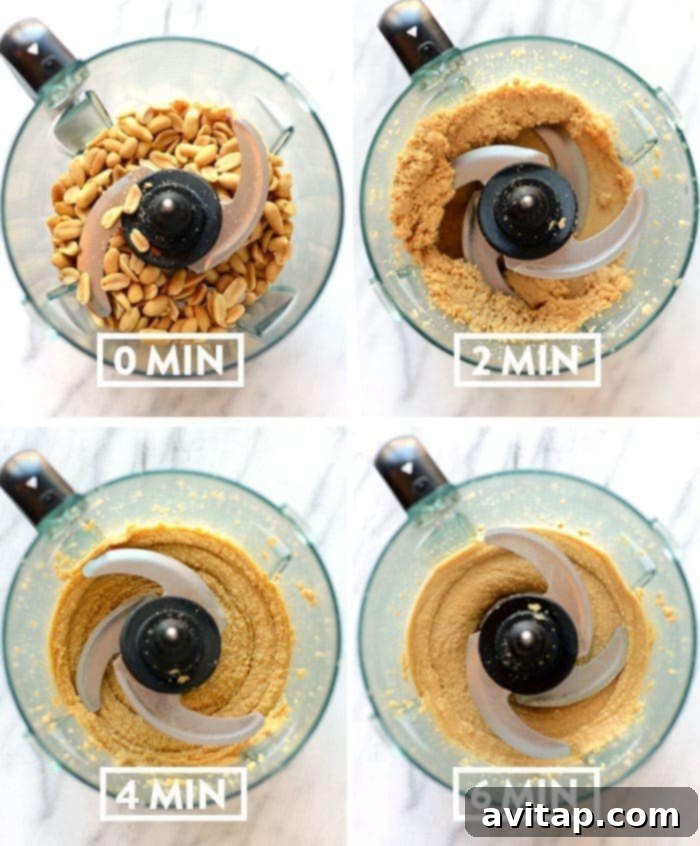
- Step 2: Process Until Creamy. Turn the food processor on high and let it run. This is where the magic happens! The peanuts will go through several stages:
- Roughly Chopped (0-1 minute): The peanuts will break down into coarse crumbs.
- Fine Meal (1-2 minutes): The crumbs will become finer, resembling flour.
- Pasty/Ball Formation (2-4 minutes): As the natural oils release, the mixture will clump together, often forming a thick ball around the blade. This is normal!
- Smooth & Drippy (4-7 minutes): Keep processing! The ball will eventually break down, and the mixture will transform into a gloriously smooth, liquid-like, and drippy peanut butter.
Scrape down the sides of the food processor every minute or so to ensure all peanuts are consistently pulverized. The exact time will vary based on your machine’s power and the freshness of your peanuts, but typically it takes between 5-8 minutes to achieve that perfect drippy consistency.
Key Considerations for Perfect Homemade Peanut Butter
While the process is simple, a few factors can influence the outcome of your homemade peanut butter. Keeping these tips in mind will ensure a consistently delicious result every time.
Choosing Your Peanuts: Raw vs. Roasted
The type and quality of peanuts you use are crucial. We generally recommend using unsalted dry roasted peanuts. Roasting helps to bring out their natural flavors and makes them easier to process due to changes in their oil structure. While you can use raw peanuts, they typically yield a slightly different flavor profile and might require longer processing times.
It’s important to note that not all peanuts are created equal. The freshness of your peanuts plays a significant role in their oil content. If you’re using older peanuts, or if your blend seems unusually thick and isn’t turning smooth after 7 minutes of processing, it’s a good indicator that their natural oil content is lower. In such cases, don’t hesitate to add a small amount (1-2 tablespoons) of a neutral oil like coconut oil or peanut oil to help smooth things out.
The Right Equipment: Powering Your Peanut Butter
Your food processor is the hero of this recipe. A powerful, high-speed model is essential for achieving that desirable creamy consistency without overheating the machine. Less powerful processors may struggle, leading to longer processing times, a grainier texture, or even premature burnout.
- Food Processor: A high-quality food processor is our top recommendation. Brands like Vitamix (yes, they make food processor attachments too, or powerful blenders that act like one) or Cuisinart are excellent choices that can handle the intensity of grinding nuts. We personally vouch for investing in a reliable food processor; it’s truly worth it for the consistent results it delivers.
- High-Speed Blender: While a food processor is ideal, a high-speed blender (like a Vitamix or Blendtec) can also work. You might need to use the tamper more frequently to push the peanuts down towards the blades and may experience more resistance compared to a food processor.
Troubleshooting Common Issues
- Peanut Butter is Too Thick/Dry: If, after 7-8 minutes, your peanut butter is still too thick or not becoming creamy, simply add 1-2 tablespoons of coconut oil (or another neutral oil like peanut oil) and continue processing until smooth. This helps release the natural oils.
- Peanut Butter is Grainy: This usually means it hasn’t been processed long enough. Keep blending! Patience is key. A high-speed processor typically takes 5-8 minutes to reach a silky-smooth consistency.
- Food Processor Overheating: If your food processor starts to heat up or makes straining noises, turn it off for a few minutes to let it cool down before continuing. This is more common with less powerful machines.
Explore Exciting Flavors: Beyond Classic Peanut Butter
While a simple homemade peanut butter made with just peanuts is undeniably delicious, the true joy of making your own lies in the endless possibilities for flavor customization. Get creative and transform your basic spread into something truly unique! Here are three incredibly popular and easy-to-make variations:
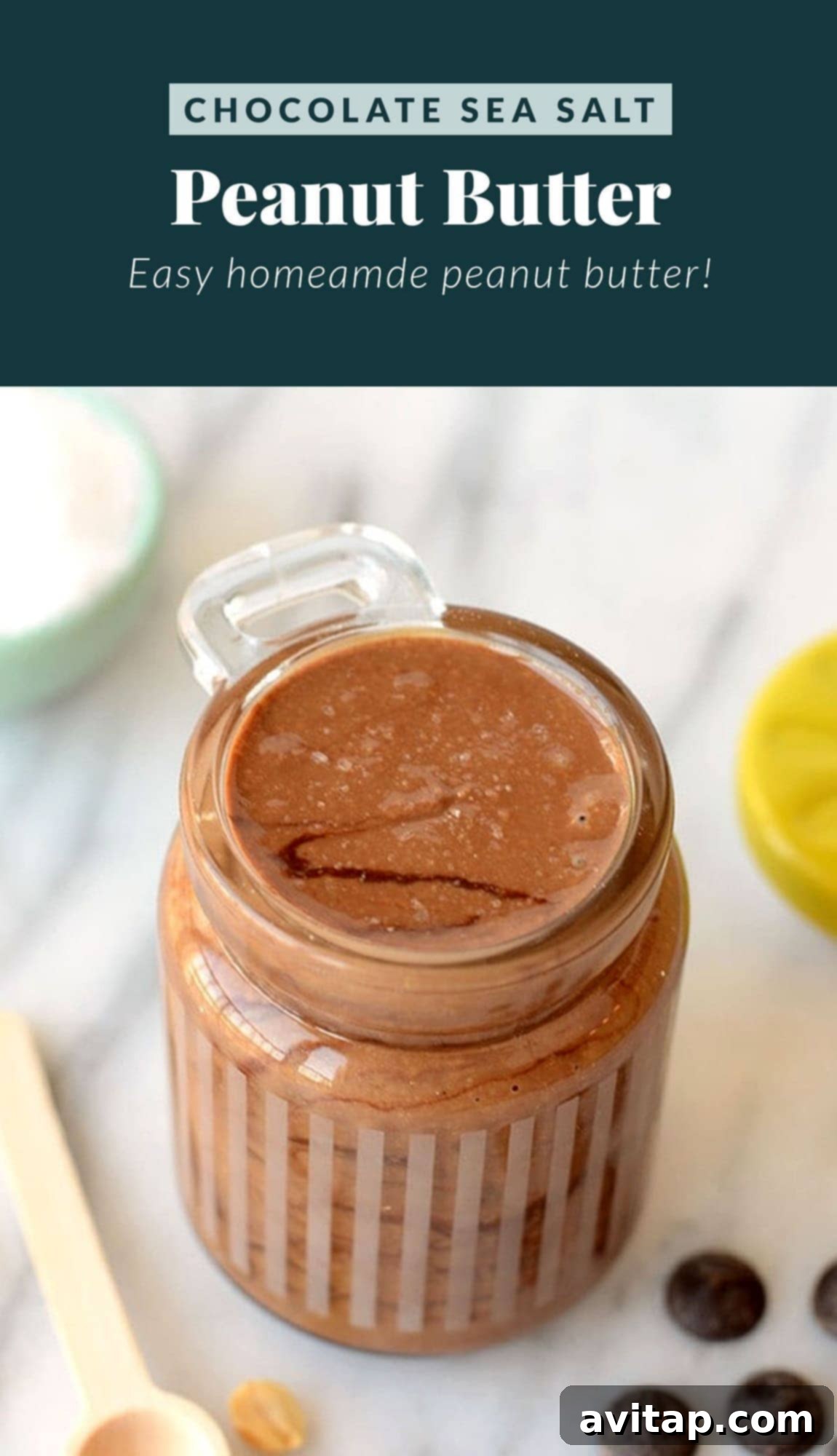
Chocolate Sea Salt Peanut Butter: A Sweet & Salty Delight
Indulge your sweet tooth with this decadent yet healthy variation. The rich notes of dark chocolate perfectly complement the natural sweetness of peanuts, while a hint of sea salt elevates all the flavors, creating an irresistible balance.
- 3 cups unsalted dry roasted peanuts
- 1/4 cup dark chocolate chips (room temperature)
- 1/8 teaspoon sea salt
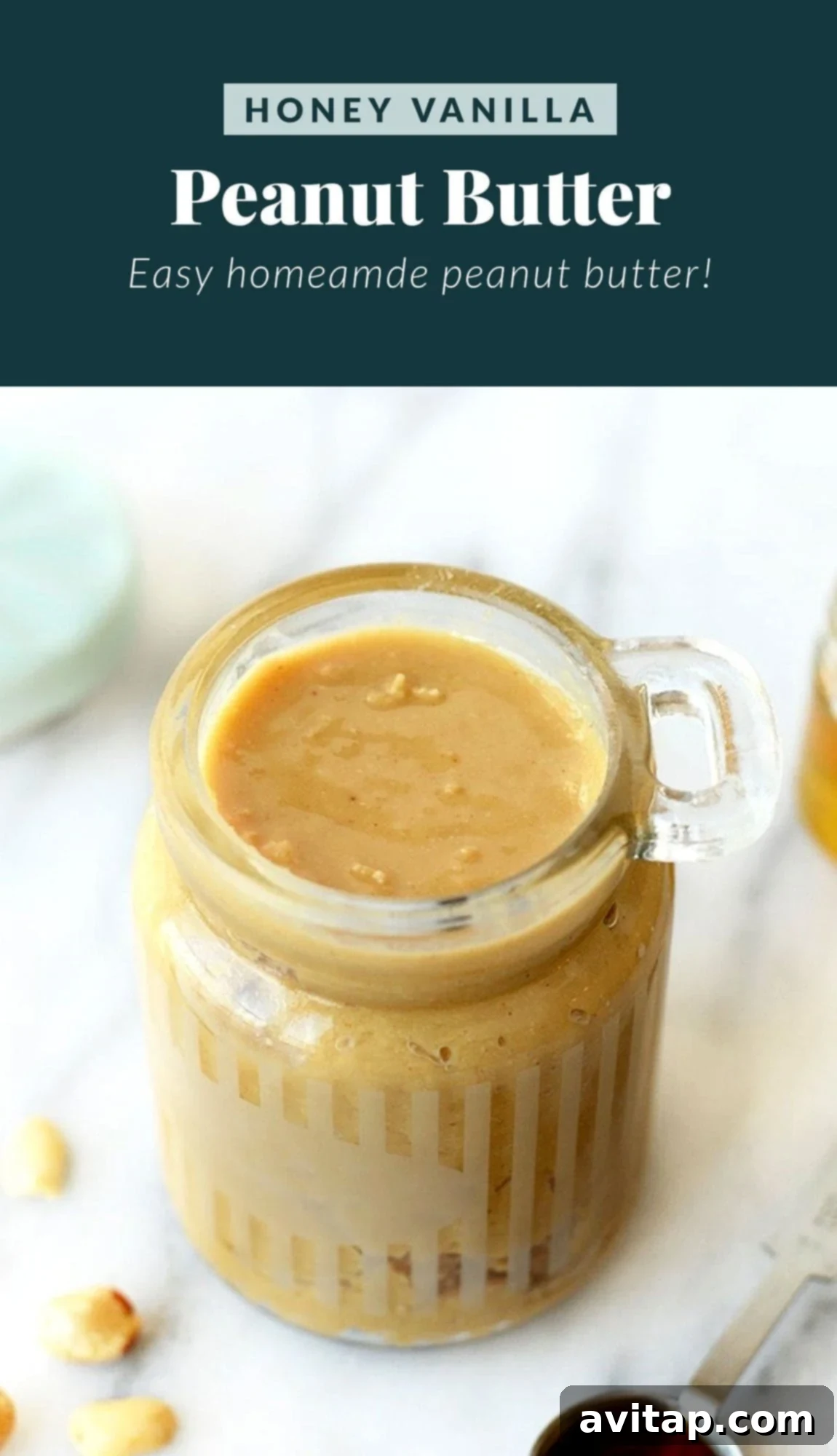
Honey Vanilla Peanut Butter: Naturally Sweet & Aromatic
This version offers a comforting sweetness and a fragrant aroma. Naturally sweetened with honey and infused with vanilla, it’s a delightful twist that’s perfect for toast, oatmeal, or even straight from the spoon!
- 3 cups unsalted dry roasted peanuts
- 2 tablespoons honey
- 1 teaspoon vanilla extract
- 2 tablespoons coconut oil (room temperature)
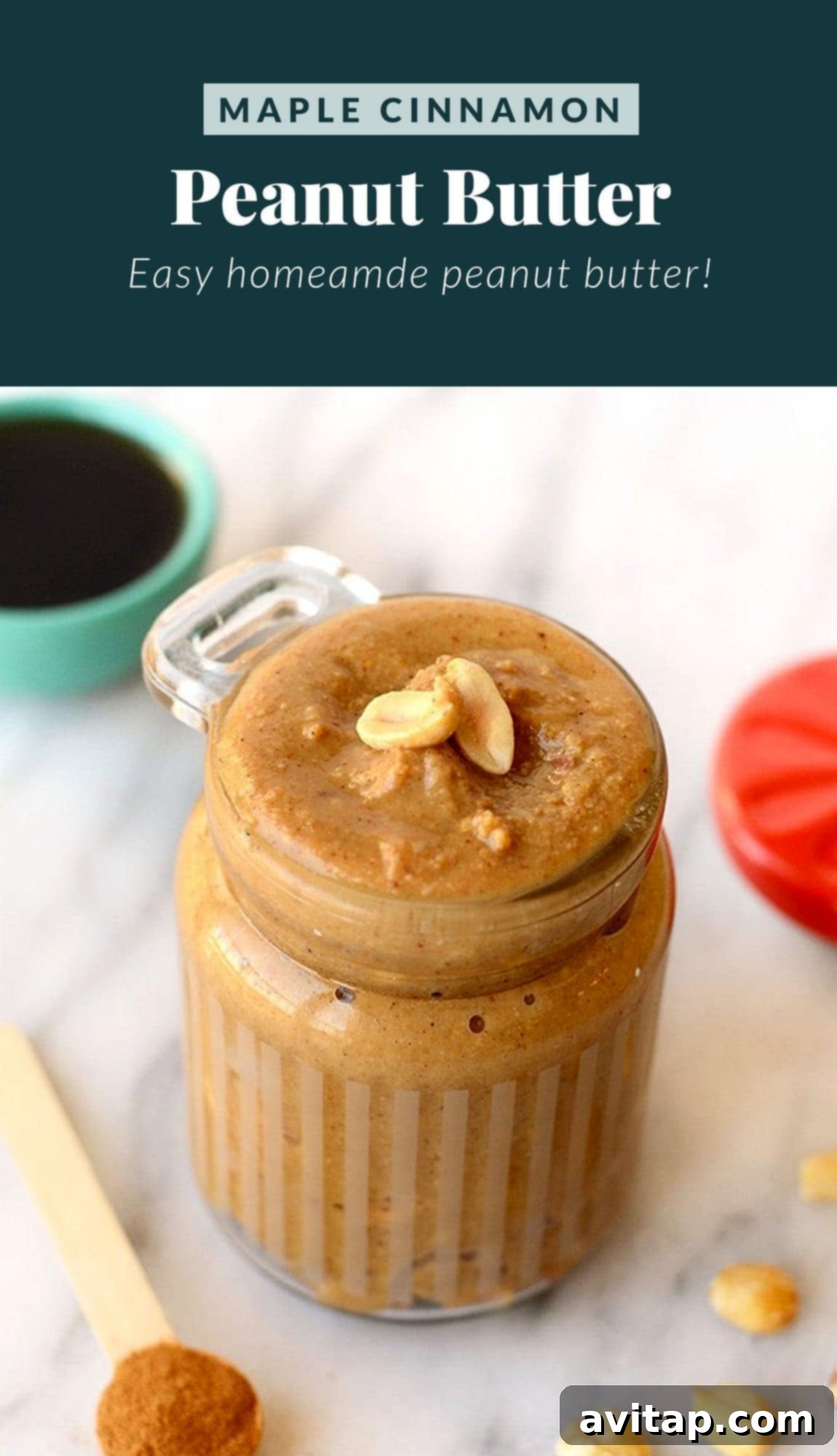
Crunchy Maple Cinnamon Peanut Butter: Warm Spices & Satisfying Texture
For those who love a bit of texture, this crunchy variant is a winner. Sweetened with pure maple syrup and spiced with warming cinnamon, it also incorporates whole peanuts at the end for an extra satisfying crunch.
- 3.33 cups unsalted dry roasted peanuts (divided)
- 2 tablespoons 100% pure maple syrup
- 1 teaspoon ground cinnamon
- 2 tablespoons coconut oil (room temperature)
- 1/3 cup whole peanuts
Storing Your Homemade Peanut Butter: Freshness & Shelf Life
Unlike commercial peanut butters that rely on preservatives to stay shelf-stable for months, your homemade creation is a pure product. This means its shelf life is shorter but its flavor is infinitely better!
- Refrigeration is Key: Because there are no stabilizers or preservatives, it’s crucial to store your homemade peanut butter in an airtight container in the refrigerator. This will significantly extend its freshness and prevent spoilage.
- Shelf Life: When properly refrigerated, homemade peanut butter will last for up to 3 months. While it might be tempting to leave it on the counter, doing so will drastically reduce its shelf life to just a couple of weeks, as the natural oils can go rancid more quickly at room temperature.
- Oil Separation: It’s completely normal for the natural oils to separate and rise to the top when stored. This is a sign of a truly natural product! Simply give it a good stir before each use to reincorporate the oils and restore its creamy texture.
- Signs of Spoilage: Always trust your senses. If your peanut butter develops an off-smell (often described as sour or paint-like), or if you notice any mold or discoloration, it’s time to discard it.
Creative Ways to Enjoy Your Homemade Peanut Butter
Having a fresh batch of homemade peanut butter opens up a world of culinary possibilities. Here are some of our favorite ways to incorporate this delicious spread into your daily routine:
More of our Favorite… Ways to Use Peanut Butter
- Homemade Peanut Butter Cups: Indulge in guilt-free treats like Crunchy Rice Crispy Peanut Butter Cups, rich Chocolate Peanut Butter Fat Bombs, or classic Healthy Peanut Butter Cups.
- Peanut Butter Bars: Perfect for a quick snack or dessert, try Peanut Butter Oatmeal Bars, a healthier take on Healthy Scotcheroos, satisfying Peanut Butter Rice Crispy Bars, or protein-packed Homemade Protein Bars.
- Peanut Butter Oatmeal: Elevate your breakfast with a comforting Peanut Butter Baked Oatmeal, convenient Vegan Peanut Butter Cup Overnight Oats, or a delicious Peanut Butter Chocolate Chip Cookie Dough Overnight Oats.
- Healthy Peanut Butter Cookies: Enjoy wholesome baked goods like Grain Free Peanut Butter Cookies, quick Peanut Butter No Bake Cookies, or fun Healthier Monster Cookies.
- Peanut Butter Smoothies: Boost your beverages with a Peanut Butter Banana Cold Brew Protein Smoothie, a refreshing The Best Breakfast Smoothie, or a indulgent yet Healthy Peanut Butter Cup Smoothie.
How to Make Peanut Butter (+3 Flavors!)
Discover how effortlessly you can create your very own wholesome peanut butter right at home. This quick and straightforward recipe helps you avoid unnecessary fillers often found in store-bought options, offering a pure and customizable spread.
By: Lee Funke
Prep Time: 15 mins
Cook Time: 0 mins
Total Time: 15 mins
Servings: 12
Ingredients
Classic Homemade Peanut Butter
- 3 cups unsalted dry roasted peanuts
Honey Vanilla Peanut Butter
- 3 cups unsalted dry roasted peanuts
- 2 tablespoons honey
- 1 teaspoon vanilla extract
- 2 tablespoons coconut oil, room temperature
Chocolate Sea Salt Peanut Butter
- 3 cups unsalted dry roasted peanuts
- 1/4 cup dark chocolate chips, room temperature
- 1/8 teaspoon sea salt
Crunchy Maple Cinnamon Peanut Butter
- 3.33 cups unsalted dry roasted peanuts, divided
- 2 tablespoons 100% pure maple syrup
- 1 teaspoon ground cinnamon
- 2 tablespoons coconut oil, room temperature
Instructions
Classic Homemade Peanut Butter
- Place 3 cups of peanuts in a high-speed food processor. Process peanuts on high for 5-8 minutes, stopping every minute or so to scrape the sides if needed. You know your peanut butter is ready when it’s drippy (it took us about 6 minutes!).
Honey Vanilla Peanut Butter
- Place 3 cups of peanuts in a high-speed food processor. Process peanuts on high for 5-8 minutes, stopping every minute or so to scrape the sides if needed. You know your peanut butter is ready when it’s drippy.
- Add in honey, vanilla extract, and coconut oil and blend. At this point your peanut butter might seize and get uncreamy. This is normal and what the coconut oil is for! Blend for 2-3 more minutes or until things smooth out again.
Chocolate Sea Salt Peanut Butter
- Place 3 cups of peanuts in a high-speed food processor. Process peanuts on high for 5-8 minutes, stopping every minute or so to scrape the sides if needed. You know your peanut butter is ready when it’s drippy.
- Add in dark chocolate chips and sea salt and blend for about 1 more minute or until everything is mixed. NOTE: use room temperature chocolate chips. Frozen/cold chocolate chips might seize your peanut butter!
Crunchy Maple Cinnamon Peanut Butter
- Place 3 cups of peanuts in a high-speed food processor. Process peanuts on high for 5-8 minutes, stopping every minute or so to scrape the sides if needed. You know your peanut butter is ready when it’s drippy.
- Add in maple syrup, ground cinnamon, and coconut oil and blend. At this point your peanut butter might seize and get uncreamy. This is normal and what the coconut oil is for! Blend for 2-3 more minutes or until things smooth out again.
- Finally, add in whole peanuts and pulse a few times until they get chopped and mixed in!
Tips & Notes
- Storage: Store peanut butter in an air-tight container for up to 3 months. Best if kept in the refrigerator.
- Nutrition Information: The nutrition information provided is based on the classic homemade peanut butter recipe.
- Yields: Each recipe variation yields approximately 1.5 cups of peanut butter.
Nutrition Facts (per 2 tablespoon serving)
Based on Classic Homemade Peanut Butter
- Calories: 190 kcal
- Carbohydrates: 7 g
- Protein: 8 g
- Fat: 16 g
- Fiber: 3 g
- Sugar: 2 g
Nutrition information is automatically calculated and should only be used as an approximation.
Love this recipe? We’d love to hear from you!
Leave a comment below!
Don’t forget to tag your posts on social media with the hashtag #fitfoodiefinds, we’d love to see what you’re up to!