
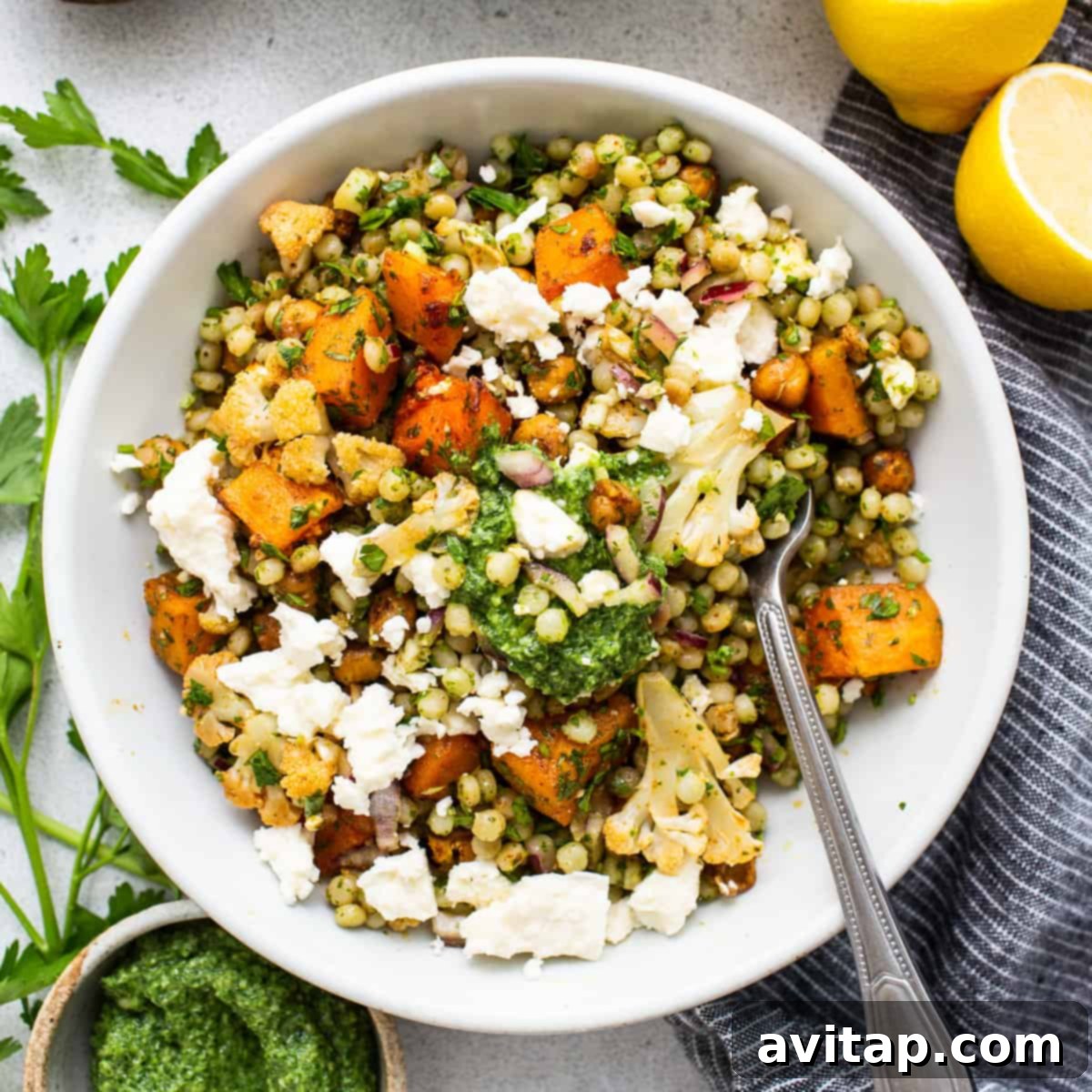
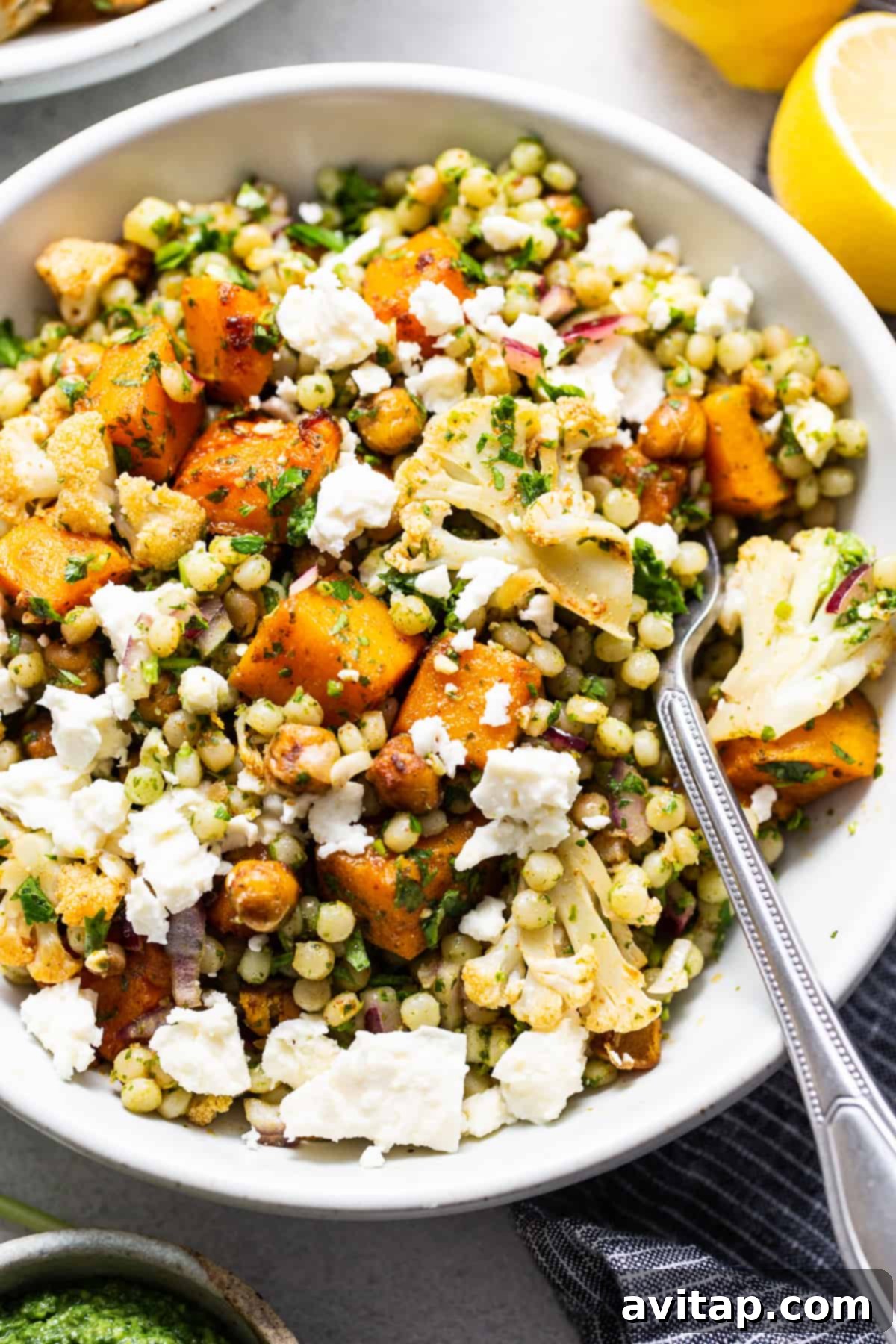
Welcome to a culinary journey with this incredibly flavorful Israeli couscous salad. More than just a side, this vibrant dish is a complete meal, bursting with an array of fresh vegetables, plant-based protein, and a zesty homemade kale pesto. Whether you prefer it comforting and warm or refreshing and chilled, this salad offers a delightful texture and taste experience that will elevate your mealtime. It’s an ideal choice for a wholesome dinner, a convenient meal prep solution for busy weeks, or a sophisticated side dish that will impress any guest.
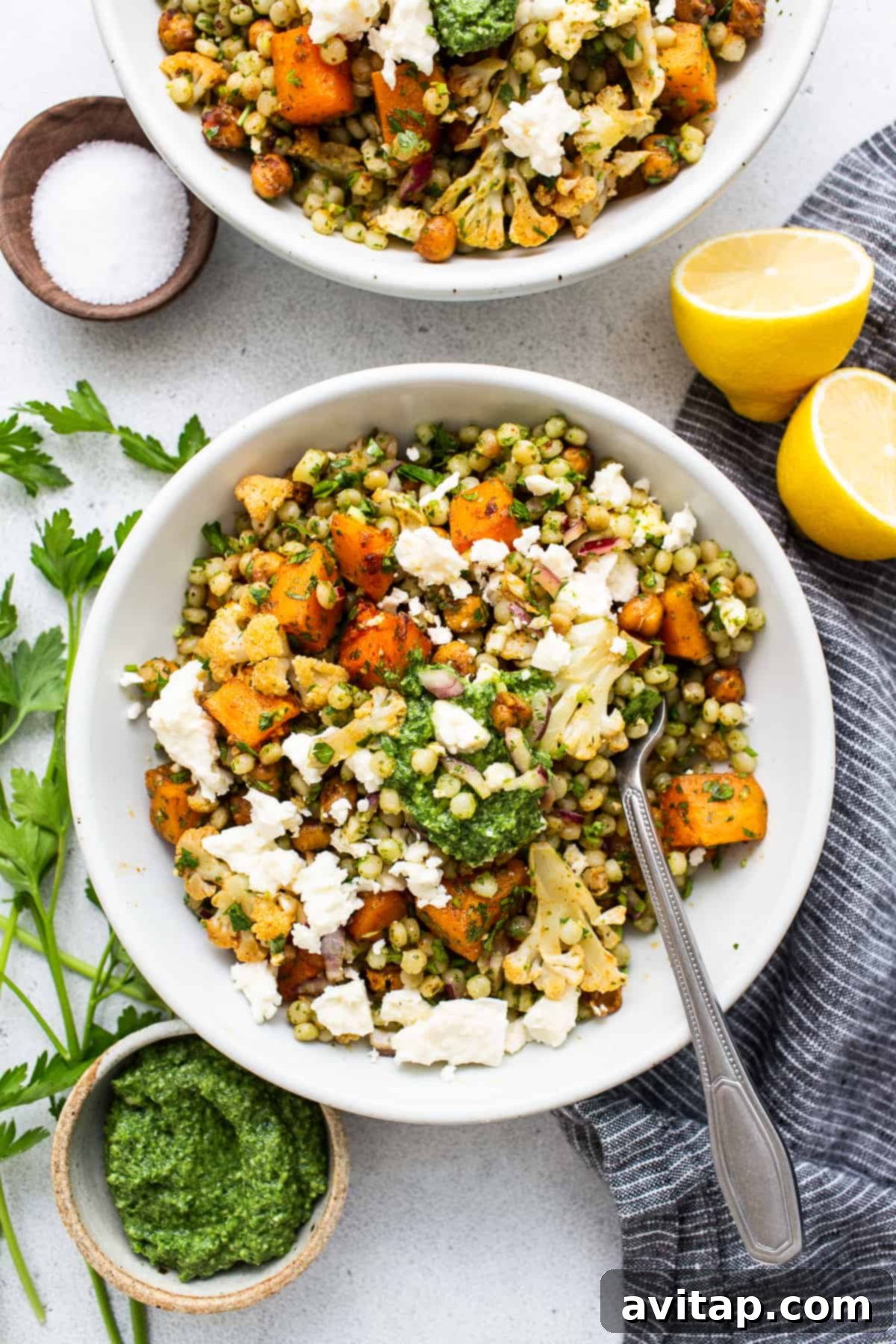
Irresistible Israeli Couscous Salad: A Nutrient-Packed Delight
Gone are the days of dull and uninspiring salads! This Israeli couscous salad stands out from the crowd, offering a harmonious blend of textures and flavors that will tantalize your taste buds. Unlike traditional green salads, this recipe focuses on hearty ingredients that deliver both satisfaction and a wealth of nutrients. From its chewy pasta pearls to its tender roasted vegetables and aromatic pesto, every bite is an experience.
Whether you’re planning a week of healthy lunches, seeking a nourishing family dinner, or simply need a standout dish for your next gathering, this Israeli couscous salad is a versatile option. Its ability to be served warm or cold makes it perfect for any season or occasion, proving that healthy eating can also be incredibly delicious and exciting.
Why This Israeli Couscous Salad Will Become Your New Favorite
This isn’t just another salad; it’s a testament to how incredible simple, wholesome ingredients can be when combined thoughtfully. Here’s why this Israeli couscous salad consistently earns rave reviews and becomes a staple in many kitchens:
- A Bounty of Vegetables: We believe in eating the rainbow! This salad is generously loaded with colorful, nutrient-dense vegetables like sweet butternut squash, earthy cauliflower, and protein-rich garbanzo beans. Each vegetable is roasted to perfection, bringing out its natural sweetness and creating a delightful caramelized flavor. This ensures a substantial and satisfying meal packed with vitamins, minerals, and fiber.
- Exceptional Protein Power: With an impressive 17 grams of protein per serving, this salad is far from flimsy. The garbanzo beans (chickpeas) are spiced and roasted to add a crispy texture and a significant protein boost, making this a truly fulfilling vegetarian dish that supports muscle health and keeps you feeling full longer.
- Homemade Kale Pesto: A Flavor Revelation: The heart of this salad’s incredible flavor lies in its homemade kale pesto. This vibrant green sauce doesn’t just add a beautiful hue; it infuses the entire dish with fresh, garlicky, nutty, and slightly cheesy notes. It’s an excellent way to sneak in extra greens, delivering antioxidants and a depth of flavor that store-bought varieties simply can’t match.
- Satisfying Texture from Israeli Couscous: Israeli couscous, also known as pearl couscous, provides an exceptional base for this salad. Its unique, slightly chewy texture and larger, pearl-like grains offer a delightful contrast to the tender roasted vegetables and crunchy chickpeas. It’s incredibly filling and acts as a fantastic vehicle for the rich pesto, ensuring every forkful is a joy.
- Versatility at Its Best: Enjoy this salad warm straight from the oven, allowing the roasted flavors to truly shine, or chill it for a refreshing cold salad perfect for picnics, potlucks, or packed lunches. It truly adapts to your preference and needs.
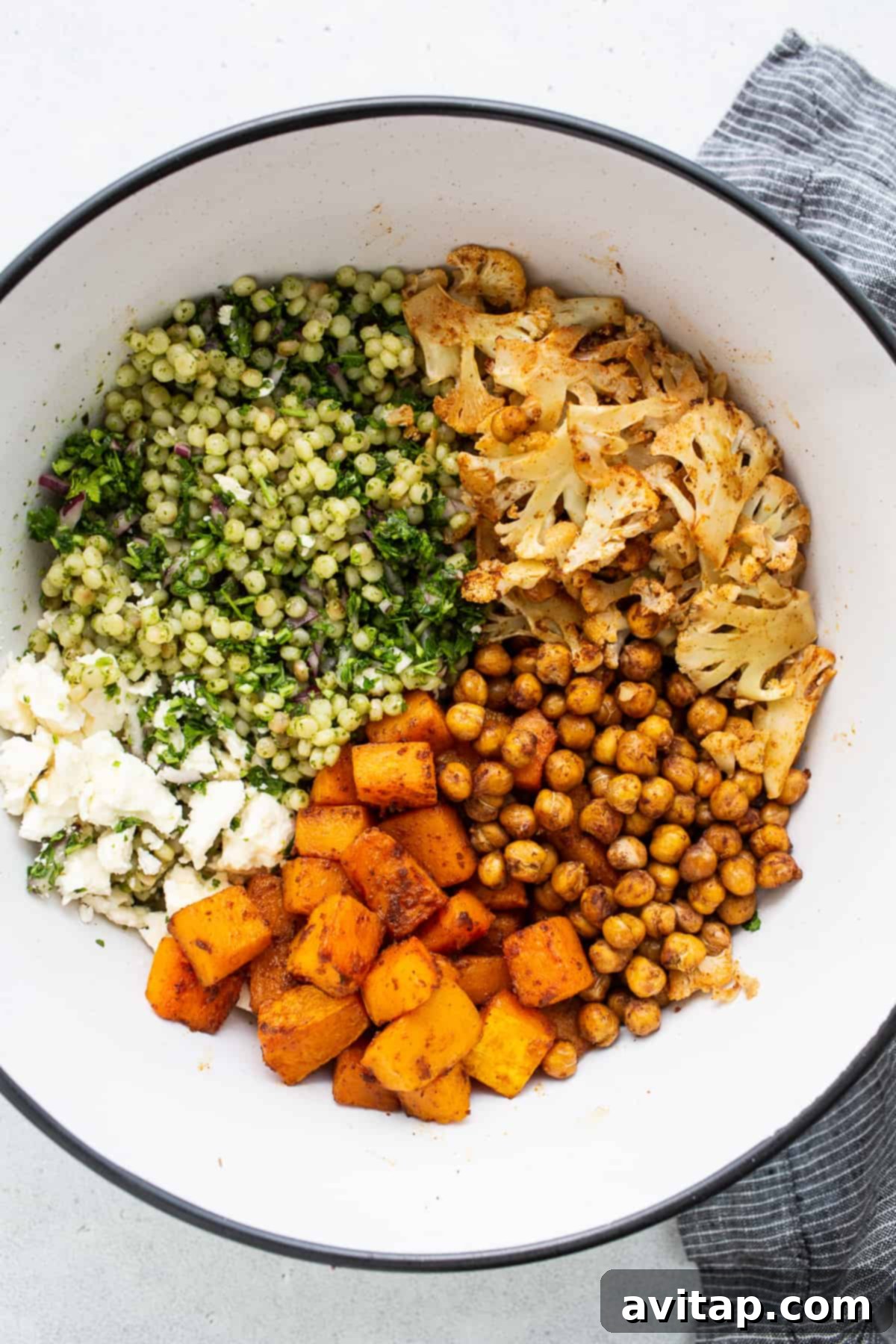
Key Ingredients for Your Gourmet Israeli Couscous Salad
Crafting an outstanding salad begins with exceptional ingredients. Here’s a closer look at the stars of this Israeli couscous salad and why they’re so essential:
- Israeli Couscous (Pearl Couscous): Often mistaken for a grain, Israeli couscous is actually a type of pasta, characterized by its tiny, toasted, pearl-like balls. This unique preparation gives it a slightly nutty flavor and a satisfyingly chewy texture that holds up beautifully in salads. It cooks quickly and absorbs flavors wonderfully, making it an ideal base for our vibrant pesto and roasted vegetables. Its substantial nature makes this salad incredibly filling and satisfying.
- Homemade Kale Pesto: While store-bought pesto can work in a pinch, we wholeheartedly recommend making our homemade kale pesto. It’s incredibly fresh, bursting with bright flavors from garlic, lemon, Parmesan, and the wholesome earthiness of kale. This pesto doesn’t just add greens; it acts as the primary flavor binder for the entire salad, coating each ingredient in its aromatic richness. If you’re short on time, opt for a high-quality store-bought pesto, preferably a kale-based one for consistency in flavor profile.
- Cauliflower: We call for a medium head of cauliflower, thinly sliced using a mandoline. This technique ensures that the cauliflower cooks evenly and quickly, achieving a tender-crisp texture and a slightly caramelized edge when roasted. The thin slices also integrate seamlessly into the salad, providing a delicate crunch. If you don’t have a mandoline, a very sharp knife can achieve similar thin strips; just exercise caution and precision. Rough chopping will also work, though the texture will be different.
- Garbanzo Beans (Chickpeas): These versatile legumes are a powerhouse of plant-based protein and fiber, adding a fantastic nutritional boost to our salad. In this recipe, they are tossed in a unique spice mixture and roasted until slightly crispy and wonderfully flavorful. This process not only enhances their taste but also adds a delightful textural contrast, providing a satisfying crunch in every bite.
- Butternut Squash: The sweet, creamy texture of roasted butternut squash is an absolute game-changer in this salad. Its natural sweetness perfectly complements the savory pesto and earthy vegetables, adding a depth of flavor and a beautiful golden hue. When roasted, it becomes incredibly tender, melting in your mouth. If butternut squash isn’t available or you prefer an alternative, sweet potatoes or carrots can be excellent substitutes, offering similar sweetness and vibrant color.
The signature spice mixture used in this salad is a carefully balanced blend of garlic powder, chili powder, paprika, ground cumin, and coarse salt. This combination creates a warm, earthy, and mildly smoky flavor profile that beautifully enhances the natural sweetness of the roasted vegetables and harmonizes with the fresh zest of the kale pesto. It’s designed to awaken the palate without overpowering the delicate flavors of the other ingredients.
Effortless & Flavorful
Whip Up Our Signature Homemade Kale Pesto
Elevate your cooking with a batch of our simple yet exquisite kale pesto. It’s incredibly versatile: perfect for enriching pasta, enhancing salads, or serving as a delightful dip. Prepare a batch and store it in your fridge for a burst of fresh flavor whenever you need it!
Crafting Your Salad: A Step-by-Step Overview
For the complete list of ingredients with precise measurements and detailed, step-by-step instructions, please scroll down to the full recipe card below. This recipe involves preparing several components in sections, and following the specific timing in the recipe card is key to achieving the best results.
- Master the Kale Pesto: Begin by combining all pesto ingredients in a high-speed food processor. Blend until you achieve a wonderfully smooth and creamy consistency. This can be made ahead of time, intensifying its flavors.
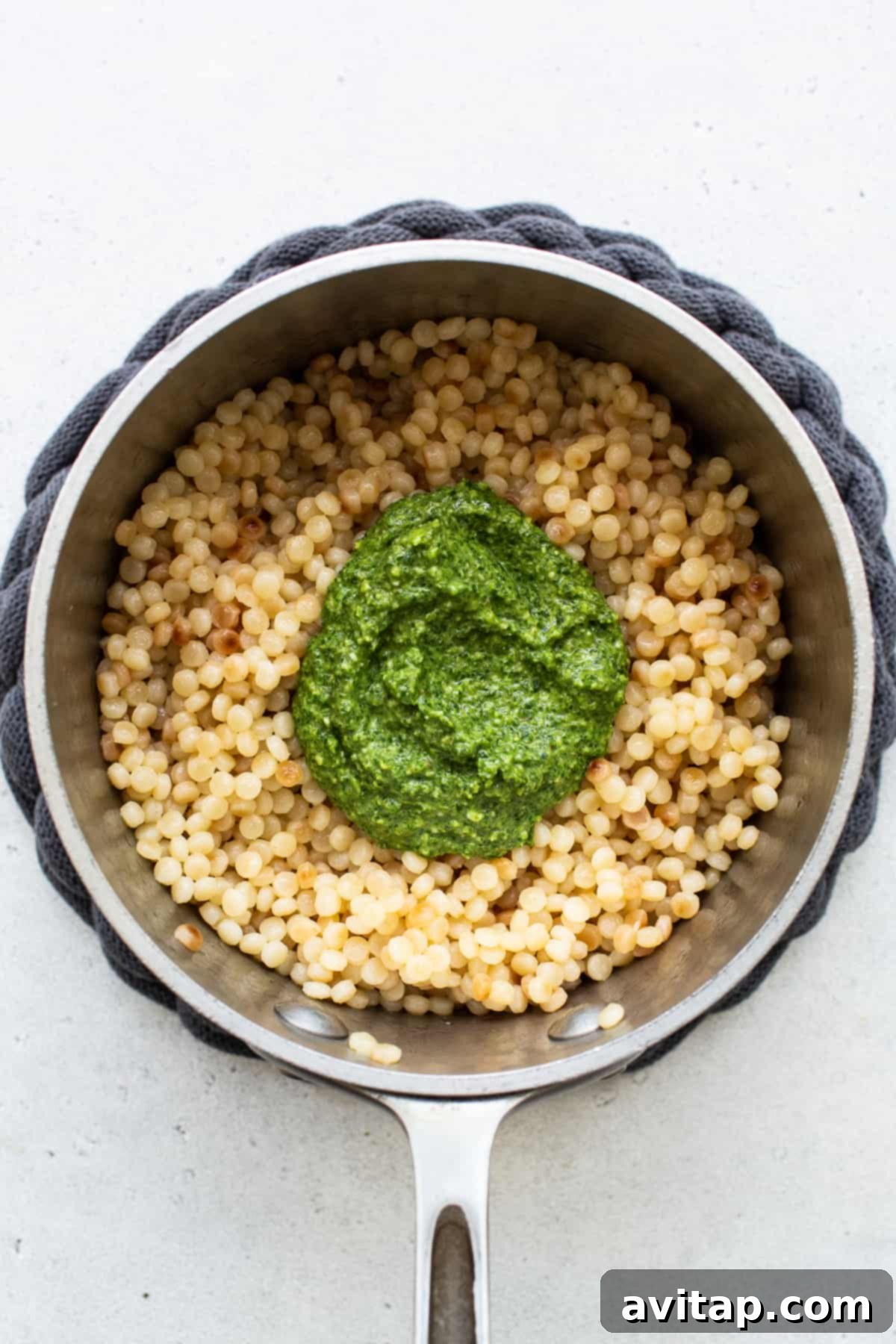
- Perfect the Israeli Couscous: Lightly toast the dry couscous in a saucepan to enhance its nutty flavor before adding water. Bring it to a boil, then cover and simmer until all the liquid is absorbed and the pearls are perfectly tender. Once cooked, gently fluff the couscous with a fork and then fold in a generous portion of your freshly made kale pesto, ensuring every pearl is beautifully coated.
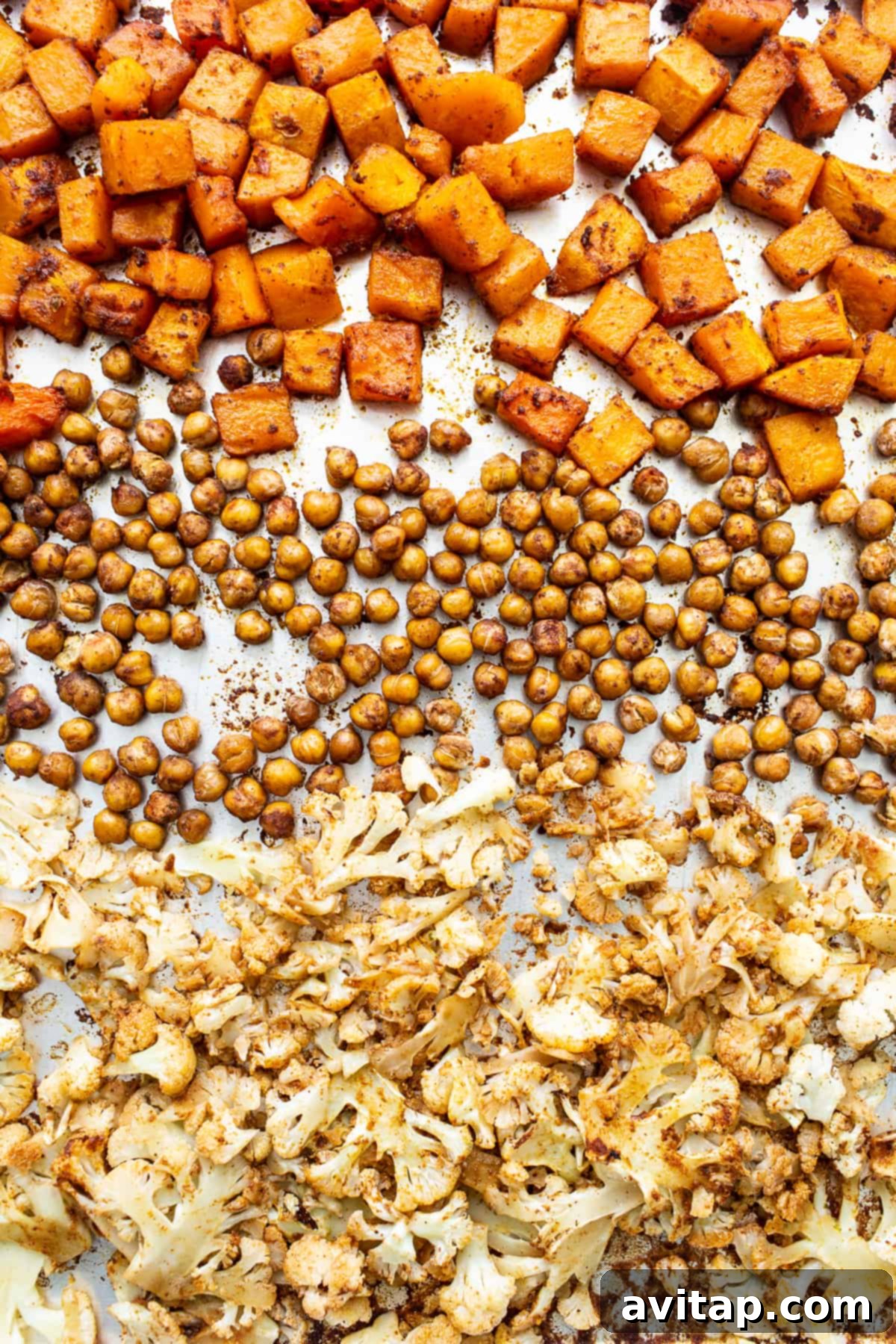
- Roast the Vegetables to Perfection: Prepare your butternut squash and garbanzo beans by tossing them with a portion of the savory spice mix and a drizzle of olive oil. Roast them first to give them a head start. After about 15 minutes, add the thinly sliced cauliflower, seasoned with the remaining spice mix and olive oil, to the baking sheet. Continue roasting until all vegetables are tender, slightly caramelized, and golden brown.
- Assemble the Flavorful Cold Salad Component: While the vegetables are roasting, prepare a quick, zesty mixture of finely minced red onion, fresh chopped parsley, a splash of red wine vinegar, and a pinch of salt. This will add a bright, fresh contrast to the warm, earthy roasted elements.
- Combine and Serve: Once all components are ready, gently toss the warm roasted vegetables and the pesto-infused couscous together in a large serving bowl. Fold in the vibrant cold salad mixture and a generous sprinkle of crumbled feta cheese. Serve immediately for a warm, comforting experience, or allow it to chill in the refrigerator for a refreshing cold salad.
Expert Tips for a Flawless Israeli Couscous Salad
Achieving a perfect salad every time is easy with a few insider tricks. Here are some valuable tips to ensure your Israeli couscous salad turns out spectacular:
- Efficient Time Management: This recipe involves multiple steps, but many can be executed simultaneously, making it surprisingly quick to prepare. For instance, while your vegetables are roasting, you can cook the couscous and prepare the pesto. With a good workflow, you should be able to complete this entire dish in approximately an hour, from prep to table.
- Cauliflower Prep Alternatives: A mandoline provides uniformly thin slices of cauliflower that roast beautifully and blend seamlessly into the salad. However, if a mandoline isn’t available, don’t fret! You can use a very sharp chef’s knife to carefully slice the cauliflower into thin strips, or simply rough chop it into small florets. The texture will vary slightly, but the flavor will remain delicious.
- Pesto Preference: Our homemade kale pesto truly elevates this salad with its unparalleled freshness and depth of flavor. We highly encourage you to give it a try! However, we understand that time is often a factor. In such cases, a good quality store-bought pesto (preferably kale or basil-based) can be a convenient and tasty alternative.
- Vegetable Versatility: Feel free to customize the roasted vegetables based on seasonality, availability, or your personal preferences. If butternut squash isn’t an option, consider roasting other root vegetables like sweet potatoes, carrots, parsnips, or even bell peppers. Adjust roasting times as needed, as different vegetables cook at different rates.
- Serving Temperature Flexibility: This salad is wonderfully versatile and can be enjoyed both warm and cold. Serving it warm right after assembly allows the roasted flavors to be most prominent and comforting. When chilled, the flavors meld together even further, making it a refreshing and convenient option for meal prep or a light lunch. Experiment to discover your favorite way to savor this dish!
Frequently Asked Questions About Israeli Couscous Salad
Israeli couscous, like most grains and pasta, can be a healthy part of a balanced diet when consumed in moderation. It provides carbohydrates for energy and some fiber, especially if you choose whole wheat varieties. In this recipe, it’s combined with a significant amount of nutrient-rich vegetables and protein from chickpeas, making the overall dish a very wholesome and beneficial choice. It’s all about balanced consumption and pairing it with diverse, healthy ingredients.
Yes, Israeli couscous, also known as pearl couscous or “ptitim,” is indeed a type of pasta. It’s made from semolina flour and water, rolled into small spheres, and then typically toasted, which gives it its unique slightly nutty flavor and firmer texture compared to traditional couscous (which is a crushed durum wheat semolina). It is not a whole grain in the same way quinoa or bulgur are, but it functions similarly in dishes.
If you don’t have Israeli couscous on hand or prefer an alternative, there are several excellent substitutes that will work well in this recipe, though the texture might vary slightly. Great options include:
- Orzo: A small, rice-shaped pasta that has a similar chewiness and cooks quickly.
- Millet: A gluten-free whole grain that offers a delicate, slightly nutty flavor and fluffy texture when cooked.
- Bulgur Wheat: A par-cooked, cracked wheat product, often used in tabbouleh, providing a chewy texture.
- Quinoa: A complete protein and gluten-free pseudo-grain, offering a fluffier, slightly more seedy texture and a boost of nutrients.
Regardless of your choice, always refer to the packaging instructions for cooking times and water ratios, as preparation methods will differ from Israeli couscous.
Absolutely! This Israeli couscous salad is highly adaptable. Feel free to incorporate any of your favorite vegetables to enhance its flavor and nutritional profile. Some excellent additions could include bell peppers, zucchini, cherry tomatoes, spinach, mushrooms, or even broccoli. If you plan to roast additional vegetables, be mindful of their individual cooking times. Harder vegetables like carrots or potatoes will need longer roasting periods, while softer ones like zucchini or bell peppers will cook more quickly. You may need to add them to the baking sheet at different stages to ensure everything is perfectly tender-crisp.
While this Israeli couscous salad is already packed with 17 grams of plant-based protein per serving thanks to the chickpeas, you might wish to serve it alongside an additional protein for an even heartier meal, or for those who prefer meat or fish. It pairs wonderfully with a variety of options:
- Chicken: Air fryer chicken thighs or a whole roasted chicken offer succulent and flavorful additions.
- Beef: A perfectly cooked sous vide steak brings a gourmet touch.
- Pork: Enjoy it with a tender baked pork tenderloin for a lean and satisfying pairing.
- Fish: Flaky blackened salmon or any grilled white fish complements the Mediterranean-inspired flavors beautifully.
For a continued vegetarian or vegan theme, consider serving it with grilled halloumi (if vegetarian), baked tofu, or extra roasted chickpeas.
Storage and Make-Ahead Tips
One of the many benefits of this Israeli couscous salad is its excellent keeping quality, making it a fantastic option for meal prepping throughout the week. To store, first ensure the salad has cooled completely to room temperature. Transfer it to an airtight container and refrigerate for up to 5 days. The flavors tend to meld and deepen over time, often tasting even better the next day! It’s an ideal choice for healthy packed lunches or quick dinners on busy evenings.
Discover More of Our Favorite…
More Delicious and Healthy Salad Recipes
If you loved this Israeli couscous salad, you’re in for a treat! Our collection of wholesome and flavorful salads is designed to inspire healthy eating without compromising on taste. Explore these other fantastic options to keep your meals fresh and exciting:
- Hearty Farro Salad
- Classic Mediterranean Couscous Salad
- Lemon Garlic Israeli Couscous with Whipped Feta
- Southwestern Black Bean Couscous Salad
- Spiced Chickpea Couscous Salad
Israeli Couscous Salad Recipe
This delightful warm Israeli couscous salad is a wholesome masterpiece, featuring tender roasted vegetables and a luxurious homemade kale pesto. It’s perfect for a satisfying meal any day of the week.
Prep: 30 mins | Cook: 40 mins | Total: 1 hr 10 mins |
Yields: 8 servings
Ingredients
For the Kale Pesto:
- ⅓ cup olive oil, separated
- 4 cloves garlic, peeled
- 4 cups chopped kale, deboned and packed
- ½ cup grated Parmesan cheese (medium grate)
- 3 tablespoons fresh lemon juice
- ½ cup walnuts
- 1 teaspoon kosher salt
For the Israeli Couscous:
- 1 tablespoon olive oil
- 1.5 cups uncooked Israeli couscous
- 2 cups water
- 3.5 tablespoons kale pesto
For the Spice Mix:
- 1 tablespoon garlic powder
- 1 teaspoon chili powder
- 1 teaspoon paprika
- ½ teaspoon ground cumin
- 1 teaspoon coarse salt
For the Butternut Squash:
- 4 cups butternut squash, chopped into ¾-inch chunks
- 1 tablespoon olive oil
- Half of the prepared spice mix (~1.5 tablespoons)
For the Roasted Garbanzo Beans:
- 15 oz. can garbanzo beans, drained and rinsed
- 1 teaspoon maple syrup
- ½ teaspoon ground cinnamon
- ½ teaspoon garlic powder
- ¼ teaspoon salt
- ¼ teaspoon cayenne pepper
For the Roasted Cauliflower:
- 1 small head cauliflower, (~4 cups florets or thin slices)
- 1 tablespoon olive oil
- Remaining half of the prepared spice mix (~1.5 tablespoons)
Other Ingredients for Assembly:
- ½ large red onion, minced (~½ cup)
- 1 cup chopped fresh parsley
- 1 tablespoon red wine vinegar
- ¼ teaspoon salt
- ½ cup crumbled feta cheese
Instructions
- Prepare the Kale Pesto: Begin by lightly smashing each garlic clove to flatten it slightly. Heat 1.5 tablespoons of olive oil in a small skillet over medium-high heat. Add the garlic and sauté until fragrant and lightly golden brown, about 1-2 minutes. Transfer the cooked garlic to a high-powered food processor along with the kale, Parmesan cheese, fresh lemon juice, walnuts, kosher salt, and the remaining olive oil. Pulse the ingredients to combine, then process on high for 2-4 minutes until thick and creamy. Scrape down the sides of the food processor as needed. If the pesto is too dry, add an additional teaspoon or two of olive oil and process further. Set the prepared pesto aside.
- Cook the Israeli Couscous: In a small saucepan, heat 1 tablespoon of olive oil over medium-high heat. Add the uncooked Israeli couscous and toast for 3-4 minutes, stirring frequently, until the pearls are golden brown and fragrant. Pour in 2 cups of water and bring to a boil. Reduce the heat to low, cover the saucepan, and simmer for 10-12 minutes, or until all the water has been absorbed and the couscous is tender. Remove from heat, uncover, and fluff the couscous with a fork. Immediately add 3.5 tablespoons of the prepared kale pesto to the warm couscous and mix thoroughly until every pearl is coated. Set aside.
- Prepare the Spice Mix and Preheat Oven: Preheat your oven to 450ºF (230ºC). Line a large baking sheet with parchment paper or lightly grease it with olive oil. In a small bowl, combine all the ingredients for the spice mix (garlic powder, chili powder, paprika, ground cumin, coarse salt) and mix well. This blend creates a warm, aromatic coating for your vegetables.
- Roast Butternut Squash and Garbanzo Beans: Place the ¾-inch chunks of butternut squash on one half of the prepared baking sheet. Drizzle with 1 tablespoon of olive oil and sprinkle with half of the spice mixture (approximately 1.5 tablespoons). Use your hands to massage the oil and spices into the squash, ensuring even coating. In a separate small bowl, combine the drained and rinsed garbanzo beans with maple syrup, ground cinnamon, garlic powder, salt, and cayenne pepper. Mix until the beans are well coated. Spread the seasoned beans in the middle section of the baking sheet, separate from the squash. Bake the butternut squash and beans for 15 minutes, tossing them halfway through to promote even browning.
- Roast the Cauliflower: While the butternut squash and beans are roasting, prepare the cauliflower. Break a small head of cauliflower into large florets, then use a mandoline to thinly slice the florets (a 3.0mm setting works well if using a Kyocera mandoline). Alternatively, use a sharp knife to carefully slice them thinly or rough chop them into small, bite-sized pieces (you should have about 4 cups). Transfer the cauliflower to a large bowl, add 1 tablespoon of olive oil and the remaining half of the spice mixture (approximately 1.5 tablespoons). Gently toss the cauliflower to coat it evenly. It’s perfectly fine if some pieces break apart.
- Finish Roasting: After the initial 15 minutes for the squash and beans, carefully add the seasoned cauliflower to the baking sheet, spreading it out in a single layer alongside the other vegetables. Return the baking sheet to the oven and bake for an additional 10-12 minutes, or until the cauliflower is tender-crisp and lightly golden brown. All vegetables should be tender with some caramelized edges.
- Assemble the Cold Components: While the cauliflower is cooking, combine the minced red onion, chopped fresh parsley, red wine vinegar, and ¼ teaspoon of salt in a large salad bowl. Mix these ingredients together; this forms a bright, acidic counterpoint to the richer flavors of the roasted vegetables and pesto.
- Final Toss and Serve: Once all the roasted vegetables are cooked, transfer them from the baking sheet into the large salad bowl with the onion and parsley mixture. Gently toss to combine. Add the pesto-coated Israeli couscous to the bowl and toss everything together again, ensuring all ingredients are well distributed and coated in the delicious flavors. Top the salad with the crumbled feta cheese just before serving. Enjoy immediately while warm, or allow it to cool and chill in the refrigerator for a refreshing cold salad.
Tips & Notes for Success
- This recipe is designed for efficiency; several steps can occur simultaneously. If you plan your workflow, you can have this flavorful salad ready in approximately one hour.
- For cauliflower, a mandoline creates ideal thin slices, but a sharp knife works well too. If neither is an option, simply rough chop the cauliflower into small florets for roasting.
- While our homemade kale pesto offers superior freshness, a good quality store-bought pesto can be used as a convenient alternative.
- Don’t hesitate to experiment with other root vegetables like sweet potatoes or parsnips if butternut squash is unavailable. Adjust roasting times as needed.
- This salad is truly delicious served either warm, highlighting the roasted flavors, or cold, as a refreshing make-ahead meal or side.
Nutrition Information (Approximate)
Per Serving (1/8 of recipe):
- Calories: 466 kcal
- Carbohydrates: 59 g
- Protein: 17 g
- Fat: 28 g
- Fiber: 11 g
- Sugar: 7 g
Nutrition information is automatically calculated and should be considered an approximation. Actual values may vary based on specific ingredient brands and preparation methods.
Photography Credit: The stunning food photography featured in this post was skillfully captured by Ashley McGlaughlin from The Edible Perspective, beautifully bringing this recipe to life.