
Have you ever taken a bite of a kale salad only to find yourself chewing endlessly, struggling with its tough, bitter leaves? It’s an experience akin to munching on shredded paper – not exactly delightful, even when drenched in the most delicious dressing. But what if we told you there’s a simple, game-changing technique that transforms this formidable green into a tender, palatable delight? The secret lies in a kitchen ritual that sounds a little unconventional but yields incredible results: massaging your kale.
Massaging kale with a little oil before incorporating it into your salads isn’t just a quirky culinary trend; it’s a fundamental step that breaks down the tough cell walls and fibrous structure of the leaves. This process not only makes kale significantly easier to digest and more pleasant to eat but also enhances its natural flavor, reducing any bitterness and opening up its leaves to absorb dressings more effectively. If you’ve ever shied away from kale due to its texture, prepare to have your mind (and taste buds) completely changed!
Kale has become a superstar in the world of healthy eating, and for good reason. From vibrant massaged kale salads and refreshing green smoothies to crispy kale chips and hearty stews, its versatility is unmatched. Today, we’re taking a deep dive back to the basics, providing you with a simple, step-by-step guide on how to properly massage kale. This foundational skill will empower you to enjoy this nutrient-dense leafy green in countless delicious ways, ensuring every bite is a pleasure, not a chore.
Why Kale Deserves its Crown: The Green of the Gods
Calling kale the “green of the gods” might sound like hyperbole, but once you understand its incredible nutritional profile and the culinary magic it brings, you’ll agree it truly lives up to the title. For many, leafy greens have always been a staple, a testament to growing up with the golden rule: try everything at least three times before forming a definitive opinion. This wasn’t just about politeness; it was about discovering the endless possibilities of food preparation. Kale, often encountered wilted in soups or blended into smoothies, always found a way to be palatable. But its true potential, especially in raw salads, shines brightest when given a little tender loving care.
Kale is a powerhouse of essential vitamins and minerals, boasting significant amounts of Vitamin K, Vitamin A, Vitamin C, and Manganese. It’s also a good source of fiber, calcium, and potent antioxidants like quercetin and kaempferol, which help combat oxidative stress and inflammation in the body. Beyond its impressive nutrient content, kale’s robust texture and slightly peppery flavor make it a fantastic base for salads, offering a satisfying crunch that holds up well against creamy dressings and hearty toppings. However, its toughness can be a barrier for many. This is where the art of massaging comes in, transforming it from a fibrous challenger into a delightful ingredient.
Mastering the Art of Massaging Kale
The concept of “massaging” your kale might sound unusual at first, almost like something you’d do for a tired muscle rather than a vegetable. However, once you experience the remarkable transformation it brings about, you’ll understand why it’s an indispensable step for raw kale preparations. This simple technique breaks down the rigid cellulose fibers in the kale leaves, resulting in a noticeably softer texture, a less bitter taste, and a vibrant green color. It’s a small effort that yields a huge reward, making your kale salads infinitely more enjoyable and easier to digest.
Follow these straightforward steps to prepare your kale for the most delicious salads. While we’ll guide you through the basics of massaging, remember that the final touch is yours – whether it’s one of our many delicious kale salad recipes or your own creative concoction of dressing and fixings. Let’s get started and turn that tough kale into a tender, flavorful star!
Step 1: Select Your Kale
The journey to a perfect massaged kale salad begins with choosing the right type of kale. While there are several varieties available, curly kale is often the most common, widely accessible, and budget-friendly choice, making it a favorite for many of our recipes. Its ruffled leaves hold dressing wonderfully and soften beautifully with a good massage. Lacinato kale, also known as dinosaur kale or Tuscan kale, with its darker, flatter, and slightly crinkled leaves, is another excellent option that becomes incredibly tender when massaged. Red kale varieties offer a slightly milder flavor and a beautiful visual appeal.
When selecting kale, look for vibrant, firm leaves without any yellowing or wilting. Avoid bunches with slimy or bruised spots. For optimal results, fresh kale is key. It’s worth noting that baby kale, characterized by its small, delicate leaves, is naturally tender and does not typically require massaging. Its soft texture means it can be enjoyed raw straight out of the bag, making it a convenient alternative for quick salads.
Step 2: Debone and Chop Your Kale
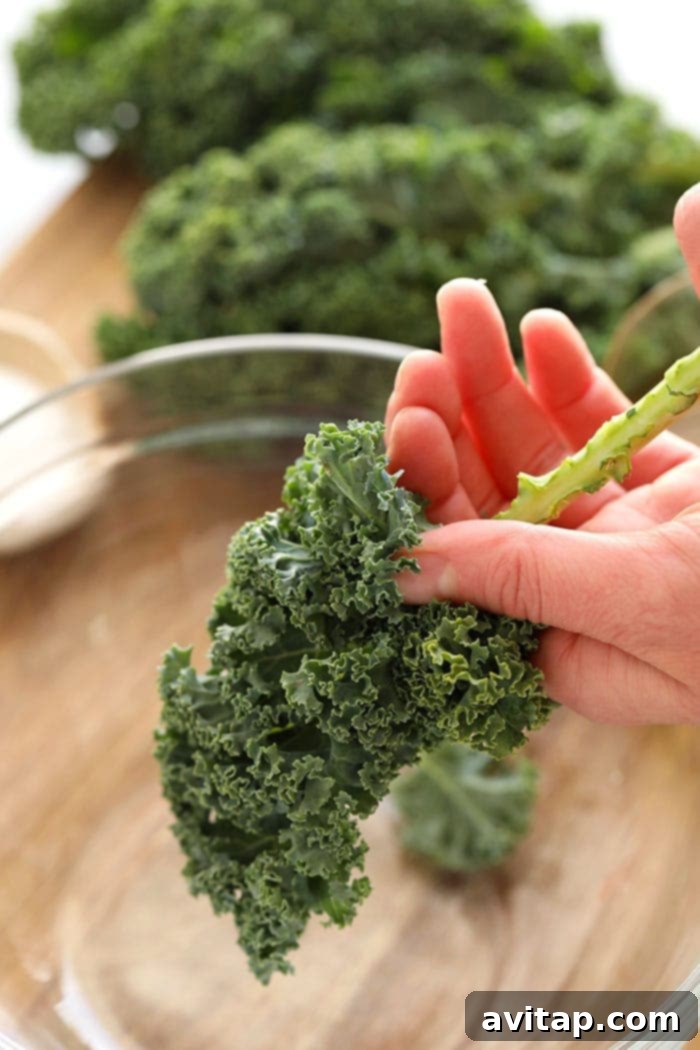
One of the most crucial steps in preparing kale for a salad is removing its tough, fibrous stem. While the stem is edible, its chewy texture can detract significantly from the enjoyment of a raw kale salad. The goal is to achieve uniformly tender leaves that are easy to chew and digest. There isn’t one “best” way to remove the stem, so choose the method that feels most comfortable and efficient for you.
Here are two popular methods for de-stemming your kale:
- By Hand: This method is quick and requires no tools. Grasp the bottom of the kale stem firmly with one hand. With the other hand, tightly squeeze the leafy portion at the top of the stem and slowly pull your hand down along the stem, stripping the leaves away as you go. The leafy part will easily detach from the tough core. Once all stems are removed, gather the de-stemmed leaves and chop them into bite-sized pieces, roughly 1-inch squares or strips, then place them into a large salad bowl.
- With a Knife: For those who prefer precision, a knife works wonderfully. Lay a kale leaf flat on a cutting board. Using a sharp knife, carefully cut along both sides of the thick central stem, separating the leafy greens from the stem. Discard the stems, then stack the de-stemmed leaves and chop them into small, manageable pieces. Transfer the chopped kale to a large salad bowl.
Once de-stemmed and chopped, give your kale a thorough rinse under cold water to remove any dirt or grit. Pat it dry completely with a clean kitchen towel or paper towels. Excess water can dilute your dressing and prevent the oil from properly coating the leaves during the massage.
(Psssst… If you have a furry friend at home, you can chop the kale stems into very small, digestible pieces and offer them as occasional, healthy dog treats! Always consult with your vet regarding new additions to your pet’s diet.)
Step 3: Drizzle with Oil and a Pinch of Salt
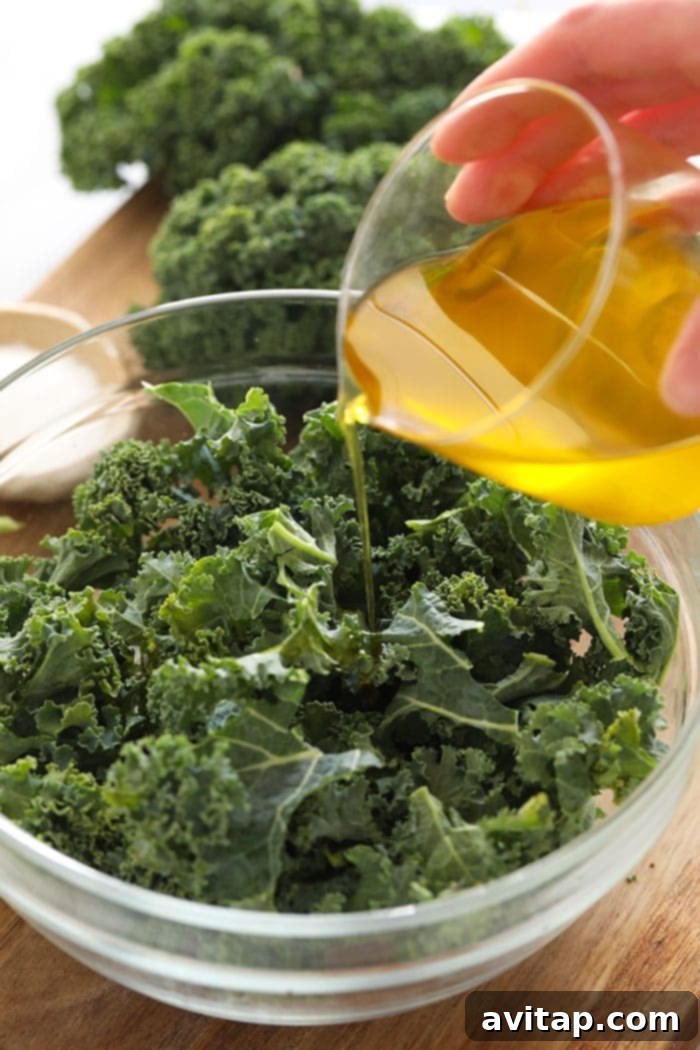
Now comes the crucial step of preparing your kale for its massage. The combination of oil and salt acts as a catalyst, helping to break down those tough fibers and tenderize the leaves. We highly recommend using extra virgin olive oil for its rich flavor and numerous health benefits. Its fruity notes complement kale beautifully, but feel free to use your preferred cooking oil.
The salt plays a vital role in drawing out moisture from the kale, further softening its texture and reducing bitterness. Just a pinch is all you need to start the tenderizing process. Don’t worry about making it too salty; most of it will be absorbed or rinsed away if you decide to do a quick rinse after massaging. As a general guide, for a standard bunch of kale (about 6-8 ounces), you’ll typically need 1-2 teaspoons of oil and about 1/8 to 1/4 teaspoon of fine sea salt.
Here are some excellent oil options to consider, each offering a unique flavor profile:
- Olive Oil: Classic, robust, and full of healthy fats. Perfect for most kale salads.
- Avocado Oil: Mild in flavor, high smoke point, and packed with monounsaturated fats. A great neutral option.
- Coconut Oil: Adds a subtle tropical note, especially good for kale used in Asian-inspired dishes (use melted).
- Grapeseed Oil: Light and neutral, it won’t overpower the kale’s natural taste.
Ensure your chopped kale is evenly coated with the oil and salt. This initial coating is what facilitates the softening process, preparing the leaves for a thorough massage.
Step 4: The Massage!
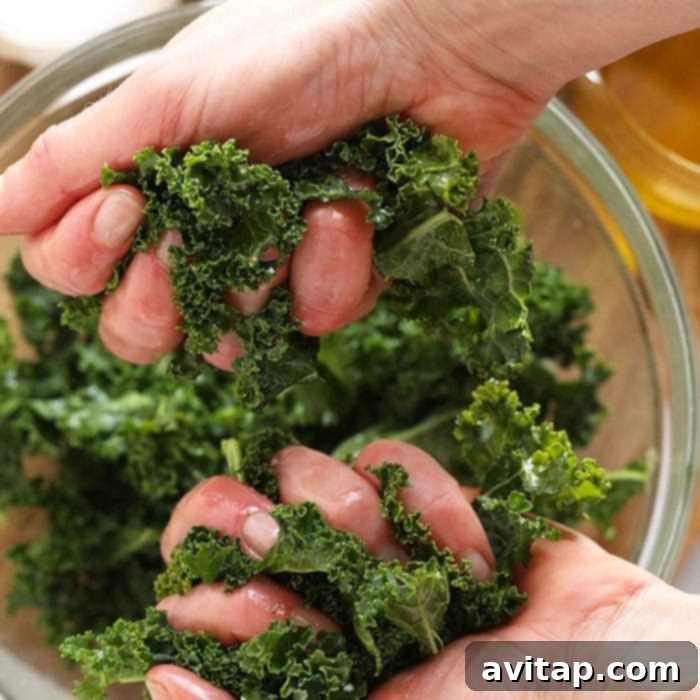
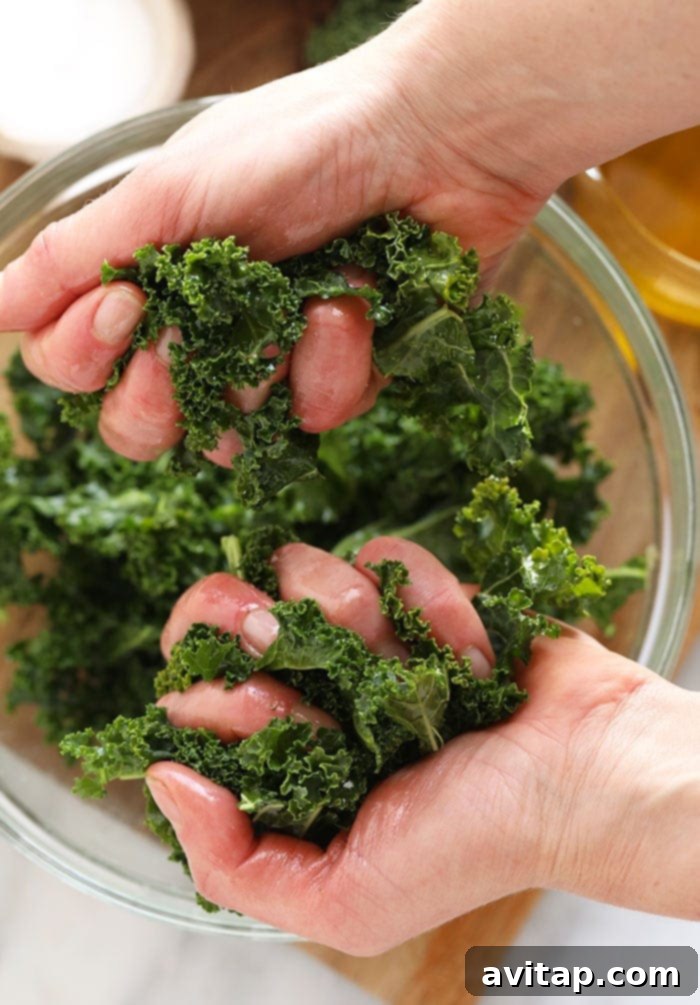
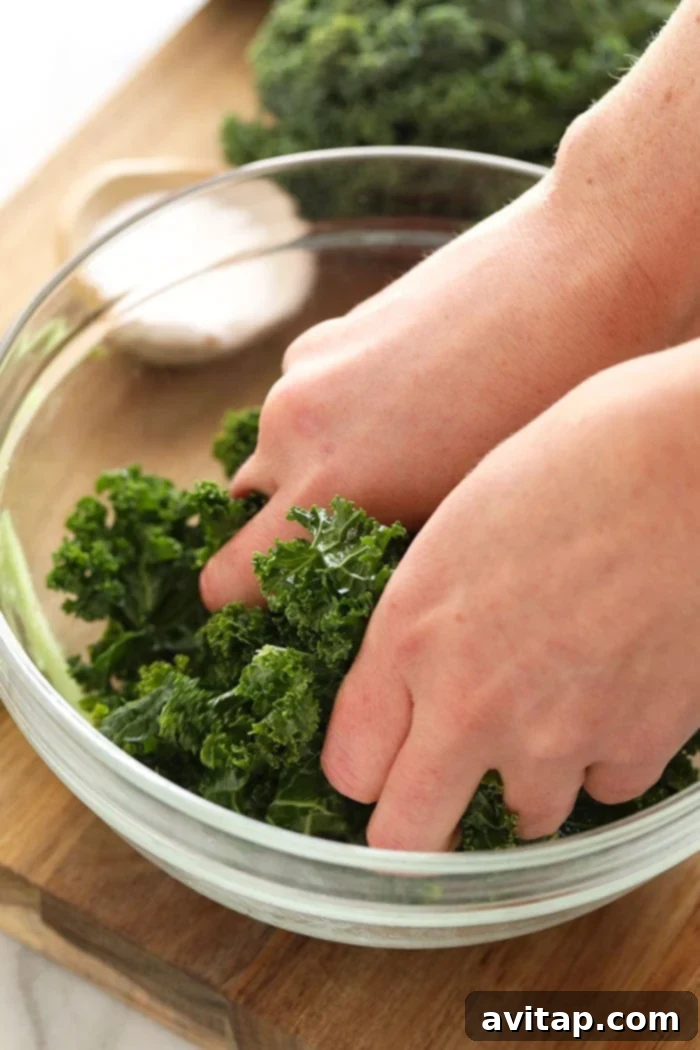
This is where the magic happens! With your kale seasoned with oil and salt in a large bowl, it’s time to get your hands in there and start massaging. Don’t be shy – you really want to work the leaves to break them down. Use your fingers to gently but firmly squeeze, scrunch, and rub the kale, much like you would knead dough or massage a shoulder. Picture yourself literally softening the leaves between your fingers.
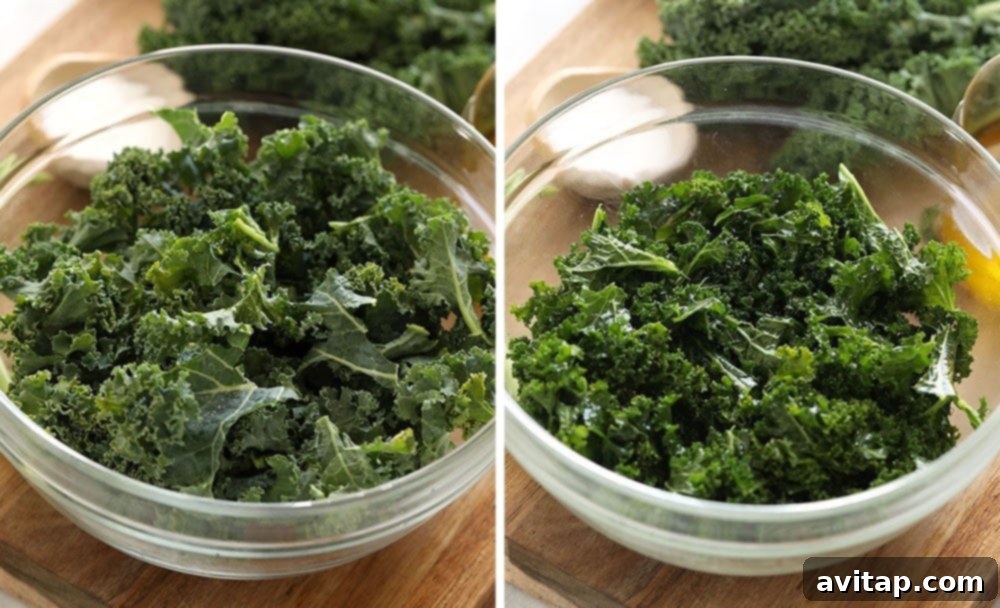
Continue massaging the kale for approximately 3 to 4 minutes. You’ll notice a remarkable transformation: the kale will visibly soften, its texture becoming far more pliable, and its color will deepen to a richer, more vibrant green. The volume of kale will also significantly reduce, indicating that its fibers have truly broken down. You’ll feel the leaves becoming silken and tender, a stark contrast to their initial rigidity. Once you achieve this soft, tender texture, your massaging job is done.
This physical act of massaging, combined with the softening power of oil and salt, breaks down the cellular structure of the kale, making it not only easier to chew but also more digestible. It also helps to release some of the natural sugars and reduce the bitterness often associated with raw kale, resulting in a sweeter, milder flavor profile that is far more appealing in salads.
Now that your kale is perfectly massaged and wonderfully tender, it’s ready to be the star of any salad you envision. The possibilities are endless!
The Irresistible Benefits of Massaged Kale
Beyond simply making kale easier to eat, massaging this leafy green unlocks a host of benefits that enhance both its flavor and its nutritional impact. Understanding these advantages can inspire you to make massaged kale a regular part of your culinary repertoire.
- Improved Texture: The most immediate and noticeable benefit is the dramatic change in texture. Tough, fibrous leaves become incredibly tender, silken, and pleasant to chew, eliminating the “raw crunch” that many find off-putting.
- Enhanced Flavor: Massaging helps to break down bitter compounds within the kale, resulting in a milder, sweeter, and more palatable flavor. This makes kale more appealing, especially to those who are new to incorporating it into their diet.
- Better Digestion: By physically breaking down the tough cellulose fibers, massaging makes kale easier for your digestive system to process. This can reduce bloating and discomfort often associated with eating large quantities of raw, un-massaged greens.
- Increased Nutrient Absorption: While not a direct scientific consensus, some believe that breaking down the cell walls can make certain nutrients in kale more bioavailable, allowing your body to absorb them more efficiently.
- Versatility in Recipes: Tenderized kale is far more versatile. It can stand up to robust dressings without wilting instantly, integrate smoothly into wraps and sandwiches, or even be lightly sautéed after massaging for a quicker cooking time.
- Greater Volume: The massaging process significantly reduces the volume of kale, allowing you to comfortably consume a larger quantity of this nutrient-dense vegetable in a single serving.
Embracing the massage technique truly elevates kale from a challenging superfood to a readily enjoyable and integral component of a healthy diet.
Our Favorite Massaged Kale Salad Recipes
Once you’ve mastered the art of massaging kale, a world of delicious salad possibilities opens up! Here are some of our top picks for massaged kale salads that you’ll absolutely love:
- Discover The Best Kale Salad Recipes
- Try our refreshing Massaged Kale and Fennel Salad with Lemon Vinaigrette
- Indulge in Roasted Butternut Squash and Kale Salad with Farro and Goat Cheese
- Savor the flavors of our Harvest Blackberry and Butternut Squash Massaged Kale Salad
How to Massage Kale
Linley Hanson
Prep:
10
Cook:
0
Total:
10
4
Ingredients
- 12 oz. kale
- 2-3 teaspoons olive oil
- 1/8 teaspoon salt
Instructions
-
Begin by rinsing kale under cold water. Make sure all dirt is removed from kale. Pat dry completely with a paper towel or clean kitchen cloth.
-
Next, de-stem the kale using either a knife or your hands, carefully removing the tough central stem from the leafy part of the kale. Discard the stems and set the leafy parts aside.
-
Once all kale has been de-stemmed, chop the leafy kale into small, bite-sized pieces and place them into a large salad bowl.
-
From there, drizzle olive oil and sprinkle salt evenly over the chopped kale. Using your hands, massage the kale for 3-4 minutes until the leaves become noticeably tender and soft, and their color deepens.
-
Finally, use your perfectly massaged kale to prepare your favorite massaged kale salad! We recommend trying our Massaged Kale and Fennel Salad or our delightful Harvest Salad.
Nutrition
Calories:
59 kcal
,
Carbohydrates:
9 g
,
Protein:
4 g
,
Fat:
2 g
,
Fiber:
4 g
,
Sugar:
2 g
Nutrition information is automatically calculated, so should only be used as an approximation.
Shop This Post
Cutting Boards
Olive Oil
Love this? Leave a comment below!
Don’t forget to tag your delicious creations on social media with the hashtag #fitfoodiefinds – we’d absolutely love to see what you’re up to!