
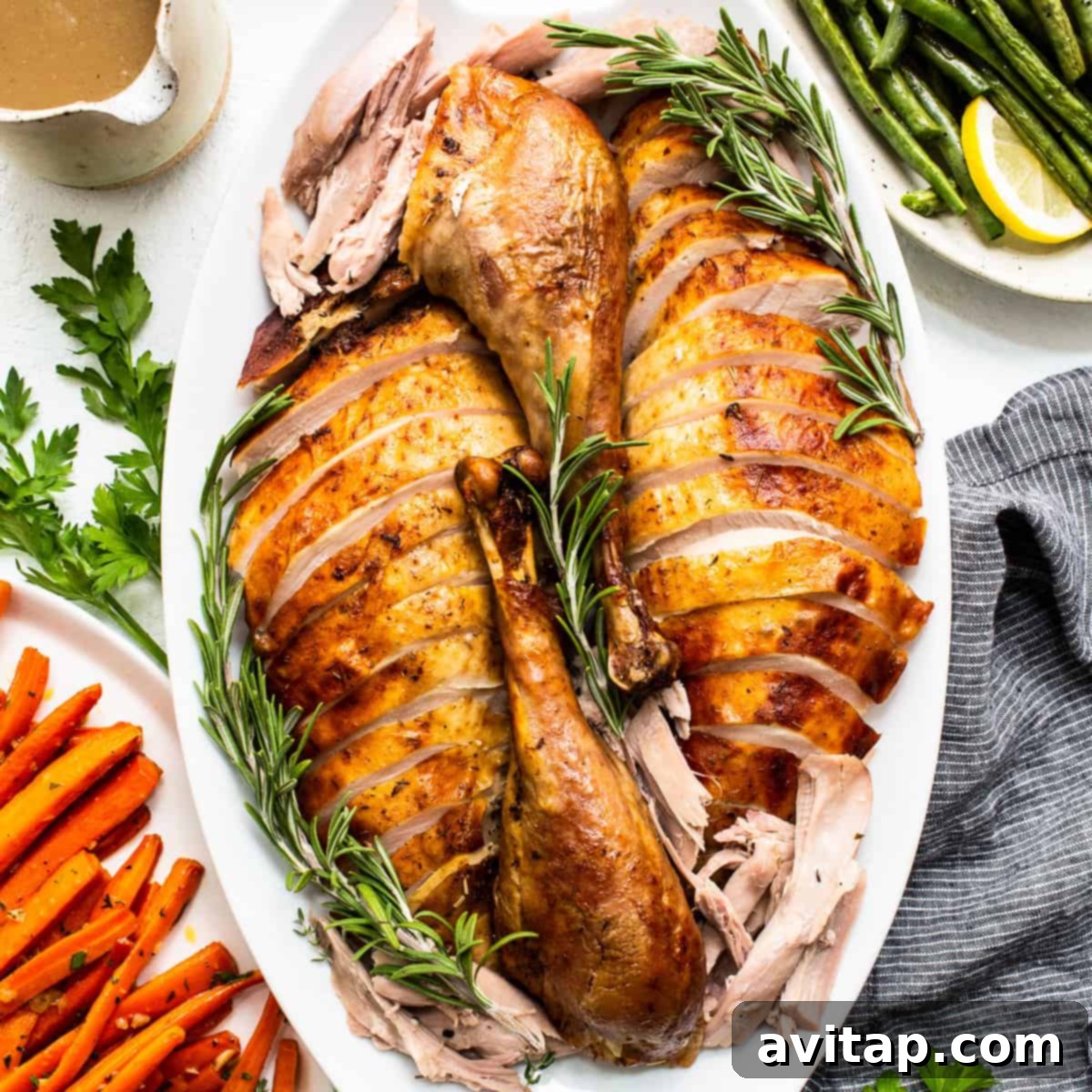
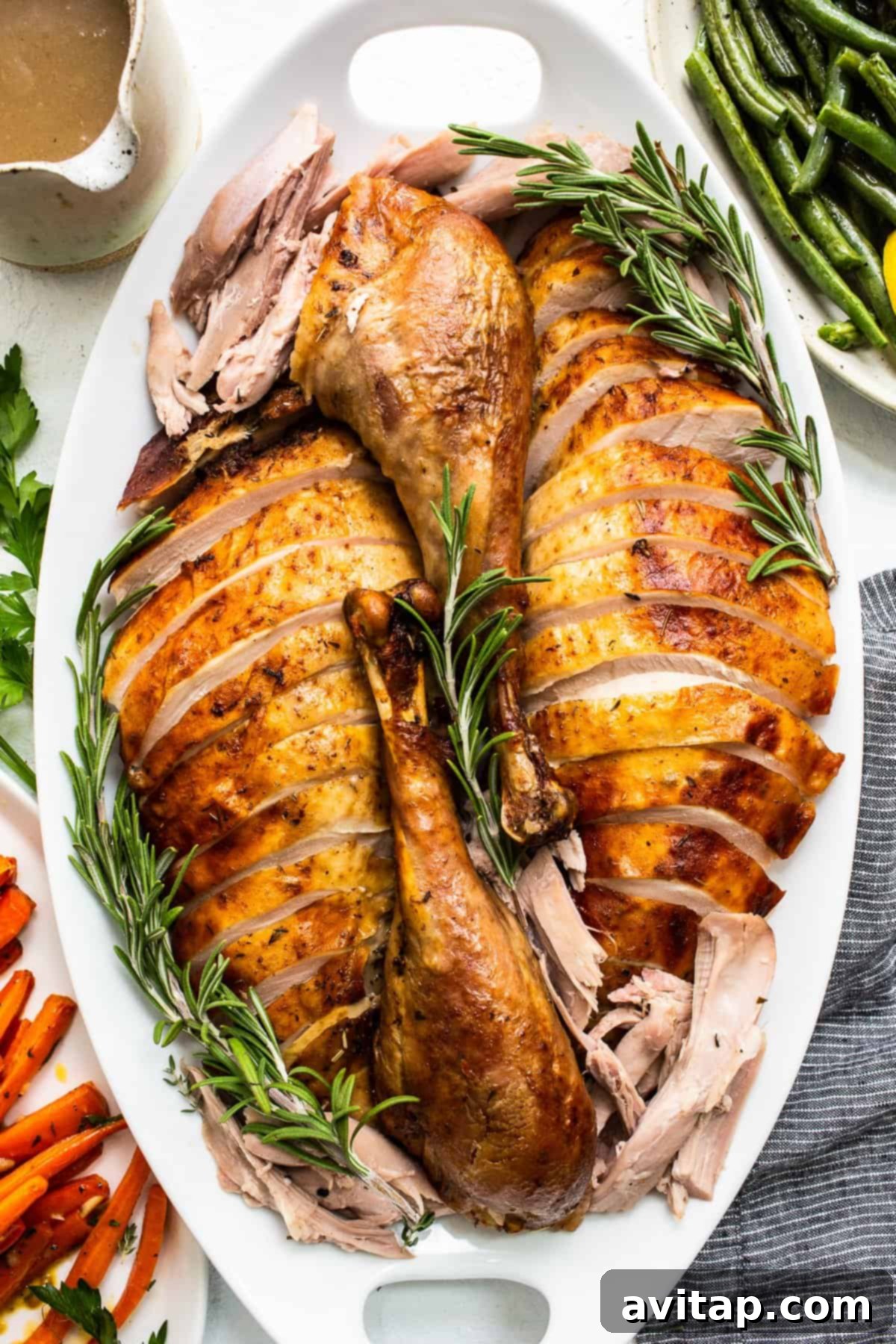
Prepare to create the most unforgettable Thanksgiving turkey with this ultimate recipe. Crafted for perfection, our method involves a meticulous process of brining, applying a savory dry rub, and frequent basting. The result? A stunningly crispy, golden-brown skin that encases incredibly tender, moist, and flavorful meat, promising a holiday centerpiece that will impress every guest.
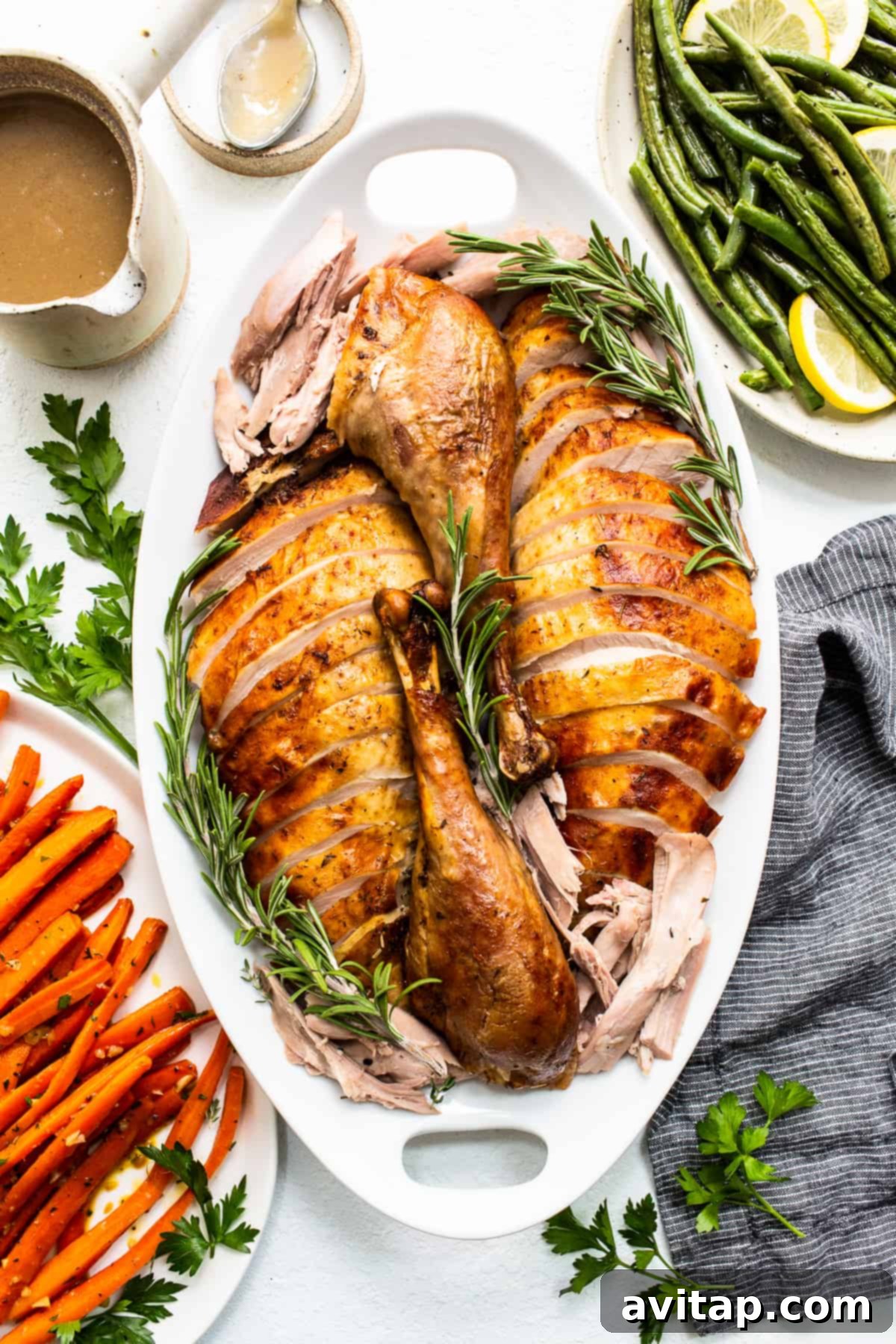
Crafting the Perfect Thanksgiving Turkey: A Step-by-Step Guide
Thanksgiving dinner often revolves around the majestic turkey, and if you’ve ever had a culinary mishap (like accidentally roasting a turkey with the giblets still inside!), rest assured, this guide is designed to prevent any future kitchen catastrophes. We’ll walk you through every critical step to ensure your turkey is not only safe to eat but also incredibly delicious and memorable.
My cherished memories of Thanksgiving revolve around helping my mom prepare our family feast. Her roasted turkeys were always the highlight — consistently juicy and cooked to perfection. This recipe incorporates some of her timeless techniques, combined with modern culinary wisdom, to deliver a turkey that truly shines.
This recipe is ideal for feeding 8-10 people, starting with a 12-15 lb. turkey. The journey to a perfect bird begins with an overnight brining in a fragrant salt and citrus solution, followed by a generous application of a homemade dry rub in the morning. The turkey is then slow-roasted in the oven at a precise 325ºF for approximately 3.5 to 4 hours, with regular basting to develop that coveted crispy exterior and ensure uniformly succulent, tender meat throughout.
Essential Notes Before You Begin Your Thanksgiving Turkey Preparation
Before you dive into roasting your masterpiece, keep these crucial tips in mind:
- Brining is Highly Recommended: While optional, we strongly advocate for brining your turkey. It’s a game-changer for moisture and flavor. If you prefer a dry brine, that’s also an excellent option.
- Roasting Time Varies: The cooking duration largely depends on your turkey’s size. A general rule of thumb is 13 minutes per pound of turkey. Always use a meat thermometer to confirm doneness, rather than relying solely on time.
- Flavorful Seasoning is Key: Our homemade turkey dry rub infuses unparalleled flavor. If time is short, a high-quality store-bought poultry seasoning can be used as an alternative.
- Choose the Right Roasting Pan: A sturdy roasting pan with a wire rack is essential. The rack elevates the turkey, allowing hot air to circulate evenly and preventing the bottom from steaming in its own drippings.
- Don’t Forget the Gravy: The delicious pan drippings from your roasted turkey are the foundation for an incredible homemade gravy. Don’t let them go to waste!
Key Ingredients for an Exceptional Turkey
Every great recipe starts with quality ingredients. Here’s what you’ll need to create our signature juicy Thanksgiving turkey:
- Whole Turkey: Select a fresh or fully thawed, untreated turkey weighing between 12-15 pounds. This size is ideal for even cooking and soaking up all the flavors.
- Kosher Salt: More than just a seasoning, kosher salt is vital for both the brining process and enhancing the overall flavor profile of the turkey. Its larger crystals dissolve slower and penetrate the meat more effectively.
- Signature Turkey Seasoning: We can’t emphasize enough the impact of our homemade turkey dry rub. It’s a carefully balanced blend of herbs and spices that elevates the turkey’s natural taste. If you’re short on time, a high-quality store-bought poultry seasoning can be a substitute, but homemade is always best.
- Aromatics: Fresh onions, garlic, thyme, rosemary, and oregano are not merely fillers; they impart deep, aromatic flavors into the turkey and the basting liquid. Do not skip these!
- Broth: Any type of broth will work wonders for the basting liquid, whether it’s homemade chicken, turkey, or a good quality store-bought variety. It adds moisture and depth of flavor.
- Dry White Wine: A splash of dry white wine in the basting liquid makes a remarkable difference, adding a subtle complexity and richness that complements the turkey beautifully. Opt for a dry wine over a sweet one for the best results.
Preparing Your Turkey for Roasting: A Detailed Walkthrough
Proper preparation is the cornerstone of a perfectly roasted turkey. Follow these steps carefully to ensure a flavorful and safely cooked bird.
Thaw Your Turkey Safely and Completely
The most critical first step is ensuring your turkey is completely thawed. A 12-15 lb. turkey requires more thawing time than you might expect. We recommend thawing your turkey in the refrigerator for at least 2 full days, or approximately 24 hours for every 5 pounds of turkey. Never thaw at room temperature. For faster thawing, you can submerge the wrapped turkey in cold water, changing the water every 30 minutes, but fridge thawing is always preferred for safety and quality. Always keep a close eye on your turkey to ensure it’s fully thawed before proceeding.
Remove Turkey Innards and Giblets
Before any brining or seasoning, make sure to reach into the turkey’s cavity and remove the neck, giblets, and any other packaged innards. These are typically found in a small bag inside the main cavity or the neck cavity. You can either discard these or save them to make a flavorful stock or a delicious turkey soup later on, adding another layer of culinary delight to your holiday spread.
The Art of Wet Turkey Brine
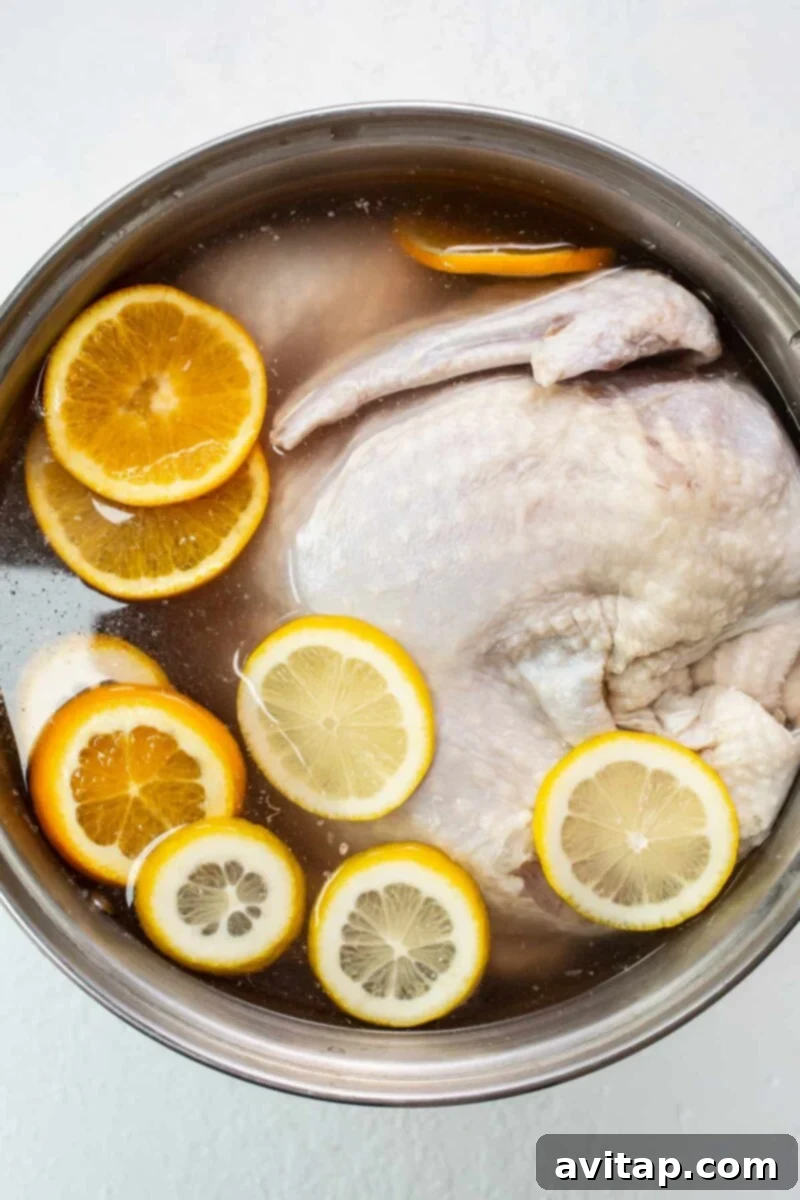
Once your turkey is prepped and cleaned, it’s time for the transformative wet brine. Brining involves submerging the turkey in a salty liquid solution, which helps the meat absorb moisture and seasoning, resulting in an incredibly juicy and flavorful bird. We have a dedicated post detailing our wet turkey brine, but the essence is creating a flavorful, salty water bath for your turkey to soak in overnight. This step is key to preventing dry turkey! If you prefer a dry brine, where salt and seasonings are rubbed directly onto the skin and left to cure, that’s also an excellent method for achieving similar moisture retention and flavor.
Brining is a highly recommended step because it significantly enhances the turkey’s flavor and, more importantly, helps the meat retain moisture throughout the roasting process. The salt in the brine denatures the proteins in the meat, allowing them to hold onto more water, resulting in a much juicier turkey. The added aromatics in the brine also infuse the meat with delicious flavors from the inside out.
For optimal results, we recommend brining your turkey for at least 12 hours, preferably overnight. This allows ample time for the brine to work its magic. Plan to start the brining process the night before you intend to roast your turkey, so it’s perfectly prepared by morning.
Applying the Flavorful Turkey Dry Rub
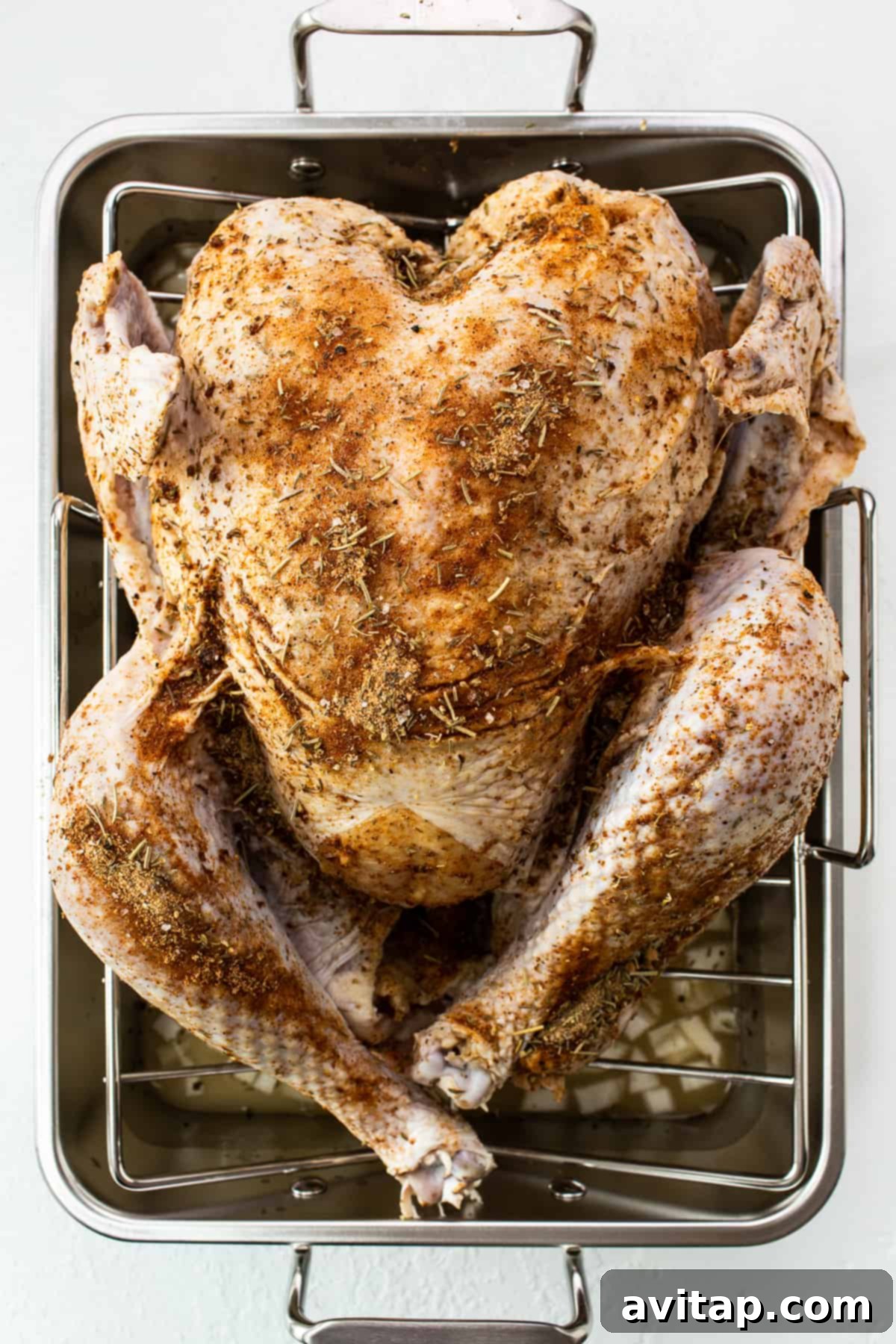
After brining, carefully remove the turkey from the liquid and give it a thorough rinse under cold water to remove any excess salt. Pat the turkey completely dry with paper towels – this is crucial for crispy skin! Then, it’s time to generously apply our delicious turkey dry rub. Make sure to work the rub into every crevice, under the wings, and especially between the skin and breast meat for maximum flavor penetration. Our homemade dry rub is truly what sets this recipe apart, delivering an amazing depth of flavor. You’ll typically use about 1/2 to 3/4 cups of our turkey seasoning, which consists of:
- Dried thyme
- Dried rosemary
- Dried oregano
- Brown sugar
- Garlic powder
- Salt
- Ground pepper
- Chili powder
- Smoked paprika
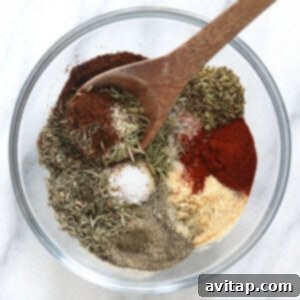
Elevate Your Flavor!
Homemade Turkey Seasoning
Forget generic store-bought options! Our most Flavorful Turkey Seasoning is crafted with 9 simple ingredients you can easily pronounce, including garlic powder, brown sugar, and kosher salt. It’s the secret to a truly delicious turkey dinner!
Crafting the Perfect Basting Liquid
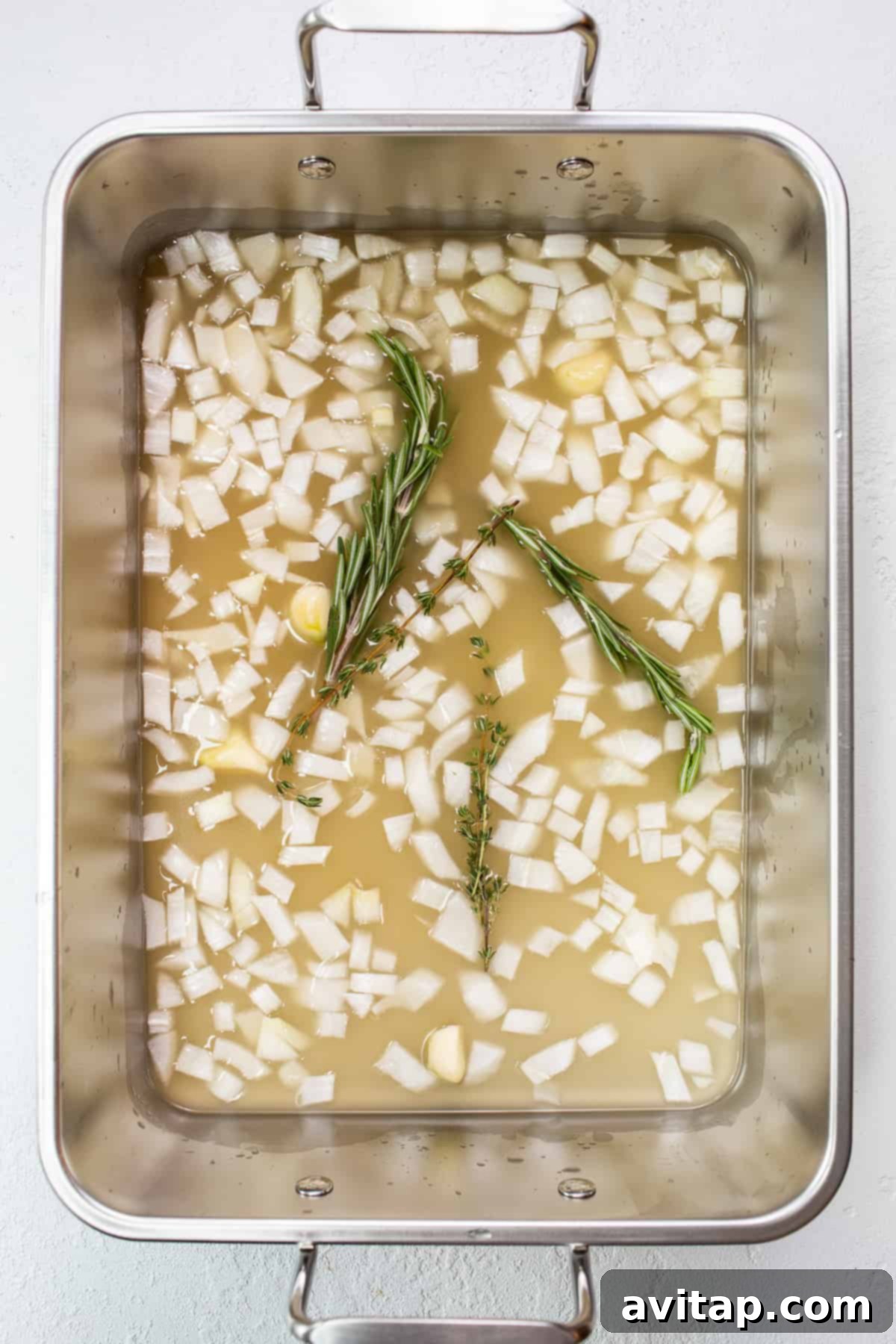
Our basting liquid is a harmonious blend of broth, dry white wine, diced onion, and fresh garlic. This liquid is continuously spooned over the turkey throughout the roasting process, playing a vital role in maintaining moisture and contributing to that beautiful, crispy skin. Do not underestimate the power of basting! As the turkey roasts, its natural juices and fats drip into the pan, mingling with the basting liquid to create an incredibly flavorful foundation for both basting and, eventually, a rich homemade gravy.
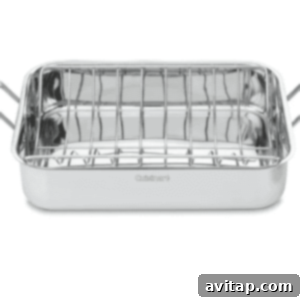
Essential Tool
The Right Roasting Pan
A durable roasting pan with a sturdy wire rack is indispensable for even cooking and collecting those precious drippings. We highly recommend this reliable Cuisinart roasting pan for all your holiday cooking needs.
How Long Should You Roast Your Thanksgiving Turkey?
For a 12-15 lb. turkey prepared using this recipe, expect a roasting time of approximately 3 to 3.5 hours. However, remember that cooking times can vary based on oven calibration and the turkey’s exact size and initial temperature. The most accurate way to determine doneness is by checking the internal temperature with a reliable meat thermometer.
Once your turkey reaches the correct internal temperature, remove it from the oven and allow it to rest for at least 15-20 minutes before carving. This crucial resting period allows the juices to redistribute throughout the meat, ensuring every slice is incredibly tender and moist. Skipping this step can lead to a dry turkey, regardless of how perfectly it was cooked.
Can I roast a larger turkey with this recipe? Yes, absolutely! This recipe is adaptable for larger turkeys. Just be prepared for a longer roasting time. Always refer to a meat thermometer to ensure your larger bird reaches the safe internal temperature of 165ºF in its thickest parts.
Achieving the Ideal Internal Temperature for Your Whole Turkey
Food safety and optimal taste go hand in hand. The universal safe internal temperature for turkey is 165ºF (74ºC). While some culinary experts suggest slightly different temperatures for specific parts (e.g., thigh meat to 175ºF and breast meat to 160-165ºF), our general rule is to ensure the thickest part of the entire bird, usually the deepest part of the thigh without touching bone, reaches 165ºF. The breast meat will likely be slightly higher by then, ensuring a perfectly cooked and safe turkey.
Our best advice is to use a high-quality meat thermometer. Insert the probe into the thickest part of the bird, ensuring it doesn’t touch any bone, and monitor the temperature throughout the roasting process. This precision ensures your turkey is neither undercooked nor overcooked and dry.

Precision Cooking
The Thermapen One
For consistently perfect results with any cut of meat, a reliable meat thermometer is indispensable. The Thermapen One is our top recommendation for its speed and accuracy, guaranteeing your turkey is cooked to perfection every time.
Our Top Turkey Roasting Tips for Success
Follow these expert tips to ensure your Thanksgiving turkey is nothing short of magnificent:
Tip 1: Always Thaw Your Bird Completely. Planning is key! There’s nothing more frustrating than discovering your turkey is still frozen solid on Thanksgiving morning. Ensure adequate time for thawing in the refrigerator (approximately 24 hours per 5 pounds) to guarantee even cooking and food safety. A partially frozen turkey will cook unevenly and can be unsafe.
Tip 2: Never Skip the Brine. Whether you opt for a wet brine or a dry brine, this step is non-negotiable for achieving a truly juicy and flavorful bird. Brining significantly boosts moisture retention and seasoning, making a noticeable difference in the final taste and texture.
Tip 3: Utilize a Quality Roasting Pan with a Rack. A good roasting pan that collects drippings is essential. The rack keeps the turkey elevated, promoting even heat circulation for crispy skin all around. The collected drippings are invaluable for basting and forming the base of a rich, homemade gravy, maximizing flavor from your turkey.
Explore More Delicious Turkey Recipes
Easy Oven-Roasted Turkey Tenderloin
Vibrant Egg Roll in a Bowl
Italian Grinder Sliders
Egg and Croissant Breakfast Casserole
High-Protein Cottage Cheese Wraps
Frequently Asked Questions About Roasting Thanksgiving Turkey
For a 12-15 pound turkey, roasting typically takes between 3 to 3.5 hours at 325ºF. Remember to always use a meat thermometer to confirm the internal temperature reaches 165ºF in the thickest part of the bird for safety and optimal doneness.
This particular recipe calls for roasting your turkey at a consistent 325ºF. This lower temperature allows for a slower cook, which helps the turkey cook more evenly and stay moister, reducing the risk of drying out while still achieving a beautifully browned skin.
Roasting a turkey in the oven remains the most popular and traditional method for cooking a Thanksgiving turkey, celebrated for its ability to produce a golden-brown, flavorful bird. However, there are other fantastic methods you can explore, such as smoking a turkey (our ultimate smoked turkey recipe is a favorite!) or trying a sous vide turkey for unparalleled precision and tenderness.
Storing Your Thanksgiving Turkey Leftovers
To maximize the freshness and safety of your turkey leftovers, store them in an airtight container in the refrigerator. Properly stored, cooked turkey will remain delicious and safe to eat for up to 3-4 days.
Can I Freeze Cooked Turkey?
Absolutely! Freezing leftover turkey is an excellent way to preserve it for future meals like soups, salads, or casseroles. To freeze, allow the cooked turkey to cool completely. Then, transfer it to a freezer-safe bag or airtight container, removing as much air as possible to prevent freezer burn. Frozen turkey can be stored for up to 3 months, offering a convenient option for quick and delicious meals down the line.
Discover More of Our Favorite…
Essential Thanksgiving Recipes
- Creamy Herby Mashed Potatoes
- Elegant Green Beans Almondine
- Hearty Vegan Green Bean Casserole
- Zesty Lemon Ginger Cranberry Sauce
- Wholesome Sweet Potato Casserole
Perfect Pairings: What to Serve with Your Thanksgiving Turkey
A perfectly roasted turkey deserves equally incredible side dishes to complete your holiday feast. Here are some of our top recommendations:
Creamy Butternut Squash Risotto:This rich and savory butternut squash risotto is a comforting and elegant dish, perfect for any fall meal or as a luxurious accompaniment to your turkey. Its creamy texture and deep flavors make it a standout side.
Effortless Crock Pot Mashed Potatoes: Free up oven space with this ultimate crockpot mashed potatoes recipe. It’s incredibly easy to make, consistently creamy, and a must-have at any holiday gathering, delivering fluffy, flavorful potatoes without the fuss.
Classic Green Beans Almondine: A fresh, vibrant, and buttery holiday side dish, our Green Beans Almondine features crisp-tender blanched green beans, a delightful topping of slivered almonds, and a bright finish of fresh lemon zest. It’s simple yet sophisticated.
Decadent Pumpkin Bread Pudding:End your meal on a sweet note with this tender and warmly spiced pumpkin bread pudding. Made with an entire loaf of pumpkin bread, it’s the ultimate comforting fall dessert, perfect for a cozy holiday celebration.
Creative Thanksgiving Turkey Leftover Ideas
If your Thanksgiving gathering is on the smaller side, you’re bound to have delicious turkey leftovers! Don’t let them go to waste. Here are some fantastic and creative ideas to transform your extra turkey into exciting new meals:
- Hearty Leftover Turkey Soup
- Fresh and Flavorful Turkey Salad
- Quick and Easy Turkey Quesadillas
Juicy Thanksgiving Turkey Recipe
This is truly the juiciest Thanksgiving turkey that you will ever taste. It is brined overnight, seasoned, and roasted to perfection. Served with homemade gravy, you just can’t beat it.
By: Linley Hanson
Print Recipe
Ingredients
Brine
- 2 gallons water, separated
- 1.5 cups kosher salt
- 1 large orange, sliced
- 1 lemon, sliced
Basting Liquid
- 3 cups broth, any kind (we used homemade turkey broth)
- ½ large white onion, diced
- 4 cloves garlic
- 1 cup dry white wine
- 2 sprigs fresh thyme
- 2 sprigs fresh rosemary
Turkey
- 12-15 lb. whole turkey, innards removed, fully thawed (ours was 14 lbs.)
- 3 tablespoons turkey seasoning (we used our homemade turkey seasoning, but any good poultry seasoning works)
- 2 tablespoons unsalted butter, cut into two pieces
- 2 tablespoons olive oil
- 1 large white onion, diced
- 4 cloves garlic, minced
- 4 sprigs fresh thyme
- 4 sprigs fresh oregano
- 4 sprigs fresh rosemary
Instructions
- Prepare the turkey brine: Fill a 20-30 quart pot with 2 gallons of water.
- Remove 2 cups of water from the pot and add it to a saucepan along with the kosher salt. Heat these two ingredients over medium heat, whisking until the salt has completely dissolved. Do not bring to a boil. Remove from heat. Once slightly cooled, add the salted water back into the pot and whisk to combine.
- Next, carefully add the sliced oranges and lemons to the salt water in the pot.
- Finally, place the turkey into the pot, ensuring it is completely submerged in the brine solution.
- Place the pot in the refrigerator and allow the turkey to brine for 12 hours or overnight.
- Prepare the turkey for roasting: Preheat your oven to 325ºF. Remove the turkey from the brine and let any excess liquid drain thoroughly from the cavity. Pat the turkey completely dry with paper towels – this step is essential for crispy skin.
- Add all the ingredients for the basting liquid into the bottom of a large roasting pan and mix them together. Place the metal wire rack for the turkey inside the roasting pan, then position the turkey breast-side up on the rack.
- Generously season the entire outside of the turkey with the turkey seasoning. Massage the seasoning into the turkey’s skin with your hands, ensuring every part is covered. Then, gently lift the skin over each turkey breast and insert one pad of butter underneath.
- Drizzle the olive oil evenly over the turkey and massage it into the skin.
- Lastly, stuff the diced onion, minced garlic, and fresh sprigs of thyme, oregano, and rosemary into the cavity of the turkey.
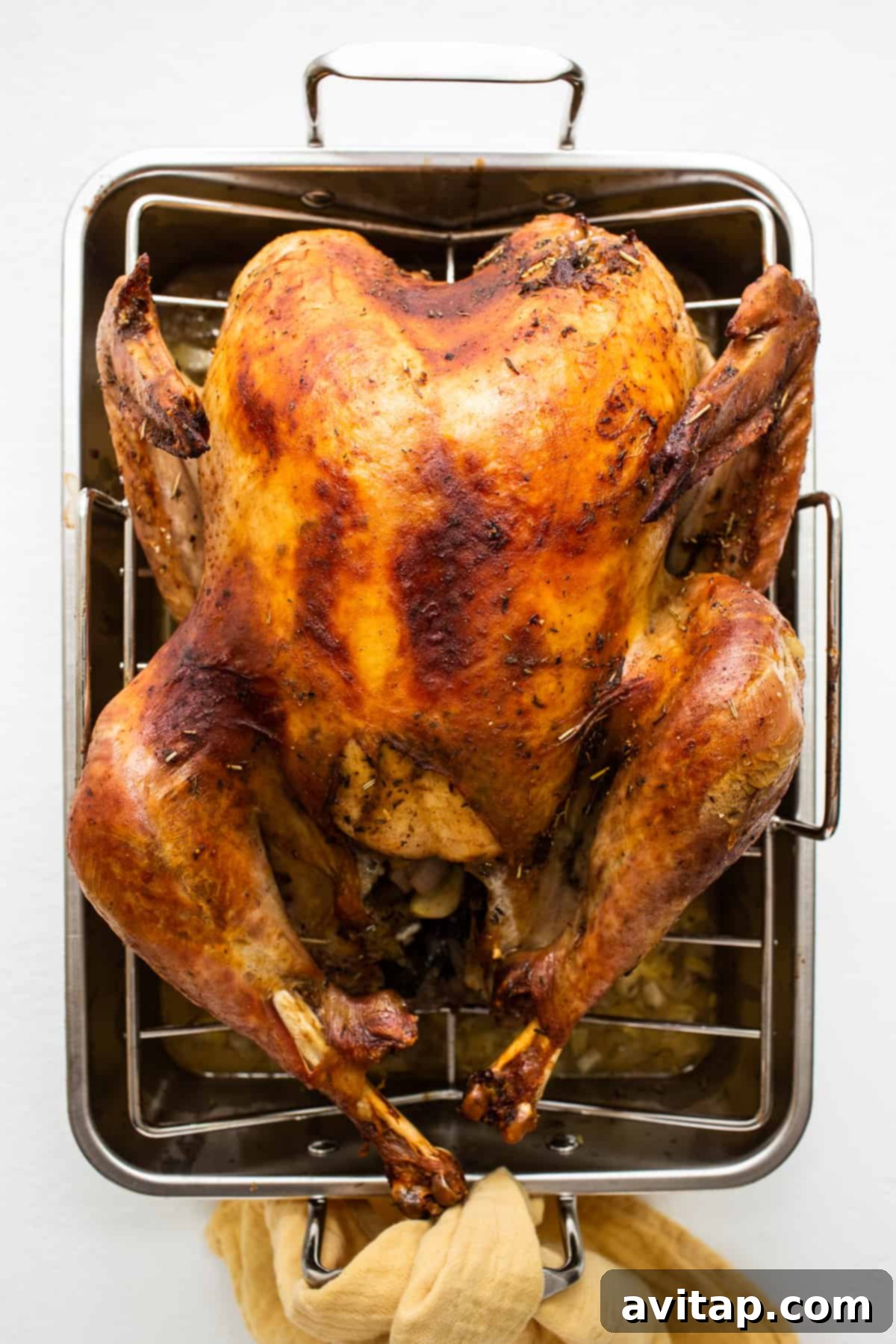
- Roast the turkey: Carefully place the turkey into the preheated oven. Roast for 3-3.5 hours (approximately 13 minutes per pound) or until the internal temperature reaches 165ºF in the thickest part of the turkey (without touching bone). Make sure to baste the turkey with the pan drippings every hour. If the skin starts to brown too much in the final hour, loosely tent aluminum foil over the top to prevent burning.
- Remove the turkey from the oven once the internal temperature reads 165ºF. Allow the turkey to rest, uncovered, for 20 minutes before carving. This resting period is vital for the juices to redistribute, ensuring a tender and moist turkey.
- Carve the turkey and serve with your favorite gravy and holiday side dishes. Enjoy your perfectly roasted Thanksgiving turkey!
Tips & Notes
- Brining the turkey is optional but highly recommended for a juicy and flavorful result. If you prefer, a dry brine can also be used.
- The actual roasting time will depend on the size of your turkey. A good guideline is 13 minutes per pound. Always rely on a meat thermometer to confirm doneness.
- We highly recommend using our homemade turkey dry rub for superior flavor. However, a quality store-bought poultry seasoning can be used as an alternative.
- Use a sturdy roasting pan with a wire rack to elevate the turkey, allowing for even cooking and collection of drippings.
- Don’t forget to serve your magnificent turkey with a rich, homemade turkey gravy, made from the delicious pan drippings.
Watch Our Turkey Roasting Video Guide
For a visual guide to making the BEST Thanksgiving Turkey, watch our video tutorial here. You’ll see every step of the process, from brining to carving!
Nutrition
Calories: 687 kcal,
Carbohydrates: 2 g,
Protein: 99 g,
Fat: 30 g,
Fiber: 0.4 g,
Sugar: 1 g
Nutrition information is automatically calculated and should only be used as an approximation.
Don’t forget to tag your culinary creations on social media with the hashtag #fitfoodiefinds – we’d love to see your delicious results!
Photography Credit: All stunning photos featured in this post were expertly captured by Ashley McGlaughlin from The Edible Perspective.