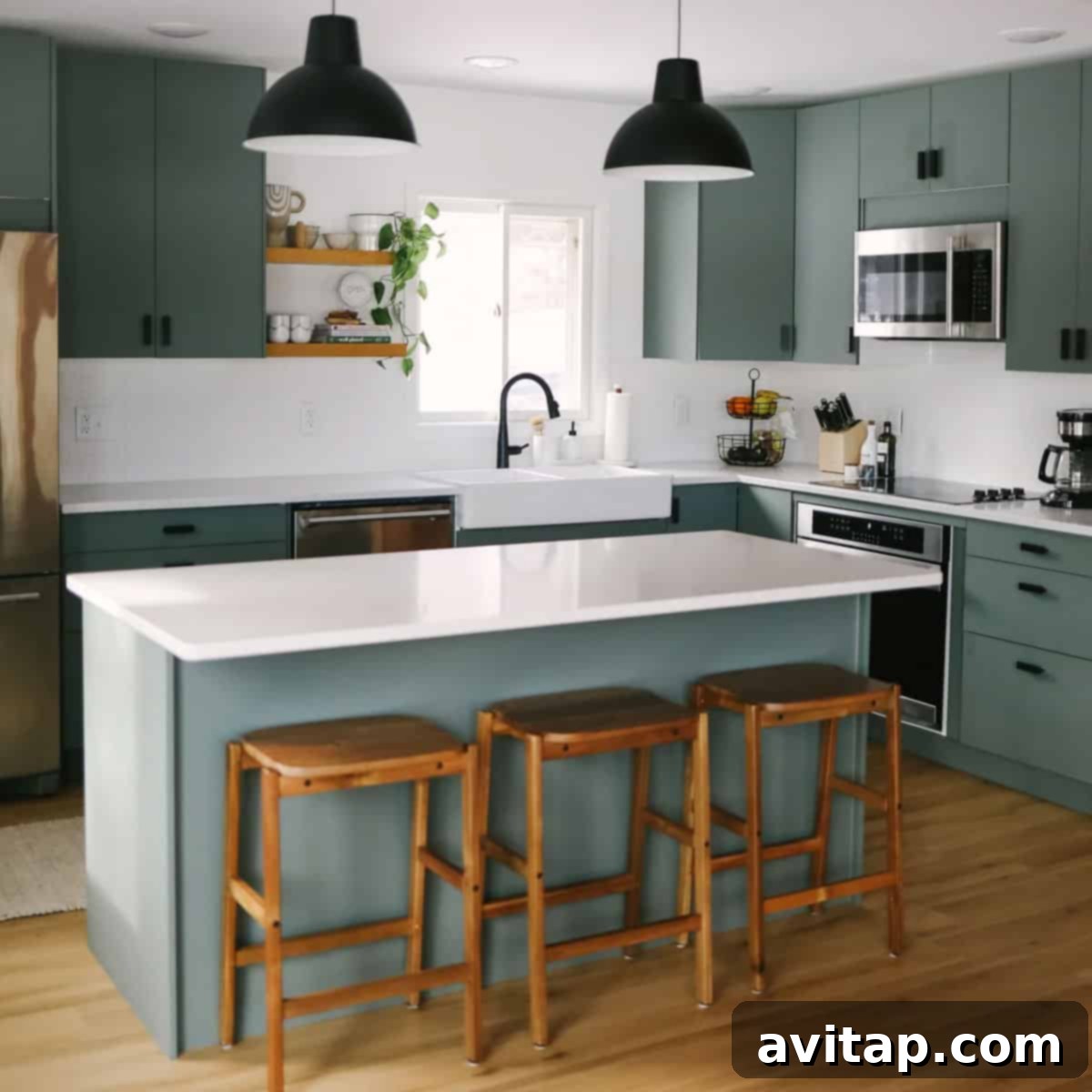
Welcome to an exciting home transformation! We’re thrilled to finally pull back the curtain on our Scandinavian Modern cabin kitchen reveal. This journey has been a labor of love, blending crisp modern aesthetics with the warm, rustic charm of our Wisconsin cabin. In this comprehensive post, we’ll walk you through every step of our kitchen renovation process, sharing our candid experience with an IKEA kitchen system, our design inspirations, and a detailed budget breakdown.
Get ready to say hello to our brand-new Scandinavian Modern Wisconsin cabin kitchen! My husband and I poured our hearts into this renovation, proving that a stunning kitchen doesn’t have to break the bank. We couldn’t be more delighted with how this IKEA kitchen project materialized, creating a functional, stylish, and incredibly inviting space. We’re eager to delve into all the intricate details of this renovation, from cabinet choices to countertop challenges, offering insights that might help you on your own kitchen remodeling journey.
The Scandi-Mod Design Philosophy: Blending Modernity with Rustic Charm
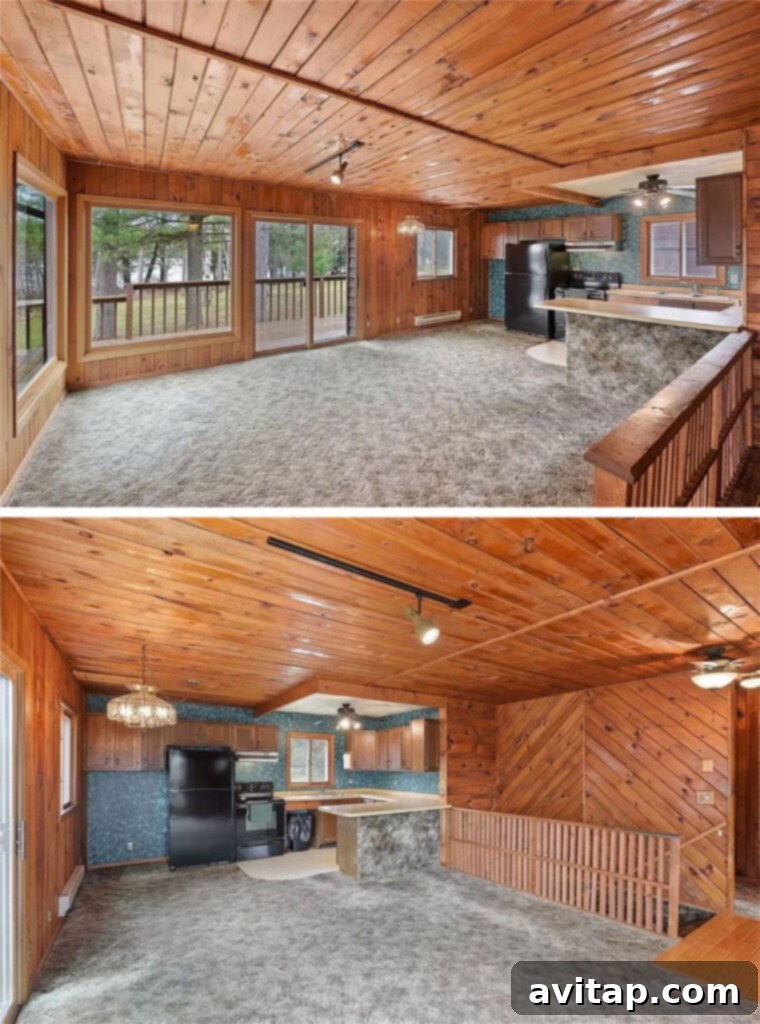
Our cabin exudes an overall Scandinavian-modern vibe, delicately intertwined with its inherent rustic character. When we acquired this home after 30 years from its previous owners, we were captivated by their commitment to preserving the natural wood paneling throughout the house. However, the property presented certain quirks—namely, an abundance of carpet, including a rather surprising patch on the kitchen island, covering approximately 3,000 square feet! The original kitchen was also clearly past its prime, desperately needing a modern refresh and some tender loving care.
Our primary objective for this renovation was clear: to infuse the home with contemporary Scandinavian modern influences while meticulously safeguarding the cabin’s authentic charm, particularly its beautiful wood paneling. This delicate balance guided every design decision we made, ensuring the new kitchen felt both fresh and deeply rooted in the cabin’s history. We aimed for a cohesive look that respected the past while embracing the present.
With this vision firmly in mind, we consciously decided to retain the striking wood paneling on both the walls and ceiling. This preserved an essential element of the cabin’s rustic soul. To complement this, we introduced a pristine white backsplash and finished the walls with a crisp white paint, creating a bright and airy contrast. Instead of defaulting to white or natural wood cabinets, which might have felt too stark or redundant, we opted for a sophisticated green/grey hue. This specific color choice was crucial, as it pairs beautifully and harmoniously with the existing wood paneling, achieving that perfect blend of modern Scandinavian simplicity and rustic warmth we desired.
A Detailed Look at Our Kitchen Materials
The vast majority of materials for this exciting kitchen renovation project were sourced from IKEA, aligning perfectly with our budget-conscious approach. Only a few select items were acquired elsewhere. Below, you’ll find an in-depth look at each component, complete with links and our honest opinions on the selection and installation process. We hope this breakdown provides valuable insights for your own renovation endeavors!
Cabinets & Hardware: The IKEA Advantage
Ah, the joys of renovating during a global pandemic! COVID-19 certainly introduced its share of challenges, particularly in the form of shipping delays. When we began sourcing cabinets, our priorities were a strict budget and finding a supplier who could navigate these unpredictable times with reasonable delivery. We thoroughly explored options from Menards, BOXI, and IKEA. After careful consideration and pricing comparisons, IKEA emerged as the clear winner. They offered the most competitive prices—by a significant margin—and promised the fastest delivery times, which, as we later learned, came with its own set of caveats.
One key difference with IKEA cabinets is that they arrive unassembled. This makes it a true DIY project, requiring you to painstakingly put each unit together and then install them yourself. In contrast, both Menards and BOXI provided pre-assembled cabinets, a convenience that inevitably drove up their overall cost. For us, the savings offered by IKEA made the assembly effort worthwhile, or at least, justified the cost of hiring help.
We ultimately decided on IKEA’s BODARP Matte Gray/Green Cabinets. This choice was driven by several factors: I absolutely adored the sleek, flat-panel Scandinavian aesthetic, which perfectly complemented our design vision. Furthermore, these cabinets delivered the green kitchen I had always envisioned without the added expense and effort of painting, saving both time and money. The unique gray/green hue offered a sophisticated yet understated elegance that tied the entire room together.
I am genuinely thrilled with how the gray/green color interacts with the warm tones of our white oak LVP flooring and the exquisite original woodworking of the cabin. A pure white cabinet might have appeared too stark or overly modern, potentially clashing with the cabin’s rustic foundation. This subtle, earthy tone strikes the perfect balance, allowing the natural wood elements to shine while providing a contemporary anchor for the space. It truly feels like the ideal color choice for our unique cabin kitchen.
Hardware Choices
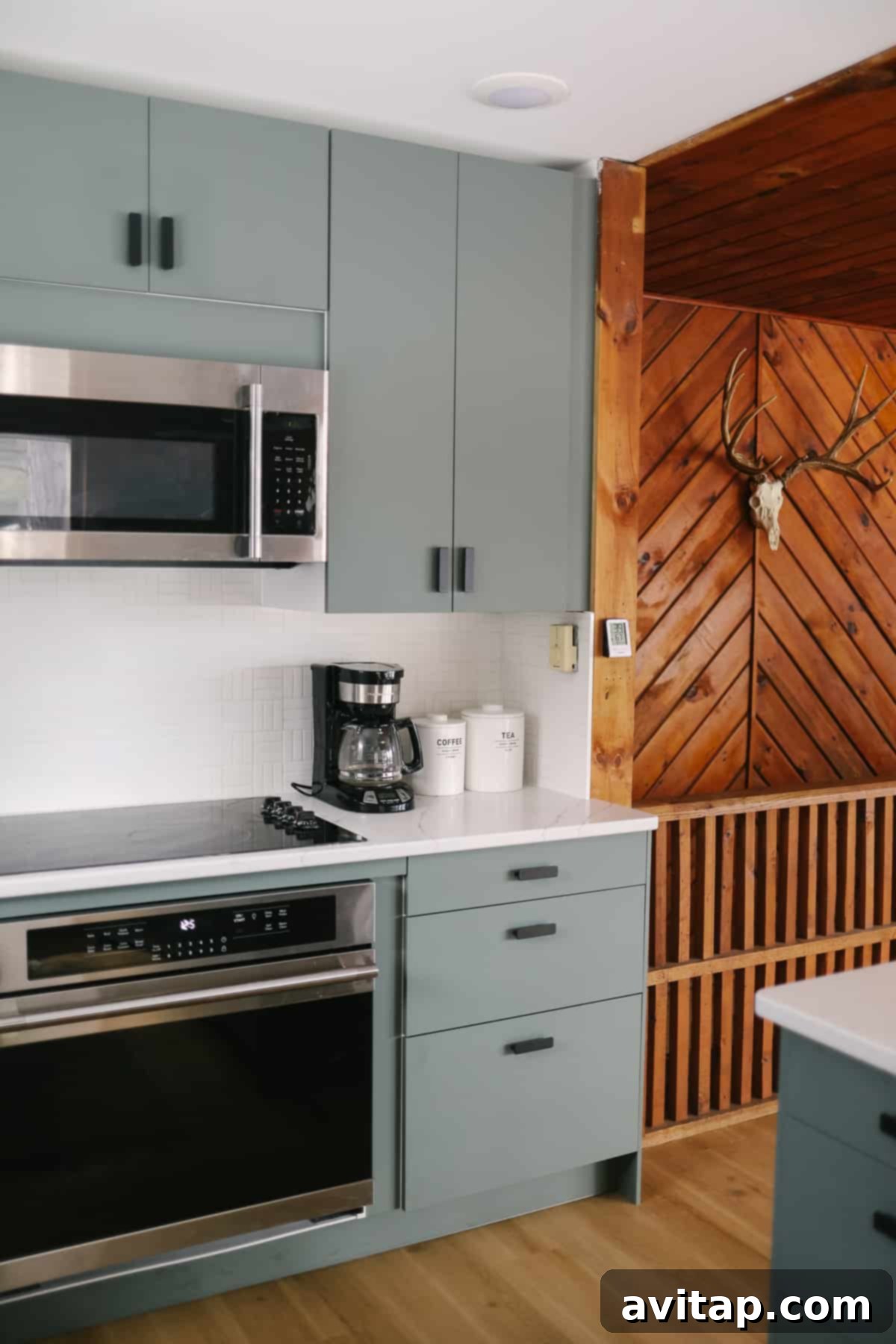
Continuing our IKEA trend, the hardware we selected for these cabinets also came from the Swedish retailer. At an astonishing $4 apiece, these Hackas matte black cabinet pulls represent an incredible value. Beyond their unbeatable price, they offer a clean, modern aesthetic that perfectly complements the flat-panel BODARP cabinets, adding a touch of contemporary sophistication to the overall Scandinavian design. Their understated elegance enhances the functionality without drawing too much attention, letting the cabinet color and design speak for themselves.
Appliances: The IKEA One-Stop-Shop
One of the aspects we truly appreciate about IKEA is its comprehensive offering—it genuinely functions as a one-stop-shop for kitchen renovations. Their kitchen systems are intelligently designed to accommodate standard-sized appliances, which greatly simplified our planning process. We ultimately made the decision to purchase our appliances directly from IKEA for a combination of compelling reasons, primarily centered around convenience and cost-effectiveness.
- Timing: During a period of widespread supply chain disruptions, IKEA’s quoted shipping time of just four weeks for appliances was exceptionally appealing and a major factor in our decision.
- Cost: It’s genuinely challenging to beat IKEA’s competitive pricing on appliances. For a cabin kitchen where luxury wasn’t the top priority, their prices offered incredible value.
- Convenience: The ability to order every component—cabinets, hardware, and appliances—all at once from a single vendor was a significant convenience. This eliminated the hassle of coordinating multiple deliveries and navigating various retail outlets.
- Sales & Promotions: Fortuitously, at the time of our purchase, IKEA was running a 20% off friends and family sale. This substantial discount further reduced the overall cost, making the deal even more attractive.
It’s important to clarify that these are by no means high-end, luxury appliances. However, for our cabin kitchen, where affordability and functionality were key, they were the perfect fit. While we secured an excellent deal on these appliances, I must share one notable caveat: the incredibly persistent, sticky plastic protector. Each appliance arrived encased in a plastic film designed for protection, which, in theory, is great. In practice, manually peeling off this tenacious, adhesive-laden plastic proved to be an arduous and frustrating task, particularly when attempting to remove it from tight crevices and seams. This seemingly minor detail became a significant headache.
This might sound like a trivial complaint, but to this day, remnants of that stubborn plastic film cling to every appliance we purchased. It requires painstaking precision, often with an Exacto-knife, to fully remove, a task we simply haven’t had the time or patience to complete for every last piece. It’s a small but irritating design flaw that detracts slightly from an otherwise positive experience.
Our IKEA Appliances
For those interested in the specifics, here are the links to each of the IKEA appliances we integrated into our Scandinavian Modern cabin kitchen:
- Refrigerator: A sleek French door model, offering ample storage and a modern look.
- Microwave: An over-the-range unit with true convection, blending convenience with versatile cooking options.
- Dishwasher: A built-in model in black stainless steel, providing quiet operation and efficient cleaning.
- Wall Oven: A self-cleaning wall oven with true convection, perfect for all our baking and roasting needs.
- Cooktop: A black glass-ceramic cooktop, offering a sleek surface and precise temperature control.
Sink/Faucet: Functionality Meets Style
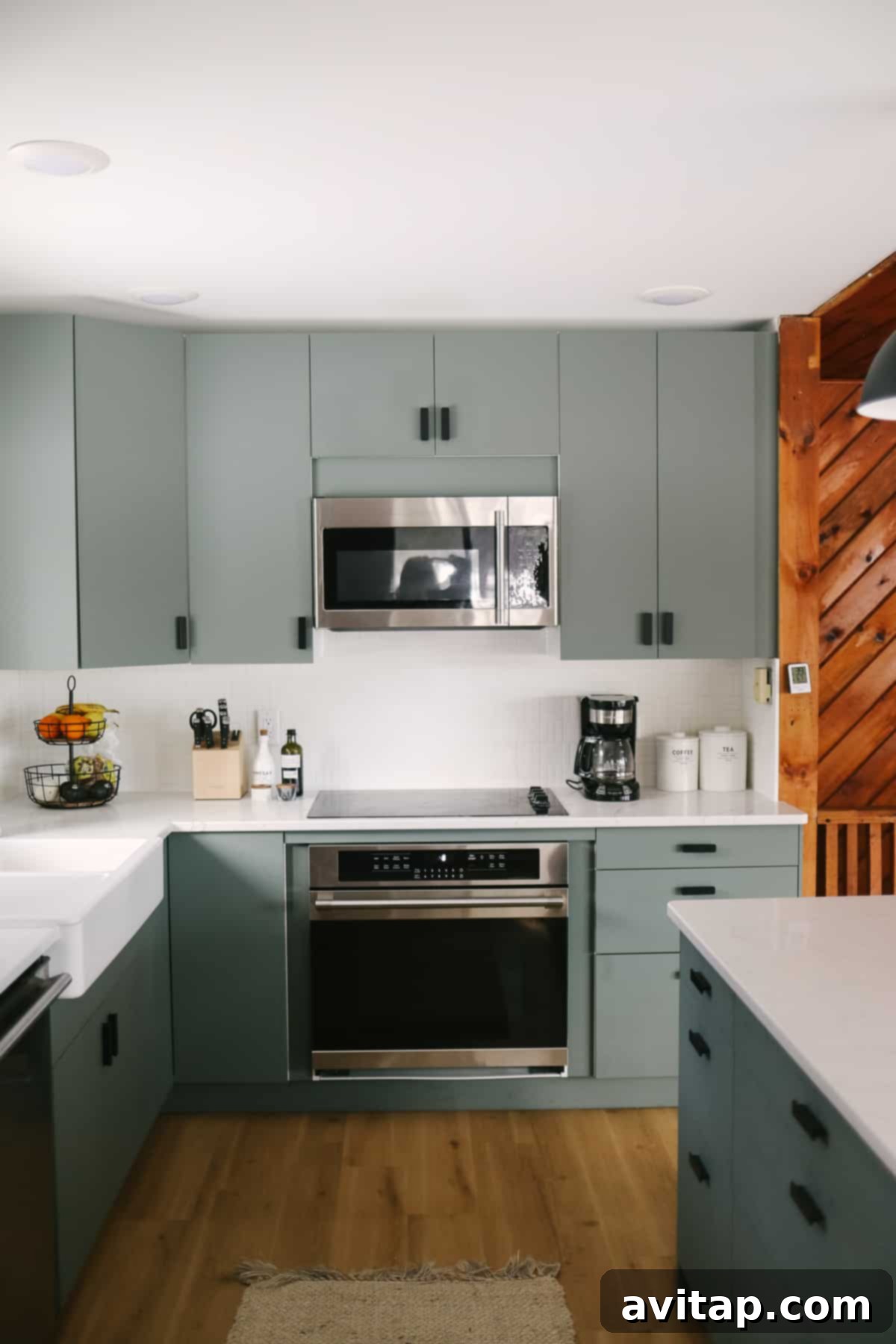
One of my long-held kitchen dreams was to incorporate a classic farmhouse sink, and I’m thrilled to report that I finally achieved it in our cabin kitchen! IKEA made this particular choice surprisingly straightforward, primarily because they offer a curated selection of just a few excellent options. We ultimately opted for the Havsen apron-front double-bowl sink, and I absolutely adore its dual-basin design, which offers excellent functionality for washing and rinsing.
It’s only been a few months since the installation, but the Havsen sink has performed beautifully, proving to be a durable and aesthetically pleasing centerpiece for our kitchen. Its bright white finish provides a striking contrast to the gray/green cabinets, reinforcing the clean, Scandinavian aesthetic.
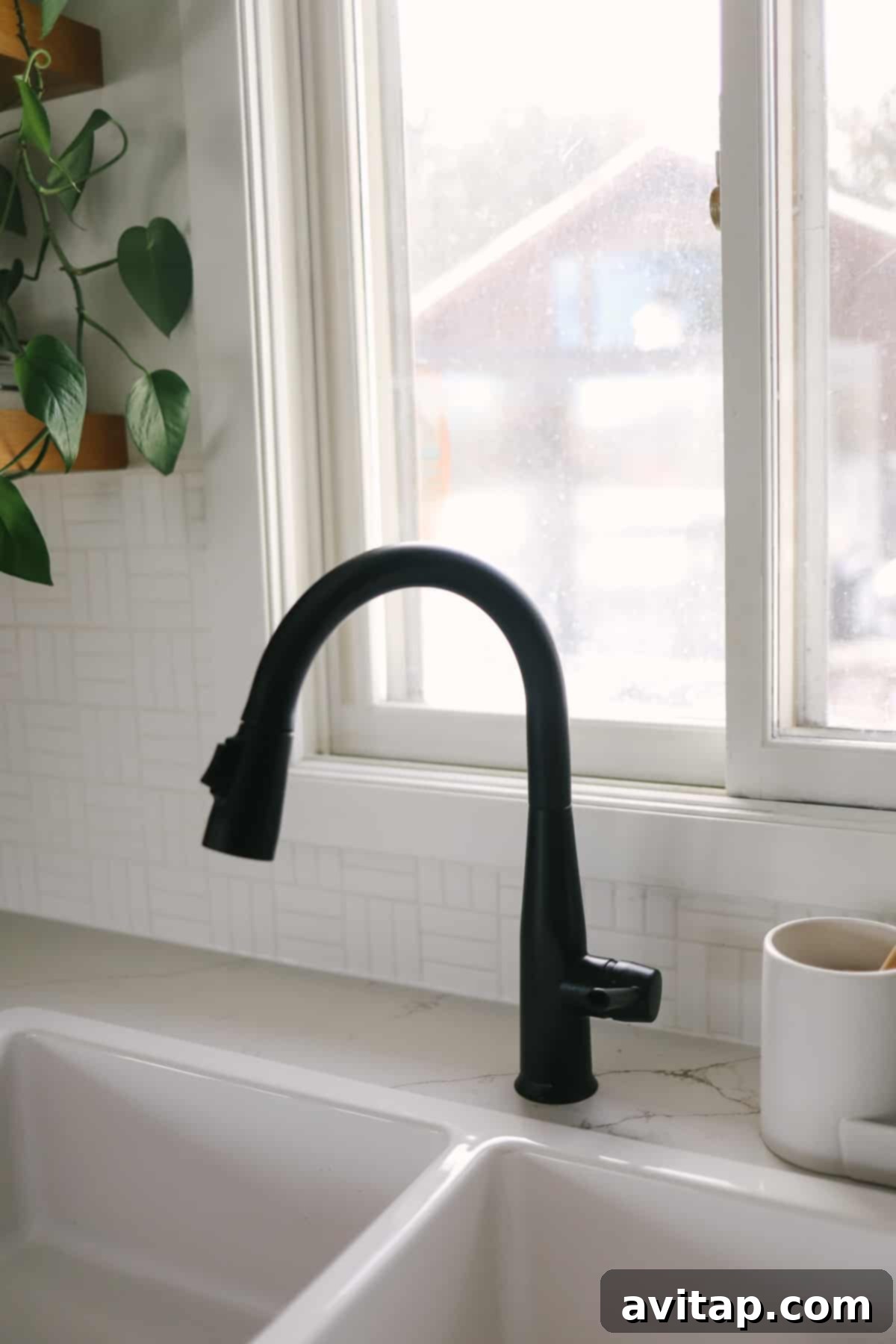
As for the faucet, our initial purchase was also from IKEA. However, after some consideration and a desire to elevate both the aesthetics and the overall quality, we decided to upgrade. The current faucet gracing our sink is the elegant Delta Essa Faucet in Matte Black. This choice brought a touch of sophisticated modernism and improved durability, perfectly complementing the darker hardware accents and providing a striking visual anchor against the white sink and backsplash.
Lighting: Affordable Pendant Lights and Essential Recessed Lighting
Can you believe it? These stylish pendant lights cost us an incredible $42 – TOTAL! That’s right, people of the internet, these beauties were only $21 apiece at IKEA, and it’s genuinely hard to find a better deal anywhere. I knew I wanted sleek black pendants to contrast with the lighter elements and complement our matte black hardware, and when I spotted these at IKEA, passing up such an amazing value was simply not an option. They perfectly encapsulate the minimalist yet functional aesthetic central to Scandinavian design.
My only minor wish regarding these pendants is that their interior would match the matte black finish of the exterior, rather than being white. However, for a mere $42 for both, this is a compromise I am more than willing to live with. Their overall impact on the kitchen’s aesthetic is significant, providing focused lighting over the island and adding a touch of modern flair.
It’s important to note that in addition to these two striking pendant lights, we strategically installed four recessed lights to provide essential ambient and task lighting throughout the kitchen. And let me tell you, the difference they make is truly remarkable. While the electrical work represented one of our more significant line items in the budget (as you’ll see in the breakdown below), the enhanced functionality, brightness, and inviting atmosphere they create were undoubtedly worth every penny. Good lighting is an often-underestimated element in kitchen design, and it genuinely transforms the space.
Floating Shelves: A Hunt for the Perfect White Oak
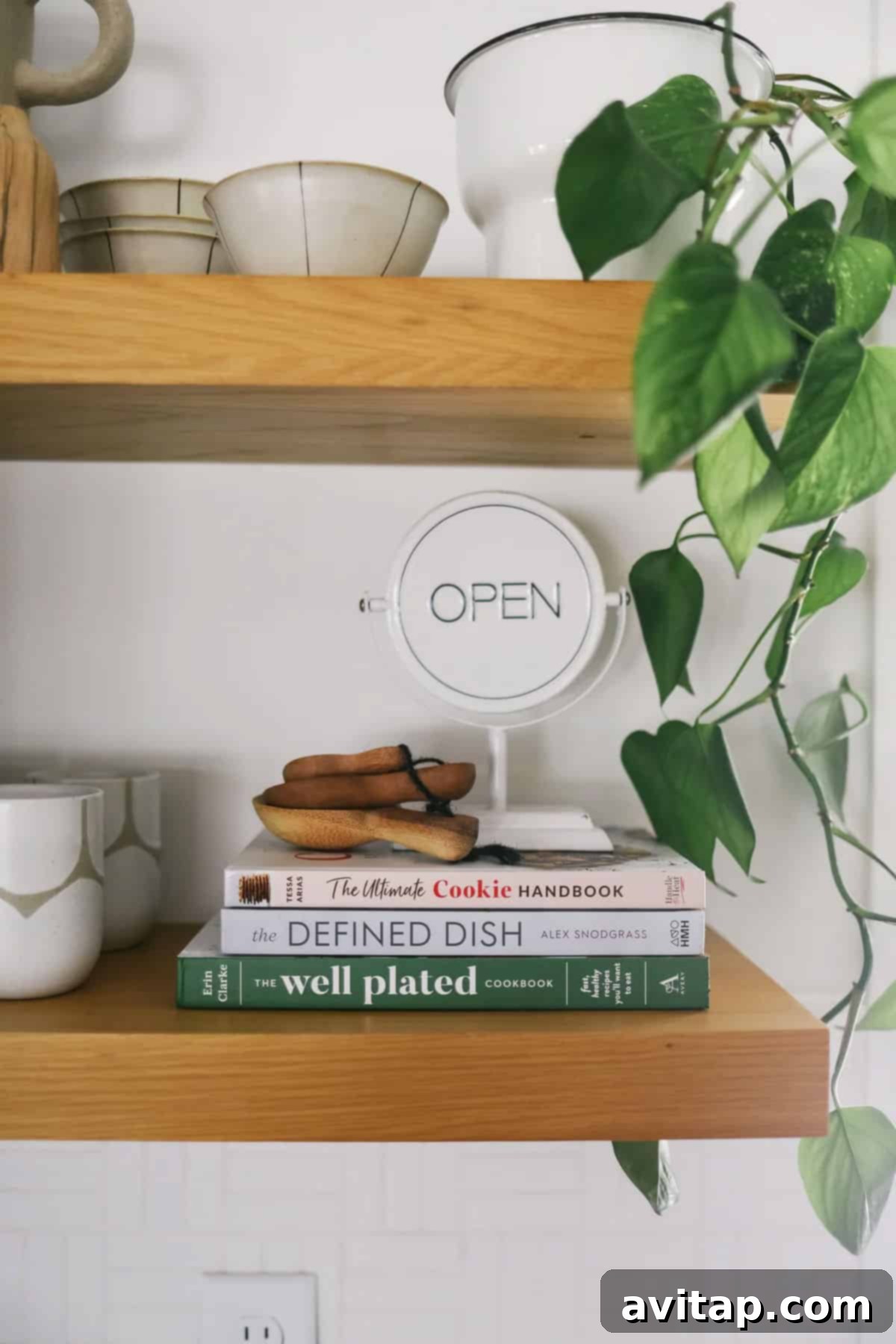
Who knew that finding the perfect floating shelves could be such an odyssey? This particular element proved to be one of the most challenging items to source for our kitchen. I had a very specific vision: I needed shelves of a precise size and was committed to finding them in genuine white oak to complement our flooring and the overall Scandi-Mod aesthetic. After several frustrating purchases and returns, I finally stumbled upon the floating shelves of my dreams at Rejuvenation.
As these are authentic 2-inch thick white oak shelves, they admittedly stand out as one of the more expensive individual items in the entire kitchen budget. However, their quality, durability, and the significant aesthetic impact they have on the space made them absolutely worth the investment. They provide open storage, allowing us to display curated items and break up the monotony of upper cabinetry, reinforcing the airy and minimalist Scandinavian design principle.
Floating Shelf Specifications
If you’re as enamored with these white oak floating shelves as we are, here are the exact specifications of the ones we chose from Rejuvenation:
- Thickness: 2 inches, providing a substantial and high-quality feel.
- Width: 24 inches, perfectly sized for our designated wall space.
- Depth: 10 inches, offering ample space for dishes, decor, and other kitchen essentials.
Pro Tip for Installation: We strategically hung these shelves approximately 15 inches apart from each other. The lowest shelf was precisely aligned against the bottom of our upper cabinets, resting perfectly on top of our beautifully installed tile backsplash. This careful placement ensures both visual harmony and practical accessibility, maximizing their utility and aesthetic appeal.
Countertops: The Biggest Investment & A Learning Experience
Without a doubt, the countertops represented the single most expensive line item in our entire kitchen budget. At the time we were purchasing our IKEA kitchen components, IKEA was not selling or installing their own countertops. While I’m not entirely certain of the precise reason, I strongly suspect it was due to ongoing COVID-19 related supply chain disruptions and logistical challenges. This unexpected turn meant we had to look beyond IKEA for this crucial element.
Given this situation, we decided to source our countertops from a reputable local vendor, Trend Stone Surfaces, based out of Eau Claire, WI. Opting for quartz was definitely an upgrade in terms of cost compared to more basic options, but we firmly believe it’s a worthwhile long-term investment due to its exceptional durability, low maintenance, and timeless aesthetic. Quartz is renowned for its resilience against scratches, stains, and heat, making it ideal for a frequently used cabin kitchen.
After much deliberation, I discovered and instantly fell in love with a particular product called Aldino Giallo Quartz. What truly captivated me about this material were the subtle yet striking brown and gold hues intricately woven into its delicate veining, all set against a base of bright white. This combination offered both warmth and brightness, perfectly complementing our green/grey cabinets and the rustic wood elements of the cabin, while maintaining the clean lines of our Scandinavian design.
My Experience with Trend Stone Surfaces: A Candid Review
While we absolutely adore the Aldino Giallo Quartz, our experience working with Trend Stone Surfaces did encounter a significant hiccup. The initial team dispatched to measure our kitchen unfortunately did not perform their job with the required precision. Consequently, both the island and the L-shaped perimeter countertops were measured incorrectly. This critical error became glaringly apparent during the installation phase when nothing fit as it should have.
The timing of this setback couldn’t have been worse: the original installation was scheduled for the day before Thanksgiving. This meant we were left with an entirely unusable kitchen for our holiday celebrations, a truly frustrating and inconvenient situation. Trend Stone Surfaces did leave the incorrectly cut counters installed over Thanksgiving, allowing us some semblance of a surface, but we were then forced to wait an additional two weeks for them to re-cut and properly install the corrected pieces. This delay also necessitated the inconvenient uninstalling and reinstalling of both our plumbing and appliance electricity, adding unforeseen complexities and disruptions to our renovation timeline. It was a stressful period, serving as a valuable lesson in the importance of meticulous measurements and contractor oversight.
Tile: A Unique Lattice Weave Backsplash
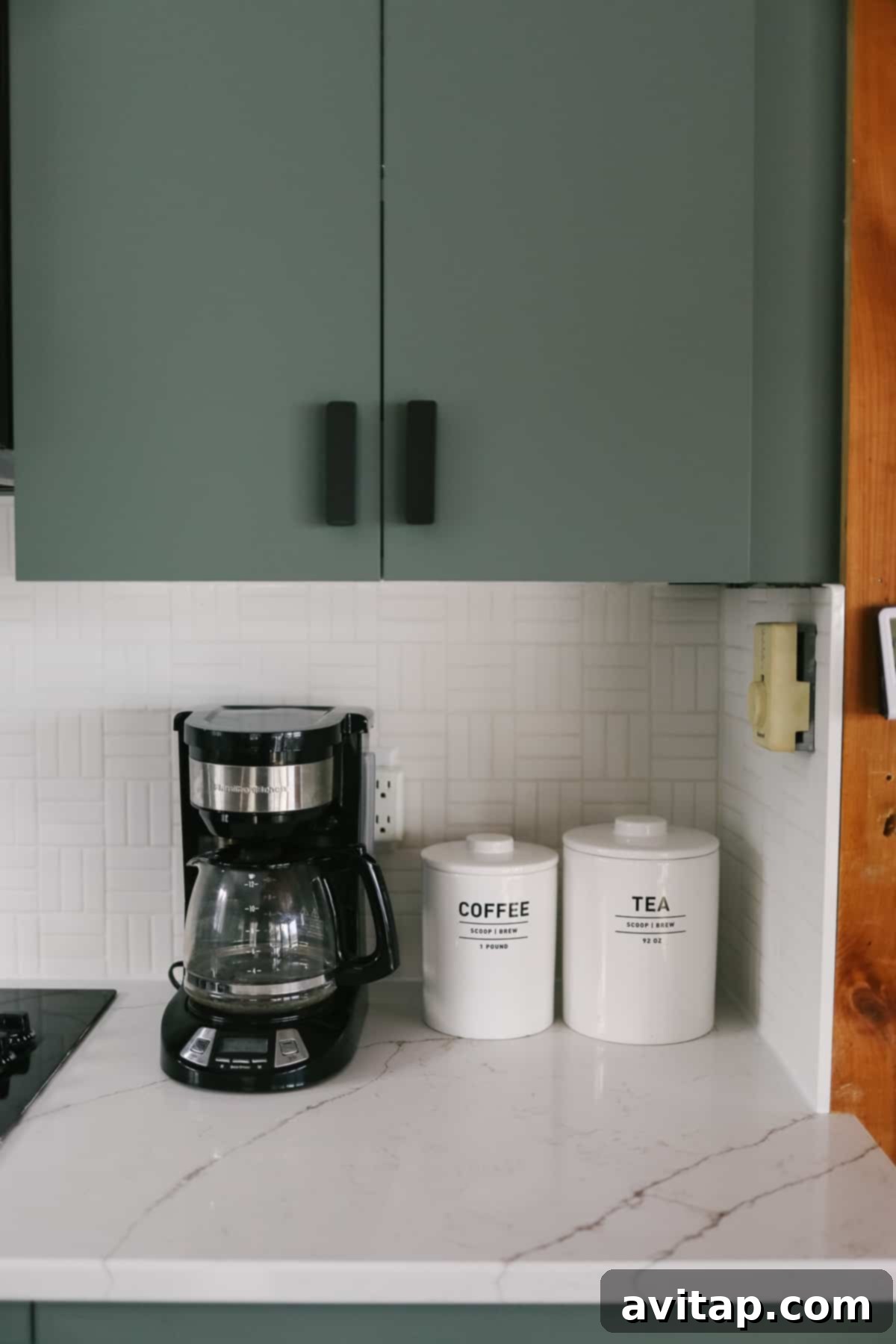
From the outset, I was determined to keep the backsplash design simple and predominantly white, ensuring it provided a clean, bright backdrop that wouldn’t compete with the other kitchen elements. My initial inclination was to use a thinner subway tile, installed vertically, to add a contemporary vertical line to the space. However, during my search, I stumbled upon this exquisite lattice weave pattern from Daltile, and it was love at first sight. The intricate yet subtle pattern offered a unique texture and visual interest without overwhelming the clean aesthetic.
This beautiful tile proved to be quite inexpensive, offering fantastic value for its sophisticated look. My only regret is that I wish I had purchased enough to extend the tiling all the way up to the ceiling, which would have created an even more dramatic and cohesive look. Unfortunately, I was short by just a small margin, so we ultimately decided to tile only the backsplash area, which still looks fantastic and perfectly frames the kitchen. The lattice weave adds a delicate layer of detail that elevates the overall design.
Grout Choice: For the grout, we opted for a light grey color. This choice provides a subtle contrast that highlights the beautiful lattice pattern of the tile without being too stark. However, I believe a pure white grout would also have looked incredibly nice, offering a more seamless and minimalist appearance.
Other Decor and Furnishings: Completing the Look
Beyond the core kitchen elements, several other carefully chosen pieces helped to complete our Scandinavian Modern cabin aesthetic, adding personality and functionality to the adjacent dining area and overall space:
- European Mule Deer Mount: I have a particular fondness for faux antlers, and I couldn’t be more pleased with the European mount we discovered from Cast Horn Designs. This piece introduces a charming touch of rustic, cabin-appropriate decor without the ethical considerations of real taxidermy, perfectly balancing our modern and natural elements.
- Stools: The stylish stools featured in these photographs were a fantastic find from West Elm during the summer of 2021. I managed to snag them during an incredible sale—specifically, two stools for just $70! Regrettably, they are no longer available in their current inventory. They provided comfortable seating at the island, blending seamlessly with the contemporary design.
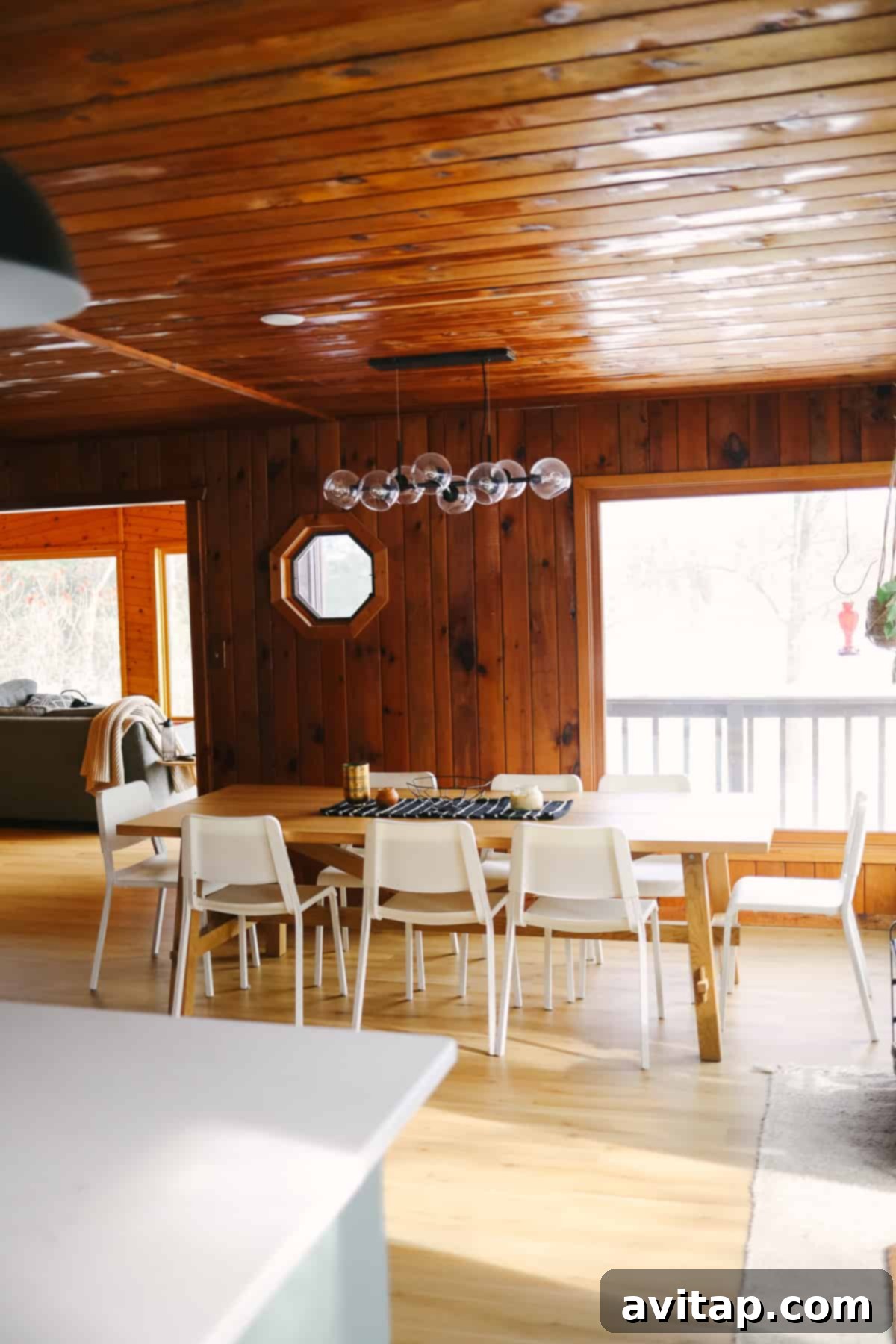
- Dining Light Fixture: The striking light fixture illuminating our dining table was also a West Elm purchase. It’s a versatile piece, available in both matte black and gold finishes, allowing for customization to suit various interior palettes. Our choice in matte black ties into the kitchen hardware and pendant lights, creating visual continuity.
- Dining Table: For our dining area, we needed a table that could comfortably accommodate guests. We selected the Mockelby table from IKEA, which impressively seats 10 people. For an IKEA piece, it boasts remarkably great quality and was decently priced at $699, offering exceptional value for its size and solid oak construction. Its natural wood finish complements the cabin’s inherent warmth.
- Dining Chairs: Given that this is our cabin, we aimed for practical and affordable seating options for the dining table without sacrificing style. We purchased 10 IKEA Janinge chairs at a budget-friendly price of $65 each. Their clean, minimalist white design perfectly aligns with the Scandinavian aesthetic, providing comfortable and easy-to-clean seating for large gatherings.
IKEA Kitchen Budget – The Full Breakdown
One of our primary goals for this Scandinavian Modern cabin kitchen renovation was to achieve a high-impact transformation without overspending. We’re excited to share a transparent breakdown of our IKEA kitchen budget, categorizing costs by materials and labor. It’s important to note that this budget does not include two larger household expenses: the flooring, which was replaced throughout the entire house, and the ceiling drywall, which was a separate project. This breakdown focuses purely on the kitchen-specific expenses.
Materials Cost
- Cabinets (IKEA BODARP): $5,500 – The core of our kitchen, offering great value for their modern aesthetic.
- Appliances (IKEA): $4,500 – A cost-effective suite of appliances chosen for convenience and budget.
- Hardware (IKEA Hackas Pulls): $150 – An incredibly affordable yet stylish choice for cabinet pulls.
- Sink/Faucet (IKEA Havsen & Delta Essa): $350 – Combining an IKEA sink with an upgraded Delta faucet for aesthetics.
- Pendant Lights (IKEA): $42 – An unbeatable deal for stylish modern lighting.
- Countertops (Trend Stone Surfaces Quartz): $6,000 – The most significant material investment, sourced locally due to IKEA availability.
- Tile (Daltile Lattice Weave): $270 – An affordable and unique backsplash choice.
Total Cost of Materials: $16,820 – Demonstrating how strategic IKEA purchases can keep material costs manageable, even with a few splurges.
Labor Cost
- Demo & Cabinet Installation: $3,500 – Professional help for dismantling the old kitchen and assembling/installing IKEA cabinets.
- Appliance Installation: $560 – Ensuring all new appliances were correctly and safely hooked up.
- Plumbing: $400 – For sink, faucet, and dishwasher connections.
- Electric: $1,500 – Including installation of new recessed lights and adjustments for appliances, a crucial upgrade.
- Tile Installation: $1,500 – Expert installation of our lattice weave backsplash for a flawless finish.
Total Cost of Labor: $7,460 – An investment that ensured professional results and saved us considerable time and effort.
Total Project Cost: $24,280
It’s genuinely hard to believe that this entire Scandinavian Modern kitchen transformation came in at just under $25,000! What’s even more remarkable is the potential for further savings: if my husband, Mark, and I had undertaken all the labor ourselves, the project cost could have been nearly $7,500 less. We know many individuals possess incredible DIY skills and could have completed this kitchen for around $17,000.
However, we made a conscious decision from the very beginning to hire out the construction and installation phases. Our goal was to ensure a smoother, more efficient, and ultimately higher-quality process. While it added to the total cost, the peace of mind, professional finish, and saved time were invaluable to us, especially given the complexity of the project and the desire to enjoy our cabin sooner.
Pros & Cons of an IKEA Kitchen Renovation
Embarking on an IKEA kitchen renovation comes with its own unique set of advantages and disadvantages. Based on our comprehensive experience, here’s an honest breakdown of what you can expect:
Pro – Exceptional Design Services: One of the most invaluable aspects of undertaking an IKEA kitchen project is their complimentary design service. While you can certainly utilize their robust online planning tool to visualize your space, the true benefit lies in their in-store professional designers. By bringing your kitchen measurements, you can sit down with an expert who will help you meticulously design and order your entire kitchen. I personally visited twice, spending approximately two hours each session. This service was incredibly helpful, providing expert guidance, refining our layout, and ensuring all components were accounted for – and best of all, it was absolutely free.
Pro – Unbeatable Price Point: When it comes to affordability, IKEA’s kitchen prices are truly unmatched. Our total material cost for this project amounted to $16,820, and a significant portion of that—$6,000—was for the quartz countertops, which, as mentioned, were not purchased from IKEA. This means we essentially acquired almost an entire kitchen’s worth of materials for under $11,000 from IKEA itself. Many other cabinet suppliers quoted me prices close to or even exceeding our *total* material cost for just the cabinets alone. The ability to achieve a stylish and functional kitchen for such an accessible price is a major advantage.
Con – Significant Supply Chain Issues: Our experience with IKEA’s shipping and supply chain was, unfortunately, a major drawback. While I’m uncertain if this was entirely due to COVID-19, it was a profoundly frustrating aspect of the renovation. Our original delivery date was an impressively fast four weeks after placing the order. However, the order simply never arrived – with no prior warning email or phone call. After diligently tracking it down, the delivery was rescheduled for another four weeks later. When the order finally did arrive, only about three-quarters of the items were present.
I spent countless hours on the phone with customer service, navigating a labyrinth of calls and inquiries. Some missing products were in stock and shipped immediately, but I was instructed to “keep an eye on a handful of things” and “call the store every week” to check for restocks. One item, in particular, a corner base cabinet, became a critical bottleneck. As anyone familiar with kitchen renovations knows, all base cabinets must be installed before moving on to the next crucial step—countertop templating and installation. It ultimately took a frustrating three to four months to receive every component we needed, requiring immense persistence and continuous follow-up on our part. This protracted delay significantly impacted our project timeline.
Con – Pesky Plastic Covering on Appliances: As I previously mentioned, the sticky plastic protector on the IKEA appliances was a persistent source of irritation. The adhesive left behind a messy residue, particularly in the appliance crevices, making removal a painstaking and time-consuming process. Even now, weeks later, small bits of plastic remain stubbornly attached, requiring an Exacto-knife for precise removal. It’s a minor detail that, accumulated across several appliances, adds up to a surprising amount of frustration.
Con – The DIY Assembly Requirement: While we chose to hire out this aspect, a significant drawback of opting for an IKEA kitchen is the sheer volume of self-assembly required for all the cabinetry. The entire order arrives in what feels like a million boxes, each containing flat-packed components that need to be pieced together. This task is incredibly time-consuming and labor-intensive, demanding patience and a certain level of DIY proficiency. For us, taking on the entire assembly process ourselves was simply not feasible, underscoring the added cost if you plan to outsource this crucial step.
Before Photos: The Transformation Unveiled
No kitchen reveal would be truly complete without a dramatic set of before-and-after photos, offering a vivid testament to the transformation! I couldn’t possibly leave you hanging without showcasing the epic “before” images of our cabin kitchen. Prepare to be amazed (and perhaps a little amused) by the original state of affairs, including the generous application of carpet – yes, even in the kitchen! Enjoy the journey from dated to dazzling.