
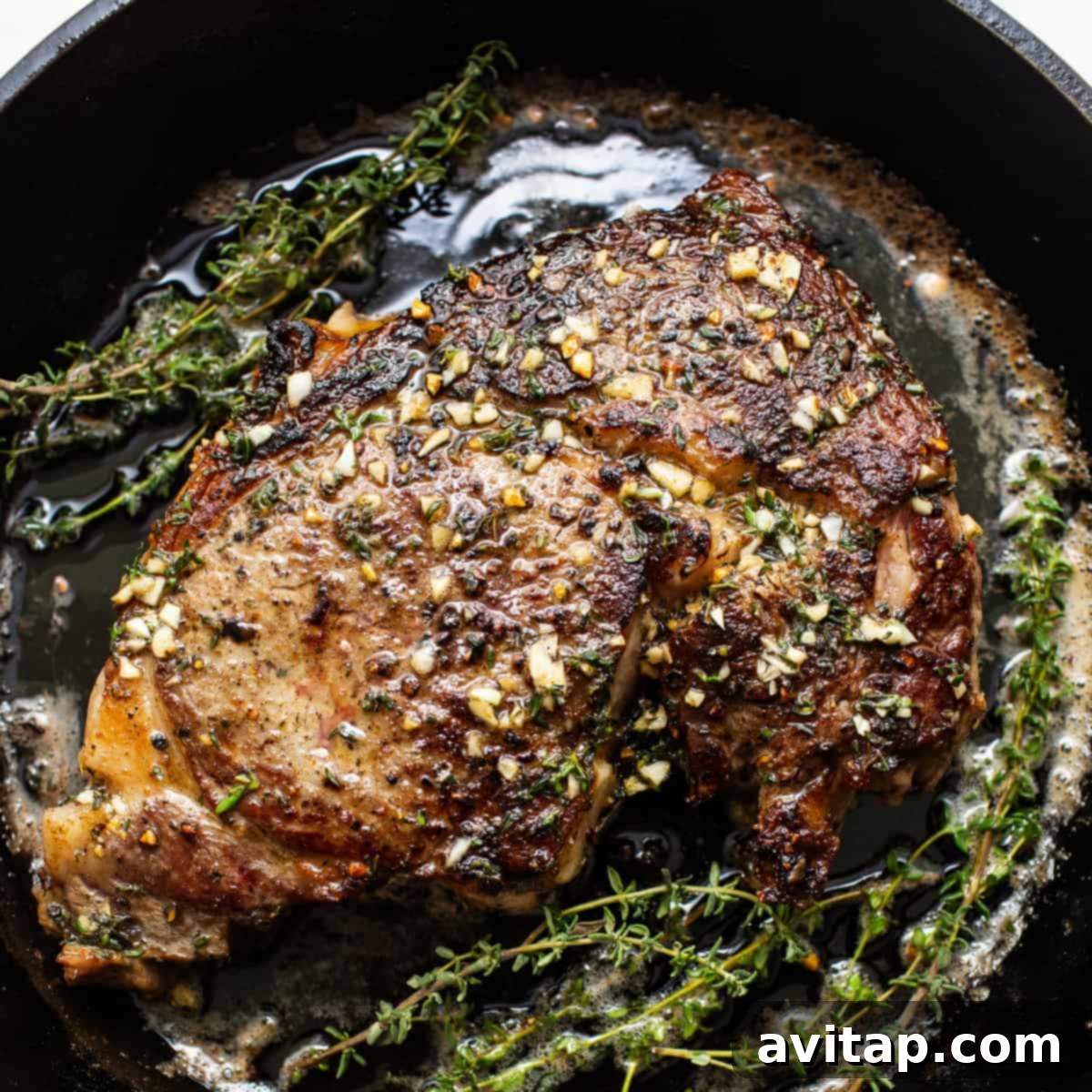
Perfect Cast Iron Steak Recipe: Achieve Restaurant-Quality Results at Home
Mastering the art of cooking steak in a cast iron skillet is a true game-changer, elevating a simple meal into an extraordinary culinary experience. This comprehensive guide will show you how to prepare a thick, juicy, and incredibly flavorful steak with a gorgeous, deeply browned crust, right in your own kitchen. Our signature cast iron steak recipe features succulent ribeye, expertly seasoned with a blend of homemade spices, then perfectly seared and basted in a fragrant garlic herb butter. Get ready to transform your home cooking and impress your palate!
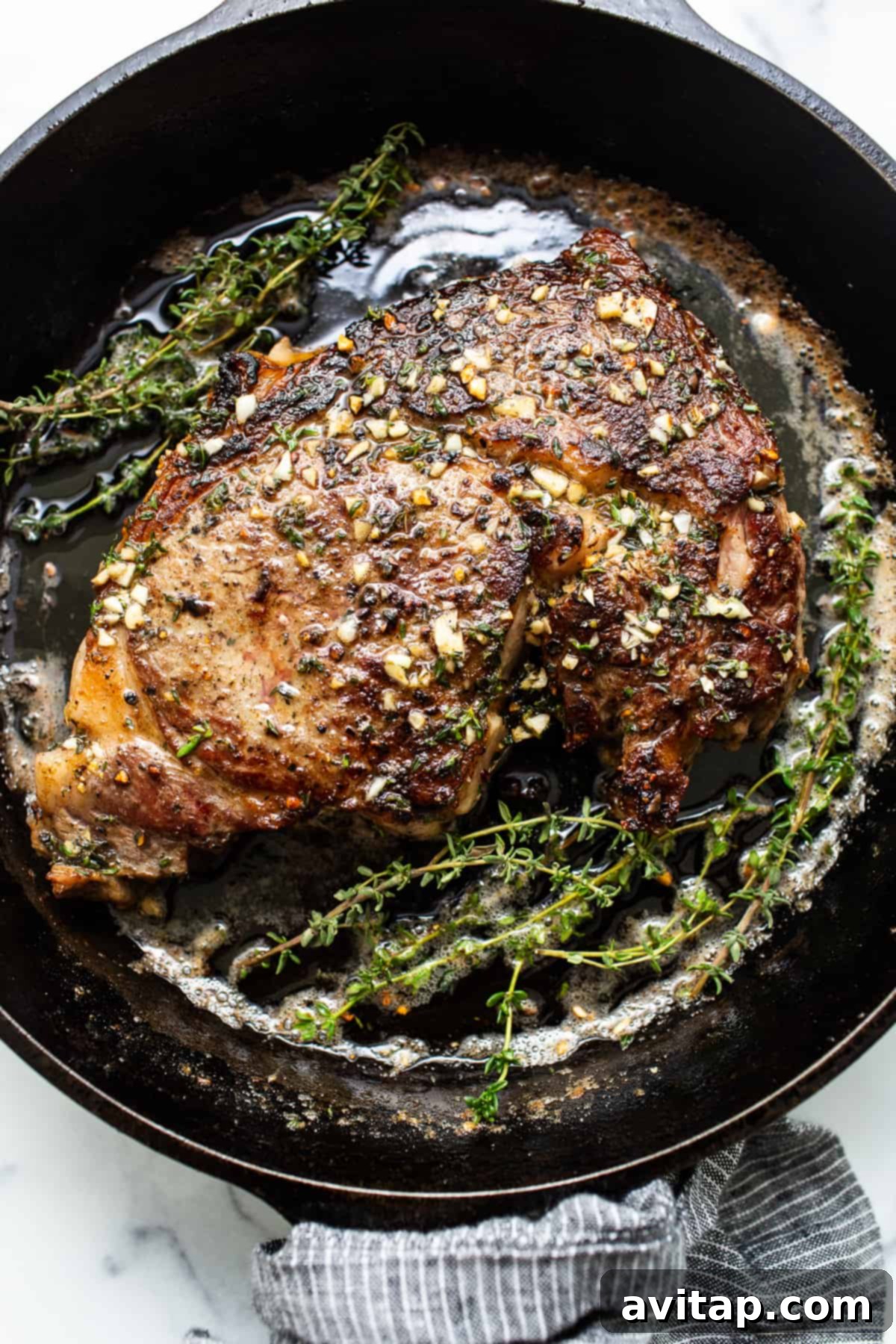
Why Cook Steak in a Cast Iron Skillet? The Secret to Perfection
If you’re not already cooking your steaks in a cast iron skillet, you’re missing out on the easiest path to a restaurant-quality meal. This method isn’t just a trend; it’s a time-honored technique cherished by chefs and home cooks alike for its unparalleled ability to create a truly spectacular steak. But what makes cast iron the superior choice?
Unrivaled Heat Retention and Even Cooking
Unlike a standard pan or even a grill, a cast iron skillet boasts exceptional heat retention. Once hot, it stays hot, which is absolutely crucial for achieving that coveted, deep brown crust without overcooking the interior. This consistent, high heat allows for the Maillard reaction—the chemical process responsible for the rich, complex flavors and aromas in seared foods—to occur rapidly and uniformly across the entire surface of the steak. This even heat distribution also prevents cold spots, ensuring every part of your steak cooks consistently.
The Perfect Sear
The ability of cast iron to get incredibly hot is your secret weapon for a truly phenomenal sear. A screaming hot skillet creates an instant crust that locks in juices, preventing your steak from drying out. This robust crust not only adds an incredible textural contrast to the tender interior but also contributes significantly to the steak’s overall flavor profile. No other pan material achieves this level of searing efficiency quite like cast iron.
Flavor Infusion with Herb Butter Basting
Beyond its searing capabilities, cast iron is ideal for basting. We recommend cooking your steak in a fragrant herb butter mixture that’s incredibly easy to make and infuses every bite with an amazing depth of flavor. As the butter melts and browns, it coats the steak, adding moisture, richness, and a beautifully glossy finish. This basting technique ensures your steak is not only perfectly cooked but also incredibly delicious from edge to edge.
Best Types of Steak for Cast Iron Cooking: Choosing Your Cut
While cast iron can elevate almost any cut of beef, certain types truly shine under its intense heat. Selecting the right steak is the first step towards a memorable meal. For this recipe, we absolutely adore a good ribeye steak—a thicker cut of beef renowned for its generous marbling. This intramuscular fat melts during cooking, basting the meat from within, resulting in an exceptionally tender, juicy, and flavorful steak. A little extra fat goes a long way in enhancing the overall taste and texture.
If ribeye isn’t available or you’re looking for an alternative, our second top choice is a New York Strip. This cut offers a good balance of tenderness and flavor, often with a nice fat cap on one side that renders beautifully.
Here are several other excellent cuts of steak that perform wonderfully when cooked in a cast iron pan:
- Ribeye Steak: Our top recommendation for its incredible marbling and rich flavor.
- New York Strip: A well-balanced cut, tender with a good chew and distinct beefy flavor.
- Sirloin Steak: A lean yet flavorful option, best for those who prefer less fat.
- Flank Steak: While often grilled, flank steak can be seared in cast iron for fantastic tacos or salads. (Check out our Grilled Flank Steak recipe for inspiration).
- Skirt Steak: Similar to flank, it’s thin and cooks quickly, perfect for fajitas.
- T-bone Steaks: A generous cut featuring both a tenderloin and a New York strip, offering two distinct textures.
- Tri-tip Steak: A versatile cut, great for roasting whole or slicing and searing.
- Filet Mignon: The most tender cut, known for its buttery texture and mild flavor.
- Porterhouse: A larger version of the T-bone, providing an even more substantial portion of both tenderloin and strip.
Mastering the Sear: Our Top Tips for Cast Iron Steak
Achieving a perfectly seared steak with a tender, juicy interior is simple when you follow a few fundamental principles. These tips are crucial for maximizing flavor and texture:
- Bring Steak to Room Temperature: Never sear a cold steak straight from the refrigerator. Remove your steak from the fridge at least 20-30 minutes (for thinner cuts) to 1 hour (for thicker cuts like ribeye) before cooking. This allows the meat to relax and cook more evenly, preventing a cold center and ensuring a consistent doneness throughout.
- Pat Your Steak Dry: Moisture is the enemy of a good sear. Before seasoning, thoroughly pat both sides of your steak dry with paper towels. Excess surface moisture will steam the meat rather than sear it, preventing that beautiful, crispy crust from forming.
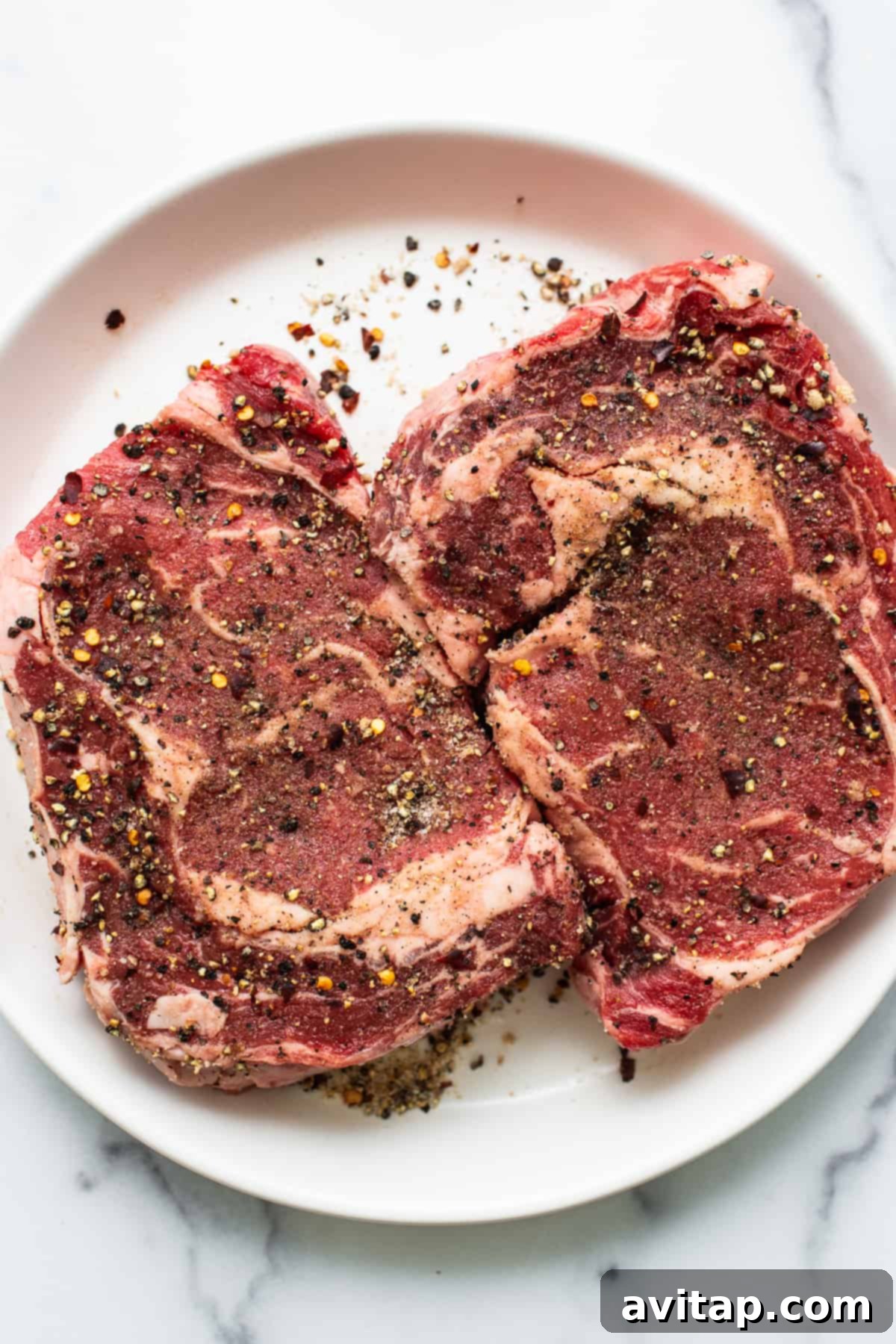
- Season Generously: Don’t be shy with your seasoning. A good steak deserves a liberal coating of salt, pepper, and any other desired spices. Apply your chosen seasoning mix evenly over both sides and edges of the steak.
- Preheat Your Skillet Thoroughly: The cast iron skillet needs to be screaming hot. Place it over high heat for at least 5-7 minutes before adding oil or steak. You want to see wisps of smoke just starting to appear from the empty pan. This intense initial heat is critical for an instant, deep sear.
- Don’t Overcrowd the Pan: If cooking multiple steaks, work in batches. Overcrowding the skillet will drop the pan’s temperature, leading to steaming instead of searing. Give each steak enough space to ensure proper heat circulation and crust development.
- Don’t Overcook: This is paramount for juicy steak. A meat thermometer is your best friend. Keep a reliable meat thermometer on hand and constantly monitor the internal temperature. Remove the steak from the heat a few degrees below your desired final doneness, as it will continue to cook as it rests.
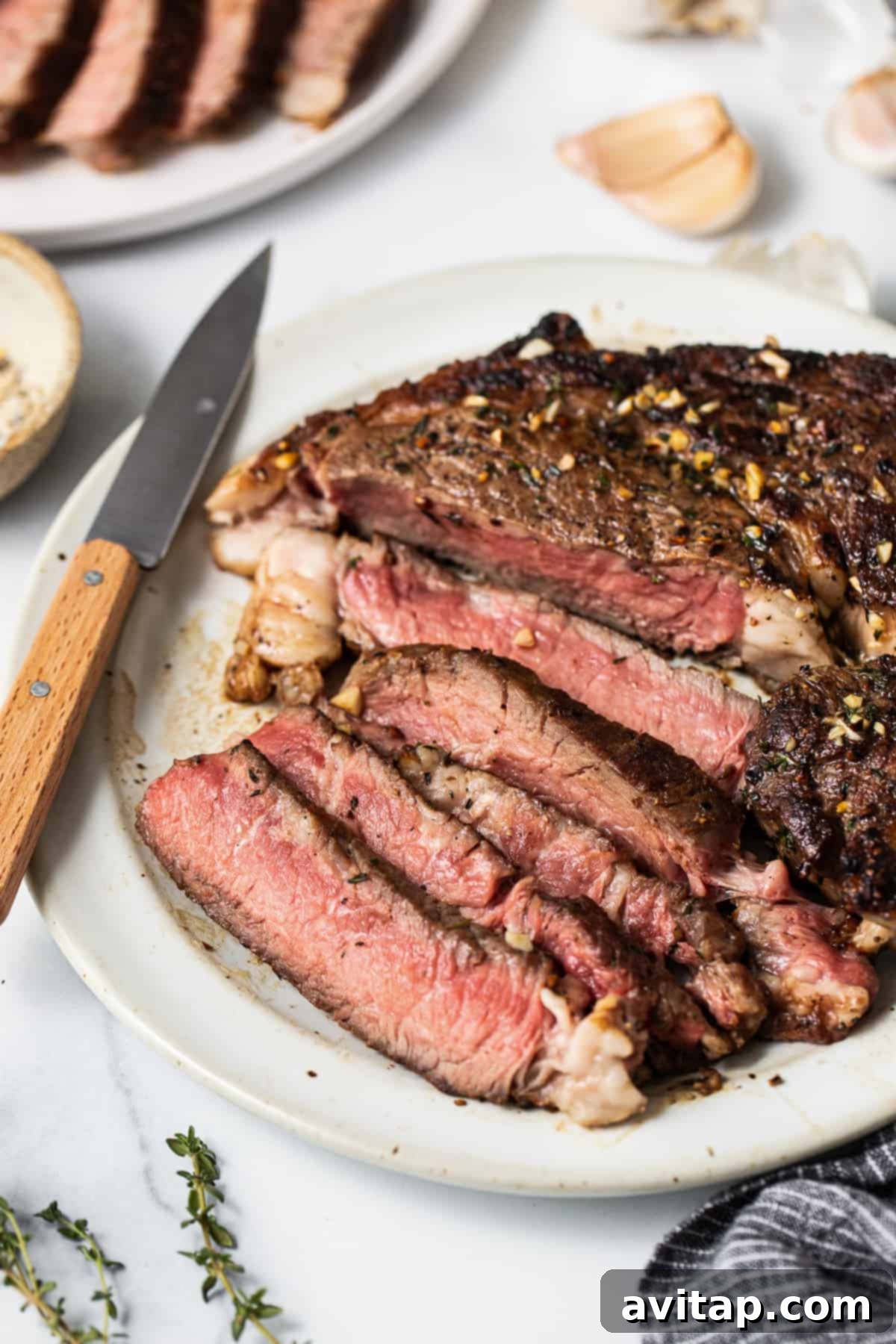
- Let It Rest: This step is non-negotiable for a juicy steak. Once your steak is done cooking, transfer it to a cutting board and let it rest for at least 5-10 minutes (for thinner cuts) or 10-15 minutes (for thicker cuts). Resting allows the muscle fibers to relax and reabsorb the juices that have migrated to the center during cooking. Skipping this step will result in juices running out onto your plate, leaving you with a dry steak. During this resting period, the internal temperature will also continue to rise by about 5-10ºF, known as “carryover cooking.”
Achieving Your Ideal Steak Doneness: A Temperature Guide
Steak doneness is a personal preference, and understanding the internal temperatures is key to consistently achieving your desired result. The team here loves a medium-rare steak for its perfect balance of tenderness and flavor, but you can tailor it to your liking. Remember to always use a reliable meat thermometer for accuracy.
Here’s a guide to internal temperatures:
- Rare: 125-130ºF (52-54ºC) – Cool red center, very tender.
- Medium Rare: 130-135ºF (54-57ºC) – Warm red center, exceptionally juicy.
- Medium: 135-140ºF (57-60ºC) – Warm pink center, firm to the touch.
- Medium Well: 140-150ºF (60-66ºC) – Slightly pink center, mostly gray.
- Well Done: 155-165ºF (68-74ºC) – Little to no pink, firm throughout.
As mentioned, the internal temperature of your steak will continue to rise by approximately 5-10ºF (2-5ºC) after it’s removed from the heat during the resting period. Always pull your steak off the heat a few degrees before it reaches your target temperature.

Pro Tip!
Our Recommended Meat Thermometer
We absolutely swear by using a high-quality meat thermometer when cooking any cut of meat, especially steak. Precision is key to avoiding over or undercooking. The Thermapen is our go-to instant-read meat thermometer, delivering accurate readings every single time. It’s a small investment that guarantees perfectly cooked meat and eliminates guesswork.
Why Butter Reigns Supreme Over Oil for Searing Steak
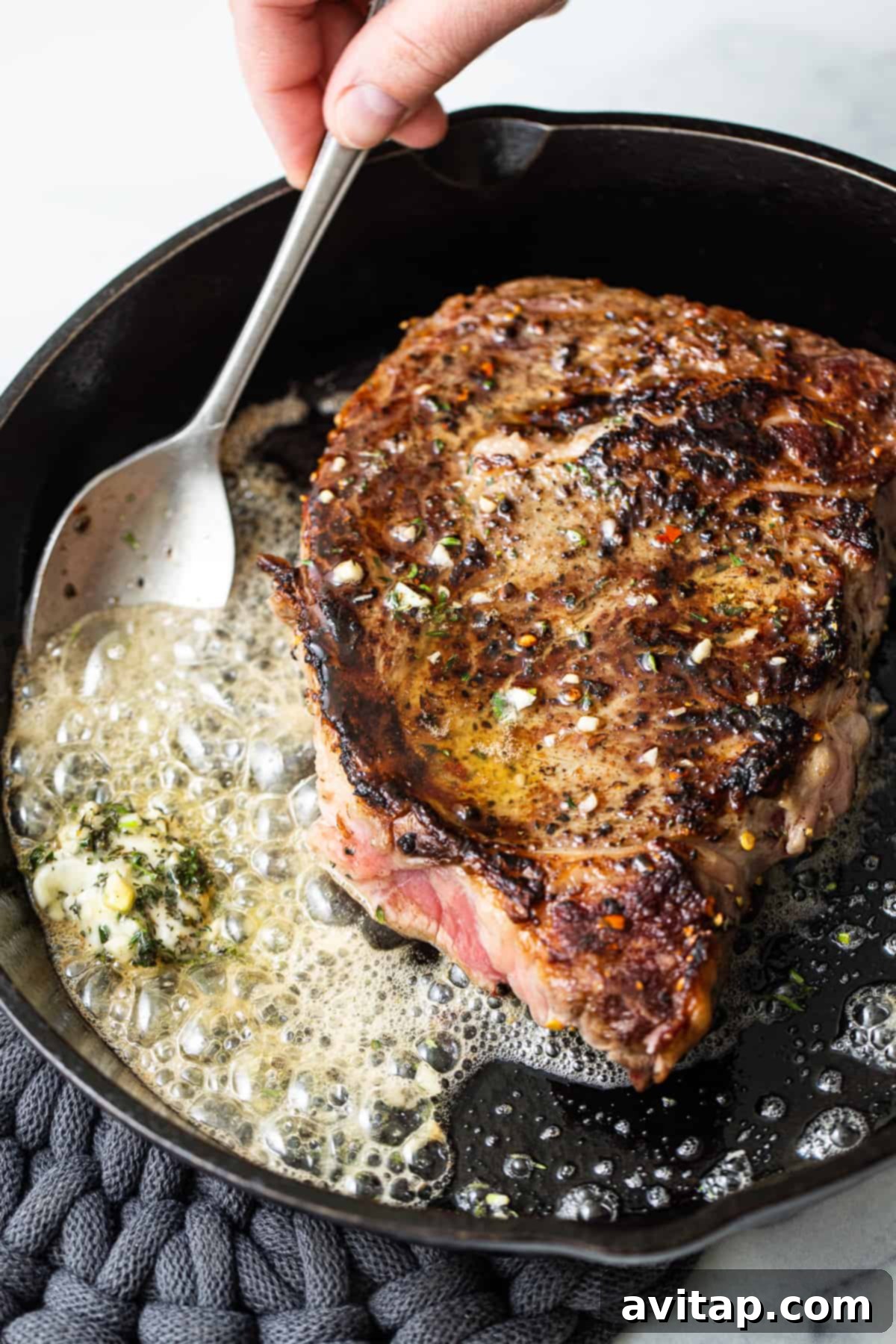
When it comes to searing steak in a cast iron skillet, the choice between butter and oil is clear: butter wins every time! We rigorously tested this recipe with both and found that butter consistently delivered superior results in terms of flavor, crust development, and overall steak experience. While oil has a higher smoke point and is often recommended for high-heat cooking, butter offers unique advantages that elevate your steak to new heights.
Unmatched Flavor and Aroma
The rich, creamy flavor of butter simply cannot be replicated by oil. As butter cooks, its milk solids brown and caramelize, contributing a nutty, deep, and complex flavor to the steak. This browned butter is a culinary marvel in itself, and when it permeates the crust of your steak, it creates an irresistible aroma and taste that plain oil simply cannot provide. The herbs and garlic added to the butter further enhance this aromatic experience, creating a multi-layered flavor profile.
Superior Crust Formation
While oil helps with searing, butter actively contributes to the development of a magnificent crust. The milk solids in butter, along with its lower smoke point compared to some oils (which is mitigated by basting and quick cooking), participate in the Maillard reaction. This results in a more robust, deeply flavored, and visually appealing crust. The act of basting the steak with the melted herb butter also ensures continuous contact with the hot, flavorful fat, promoting even browning and crispiness across the surface.
For the initial high-heat sear, a small amount of high smoke point oil (like olive oil or avocado oil) can be used to prevent butter from burning immediately. However, the true magic happens when the butter is introduced and allowed to brown and baste the steak, infusing it with its unparalleled flavor and aiding in the creation of that perfect, crispy exterior.
Discover More of Our Favorite…
Exceptional Steak Recipes
Love steak? Explore these other fantastic steak recipes from our collection:
- How to Grill Steak
- Sous Vide Steak
- Ultimate Steak Marinade
- Grilled Flank Steak
- Steak Tacos
- Steak Fajitas
- Steak Salad
Perfect Pairings: What to Serve with Your Cast Iron Skillet Steak
A beautifully seared cast iron steak deserves equally delicious accompaniments. Here are some of our favorite side dishes that complement its rich flavors:
- Fluffy Baked Potatoes in Foil
- Refreshing Strawberry Broccoli Salad
- Crispy Roasted Fingerling Potatoes
- Creamy mashed potatoes or a vibrant green bean almondine.
- A simple garden salad with a light vinaigrette to balance the richness.
Pro Tip: Don’t let delicious leftovers go to waste! We highly recommend using any remaining cast iron steak in our flavorful steak salad recipe for a quick and satisfying lunch the next day.
Cast Iron Steak Recipe
Cooking steak in a cast iron skillet is a foolproof method for achieving a perfectly juicy steak with a medium-rare interior and a magnificent, crispy crust. Season your chosen cut generously with homemade steak seasoning, then sear it on high heat in your cast iron pan for just 6-8 minutes, basting frequently with melted herb butter.
Linley Hanson
2 hours (includes bringing steak to room temp)
6 minutes
2 hours 6 minutes
4
Ingredients
Homemade Steak Seasoning
- 1 tablespoon kosher salt
- 1 tablespoon freshly cracked ground black pepper
- 1 teaspoon garlic powder
- 1 teaspoon light brown sugar
- ½ teaspoon red pepper flakes (optional, for a hint of heat)
Other Ingredients
- 1 tablespoon prepared steak seasoning (from above, or your favorite blend)
- 2 ribeye steaks, ~1.5 lbs each and 1-1.5 inches thick*
- 4 tablespoons unsalted butter, softened to room temperature
- 1 tablespoon fresh thyme, finely chopped
- 2 garlic cloves, minced
- 2 tablespoons olive oil (or other high-smoke point oil like avocado oil)
Instructions
-
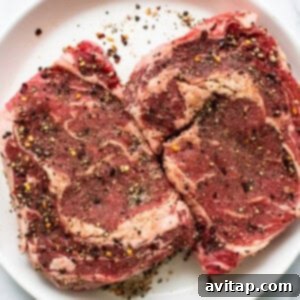
Prepare Steak Seasoning: In a small bowl or jar, combine all ingredients for the homemade steak seasoning (kosher salt, black pepper, garlic powder, light brown sugar, and red pepper flakes). Mix well until thoroughly combined.

-
Season Steaks and Bring to Room Temperature: Pat both sides of your ribeye steaks completely dry with paper towels. Generously season both sides and edges of the steaks with 1 tablespoon of the prepared steak seasoning. Use your hands to massage the seasoning into the meat, ensuring an even coating. Let the seasoned steaks rest at room temperature for 30 minutes to 1 hour. This step is crucial for even cooking.
-
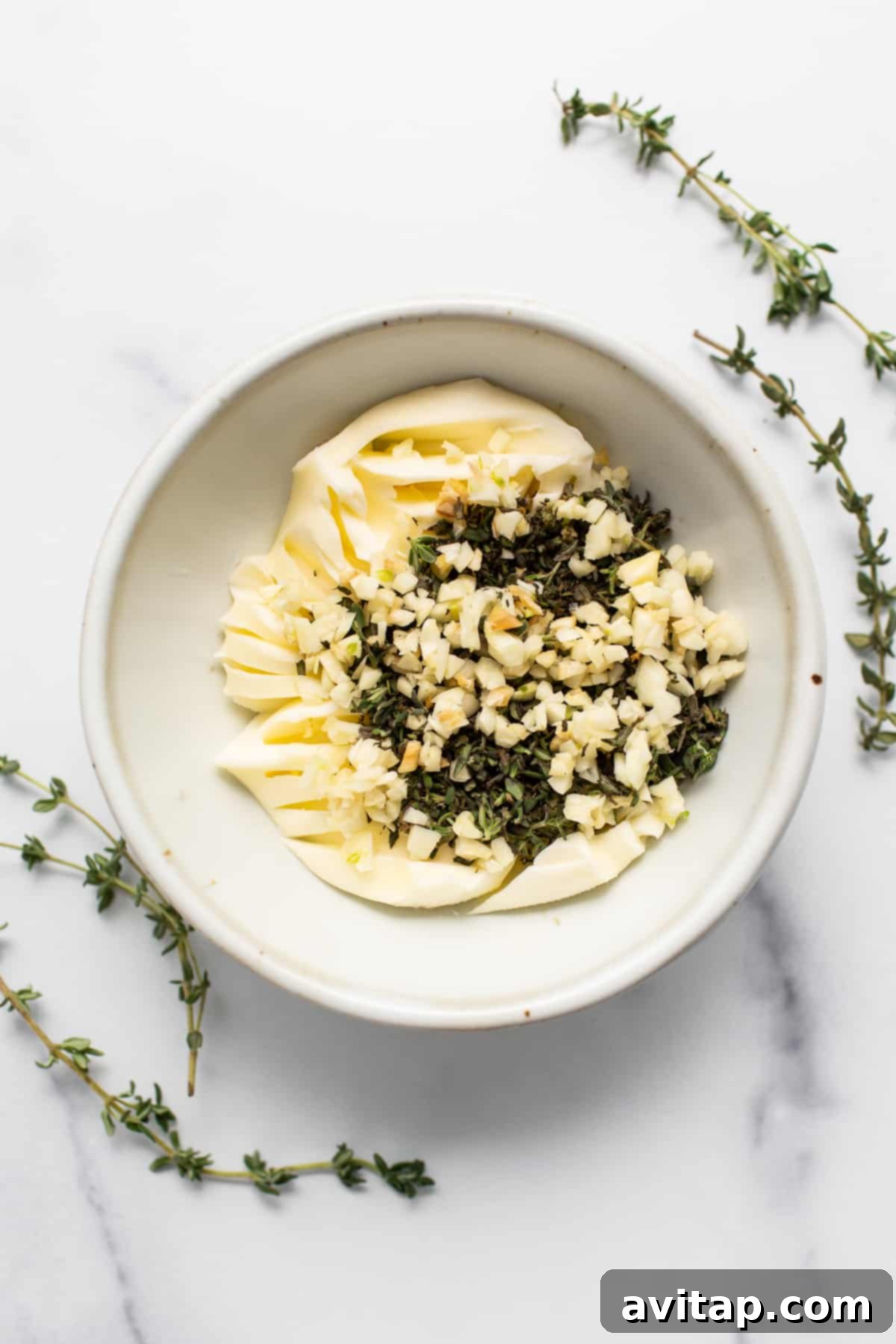
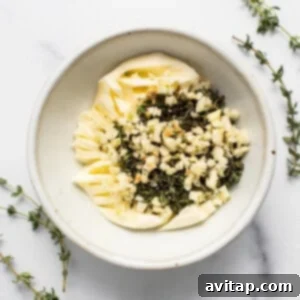
Prepare Herb Butter: While the steaks are resting, combine the softened unsalted butter, chopped fresh thyme, and minced garlic in a small bowl. Mix thoroughly with a fork or spoon until well combined. Set aside.
-
Preheat Cast Iron Skillet: Heat a large cast iron skillet over high heat. Allow the skillet to become extremely hot for about 5-7 minutes. You should see light wisps of smoke. Add the olive oil to the hot skillet, swirling to coat the bottom.
-
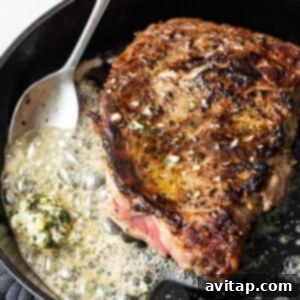
Sear and Baste: Carefully place one seasoned steak into the screaming hot skillet. Sear undisturbed for 3 minutes to develop a deep crust. Flip the steak to the other side, then immediately add half of the prepared herb butter mixture to the skillet. The butter should melt and sizzle instantly. Using a large spoon, carefully and continuously spoon the melted butter over the steak as it continues to sear for another 3-5 minutes, or until it reaches your desired internal temperature (refer to our temperature guide above).
-
Rest the Steak: Remove the cooked steak from the skillet and transfer it to a cutting board. Let it rest uncovered for 10-15 minutes before slicing and serving. This allows the juices to redistribute, ensuring a tender and moist steak.
-
Repeat for Second Steak: Carefully wipe out any excess butter and fond from the cast iron skillet (be cautious, as it will be very hot). Repeat steps 3-5 for the second steak, ensuring the pan is hot before adding the steak and using the remaining herb butter.
Chef’s Tips & Notes
- Steak Thickness Matters: Our recipe assumes ribeye steaks are around 1 – 1.5 inches thick. If you use a thicker or thinner steak, you will need to adjust your searing and cooking times accordingly. Thicker steaks may benefit from a quick finish in a preheated oven (after searing) to achieve desired doneness without burning the exterior.
- Freshly Cracked Pepper: For the best flavor, we highly recommend using freshly cracked black pepper for your steak seasoning. A pepper grinder or mortar and pestle will yield a more aromatic and potent pepper flavor than pre-ground pepper.
- Alternative Cuts: While ribeye is our top choice, feel free to replace it with a New York Strip, sirloin, or even a thick-cut filet mignon. Adjust cooking times based on the cut’s thickness and fat content.
- Room Temperature is Non-Negotiable: Always remember to bring your steak to room temperature before searing. This is a critical step for ensuring even cooking and preventing a cold, undercooked center.
- Internal Steak Temperatures (recap):
- 125-130ºF – Rare (pull at 120-125ºF)
- 130-135ºF – Medium Rare (pull at 125-130ºF)
- 135-140ºF – Medium (pull at 130-135ºF)
- 140-150ºF – Medium Well (pull at 135-145ºF)
- 155-165ºF – Well Done (pull at 150-160ºF)
- Don’t Forget to Rest: Resting allows the steak’s juices to redistribute, making every bite incredibly tender and moist. Patience is a virtue when cooking steak!
Watch Our Video Guide
Learn visually how to perfectly execute this cast iron steak recipe:
Nutrition Information (per serving)
Calories:
415 kcal
,
Carbohydrates:
4 g
,
Protein:
23 g
,
Fat:
35 g
,
Fiber:
1 g
,
Sugar:
1 g
Nutrition information is automatically calculated and should be used as an approximation. Individual results may vary.

Loved this recipe? Share your thoughts below!
Don’t forget to tag your culinary creations on social media with the hashtag #fitfoodiefinds – we love seeing what you’re cooking up!
Photography: All stunning food photography in this post was captured by Ashley McGlaughlin from The Edible Perspective.