
The Ultimate Guide to Making Oatmeal: Every Type, Every Method
Welcome to the ultimate guide for mastering oatmeal! If you’ve ever wondered how to make oatmeal perfectly, you’re about to unlock a world of delicious and nutritious breakfast possibilities. Oatmeal isn’t just a simple dish; it’s a versatile, whole-grain powerhouse that can be customized to suit any taste or lifestyle.
For those eager to dive right in, the easiest and most consistently delicious method for making classic oatmeal is on the stovetop. A simple ratio of 2 cups of liquid to 1 cup of rolled oats yields a wonderfully creamy result. Bring the mixture to a boil over high heat, then reduce to low and simmer for 3-5 minutes until it reaches your desired thickness. It’s a foolproof method that delivers comforting perfection every time.
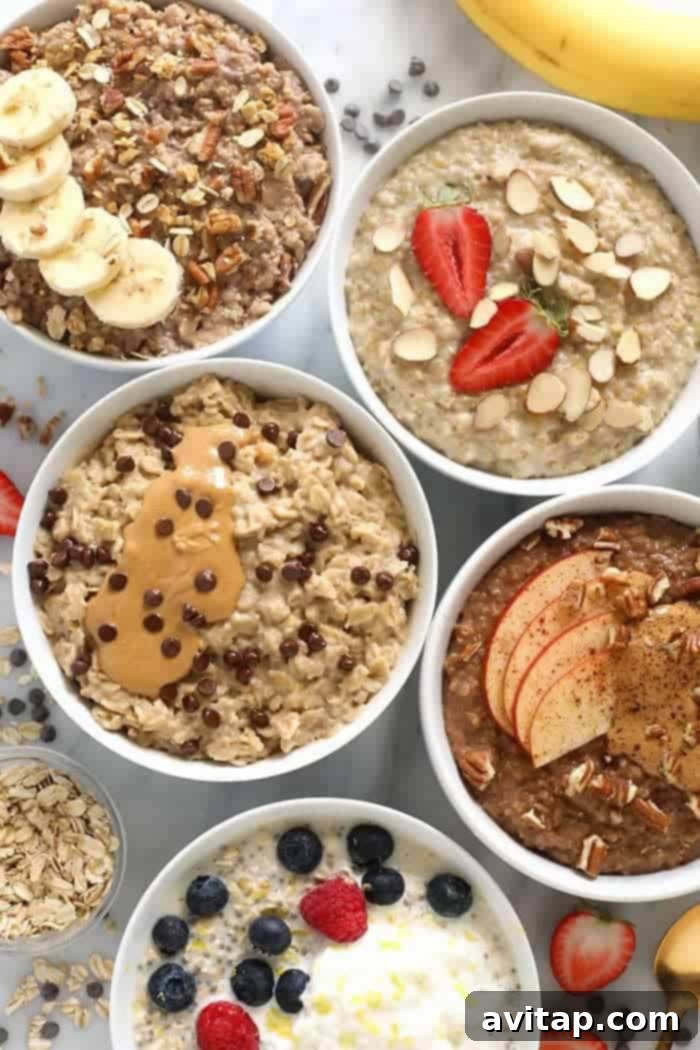
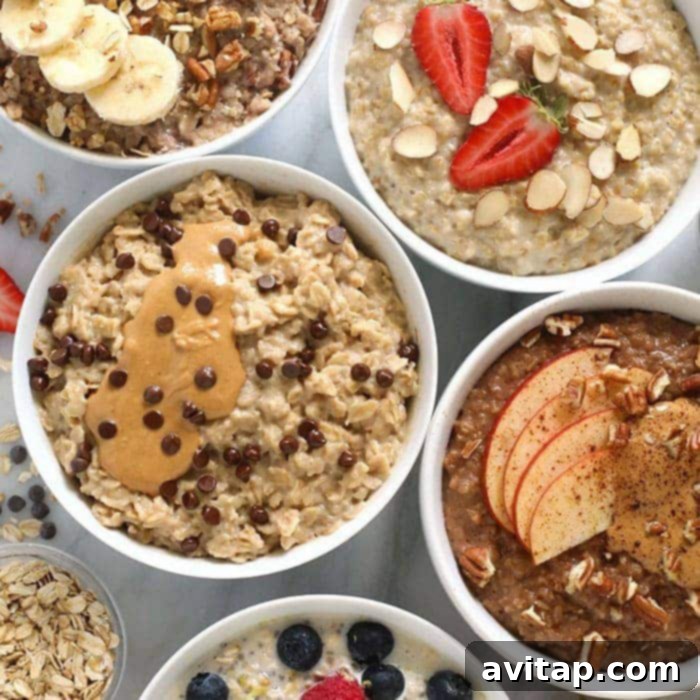
Oatmeal is more than just a breakfast; for many, it’s a daily ritual. As a champion of quick, easy, and 100% whole grain breakfasts, oatmeal can be prepared for a single serving or meal-prepped for the entire week. Its adaptability is unmatched – enjoy it plain and simple, or transform it into a dessert-like indulgence with additions like nut butter, fresh fruit, or sweet spices. While the microwave offers ultimate speed for my busy mornings, there’s nothing quite like the thick, fluffy, and perfectly cooked texture achieved with stovetop oatmeal when time allows.
Having extensively tested every method of preparing oatmeal, along with all the common types of oats, I’m here to provide you with the optimal liquid-to-oat ratios and comprehensive cooking instructions. This guide is exceptionally thorough, but if you’re ready for our go-to stovetop oatmeal recipe, feel free to jump directly to the recipe section below!
Why Oatmeal is a Breakfast Champion: Health Benefits and Versatility
Beyond its delicious taste and comforting texture, oatmeal is a nutritional powerhouse, making it an excellent choice to start your day. It’s packed with essential nutrients and offers a host of health benefits:
- Rich in Fiber: Oats are an excellent source of soluble fiber, particularly beta-glucan. This type of fiber is known to help lower cholesterol levels, stabilize blood sugar, and promote gut health. It also contributes to a feeling of fullness, which can aid in weight management.
- Sustained Energy: The complex carbohydrates in oats provide a steady release of energy, preventing sudden spikes and crashes in blood sugar. This means you’ll feel energized and focused for longer, making it an ideal breakfast for active individuals or those needing sustained concentration.
- Heart Health: Regular consumption of oats can contribute to improved cardiovascular health by reducing LDL (“bad”) cholesterol and blood pressure, thanks to its unique fiber content.
- Nutrient-Dense: Oats are loaded with vitamins and minerals, including manganese, phosphorus, magnesium, copper, iron, zinc, and B vitamins. These nutrients are crucial for various bodily functions, from bone health to energy metabolism.
- Versatility: Oatmeal serves as a blank canvas for countless flavor combinations. Whether you prefer sweet or savory, creamy or chewy, hot or cold, there’s an oatmeal recipe for everyone. This adaptability ensures you never get bored and can always find a way to incorporate this superfood into your diet.
Understanding Your Oats: A Deep Dive into Varieties
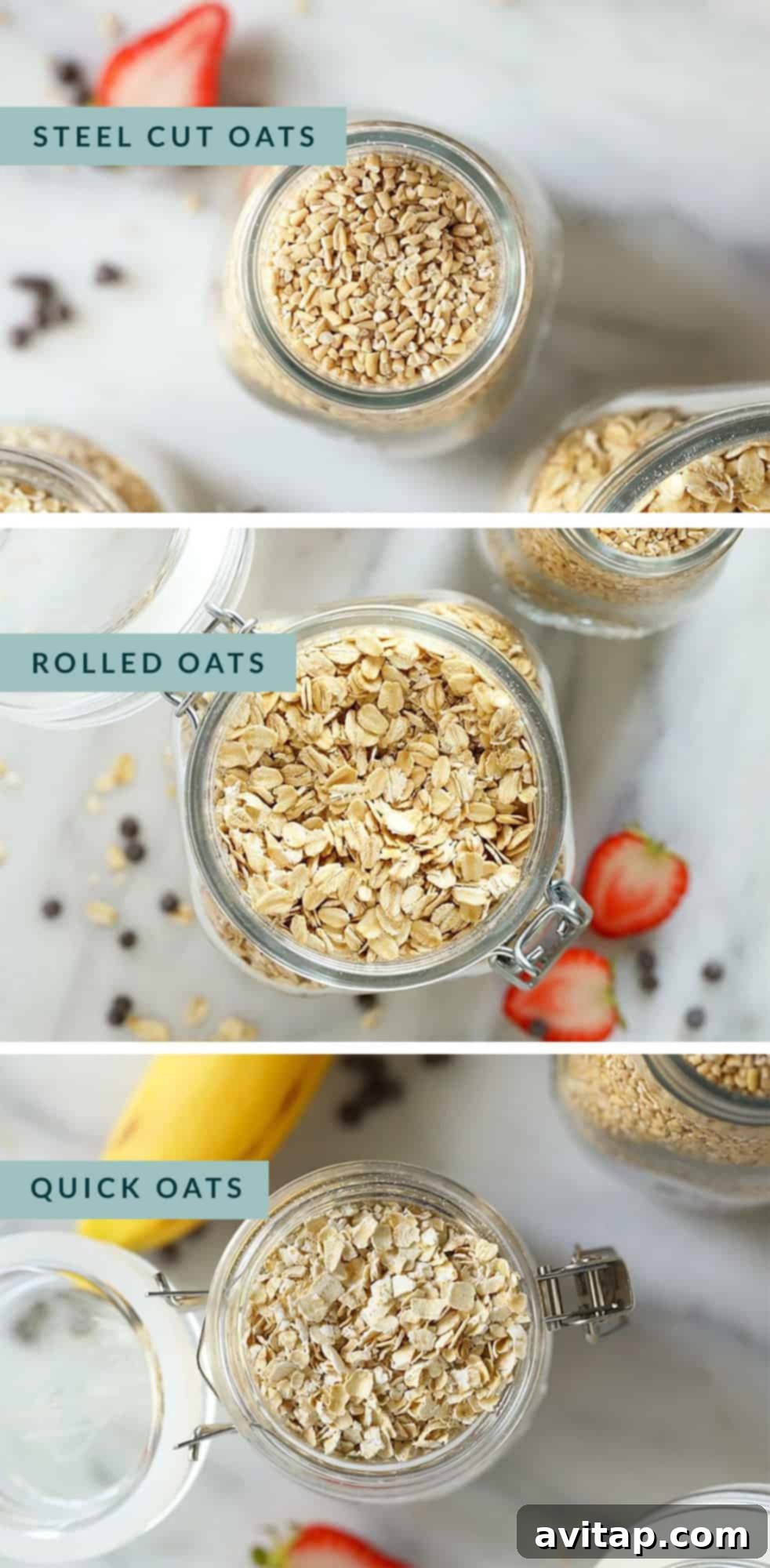
Not all oats are created equal! While they all originate from the same whole oat groat, different processing methods result in distinct textures, cooking times, and culinary applications. I’ve explored the three main types to help you choose the best oat for your desired outcome.
- Steel-Cut Oats: Also known as Irish or Scottish Oats, steel-cut oats are whole oat groats that have been cut into two or three smaller pieces rather than rolled. Uncooked, they resemble small, thick pieces of rice. Due to their minimal processing, steel-cut oats retain a significant chewiness and a nutty flavor when cooked. They take the longest to prepare, typically around 20-40 minutes on the stovetop, but offer a robust, hearty texture that many prefer for a more substantial breakfast. They are excellent in slow cooker recipes due to their longer cooking time.
- Rolled Oats: Often referred to as old-fashioned oats, these are whole oat groats that have been steamed and then rolled flat into thin flakes. This processing allows them to cook much faster than steel-cut oats, usually within 5-10 minutes. Rolled oats strike a perfect balance between a creamy and chewy texture, making them incredibly versatile. They are ideal for stovetop oatmeal, overnight oats, baking (like cookies and muffins), and granola, and are readily available in nearly every supermarket.
- Quick-Cooking Oats: Or “Instant Oats,” are the most processed form of oats. They are essentially rolled oats that have been pre-cooked, dried, and then cut into even smaller pieces. This extensive processing significantly reduces their cooking time, allowing them to be prepared in as little as 1-2 minutes, especially in the microwave. When cooked, quick-cooking oats have a very creamy, soft, almost mushy texture. They are perfect for when you need a lightning-fast breakfast or for recipes where a smoother consistency is desired.
Mastering Oatmeal: Diverse Cooking Methods for Every Lifestyle
From a leisurely morning on the stovetop to a grab-and-go option from the refrigerator, there’s an oatmeal preparation method for every schedule and preference. Let’s explore how to cook oatmeal in every popular way, ensuring you get perfect results.
- Stovetop
- Slow Cooker
- Overnight
- Instant Pot
- Microwave
Stovetop Oatmeal: The Classic Way to Creamy Perfection
If you have a few extra minutes, stovetop oatmeal is arguably the best way to achieve the fluffiest, most satisfying oats. The continuous stirring during the cooking process incorporates air, resulting in an incredibly airy and creamy texture that truly elevates your breakfast experience. It’s a classic for a reason!
The good news is that you can easily make quick-cooking oats, rolled oats, and even steel-cut oats on the stove. The key is understanding the correct liquid-to-oat ratio and cooking times for each variety.
Stovetop Steel-Cut Oats
- 1 cup steel-cut oats
- 3 cups liquid (water or milk)
Instructions: Combine 1 cup steel-cut oats and 3 cups liquid in a medium pot. Bring to a boil over high heat, stirring frequently. Once boiling, reduce the heat to low and let it simmer, uncovered, for 20-30 minutes, stirring occasionally. Continue cooking until the steel-cut oats are thick and creamy with a pleasant chew.
Stovetop Rolled Oats
- 1 cup rolled oats
- 2 cups liquid (water or milk)
Instructions: Place 1 cup rolled oats and 2 cups liquid into a medium pot. Bring the mixture to a boil over high heat, stirring continuously. Then, reduce the heat to low and continue to stir for about 3-5 minutes, or until the oats have thickened to your desired consistency.
Stovetop Quick-Cooking Oats
- 1 cup quick-cooking oats
- 2 cups liquid (water or milk)
Instructions: Combine 1 cup quick-cooking oats and 2 cups liquid in a medium pot. Bring to a boil over high heat and continuously stir for 1-2 minutes, or until the oats have thickened. Quick-cooking oats are ideal for a rapid stovetop preparation.
More Stovetop Oatmeal Recipes
- Chocolate Chip Cookie Dough Oatmeal
- Brownie Batter Peanut Butter Swirl Stovetop Oatmeal
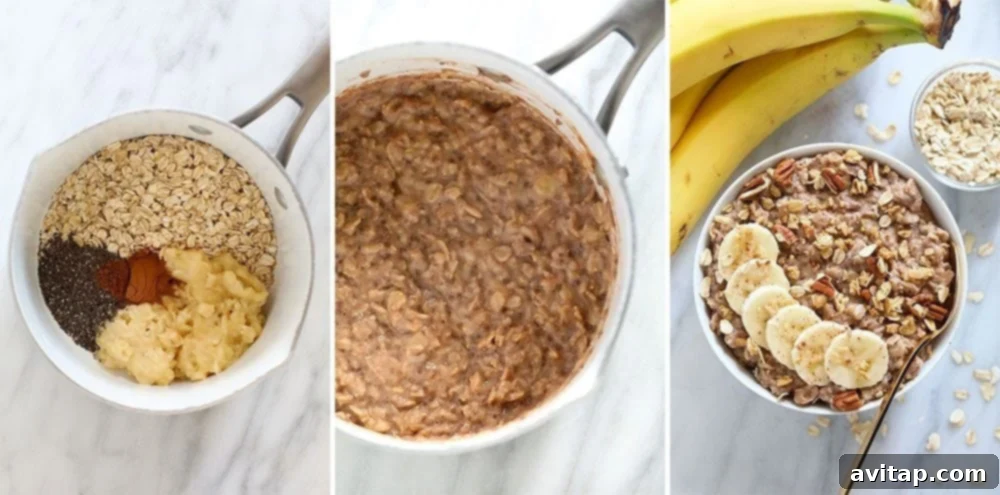
- Fluffy Banana Stovetop Oatmeal
- Chocolate Protein Oatmeal
- Strawberries and Cream Oatmeal
- Superfood Oatmeal Bowl
- Savory Oatmeal Recipe
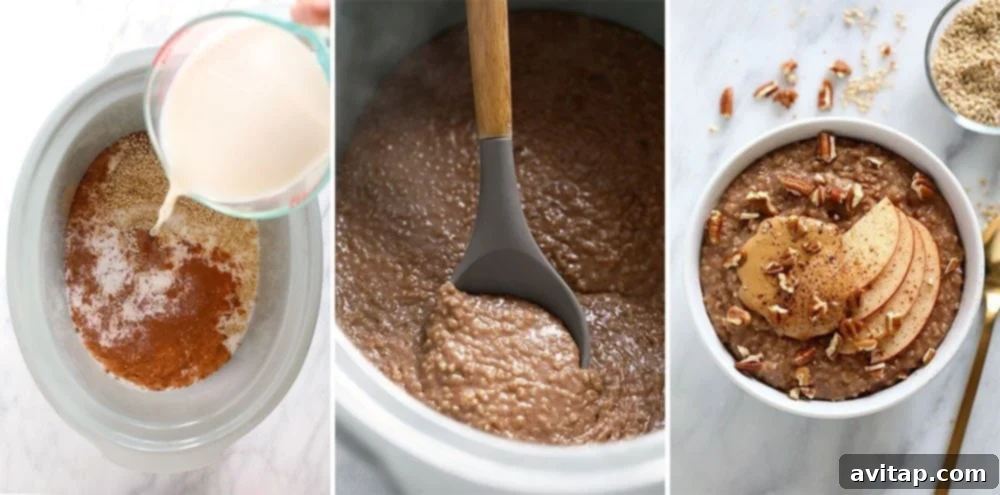
Slow Cooker Oatmeal: Effortless Overnight Goodness
Slow cooker oatmeal is a fantastic hands-off method, especially for steel-cut oats. It’s perfect for meal prepping a large batch or waking up to a warm, hearty breakfast with minimal effort. Simply combine your ingredients, set it, and let the slow cooker do all the work overnight or while you’re busy with other tasks.
While technically you could make instant or rolled oats in a slow cooker, this method truly shines with steel-cut oats, as it eliminates the long stovetop cooking time and constant stirring. It transforms stubborn steel-cut oats into a creamy, perfectly cooked breakfast with incredible convenience.
Slow Cooker Steel-Cut Oatmeal
- 1 cup steel-cut oats
- 4 cups liquid (water or milk)
Instructions: First, lightly spray your slow cooker insert with nonstick cooking spray to prevent sticking. Then, place 1 cup steel-cut oats and 4 cups liquid into the slow cooker and stir well to combine. Cover and cook on HIGH for 4 hours or on LOW for 8 hours. If possible, stir the steel-cut oatmeal every hour or so when cooking on high, or a few times on low, to prevent oats from clumping at the bottom. The oatmeal is ready once it has thickened to a creamy consistency.
More Slow Cooker Oatmeal Recipes
- Steel Cut Oats
- Hot Cocoa Steel Cut Oats
- Slow Cooker Apple Cinnamon Oatmeal
- Creamy Coconut Slow Cooker Steel Cut Oats
- Maple Cinnamon Crockpot Steel Cut Oats
- Pumpkin Oatmeal
- Crock Pot Samoa Steel Cut Oatmeal
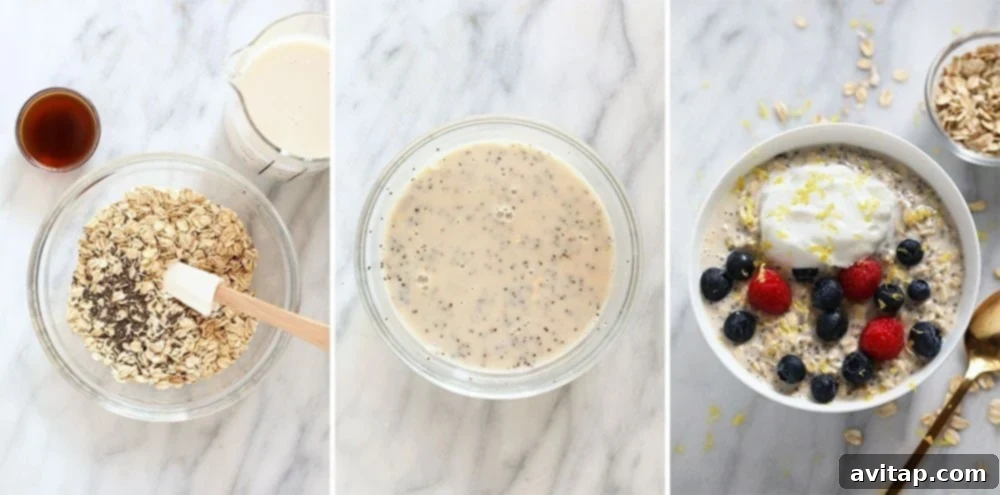
Overnight Oats: Chilled & Convenient Breakfasts
Overnight oats offer a delightful, chilled twist on traditional hot oatmeal. This method involves soaking your oats in liquid, often with chia seeds, for at least 2 hours or, ideally, overnight in the refrigerator. The result is a chewy, creamy, and incredibly healthy breakfast option that requires no cooking in the morning.
I absolutely adore overnight oats because they’re served cold, making them a refreshing choice, especially in warmer months. I highly recommend including chia seeds in this process, as they absorb liquid and expand, contributing to a wonderfully thick and fluffy texture. The great news is that all three types of oats – steel-cut, rolled, and quick-cooking – can be used for overnight oats, each offering a slightly different texture.
Overnight Steel-Cut Oatmeal (Pre-cooked for best results)
- 1 cup steel-cut oats
- 1 tablespoon chia seeds
- 1.5 cups liquid (milk or water)
Instructions: For the best overnight steel-cut oats, it’s recommended to briefly cook them. Place 1 cup steel-cut oats, 1 tablespoon chia seeds, and 1.5 cups liquid into a microwave-safe glass container and mix. Microwave on high for 1 minute, then stir again. Cover the container and place it in the refrigerator for at least 2 hours or overnight. This brief pre-cook helps soften them for a more palatable cold texture.
Overnight Rolled Oats
- 1 cup rolled oats
- 1 tablespoon chia seeds
- 1.5 cups liquid (milk or water)
Instructions: Combine 1 cup rolled oats, 1 tablespoon chia seeds, and 1.5 cups liquid into a glass container and mix thoroughly. Cover the container and place it in the refrigerator for at least 2 hours or overnight. These will become wonderfully soft and creamy.
Overnight Quick-Cooking Oats
- 1 cup quick-cooking oats
- 1 tablespoon chia seeds
- 1.5 cups liquid (milk or water)
Instructions: Place 1 cup quick-cooking oats, 1 tablespoon chia seeds, and 1.5 cups liquid into a glass container and mix well. Cover and place in the refrigerator for at least 2 hours or overnight. Quick oats will yield the smoothest, creamiest overnight oats.
More Overnight Oats Recipes
- Overnight Steel Cut Oats
- Peanut Butter Banana Overnight Oats
- Lemon Cheesecake Overnight Oats
- Classic Vegan Overnight Oats Recipe
- Peanut Butter Overnight Oats
- Carrot Cake Overnight Oats
- Blueberry Overnight Oats
- Apple Cinnamon Overnight Oats
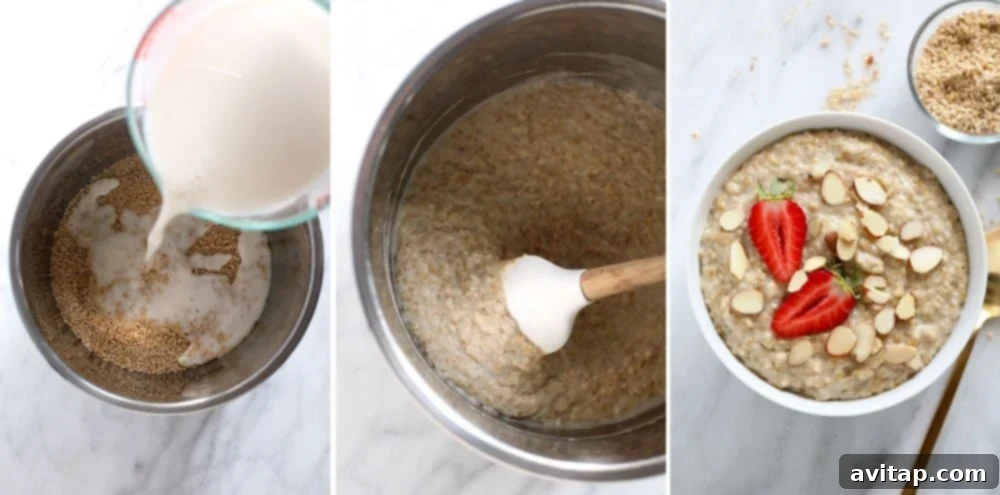
Instant Pot Oatmeal: Speed and Simplicity Under Pressure
The Instant Pot is a game-changer for cooking oatmeal, particularly for steel-cut and rolled oats. It drastically cuts down cooking time while still delivering that desirable chewy or creamy texture that’s often associated with stovetop or slow cooker methods. Using a pressure cooker ensures consistently great results with minimal hands-on effort.
While technically you could cook quick-cooking oatmeal in an Instant Pot, its real advantage lies in simplifying the preparation of steel-cut and rolled oats, making them accessible even on busy mornings.
Instant Pot Steel Cut Oats
- 1 cup steel-cut oats
- 3 cups liquid (water or milk)
Instructions: Combine 1 cup steel-cut oats and 3 cups liquid in the Instant Pot liner and stir. Secure the lid on the Instant Pot and turn the valve to the “Sealing” position. Set the Instant Pot to high pressure for 10 minutes. Once the timer goes off, perform a quick release by carefully opening the valve to vent the steam. Stir the steel-cut oats before serving.
Instant Pot Rolled Oatmeal
- 1 cup rolled oats
- 2 cups liquid (water or milk)
Instructions: Place 1 cup rolled oats and 2 cups of liquid into the Instant Pot liner and mix. Close the Instant Pot lid and turn the valve to the “Sealing” position. Set the Instant Pot to high pressure for 3 minutes. When the timer sounds, quick release the pressure by opening the valve to vent. Stir the oatmeal and serve immediately.
More Instant Pot Oatmeal Recipes
- Instant Pot Oatmeal (w/ rolled oats)
- Instant Pot Steel Cut Oats
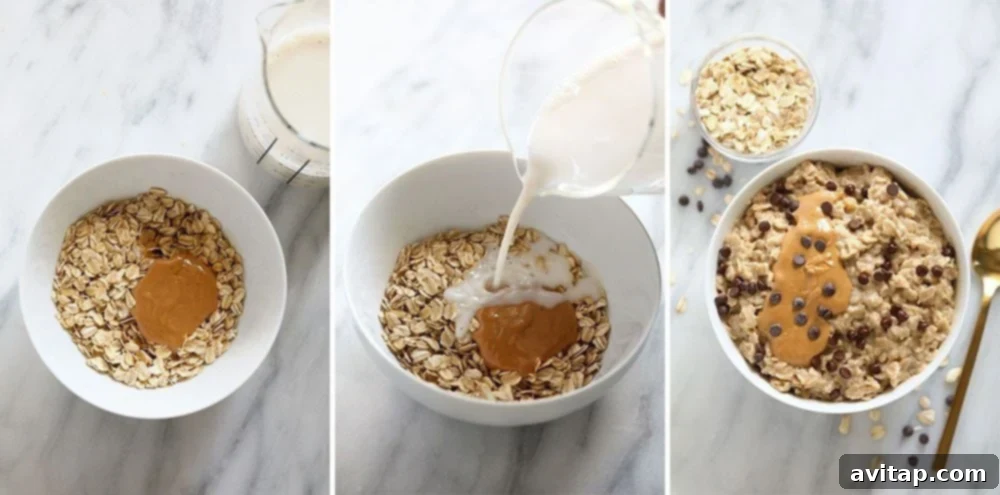
Microwave Oatmeal: The Ultimate Quick Fix
When you’re truly short on time, microwave oatmeal is your best friend. This method allows you to prepare either rolled oats or quick-cooking oats in under 2 minutes, making it the fastest and most convenient breakfast option for busy mornings or a quick snack.
It’s important to use a microwave-safe bowl that’s large enough to prevent boil-overs, as oats can expand rapidly during cooking. This method is ideal for single servings and requires minimal cleanup.
Microwave Rolled Oats
- 1 cup rolled oats
- 1 and 1/3 cups liquid (water or milk)
Instructions: Place 1 cup rolled oats and 1.33 cups liquid into a microwave-safe bowl. Microwave on high for 1 minute. Carefully remove from the microwave and stir well. Place back into the microwave for another 1 minute on high, or until the oats have absorbed the liquid and reached your desired consistency.
Microwave Quick-Cooking Oats
- 1 cup quick-cooking oats
- 1 and 1/3 cups liquid (water or milk)
Instructions: Combine 1 cup quick-cooking oats and 1.33 cups liquid into a microwave-safe bowl. Microwave on high for 1 minute. Carefully remove and stir. Quick-cooking oats typically require only one minute to be ready.
Essential Stovetop Rolled Oatmeal Recipe
Wondering how to cook oatmeal or looking for a basic rolled oatmeal recipe that can be made in less than 10 minutes? This super simple stovetop oatmeal recipe, made with 2 cups of liquid to 1 cup of rolled oats, comes out creamy every time!
Stovetop Rolled Oatmeal
By: Lee Funke
Prep Time: 5 mins | Cook Time: 5 mins | Total Time: 10 mins
Servings: 2
Ingredients
- 1 cup rolled oats
- 2 cups liquid (we prefer milk for creaminess)
- Optional add-ins: 1 medium mashed banana, 1/4 cup chopped pecans, 1/2 teaspoon ground cinnamon, and 1 tablespoon maple syrup.
Instructions
- Place 1 cup rolled oats and 2 cups liquid into a medium pot.
- Bring to a boil over high heat while continuously stirring.
- Then, reduce heat to low and continue to stir for around 3-5 minutes, or until oats have thickened to your desired consistency.
Tips & Notes
- Nutrition information below is calculated without optional add-ins and assumes unsweetened plain almond milk.
- You can easily substitute rolled oats for quick-cooking oats in this recipe; just adjust cooking time to 1-2 minutes.
- Add a sweetener: For a healthier touch, opt for natural sweeteners over refined sugars. Our favorites include mashed banana, coconut sugar, or maple syrup. These not only add sweetness but also depth of flavor.
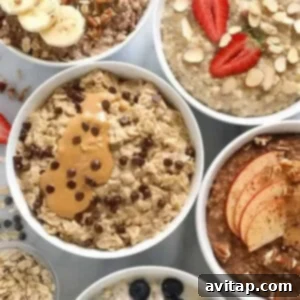
- Topping ideas and mix-ins: Don’t miss out on the opportunity to add texture and an additional flavor profile to your oatmeal! From fresh fruits and crunchy nuts to protein boosts and savory elements, the possibilities are endless. Consider: fresh berries, sliced bananas, chopped apples, various nuts (almonds, walnuts, pecans), seeds (chia, flax, hemp for extra fiber and omega-3s), a scoop of protein powder, a dollop of your favorite nut butter, or even pureed fruits and vegetables like pumpkin or sweet potato.
- Storage: Store any leftover oatmeal in an airtight glass container in the refrigerator for up to 3-5 days. Reheat gently on the stovetop or in the microwave, adding a splash of liquid if needed to restore consistency.
Nutrition (approximate, without add-ins)
Calories: 180 kcal, Carbohydrates: 28 g, Protein: 6 g, Fat: 6 g, Fiber: 5 g, Sugar: 1 g
Nutrition information is automatically calculated and should only be used as an approximation.
Elevate Your Bowl: Flavorful Add-ins and Toppings
The beauty of oatmeal truly lies in its incredible versatility. It serves as a perfect canvas for a myriad of flavors, allowing you to transform a basic bowl into a gourmet experience. Experimenting with add-ins and toppings is key to keeping your oatmeal exciting and tailored to your cravings. Here are some ideas to inspire your next bowl:
Sweet Enhancements:
- Natural Sweeteners: Move beyond refined sugars. Options like maple syrup, honey, agave nectar, date paste, or a sprinkle of coconut sugar provide natural sweetness. Mashed ripe banana or applesauce can also naturally sweeten and add moisture.
- Fresh & Frozen Fruits: Berries (strawberries, blueberries, raspberries), sliced banana, diced apples, peaches, or mango add natural sugars, vitamins, and a burst of freshness. Frozen fruits are excellent as they cool down hot oats and release their juices.
- Dried Fruits: Raisins, cranberries, chopped dates, apricots, or figs offer concentrated sweetness and chewiness. Be mindful of portion sizes due to their higher sugar content.
Textural Delights & Healthy Fats:
- Nuts: Almonds, walnuts, pecans, cashews, or pistachios provide a satisfying crunch, healthy fats, and protein. Chop them for easier eating or sprinkle them whole.
- Seeds: Chia seeds, flax seeds, hemp seeds, pumpkin seeds, or sunflower seeds are powerhouses of omega-3 fatty acids, fiber, and protein. They add a lovely texture and nutritional boost.
- Nut Butters & Seed Butters: A swirl of peanut butter, almond butter, cashew butter, or tahini adds rich flavor, healthy fats, and an extra protein kick, making your oatmeal more satisfying.
Spices & Extracts:
- Warm Spices: Cinnamon, nutmeg, cardamom, ginger, or a ready-made pumpkin pie spice blend can instantly elevate the flavor profile of your oatmeal, making it more aromatic and comforting.
- Extracts: A few drops of vanilla extract, almond extract, or peppermint extract can add a sophisticated layer of flavor.
Protein Boosts & Savory Twists:
- Protein Powder: Stir in a scoop of your favorite protein powder (whey, plant-based, etc.) after cooking to increase the protein content, ensuring you stay full and energized.
- Greek Yogurt: A dollop of Greek yogurt on top adds creaminess and a significant protein boost.
- Savory Oatmeal: Don’t limit yourself to sweet! Oatmeal can be incredibly delicious as a savory dish. Try toppings like a fried egg, sautéed mushrooms, spinach, avocado slices, cheese, herbs (chives, cilantro), hot sauce, or a sprinkle of everything bagel seasoning.
Meal Prepping and Storage Tips for Oatmeal
Oatmeal is not only a quick breakfast but also an excellent candidate for meal prepping, allowing you to save time during busy mornings. With proper storage, you can enjoy delicious oatmeal throughout the week.
- Batch Cooking: Prepare a larger batch of your preferred oatmeal (stovetop, slow cooker, or Instant Pot) at the beginning of the week. Cook it slightly thicker than you might normally, as it will absorb more liquid as it cools and sits.
- Portioning: Divide the cooked oatmeal into individual airtight glass containers or meal prep containers. This makes it easy to grab and go each morning.
- Refrigeration: Store cooked oatmeal in the refrigerator for up to 3-5 days. Ensure the containers are sealed tightly to maintain freshness and prevent other food odors from permeating.
- Freezing (Steel-Cut & Rolled Oats): For longer storage, cooked steel-cut or rolled oats can be frozen. Allow the oatmeal to cool completely, then portion it into freezer-safe bags or containers. It can be stored in the freezer for up to 2-3 months. Thaw overnight in the refrigerator before reheating.
- Reheating:
- Microwave: For individual servings, transfer to a microwave-safe bowl. Add a splash of water, milk, or your favorite liquid (about 1-2 tablespoons per serving) to help restore its creamy texture. Heat on high for 30-60 seconds, stir, and heat again if needed until warmed through.
- Stovetop: For larger batches, place the oatmeal in a pot over medium-low heat. Add a generous splash of liquid and stir frequently until heated through and the desired consistency is achieved.
- Add Toppings Fresh: While the oatmeal base can be prepped, it’s best to add fresh fruits, nuts, seeds, and sweeteners just before serving. This preserves their texture and maximizes flavor. For overnight oats, you can add toppings just before eating or layer them in the jar the night before if they’re sturdy (like dried fruit or nuts).
With these meal prep and storage tips, you can enjoy the wholesome goodness of oatmeal effortlessly, making healthy eating a convenient part of your routine.
Whether you’re a seasoned oat enthusiast or new to the world of whole-grain breakfasts, this guide provides all the information you need to make delicious oatmeal, every single time. From understanding the nuances of each oat variety to mastering diverse cooking methods and exploring endless flavor combinations, oatmeal offers a customizable and nutritious start to any day. So go ahead, experiment, and find your perfect bowl!
Love this? Leave a comment below!
Don’t forget to tag your posts on social media with the hashtag #fitfoodiefinds, we’d love to see what you’re up to!