
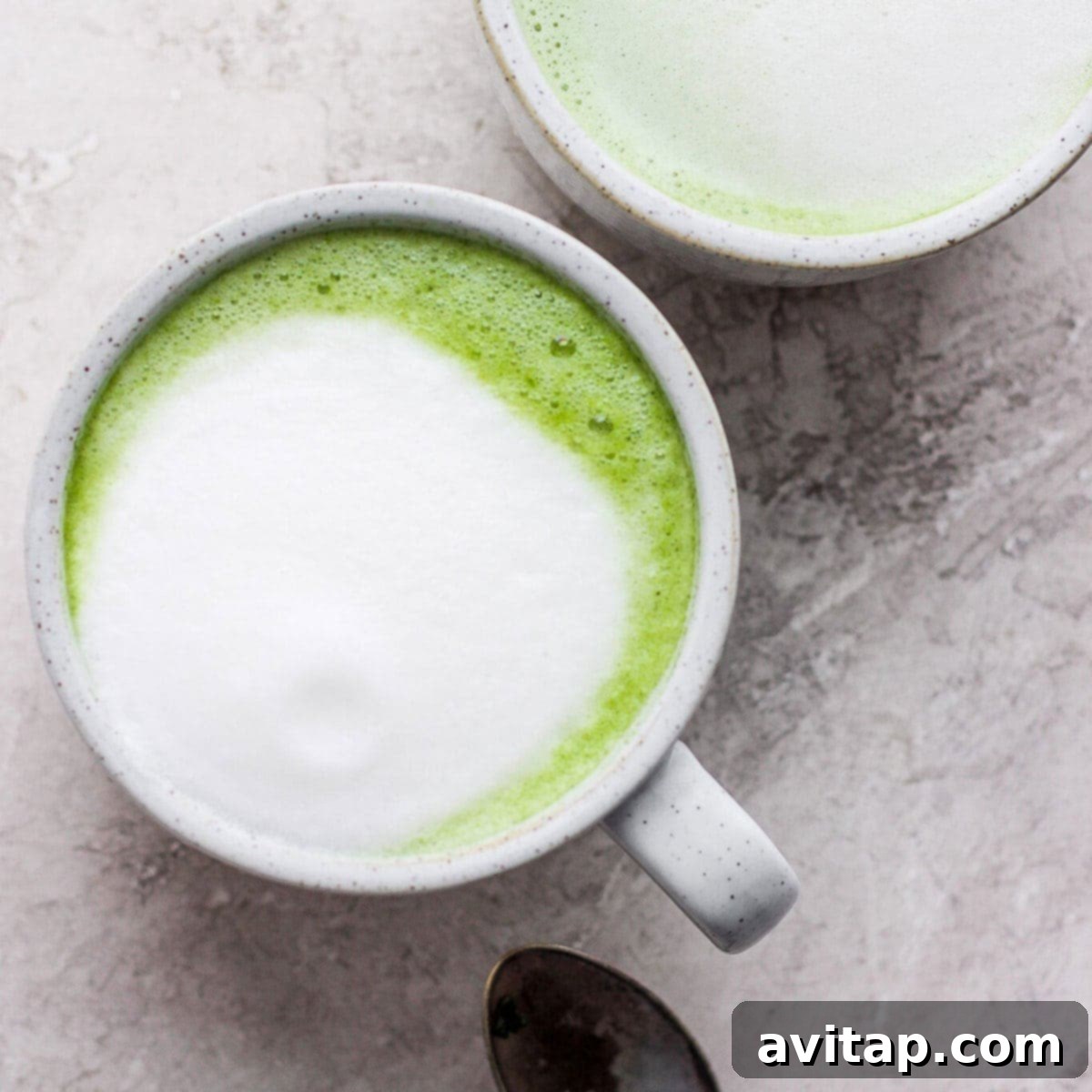
Discover the art of creating the perfect **matcha latte** right in your own kitchen! This comprehensive guide will walk you through our signature **matcha latte recipe**, featuring vibrant matcha powder, hot water, luxuriously steamed milk, and a touch of natural maple syrup for a delightful sweet balance. Whether you’re seeking a serene morning ritual or a comforting afternoon pick-me-up, our detailed instructions ensure you can craft a creamy, invigorating, and utterly delicious green tea latte every single time.
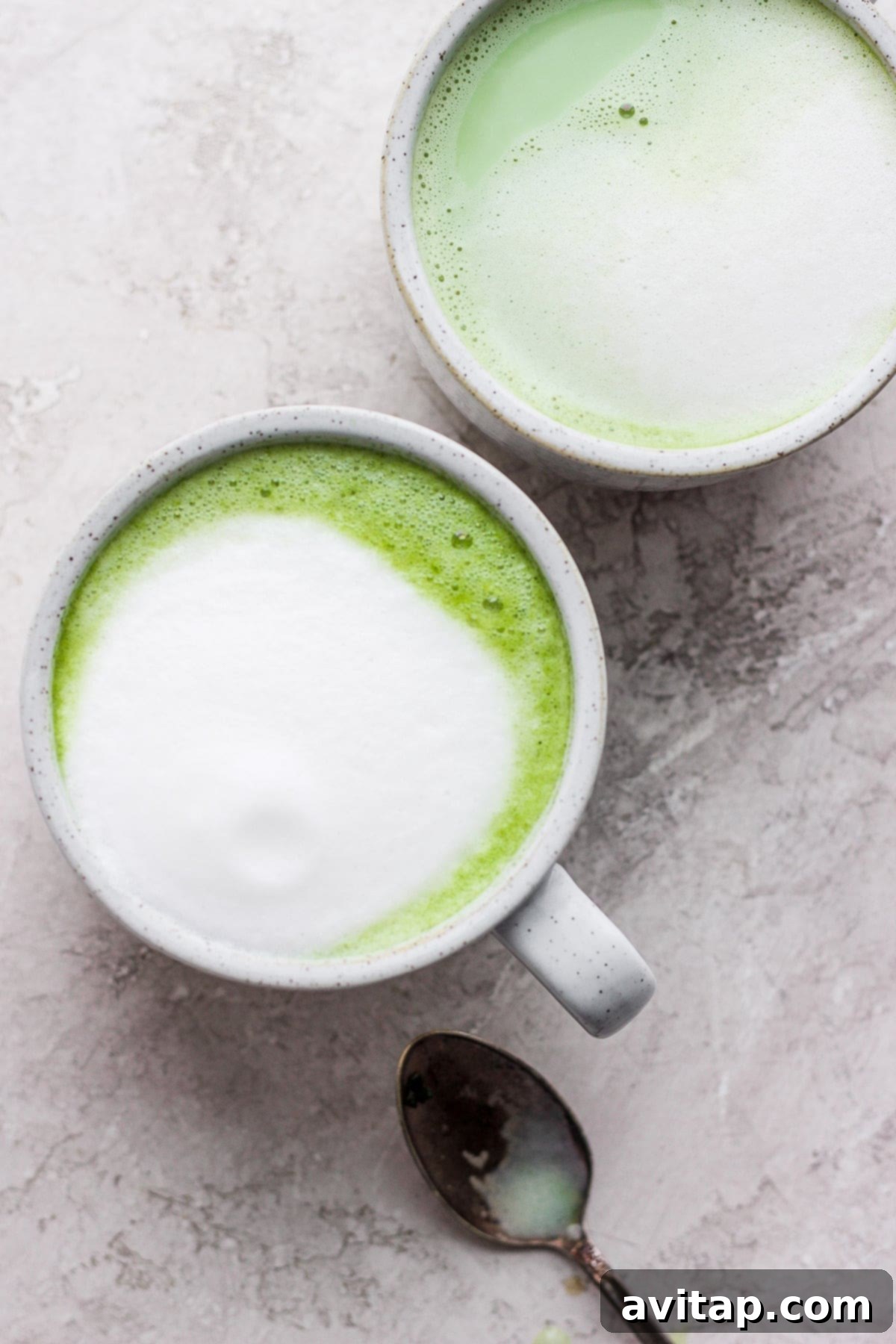
There’s truly nothing quite like the gentle lift of caffeine to kickstart your day, and we’re confident you’ll adore this exquisitely creamy matcha green tea latte. More than just a simple beverage, it’s a mindful experience that nourishes both body and soul. This morning (or anytime!) drink is thoughtfully sweetened with natural ingredients and can be effortlessly adapted to be completely plant-based, using your preferred milk for a delightful dairy-free option. Say goodbye to the coffee jitters and embrace the sustained, focused energy that only matcha can provide.
PS: Craving a cool, refreshing sip? If you’re more of an iced latte enthusiast, be sure to explore our incredibly simple 4-ingredient Iced Matcha Latte recipe instead!
What Exactly is Matcha? Unveiling the Green Elixir
Matcha is far more than just powdered green tea; it’s a centuries-old tradition encapsulated in a vibrant, fine green powder. Originating from Japan, matcha is crafted from specifically shade-grown tea leaves. Unlike conventional green tea where leaves are steeped and then discarded, with matcha, you consume the entire tea leaf, finely ground into this exquisite powder. This unique preparation method means you ingest all of the incredible nutrients, leading to a much richer flavor profile and enhanced health benefits.
The distinctive bright green color of high-quality matcha signals its freshness and potent nutritional content. It is exceptionally rich in a powerful catechin known as EGCG (epigallocatechin gallate), a compound widely celebrated for its significant antioxidant properties and potential cancer-fighting effects. Beyond EGCG, matcha is loaded with a spectrum of antioxidants, vital for combating oxidative stress and promoting overall well-being. Its natural caffeine content, coupled with L-theanine (an amino acid unique to tea), provides a sustained, calm alertness without the typical jitters often associated with coffee, making it an ideal morning beverage.
Does Matcha Contain Caffeine? The Energy Breakdown
Yes, matcha powder definitely contains caffeine. This is one of the reasons many people choose it as an energizing alternative to coffee or other morning drinks. However, the caffeine experience from matcha is notably different due to the presence of L-theanine, an amino acid that works synergistically with caffeine. L-theanine promotes a state of calm alertness, enhancing focus and memory while mitigating the potential for anxiety or jitters that can sometimes accompany higher doses of caffeine found in coffee.
Caffeine Showdown: Matcha vs. Coffee
Curious how your favorite green tea stacks up against your daily brew? Here’s a clear comparison of the caffeine content to help you understand the difference:
- Matcha: On average, 1 teaspoon of matcha powder contains approximately 70 mg of caffeine. Keep in mind that ceremonial grade matcha might have slightly more, while culinary grade might have a bit less.
- Coffee: A standard 8-oz. cup of brewed coffee typically contains around 91 mg of caffeine. This can vary significantly based on the bean, roast, and brewing method.
While coffee generally has a higher caffeine punch per serving, the magic of matcha lies in its L-theanine content. This amino acid slows down the absorption of caffeine, resulting in a smoother, more prolonged energy release over several hours, rather than the sharp peak and crash often experienced with coffee. This makes matcha an excellent choice for sustained focus and calm productivity.
What Defines a Matcha Latte? More Than Just a Drink
At its heart, a matcha latte is a harmonious blend of finely prepared matcha powder and beautifully steamed milk. It transcends a mere tea or coffee drink, offering a unique sensory experience. The traditional method involves first dissolving the vibrant green matcha powder in a small amount of hot water to create a concentrated, smooth matcha shot (often called “usucha” in Japanese tea ceremonies). This rich matcha base is then lovingly combined with creamy, frothy steamed milk, creating a warm, comforting beverage with a distinctive earthy, yet subtly sweet, flavor profile and a captivating emerald hue. The velvety texture of the milk perfectly complements the nuanced taste of the matcha, making it a beloved choice in cafes and homes worldwide.
What Does Matcha Taste Like? A Flavor Exploration
The flavor of matcha is truly distinctive and complex, often described as having a smooth, earthy, and slightly vegetal quality. High-quality ceremonial grade matcha exhibits a delicate balance, offering a nuanced umami richness—a savory, satisfying depth—alongside subtle notes of sweetness and a pleasant, fresh grassiness. There’s a slight inherent bitterness, particularly in lower grades or if over-whisked, but in a well-prepared latte, this bitterness is beautifully mellowed and complemented by the sweetness of the syrup and the creaminess of the milk. The overall experience is clean, refreshing, and deeply satisfying.
Selecting the Best Matcha Powder for Your Latte
The quality of your matcha powder is paramount to creating an exceptional latte. The market is flooded with options, so knowing what to look for can elevate your homemade matcha experience significantly. We highly recommend investing in ceremonial grade matcha, as it’s specifically cultivated and processed for drinking on its own or in lattes, offering a superior flavor and smoother texture compared to culinary grade matcha.
When choosing, look for a vibrant, almost electric green color. A dull, yellowish-green often indicates lower quality or older matcha. The powder should be incredibly fine, like talc, and have a fresh, slightly sweet aroma. Our longstanding favorite brand, backed by thousands of 5-star reviews on Amazon, is Matchabar. It consistently delivers on quality, providing a smooth, delicious base for any matcha recipe.
Our top recommendation is Matchabar. You can conveniently purchase it directly from their official website here or find it readily available on Amazon here. This ceremonial grade matcha powder is sourced from premium green tea leaves cultivated in Japan, ensuring an authentic and delightful flavor experience for your latte.
The Ultimate
Matcha Powder Choice
This is our go-to pure ceremonial matcha powder, perfect for any recipe that calls for matcha, especially for creating a sublime latte.
Proper storage is also key to maintaining the freshness and vibrant flavor of your matcha. Always keep it in an airtight container, away from light, heat, and moisture, ideally in the refrigerator, to preserve its delicate compounds and prevent oxidation.
Essential Ingredients for Your Perfect Matcha Latte
Crafting a truly exceptional green tea matcha latte requires only a handful of high-quality ingredients. The beauty of this recipe lies in its simplicity, allowing the natural flavors to shine through. Here’s what you’ll need to gather to get started, with options for plant-based preferences:
- Matcha Powder: As discussed, this is the star of the show. For the best flavor and texture, opt for ceremonial grade matcha. A little goes a long way; for a standard 6 to 8-oz. latte, approximately 1 teaspoon of matcha powder is typically sufficient to achieve that perfect balance of flavor and vibrant green color.
- Hot Water: Used to dissolve the matcha powder and create a smooth, lump-free base. The ideal temperature for hot water is crucial – it should be hot but not boiling (around 175°F / 80°C). Water that is too hot can “burn” the delicate matcha, resulting in a bitter taste, while water that is not hot enough won’t dissolve the powder properly, leaving clumps.
- Steamed Milk: The choice of milk significantly impacts the latte’s creaminess and flavor. While any type of milk will work, our top recommendations for excellent frothing and a rich mouthfeel are oat milk or almond milk, especially unsweetened varieties to control the overall sweetness. These plant-based options create a beautiful, velvety foam that perfectly complements the matcha. Feel free to explore our homemade recipes for these alternatives. You can even use steamed cream for an extra indulgent treat!
- Sweetener: Our preferred sweetener is pure maple syrup. Its warm, subtle caramel notes perfectly enhance the earthy tones of the matcha, and it’s a fantastic plant-based option. However, feel free to personalize your latte with other liquid sweeteners such as honey, agave nectar, or even a simple sugar-free syrup, adjusting the amount to your desired level of sweetness.
Essential Kitchen Tools for Crafting Your Matcha Latte
While traditional matcha preparation often calls for a special bamboo whisk, known as a *chasen*, you don’t need a full ceremonial kit to make a fantastic matcha latte at home. We believe in empowering you with practical alternatives without compromising on quality or enjoyment. Here’s a breakdown of the tools that will simplify your matcha-making process:
- Matcha Whisk (Chasen) or Regular Whisk: The traditional matcha whisk, or *chasen*, is a masterpiece designed to perfectly dissolve matcha powder and create that signature frothy top. Its fine bamboo prongs ensure no lumps and a smooth, creamy consistency. However, a small regular whisk can achieve remarkably similar results! The key is to thoroughly combine the matcha and hot water until it’s perfectly smooth.
- Sieve (Optional but Recommended): For an ultra-smooth latte, sifting your matcha powder through a fine-mesh sieve before adding water is a game-changer. This simple step breaks up any small clumps, making whisking much easier and ensuring a silky texture.
- Mug or Small Bowl: A wide-mouthed mug or a small bowl provides enough space to comfortably whisk your matcha without spilling.
- Milk Frother: This is where the magic happens for that creamy latte texture. We have both, and highly recommend investing in one!
- Handheld Electric Frother: A small, battery-operated wand frother is an affordable and efficient tool for creating foam. It quickly whips milk into a lovely froth directly in your mug or a small saucepan.
- Electric Milk Steamer/Frother: For a more café-like experience, an electric milk frother heats and froths milk to perfection with the push of a button. These often come with settings for different foam consistencies (light foam, dense foam) and temperature.
- Stovetop Steaming & Hand Whisk: If you don’t have a frother, you can gently heat your milk in a saucepan on the stovetop (be careful not to boil it!) and then vigorously whisk it by hand until frothy.
- Mason Jar (Alternative Whisking Method): In a pinch, you can even combine the hot water and matcha powder in a mason jar, secure the lid, and shake vigorously until smooth and frothy. It’s a fun and effective method when specialized tools aren’t available!
Ultimately, the goal is to fully dissolve the matcha powder in hot liquid to prevent any dry lumps and to create beautifully frothed milk. With these tools, you’re well-equipped to master the art of the homemade matcha latte!
Mastering the Matcha Latte: A Simple 3-Step Guide
Get ready to whisk up a delightful matcha green tea latte in under 10 minutes! Our straightforward three-step process ensures a perfectly creamy and delicious result every time. Follow these steps for your next soothing beverage:
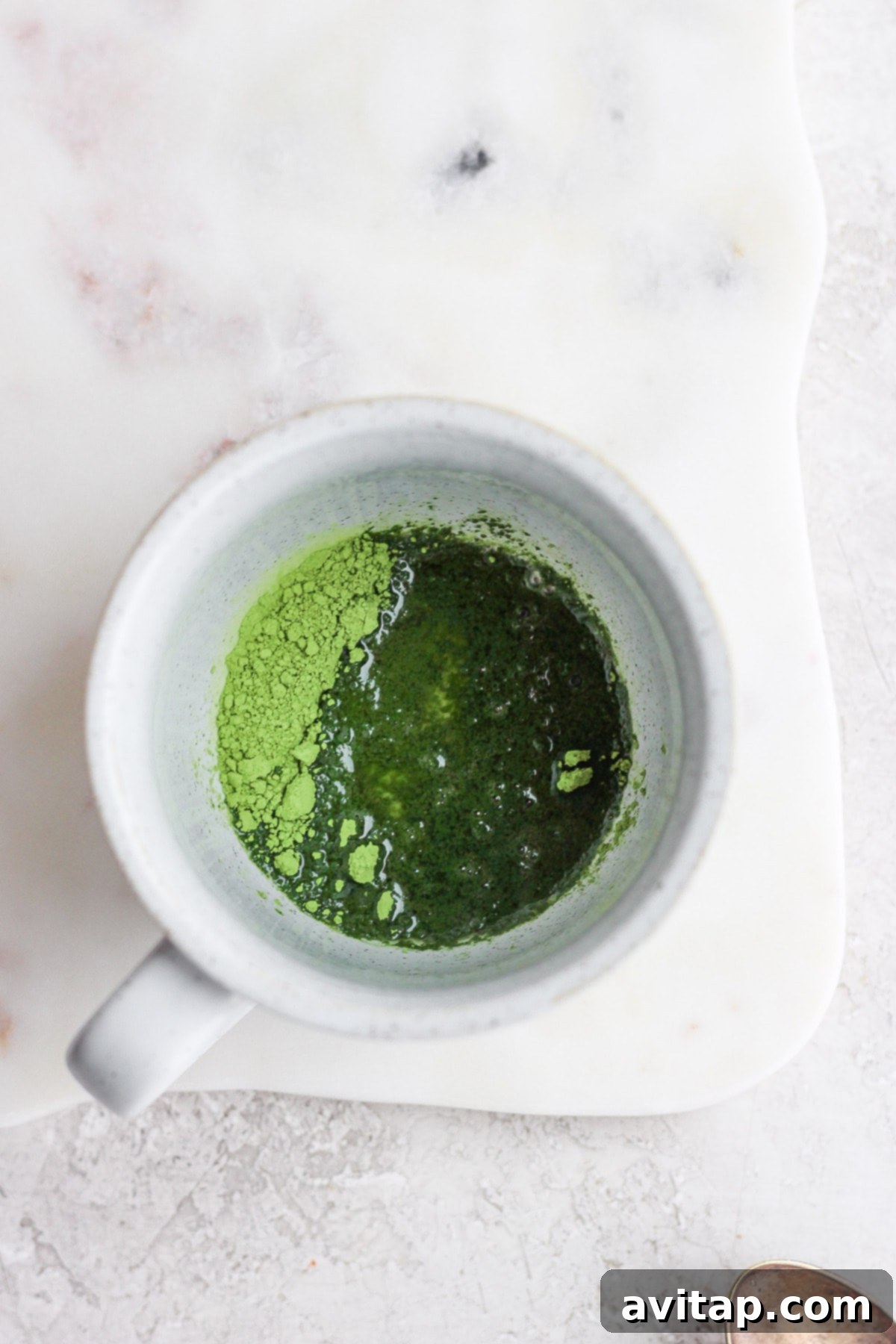
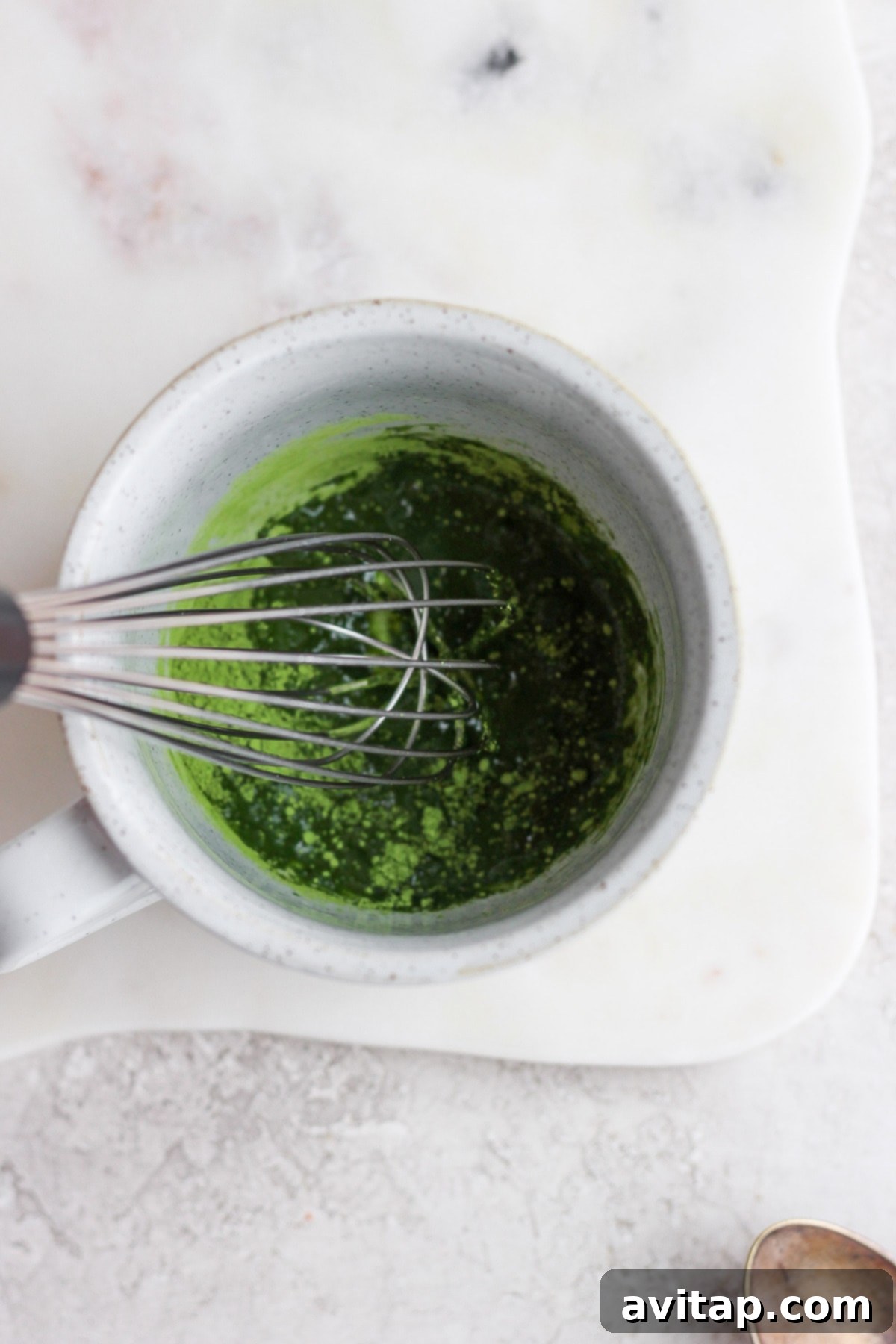
- Prepare Your Matcha Base: Begin by adding your desired amount of matcha powder (we recommend sifting it first for ultimate smoothness) into the bottom of your favorite mug. Pour in the hot water, ensuring it’s not boiling (around 175°F / 80°C). Using either a traditional bamboo whisk (chasen), a small regular whisk, or an electric frother, vigorously whisk the matcha powder into the hot water. Continue whisking until the powder is fully dissolved, forming a smooth, vibrant green liquid with a delicate foam on top and no visible lumps.
- Steam and Sweeten Your Milk: In a separate container (a small saucepan, a frothing pitcher, or directly in an electric milk frother), combine your chosen milk and the maple syrup (or other sweetener). Gently heat the mixture while simultaneously frothing it. If using a steam wand, position it just below the surface of the milk to incorporate air, then submerge it deeper to heat the milk to your desired temperature, aiming for a creamy, velvety texture with fine bubbles (microfoam). If using a handheld frother, simply froth the heated milk until it reaches your desired consistency. Avoid boiling the milk, as this can alter its flavor.
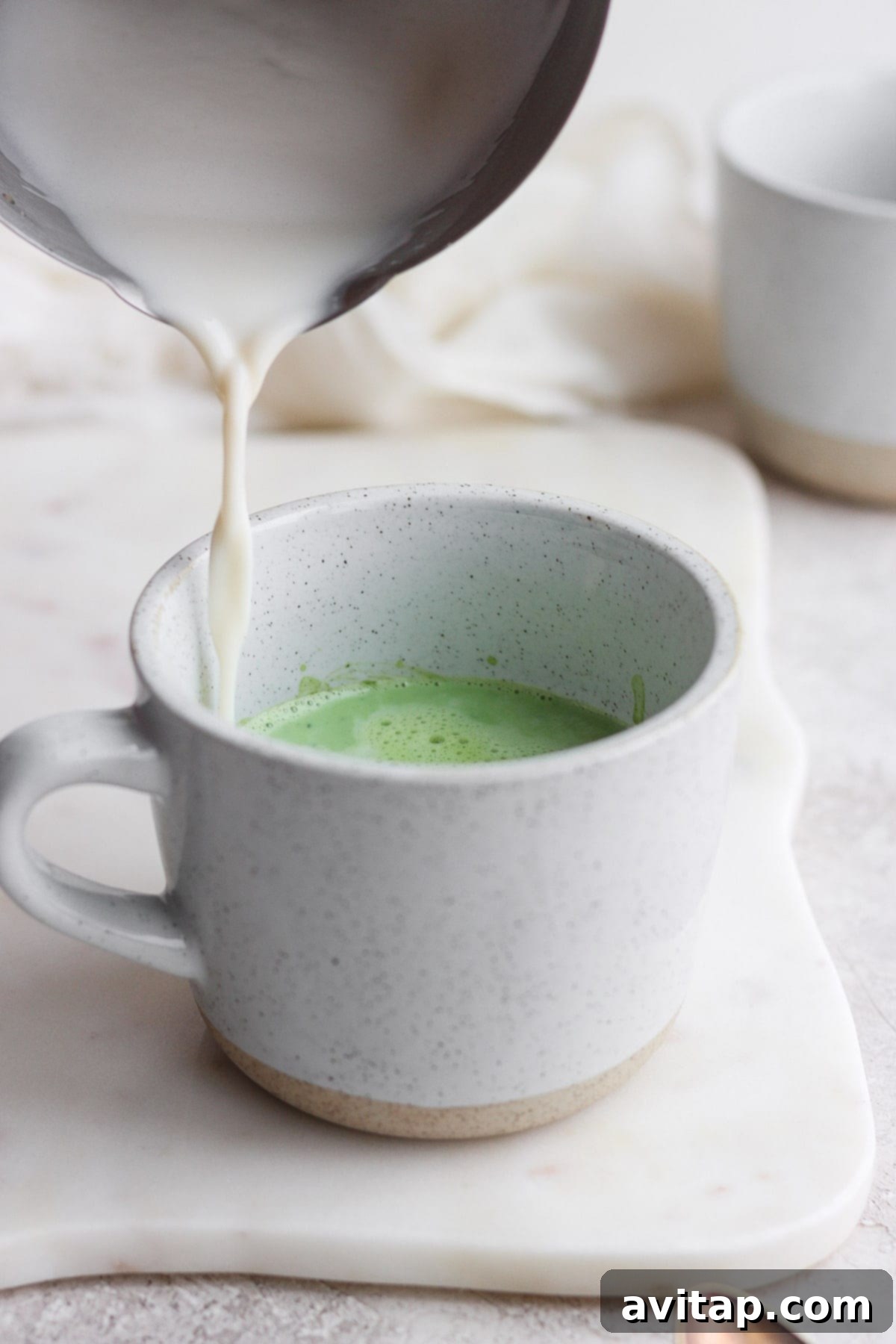
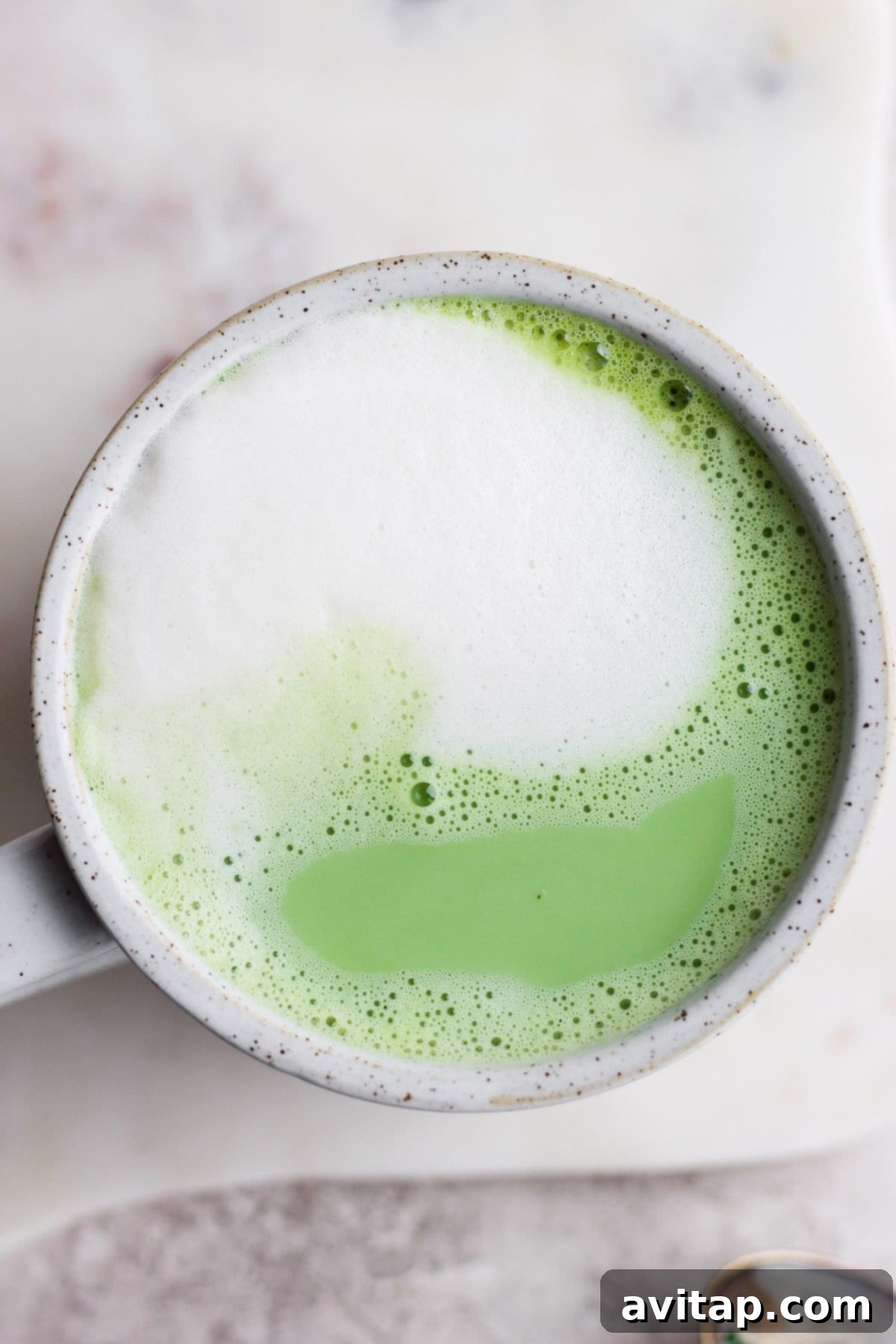
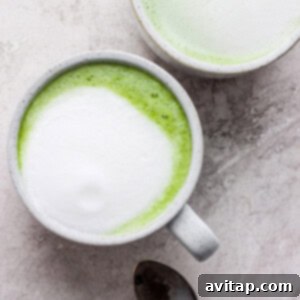
- Combine and Enjoy: Once your matcha base is perfectly smooth and your milk is beautifully steamed and frothed, it’s time to bring it all together. Slowly and carefully pour the warm, frothy milk into your mug over the prepared matcha. Stir gently to combine the layers, allowing the vibrant green to swirl beautifully with the creamy white foam. Take a moment to appreciate the aroma before taking your first sip. Your homemade matcha latte is now ready to be savored!
Cool Down with an Iced Matcha Latte!
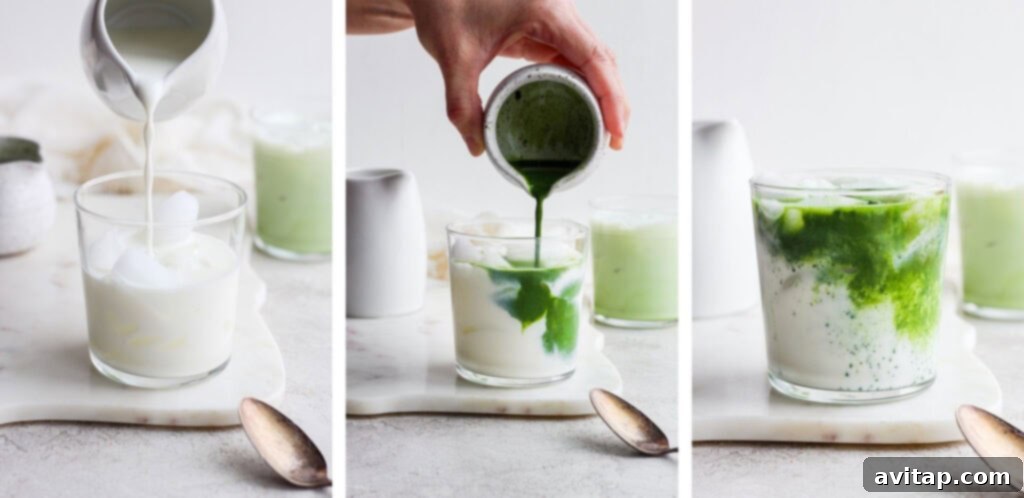
When the weather warms up or you simply prefer a refreshing chill, treat yourself to a delightful iced matcha latte. Our iced matcha latte recipe utilizes the same core ingredients, but with a slightly adapted method to ensure a perfectly cool and invigorating drink. It’s the ideal way to enjoy the rich flavors and energizing benefits of matcha on a hot day.
Pro Tips for the Perfect Matcha Latte
Achieving a café-quality matcha latte at home is easier than you think with these expert tips:
- Sift Your Matcha: Always, always sift your matcha powder before adding water. This prevents frustrating lumps and ensures a smooth, silky beverage that’s a pleasure to drink.
- Optimal Water Temperature: As mentioned, boiling water can damage matcha’s delicate flavor, making it bitter. Aim for water that’s hot but not boiling, around 175°F (80°C). If you don’t have a thermometer, let boiling water sit for a minute or two before using.
- Whisking Technique: When whisking the matcha and hot water, use a quick, back-and-forth “W” or “M” motion, rather than a circular stir. This technique helps to incorporate air and create a beautiful layer of fine foam, known as *crema*, on top of your matcha base.
- Quality Milk Matters: Different milks froth differently. Oat milk and almond milk are excellent plant-based choices for their frothing capabilities and creamy texture. Full-fat dairy milk also produces a rich foam. Experiment to find your favorite!
- Don’t Over-Steam Milk: Over-steamed milk can develop an unpleasant, scalded taste. Heat your milk just until it’s steaming and frothy, typically between 140-150°F (60-65°C).
- Adjust Sweetness to Taste: The amount of sweetener is entirely up to your personal preference. Start with a smaller amount and add more if needed. You can also experiment with other natural sweeteners like dates or stevia.
- Add Flavor Enhancements: For an extra layer of flavor, consider adding a tiny dash of vanilla extract, a pinch of cinnamon, or a hint of cardamom to your milk before steaming.
Why Choose a Matcha Latte? The Ultimate Healthy Indulgence
Beyond its delicious taste and beautiful appearance, the matcha latte offers a wealth of benefits that make it a superior choice for many:
- Sustained Energy: The combination of caffeine and L-theanine provides a calm, focused energy boost that lasts for hours, without the jitters or sudden crash associated with coffee.
- Rich in Antioxidants: Packed with catechins, especially EGCG, matcha helps protect your cells from damage, supports healthy aging, and boosts overall immune function.
- Enhances Focus and Calm: L-theanine not only moderates caffeine but also promotes alpha brain waves, leading to a state of relaxed alertness, improved concentration, and reduced stress.
- Metabolism Support: Studies suggest matcha can help boost metabolism and increase fat burning, making it a supportive drink for weight management.
- Detoxification: The chlorophyll content in matcha, due to its shade-grown cultivation, is believed to aid in detoxification, helping to cleanse the body.
- Versatile and Customizable: Whether you prefer it hot or iced, dairy or plant-based, subtly sweet or richly flavored, a matcha latte is incredibly versatile and can be tailored to your exact preferences.
Embracing matcha into your routine is more than just enjoying a trendy drink; it’s adopting a holistic approach to wellness, one delicious sip at a time.
More of our Favorite…
Explore More Delicious Matcha Recipes
If you’ve fallen in love with the vibrant flavor and health benefits of matcha, you’ll be thrilled to discover other creative ways to incorporate this superfood into your diet. Beyond lattes, matcha adds a unique twist to a variety of dishes. Here are a few more of our favorite matcha-infused recipes:
- Iced Matcha Latte: The perfect cooling complement to its warm counterpart.
- Matcha Waffles: Start your day with a nutritious and colorful breakfast.
- Banana Matcha Smoothie: A quick, healthy, and energizing blend for any time of day.
These recipes highlight the versatility of matcha, proving it’s much more than just a drink. Get creative and enjoy the green goodness!
How to Make Matcha Latte: Your Step-by-Step Recipe
Prep: 10 minutes
Cook: 0 minutes
Total: 10 minutes
Pin
Ingredients
- 1 teaspoon matcha powder
- 1 tablespoon hot water
- ¾ cup steamed almond milk, any kind of milk works
- 1 – 1.5 tablespoons maple syrup, depending on how sweet you like it
Instructions
-
Add your chosen matcha powder to the bottom of your mug. Pour in the hot water. Using a whisk (or an electric frother), whisk the two together vigorously until the matcha powder is completely dissolved and no lumps remain. A fine foam should form on the surface.
-
Next, combine your preferred milk and maple syrup in a separate container. Steam or froth this mixture using a milk frother until it is warm and beautifully frothy. Always follow the specific directions for your milk frother. If using the stovetop, gently heat the milk and use a hand frother to create foam, being very careful not to boil the milk, as burnt milk can ruin the flavor.
-
Finally, slowly and carefully pour the frothed, sweetened milk into the mug with your prepared matcha mixture. Stir gently to integrate the flavors and enjoy your perfect homemade matcha latte immediately!
Tips & Notes
- Ensure that the matcha powder is fully and completely dissolved in the hot water before adding the steamed milk. If you still see any dry clumps, add a tiny bit more hot water if necessary and continue whisking until it’s perfectly smooth. A smooth matcha base is key to a superior latte.
- For an extra smooth texture, consider sifting your matcha powder through a fine-mesh sieve into your mug before adding hot water. This helps prevent clumps from forming.
Nutrition
Nutrition information is automatically calculated, so should only be used as an approximation. It may vary based on specific ingredients and preparation methods.
Love this recipe? Leave a comment below!
We absolutely love seeing your creations! Don’t forget to tag your posts on social media with the hashtag #fitfoodiefinds, we’d be thrilled to see what you’re whipping up!
Photography by: The Wooden Skillet