
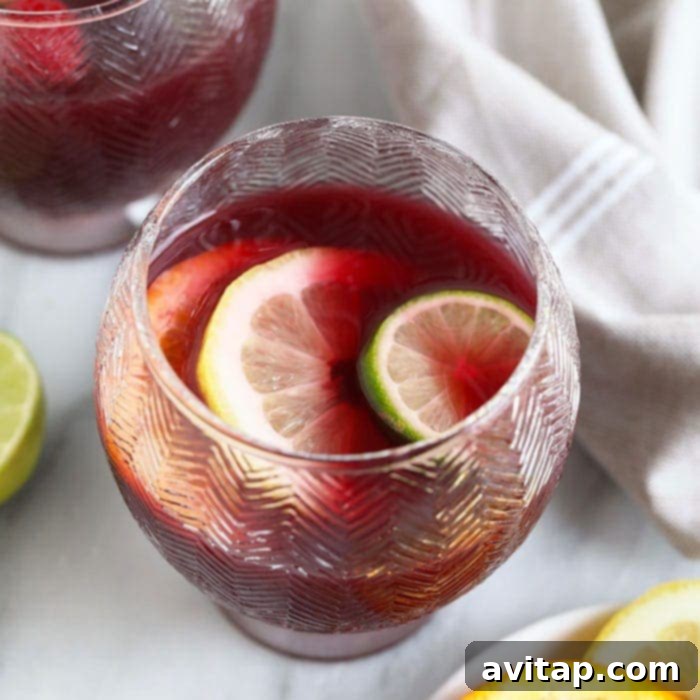
Welcome to your new favorite go-to beverage! We’re thrilled to share an incredibly **easy sangria recipe** that’s guaranteed to be a hit. This classic **red wine sangria** is crafted with your preferred dry Spanish red, vibrant orange juice, a splash of rum, and an abundance of freshly sliced citrus. It’s the quintessential drink for any gathering, embodying a perfect blend of refreshment and festive spirit.
Whether you’re hosting a casual get-together, a lively holiday party, or simply enjoying a relaxing evening, this **homemade sangria** always delivers. Its delightful taste and stunning appearance make it a true crowd-pleaser. For those seeking other festive sips, be sure to explore our recipes for Festive Hot Toddies and Raspberry Mulled Wine.
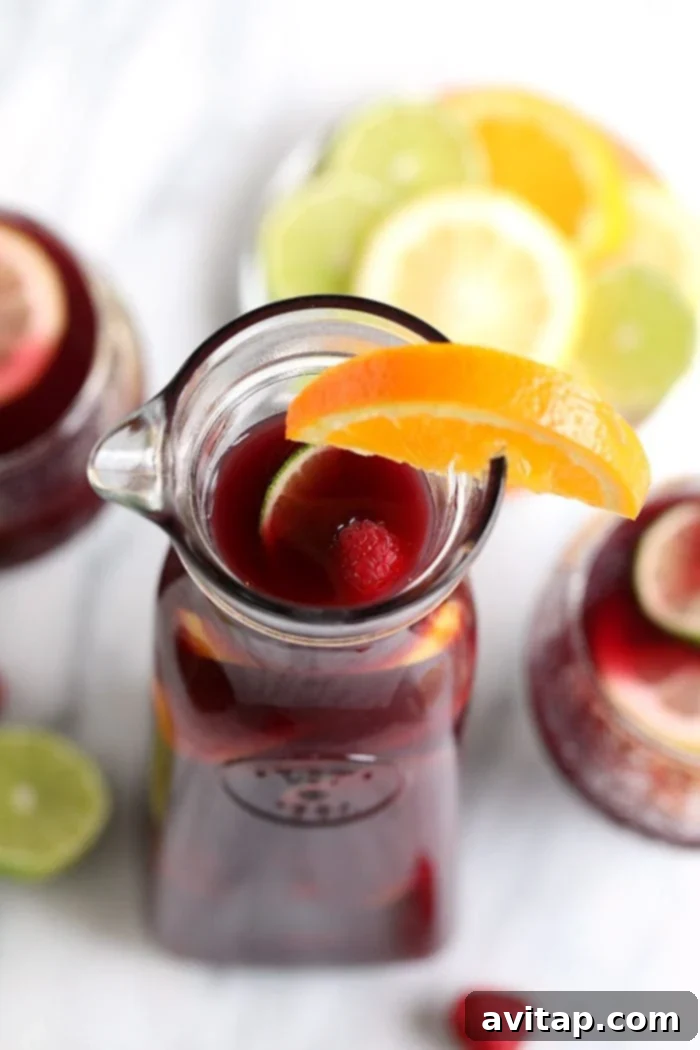
There’s nothing quite as satisfying as a perfectly chilled, citrus-infused **red wine sangria** served over ice. Just last weekend, I prepared a triple batch of this delightful **sangria recipe with rum** for a party, and it vanished almost instantly! It’s the kind of drink that sparks conversations and leaves everyone asking for the recipe.
A word of caution, though: this delicious concoction tastes deceptively mild, so sip responsibly! Its smooth, fruity notes beautifully mask its potent kick.
Unveiling the Magic of Sangria: A Deep Dive into this Classic Drink
Sangria, a beloved traditional Spanish drink, is more than just a cocktail; it’s an experience. Typically made with a dry red wine, a medley of fresh fruits, and other delightful additions like spirits, sugar, and various citrus elements, sangria is remarkably versatile. The beauty of **homemade sangria** lies in its adaptability, allowing you to customize it entirely to your taste and what you have readily available in your kitchen.
Given sangria’s incredible versatility as a refreshing drink or punch, let’s break down the essential components that form the foundation of any truly great sangria:
- The Wine: The Heart of Sangria
Whether you’re aiming for a vibrant rosé sangria, a crisp white wine sangria, or the rich **red wine sangria** we’re celebrating today, you’ll need at least one full bottle. For most sangria variations, a drier wine is usually preferred because the added fruits and spirits contribute sweetness. Opting for a dry wine creates a balanced flavor profile, preventing the drink from becoming overly saccharine. Our top recommendations for red wine include a Tempranillo, Garnacha, Zinfandel, or Cabernet Sauvignon. Since you’ll be mixing it with other ingredients, there’s no need to splurge on an expensive bottle; an affordable yet quality dry red will work perfectly for this **easy red wine sangria recipe**.
- The Booze: Adding Depth and Kick
Beyond the wine, a secondary spirit elevates the complexity and potency of your sangria. The type of liquor you choose can significantly influence the final taste, and it often depends on your base wine. For **red wine sangria**, white rum is a personal favorite due to its smooth and slightly sweet profile that complements the red wine without overpowering it. However, you can also experiment with dark rum for a richer, molasses-like note, brandy for a more traditional Spanish touch, or an orange liqueur like Triple Sec or Cointreau to amplify the citrus flavors. Each choice brings its own unique character to the blend.
- The Citrus: Essential for Brightness
In our humble opinion, sangria simply isn’t sangria without a generous amount of fresh citrus! Citrus fruits are crucial for several reasons: they impart that signature “punchy” and refreshing flavor, they balance the wine’s acidity, and most importantly, they brilliantly mask the alcohol’s strong taste, making the drink dangerously smooth and enjoyable. Oranges, lemons, and limes are classic choices, offering a delightful tang and vibrant aroma.
- Other Flavors: Fruits and Spices
While citrus is non-negotiable, other fruits and spices allow for endless customization. Think crisp apple slices, succulent pear wedges, an assortment of fresh berries (strawberries, blueberries, raspberries), or even seasonal stone fruits like peaches and plums. For a warmer, more aromatic sangria, especially during cooler months, consider adding cinnamon sticks, star anise, or a few cloves. These additions infuse the wine with layers of delightful fragrance and taste.
- Sweetener: Tailoring to Your Palate
Many **sangria recipes** call for an added sweetener to achieve the perfect balance. Options range from simple syrup (easily made at home with equal parts sugar and water), honey, maple syrup, or even brown sugar. The decision to add sweetener, and how much, is entirely up to your personal preference and the natural sweetness of your chosen fruits and wine. Always taste before adding too much!
- The Fizz: A Sparkling Finish
While not traditionally mixed directly into the main sangria batch, a touch of fizz is often added as a topper when serving. A splash of club soda, sparkling water, or ginger ale right before serving provides a lovely effervescence and lightens the drink. For an even more celebratory touch, consider topping with a dry sparkling wine like Cava or Prosecco for a **sparkling sangria** experience.
Exploring the Diverse World of Sangria Types
While **red wine sangria**, often referred to as **Spanish sangria**, is undoubtedly the most iconic and widely recognized form of this delightful beverage, the world of sangria is far richer and more varied than many realize. The type of sangria you create or enjoy is largely dictated by the base wine you select, combined with your choice of spirits and fruit add-ins. This flexibility allows for endless creativity and makes sangria a truly versatile drink for any season or occasion. Here are some other popular and exciting sangria variations to inspire your next batch:
- Rosé Sangria: Perfect for warmer months, rosé sangria offers a lighter, brighter profile. It pairs wonderfully with strawberries, peaches, and a hint of elderflower liqueur. Its delicate pink hue makes it visually appealing and incredibly refreshing.
- White Wine Sangria: A fantastic alternative to red, white wine sangria often features crisp, dry white wines like Pinot Grigio, Sauvignon Blanc, or Verdejo. Complementary fruits include green apples, peaches, grapes, and even pineapple. It’s typically lighter-bodied and incredibly refreshing.
- Moscato Sangria: For those who prefer a sweeter drink, Moscato sangria is an excellent choice. The naturally sweet and often effervescent Moscato wine pairs beautifully with berries, citrus, and a touch of peach schnapps, creating a light and bubbly concoction.
- Cider Sangria: A delightful seasonal twist, especially popular in autumn. Cider sangria uses hard cider as its base, often combined with apple slices, cinnamon sticks, caramel notes, and a splash of bourbon or apple brandy for a warm, comforting drink.
- Mulled Wine: While not strictly sangria, mulled wine shares its fruit and spice infusion philosophy. Served warm, it’s a quintessential winter drink, combining red wine with spices like cinnamon, cloves, star anise, and citrus, often sweetened with honey or sugar.
- Sparkling Sangria: Elevate any sangria recipe by using a sparkling wine like Cava, Prosecco, or even Champagne as your base, or by adding a significant top-off of these bubbly wines right before serving. This adds an extra layer of festivity and effervescence, perfect for celebrations.
- Seasonal Sangrias: Embrace the seasons! A summer sangria might feature watermelon, mint, and lime, while a winter sangria could incorporate cranberries, pomegranates, and rosemary. The possibilities are truly endless, limited only by your imagination and the availability of fresh produce.
Crafting the Perfect Easy Red Wine Sangria: Step-by-Step Guide
Making **red wine sangria** is incredibly straightforward, requiring just a few key ingredients to begin your culinary adventure. The magic truly happens during the steeping process, so preparation is key. Here’s what you’ll need and how to bring it all together:
Essential Ingredients:
- Dry Red Wine: One 750ml bottle. We highly recommend a dry Spanish wine for authentic flavor, but a versatile Cabernet Sauvignon, Merlot, or any reliable “house” red will also work wonderfully. The crucial aspect is its dryness, as the orange juice will naturally provide sweetness, ensuring a balanced taste.
- Orange Juice: 2 cups of 100% orange juice. Freshly squeezed is always best for superior flavor.
- White Rum: 9 oz (approximately 1 cup). White rum adds a smooth, clean alcoholic kick without overpowering the wine or fruit.
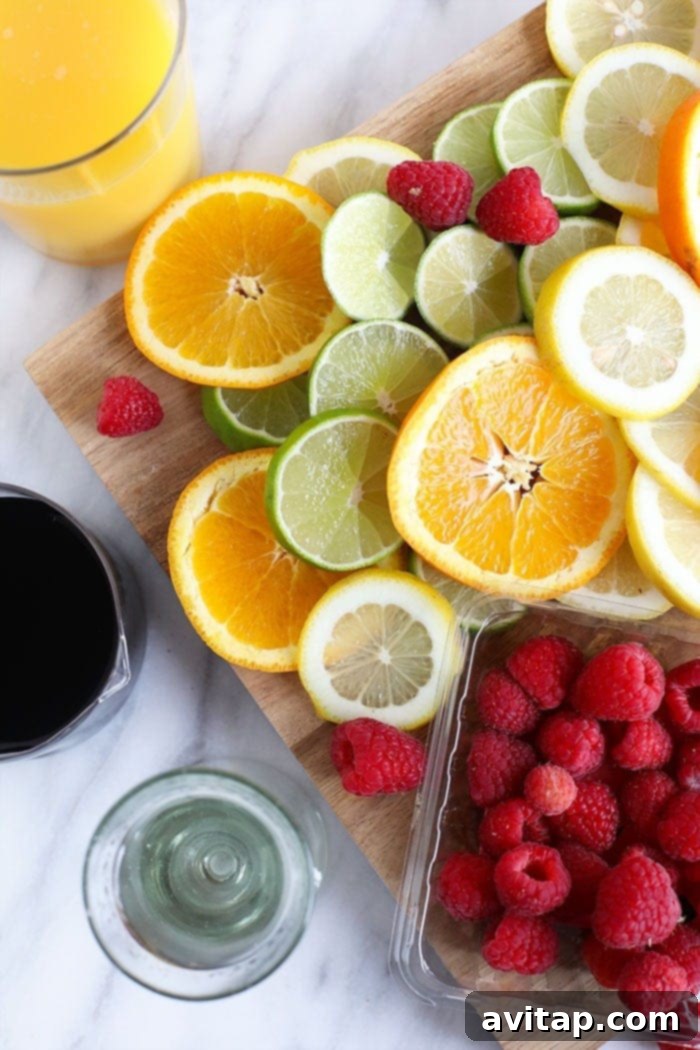
- Oranges: 2 medium, thinly sliced.
- Lemons: 2 medium, thinly sliced.
- Limes: 2 medium, thinly sliced.
- Raspberries: 1 pint, fresh.
Simple Instructions:
Once you’ve gathered and prepared all your ingredients, it’s time to combine them and let the flavors meld. This step is essential for developing the deep, rich taste that makes sangria so irresistible.
- Combine Ingredients: In a large pitcher or punch bowl, pour in the full bottle of dry red wine, followed by the orange juice and white rum.
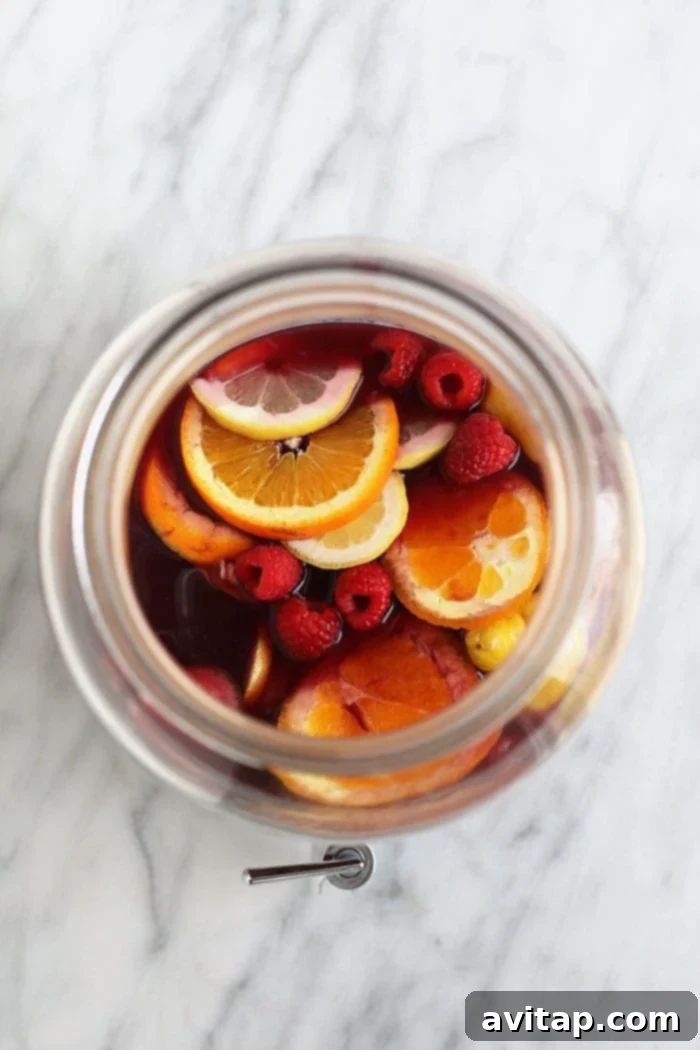
- Add Fruit: Gently add all the sliced oranges, lemons, limes, and fresh raspberries to the liquid mixture.
- Stir and Chill: Stir everything together thoroughly to ensure all ingredients are well combined. Cover the pitcher or bowl and place it in the refrigerator.
- Steep for Flavor: For the absolute best results, allow the sangria to steep for at least 6 hours, or ideally, overnight. This crucial steeping period allows the fruits to infuse their vibrant flavors and aromas into the wine mixture, creating a complex and harmonious blend.
- Serve: When ready to serve, pour the chilled sangria over ice in individual glasses. For an extra touch of effervescence, you have the option to add a splash of sparkling water, club soda, or even kombucha before serving.
Choosing the Best Red Wine for Sangria
The foundation of a truly exceptional **red wine sangria** begins with selecting the right wine. As previously mentioned, a dry red wine is typically preferred. Varietals such as Cabernet Sauvignon, Merlot, or Pinot Noir are excellent choices, offering a robust base without excessive sweetness. Spanish wines like Tempranillo or Garnacha are also fantastic, staying true to sangria’s origins. When it comes to price, you don’t need to break the bank. My general rule of thumb is to aim for a bottle that costs around $10-$15. This price point usually guarantees a decent quality wine that will hold up well to the added fruits and spirits, without being so precious that you’re hesitant to mix it.
The Role of the Booze: Elevating Your Sangria
A quick survey of various **sangria recipes** online will reveal a wide array of alcoholic additions. While brandy is a traditional choice, we often prefer making our **red sangria with rum**. Specifically, white rum tends to be a bit “softer” on the palate compared to some other spirits, contributing a smooth, clean kick that blends seamlessly with the wine and fruit. It goes down exceptionally smoothly, enhancing the drink without an overpowering alcoholic burn.
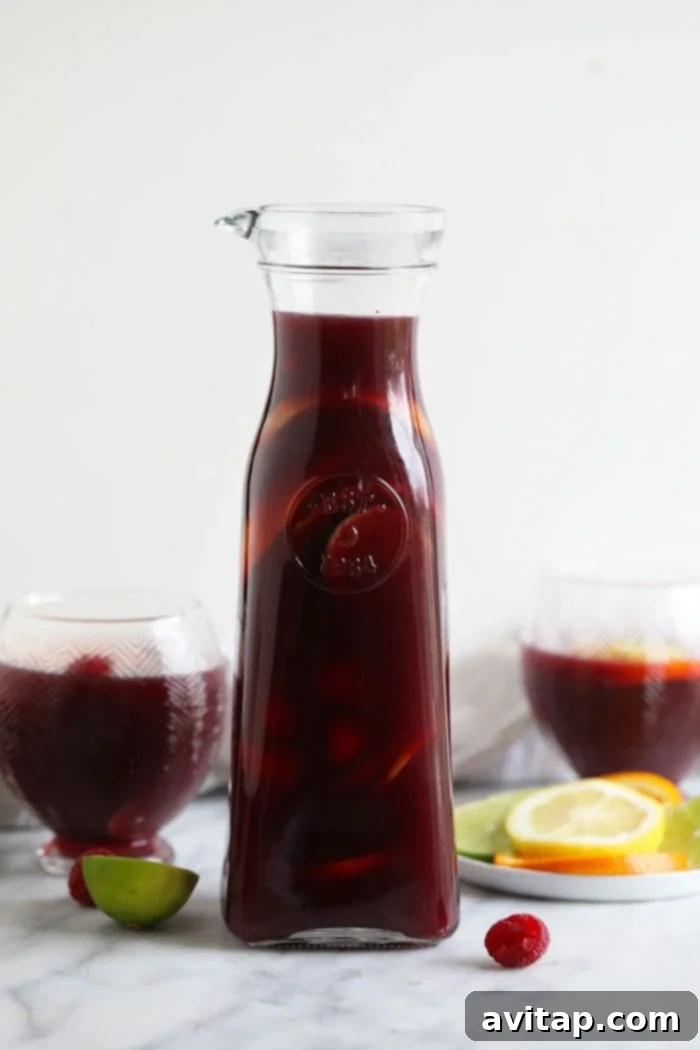
Understanding Sangria’s Alcoholic Punch
Despite its fruity and often refreshing taste, sangria can be surprisingly potent. The combination of wine, spirits (like rum), and the natural sweetness and acidity of the orange juice and other citrus fruits does an excellent job of masking the underlying alcohol content. This deceptive smoothness is part of its charm but also a reason for caution. It’s easy to enjoy several glasses without fully realizing just how much alcohol you’ve consumed. If you’re looking to create a milder version, or simply prefer a less boozy drink, feel free to reduce the amount of rum (or other spirits) in this recipe. You can also offset the reduction by adding more fruit juice or a splash of sparkling water.
The Best Sangria Fruit Combinations for Ultimate Flavor
While my personal preference for **red wine sangria** leans heavily towards all things citrus, the beauty of this drink is its adaptability. You can truly use almost any fruit you have on hand, allowing for endless creative combinations and seasonal variations. The key is to select fruits that will release their juices and flavors into the wine, adding both sweetness and complexity. Here are some fantastic fruit pairing ideas to inspire your next batch of homemade sangria:
- Classic Citrus Medley: Oranges, Lemons, and Limes are the traditional foundation, providing essential brightness and balancing acidity.
- Strawberry + Lime: A wonderfully refreshing combination, especially in warmer weather. The sweetness of strawberries pairs beautifully with the tangy zest of lime.
- Apple + Orange: Crisp apple slices add a lovely texture and subtle sweetness, harmonizing perfectly with the bright flavor of oranges. This is a great choice for a year-round sangria.
- Pear + Cranberries: An excellent duo for an autumnal or winter sangria. Pears offer a delicate sweetness and soft texture, while cranberries provide a tart counterpoint and beautiful color.
- Blueberry + Lemon: The earthy sweetness of blueberries gets a vibrant lift from fresh lemon slices, creating a light and juicy sangria that’s especially good with a white or rosé base.
- Peach + Raspberry: A delightful summer pairing. Sweet, juicy peaches and slightly tart raspberries create a vibrant and aromatic sangria. Consider adding a splash of peach schnapps for extra flavor.
- Pineapple + Mint: For a tropical twist, fresh pineapple chunks add a juicy sweetness, while mint leaves provide a cool, aromatic finish.
- Mixed Berries: A blend of strawberries, blueberries, raspberries, and blackberries is always a winning combination, offering a complex berry flavor that works well with any wine base.
Remember, the longer the fruit steeps in the wine, the more intense the flavor infusion will be. Don’t be afraid to experiment with your favorite seasonal produce!
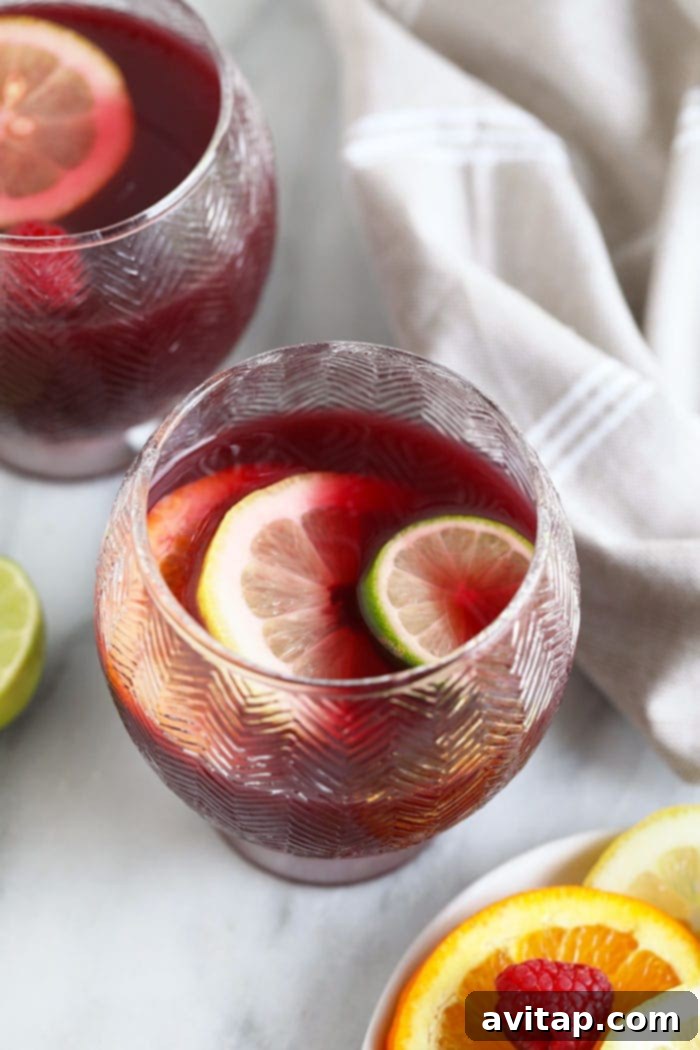
Tips for the Perfect Sangria Every Time
- Chill Thoroughly: The key to a great sangria is allowing the flavors to meld. Minimum 2 hours of chilling is essential, but overnight is always best. This allows the fruit to properly infuse the wine and spirits.
- Taste and Adjust: Before serving, always taste your sangria. You might find it needs a little more sweetness (add a touch of simple syrup or honey) or a bit more tang (a squeeze of fresh lemon or lime juice).
- Don’t Muddle Excessively: While you want the fruit flavors to release, avoid mashing or muddling the fruit too vigorously. This can release bitter compounds from the citrus rinds. Gentle stirring is sufficient.
- Fresh vs. Frozen Fruit: Fresh fruit is always recommended for the best flavor and texture. However, frozen fruit can be a good substitute, especially if you’re making a large batch and want to keep it extra cold without diluting it with ice.
- Serving Ice: Always serve sangria over ice. This keeps the drink cold and refreshing. Consider making large ice cubes or spheres to prevent quick dilution.
- Garnish Generously: Don’t forget the visual appeal! Garnish each glass with fresh fruit slices, a sprig of mint, or a cinnamon stick to enhance the experience.
- Batch Size: This recipe is easily doubled or tripled, making it ideal for entertaining large groups. Simply scale up the ingredients proportionally.
Frequently Asked Questions About Sangria
How long does sangria last?
When stored in the refrigerator, homemade sangria typically lasts for 2-3 days. The fruit will start to break down and become mushy after this point, and the flavors might become less vibrant. For best results, consume it within 24-48 hours.
Can I make sangria without alcohol?
Absolutely! You can create a delicious non-alcoholic “mock sangria” by replacing the red wine with grape juice (red or white, depending on your desired flavor profile) and omitting the rum. Add extra sparkling water, fruit juices, and plenty of fresh fruit for a refreshing and family-friendly option.
What’s the best time to make sangria?
Sangria is best made several hours in advance, allowing ample time for the flavors to meld and deepen. Preparing it the night before serving is ideal, as an overnight chill results in the most robust and harmonious taste.
Can I use pre-made sangria mix?
While pre-made sangria mixes are available, they often contain artificial flavors and excessive sugar. For the freshest, most authentic taste, we highly recommend making your sangria from scratch using fresh ingredients. The effort is minimal, and the difference in flavor is significant.
More of our Favorite…
Delightful Drink Recipes to Explore
- Strawberry Peach Frosé
- Best Frozen Margaritas
- Cucumber Melon Ginger Punch
- Skinny Margarita
Easy Red Wine Sangria Recipe
This easy sangria recipe is a true crowd-pleaser! It combines your favorite Spanish red wine with orange juice, white rum, and an abundance of fresh citrus and berries for a vibrant, unforgettable party drink.
By: Lee Funke
Prep Time: 10 minutes
Total Time: 10 minutes (plus 6+ hours chilling)
Servings: 6
Ingredients
- 1 (750 ml) bottle of dry Spanish red wine (e.g., Tempranillo, Garnacha)
- 2 cups 100% orange juice (freshly squeezed for best results)
- 9 oz. white rum (about 1 cup)
- 2 oranges, thinly sliced
- 2 lemons, thinly sliced
- 2 limes, thinly sliced
- 1 pint fresh raspberries
Optional Additions
- Top off with kombucha or fizzy water before serving for extra sparkle.
- 1/4 cup simple syrup, honey, or maple syrup for extra sweetness, if desired.
- Additional fruits like apple slices or peach wedges.
Instructions
- Combine Liquids: In a large pitcher or punch bowl, combine the dry red wine, orange juice, and white rum. Stir gently to mix.
- Add Fruit: Carefully add all the sliced oranges, lemons, limes, and fresh raspberries to the liquid mixture.
- Chill and Steep: Stir the sangria once more to ensure everything is well distributed. Cover the pitcher or bowl and refrigerate for at least 6 hours. For the deepest, most infused flavors, chilling overnight is highly recommended.
- Serve: Once thoroughly chilled and infused, serve the sangria over ice. For an optional touch of effervescence, add a splash of sparkling water, club soda, or kombucha to each glass just before serving. Garnish with extra fresh fruit if desired.
Tips & Notes
- For optimal flavor, ensure the sangria sits overnight in the refrigerator, allowing all the ingredients to fully meld.
- This recipe is incredibly easy to scale up. Feel free to double or triple the ingredients for larger gatherings.
- The estimated yield per serving is approximately 1 cup (240ml).
- Always taste your sangria before serving and adjust sweetness or tartness to your preference.
Nutrition (Approximate per serving)
Carbohydrates: 9 g
Protein: 1 g
Fat: 0 g
Fiber: 0 g
Sugar: 7 g
Nutrition information is an approximation and can vary based on specific ingredients and serving sizes.
Love this **easy red wine sangria**? Leave a comment below!
Don’t forget to tag your posts on social media with the hashtag #fitfoodiefinds – we’d absolutely love to see your delicious creations!