
The Ultimate No-Equipment Cardio Warm-Up: Your Go-To Routine for Fitness Anytime, Anywhere
Are you one of those individuals who dreads the thought of another monotonous session on the treadmill or elliptical? Perhaps you don’t have access to a fully equipped gym, or maybe your busy schedule means hitting the gym isn’t always an option. And for our intrepid travel bunnies out there, finding a quick, effective warm-up in a hotel room can be a real challenge. We hear you!
This dynamic, circuit-based warm-up is designed specifically with all these scenarios in mind. It’s a versatile routine that proves you don’t need fancy machines or a lot of space to get your body primed for action. Get ready to discover a warm-up fit for everyone, no matter your location or equipment access.
Introducing The 20’s Cardio Warm-Up: Beat Boredom, Boost Readiness
I call it “The 20’s Cardio Warm-Up” because it’s built on efficient, short bursts of movement that elevate your heart rate and wake up your muscles. This isn’t just about going through the motions; it’s about engaging your body and mind, prepping you for the workout to come without the usual warm-up drudgery.
The beauty of this routine lies in its simplicity and effectiveness. It’s a circuit-based approach that actively combats boredom, ensuring you stay motivated and energized from the very first move. Each round is designed to be completed in just one minute, featuring five distinct exercises. The goal is to perform as many rounds as you like until your body feels sufficiently warm, limber, and ready to tackle your main workout with full vigor.
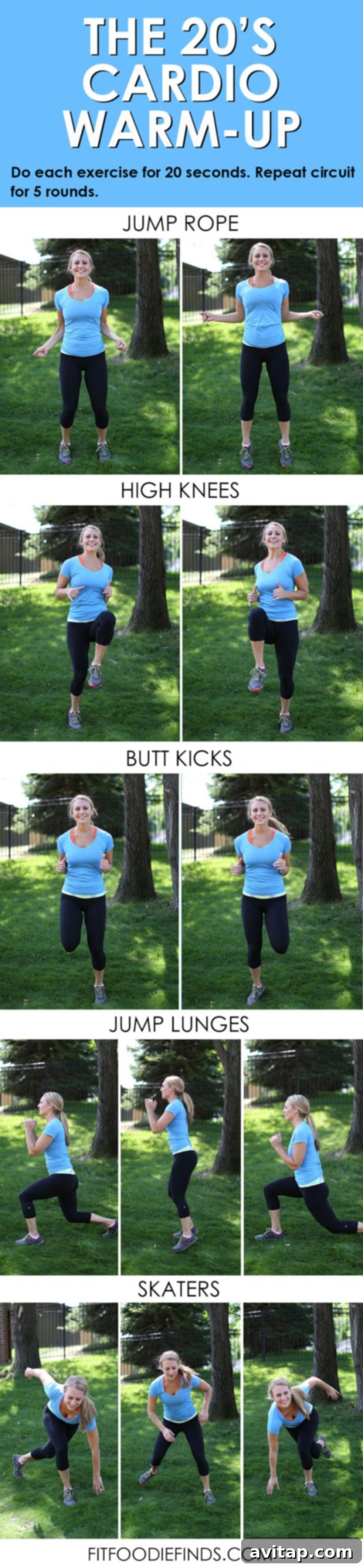
Photo Credits: Brooke Alexandra Photography
Why a Proper Warm-Up is Non-Negotiable for Every Fitness Level
Before diving into the specifics of “The 20’s Cardio Warm-Up,” let’s take a moment to understand why a proper warm-up is an absolute cornerstone of any effective fitness regimen. It’s more than just a pre-workout formality; it’s a strategic preparation that yields significant benefits, safeguarding your body and enhancing your performance.
Injury Prevention and Joint Health
- Increased Blood Flow: A warm-up gradually increases blood flow to your muscles, delivering more oxygen and nutrients. This prepares your muscles for exertion, making them more pliable and less prone to strains or tears.
- Enhanced Muscle Elasticity: Cold muscles are stiff and less elastic. Dynamic movements in a warm-up improve muscle elasticity, allowing them to stretch and contract more efficiently during your workout.
- Lubricated Joints: Movement stimulates the production of synovial fluid, which acts as a natural lubricant for your joints. This reduces friction and allows for smoother movement, protecting cartilage and preventing joint pain.
- Improved Range of Motion: A proper warm-up gradually expands your joints’ range of motion, preparing them for the specific movements of your exercise. This prevents overstretching cold tissues and minimizes the risk of pulls.
Optimized Performance and Mental Readiness
- Gradual Heart Rate Elevation: Jumping straight into intense exercise can shock your cardiovascular system. A warm-up gradually raises your heart rate, preparing your heart and lungs for the demands of the workout and improving your endurance.
- Improved Nerve-Muscle Connection: Warming up helps activate the neural pathways between your brain and muscles. This leads to better coordination, quicker reaction times, and more efficient muscle recruitment during your main workout.
- Mental Focus and Preparation: Beyond the physical, a warm-up provides a crucial mental transition. It allows you to shift focus from daily distractions to your fitness goals, enhancing concentration and mental readiness for the challenge ahead.
- Enhanced Oxygen Delivery: As your body warms up, hemoglobin releases oxygen more readily to your working muscles. This improved oxygen delivery means your muscles can perform more effectively and for longer durations.
Skipping your warm-up is akin to trying to drive a car with a cold engine – it might run, but not optimally, and with a higher risk of wear and tear. “The 20’s Cardio Warm-Up” ensures your body is a finely tuned machine, ready to perform at its best.
How The 20’s Cardio Warm-Up Works: Simple, Effective, Adaptable
This warm-up is designed for maximum efficiency and engagement. Here’s a breakdown of its structure and how to make it work for you:
- Circuit-Based Approach: The routine is structured as a circuit, meaning you move from one exercise to the next with minimal rest. This keeps your heart rate consistently elevated and ensures full-body activation.
- Five Exercises Per Round: Each minute-long round consists of five distinct, dynamic exercises. The idea is to spend approximately 10-12 seconds on each exercise, transitioning quickly between them to maintain intensity. Alternatively, you can opt for 20 seconds per exercise with quick 4-second transitions, cycling through 3 exercises per minute. The flexibility is yours to decide what works best for your flow.
- Duration: The beauty of this warm-up is that you do it for as many rounds as you need. Typically, 5-10 minutes (5-10 rounds) is sufficient for most individuals to feel adequately warm and ready. Listen to your body: a light sweat, slightly elevated breathing, and muscles feeling pliable are good indicators that you’re prepared.
- Progressive Intensity: Start slow and controlled with each exercise, focusing on form. As your body warms up through the rounds, you can gradually increase your speed and range of motion, making the movements more dynamic.
Sample Dynamic Exercises for Your 20’s Warm-Up
While the original concept doesn’t list specific exercises, here are some universally effective, no-equipment options that fit perfectly into “The 20’s Cardio Warm-Up” circuit:
- Jumping Jacks: A classic full-body cardio move. Start with feet together and arms at your sides, then jump, spreading your legs wide and bringing your arms overhead, before returning to the start. Focus on a rhythmic, controlled pace.
- High Knees: March or run in place, bringing your knees up towards your chest. Keep your core engaged and pump your arms in opposition to your legs. This is excellent for hip flexor activation and increasing heart rate quickly.
- Butt Kicks: Similar to high knees, but instead of bringing your knees forward, focus on kicking your heels back towards your glutes. This warms up the hamstrings and quadriceps dynamically.
- Arm Circles (Forward and Backward): Stand tall with arms extended out to the sides. Perform small, controlled circles, gradually increasing the size. After a few seconds, reverse the direction. This mobilizes the shoulder joints and upper back.
- Leg Swings (Front-to-Back): Stand tall, holding onto a wall or chair for balance if needed. Swing one leg forward and backward in a controlled arc, keeping your core stable. Switch legs. This improves hip mobility and warms up the hamstrings and hip flexors.
- Torso Twists / Rotations: Stand with feet shoulder-width apart, knees slightly bent. Gently twist your torso from side to side, letting your arms swing naturally. Keep the movement fluid and avoid forcing it. This warms up the obliques and improves spinal mobility.
- Bodyweight Squats (Shallow): Perform squats without weight, focusing on controlled movement. Only go as deep as comfortable, perhaps just a quarter or half squat, to activate the glutes and legs without full exertion.
Remember, the key is continuous movement. Don’t worry about perfection; focus on keeping your body moving and your heart rate rising.
Customization is Key: Tailor Your Warm-Up to Your Needs
One of the greatest advantages of “The 20’s Cardio Warm-Up” is its incredible adaptability. This isn’t a rigid routine; it’s a template you can personalize to suit your body’s specific requirements, preferences, and any physical limitations you might have.
- Addressing Knee Problems: If certain moves put strain on your knees, don’t hesitate to swap them out. For example, instead of high knees or jumping jacks, you could opt for gentle marching in place, step-ups onto a low sturdy surface, or glute bridges. Shallow bodyweight squats with a focus on proper form can also be a great, low-impact alternative. The goal is to elevate your heart rate and warm your muscles without causing discomfort.
- Personal Preferences: Don’t like a particular exercise? Simply replace it with one of your favorite cardio moves! The fitness world offers a plethora of options. Maybe you prefer dynamic stretches like walking lunges or gentle leg swings. The important thing is that the movement is dynamic, gets your blood flowing, and you enjoy it. This ensures consistency and adherence to your warm-up routine.
- Varying Intensity: On days when you feel less energetic, you can perform the movements at a slower pace and smaller range of motion. On days when you’re feeling strong, you can increase the speed and amplitude of your movements, making the warm-up more challenging.
- Focusing on Specific Areas: If your main workout targets a particular muscle group (e.g., upper body or legs), you can choose warm-up exercises that pre-activate those specific muscles. For an upper body day, include more arm circles, shoulder shrugs, and gentle torso twists. For a leg day, emphasize leg swings, dynamic lunges, and calf raises.
This ability to create a truly custom warm-up ensures that your routine is tailored specifically to you, enhancing its effectiveness and making it more sustainable in the long run. Listen to your body, make adjustments, and embrace the flexibility this warm-up offers.
Tools for Timing Your Circuit: Harnessing Technology for Fitness
To execute “The 20’s Cardio Warm-Up” effectively, you’ll need a reliable way to keep track of your time. While a simple stopwatch can certainly do the trick, investing in or utilizing a handy interval timer can significantly enhance your warm-up experience.
- The Stopwatch Method: If you’re going old school, a basic stopwatch works perfectly. Simply start the timer at the beginning of your circuit and keep an eye on the clock to ensure each round lasts approximately one minute. You’ll need to manage your transitions manually, but it’s a perfectly viable option.
- The Power of Interval Timers: This is where technology truly shines for fitness. Interval timers are designed to automate your work and rest periods, allowing you to focus entirely on your movement rather than watching the clock. Many apps allow you to pre-set custom intervals, for example, 10-12 seconds of work per exercise with quick transitions, or even specific work-to-rest ratios for different types of workouts.
- Smartphone Apps: Your Free Fitness Assistant: The best part? You don’t need to buy a dedicated device. Your smartphone is a powerful tool already in your pocket. Simply head to your device’s app store (whether it’s Apple’s App Store or Google Play) and search for “interval timer.” You’ll be presented with a plethora of free, feature-rich options. These apps often come with customizable alarms, different sound cues for transitions, and even the ability to save your favorite warm-up routines. They make keeping track of your one-minute rounds incredibly seamless and efficient.
Modern smartphones, packed with powerful processors and user-friendly interfaces, have transformed into essential fitness companions. Beyond simply making calls, they serve as personal trainers, nutrition trackers, and, crucially for this warm-up, precise interval timers. The constant evolution of this technology, with new models and features frequently emerging, ensures we always have advanced tools at our fingertips to support our health and fitness journeys. So, leverage the tech you already own to make your warm-up routine as smooth and effective as possible.
Integrating Your Warm-Up into Any Routine and Beyond
While designed as a preparation for your main workout, the “20’s Cardio Warm-Up” is versatile enough to be incorporated into various aspects of your daily fitness and wellness routine.
- Before Strength Training: This warm-up is exceptional before lifting weights. It mobilizes joints, activates major muscle groups, and gets your cardiovascular system ready, ensuring you approach your lifts with full power and reduced risk of injury.
- Before Cardio Sessions: Even if your main workout is a run or a cycle, a dynamic warm-up like this can significantly improve your performance. It primes your muscles for sustained effort, improves oxygen uptake, and gets your body accustomed to movement before hitting peak intensity.
- As an Energy Boost: Feeling sluggish during a long workday? A quick 5-minute round of “The 20’s Cardio Warm-Up” can be an incredible energy booster. It’s a fantastic way to break up prolonged sitting, increase blood flow, and clear your mind, leaving you feeling refreshed and re-energized.
- For Active Recovery: On lighter days or as part of an active recovery strategy, a gentle version of this warm-up can promote circulation and flexibility without putting excessive strain on your body.
By making this dynamic warm-up a consistent part of your routine, you’re not just preparing for a workout; you’re investing in long-term health, injury prevention, and optimized physical performance. It’s a simple, yet profoundly effective habit that pays dividends.
Final Thoughts: Embrace Dynamic Movement!
So, for all the treadmill skeptics, the gym-less warriors, and the globe-trotting fitness enthusiasts, “The 20’s Cardio Warm-Up” offers a refreshing and highly effective alternative. It’s proof that a powerful warm-up doesn’t require complex machinery or vast amounts of time. All it takes is a commitment to dynamic movement and a willingness to listen to your body.
Make this circuit your own. Experiment with different exercises, adjust the intensity, and truly personalize it until you have a warm-up that not only prepares your body but also gets you excited for the workout ahead. Your body will thank you!
Questions for You:
1. Do you consistently warm up before your strength training sessions?
2. Are you generally a fan of traditional cardio machines like treadmills, or do you prefer other forms of cardio?
3. What’s your favorite dynamic warm-up exercise?