
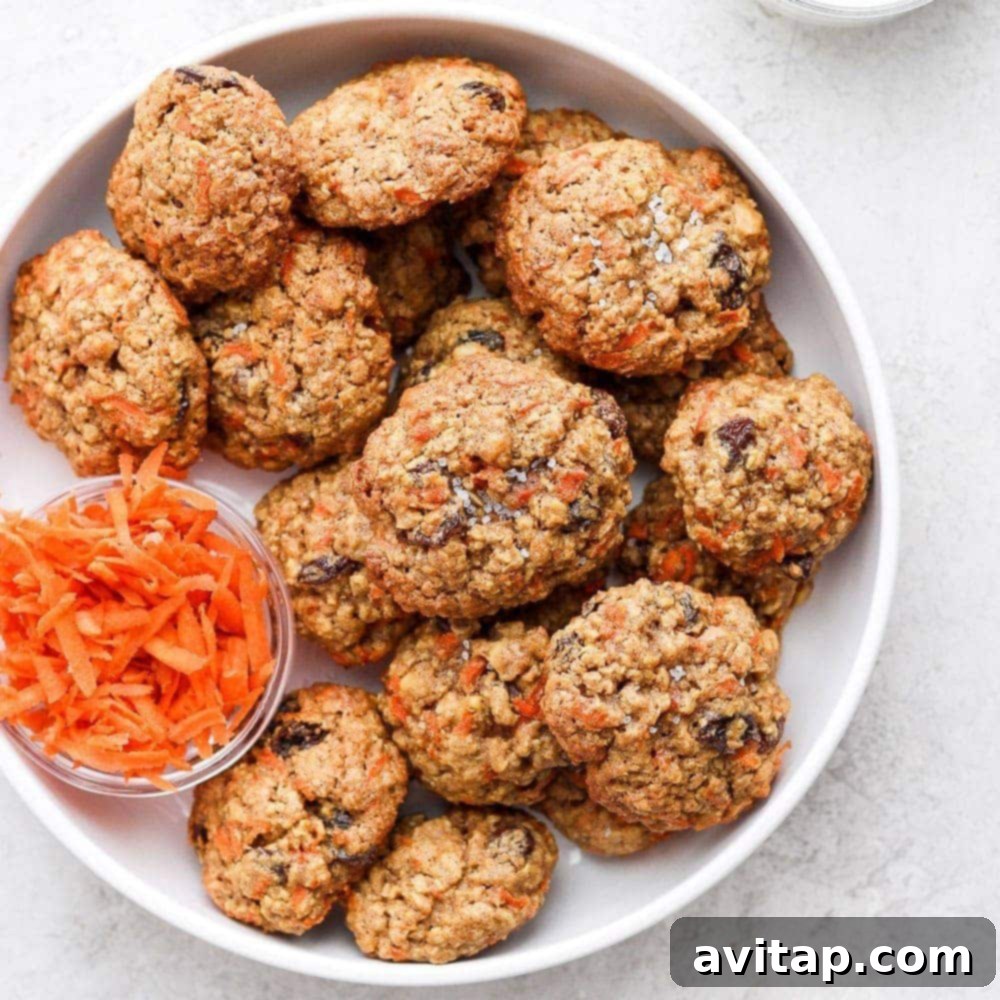
Welcome to the delightful world of **Oatmeal Carrot Cake Cookies**, a perfect fusion of wholesome ingredients and irresistible flavor that you’ll want to bake again and again! These cookies are more than just a treat; they’re a comforting indulgence packed with nourishing elements. Crafted with hearty oats, wholesome white whole wheat flour, naturally sweet grated carrots, aromatic cinnamon and nutmeg, and bursts of juicy raisins, they strike an ideal balance between deliciousness and health. Whether you’re seeking a satisfying snack, a wholesome dessert, or a portable breakfast option, these cookies are designed to be enjoyed any time of day.
If you find yourself with an abundance of carrots and are looking for more ways to incorporate this vibrant vegetable into your diet, consider expanding your culinary repertoire. After baking a batch of these incredible cookies, why not explore our healthy carrot cake recipe for a more traditional dessert experience, or whip up a batch of carrot cake overnight oats for a convenient and nutritious breakfast? Each recipe highlights the versatility and natural sweetness of carrots, proving that healthy eating can be incredibly flavorful and enjoyable.
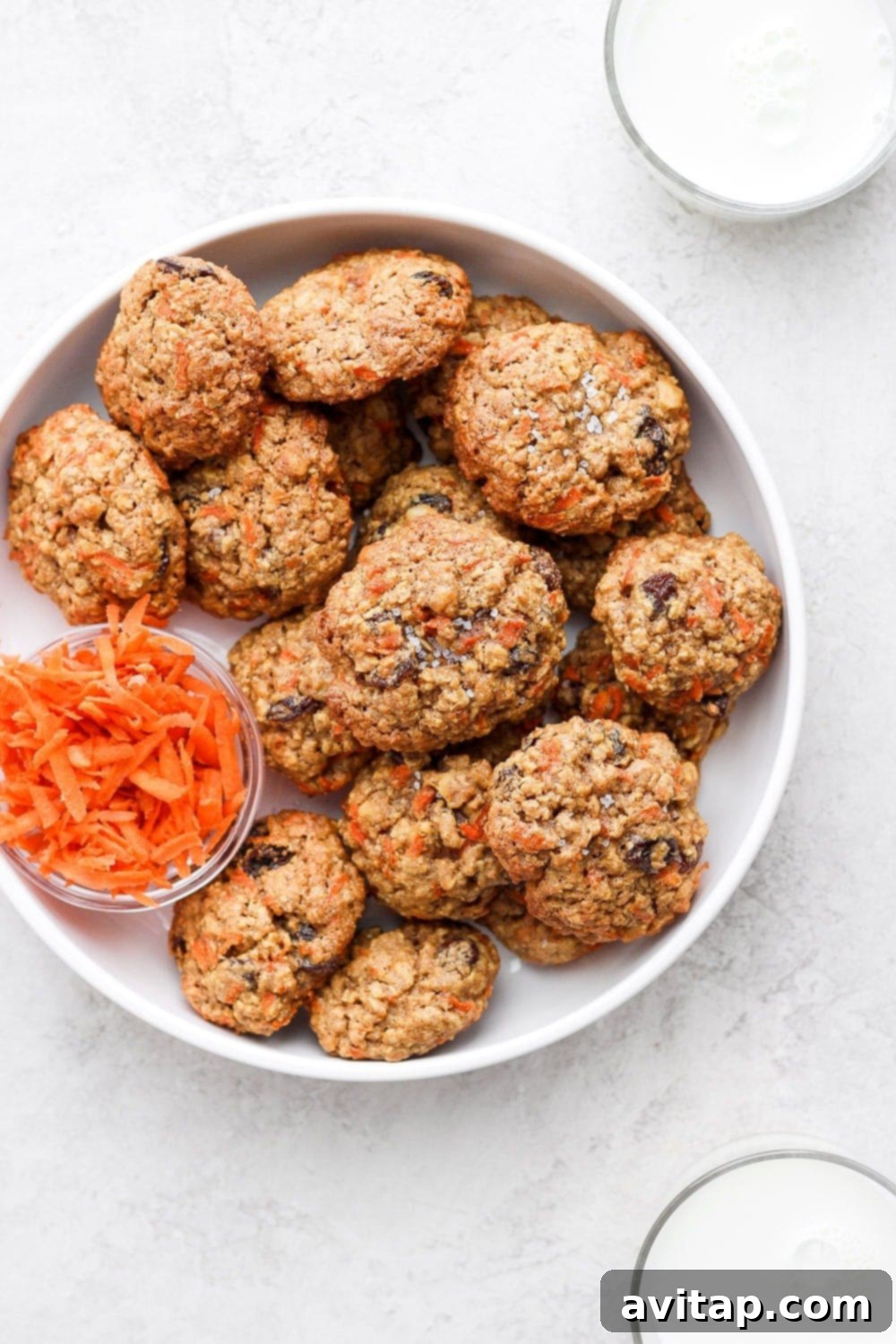
Embrace Wholesome Goodness: The Secret to Healthy Cookies (It’s the Carrots!)
It’s a culinary truth universally acknowledged: incorporating pureed or shredded vegetables into your baked goods is a brilliant and often undetectable way to boost your daily vegetable intake. Far from being a mere gimmick, this clever trick transforms ordinary treats into nutrient-dense powerhouses without compromising on taste or texture. In fact, it often enhances them!
We’ve successfully integrated vegetables into a variety of our popular recipes, proving just how versatile and beneficial this approach can be. From the vibrant hues of our sneaky beet brownies, which get an extra layer of richness and moisture from beets, to the wholesome goodness found in our zucchini waffles, where shredded zucchini keeps things incredibly tender, and even our sweet potato pancakes that burst with natural sweetness and fiber. What do all these delightful dishes have in common, beyond their impressive vegetable content? They are consistently praised for being exceptionally moist, tender, and, of course, absolutely delicious!
The magic of vegetable purées or finely shredded vegetables lies in their natural ability to add significant moisture to baked goods like cookies, pancakes, breads, and waffles. This inherent moisture means you can often reduce the amount of added oils, butter, or fats typically required in traditional recipes, making your treats lighter and healthier without sacrificing a bit of flavor or texture. Carrots, in particular, are stars in this regard. Beyond their rich vitamin A content (essential for vision and immune function), they provide dietary fiber, antioxidants, and a wonderful natural sweetness that allows for a reduction in refined sugars. They contribute to a beautifully soft crumb and a vibrant color, making these cookies not only good for you but also visually appealing.
But the health benefits of these oatmeal carrot cake cookies extend far beyond just the carrots. They are truly nutrient-dense powerhouses. The inclusion of wholesome oats provides an excellent source of dietary fiber, particularly beta-glucans, which are known for their heart-healthy properties and ability to promote satiety. This means these cookies can help keep you feeling full and energized longer. Furthermore, the walnuts stirred into the dough are a fantastic source of omega-3 fatty acids, healthy monounsaturated fats, and antioxidants, contributing to brain health and overall well-being. Coupled with white whole wheat flour, which retains more nutrients than its all-purpose counterpart, these cookies offer a delicious way to nourish your body with every bite.
Crafting Perfection: A Step-by-Step Guide to Making These Oatmeal Carrot Cake Cookies
These oatmeal carrot cake cookies are remarkably straightforward to prepare, making them an ideal baking project for both seasoned bakers and enthusiastic beginners. The process involves a few simple steps that, when followed carefully, will yield a batch of perfectly tender, chewy, and flavorful cookies every time. Let’s walk through the details, ensuring you achieve the best possible results.
Before You Begin: The Golden Rule of Baking — Mise en Place! A crucial tip for any successful baking endeavor, especially with cookies, is to measure out all your ingredients before you start mixing. This practice, known as “mise en place” (French for “everything in its place”), ensures that every component is ready when needed, minimizing errors and making the entire process smoother and more enjoyable. Having all your wet and dry ingredients pre-measured and waiting will help you avoid frantic searches for a forgotten item and ensure accurate proportions, which is key to consistent results.
Step 1: Master the Wet Ingredients for Optimal Texture
While some cookie recipes are forgiving about combining wet and dry ingredients, these carrot cake cookies thrive on precision, particularly when it comes to the wet mixture. This initial step is fundamental for achieving that coveted light and airy, yet moist, texture.
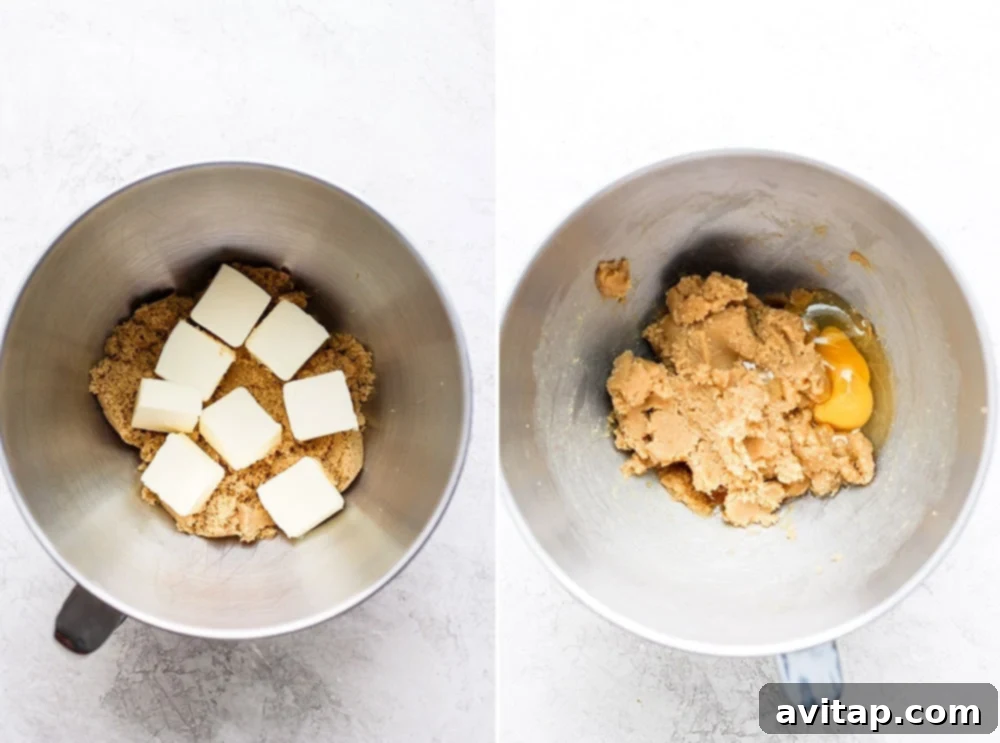
The process begins with creaming together the butter and sugar. This isn’t just about mixing; it’s about incorporating air into the mixture, which creates tiny pockets that expand in the oven, giving your cookies a wonderful lift and tenderness. For best results, use *cold butter* that has been cut into tablespoon-sized pads. This allows it to slowly soften and emulsify with the sugar as it creams, rather than melting too quickly. Beat the butter and sugar together until the mixture is light, fluffy, and significantly paler in color, and any lumps of butter have disappeared, typically taking about 3-5 minutes on medium speed.
Once your butter and sugar are perfectly creamed, it’s time to add the egg and vanilla extract. The key here is to **beat just until mixed**. Over-beating the egg can develop too much gluten in the flour once it’s added, resulting in cookies that are tough and dense, rather than soft and chewy. Mix until the egg is fully incorporated and the mixture is smooth, then stop. The vanilla extract, a foundational flavor in many baked goods, will also be incorporated at this stage, infusing the wet mixture with its warm, aromatic notes.
Step 2: Carefully Combine the Dry Ingredients
Preparing your dry ingredients separately before integrating them with the wet mixture is a critical step that ensures an even distribution of all leavening agents and spices. This prevents clumps of baking powder or concentrated pockets of cinnamon, leading to a consistently flavored and textured cookie.
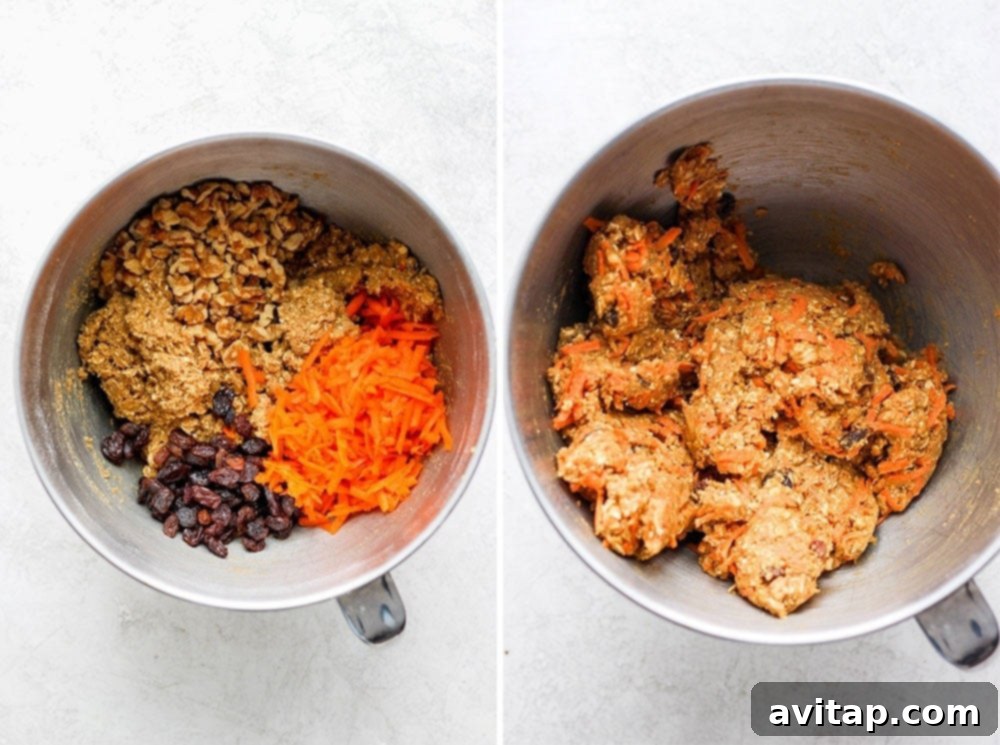
In a separate, large mixing bowl, combine the lightly pulverized rolled oats (a technique that gives the cookies a beautiful texture, a mix of chewy and slightly soft), white whole wheat flour, baking powder, ground cinnamon, allspice, nutmeg, and salt. Whisk these ingredients thoroughly to ensure they are well combined. Once ready, you will gradually add this dry mixture to your wet ingredients. The technique here is to add the dry ingredients *slowly* and mix on a medium-low speed. This incremental addition, combined with gentle mixing, prevents over-developing the gluten in the flour, which can lead to tough cookies. Mix only until the dough just comes together and no streaks of dry flour remain. The consistency should be somewhat sticky but manageable enough to form into balls. Don’t be afraid to stop the mixer and scrape down the sides of the bowl to ensure everything is incorporated evenly.
Step 3: Shape and Arrange Your Cookies with Care
With your perfectly mixed dough ready, it’s time to transform it into individual cookies for baking. Proper preparation of your baking sheet is paramount to avoid sticky situations!
Before you begin rolling, ensure your baking sheet is adequately prepared. Generously spray it with a high-quality non-stick baking spray. There’s nothing more frustrating than having your beautifully baked cookies adhere stubbornly to the tray, so don’t skip this crucial step! A little prevention goes a long way here.
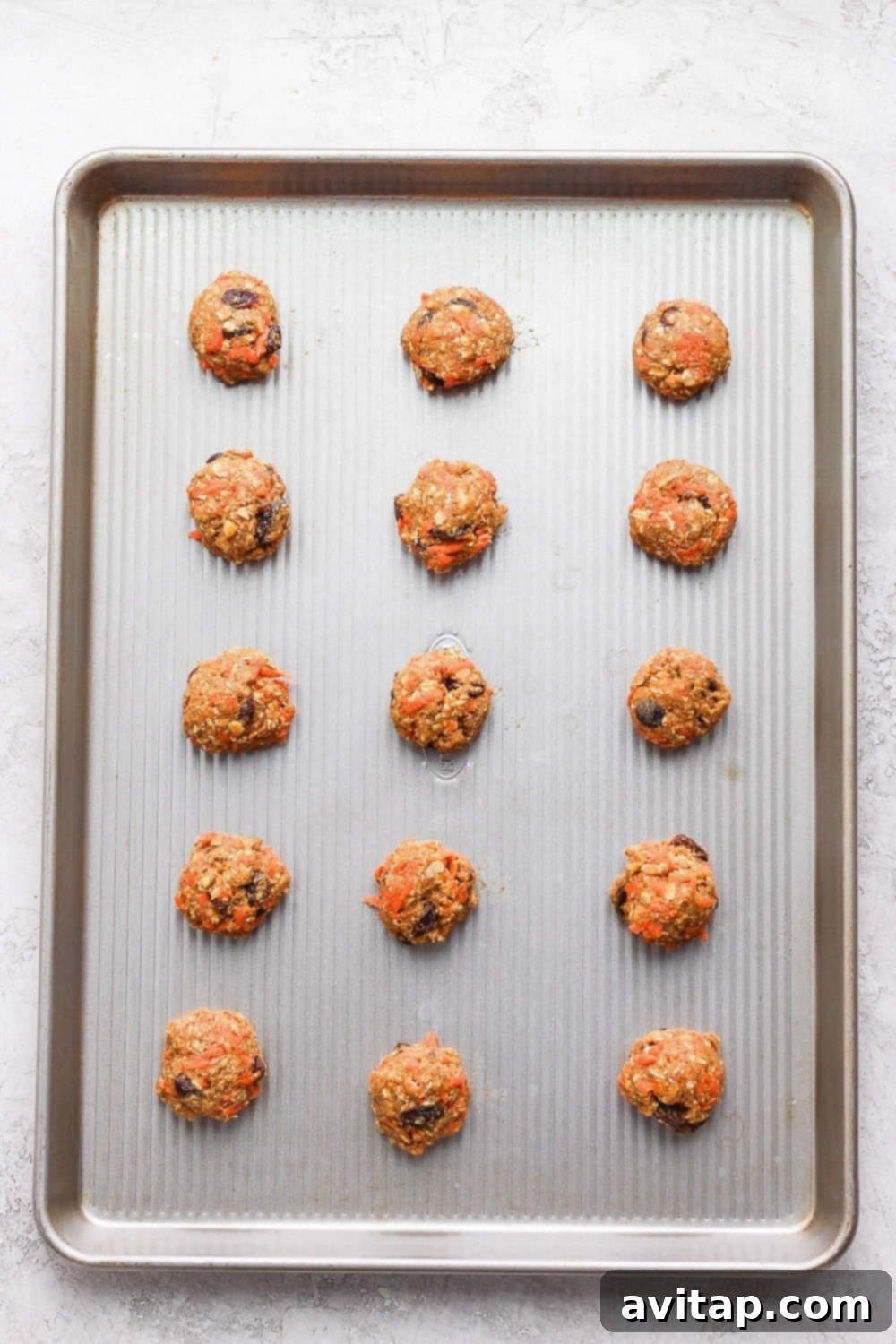
For uniform cookies that bake evenly, we highly recommend using a 1.5-tablespoon cookie scoop. This handy tool ensures that each cookie is roughly the same size, which is vital for consistent baking times. Investing in a good cookie scoop will elevate your baking game significantly. Once you’ve scooped out a portion of dough, gently roll it between your palms to form a smooth ball. Then, carefully flatten the dough ball slightly with your hands to create a disc shape. This flattening step is particularly important for these cookies, as they tend not to spread significantly during baking. Placing them on the baking sheet as flattened discs ensures a more traditional cookie shape and texture. Continue this process until your baking sheet is full, leaving about 2 inches between each cookie. Because these cookies maintain their shape well, you don’t have to worry too much about them spreading into one another, allowing you to fit more on a single sheet.
Step 4: The Perfect Bake for Your Carrot Cake Cookies
The final stage of your cookie journey is the bake. Achieving the ideal texture—whether soft and chewy or slightly crispy—comes down to careful observation and understanding your oven.
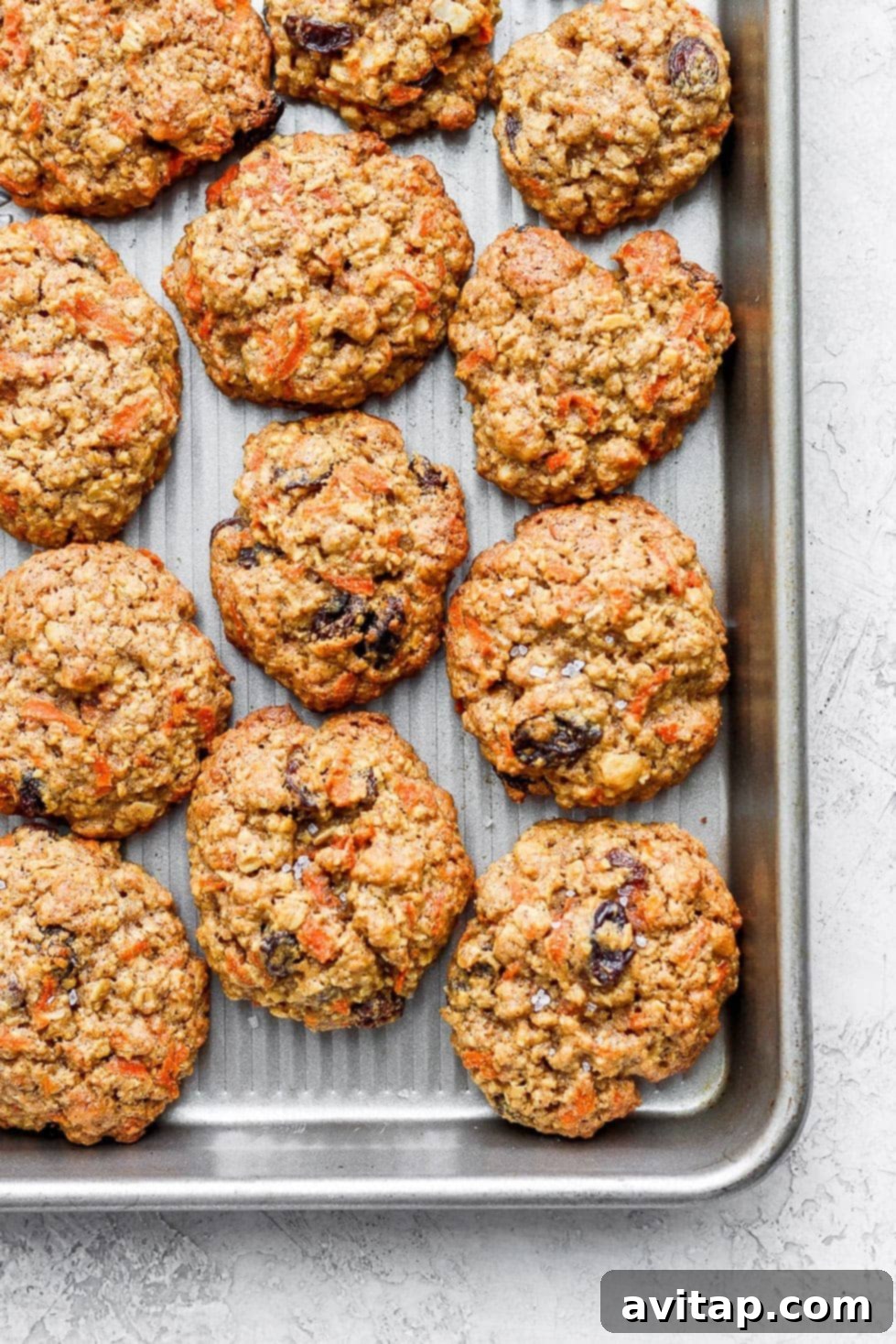
The recommended bake time for these oatmeal carrot cake cookies typically falls within a range of about 12-14 minutes at 350ºF (175ºC). This range is important because every oven is unique and can have slight temperature variations. Factors such as the humidity in your environment can also subtly influence baking times. To ensure perfection, consider purchasing an oven thermometer to verify your oven’s accuracy.
Remember, your preference dictates the final texture:
- If you love your cookies soft, tender, and slightly chewy, aim for the shorter end of the baking spectrum, around 12 minutes. The centers should still look slightly underdone when you pull them out.
- For those who prefer a cookie with a bit more crispness around the edges and a firmer bite, bake them for a minute or two longer, closer to the 14-minute mark. Keep a close eye on them to prevent overbaking.
Regardless of your preferred texture, once the cookies are baked, it’s crucial to remove them from the hot baking sheet almost immediately. Transfer them gently to a wire cooling rack. This allows air to circulate around them, preventing them from continuing to bake on the hot sheet and ensuring they cool evenly, which helps achieve that desired consistency and prevents them from becoming too hard or over-baked.
Expert Tips and Smart Tricks for the Ultimate Oatmeal Carrot Cake Cookies
Achieving truly exceptional cookies goes beyond just following a recipe; it involves understanding some key techniques and having the right tools. Here are our top tips and tricks to ensure your oatmeal carrot cake cookies are nothing short of perfect every time.
Invest in a Quality Stand Mixer
This is not an exaggeration: a stand mixer can truly revolutionize your baking experience. Whether you opt for a KitchenAid or another reputable brand, investing in a good quality stand mixer is highly recommended, especially if you bake frequently. It significantly streamlines the process and reduces physical effort. We’ve personally experienced the difference; attempting to cream cold butter and sugar by hand or with a less powerful hand mixer can leave your arms exhausted and the mixture less aerated than desired. A stand mixer provides consistent power and frees up your hands, allowing for more precise ingredient additions and ensuring a perfectly smooth, fluffy base for your cookies. It’s a game-changer for consistency and convenience.
Smart Substitution Options to Suit Your Pantry and Preferences
While we firmly believe that these oatmeal carrot cake cookies are utterly delicious as specified, we understand that sometimes you need flexibility. Here are some excellent substitution recommendations that allow you to adapt the recipe without sacrificing too much of its integrity or flavor.
- White Whole Wheat Flour: For a slightly lighter texture or if white whole wheat flour isn’t available, you can substitute it with an equal amount of all-purpose flour. Keep in mind that all-purpose flour will result in a slightly less nutritious cookie, but the texture will still be fantastic.
- Walnuts: If walnuts aren’t your preference or you’re simply looking for variety, feel free to swap them out for other chopped nuts like almonds or pecans. Both offer a lovely crunch and complementary flavor profile.
- Raisins: Not a fan of raisins? No problem! Dried cranberries add a delightful tartness, or for a more indulgent twist, mini chocolate chips can be a fantastic addition, especially if you’re serving these to chocolate lovers.
- Carrots: This is the one ingredient we strongly advise against substituting! Carrots are fundamental to the “carrot cake” flavor, their natural sweetness, and the essential moisture they bring to the cookies. Without them, you’d simply have oatmeal cookies, which, while tasty, wouldn’t capture the essence of this recipe.
- Butter: For a dairy-free option, you can substitute the unsalted butter with an equal amount of solidified coconut oil. Ensure the coconut oil is chilled and solid before creaming for best results, as its consistency will affect the final dough.
The Art of Not Over-Baking
This tip is paramount for achieving the perfect cookie texture. If you prefer your cookies with a slightly crispier edge, baking them for approximately 14 minutes should suffice. However, be incredibly vigilant not to over-bake them excessively. Doing so will transform your soft, flavorful carrot cake cookies into dry, hard “carrot cake bricks” – a fate no cookie deserves!
One of the most effective ways to prevent over-baking is to act quickly once they come out of the oven. As soon as your cookies are done (look for lightly golden bottoms and edges, with centers that still appear slightly soft), promptly remove them from the hot baking sheet. Transfer them carefully using a spatula to a wire cooling rack. This immediate transfer halts the residual baking that occurs when cookies remain on a hot pan, allowing them to cool down and set properly, resulting in that ideal chewy-soft consistency.
Optimal Storage for Freshness and Convenience
Proper storage ensures your delicious oatmeal carrot cake cookies remain fresh and enjoyable for as long as possible.
- Refrigerator Storage: We recommend storing these cookies in an airtight container in the refrigerator for up to five days. This helps maintain their moisture and prolongs their freshness, especially given the carrots.
- Freezer Storage: For longer enjoyment, these cookies freeze beautifully! Place cooled cookies in a freezer-safe airtight container or freezer bag, separating layers with parchment paper to prevent sticking. They can be stored in the freezer for up to three months. When you’re ready to enjoy one, simply let it thaw at room temperature or gently warm it in the microwave for a few seconds. Freezing is a fantastic way to always have a wholesome treat on hand!
More Carrot Cake Inspired Delights
If you’ve fallen in love with the comforting flavors of carrot cake in cookie form, you’ll be thrilled to discover these other fantastic recipes that celebrate the wholesome sweetness of carrots. Expand your repertoire of carrot-infused treats with these delightful options:
- Healthy Carrot Cake Pancakes: Start your day with a stack of fluffy pancakes bursting with carrot cake flavor, a nutritious and delicious breakfast option.
- Healthy Chocolate Chip Carrot Cake Bread: A moist and flavorful loaf cake, enhanced with sweet chocolate chips and all the classic spices of carrot cake, perfect for snacking or dessert.
- Whole Grain Carrot Cake Muffins with Walnuts: Enjoy these hearty, wholesome muffins packed with grated carrots and crunchy walnuts, ideal for on-the-go breakfasts or healthy treats.
Carrot Cake Cookies

Ingredients
Wet Ingredients
- 1/2 cup unsalted butter, cold and cut into tablespoon pads
- 1 cup light brown sugar, packed
- 1 large egg
- 1 teaspoon vanilla extract
Dry Ingredients
- 1.5 cups rolled oats, lightly pulverized
- 1 cup white whole wheat flour
- 1/2 teaspoon baking powder
- 1.5 teaspoons ground cinnamon
- 1/2 teaspoon ground allspice
- 3/4 teaspoon ground nutmeg
- 1/8 teaspoon salt
- 1 cup coarsely grated carrot, lightly packed
- 1/2 cup chopped walnuts
- 1/2 cup raisins
Instructions
- First, preheat oven to 350ºF (175ºC) and generously spray a baking sheet with nonstick cooking spray.
- Next, cut cold butter into 1-tablespoon pads and place into a stand mixer bowl.
- Add brown sugar to the butter and cream them together on medium speed.
- Continue to cream butter and sugar until there are no more lumps of butter and the consistency is light, fluffy, and smooth. This typically takes around 5 minutes.
- While the butter and sugar are creaming, lightly pulverize the rolled oats in a food processor. The goal is to have some oat flour and some small chunks of oats remaining for texture. Then, transfer them into a large bowl.
- Add white whole wheat flour, baking powder, ground cinnamon, allspice, nutmeg, and salt to the same large bowl with the oats and mix until all dry ingredients are well combined.
- Once the butter and sugar mixture is creamed, add the egg and vanilla extract to the stand mixer. Mix on medium speed just until combined, being careful not to overmix the egg.
- Slowly add the dry ingredients mixture to the wet ingredients in the stand mixer. Mix on medium speed until a cohesive dough has formed. You may need to stop the mixer periodically to scrape down the bottom and sides of your bowl to ensure even incorporation. The consistency should be slightly sticky but firm enough to shape into balls.
- Finally, fold in the grated carrot, chopped walnuts, and raisins. Mix one final time on medium speed just to combine these additions evenly throughout the dough.
- Use a 1.5-tablespoon cookie scoop to portion the dough into your hands. Roll each portion into a smooth ball, then gently flatten it between your palms to create a cookie disc shape. Place these flattened cookies onto the prepared baking sheet, leaving about 2 inches between each.
- Bake at 350ºF (175ºC) for 12-14 minutes, depending on your oven and desired crispness.
- Once the bottoms of the cookies are golden brown and the edges are set, remove the cookies from the baking sheet immediately and transfer them to a wire cooling rack to cool completely.
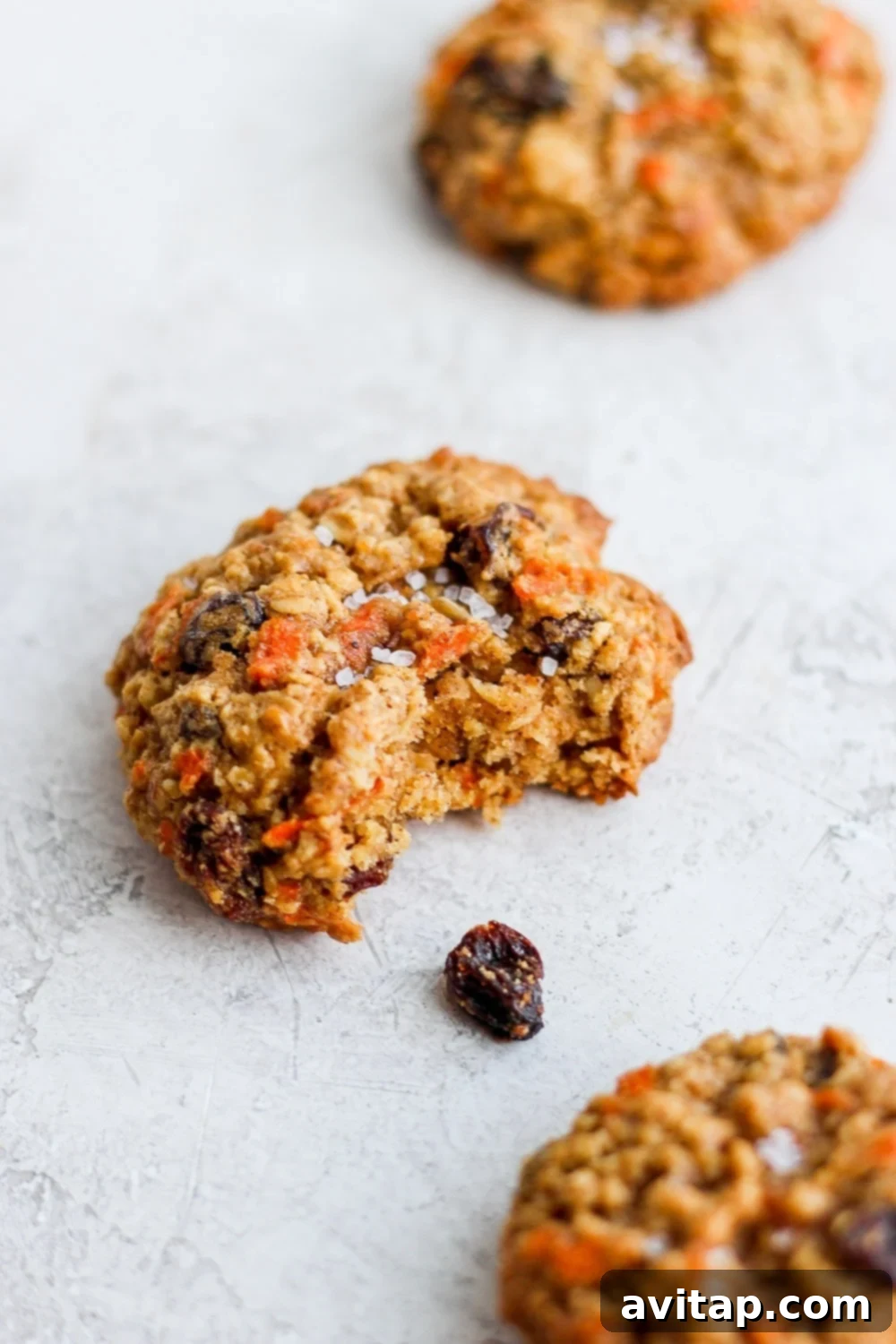
- Optionally, top with a sprinkle of sea salt before serving for an enhanced flavor profile.
Watch It
Learn how to make these delicious Oatmeal Carrot Cake Cookies with our step-by-step video guide!
Nutrition
Calories: 198 kcal
Carbohydrates: 27 g
Protein: 3 g
Fat: 9 g
Fiber: 2 g
Sugar: 16 g
Nutrition information is automatically calculated and should be used as an approximation. Individual results may vary based on specific ingredients and preparation methods.
Love this recipe? Leave a comment below!
Don’t forget to tag your posts on social media with the hashtag #fitfoodiefinds – we’d absolutely love to see your creations!