
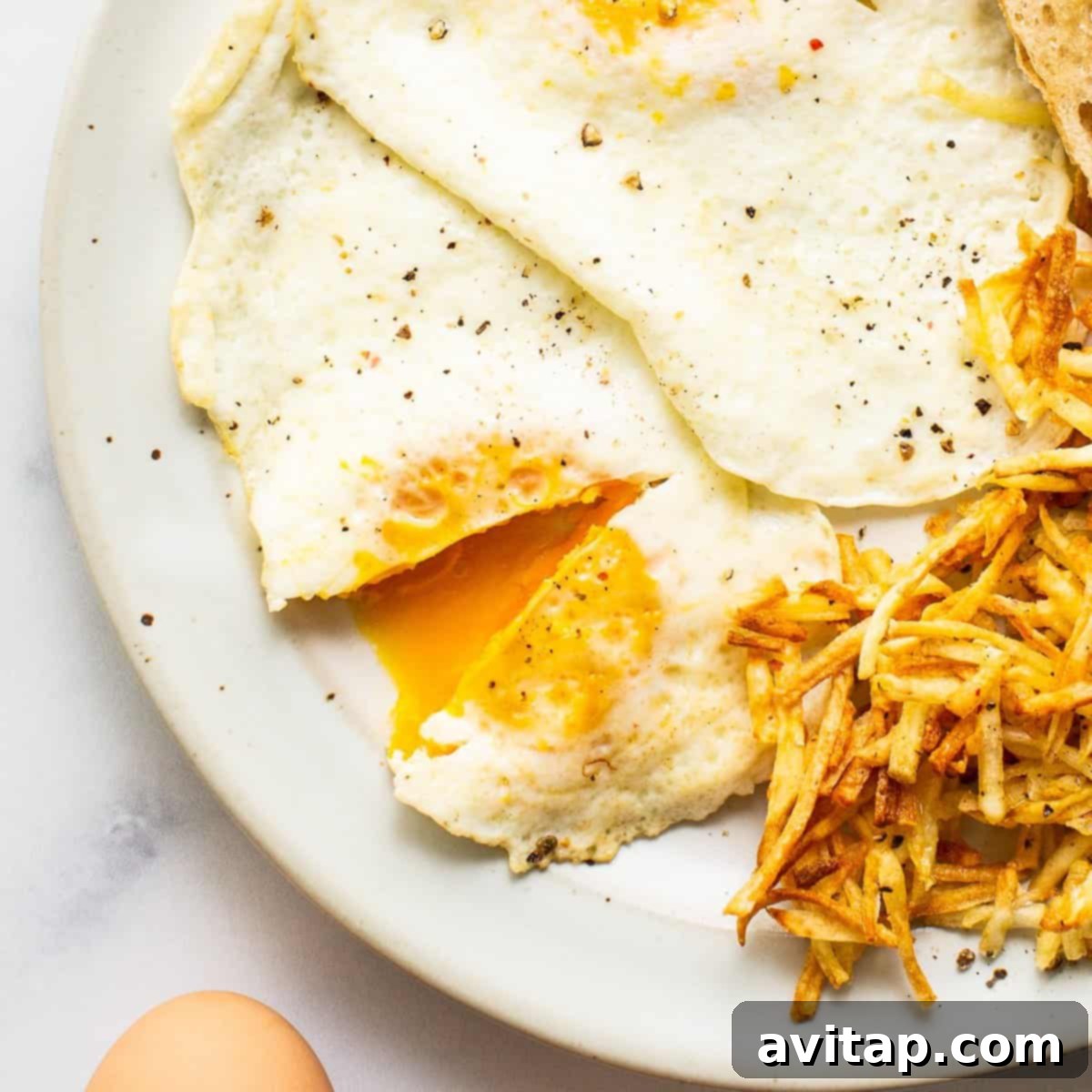
There’s a universally acknowledged truth that eggs are a breakfast staple, but the debate over the “perfect” way to cook them is endless. For many, including myself, the ideal fried egg strikes a delicate balance: the jammy yolk and fully set, yet tender, egg whites of an **over medium egg**. It’s that sweet spot between a runny over easy and a completely firm over hard, offering a luscious, pourable center without being raw. I recall a time I struggled to articulate this preference at a diner, requesting an egg “somewhere between over hard and sunny-side up” – a testament to how specific and sought-after this particular consistency is! Mastering the over medium egg is a game-changer for any breakfast enthusiast, elevating simple mornings into gourmet experiences.
This comprehensive guide will walk you through everything you need to know to create flawless over medium eggs consistently. Forget guesswork and culinary frustrations; we’ll provide simple, foolproof instructions and expert tips that guarantee success. Whether you’re a seasoned home cook or a beginner, you’re about to unlock the secret to perfectly cooked eggs that will impress every time.
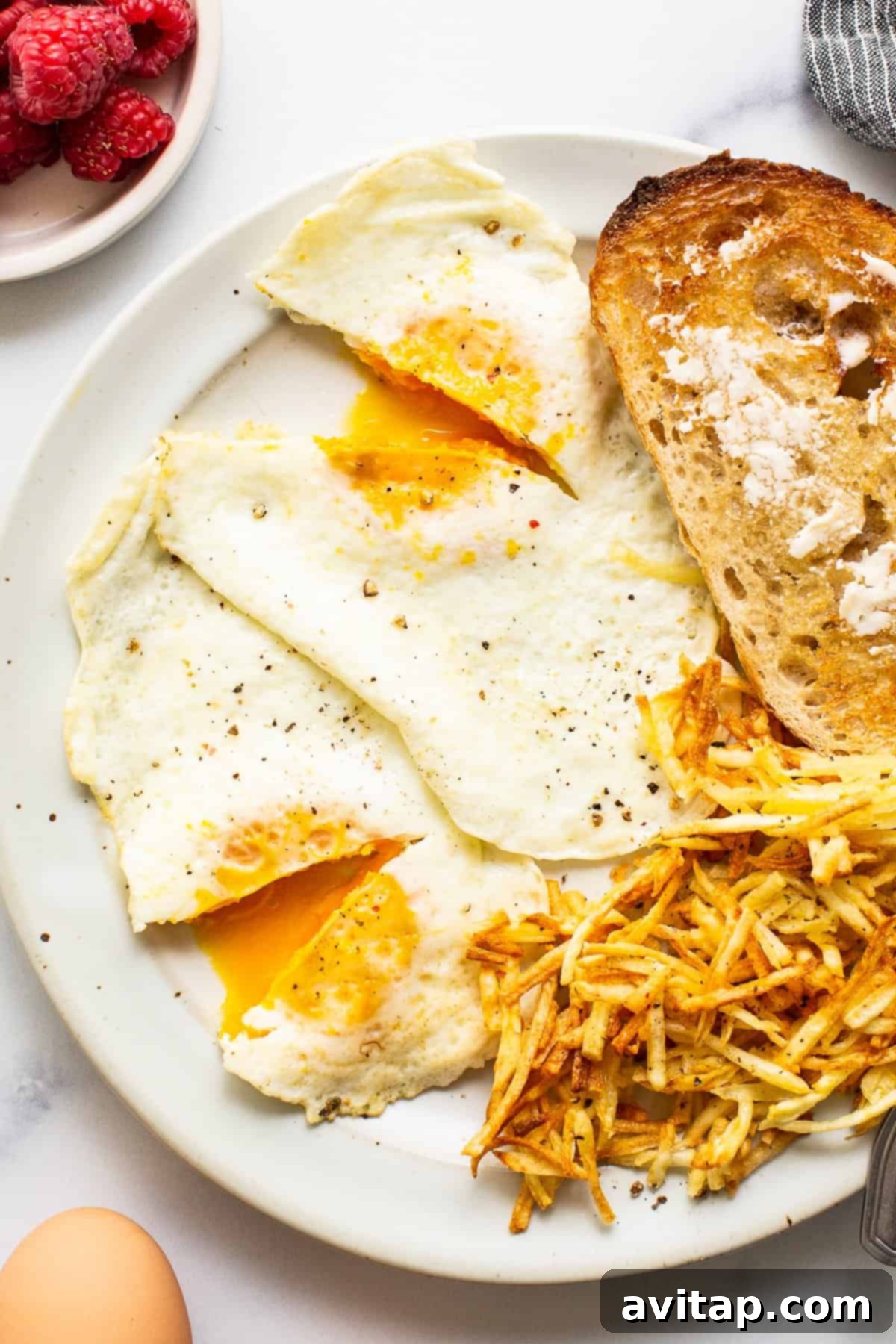
Is there anything more satisfying than starting your day with perfectly cooked over medium eggs? Absolutely not! This delightful and easy breakfast option is not only healthy but incredibly versatile. Imagine that rich, jammy yolk mingling with firm, tender egg whites, all perched atop a slice of crispy toast, perhaps with a drizzle of your favorite hot sauce. It’s a simple pleasure that truly elevates the morning meal, providing both comfort and essential nutrients to fuel your day.
What Exactly Are Over Medium Eggs?
Before diving into the cooking process, it’s helpful to understand what truly defines an over medium egg. In the spectrum of fried eggs, ‘over medium’ sits squarely in the middle, offering the best of both worlds. The key characteristic is a yolk that is slightly runny, sometimes described as “jammy” or “custardy,” while the egg whites are fully cooked and firm, without any translucent, uncooked parts. This contrasts with:
- Sunny-Side Up: Cooked only on one side, with a completely liquid yolk and tender, barely set whites.
- Over Easy: Flipped briefly, resulting in a runny yolk and fully set whites that are still quite soft.
- Over Hard: Flipped and cooked until the yolk is completely firm and opaque.
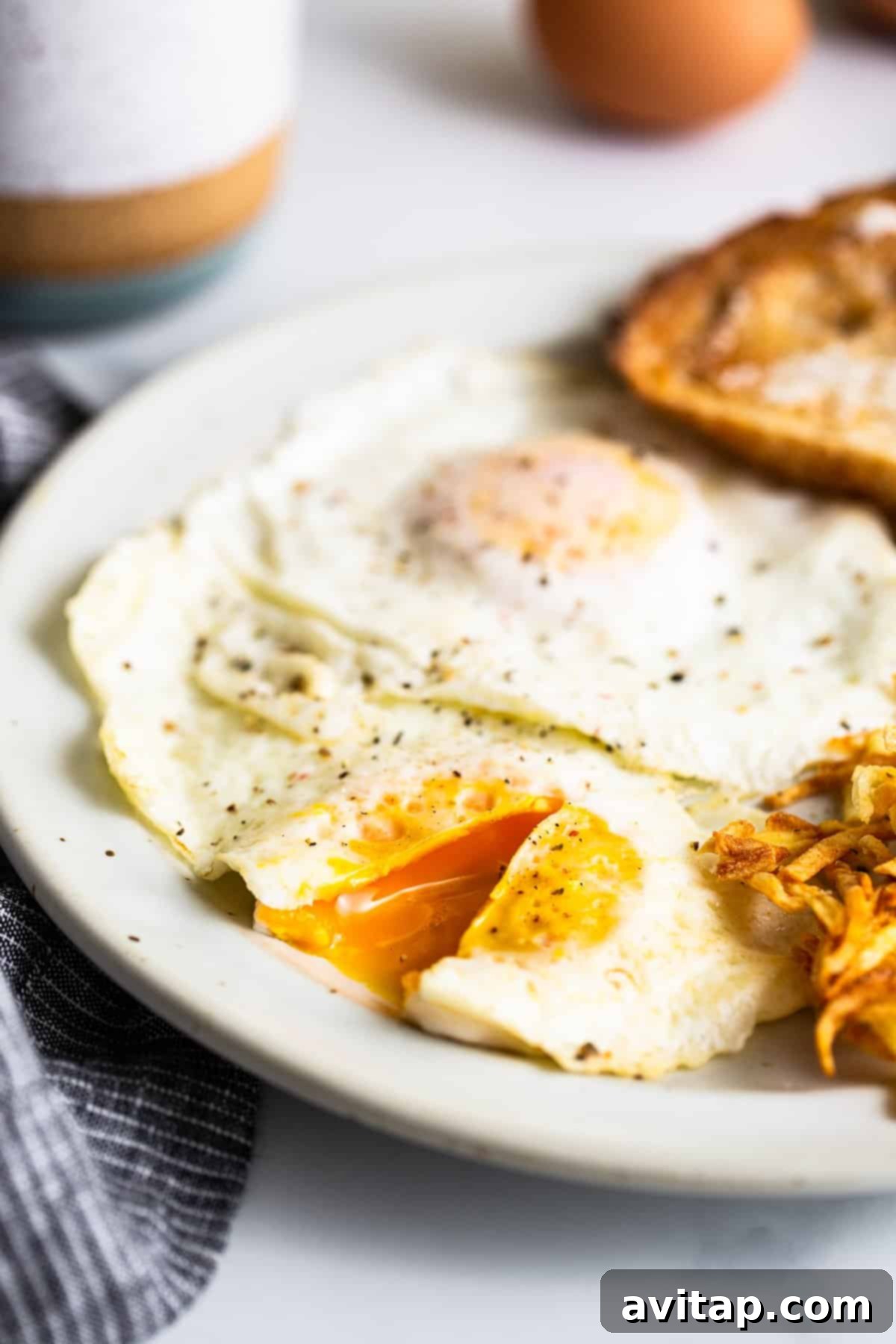
The over medium egg provides that beautiful golden flow from the yolk, perfect for dipping toast, while ensuring the white is entirely palatable. It’s a texture many find irresistible, making it a popular choice for breakfast plates worldwide.
The Two Pillars of Perfect Over Medium Eggs
Achieving culinary perfection with something as seemingly simple as a fried egg often comes down to a few critical details. For over medium eggs, our experience has distilled it down to two fundamental pieces of advice that will dramatically improve your results:
- Invest in a Quality Non-Stick Pan: This isn’t just a suggestion; it’s a necessity. A good non-stick pan ensures your eggs cook evenly and, most importantly, can be flipped effortlessly without tearing or sticking. This makes the entire process smoother and less stressful, resulting in beautifully shaped eggs every time.
- Choose Butter Over Oil: While oil can certainly cook an egg, butter imparts a superior flavor and contributes to a more appealing texture and appearance. Its rich, nutty essence infuses into the egg, and it helps achieve those consistently firm, yet tender, egg whites we’re aiming for.
Beyond these two foundational tips, the general cooking timeline is straightforward: cook your eggs for 2-3 minutes on the first side until the whites begin to set, then flip and cook for approximately 45 seconds to 1 minute to firm up the whites while allowing the yolk to reach that desired jammy consistency.
Why Butter Reigns Supreme for Over Medium Eggs
The choice of fat plays a significant role in the final taste, texture, and appearance of your over medium eggs. While various oils can be used for frying, we emphatically recommend butter. Here’s a deeper dive into why:
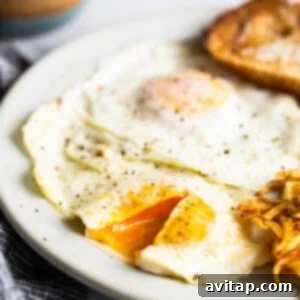
- Butter’s Charm: When you cook with butter, you’ll notice a delightful nutty flavor developing, which beautifully complements the natural taste of the egg. Butter also helps prevent excessive browning or crispy edges, resulting in a cleaner, more uniformly cooked egg white, as seen in the accompanying photos. It creates a smooth, almost velvety texture in the whites.
- Oil’s Alternative: If you opt for oils like avocado oil or olive oil, you’ll typically end up with egg whites that are more bubbly and often develop those characteristic crispy, slightly browned edges. Some people adore this texture, finding it adds a pleasant crunch. However, if your goal is the classic, smooth over medium egg with minimal browning and a richer flavor profile, butter is your undisputed champion. Vegetable oils, while neutral, won’t add the same depth of flavor.
Ultimately, the choice is yours, but for the quintessential over medium experience, butter truly enhances the dish, making it both visually appealing and incredibly delicious.
Choosing the Best Pan for Your Over Medium Eggs
While technically any pan can fry an egg, the right cookware makes a substantial difference in ease, consistency, and the final quality of your over medium eggs. Here’s a breakdown of common pan types and how they perform:
Non-Stick Pan: Your Top Pick
A high-quality non-stick pan is, without a doubt, your best friend when frying eggs. Its slick surface ensures that the egg whites won’t adhere, making flipping a breeze and preserving the integrity of both the white and the yolk. This simplifies an already easy recipe, preventing frustration and yielding picture-perfect eggs every time. We highly recommend using an 8-inch or 10-inch non-stick skillet for frying one to two eggs comfortably.
Cast Iron Skillet: The Traditionalist’s Choice (with caveats)
Cast iron skillets are beloved for their ability to heat quickly and retain heat exceptionally well, which can be great for achieving a good crust on many foods. However, for over medium eggs, they present a challenge: sticking. To use a cast iron pan successfully, you’ll need to be very generous with butter or oil and ensure the pan is adequately seasoned. You must also be extra diligent, frequently checking the edges of your egg with a spatula to prevent sticking. If not managed carefully, a cast iron pan can easily lead to torn whites and a messy situation, making it less ideal for beginners or those seeking perfectly smooth eggs.
Stainless Steel Pan: The Skilled Cook’s Arena
If a stainless steel pan is your only option, it is possible to make over medium eggs, but it requires more skill and attention. Stainless steel can heat inconsistently, leading to hot spots where eggs are prone to sticking and burning. To mitigate this, preheat the pan thoroughly, ensuring it’s evenly hot before adding fat. Use a good amount of butter and keep a close eye on the eggs, gently testing the edges with a spatula throughout the cooking process. Patience and precision are key when using stainless steel to avoid a sticky predicament.
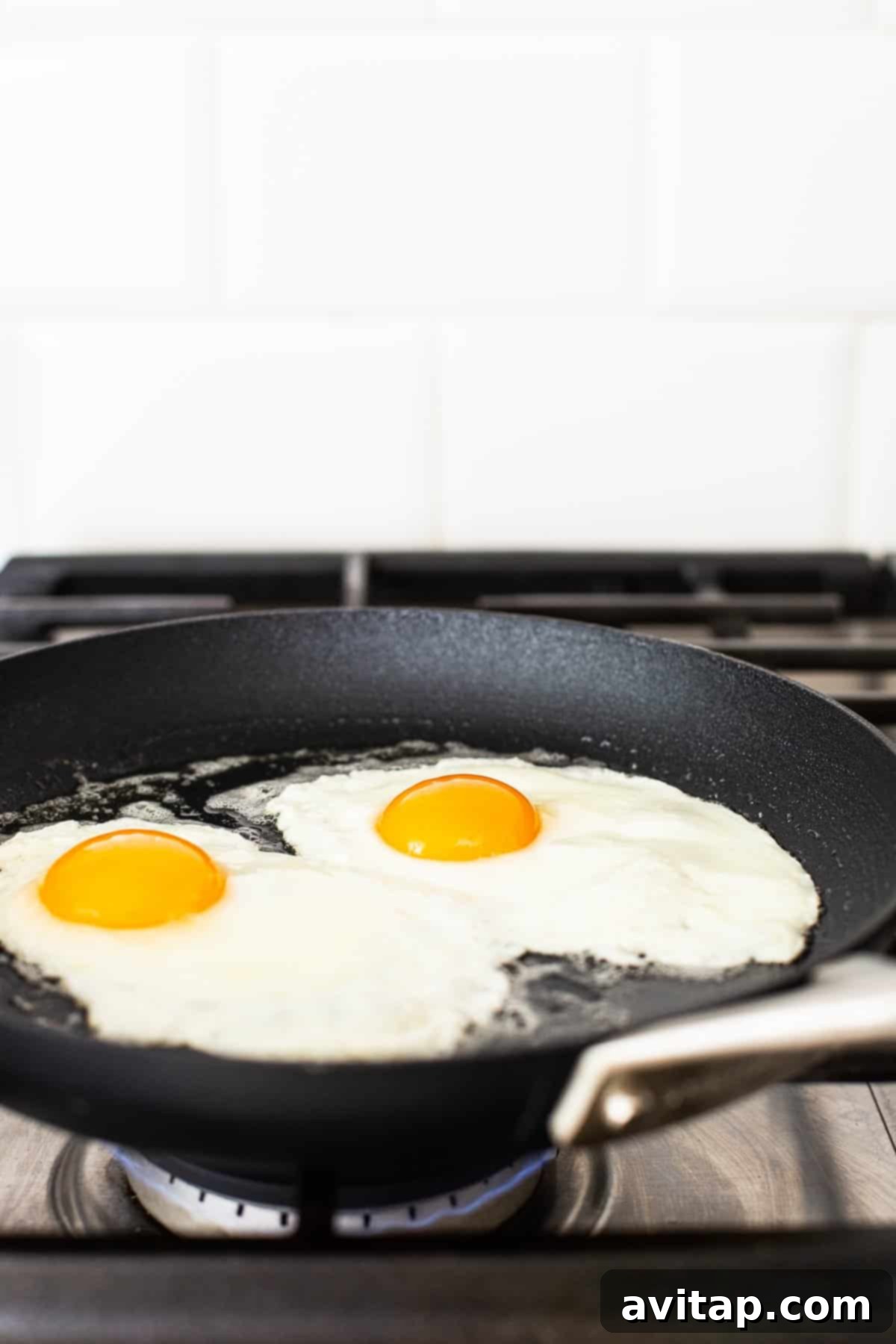
Pro Tips for Achieving Flawless Over Medium Eggs
Beyond the basics of pan and fat selection, a few expert techniques can truly elevate your over medium eggs from good to gourmet. Keep these pro tips in mind:
Always Use Fresh Eggs: The freshness of your eggs significantly impacts their cooking behavior and final texture. Fresher eggs have thicker whites that hold their shape better, resulting in a neater, more compact fried egg. Their yolks are also firmer and less likely to break. Always check the date on your egg carton before cracking them into the pan for the best results. Older eggs tend to spread more thinly in the pan, making them harder to manage and flip.
Patience is a Virtue: It’s incredibly tempting to rush the frying process, especially when hunger strikes. However, patience is paramount for over medium eggs. Cooking on a consistent medium-low heat allows the whites to set gradually and evenly without burning the bottom, while giving you precise control over the yolk’s doneness. Rushing with high heat often leads to crispy, burnt edges and an undercooked or overcooked yolk, missing that perfect jammy texture.
Monitor and Check the Edges: As your egg fries, it’s crucial to ensure it’s not sticking to the pan. Periodically and gently use a thin, flexible spatula to lift the edges of the egg white. This prevents sticking and ensures the egg releases cleanly when it’s time to flip. This small, continuous check can save you from a torn egg and a messy cleanup.
Don’t Forget to Season: A simple sprinkle of salt and freshly ground black pepper can make an immense difference. Seasoning enhances the natural flavors of the egg, bringing out its richness and making every bite more enjoyable. You can season before or after flipping, or even add a pinch of chili flakes for an extra kick, or some fresh chives for a herbaceous note.
Proper Temperature Control: Maintaining a consistent medium-low heat is essential. Too high, and the whites will burn before the yolk is ready; too low, and the eggs will take too long to cook, potentially absorbing too much fat and becoming greasy. A medium-low setting allows for gentle cooking, ensuring even heat distribution.
Crack Eggs into a Small Bowl: To avoid accidental shell pieces in your pan and to give you better control, crack each egg into a small bowl first. This also allows you to gently slide the egg into the hot pan, minimizing splashing and ensuring a neat shape.
Mastering the Flip: The flip can be intimidating, but with a good non-stick pan and a flexible spatula, it’s easier than you think. Once the whites are mostly set, slide your spatula entirely underneath the egg, swift and confident motion to flip it over. Practice makes perfect!
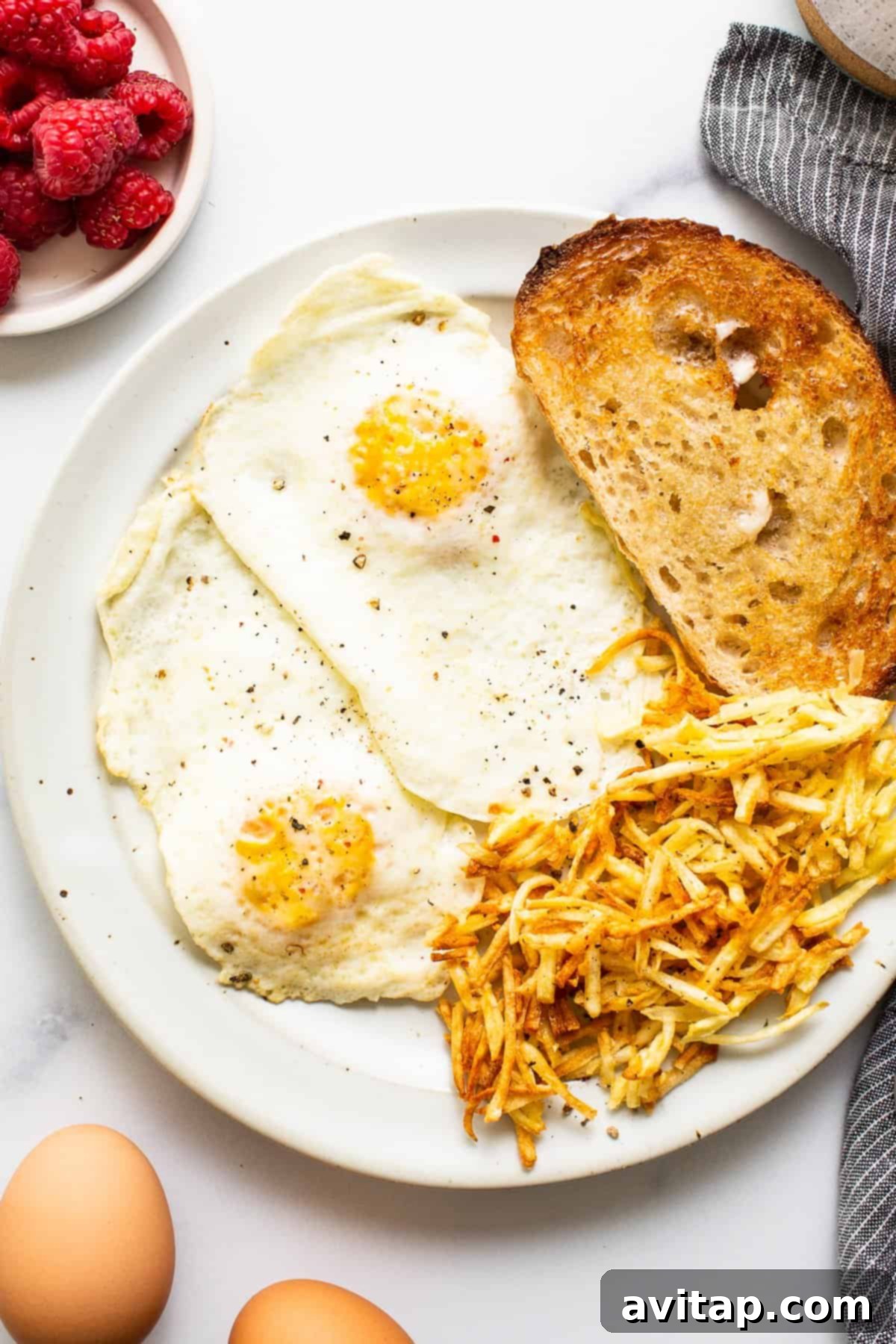
How to Make Over Medium Eggs: A Step-by-Step Recipe
Ready to achieve egg perfection? Follow these simple steps for consistently delicious over medium eggs.
1. Prep Your Pan
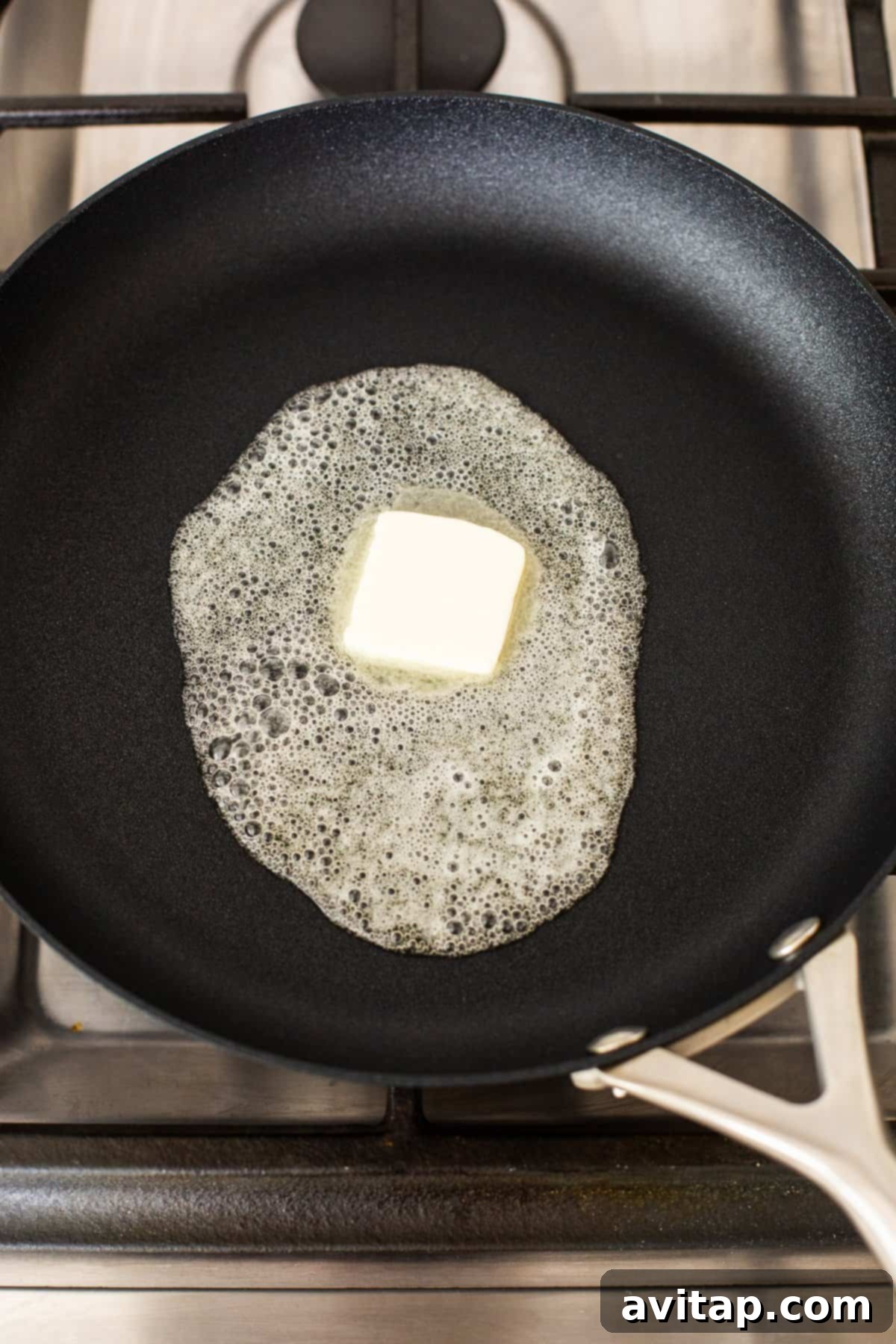
Heat a non-stick frying pan (an 8-inch or 10-inch works best) over medium-low heat. Add 2 tablespoons of unsalted butter and allow it to melt completely, coating the bottom of the pan.
2. Cook Your Eggs to Perfection
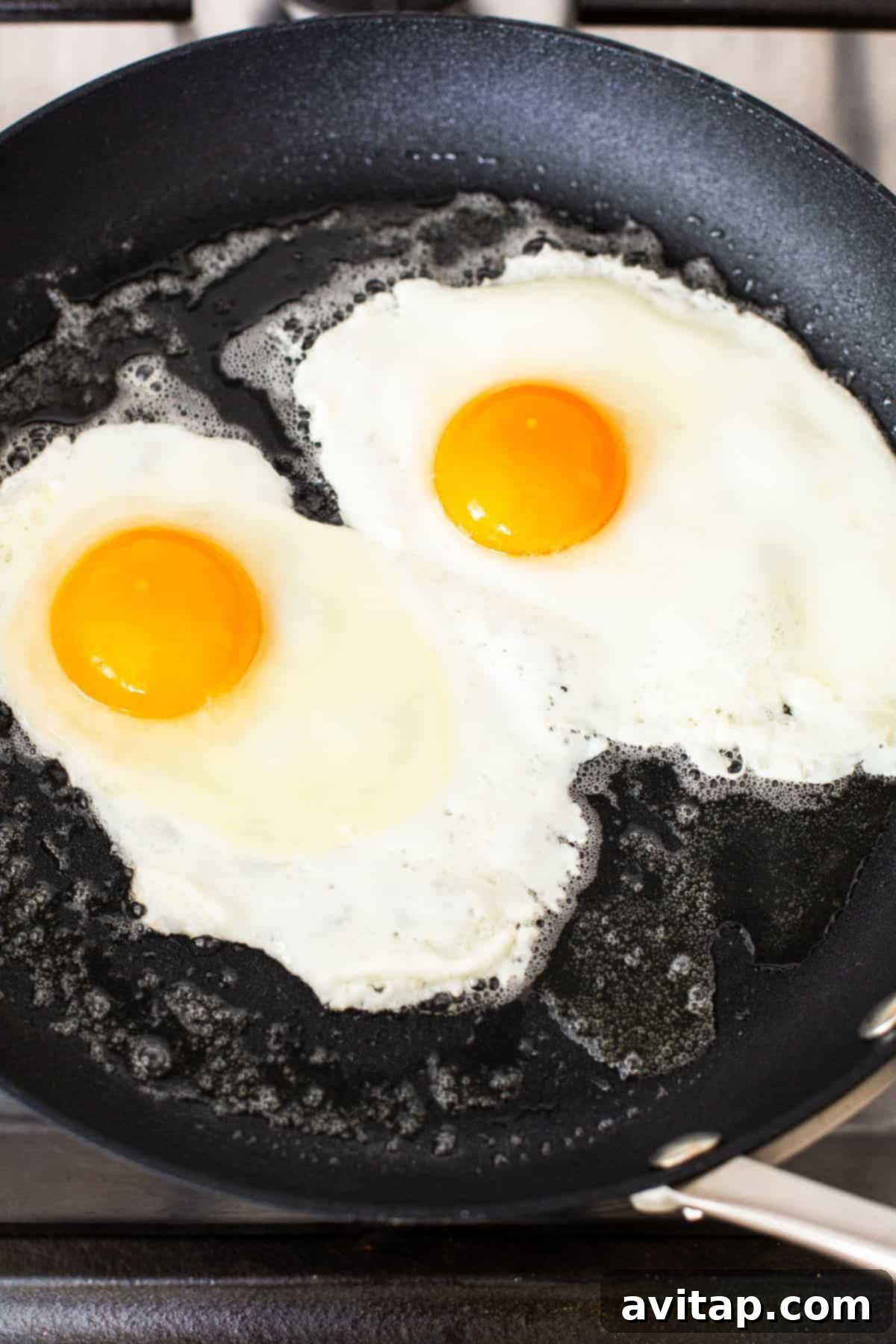
- Crack the Eggs: Once the butter is melted and slightly sizzling (but not browned), carefully crack 4 large eggs directly into the pan. If cooking more than two eggs, avoid overcrowding the pan; work in batches if necessary to ensure even cooking.
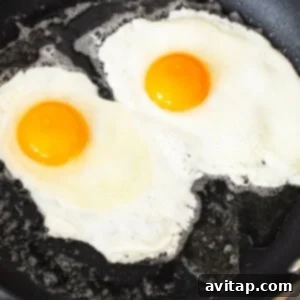
- First Cook: Cook the eggs over medium-low heat for 2-3 minutes. During this time, the egg whites will begin to set around the yolks. You’ll notice the edges turning opaque and firm, but the white shouldn’t be fully cooked or bubbly yet, and the yolk should remain perfectly intact and liquid.
- The Flip: Using a thin, flexible spatula, carefully slide it completely underneath each egg. With a quick and confident motion, flip the eggs over. Continue to cook for an additional 45 seconds to 1 minute. This short second cook time allows the top of the egg white to set fully and the yolk to reach that desired jammy consistency – it should be almost cooked through but still delightfully soft and flowy, not hard.
3. Repeat & Serve
Carefully remove the cooked eggs from the pan and place them on your serving plate. If you have more eggs to cook, repeat the process. Immediately season your over medium eggs with a pinch of salt and freshly ground black pepper, or any other preferred seasonings. Enjoy them with your favorite breakfast sides.
Over Medium Eggs
Print Recipe
Ingredients
- 4 large eggs
- 2 tablespoons unsalted butter
Instructions
-
Heat a non-stick frying pan over medium/low heat (8-inch or 10–inch works best). Add butter.

-
When the butter has melted, crack the eggs into the pan. Try not to overcrowd the pan with more than 2 eggs.
-
Cook the eggs over medium/low heat for 2-3 minutes or until the egg white begins to set, but isn’t completely cooked.
-
Use a spatula to flip the eggs and let them cook for an additional 45 seconds to 1 minute to allow the yolk to almost cook. The yolk should be jammy, not hard.
-
Remove the eggs from the pan and repeat with any remaining eggs.
-
Serve the eggs immediately with salt and pepper.
Tips & Notes
- The type of pan you use significantly matters. We strongly recommend a non-stick skillet for ease of cooking and flipping, always using butter.
- You need a pan with a slippery surface to easily move and flip the eggs without breakage. For this reason, we generally do not recommend using a cast iron skillet for over medium eggs unless you are very experienced with it and ensure generous fat.
- Avoid overcrowding your skillet. For the best results and even cooking, limit yourself to cooking no more than two eggs at a time in a standard 8-inch or 10-inch pan. If cooking for a crowd, use multiple skillets or cook in batches.
- We utilize butter as the primary fat for cooking these eggs to achieve consistently cooked, tender whites with a rich, nutty flavor. If you prefer crispier, bubbly edges on your egg whites, you can opt for olive oil or avocado oil, but be aware it will change the texture and subtly the flavor.
Nutrition
Nutrition information is automatically calculated and should only be used as an approximation. Actual values may vary based on ingredients and preparation.
Storing and Reheating Over Medium Eggs
While over medium eggs are undoubtedly at their absolute best when enjoyed fresh from the pan, there might be occasions where you have leftovers or need to meal prep. Here’s how to handle them:
These eggs are best consumed immediately to savor their perfectly runny yolk and delicate whites. However, if you find yourself with extra, you can store them in an airtight container in the refrigerator for up to 3 days. Beyond this, the quality will significantly decline, especially the texture of the yolk.
To reheat: Reheating fried eggs can be tricky, as you risk overcooking the yolk and losing that coveted jammy texture. For best results, reheat eggs on low power in the microwave, using short 15-20 second bursts. Check frequently to avoid overcooking. Alternatively, you can gently warm them in a non-stick pan over very low heat with a tiny bit of butter, just until warmed through, being careful not to cook them further. The goal is to bring them back to temperature without turning the yolk solid.
Frequently Asked Questions About Over Medium Eggs
Here are some common questions people ask about cooking over medium eggs:
Q: What’s the main difference between over easy and over medium eggs?
A: The key difference lies in the yolk’s consistency. Over easy eggs have a very runny, liquid yolk, while over medium eggs feature a thicker, “jammy” or “custardy” yolk that is still soft and flowing but not completely liquid. The whites are fully set in both.
Q: Can I use cold eggs directly from the fridge?
A: While you can, many chefs recommend bringing eggs to room temperature for about 10-15 minutes before cooking. Room temperature eggs cook more evenly and are less likely to crack when hitting a hot pan. However, for a simple fried egg, direct-from-the-fridge usually works fine, just be mindful of potential temperature shock.
Q: How do I prevent my eggs from sticking to the pan?
A: The most effective way is to use a good quality non-stick pan. Additionally, ensure your pan is adequately preheated over medium-low heat and use enough fat (butter is ideal) to coat the cooking surface generously. Gently testing the edges with a spatula also helps.
Q: What if my yolk breaks when I try to flip the egg?
A: This usually happens if the egg whites haven’t fully set on the bottom, or if your spatula isn’t completely under the egg. Ensure the whites are set enough to support the yolk, and use a thin, wide, flexible spatula to get under the entire egg before flipping quickly and confidently.
Q: Is it safe to eat partially cooked egg yolks?
A: For most healthy individuals, consuming partially cooked egg yolks (like those in over medium or over easy eggs) is generally safe, especially if you use pasteurized eggs. However, pregnant women, young children, the elderly, and those with compromised immune systems should stick to fully cooked eggs to minimize any risk of salmonella.
More of our Favorite…
Explore More Egg Tutorials
Once you’ve mastered the over medium egg, why not explore other delicious ways to cook eggs? Each method offers a unique texture and flavor profile perfect for any meal:
- Perfect Hard Boiled Eggs
- Soft Boiled Eggs
- Poached Eggs
- Over Easy Eggs
- Over Hard Eggs
- Baked Eggs in Oven
- Fluffy Scrambled Eggs
- Sunny Side Up Eggs
- Classic Fried Eggs
- Air Fryer Hard Boiled Eggs
Delicious Serving Ideas for Your Over Medium Eggs
A perfectly cooked over medium egg is a versatile star that can elevate countless dishes. Here are some fantastic ideas to pair your eggs with, whether you’re craving a classic breakfast or something more adventurous:
- Classic Toast or Bagels: The quintessential pairing! The jammy yolk is perfect for dipping, turning every bite into a delightful experience. Try different bread types like sourdough, rye, or a toasted everything bagel.
- Crispy Bacon: A timeless breakfast duo. The salty crunch of bacon perfectly complements the creamy egg.
- Flavorful Maple Breakfast Sausage: Sweet and savory sausage adds a hearty component to your meal.
- Sheet Pan French Toast: Combine your over medium eggs with sweet French toast for a balanced and indulgent breakfast spread.
- Warm Cinnamon Roll Waffles: For a truly decadent brunch, pair savory eggs with sweet, spiced waffles.
- Healthy Banana Oatmeal Pancakes: A lighter, yet satisfying option, where the eggs add a protein boost.
- Greek Yogurt and Steel Cut Oatmeal Parfait: For a nutrient-packed meal, enjoy your eggs alongside this wholesome parfait.
- Homemade Blueberry Orange Granola with Yogurt: A refreshing combination that brings a burst of fruit and crunch.
- Nutritious Healthy Smoothies: Complement your egg with a vibrant, vitamin-rich smoothie for a complete meal.
- Avocado Toast: Slice ripe avocado over toast, sprinkle with everything bagel seasoning, and top with your over medium egg for a trendy, healthy, and satisfying meal.
- Breakfast Burrito or Tacos: Dice your over medium eggs and add them to a warm tortilla with beans, cheese, salsa, and avocado for a portable and flavorful breakfast.
- Hash or Roasted Vegetables: Serve your eggs atop a bed of homemade potato hash, or roasted sweet potatoes and bell peppers for a wholesome and hearty dish.
- Kimchi Fried Rice: For a more adventurous pairing, a fried over medium egg makes an incredible topping for kimchi fried rice, with the yolk adding a luxurious richness.
Conclusion: Mastering Your Morning Eggs
From understanding the subtle nuances between different fried egg styles to selecting the perfect pan and mastering the flip, this guide has provided you with all the essential knowledge to consistently create ideal over medium eggs. With their firm whites and wonderfully jammy yolks, over medium eggs offer a delightful texture and rich flavor that can transform any breakfast into a special occasion.
Remember, practice makes perfect. Don’t be discouraged if your first few attempts aren’t flawless. Focus on maintaining a consistent medium-low heat, using good quality butter, and trusting your non-stick pan. Soon, you’ll be confidently cracking, frying, and flipping your way to egg perfection.
So, go ahead, grab your pan, and start cooking! Your taste buds (and your breakfast table) will thank you. We’d love to see your perfect creations! Don’t forget to tag your posts on social media with the hashtag #fitfoodiefinds.
Share your thoughts and feedback with us. Your experiences inspire others!