
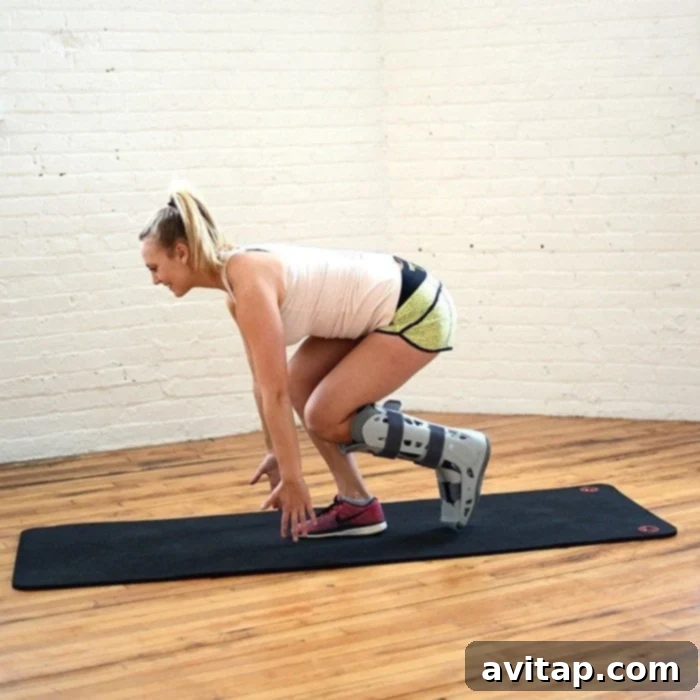
Mastering Single-Leg Workouts: Your Guide to Lower Body & Core Strength, Even with an Injury
Are you facing the challenge of a foot injury, perhaps navigating life in a boot, but still determined to maintain or even elevate your lower body and core strength? Or perhaps you’re simply looking to enhance your overall fitness, balance, and unilateral strength? You’ve landed in the right place! This comprehensive guide and accompanying single-leg workout routine is precisely what you need.
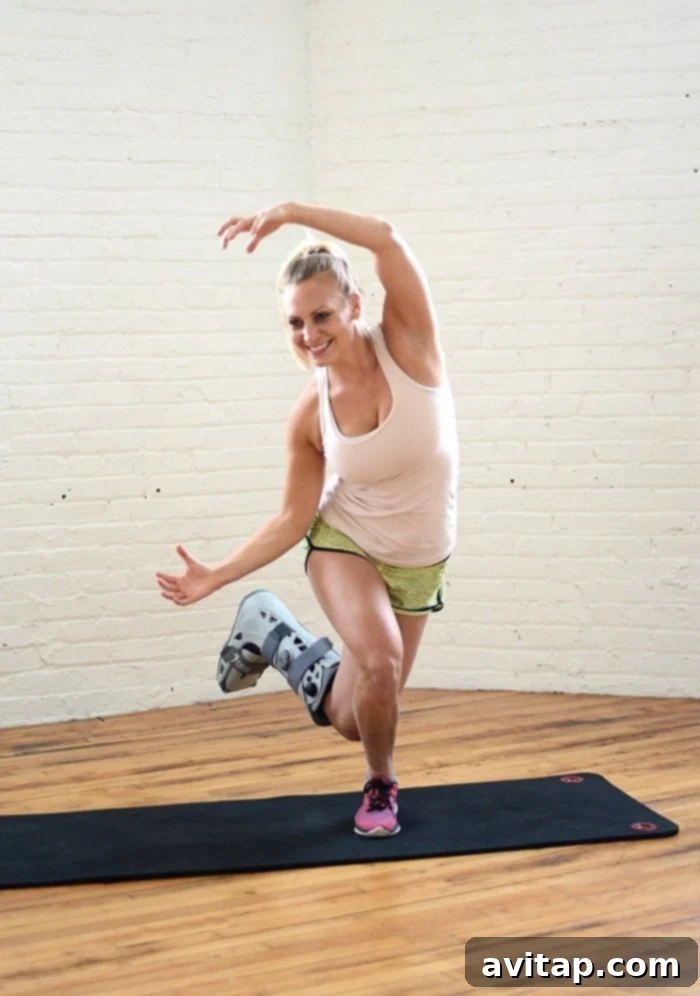
Dealing with a foot injury, especially one that requires a boot, can feel like a significant roadblock to your fitness journey. Trust me, I understand the frustration firsthand! Over the past four weeks, I’ve transformed this challenge into an opportunity, completely crushing my modified workout goals. I’ve been incredibly fortunate to collaborate with exceptional trainers like Lindsey from Nourish Move Love and Drew from PEC. Their innovative approaches and expert guidance have been invaluable in modifying exercises to ensure I still get an intense and effective burn, even with limitations.
Why Single-Leg Training is Essential for Everyone
While an injury might seem like a barrier, it can actually open doors to a more focused and beneficial type of training: unilateral, or single-leg, exercises. And for those with two healthy feet, incorporating single-leg movements into your routine is a game-changer for overall athletic performance and injury prevention.
Enhanced Balance and Stability
Every single-leg exercise inherently challenges your balance. By forcing your body to stabilize on one limb, you activate crucial smaller stabilizing muscles in your ankles, knees, hips, and core. This translates to improved stability not just in the gym, but in everyday life activities like walking, running, and climbing stairs.
Correcting Muscular Imbalances
It’s common for one side of your body to be stronger than the other. Bilateral exercises (using both legs simultaneously) can often mask these imbalances, allowing the stronger leg to compensate. Single-leg training isolates each limb, forcing it to work independently. This helps identify and correct strength discrepancies, leading to a more balanced and functional physique, which is vital for preventing future injuries.
Increased Core Engagement
Maintaining proper form during single-leg movements demands significant core activation. Your core muscles work overtime to keep your torso stable and prevent unwanted rotation or tilting. This makes single-leg workouts incredibly effective for building a strong, resilient core without always having to resort to traditional abdominal exercises.
Improved Functional Strength and Athleticism
Most real-world movements, whether it’s running, jumping, or simply walking, involve transferring weight from one leg to the other. Single-leg training directly mimics these patterns, building functional strength that improves your agility, power, and overall athletic performance in sports and daily activities.
Navigating Your Workout Journey with a Foot Injury
My personal journey with a foot injury has reinforced the belief that fitness is adaptable. While I’ve naturally ramped up my upper-body workouts, I’ve absolutely refused to neglect my lower body. There’s an incredible amount you can achieve with just one leg!
Always Consult Your Doctor
Before beginning any new workout regimen, especially when recovering from an injury, it is paramount to consult with your doctor or physical therapist. They can provide specific guidelines on weight-bearing status, range of motion, and movements to avoid, ensuring your safety and optimal recovery.
Listen to Your Body
This cannot be stressed enough. During your workout, pay close attention to any pain or discomfort. Differentiate between muscle fatigue and sharp, acute pain. If an exercise causes pain, stop immediately and find a modification or skip it altogether. The goal is to challenge your muscles, not to re-injure yourself.
Embrace Modifications
The beauty of this single-leg workout is its inherent adaptability. My own ability to put some weight on my heel has allowed me to incorporate certain bodyweight lower body exercises, but this workout is specifically designed for those who can put NO WEIGHT on one of their legs. For everyone else, including those with two healthy legs, simply repeat the exercises on the other side!
This particular routine was expertly crafted with Lindsey, ensuring it mixes strength-building exercises with plyometric movements. This dynamic combination allows you to build muscle endurance and get your heart rate up simultaneously – truly my cup of tea!

The Ultimate Single-Leg Bodyweight Workout for Core and Lower Body
This workout is designed to be challenging yet accessible, focusing on compound movements that engage multiple muscle groups. It’s perfect for strengthening your legs and core, improving balance, and boosting cardiovascular fitness. Remember to perform each circuit with control and focus on proper form.
Single Leg Workout for Lower Body and Core
Instructions: For each circuit, perform 15 reps of the strength exercise followed by 10 reps of the HIIT (plyometric) exercise. Complete these two exercises as a super-set, then rest briefly. Repeat this super-set for a total of 4 sets for the entire circuit. For individuals with two working legs, this means completing 2 sets on each leg before moving onto the next circuit. If you are training with one injured leg, you will complete all 4 sets on your healthy leg.
Equipment: Bodyweight only. No gym required!
THE WORKOUT
Interval One: Stability & Power Foundation
- 15 Reps Single-Leg Plank + Leg Lift:
Start in a plank position, then shift your weight onto one leg, lifting the other leg slightly off the ground. Maintain a straight line from head to heel, engaging your core deeply. From here, slowly lift and lower the elevated leg, focusing on glute activation. Keep your hips level and avoid rocking. This builds incredible core stability and glute strength.
- 10 Reps Single-Leg Burpee:
Begin standing on one leg. Place your hands on the floor, hop your standing leg back into a single-leg plank position, then optionally drop your chest to the floor (modify by just holding the plank). Hop your standing leg forward, then jump explosively back up to the starting position on one leg. Focus on controlled movements, especially if new to plyometrics.
Interval Two: Balance & Explosive Drive
- 15 Reps Warrior 3 + Standing Crunch:
Stand tall on one leg. Hinge at your hips, extending your free leg straight back as your torso tilts forward, aiming for a “T” shape with your body. Keep your core tight and gaze down. Return to standing, then bring your free knee towards your chest, performing a standing crunch, squeezing your abs. This complex movement dramatically improves balance and dynamic core strength.
- 10 Reps Single-Leg Deadlift Hops:
Standing on one leg, perform a single-leg deadlift: hinge at the hips, extending your free leg back, keeping your back straight. Once you reach the bottom of your comfortable range, explosively drive through your standing heel to hop slightly off the ground. Land softly and immediately go into the next rep. This is fantastic for hamstring, glute, and posterior chain power.
Interval Three: Agility & Oblique Power
- 15 Reps Speed Skater + Oblique Crunch:
Start by standing on one leg. In a controlled motion, bound laterally to the side, landing on your opposite leg while sweeping the original standing leg behind you like a speed skater. Once stable on the new leg, perform an oblique crunch by bringing your knee and elbow towards each other on the same side. This enhances lateral agility and targets the side of your core.
- 10 Reps Single-Leg Plank Hops:
From a single-leg plank position (as in Interval One), explosively hop your grounded foot forward a few inches, then immediately hop it back to the starting plank position. Maintain a strong, stable core throughout, ensuring your hips don’t sag or twist. This is a powerful core and hip flexor exercise.
Interval Four: Glute & Hip Flexor Activation
- 15 Reps Single-Leg Crunch + Donkey Kick:
Lie on your back, knees bent, feet flat. Lift one leg off the floor, bringing your knee towards your chest. Perform a crunch, lifting your shoulders off the ground while keeping your leg lifted. Lower your shoulders, then extend your lifted leg upwards into a controlled donkey kick, squeezing your glute. This targets both your core and glutes effectively.
- 10 Reps Single-Leg Speed Lunges:
Stand tall. Step forward with one leg into a lunge, ensuring your front knee stays behind your toes and your back knee hovers above the ground. Explosively push off your front foot to return to standing, then immediately step forward with the same leg for the next lunge. The focus here is on controlled speed and consistent depth.
Interval Five: Posterior Chain & Dynamic Stability
- 15 Reps Single-Leg Glute Bridge + Toe Touch:
Lie on your back, one knee bent with your foot flat on the floor, the other leg extended straight up towards the ceiling. Drive through your heel to lift your hips off the floor, forming a straight line from your shoulders to your knee. At the top, try to touch your toes of the extended leg with the opposite hand. Lower with control. This is excellent for glute and hamstring strength, with an added core twist.
- 10 Reps Single-Leg Jump Ropes:
Imagine you have a jump rope. Stand on one leg and perform small, quick hops, mimicking the motion of jumping rope. Keep your core engaged and absorb the impact with your ankle, knee, and hip. This is a fantastic cardiovascular exercise that also improves ankle stability and proprioception. If you have an actual jump rope, even better!
Maximizing Your Results: Recovery and Consistency
Completing this challenging single-leg workout is just one piece of the puzzle. To truly maximize your results, foster recovery, and ensure long-term progress, consider these vital components:
Prioritize Recovery
- Stretching and Mobility: Incorporate dynamic stretches before your workout and static stretches during your cool-down. Focus on hip flexors, hamstrings, glutes, and calves.
- Hydration: Drink plenty of water throughout the day, especially before, during, and after your workouts.
- Nutrition: Fuel your body with a balanced diet rich in protein for muscle repair, complex carbohydrates for energy, and healthy fats for overall well-being.
- Sleep: Aim for 7-9 hours of quality sleep per night. This is when your body repairs and rebuilds muscle tissue.
Consistency is Key
Regularity trumps intensity every time. Aim to incorporate this single-leg workout, or variations of it, into your routine 2-3 times a week, allowing for rest days in between. Over time, you’ll notice significant improvements in your strength, balance, and overall fitness.
Your Journey to Unilateral Strength Begins Now!
Whether you’re overcoming an injury or simply striving for a more balanced and powerful physique, single-leg training is a cornerstone of effective fitness. This bodyweight workout offers a potent blend of strength and cardio, designed to challenge you and help you achieve your goals.
Don’t let perceived limitations hold you back. Embrace the power of unilateral training and discover a stronger, more stable, and more resilient you. Give this workout a try today and feel the burn!