
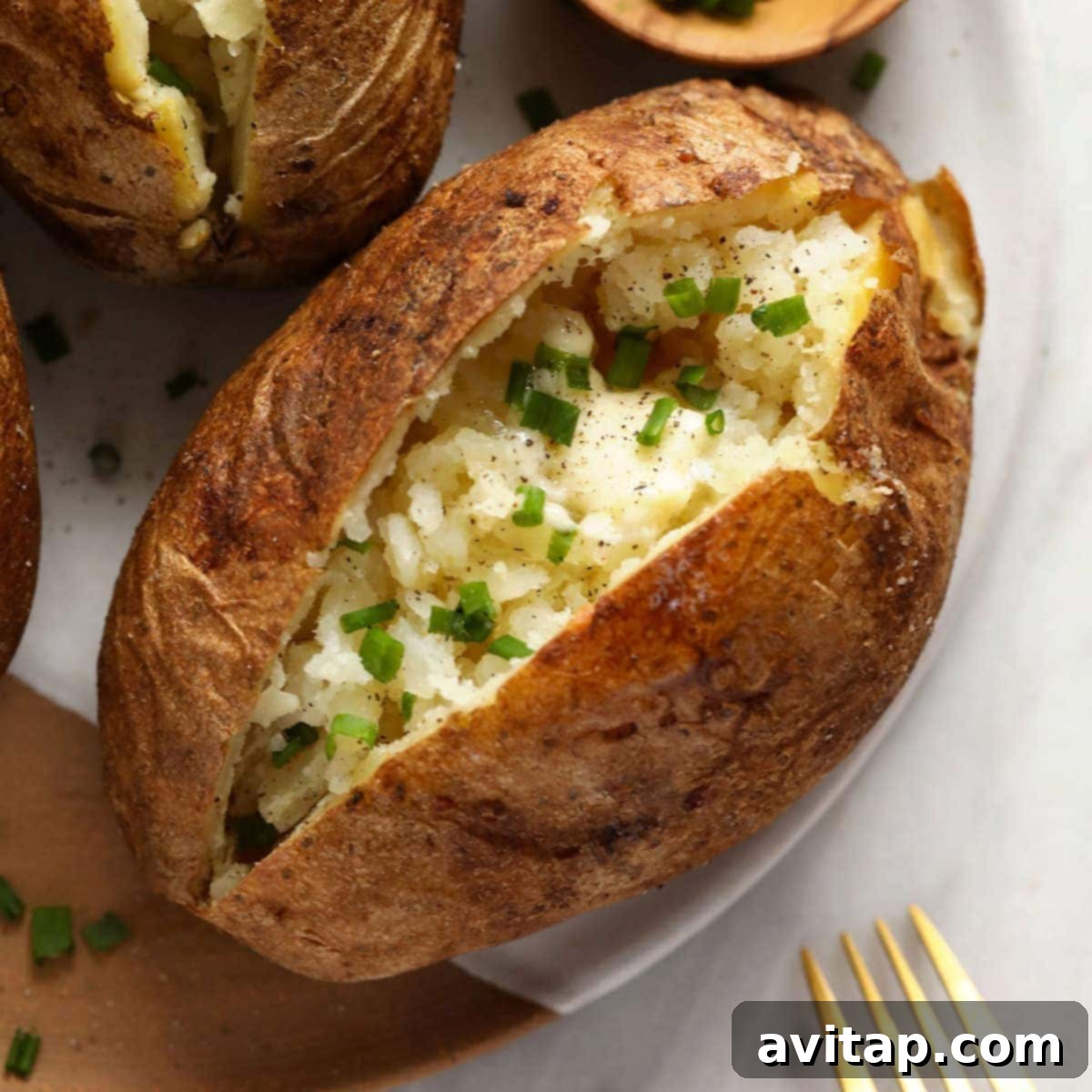
There’s a simple joy in a perfectly baked potato that resonates deeply within our home, a sentiment I know many families share. Imagine a potato with a golden, impossibly crispy and salty skin, encasing a cloud-like, fluffy interior, just waiting to be generously topped with melting butter and all your favorite fixings. It’s more than just a side dish; it’s a canvas for culinary creativity, a comforting meal in itself, and a staple that brings warmth to any dinner table. My husband often prepares a large batch at the start of the week, allowing us to effortlessly transform them into diverse meals, from being smothered in rich beef chili one evening to serving as a versatile side dish the next. The beauty of a baked potato lies in its adaptability and universal appeal.
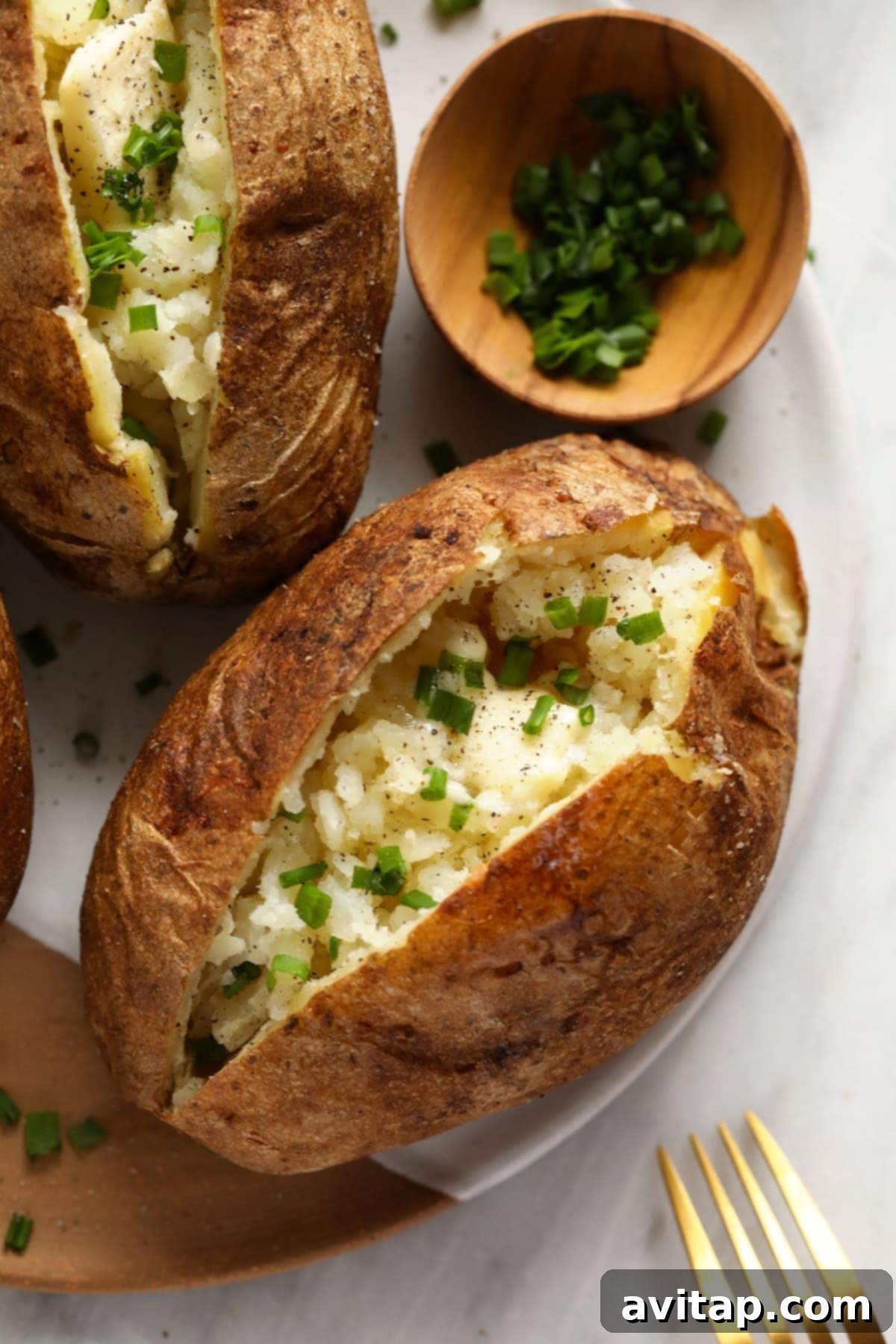
Crafting the Perfect Baked Potato: What Defines Excellence
When I envision the quintessential baked potato, several key characteristics immediately come to mind. It’s not just about cooking a potato; it’s about achieving a symphony of textures and flavors that elevates this humble root vegetable to a culinary delight.
- Golden, Crispy, and Flavorful Skin: The exterior should be baked to perfection, exhibiting a deep golden hue and an enticing crispness, often enhanced by a light sheen from the oil. A well-seasoned skin offers a delightful textural contrast to the soft interior and is packed with savory flavor.
- Tender and Effortlessly Fluffy Interior: Upon slicing, the inside should reveal a consistently tender texture, easily fluffed with a fork. It should be light, airy, and inviting, without any hard or undercooked spots.
- Meltingly Warm Core: The internal warmth is crucial, sufficient enough to instantly melt a pat of butter, allowing it to permeate every fluffy crevice and enrich the potato’s natural taste.
- Seasoned to Perfection: A truly great baked potato is subtly yet perfectly seasoned with salt and pepper from the inside out, creating an addictive flavor profile that makes it hard to put down.
- A Versatile Foundation for Any Meal: Beyond being a standalone treat, the ideal baked potato is robust enough to serve as a complete meal when loaded with hearty toppings like chili, rich sour cream, shredded cheese, chives, or a myriad of other creative additions.
Essential Ingredients for Your Flawless Baked Potato
Achieving a perfectly baked potato with a divine crispy skin and an exquisitely fluffy interior requires surprisingly few ingredients. Simplicity is key, allowing the natural goodness of the potato to shine through. You only need four core components to embark on this delicious journey:
- Russet Potatoes: These are the undisputed champions for baking. I highly recommend using large russet potatoes, especially if they are intended to be the star of your meal. Russets are known for their high starch content and thick skin, which contribute to a fluffy interior and a crispy exterior when baked. Idaho potatoes are a type of Russet and will work just as well. When selecting your potatoes, look for firm ones without any green spots, sprouts, or significant blemishes. Remember that the baking time will vary based on the size of your chosen potatoes; larger ones will naturally require more time.
- Olive Oil: A thin, even coating of oil is paramount for that coveted crispy skin. I favor olive oil for its delicate flavor that beautifully complements the potato. However, if olive oil isn’t on hand, feel free to substitute it with avocado oil for a neutral flavor, vegetable oil for a budget-friendly option, or even melted butter for an extra rich taste. The oil is a non-negotiable step; it’s the secret ingredient that helps the potato skin crisp up and turn that beautiful golden brown.
- Salt: Do not underestimate the power of salt! Generous seasoning is vital for flavoring the potato skin and enhancing the overall taste. I recommend using coarse sea salt or kosher salt, as their larger crystals adhere well to the skin and provide a delightful textural crunch. Don’t skimp; it truly makes a difference.
- Pepper: Freshly ground black pepper adds a wonderful aromatic depth and a subtle hint of spice that beautifully balances the saltiness. Its robust flavor is a fantastic complement to the earthy notes of the potato.
Mastering the Art: Your Step-by-Step Guide to Baking a Potato
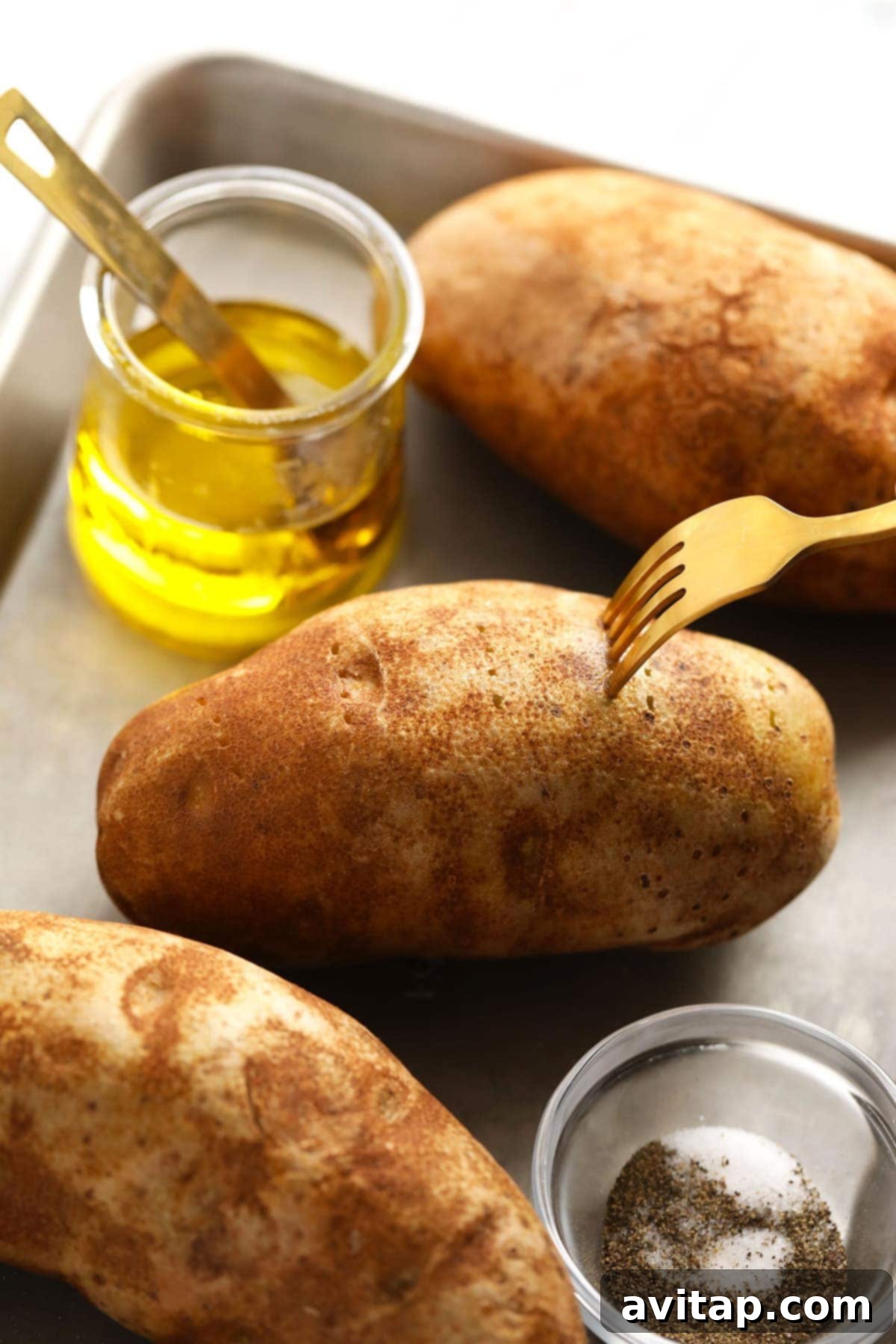
Baking a potato that boasts a perfectly crispy skin and a wonderfully fluffy interior is a surprisingly simple process that can be achieved in just a few straightforward steps. It’s also an excellent opportunity to get the whole family involved; my nephews, for instance, absolutely love helping with washing the potatoes and making sure to poke enough holes in them – a crucial step that aids in even baking and prevents any kitchen mishaps.
- Prepare Your Oven and Potatoes: Begin by preheating your oven to 425ºF (220ºC). While the oven heats, thoroughly wash and scrub your russet potatoes under cool running water to remove any dirt or debris. Pat them completely dry with a kitchen towel. This dryness is key for a crispy skin. Once clean and dry, use a fork to evenly poke 8-10 holes all over each potato. This allows steam to escape during baking, preventing the potato from bursting and ensuring a consistently cooked interior.
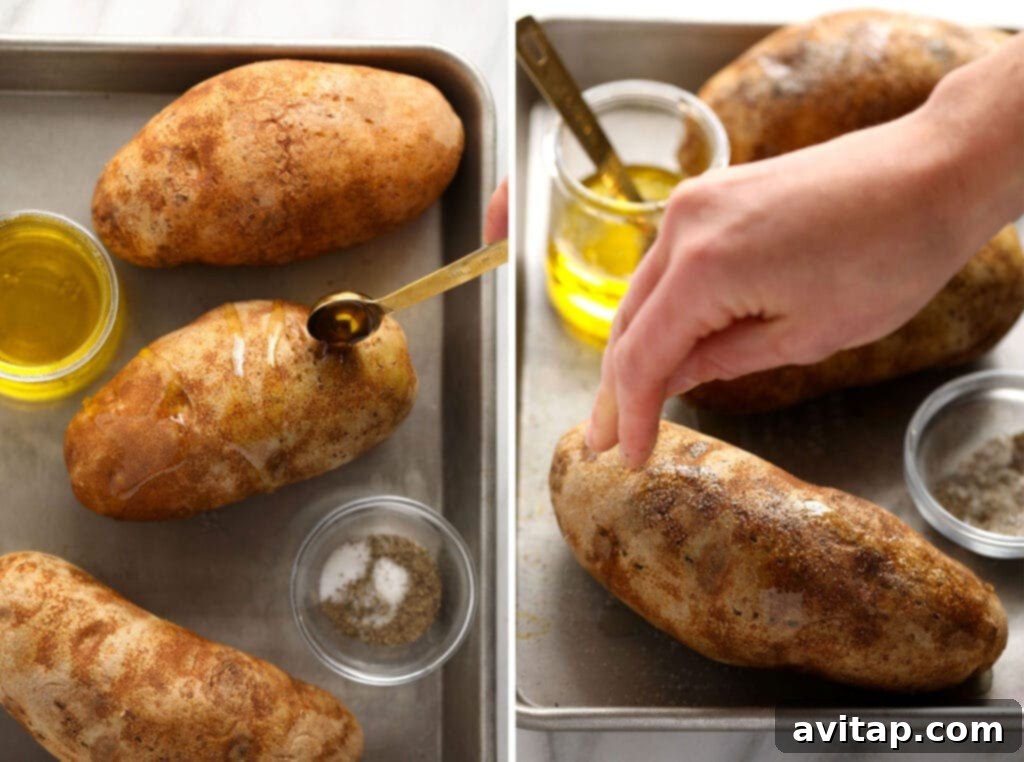
- Oil and Season Liberally: Place the prepared potatoes on a clean surface. Drizzle each potato generously with olive oil. Using your hands, massage the oil thoroughly over the entire surface of each potato, ensuring every inch of the skin is coated. This creates a barrier that helps the skin crisp up beautifully. Immediately after oiling, season the potatoes generously with salt and pepper, again making sure to coat the entire surface. Don’t be shy with the seasoning; it’s what gives the skin its incredible flavor.
- Bake to Perfection: Arrange the seasoned potatoes directly on the oven rack or on a baking sheet (preferably with a wire rack for better air circulation) in your preheated 425ºF oven. Ensure there is ample space between each potato for even heat distribution. Bake for 45-60 minutes, or potentially longer for very large potatoes. To promote even cooking and crispness, flip the potatoes every 20 minutes.
- Perform the ‘Fork Test’: Your potatoes are done when they pass the “fork test.” Carefully remove a potato from the oven and gently pierce its center with a fork or a small knife. If it glides through the potato easily and smoothly with little to no resistance, the interior is perfectly cooked through. The skin should also appear golden brown and feel firm and crispy.
- Rest and Serve: Once removed from the oven, allow the baked potatoes to rest for about 5-10 minutes. This resting period allows the internal starches to settle, resulting in a fluffier texture. After resting, carefully cut each potato lengthwise down the middle. Use a fork to gently fluff up the soft interior, then add a pat of butter, a sprinkle of extra salt, and a dash of pepper. Serve immediately with your desired toppings.
Advanced Tips for Achieving the Ultimate Baked Potato
While baking a potato seems straightforward, a few expert tips can elevate your results from good to absolutely phenomenal, ensuring crispy skin and a fluffy, flavorful interior every time.
Don’t Skimp on the Oil and Seasoning: Massaging the potato with olive oil, salt, and pepper is not just a suggestion – it’s absolutely necessary. The oil is the secret to a beautifully crisp, golden-brown skin, while the salt and pepper infuse that skin with incredible flavor. This step significantly contributes to the overall deliciousness of your baked potato. Do not skip it!
Say No to Foil for Crispy Skin: If your goal is a potato with an irresistibly crispy skin, I strongly advise against wrapping your baked potatoes in aluminum foil. Foil traps moisture around the potato during baking, which steams the skin rather than baking it, resulting in a soft, rather than crispy, exterior. For truly crispy skin, bake your potatoes directly on the oven rack or on a baking sheet without foil.
Adjust Bake Time According to Size: Potatoes come in various sizes, and baking times must be adjusted accordingly. Smaller potatoes will cook faster, while larger, denser potatoes will require more time in the oven. Always use the “fork test” or an internal temperature check rather than strictly adhering to a timer to ensure your potatoes are perfectly done.
Avoid Overcrowding the Oven: When baking multiple potatoes, ensure there’s enough space between each one on the baking sheet or rack. Overcrowding can inhibit proper air circulation, leading to uneven cooking and less crispy skins. Allow for adequate space for the heat to circulate freely around each potato.
Consider a Baking Rack: For even crispier skin all around, place your potatoes on a wire baking rack set inside a baking sheet. This elevates the potatoes, allowing hot air to circulate completely around them, preventing a soggy bottom.
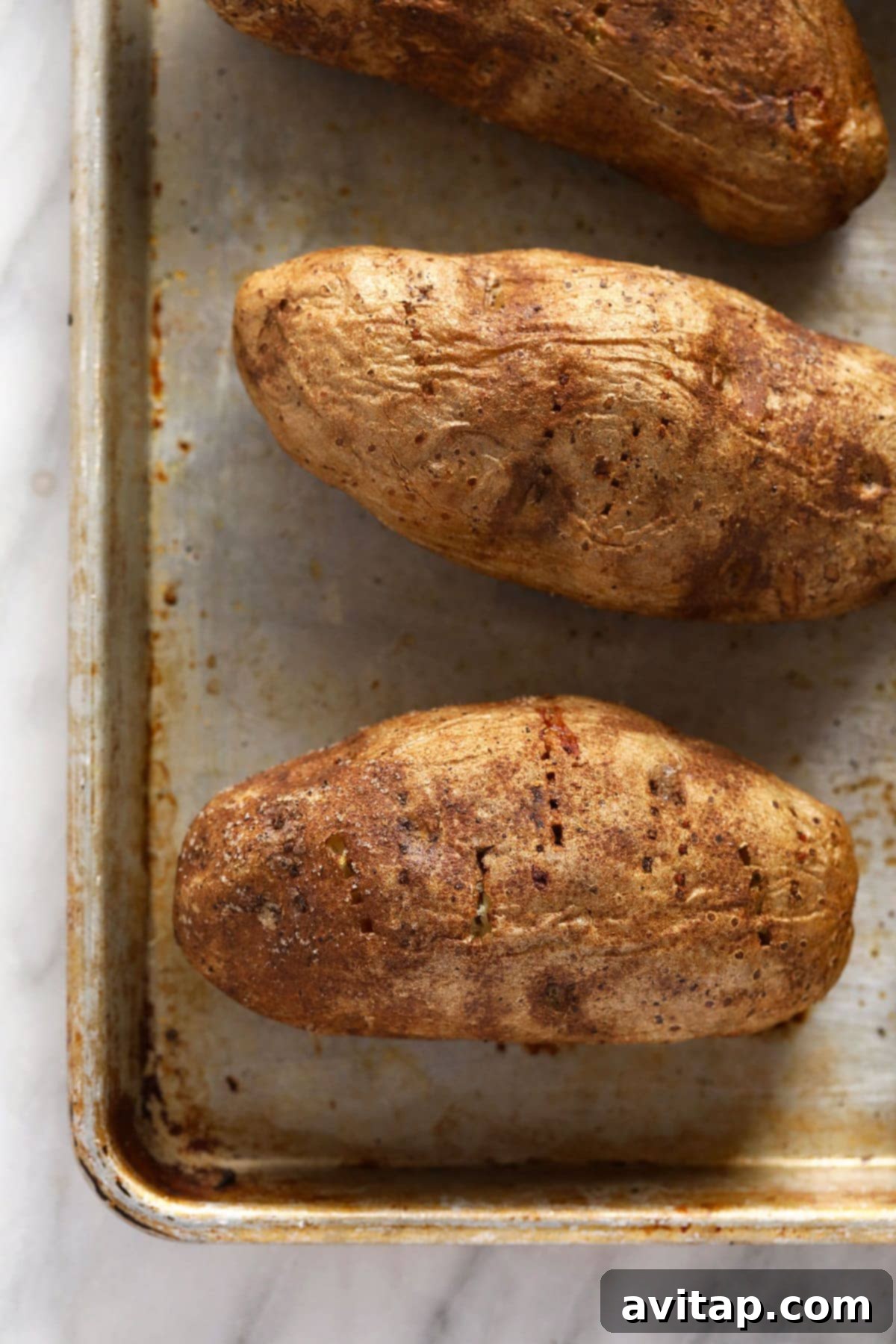
Knowing When Your Baked Potato is Perfectly Done
Ensuring your baked potato is cooked all the way through, with that ideal fluffy texture, is crucial. There are a few reliable methods to determine when your potato has reached peak perfection:
- The Fork Test (Most Common): This is the simplest and most widely used method. Gently insert a fork or a small knife into the center of the potato. If it slides in easily with little to no resistance, the potato is fully cooked and wonderfully tender inside.
- Internal Temperature Check: For the most precise measurement, use an instant-read thermometer. Insert it into the thickest part of the potato. A perfectly baked potato will have an internal temperature between 205-210ºF (96-99ºC). This temperature indicates that the starches have fully cooked and broken down, resulting in that desired fluffy texture.
- Visual and Tactile Cues: Observe the skin. It should be deeply golden brown, firm, and visibly crispy. You can also gently squeeze the potato (using oven mitts or a towel!) – a cooked potato will yield slightly and feel soft throughout, but still hold its shape.
Creative Serving Suggestions: Making Your Baked Potato a Star
Baked potatoes are incredibly versatile; they can be a comforting main dish or a perfect accompaniment to a variety of meals. Here are some of our favorite ways to serve them, transforming a simple potato into something extraordinary:
Main Meals That Pair Perfectly with Baked Potatoes
Whether you’re looking for a hearty side or a wholesome accompaniment, baked potatoes complement a wide range of main courses. Their neutral flavor and satisfying texture make them an ideal partner for robust meats, flavorful poultry, or even lighter, fresher options.
Easy Whole Roasted Chicken Recipe
A classic pairing, the savory juices of a roasted chicken soak beautifully into a fluffy baked potato.
Instant Pot Pork Tenderloin
The tender pork provides a delicious contrast to the potato’s fluffy texture.
Juicy Oven Baked Chicken Breast (+ 6 Flavor Variations)
A lean and flavorful chicken breast is perfectly balanced with a satisfying baked potato.
Juicy Pan Seared Chicken Breast
Quick to prepare, pan-seared chicken is a fantastic complement to a slow-baked potato.
Sous Vide Steak
For a restaurant-quality meal, pair a tender sous vide steak with a classic baked potato.
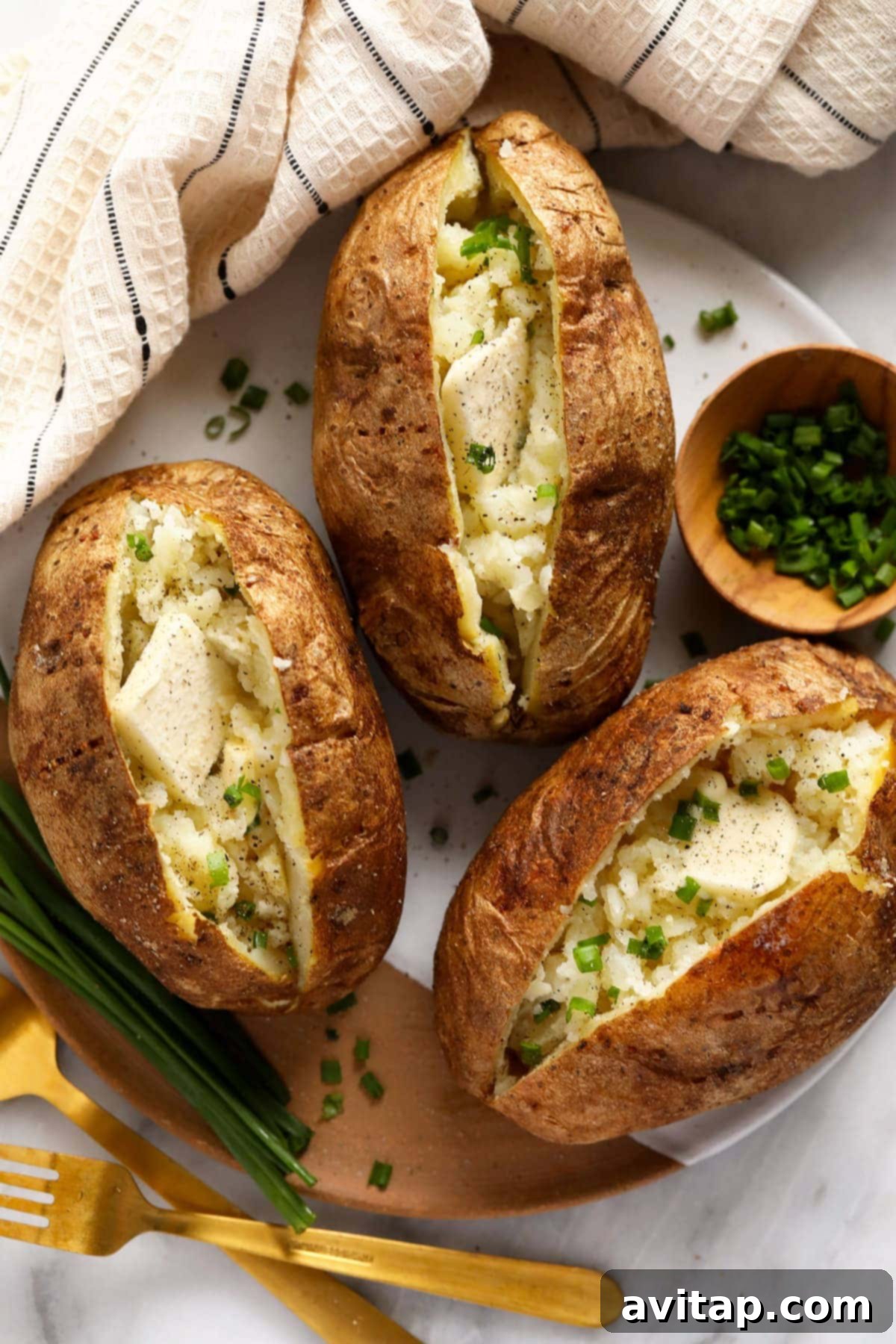
Beyond Butter: Endless Baked Potato Topping Ideas
Once your baked potatoes are perfectly roasted, the fun truly begins: it’s time to crown those fluffy taters with all your favorite fixings! Whether you prefer super simple and classic ingredients or are eager to get creative, the possibilities are virtually endless. Baked potatoes are a blank canvas, ready to soak up whatever flavors you desire.
- The Classics:
- Butter, Salt, and Pepper: The purest form of enjoyment. Simple, yet profoundly satisfying.
- Sour Cream & Chives: A timeless combination that adds creamy tang and fresh onion flavor.
- Shredded Cheese: Cheddar, Monterey Jack, or a blend that melts into gooey perfection.
- Bacon Bits: Crispy, salty, and smoky, a delightful textural and flavor addition.
- Hearty & Meal-Worthy Toppings:
- Beef or Turkey Chili: Transform your potato into a substantial meal by spooning on a generous helping of warm chili.
- Pulled Pork or Chicken: BBQ-sauce-laden pulled meats turn a potato into a savory, tangy feast.
- Taco Toppings: Seasoned ground beef, shredded lettuce, diced tomatoes, salsa, guacamole, and a sprinkle of cheese.
- Stew or Pot Roast: A comforting option, letting the rich gravy and tender meat soak into the potato.
- Vegetarian & Vegan Delights:
- Steamed Broccoli & Cheese Sauce: A beloved combination, especially with a sharp cheddar sauce.
- Sautéed Mushrooms and Onions: Earthy and savory, often enhanced with a touch of garlic and herbs.
- Black Beans & Corn Salsa: A fresh and zesty option, perhaps with a dollop of avocado cream.
- Roasted Vegetables: Diced bell peppers, zucchini, or sweet potatoes add color, nutrition, and flavor.
- Nutritional Yeast & Herbs: For a cheesy, savory vegan alternative.
- Gourmet & Unexpected Twists:
- Hot Honey: A surprising sweet and spicy drizzle that adds an intriguing kick.
- Pizza Toppings: Marinara sauce, mozzarella cheese, mini pepperonis, and dried oregano – a fun, family-friendly twist.
- Crème Fraîche & Smoked Salmon: For an elegant and sophisticated touch, perhaps with a sprinkle of dill.
- Truffle Oil: A few drops can elevate your potato to an aromatic, luxurious experience.
Explore More Delicious Potato Recipes
If you’ve mastered the art of the classic baked potato and are looking to expand your potato repertoire, we have plenty more tempting recipes for you to try. From quick microwave methods to slow-cooker wonders, there’s a potato recipe for every occasion and cooking preference:
- Microwave Baked Potato: For those times you need a quick and easy potato fix.
- Air Fryer Baked Potato Recipe: Achieve fantastic crispness with the efficiency of an air fryer.
- Crock Pot Baked Potatoes: A hands-off method for tender, moist potatoes.
- Smashed Red Potatoes Recipe: A delightful crispy-on-the-outside, creamy-on-the-inside side dish.
- Smoked Baked Potatoes: Infuse your potatoes with incredible smoky flavor.
- Twice Baked Potatoes: A decadent and flavorful stuffed potato dish.
Frequently Asked Questions About Baking Potatoes
Here are answers to some common questions about baking potatoes, designed to help you achieve the best results every time.
How long does it take to bake a potato at 400°F (200°C)?
At 400ºF (200ºC), a medium to large baked potato typically takes between 60-90 minutes to cook through. The exact time largely depends on the size and density of your potatoes. Smaller potatoes will cook more quickly, often in about an hour, while very large potatoes might require closer to 90 minutes or even a bit longer. Always rely on the fork test or an internal temperature check for accuracy.
What temperature is best for baked potatoes (400, 425, or 450°F)?
For consistently excellent results, I find that baking potatoes at 425ºF (220ºC) is ideal. This temperature provides a harmonious balance, ensuring the potato cooks thoroughly and evenly from the inside while simultaneously crisping up the skin beautifully. While 400ºF works, it might take a bit longer for the skin to crisp. 450ºF can result in a very crispy skin quickly, but you risk drying out the interior if not carefully monitored.
Should you wrap potatoes in foil when baking?
Whether or not you wrap your potatoes in foil depends entirely on the desired outcome for the skin. If you crave a baked potato with an irresistibly crispy skin, then I do not recommend wrapping the potatoes in tin foil. As mentioned earlier, foil traps moisture, which essentially steams the potato, leading to a softer skin. However, if your priority is a slightly faster cooking time and a more tender, uniformly moist interior (without the crispy skin), then wrapping the potatoes in foil can be beneficial. For more detailed information on baking potatoes in foil, you can explore this dedicated post: Baked Potatoes in Foil.
Why is it important to poke holes in potatoes before baking?
Poking holes in your potatoes before baking is a small but crucial step. As potatoes bake, moisture inside them turns into steam. If this steam has no escape route, it can build up pressure, causing the potato to burst open in the oven. The holes allow this steam to vent safely, preventing explosions and ensuring your potato cooks evenly and consistently without becoming waterlogged.
Can I use other types of potatoes for baking?
While Russet potatoes are highly recommended for their ideal starch content and thick skin, you can experiment with other varieties. Yukon Gold potatoes, for instance, bake up with a creamier, slightly denser interior and a thinner, more delicate skin. Red potatoes will also bake, but their waxy texture means they won’t achieve the same fluffy interior as a Russet. For the classic “crispy skin, fluffy inside” experience, Russets are king.

Storing Leftover Baked Potatoes
Proper storage is essential to keep your leftover baked potatoes fresh and delicious for future meals. Once your baked potatoes have cooled completely to room temperature, you can store them in an airtight container. Place the container in the refrigerator, where they will remain fresh for 5-7 days.
Sometimes, it’s helpful to drizzle a tiny bit of olive oil over the potatoes before refrigerating them. This can help prevent them from drying out and maintain some moisture, ensuring they reheat more pleasantly.
How to reheat baked potatoes?
To best reheat a baked potato, the oven is usually the superior method for crispness. Preheat your oven to 400°F (200°C). Place the potatoes directly on the oven rack and heat for 15-20 minutes, or until warmed through and the skin is crispy again. You can also reheat in an air fryer at 375°F (190°C) for 10-15 minutes. While the microwave works for quick reheating, it tends to soften the skin, so it’s not recommended if crispness is desired.
Can I freeze baked potatoes?
While it is technically possible to freeze baked potatoes, I generally do not recommend it for whole baked potatoes. Freezing and thawing can significantly alter the potato’s texture, often resulting in a mealy, watery, or mushy consistency once reheated. The high water content in potatoes makes them particularly susceptible to ice crystal formation, which damages cell walls. If you must freeze potatoes, it’s often better to do so in a prepared dish like a casserole or as mashed potatoes, where the texture change is less noticeable.
More of our Favorite…
Explore More Baked Potato Recipes
Discover new ways to enjoy this versatile vegetable with our curated list of baked potato variations and related dishes:
- Air Fryer Baked Potatoes
- Microwave Baked Potatoes
- Crock Pot Baked Potatoes
- How to Bake a Potato
- Smoked Baked Potatoes
- Baked Potatoes in Foil
- Twice Baked Potatoes
- Broccoli Cheddar Twice Baked Potatoes
Seriously Tender Baked Potato
Linley Hanson
Prep:
10 minutes
Cook:
1 hour
Total:
1 hour
10 minutes
6

Ingredients
- 6 large russet potatoes, ~3/4 – 1 lb. each
- 3 teaspoons olive oil
- 1/2 teaspoon salt
- 1/2 teaspoon ground pepper
Instructions
-
First, preheat the oven to 425ºF (220°C) and spray a baking sheet with nonstick cooking spray or line with parchment paper.
-
Then scrub potatoes thoroughly under warm water and pat them completely dry. Use a fork to pierce each potato 8-10 times evenly. This will help prevent them from exploding in the oven by allowing steam to escape.
-
Next, rub each potato with olive oil, ensuring the entire surface is coated. Then generously season with salt and pepper, making sure the seasonings adhere well to the oiled skin.
-
Place potatoes on the prepared baking sheet, ensuring they are not touching to allow for proper air circulation. Roast at 425ºF (220°C) for 45-60 minutes. Flip potatoes every 20 minutes for even cooking and crispness. Time will vary depending on the size of the potato; larger potatoes may take longer. You’ll know your potatoes are done when you can easily pierce them with a fork.
-
Let the potatoes cool for around 10 minutes before slicing them lengthwise down the middle. Use a fork to mash and fluff the tender interior.
-
Serve baked potatoes immediately with your favorite toppings such as butter, salt, pepper, shredded cheese, sour cream, or chives.
Tips & Notes
- Cook time will vary depending on the size of your potatoes. Always use the fork test for doneness.
- For extra crispy skin, ensure potatoes are completely dry before oiling and seasoning.
- Avoid wrapping potatoes in foil during baking if you desire a crispy skin.
- Serve immediately after fluffing and topping for the best texture and flavor.
Nutrition Information (per serving)
Carbohydrates: 67 g,
Protein: 8 g,
Fat: 3 g,
Fiber: 5 g,
Sugar: 2 g
Nutrition information is automatically calculated and is an approximation based on standard ingredient values. It may vary depending on specific brands and preparation methods.
Don’t forget to tag your posts on social media with the hashtag #fitfoodiefinds – we’d love to see your delicious creations!