
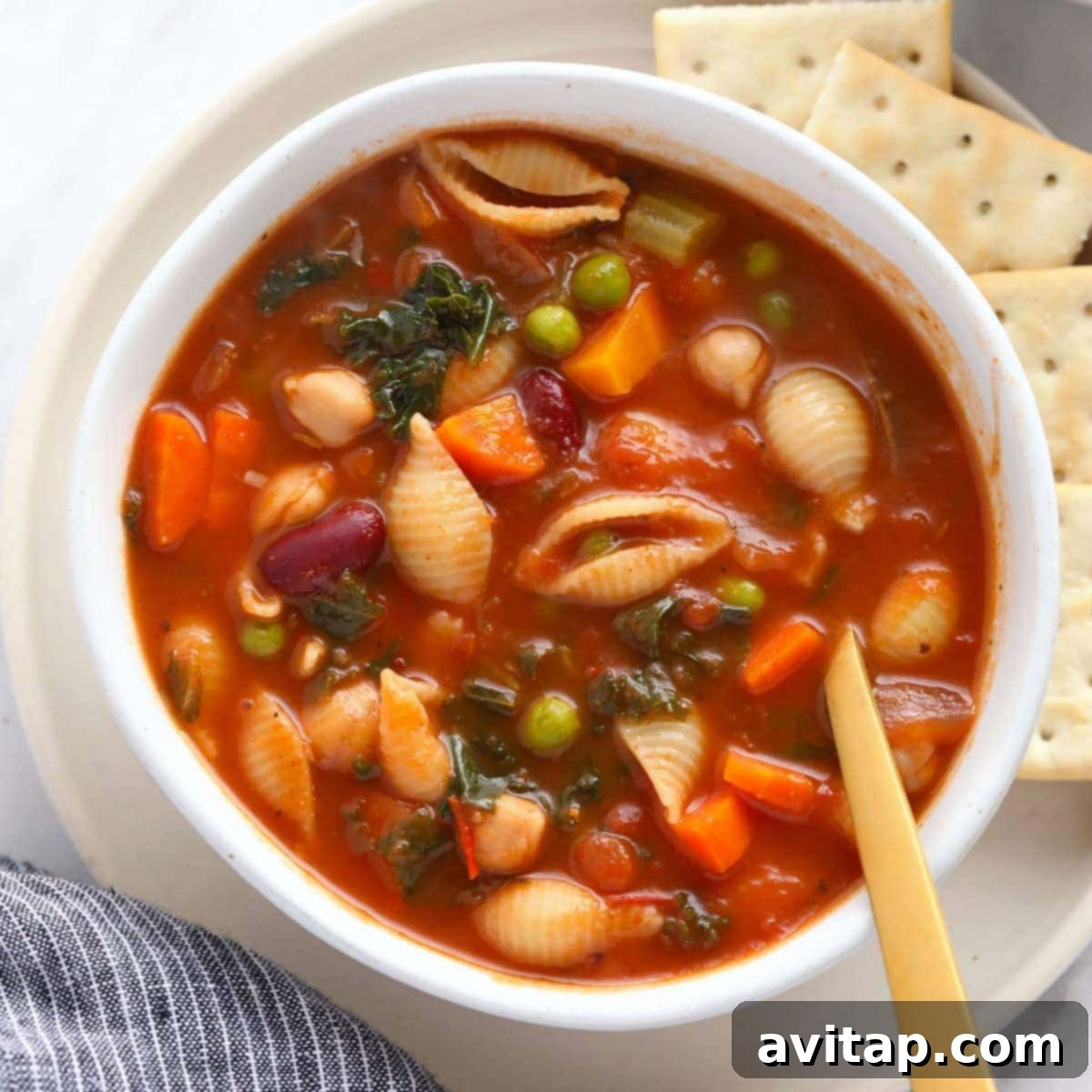
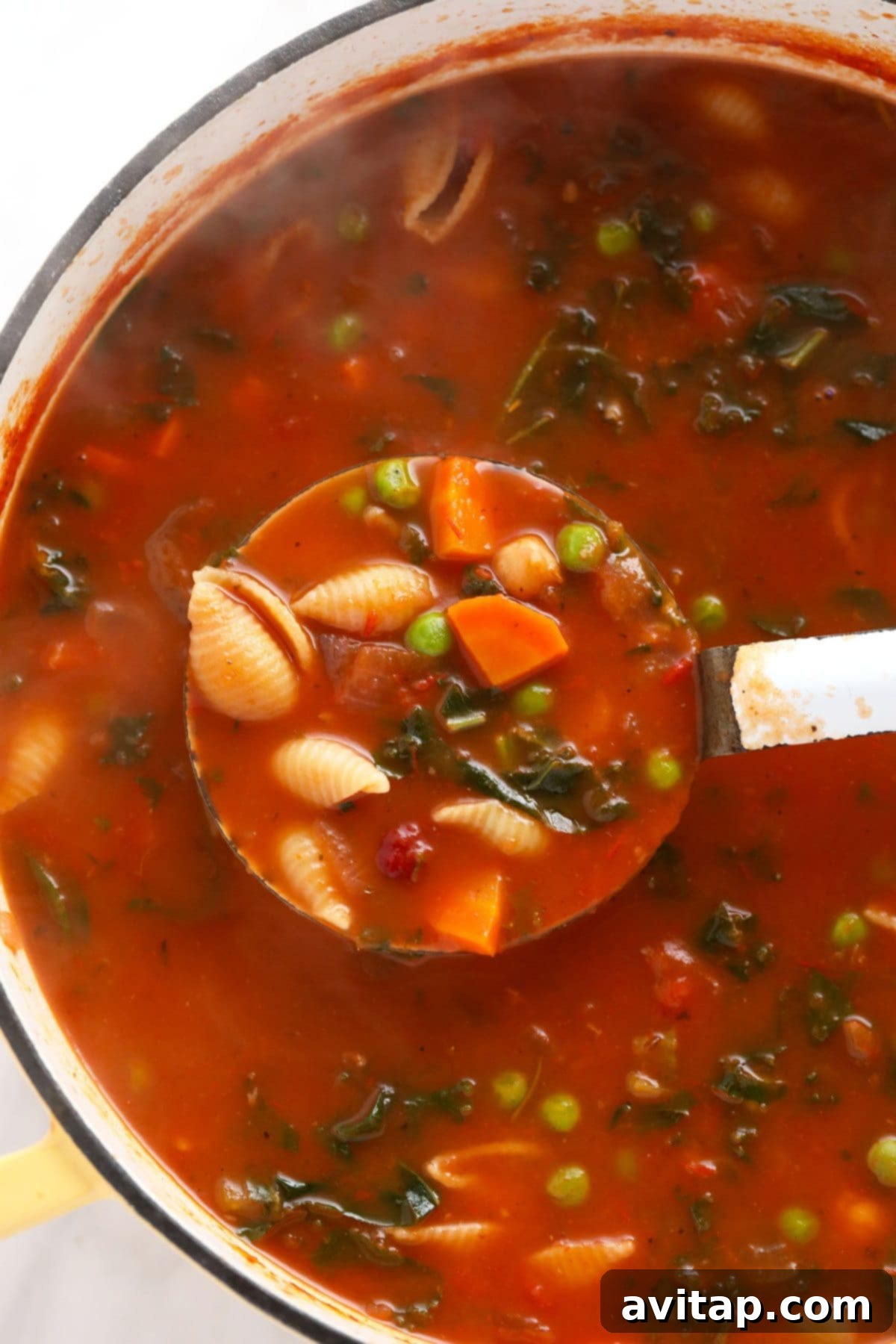
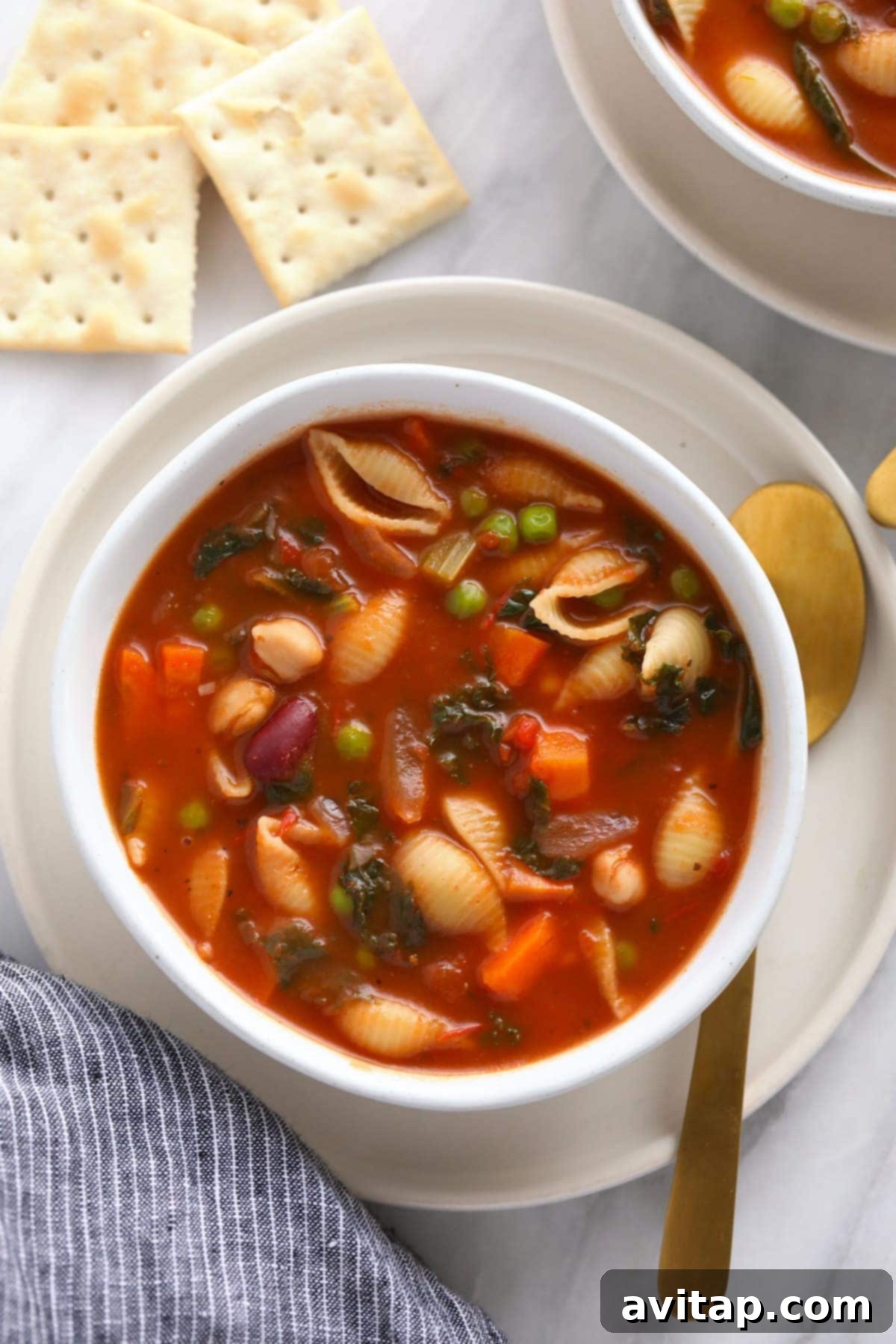
There’s nothing quite as comforting and satisfying as a classic, vegetable-packed Minestrone Soup. This timeless Italian dish, celebrated for its robust tomato broth and abundant fresh ingredients, offers a perfect blend of nutrition and flavor. Whether you’re seeking a wholesome meal for a chilly evening or a delicious way to enjoy more vegetables, this Minestrone recipe is designed to impress. We believe this isn’t just a good minestrone; it’s the absolute best you’ll find, meticulously crafted to deliver an unforgettable experience in every spoonful.
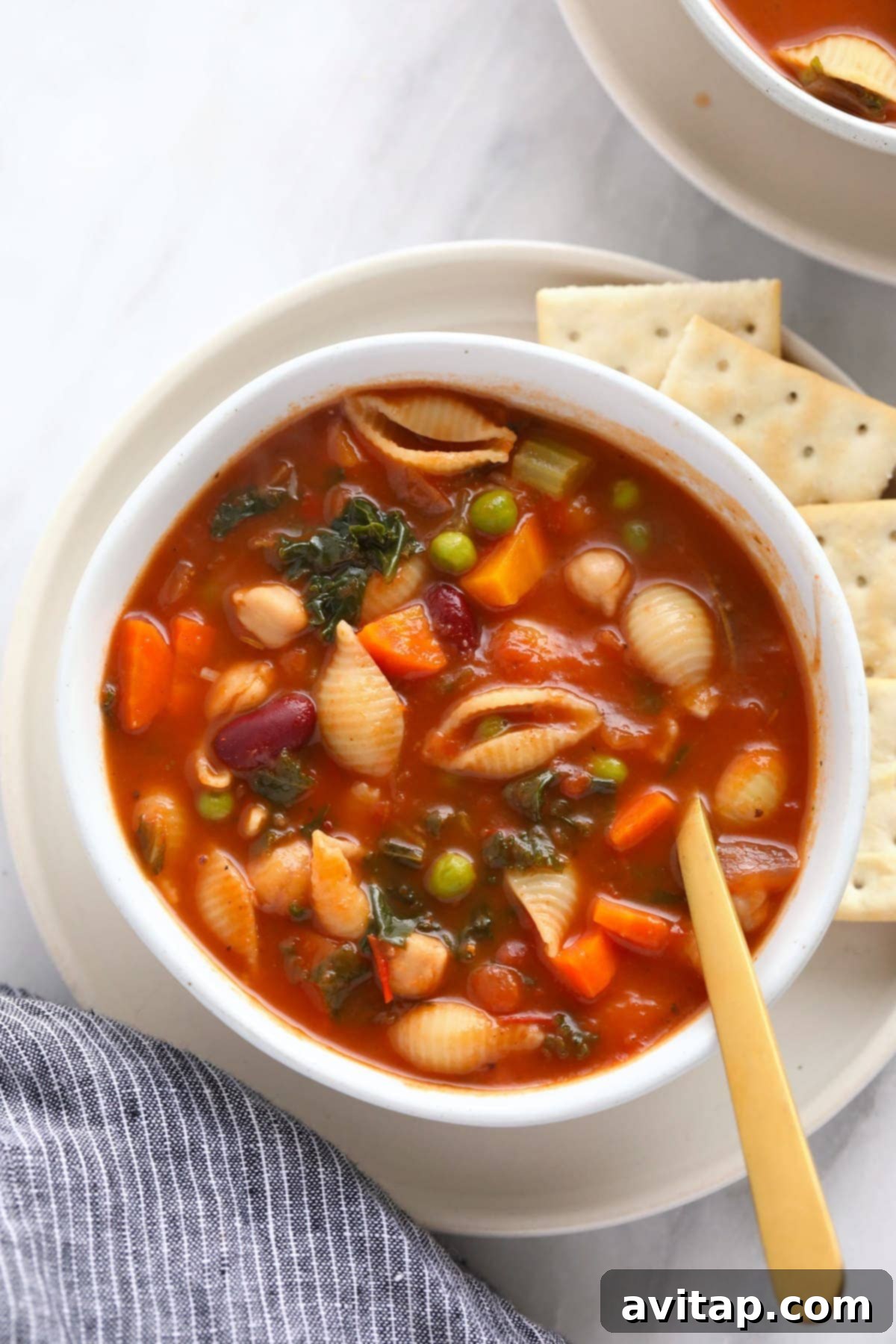
Crafting the Perfect Classic Minestrone Soup
This classic minestrone soup embodies everything you could wish for in a hearty, comforting meal. Its rich and flavorful tomato broth, brimming with tender vegetables, protein-packed beans, and satisfying noodles, makes it an ideal choice for a quick yet nourishing weeknight dinner or a meal-prep staple. Unlike many recipes, ours focuses on layering flavors from the very first step, ensuring a depth that truly sets it apart. It’s more than just a soup; it’s a bowl full of warmth and goodness, perfect for any season and adaptable to what you have in your pantry.
What Defines a Classic Minestrone? Understanding Its Heritage
Minestrone is a vibrant Italian soup made with a variety of seasonal vegetables, often with the addition of pasta or rice, and typically features a rich tomato-based broth. Its essence lies in its adaptability and the celebration of fresh produce, making it a “big soup” that can vary greatly from region to region and even from home to home. However, certain elements are traditionally recognized as quintessential to a “classic” minestrone, providing a familiar and comforting taste profile:
- Aromatic Foundation (Soffritto): The base flavor is meticulously built upon a “soffritto” – a finely diced mixture of carrots, celery, and onions. Sautéing these aromatics slowly develops a sweet and savory backbone that deeply flavors the entire broth.
- Hearty Legumes: Beans are an indispensable component, contributing not only to the soup’s robust texture but also a significant amount of plant-based protein and fiber. Common choices include cannellini beans, kidney beans, or garbanzo beans, often used in combination.
- Pasta or Grain: To make the soup more substantial and filling, small pasta shapes (like ditalini, shell noodles, or elbow macaroni) or rice are traditionally added. This starch absorbs some of the delicious broth, adding a comforting chewiness.
- Tomato-Rich Broth: While some minestrone variations are broth-based without tomatoes, a classic and widely beloved version features a robust tomato broth. Crushed tomatoes and tomato paste contribute a tangy depth and umami that beautifully complements the fresh vegetables and legumes.
- Fresh Herbs: The soul of Italian cooking lies in its herbs. Bay leaves and fresh oregano are commonly used to infuse the soup with authentic Mediterranean aromas, enhancing its overall flavor complexity.
Our recipe proudly adheres to these classic principles, promising a Minestrone experience that is both authentic and incredibly satisfying, while still offering plenty of room for your personal touch.
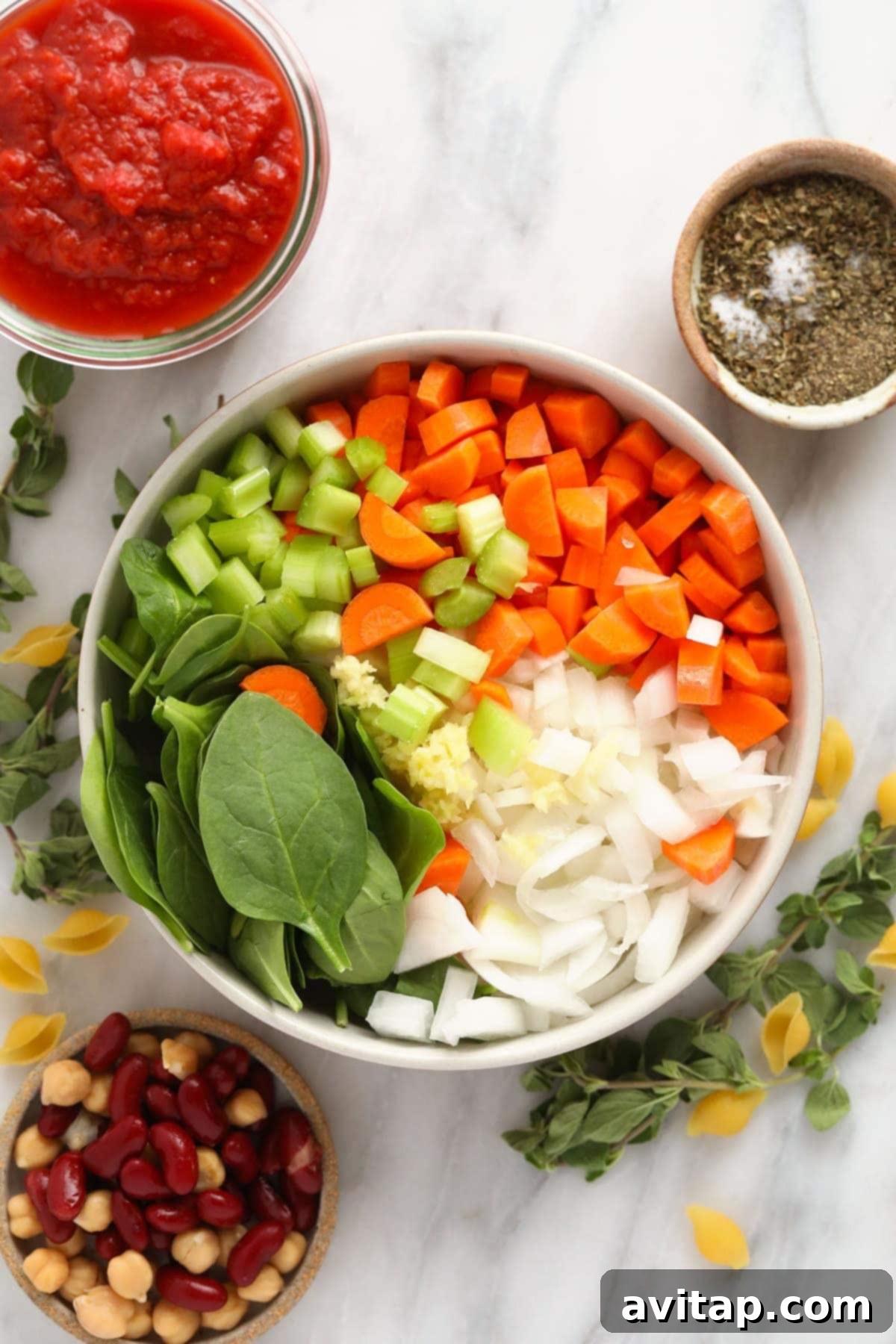
Essential Ingredients for a Flavorful Minestrone
Despite being packed with incredible flavors and healthy nutrients, this minestrone soup is surprisingly simple to make. Each ingredient plays a crucial role in creating a balanced and delicious experience, building layers of taste that transform simple components into an extraordinary meal. Here’s a detailed look at what you’ll need and why each element is important:
- Extra Virgin Olive Oil: The cornerstone of Italian cuisine, used to build our aromatic base. A good quality, robust extra virgin olive oil will impart a richer flavor from the start.
- White Onion & Garlic: These pungent aromatics form the essential soffritto, the flavor foundation. Sautéing them until softened and fragrant is key to unlocking deep, savory sweetness for the broth.
- Dry Red Wine: This is our secret weapon for deglazing the pot, a technique that lifts all those incredibly flavorful caramelized bits (known as “fond”) from the bottom. These bits are pure concentrated flavor! If you prefer not to use alcohol, a splash of vegetable broth or even water can work in a pinch, though the wine adds unparalleled depth and complexity.
- Carrots & Celery: The other vital components of the classic soffritto. They add natural sweetness, a subtle earthy flavor, and texture, beautifully complementing the onion and garlic base.
- Crushed Tomatoes: The very heart of our rich, robust tomato-based broth. Opt for high-quality crushed tomatoes for the best, most authentic flavor profile.
- Tomato Paste: Do not underestimate this ingredient! It’s crucial for intensifying the tomato flavor, adding a concentrated umami punch, and giving the broth a pleasing, silky thickness without being heavy.
- Vegetable Broth: The primary liquid for the soup. Choose a low-sodium, flavorful broth to control the overall saltiness and ensure a balanced final product. Homemade vegetable broth would be ideal if available.
- Apple Cider Vinegar: A touch of acidity, like apple cider vinegar, brightens the soup and perfectly balances the richness of the tomatoes and other savory elements. It acts as a phenomenal flavor enhancer. Red wine vinegar or a squeeze of fresh lemon juice are excellent substitutes if you don’t have apple cider vinegar.
- Salt: Absolutely crucial for seasoning and bringing out the natural flavors of all the ingredients. Remember to taste and adjust as you go; proper seasoning is the difference between a good soup and a great one.
- Italian Seasoning: A convenient and flavorful blend of dried herbs like basil, oregano, rosemary, and thyme. If you don’t have a pre-made blend, a combination of dried basil, oregano, and dried parsley works wonderfully.
- Red Pepper Flakes: For a subtle, warming kick that adds a touch of excitement to the palate without overwhelming the other delicate flavors. Adjust the quantity to your personal spice preference.
- Garlic Powder: Adds another layer of garlic flavor, especially good in the broth where it disperses evenly.
- Bay Leaves: These herbs infuse the soup with a subtle, aromatic depth during the simmering process. Remember to remove them before serving, as they are not meant to be eaten.
- Fresh Oregano: Fragrant and robust, fresh oregano elevates the authentic Italian essence of the soup. Tying sprigs in a bundle makes for easy removal at the end of cooking.
- Garbanzo Beans & Kidney Beans: These versatile legumes provide excellent plant-based protein, dietary fiber, and a satisfying, wholesome texture. Draining and rinsing them removes excess sodium and starch. Feel free to use other types like cannellini beans or great northern beans.
- Spinach (or Kale): Adds vibrant color, iron, and a wealth of other essential nutrients. Stir them in at the very end to ensure they remain fresh, slightly crisp, and retain their nutritional integrity. Kale is a fantastic, more robust alternative that holds up well.
- Peas: A delightful addition that offers a pop of sweetness and bright color, peas are also added towards the end to maintain their delicate texture.
- Shell Noodles: Small shell pasta is a classic choice for minestrone, providing a familiar, comforting chew that makes the soup extra hearty. Any small pasta shape like ditalini, elbows, or even broken spaghetti will work beautifully. Use about 8 ounces for this recipe.
Enhancing Your Minestrone with Extra Protein
While this vegetarian minestrone is already protein-rich thanks to the generous inclusion of beans, you can easily boost its protein content further to suit your dietary needs or preferences. Minestrone’s adaptability shines here, allowing for various additions without compromising its classic flavor profile.
- Additional Beans: For a simple, plant-based protein boost, just add another can or two of your favorite beans! Cannellini, navy, or a mixed bean blend would be excellent choices, contributing more fiber and texture.
- Ground Meat: For a heartier, meat-inclusive version, this minestrone soup pairs wonderfully with lean ground turkey, ground beef, or ground chicken. The savory notes from the meat will complement the rich tomato broth beautifully.
To incorporate ground meat into this soup: Partially brown your chosen ground meat (approximately 1/2 to 1 pound, depending on preference) in the pot after sautéing the onion (as described in step 3 of the instructions). Break up the meat as it cooks. Once browned, drain any excess fat before adding the minced garlic and continuing with the recipe as directed, including deglazing with wine. This method ensures the meat is flavorful and cooked through, integrating seamlessly with the other ingredients.
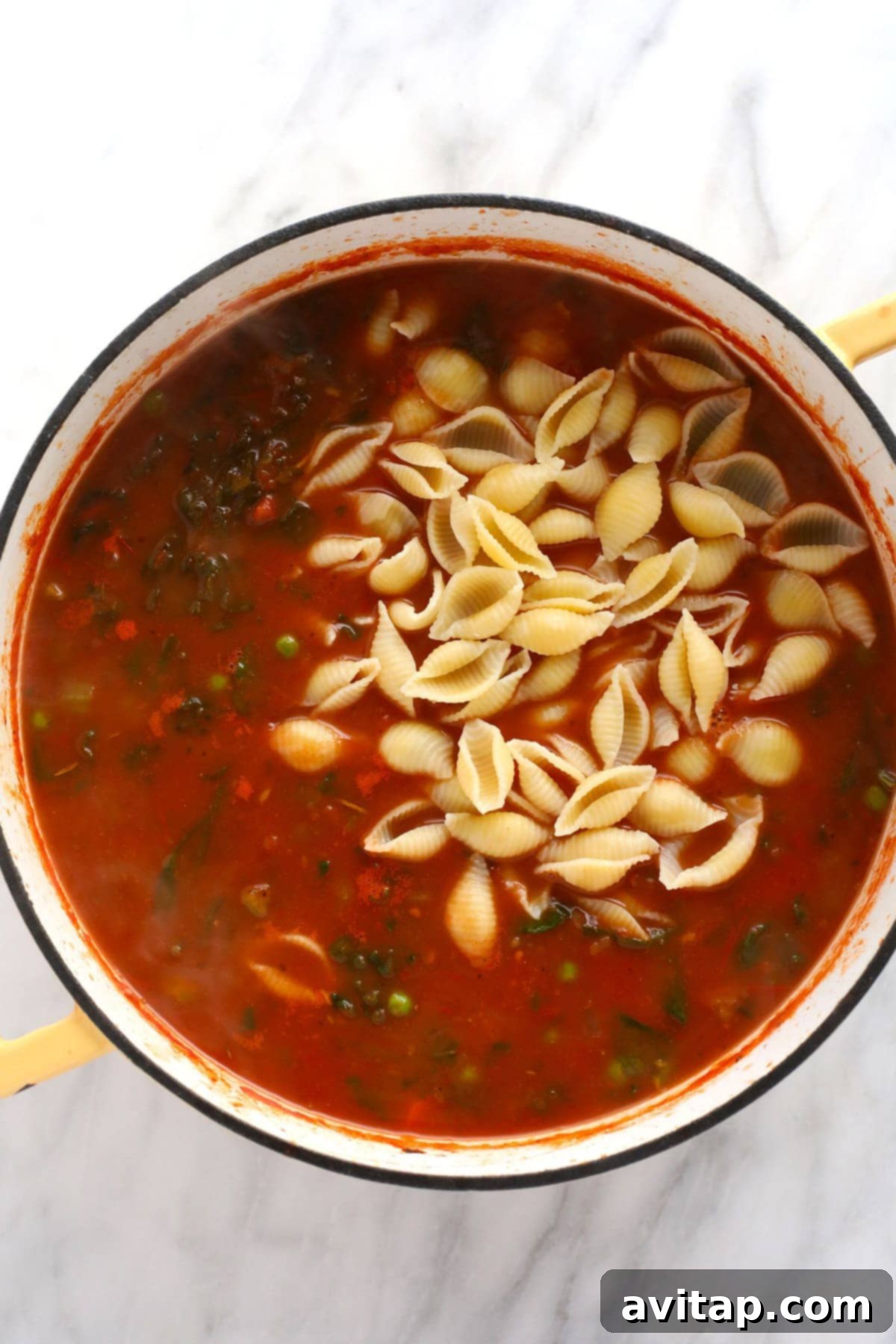
Step-by-Step Guide: How to Make the Best Minestrone Soup
The secret to truly flavorful minestrone soup lies in building layers of flavor from the very beginning. Don’t rush through the initial steps, and whatever you do, do not skip the salt – it’s absolutely essential for enhancing all the delicious tastes and allowing the ingredients to shine. Follow these steps carefully to achieve a rich and satisfying broth that will become your new go-to recipe.
- Prepare the Noodles Separately: Start by cooking your 8 ounces of small shell noodles (or your preferred small pasta shape) according to the package directions until they are al dente. This means they should still have a slight bite to them. It’s crucial to cook them separately from the soup and set them aside. This prevents them from absorbing too much of your delicious broth, turning mushy, and releasing excess starch into the soup, which can make it cloudy.
- Heat the Pot and Oil: Place a large Dutch oven or a heavy-bottomed stockpot over medium-high heat. Add the extra virgin olive oil and let it heat until it shimmers gently, indicating it’s ready for sautéing.
- Sauté the Onion: Add the minced white onion to the heated olive oil. Sauté the onion for 2-3 minutes, stirring occasionally, until it becomes soft, translucent, and slightly aromatic. At this stage, adding a small pinch of salt can help draw out moisture and intensify the onion’s natural sweetness.
- Add Garlic and Deglaze: Once the onion is ready, add the minced garlic to the pot. Sauté for about 30-60 seconds, stirring constantly, until it becomes wonderfully fragrant. Be very careful not to burn the garlic, as burnt garlic can taste bitter. You’ll likely notice some delicious brown bits starting to stick to the bottom of the pot – these are pure flavor! Now, pour in the dry red wine to deglaze the pan.
- Scrape the Fond: Using a wooden spoon or a heat-resistant spatula, actively scrape all those delicious brown bits (the “fond”) from the bottom of the pot. As the wine simmers and slightly reduces, these caramelized flavor particles will loosen and dissolve into the liquid, adding incredible depth and complexity to your soup’s broth. This step is absolutely crucial for an exceptionally rich and well-rounded taste.
- Sauté Root Vegetables: After deglazing, add the diced carrots and celery to the pot. Sauté them for an additional 2-3 minutes, stirring occasionally, allowing them to soften slightly and absorb some of the wonderful flavors from the pan.
- Combine Main Broth Ingredients: Now, it’s time to add the crushed tomatoes, tomato paste, vegetable broth, apple cider vinegar, salt, Italian seasoning, red pepper flakes, garlic powder, bay leaves, and the bundle of fresh oregano to the pot. Stir everything thoroughly to ensure all ingredients are well combined and the tomato paste is fully integrated.
- Bring to a Boil and Simmer: Increase the heat to high and bring the soup mixture to a rolling boil. Once it reaches a boil, reduce the heat to low-medium, cover the pot, and let the soup simmer gently for 15-20 minutes. This simmering time is vital for allowing all the flavors to meld beautifully and for the broth to thicken slightly, creating a harmonious and robust taste. Remember to stir periodically to prevent anything from sticking to the bottom.
- Add Delicate Ingredients: After the initial simmering period, stir in the fresh spinach (or chopped kale if using), frozen peas, and the drained and rinsed garbanzo beans and kidney beans. These ingredients are added later to prevent them from becoming overcooked, ensuring they retain their vibrant color, fresh texture, and maximum nutritional value. Stir well and let the soup simmer for an additional 5 minutes, or until the spinach has wilted and the peas are tender-crisp.
- Final Touch and Serve: Just before serving, stir the pre-cooked shell noodles into the soup. This is critical: adding them at the last moment prevents them from absorbing too much broth and becoming mushy. Ladle the hot minestrone into bowls. Season with additional salt and pepper to taste, if needed, and garnish with fresh chopped parsley or a generous sprinkle of grated Parmesan cheese for an extra layer of flavor. Enjoy your homemade masterpiece!
Minestrone FAQs & Expert Tips
How do you add more flavor to minestrone soup?
If your minestrone needs a flavor boost, beyond just adjusting the salt, here are several expert tips to deepen its taste and make it truly unforgettable:
- Salt is Paramount: Always start by adjusting the salt content. Add 1/8 teaspoon at a time, tasting after each addition, until the flavors truly pop. Salt doesn’t just make things salty; it’s a flavor enhancer that brings out the inherent tastes of all other ingredients.
- Acidity for Brightness: If the soup tastes flat or one-dimensional, it likely needs a touch of acidity. Add an extra teaspoon of apple cider vinegar, red wine vinegar, or a squeeze of fresh lemon juice just before serving. This brightens the overall profile and makes all the flavors sing.
- Umami Boosters: For deeper savoriness and a richer mouthfeel, consider stirring in a dash of Worcestershire sauce (ensure it’s vegetarian if needed), a bit of nutritional yeast, or even a tablespoon of white miso paste dissolved in a little hot broth. Adding a Parmesan rind during simmering (and removing it before serving) also imparts incredible umami.
- More Aromatics: Don’t hesitate to add more garlic powder or even a pinch of onion powder to the simmering broth. If you’re a fan of a gentle heat, ensure your red pepper flakes are balanced and not overwhelming.
- Fresh Herbs at the End: A generous sprinkling of freshly chopped parsley, basil, or even a few torn fresh oregano leaves just before serving adds a vibrant, fresh aroma that elevates the entire dish and provides a burst of herbaceous flavor.
- High-Quality Broth: The quality of your vegetable broth significantly influences the final taste. If possible, choose a good organic, low-sodium brand, or better yet, make your own homemade vegetable broth for unparalleled depth.
Is minestrone soup healthy?
Absolutely, minestrone soup is an incredibly good and wholesome meal, making it an excellent choice for a nutritious and satisfying addition to your diet. Here’s why it’s considered a powerhouse of health:
- High Protein Content: With approximately 12 grams of protein per serving (and even more if you opt to add extra beans or lean ground meat), this soup helps keep you feeling full and satiated, while also supporting muscle health and repair.
- Rich in Vegetables: It’s brimming with a diverse array of fresh vegetables, providing a wide spectrum of essential vitamins, minerals, and disease-fighting antioxidants crucial for overall well-being and a strong immune system.
- Fiber Powerhouse: The combination of various vegetables and beans makes this soup an excellent source of dietary fiber. Fiber is vital for promoting digestive health, regulating blood sugar levels, and contributing to long-lasting satiety.
- Low Calorie & Nutrient Dense: Minestrone is a relatively low-calorie soup that is remarkably nutrient-dense, meaning you get a lot of nutritional value and health benefits without a high caloric cost. It’s a smart choice for weight management.
- Hydrating: As a delicious broth-based soup, it naturally contributes to your daily fluid intake, helping to keep you well-hydrated, which is important for all bodily functions.
Can I add more vegetables to minestrone soup?
Yes, minestrone is famously adaptable, and adding more vegetables is highly encouraged! It’s a wonderful way to use up seasonal produce, boost the nutritional profile, and customize the soup to your liking. Here are some great options, along with tips on when to incorporate them for the best results:
- Hardier Vegetables (Add with carrots and celery, in Step 6): These vegetables require a longer cooking time to become tender and absorb flavors.
- Red or Sweet Potatoes (diced into 1/2-inch cubes): Adds a creamy texture and extra nutrients.
- Chopped Broccoli Florets: Provides a lovely green crunch and earthy flavor.
- Chopped Cauliflower Florets: A mild addition that absorbs the broth’s flavors exceptionally well.
- Green Beans (trimmed and snapped): Adds a fresh, crisp element and vibrant color.
- Turnips or Parsnips (diced): These root vegetables add a subtle peppery or sweet flavor.
- Quicker-Cooking Vegetables (Add with spinach and peas, in Step 9): These vegetables cook quickly and retain their texture and vibrant color best when added towards the end of the cooking process.
- Green or Red Bell Peppers (diced): Adds a sweet, vibrant flavor and a pleasant crunch.
- Zucchini or Yellow Squash (diced): Softens quickly and is great for adding volume and a mild taste.
- Chopped Cabbage (green or savoy): Adds a rustic, hearty texture and becomes tender-crisp.
- Corn (fresh or frozen): Offers a burst of sweet flavor and bright yellow color.
Don’t hesitate to experiment with what you have on hand or what’s in season. Minestrone is truly a celebration of fresh, wholesome vegetables!
Storage & Freezing Tips for Minestrone Soup
Minestrone soup is a fantastic meal-prep option, and it often tastes even better the next day as the flavors continue to meld and deepen. Proper storage ensures you can enjoy your delicious soup for days to come, whether from the refrigerator or freezer.
Refrigeration Instructions
To store minestrone soup for later enjoyment, it’s crucial to store the soup base and the cooked noodles in two separate airtight containers. This separation is key because if you store the noodles with the soup, they will continue to absorb too much liquid, becoming mushy and bloated, thereby altering the soup’s texture and diminishing its appeal. The soup itself can be safely refrigerated for up to 3-4 days. When you’re ready to enjoy a serving, simply warm the soup and a portion of the noodles separately, then combine them in your bowl just before eating. This method ensures your noodles remain al dente and your broth stays rich and flavorful.
Freezer Instructions
Yes, minestrone soup freezes beautifully, making it an excellent candidate for batch cooking and future meals! To freeze, first allow the minestrone soup (critically, without the noodles!) to cool completely to room temperature. Transfer the cooled soup into freezer-safe bags or rigid airtight soup containers, leaving about an inch of headspace at the top to allow for expansion during freezing. Store in the freezer for up to 3 months. For maximum convenience, freezing in individual portions will make thawing and reheating much easier.
Pro Tips for Freezing and Reheating Soup
Freezing soup is straightforward, but a few key tips can ensure the best quality when you’re ready to reheat and enjoy your homemade minestrone. While this guide provides simple advice, for a more comprehensive tutorial, you might want to consult a dedicated guide on freezing soup.
- Cool Completely Before Freezing: Always ensure the soup is fully cooled to room temperature before transferring it to freezer-safe containers. Freezing hot soup can lower the overall temperature of your freezer, potentially affecting other frozen items, and can also lead to more ice crystal formation.
- Prevent Freezer Burn: If you’re freezing soup in a container (especially plastic or glass), place a piece of plastic wrap directly on the surface of the soup before sealing the lid. This creates a barrier that prevents ice crystals from forming on the surface and helps to avoid freezer burn, which can degrade flavor and texture.
- Thawing and Reheating: When you’re ready to enjoy your frozen minestrone, transfer the container to the refrigerator to thaw overnight. Once thawed, pour the soup into a pot and add 1-2 additional cups of vegetable broth or water. This helps to replenish any liquid lost or absorbed during the freezing and thawing process and ensures the soup has the right consistency. Heat the soup gently over medium-low heat, stirring occasionally, until it’s warmed through. Taste and adjust seasonings if needed.
- No Noodles in the Freezer: We cannot stress this enough – never freeze the cooked noodles with the soup! They will absorb excess liquid, become overly soft and mushy upon thawing, and result in an unappetizing texture. Always cook fresh noodles when you’re ready to serve your defrosted soup for the best results.
More of Our Favorite Recipes
Discover More Healthy & Hearty Soup Recipes
If you loved this classic minestrone, you’re in for a treat! Explore our extensive collection of other wholesome and flavorful soup recipes, perfect for any season and any palate. From comforting classics to innovative twists, these soups are designed to nourish and delight your entire family.
- Best Chicken Noodle Soup
- Instant Pot Lentil Soup
- More Instant Pot Soup Recipes
- Slow Cooker Chicken Noodle Soup
- Hearty Vegetable Soup Recipe
- Best Kale Soup
4.83 from 17 votes
Vegetarian Minestrone Soup
You can’t beat a classic vegetable packed minestrone soup. This soup has a thick tomato broth, 12 grams of protein per bowl, and all the delicious flavors of a classic minestrone soup.
By: Lee Funke
15 mins
30 mins
45 mins
6
Pin Recipe
Print Recipe
Ingredients
- 2 tablespoons extra virgin olive oil
- 1 medium white onion, minced
- 3 cloves garlic, minced
- 1/3 cup dry red wine
- 2 large carrots, diced
- 2 stalks celery, diced
- 1 28-oz. can crushed tomatoes
- 1 tablespoon tomato paste
- 8 cups vegetable broth
- 2 teaspoons apple cider vinegar
- 1 teaspoon salt
- 2 teaspoons Italian seasoning
- 1/2 teaspoon red pepper flakes
- 1/2 teaspoon garlic powder
- 2 bay leaves
- 5 sprigs of fresh oregano, tied in a bundle
- 1 15-oz. can garbanzo beans, drained and rinsed
- 1 15-oz. can kidney beans, drained and rinsed
- 4 cups spinach or kale (fresh)
- 1.5 cups frozen peas
- 8-oz. shell noodles (cooked separately)
Instructions
- First, cook 8-oz. of small shell noodles (or your preferred pasta) until al dente according to package directions. Drain and set aside.
- Next, heat a large pot or Dutch oven over medium-high heat. Add the extra virgin olive oil.
- When the olive oil is fragrant, add the minced onion and sauté for 2-3 minutes over high heat until it becomes translucent and soft.
- Add the minced garlic and sauté until fragrant (about 30-60 seconds). Then, deglaze the pot by pouring in the dry red wine.
- Using a spatula, scrape any brown bits of garlic and onion from the bottom of the pot. These “fond” bits will dissolve into the wine, adding significant flavor to the soup.
- Then, add the diced carrots and celery to the pot and sauté for an additional 2-3 minutes, allowing them to soften slightly.
- Add the crushed tomatoes, tomato paste, vegetable broth, apple cider vinegar, salt, Italian seasoning, red pepper flakes, garlic powder, bay leaves, and the bundled fresh oregano to the pot. Stir until all ingredients are well combined.
- Increase the heat to high and bring the soup to a rolling boil. Once boiling, reduce the heat to low/medium, cover the pot, and let it simmer gently for 15-20 minutes, stirring periodically. This allows the flavors to meld and the broth to thicken.
- Finally, add the fresh spinach (or kale), frozen peas, and the drained and rinsed garbanzo and kidney beans to the pot. Stir everything together and let the soup simmer for an additional 5 minutes, or until the greens are wilted and the peas are tender-crisp.
- Serve the hot soup over the pre-cooked shell noodles. Season with additional salt and pepper to taste, and garnish with fresh parsley or grated Parmesan cheese if desired. Enjoy your delicious homemade minestrone!
Tips & Notes
- For meal prep and leftovers, always store cooked noodles and the soup base in separate airtight containers to prevent the noodles from becoming soggy and absorbing all the broth.
- This recipe was last updated on January 13th, 2021, reflecting the latest improvements and refinements.
Nutrition
Carbohydrates: 47 g
Protein: 12 g
Fat: 7 g
Fiber: 2 g
Sugar: 8 g
Nutrition information is automatically calculated and should be used as an approximation. Individual results may vary based on exact ingredients and preparation methods.

Loved this recipe? Leave a comment below!
Don’t forget to tag your delicious creations on social media with the hashtag #fitfoodiefinds – we’d absolutely love to see what you’re cooking up!