
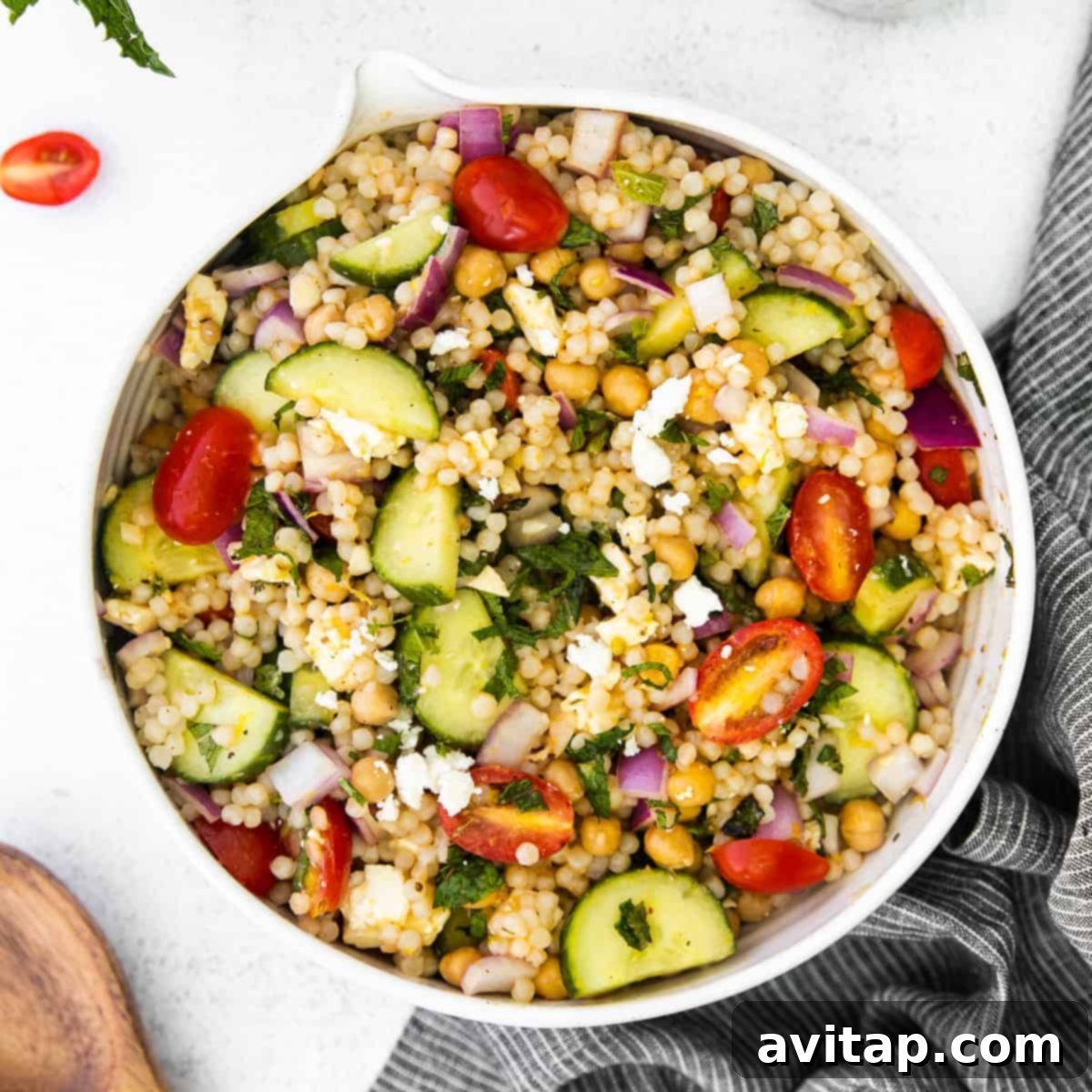
Welcome to your new favorite summer salad! This Mediterranean couscous salad is a delightful fusion of fresh, vibrant flavors and wholesome ingredients, making it an indispensable addition to any seasonal meal. Whether you’re searching for a light, healthy lunch, an impressive side dish for a barbecue, or a colorful main course, this veggie-packed sensation fits the bill perfectly. Prepare to enjoy a dish that’s as nourishing as it is delicious, bringing the bright tastes of the Mediterranean right to your table.
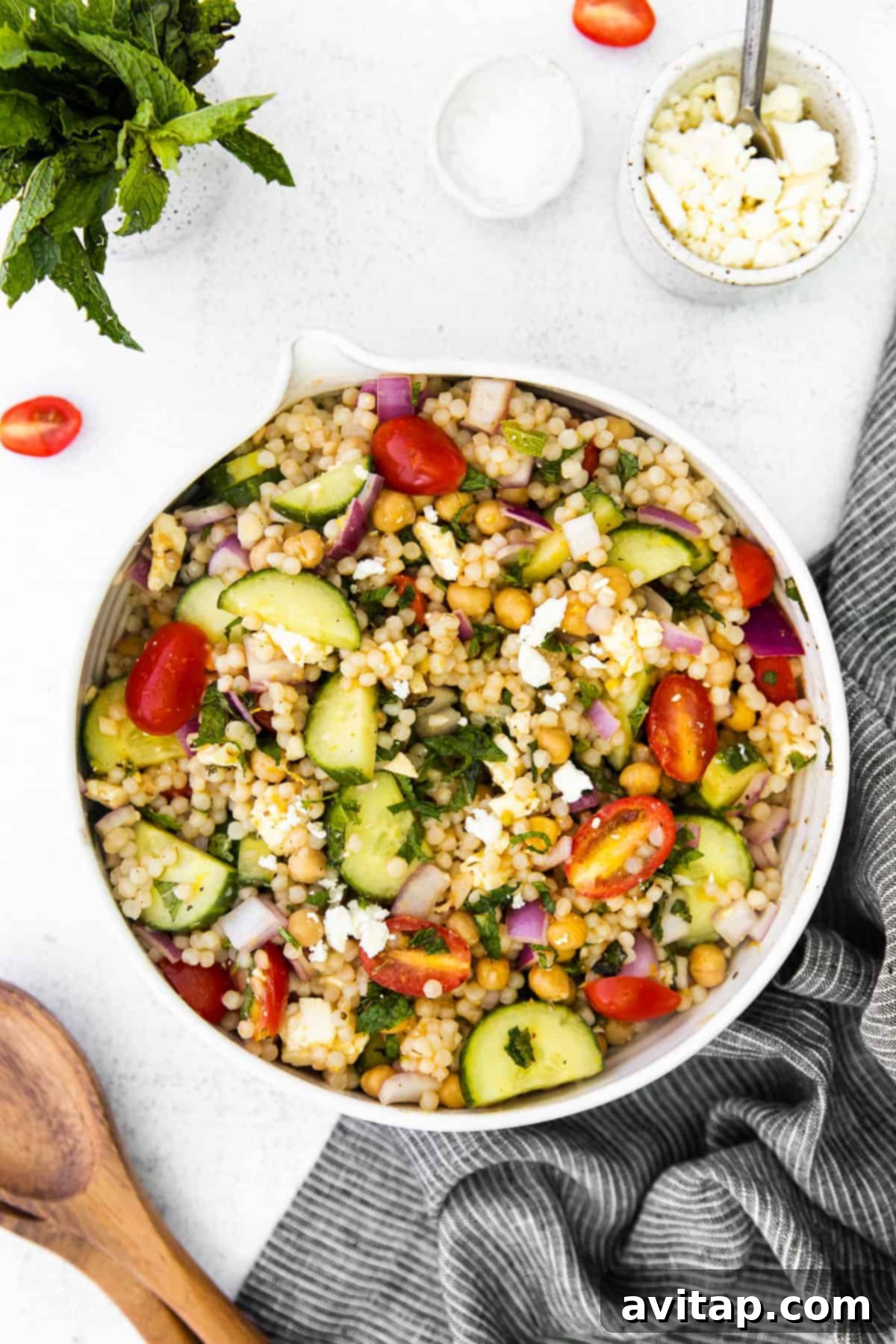
The Ultimate Veggie-Packed Mediterranean Couscous Salad
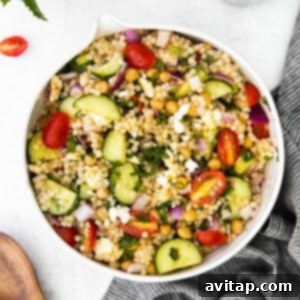
For all you salad enthusiasts out there, get ready to meet your match! This Mediterranean couscous salad isn’t just healthy; it’s a celebration of flavors and textures, brimming with a diverse array of fresh vegetables. Imagine a vibrant medley of crisp cucumbers, juicy cherry tomatoes, pungent red onion, hearty chickpeas, and crumbled feta cheese, all perfectly bound by fluffy Israeli couscous and a tantalizing lemon-balsamic dressing. This salad doesn’t just look good; it delivers on taste, offering a wholesome meal that satisfies on every level. It’s the kind of dish you’ll crave all summer long, simple enough for weeknights yet impressive enough for entertaining.
Why You’ll Adore This Mediterranean Couscous Salad
There are countless reasons why this Mediterranean couscous salad deserves a permanent spot in your recipe rotation. Beyond its stunning visual appeal, it offers a powerhouse of nutritional benefits and culinary delights:
- Bursting with Flavor: The combination of fresh mint, tangy lemon, rich balsamic, and savory feta creates an explosion of classic Mediterranean tastes in every bite.
- Rich in Nutrients: Packed with a rainbow of vegetables, protein-rich chickpeas, and whole grain couscous, this salad is a nutritious choice that fuels your body and keeps you feeling satisfied.
- Incredibly Versatile: Enjoy it as a light lunch, a vibrant side dish for grilled meats or fish, or even as a flavorful main course. It adapts beautifully to various dietary needs and preferences.
- Easy to Prepare: With straightforward steps and readily available ingredients, this recipe is perfect for busy individuals who want to enjoy a gourmet-quality meal without spending hours in the kitchen.
- Perfect for Meal Prep: This salad tastes even better the next day as the flavors meld together, making it an excellent option for meal prepping healthy lunches throughout the week.
- Crowd-Pleaser: Its fresh, inviting nature makes it a guaranteed hit at potlucks, picnics, and family gatherings.
Key Ingredients for Your Mediterranean Couscous Salad
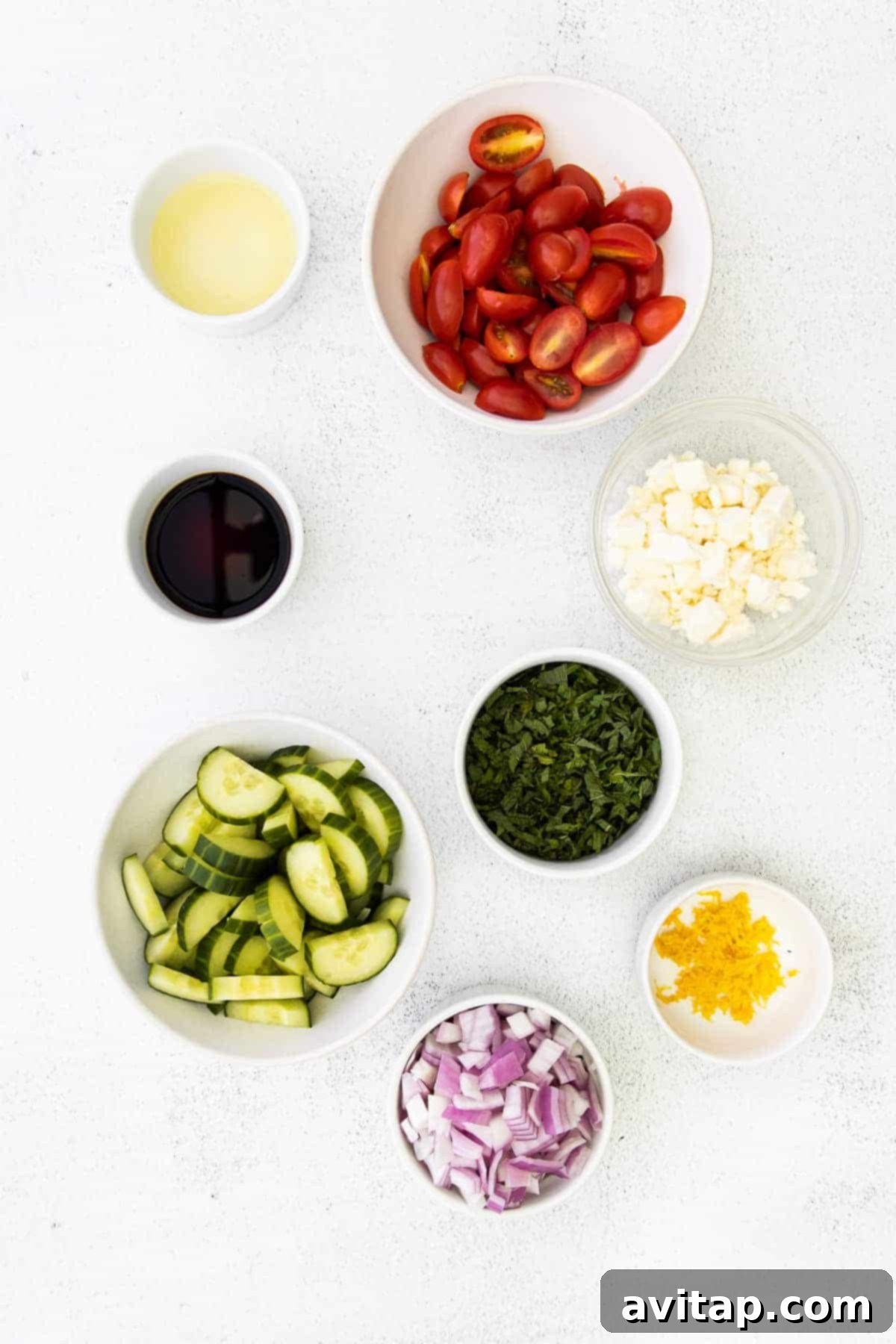
Crafting a truly memorable Mediterranean couscous salad begins with selecting the finest, freshest ingredients. Here’s a closer look at the stars of this recipe and why they shine:
- Israeli Couscous (Pearl Couscous): We specifically chose Israeli couscous for its distinctive texture and appealing spherical shape. Unlike traditional fine couscous, these larger, pearl-like pasta grains offer a satisfying chewiness that holds up wonderfully in a salad. Its ability to absorb flavors while maintaining its structure makes it the ideal base.
- Crumbled Feta Cheese: Essential for that authentic Mediterranean tang and creaminess. Feta adds a salty, briny kick that perfectly complements the fresh vegetables. If you’re not a fan of feta, crumbled goat cheese makes an excellent alternative, offering a slightly milder, creamier profile. For a dairy-free or vegan option, simply omit it or use a plant-based feta substitute.
- Red Onion: A finely diced red onion brings a sharp, zesty punch and beautiful color to the salad. If its raw intensity is too strong for your palate, you can soak the diced onion in ice water for 10-15 minutes before adding, which helps to mellow its flavor. White or yellow onions can also be used, though red offers the best visual appeal.
- Cherry Tomatoes: These sweet, juicy gems burst with flavor and add a lovely sweetness and vibrant red hue. While cherry tomatoes are ideal, feel free to use grape tomatoes or even a larger heirloom tomato, simply diced into bite-sized pieces.
- English Cucumbers: For an irresistible crunch and refreshing coolness, English cucumbers are a must. Their thin skin means no peeling is necessary, and their minimal seeds make them perfect for salads. Regular cucumbers work just as well, though you might prefer to peel them and scoop out the seeds.
- Chickpeas (Garbanzo Beans): Canned chickpeas are a fantastic addition, providing a substantial source of plant-based protein and fiber, making the salad more filling. They absorb the dressing beautifully, adding a nutty, earthy depth of flavor. Ensure they are well-drained and rinsed before use.
- Fresh Mint: This herb is the secret weapon for an authentic Mediterranean flavor profile. Fresh mint provides a wonderfully aromatic, cool, and invigorating note that elevates the entire salad. Chopping it finely ensures its refreshing essence is distributed evenly throughout. Don’t skip this for the freshest taste!
- Simple Lemon-Balsamic Dressing: Our homemade dressing is a crucial component, tying all the vibrant ingredients together. It’s a harmonious blend of high-quality balsamic vinegar, extra virgin olive oil, fresh lemon juice, and lemon zest. A portion of this dressing is used to marinate the chickpeas, infusing them with flavor, while the rest is tossed with the salad, creating a balanced and zesty finish.
Diving Deep into the World of Couscous
Couscous, a staple in North African and Middle Eastern cuisines, might seem exotic, but it’s incredibly simple to prepare and a versatile ingredient. If you’re new to cooking with it, fear not – mastering couscous is quick and rewarding. Let’s demystify this delightful ingredient:
What Exactly is Couscous?
Often mistaken for a grain, couscous is actually a type of pasta made from crushed durum wheat semolina. The semolina is moistened, rolled into tiny granules, and then lightly coated with wheat flour. Traditionally, it was hand-rolled, but modern production makes it widely available and easy to cook. It serves as an excellent base for absorbing rich flavors, much like rice or quinoa, but with a unique, light texture.
Unveiling Israeli Couscous (Pearl Couscous)
While traditional couscous consists of very fine, irregularly shaped granules, Israeli couscous (also known as pearl couscous or Ptitim) is distinctly different. It features larger, spherical pasta grains, roughly the size of peppercorns, which give it a chewier, more substantial mouthfeel. Developed in Israel in the 1950s as a rice substitute, it’s typically made from wheat flour and toasted, which imparts a slightly nutty flavor. You’ll often find Israeli couscous in white, whole wheat, and visually appealing tri-color varieties, adding both textural and aesthetic dimensions to dishes like our Mediterranean salad.
Is Couscous Truly a Pasta?
Indeed, it is! Despite its grain-like appearance and common use in similar ways to grains, couscous is fundamentally a pasta. Its classification as a pasta stems from its primary ingredient, semolina, which is also used to make many familiar Italian pasta shapes. This means it offers a delightful chewiness that grains typically don’t, making it a unique and satisfying component in many recipes.
Great Substitutes for Couscous
If Israeli couscous isn’t available or you’re looking to change things up, several excellent alternatives can work beautifully in this salad:
- Orzo Pasta: Another small, rice-shaped pasta, orzo is perhaps the closest substitute in terms of texture and ability to soak up flavors.
- Quinoa: For a gluten-free and higher-protein option, cooked quinoa provides a similar loose, fluffy texture and nutty flavor.
- Standard (Fine) Couscous: While smaller, regular couscous can still be used. Be mindful that its finer texture will make the salad less “chunky” and may absorb liquid more quickly.
- Farro or Wheat Berries: For a heartier, more rustic salad, these ancient grains offer a chewy texture and wholesome appeal, though they require longer cooking times.
Step-by-Step Guide to Crafting Your Mediterranean Couscous Salad
Creating this vibrant Mediterranean couscous salad is a simple process, broken down into three easy-to-follow stages. We’ll guide you through each part to ensure a perfect, flavorful result every time.
1. Flavor-Infused Chickpeas Preparation
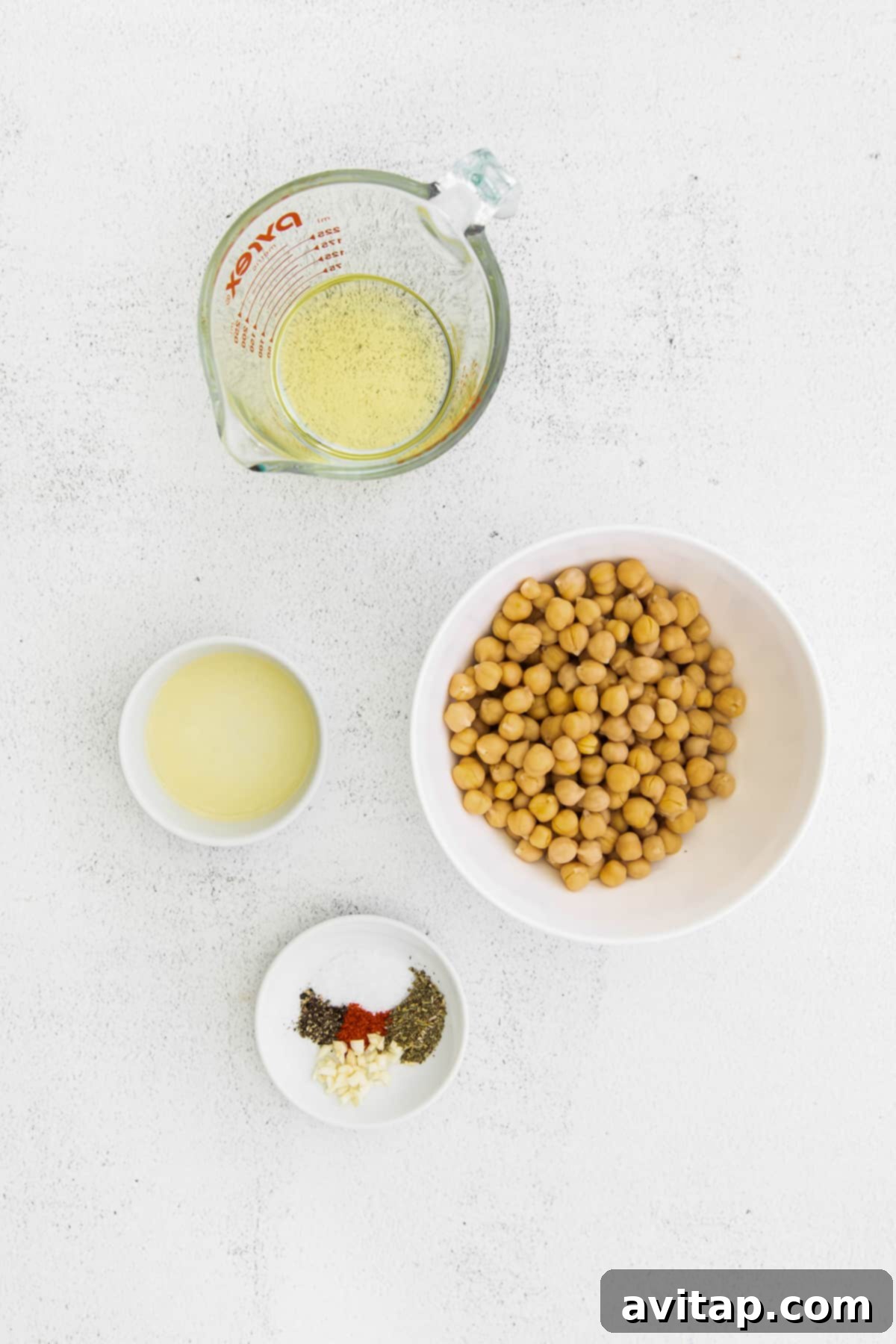
The secret to incredibly flavorful chickpeas lies in this simple pre-marination step. Begin by combining the drained and rinsed chickpeas with olive oil, lemon juice, ground pepper, salt, minced garlic, ground oregano, and a hint of cayenne pepper in a microwave-safe bowl. Toss these ingredients thoroughly until every chickpea is beautifully coated in the aromatic mixture. Microwave the seasoned chickpeas on high for just 90 seconds. This quick burst of heat helps the chickpeas absorb the flavors more deeply. After microwaving, give them another good stir and set them aside. The result will be tender, spicy, and tangy chickpeas that add a wonderful dimension to your salad.
2. Perfectly Cooked Israeli Couscous
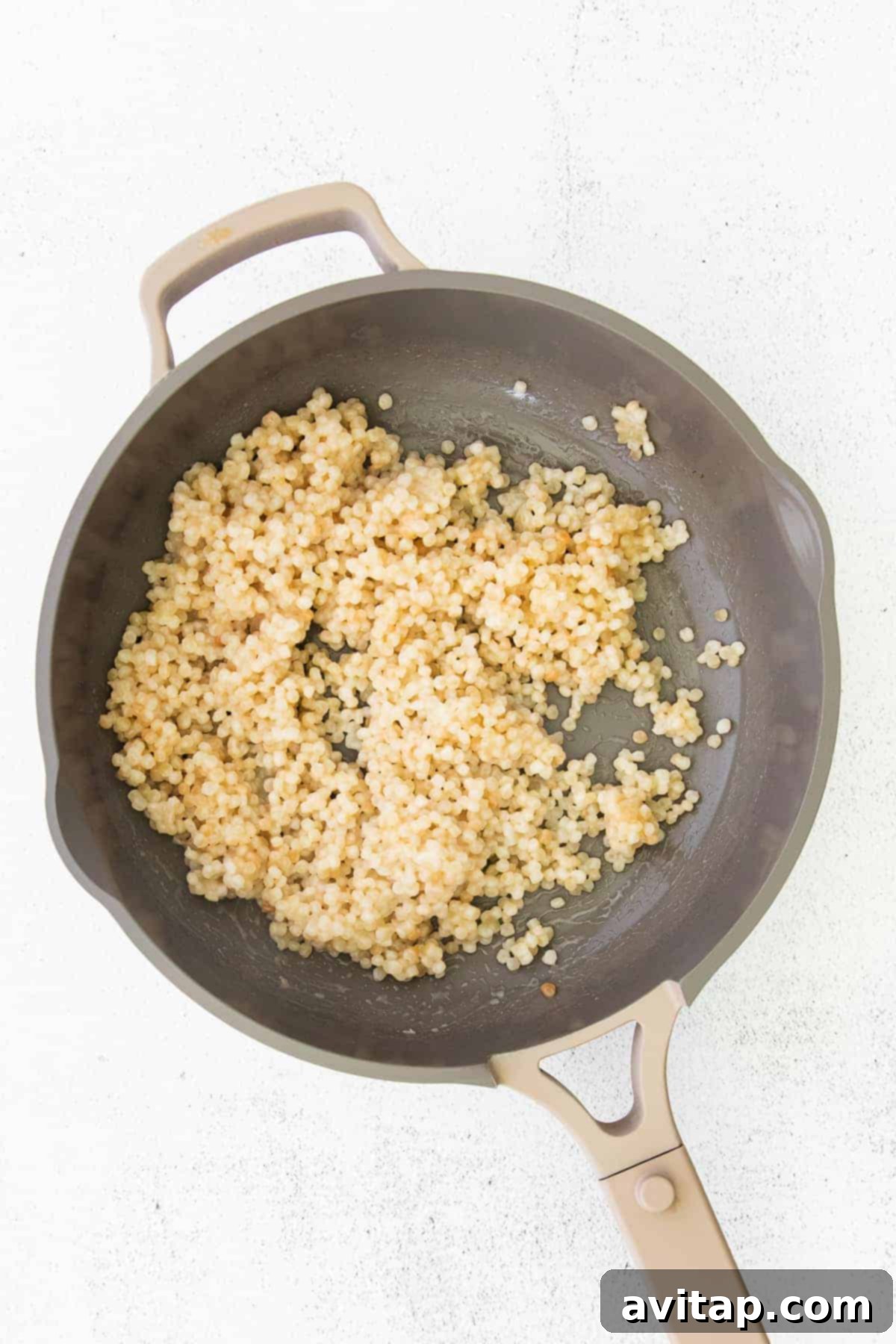
Cooking Israeli couscous to perfection is key to a great salad. Start by heating a saucepan over medium-high heat. Add olive oil and a splash of lemon juice to the hot pan. Once the olive oil becomes fragrant – you’ll notice a subtle aroma – add the uncooked Israeli couscous and a pinch of salt. Toast the couscous for about 1 minute, stirring constantly. This crucial step is often overlooked but vastly enhances the nutty flavor of the couscous; do not skip it for maximum deliciousness!
Next, carefully pour the water into the pot with the toasted couscous and stir to combine. Bring the mixture to a rolling boil. Once boiling, reduce the heat to low, cover the saucepan tightly, and let it simmer for approximately 10 minutes. The couscous is ready when it has absorbed all the liquid and is tender yet still has a slight bite – it should never be soggy. Remove the pot from the heat and, using a fork, gently fluff the couscous. Transfer the fluffy couscous to a bowl and place it in the refrigerator to cool completely. This cooling step is vital for a refreshing salad texture.
3. Assembling Your Mediterranean Masterpiece
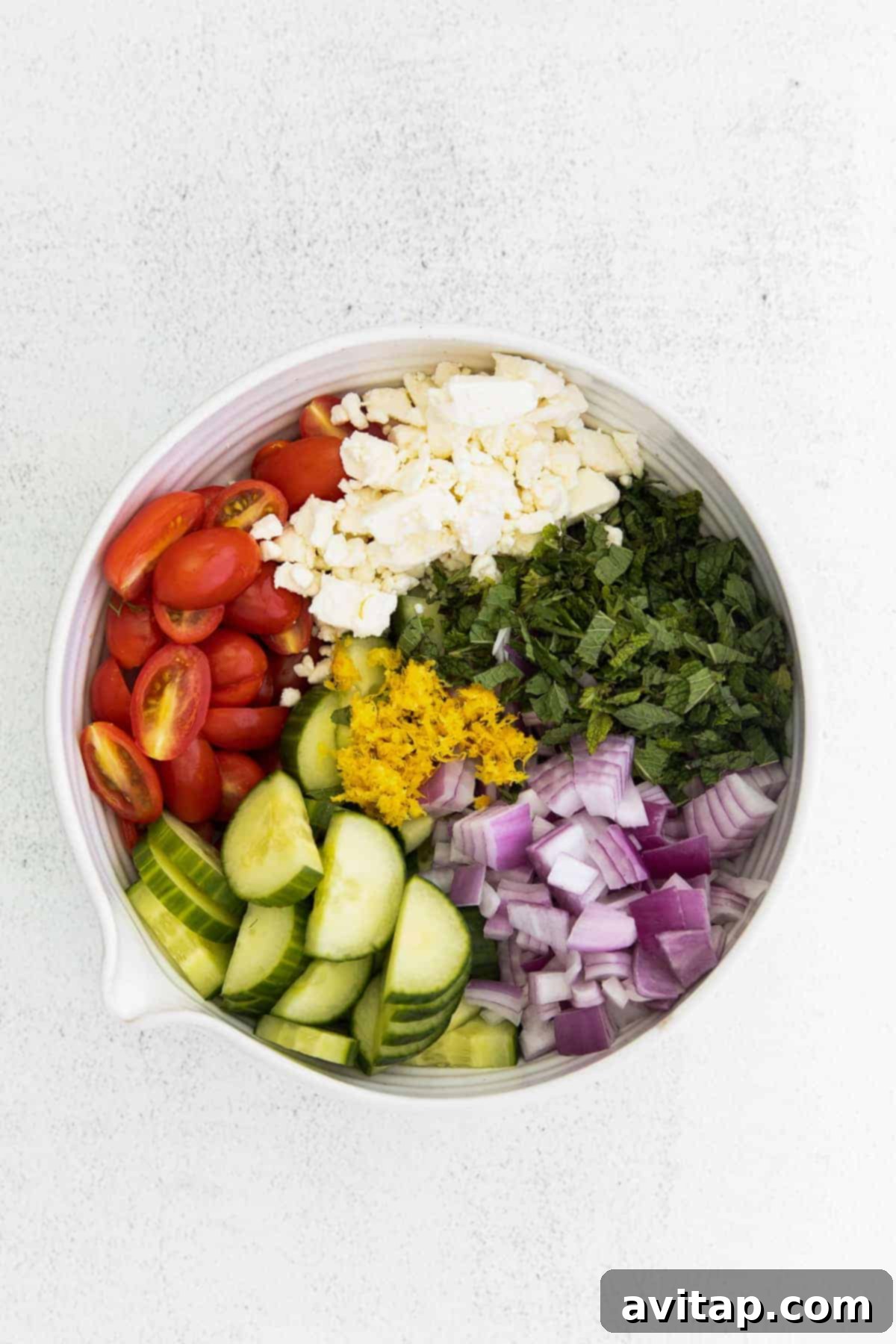
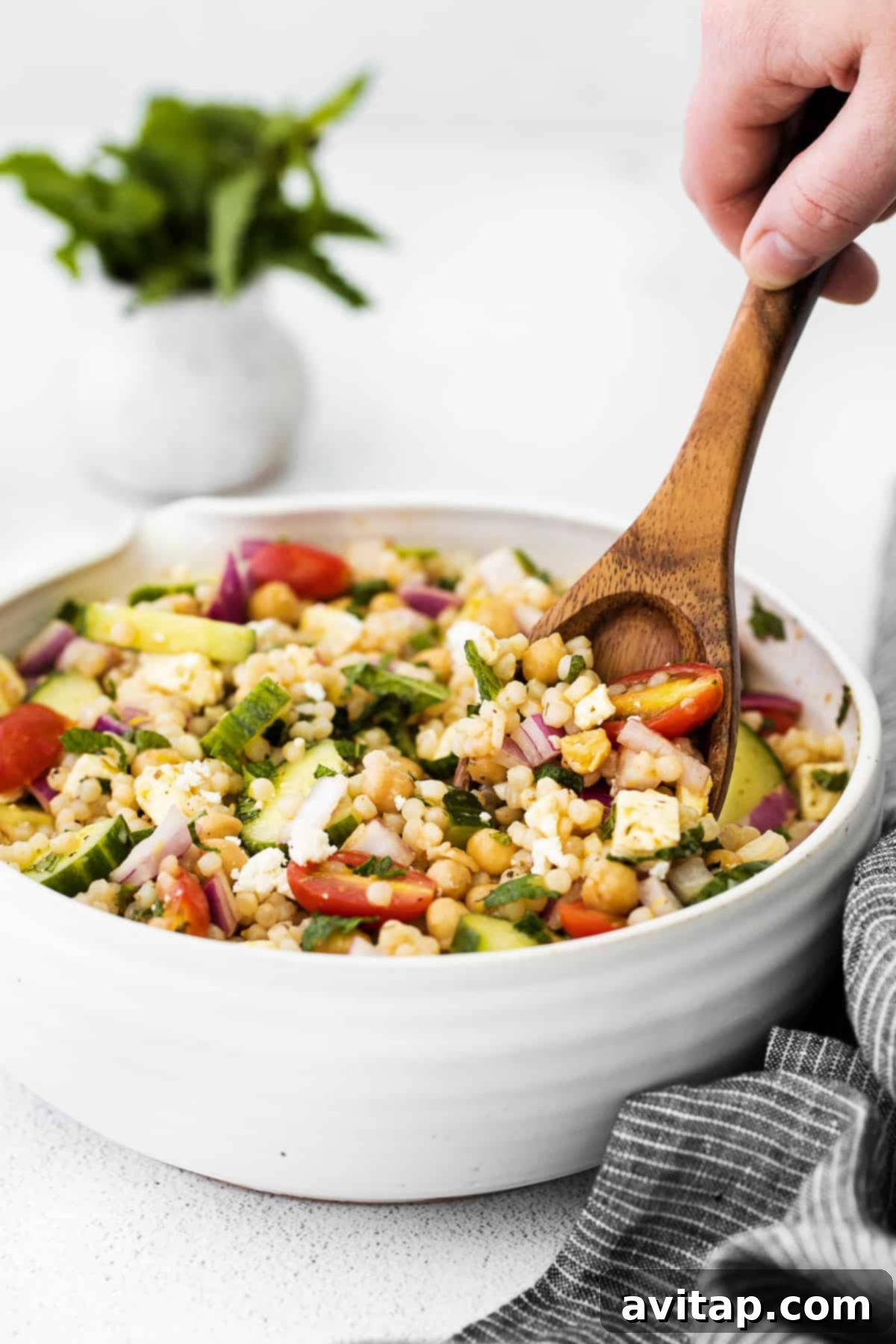
While your couscous cools, prepare the remaining fresh salad ingredients. In a large salad bowl, combine the chopped English cucumbers, halved cherry tomatoes, finely diced red onion, additional lemon juice, balsamic vinegar, fresh lemon zest, crumbled feta cheese, and fragrant chopped fresh mint. Give these ingredients a good toss to begin melding their flavors.
Once the Israeli couscous has cooled down sufficiently (typically about 15-20 minutes in the refrigerator), add it to the large salad bowl along with the flavor-infused chickpeas, including any residual oil and dressing from their bowl. Gently but thoroughly toss all the ingredients together until they are well combined and the dressing evenly coats everything. Taste and adjust seasoning with salt and freshly ground black pepper as needed. Your vibrant Mediterranean couscous salad is now ready to be enjoyed immediately, or for an even more enhanced flavor, chill it in the refrigerator for at least 30 minutes before serving. This allows the flavors to deepen and mingle beautifully.
Expert Tips for a Perfect Mediterranean Couscous Salad
Achieving a truly outstanding couscous salad is all about attention to detail. Here are some expert tips to ensure your salad is the star of any meal:
- Don’t Overcook the Couscous: The key to great couscous is a tender-chewy texture, not mushy. Follow the cooking instructions carefully and aim for al dente. Fluffing with a fork immediately after cooking prevents sticking.
- Chill Thoroughly: While you can serve this salad immediately, its flavors truly blossom after being chilled for at least an hour. This allows the ingredients to meld and the dressing to fully permeate the couscous and vegetables.
- Taste and Adjust Seasoning: Always taste your salad before serving and adjust salt, pepper, and lemon juice as needed. The brightness of lemon can vary, so a final squeeze can make all the difference.
- Fresh Herbs are Non-Negotiable: The fresh mint is crucial for the authentic Mediterranean flavor. Avoid dried mint here, as it won’t provide the same vibrant, cooling essence. Don’t be shy with it!
- Quality Olive Oil and Balsamic: Since these are key dressing components, using good quality extra virgin olive oil and a decent balsamic vinegar will significantly impact the overall flavor profile.
- Consider Marinating Onions: If you find raw red onion too sharp, dice it and soak it in ice water for 10-15 minutes before adding to the salad. This technique significantly mellows its intensity.
- Cut Vegetables Uniformly: Aim for roughly similar-sized pieces for your cucumbers and tomatoes. This ensures every bite contains a balanced mix of ingredients and a more pleasing eating experience.
Serving and Storing Your Mediterranean Couscous Salad
This versatile Mediterranean couscous salad shines in many roles, making it a go-to for various occasions. Here’s how to best enjoy and keep it fresh:
Delightful Serving Suggestions
Serve this vibrant salad well-chilled to maximize its refreshing qualities. It’s truly the quintessential summer side dish, pairing beautifully with:
- Grilled Meats or Fish: The zesty flavors cut through the richness of grilled chicken, lamb, or salmon.
- BBQs and Potlucks: It’s a fantastic dish to bring to gatherings, as it travels well and caters to many palates.
- Light Lunch: Enjoy a generous portion as a satisfying and healthy main meal, perfect for a quick workday lunch or a relaxing weekend afternoon.
- Alongside Mediterranean Platters: Serve it with hummus, pita bread, olives, and dolmades for a complete mezze experience.
- As a Base: Top it with grilled halloumi cheese, roasted vegetables, or even a hard-boiled egg for added protein and substance.
Optimal Storage for Freshness
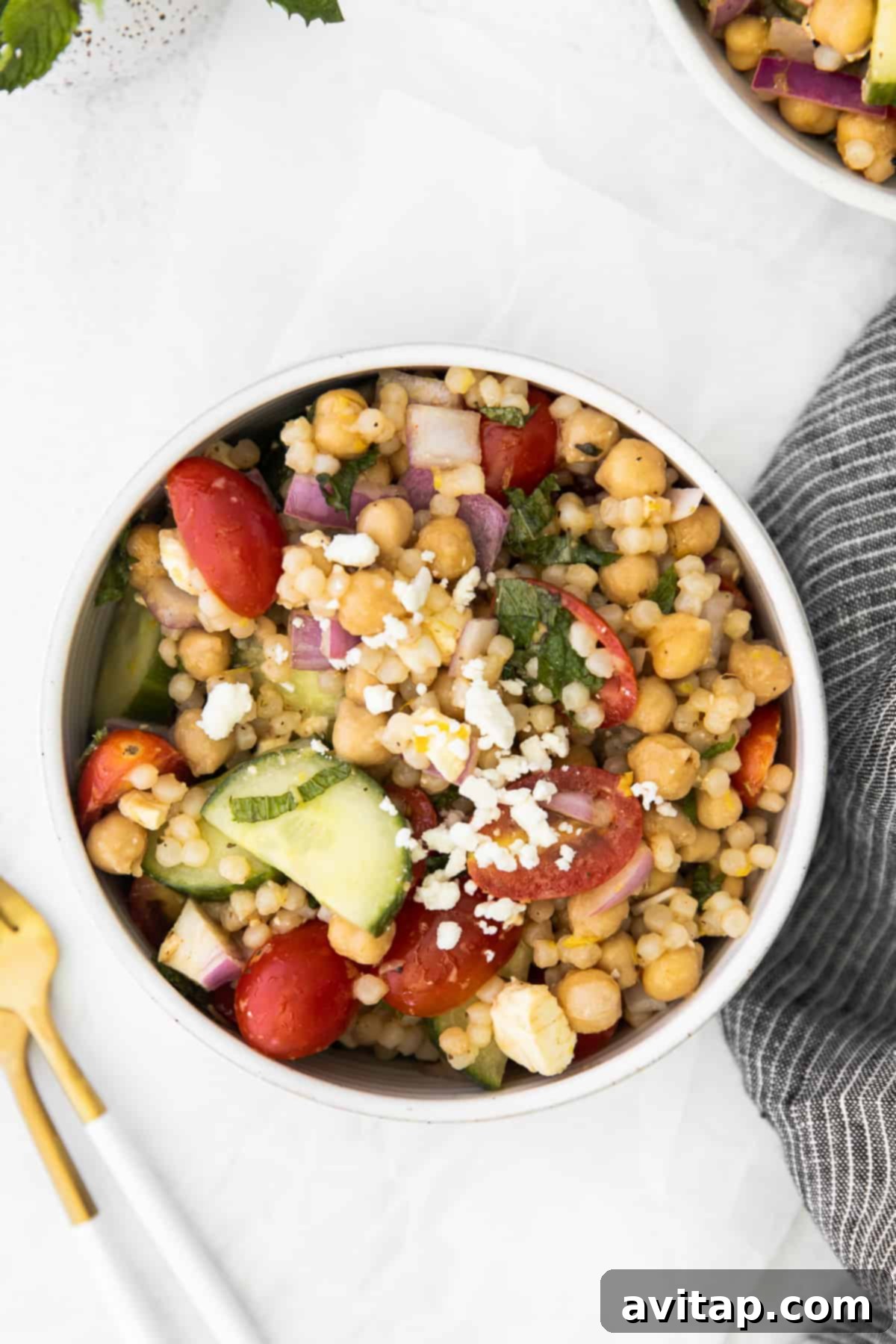
One of the best qualities of this salad is how well it keeps. To store your Mediterranean couscous salad, simply transfer any leftovers into an airtight container. Keep it refrigerated, and it will remain fresh and delicious for 3 to 5 days. The flavors often deepen and meld even more beautifully overnight, making it an excellent candidate for meal prepping ahead of time. Just give it a quick stir before serving!
Creative Variations and Customizations for Your Couscous Salad
While our core Mediterranean couscous salad recipe is a perfected classic, it’s also incredibly adaptable. Feel free to unleash your culinary creativity and tailor it to your preferences or whatever fresh ingredients you have on hand:
- Add Extra Vegetables: Enhance the veggie content with finely diced bell peppers (red, yellow, or orange for color), chopped Kalamata olives for extra brininess, sun-dried tomatoes for concentrated sweetness, or even some finely chopped spinach or kale.
- Boost the Protein: For an even more substantial meal, consider adding grilled chicken, pan-seared shrimp, canned tuna or salmon, or even hard-boiled eggs. For plant-based protein, roasted tofu or tempeh would also be delicious.
- Cheese Alternatives: If feta isn’t your favorite, try fresh mozzarella balls (bocconcini), goat cheese, or even shaved Parmesan for a different cheesy dimension.
- Herb Swaps: While mint is quintessential, fresh parsley or dill can also add wonderful herbaceous notes that complement the Mediterranean theme. A combination of herbs can be particularly delightful.
- Spice It Up: If you love a bit more heat, increase the cayenne pepper in the chickpea marinade or add a pinch of red pepper flakes to the dressing.
- Nutty Crunch: Toasted pine nuts, chopped pistachios, or slivered almonds can add a lovely crunch and a subtle nutty flavor. Add them just before serving to maintain their crispness.
- Citrus Zest: Experiment with lime zest instead of lemon for a slightly different citrusy kick.
- Different Dressings: While our lemon-balsamic is perfect, a simple lemon-tahini dressing or a red wine vinaigrette could also work beautifully, offering new flavor profiles.
Explore More Delicious & Healthy Salads
If you’re a fan of fresh, nutritious salads, you’ll love these other popular recipes from our collection:
- Classic Chicken Caesar Salad
- Refreshing Spring Mix Salad
- Wholesome Broccoli Salad with Creamy Dressing
- Discover All Our Salad Recipes
Mediterranean Couscous Salad Recipe Card
This Mediterranean couscous salad is the perfect addition to any summer meal. Serve this veggie-packed salad as a delicious side dish or a colorful main dish.
By: Emily Richter
Prep Time: 20 mins | Cook Time: 15 mins | Total Time: 35 mins
Servings: 8
Ingredients
For the Chickpeas:
- 15 oz. can chickpeas, drained and rinsed
- ¼ cup olive oil
- 2 tablespoons lemon juice
- ¼ teaspoon ground pepper
- ½ teaspoon salt
- ½ tablespoon minced garlic
- ½ teaspoon ground oregano
- ⅛ teaspoon cayenne pepper
For the Couscous:
- 2 tablespoons olive oil
- 1 tablespoon lemon juice
- ¼ teaspoon salt
- 1 cup Israeli couscous, uncooked
- 1.25 cups water
For the Salad Ingredients:
- 2 cups chopped cucumber
- 10 oz. Cherry tomatoes, halved
- ½ medium red onion, diced
- 2 tablespoons lemon juice
- 1 tablespoon balsamic vinegar
- Zest of one medium lemon
- ½ cup feta cheese crumbles
- ¾ cup chopped fresh mint
- Salt and pepper to taste
Instructions
- Prepare the Chickpeas: Place all of the ingredients for the chickpeas (chickpeas, ¼ cup olive oil, 2 tbsp lemon juice, ¼ tsp ground pepper, ½ tsp salt, ½ tbsp minced garlic, ½ tsp ground oregano, ⅛ tsp cayenne pepper) in a microwave-safe bowl. Toss the ingredients together until the chickpeas are well coated.
- Microwave the chickpeas on high for 90 seconds. Stir well and set aside for later.
- Prepare the Couscous: Heat a saucepan over medium/high heat. Add 2 tablespoons of olive oil and 1 tablespoon of lemon juice.
- Once the olive oil is fragrant, add the 1 cup uncooked Israeli couscous and ¼ teaspoon salt to the saucepan and toast for 1 minute, stirring constantly.
- Add 1.25 cups of water to the pot with the couscous and stir. Bring the mixture to a boil.
- Reduce heat to low and cover. Let it simmer for 10 minutes or until the couscous has absorbed all the water. The couscous should be tender with a slight bite, not soggy.
- Remove from heat and fluff the couscous with a fork. Pour the couscous into a bowl and place it in the refrigerator to cool completely.
- Assemble the Salad: Meanwhile, in a large salad bowl, combine the chopped cucumbers, halved cherry tomatoes, diced red onion, 2 tablespoons lemon juice, 1 tablespoon balsamic vinegar, zest of one medium lemon, ½ cup feta cheese crumbles, and ¾ cup chopped fresh mint. Toss these ingredients gently.
- Once the couscous is cooled (approximately 15-20 minutes), add the cooled couscous and the prepared chickpeas (along with any residual oil/dressing from their bowl) to the large salad bowl.
- Toss all the ingredients together thoroughly until everything is well combined and evenly coated.
- Taste and season with additional salt and pepper as desired. Serve immediately, or for best flavor, chill in the refrigerator for at least 30 minutes before serving.
Nutrition Information
Nutrition information is an approximation.
- Calories: 266 kcal
- Carbohydrates: 32 g
- Protein: 7 g
- Fat: 13 g
- Fiber: 3 g
- Sugar: 2 g
Love This Recipe? Leave a Comment Below!
Don’t forget to tag your posts on social media with the hashtag #fitfoodiefinds – we’d love to see your creations!