
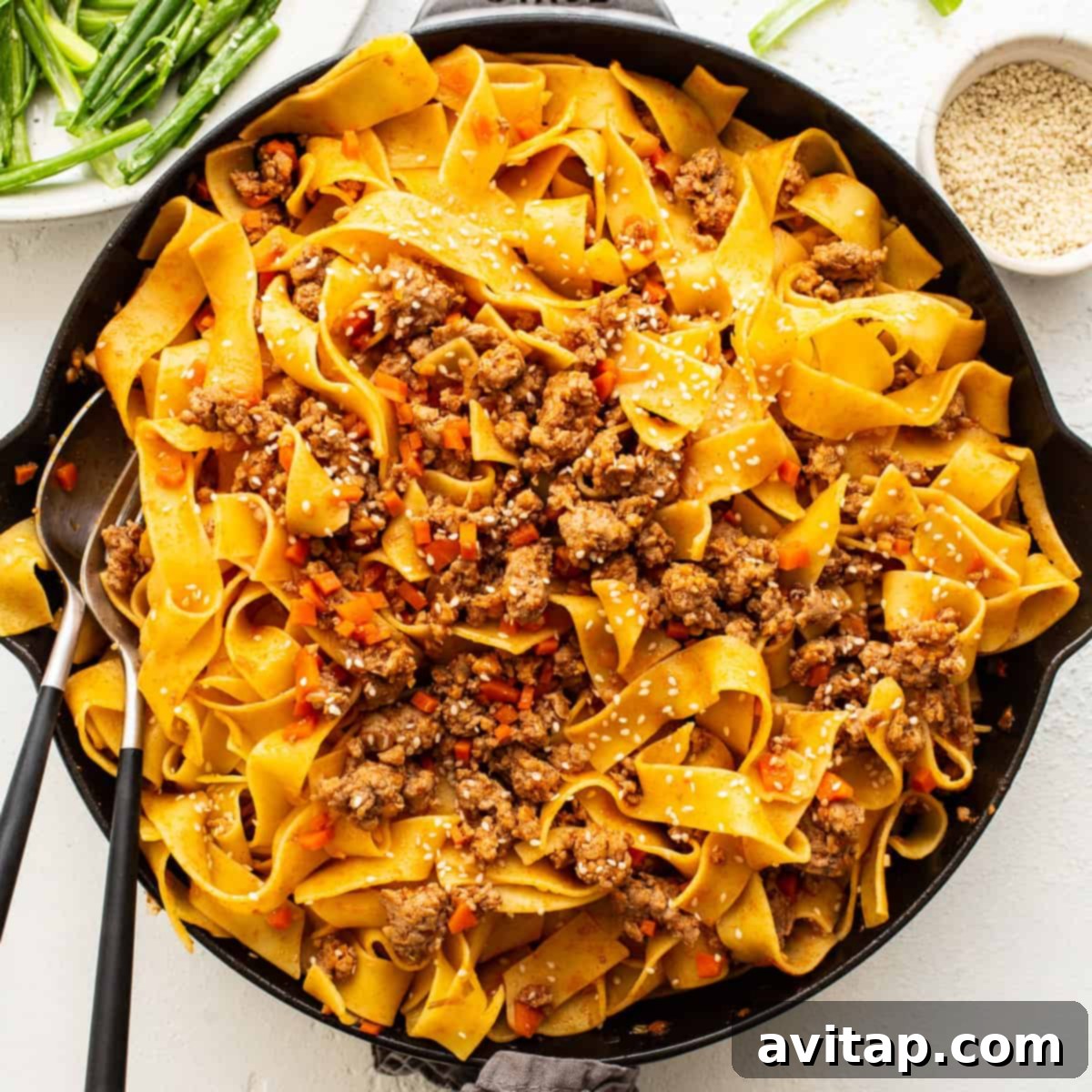
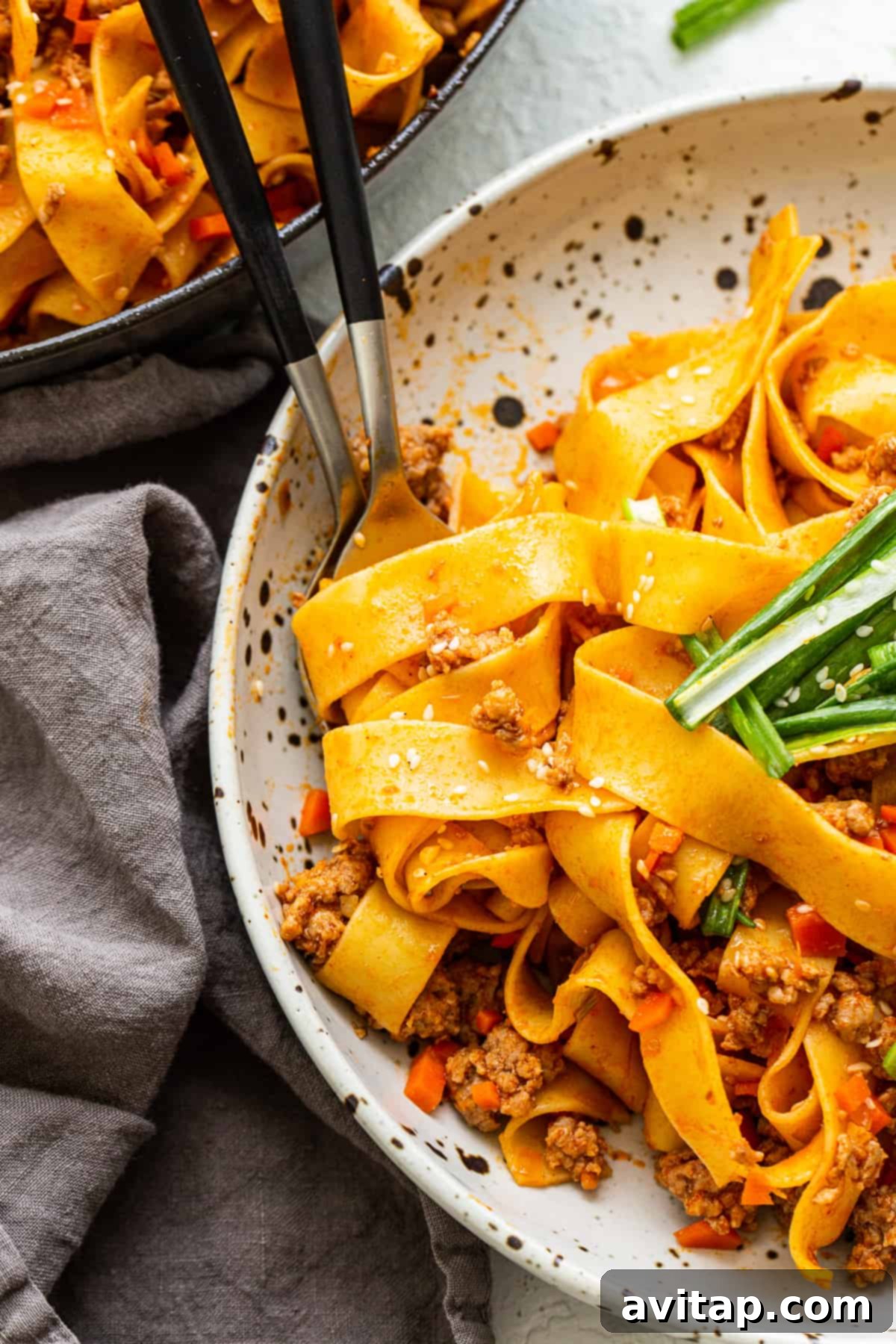
Craving a dish that’s bursting with flavor, incredibly satisfying, and ready in less than an hour? Look no further! These Gochujang Pork Noodles are your answer. This recipe combines tender ground pork with a vibrant, spicy, and subtly sweet Korean-inspired gochujang sauce, all tossed with your favorite noodles and crowned with a crisp, refreshing green onion salad and a sprinkle of sesame seeds. It’s a culinary masterpiece that promises to become a staple in your weeknight dinner rotation, offering a perfect balance of fiery heat and savory depth.
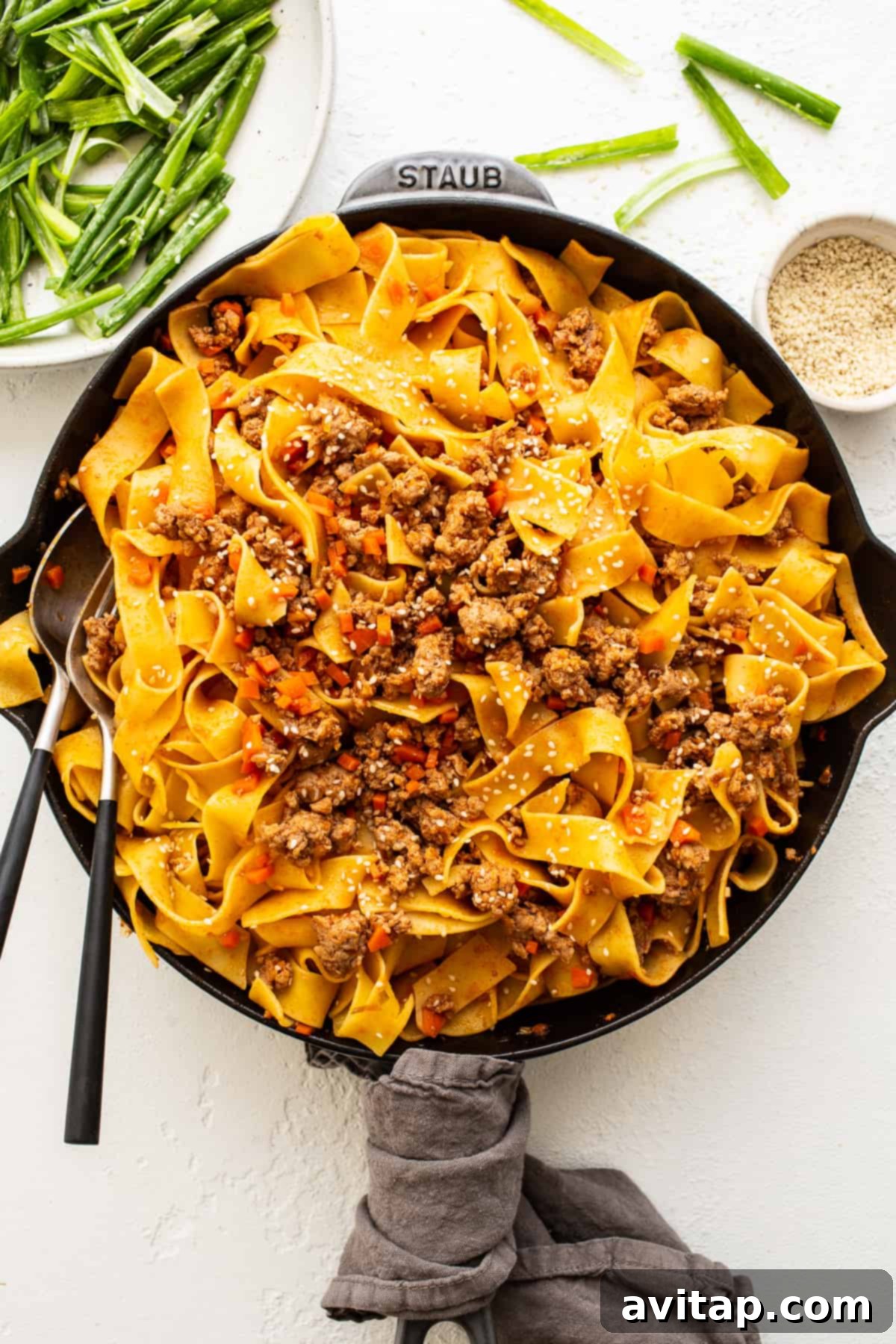
The secret to the unparalleled flavor of these spicy pork noodles lies in the star ingredient: gochujang. This versatile Korean fermented chili paste brings a complex profile of heat, sweetness, and umami that elevates simple ground pork into something truly extraordinary. Combined with aromatic ginger, a medley of fresh vegetables like crisp carrots and pungent green onions, and hearty pappardelle noodles, you get a meal that’s both comforting and exciting. The addition of a quick, cool green onion salad on top creates an irresistible contrast in temperature and texture, making every bite an adventure.
What Makes These Gochujang Pork Noodles Irresistible?
Beyond their incredible taste, these Gochujang Pork Noodles offer a multitude of reasons to fall in love. They are:
- **Lightning Fast:** From start to finish, you’re looking at a meal prepared in under 50 minutes, making it perfect for busy weeknights when you still want a homemade, flavorful dinner.
- **Flavor-Packed:** The gochujang sauce delivers a harmonious blend of spicy, sweet, and savory notes, creating a dynamic taste experience that satisfies every craving.
- **Hearty and Filling:** With ground pork and substantial pappardelle noodles, this dish is incredibly satisfying and will keep you full without feeling overly heavy.
- **Simple to Customize:** Easily adjust the spice level, swap proteins, or add more vegetables to suit your preferences and what you have on hand.
- **Textural Delight:** The warm, saucy noodles and savory pork are beautifully complemented by the fresh, crisp green onion salad, offering a delightful contrast in every forkful.
Essential Ingredients for Your Gochujang Pork Noodles
Crafting this flavorful dish starts with a selection of high-quality ingredients, each playing a crucial role in building the robust taste profile. Here’s a detailed look at what you’ll need:
- Gochujang: This is the soul of our sauce. Gochujang provides not just heat, but also a wonderful complexity with its fermented notes, subtle sweetness, and rich umami, forming the foundational flavor.
- Tomato Paste: Often overlooked in Asian-inspired dishes, tomato paste adds a mild, concentrated savory depth and a beautiful color to the sauce, helping to balance the spice.
- Rice Vinegar: Essential for balancing the richness and sweetness of the sauce. Its gentle acidity brightens the flavors and adds a tangy counterpoint.
- Soy Sauce & Fish Sauce: These two powerhouses contribute significant umami and saltiness. Soy sauce offers a deep, savory foundation, while fish sauce adds a distinct, pungent savory kick that is key to many Southeast Asian and Korean dishes.
- Honey: A touch of honey rounds out the flavors, providing a natural sweetness that complements the gochujang’s spice and helps create a glossy, appetizing sauce.
- Fresh Ginger: Minced ginger infuses the dish with a zesty, aromatic freshness that is indispensable in Asian cuisine, adding warmth and a subtle peppery note.
- Pappardelle or Tagliatelle: While the recipe calls for broad, flat pappardelle noodles, known for their ability to cling to rich sauces, you can also use tagliatelle, spaghetti, or even rice noodles for a gluten-free option. The wide surface area of pappardelle is perfect for soaking up every drop of this delicious sauce.
- Ground Pork: The primary protein, ground pork offers a rich, tender texture and takes wonderfully to the spicy sauce. For variations, ground chicken, turkey, or even a plant-based ground substitute work just as well.
- Garlic: A generous amount of minced garlic creates a pungent, aromatic base that builds the overall flavor profile of the dish. Feel free to adjust to your personal preference!
- Carrots: Finely minced carrots add a subtle sweetness, a pleasant textural bite, and a pop of color, sneaking in an extra vegetable without overpowering the dish.
- Green Onions: Used in two ways – the white parts are sautéed for a mild onion flavor in the sauce, while the green parts are reserved for a fresh, vibrant topping salad.
Pro Tips & Recipe Variations for Perfection
While this recipe is fantastic as written, a few tweaks can help you personalize it or elevate it further:
Adjusting the Spice Level
If you prefer a milder dish, reduce the amount of gochujang. For every tablespoon of gochujang you remove, replace it with an additional tablespoon of tomato paste to maintain the sauce’s body and savory notes. Do not remove all the gochujang, as it is the signature flavor. For an extra kick, a dash of gochugaru (Korean chili flakes) or a drizzle of chili oil can intensify the heat.
Noodle Alternatives
While pappardelle and tagliatelle are excellent choices for their ability to hold the rich sauce, feel free to experiment. Spaghetti, linguine, or even thicker ramen noodles can work well. For a gluten-free option, rice noodles or zucchini noodles make a great substitute, just be mindful of cooking times.
Meat Substitutions
These are pork noodles, but the recipe is incredibly versatile. Ground chicken or turkey are lean alternatives that absorb the gochujang sauce beautifully. For a vegetarian or vegan version, plant-based ground meat substitutes are an excellent choice, ensuring the dish remains hearty and satisfying.
Why Warm Noodles Matter
For the best results, always add your cooked noodles to the sauce while they are still warm or hot. Warm noodles are more pliable and porous, allowing them to absorb the sauce much more effectively, creating a cohesive and flavorful dish. Cold noodles tend to clump and won’t mix as well, leading to a less satisfying texture and uneven coating.
Boost Your Veggies
Feel free to add other finely diced vegetables to the pork mixture. Bell peppers, mushrooms, spinach, or bok choy can be added with the carrots or wilted in at the end for extra nutrients and texture.
Storage and Reheating Made Easy
Leftover Gochujang Pork Noodles make for an excellent next-day meal. Store them in an airtight container in the refrigerator for up to 3 days. To reheat, simply place your desired portion in the microwave and heat on high for 60-90 seconds, or until thoroughly warmed through. You can also reheat them gently in a skillet over medium heat, adding a splash of water or broth if the sauce has thickened too much.
Serving Suggestions for a Complete Meal
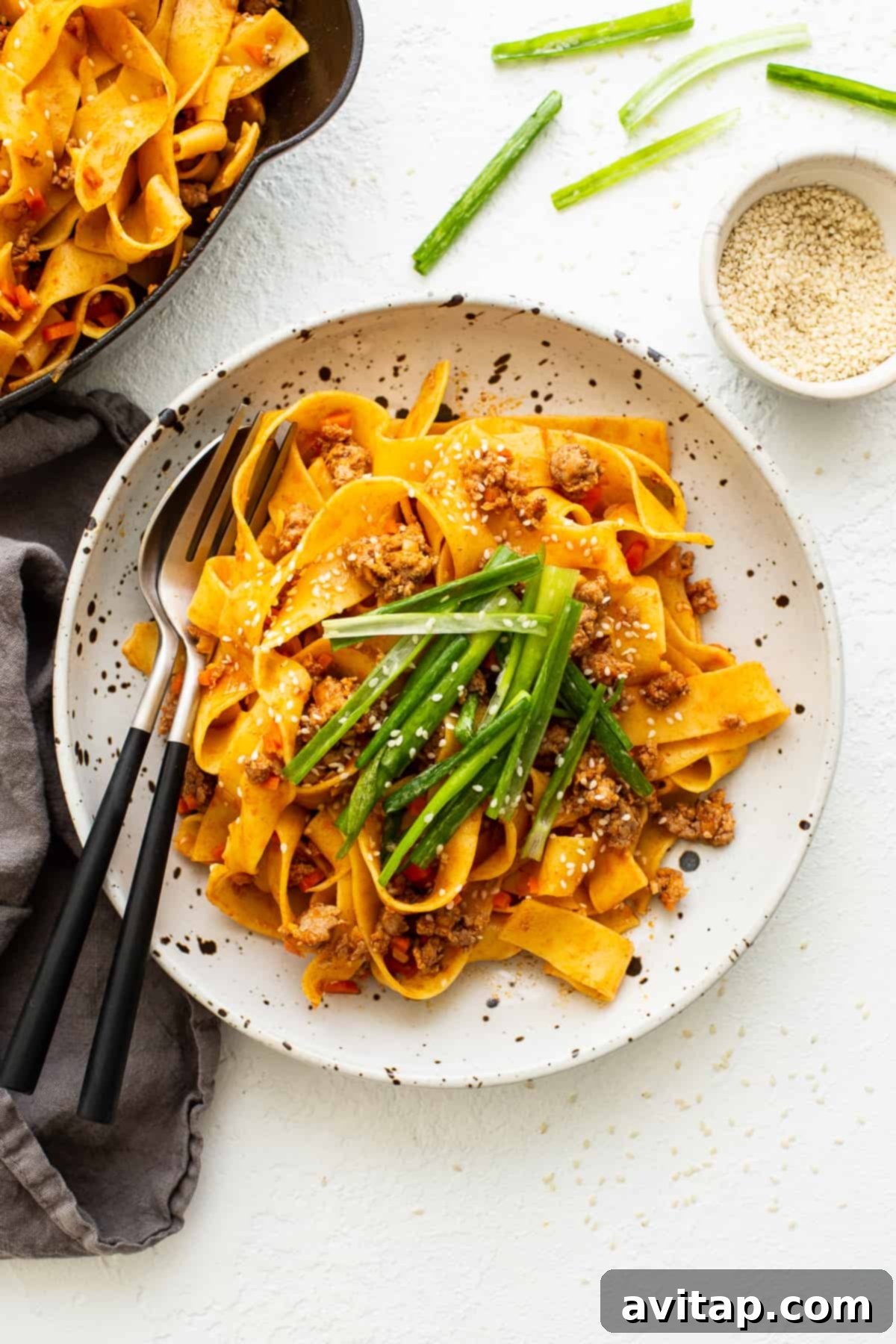
The refreshing green onion salad is not just a garnish; it’s an integral part of this dish, providing a crucial fresh counterpoint to the warm, spicy noodles. So, don’t skip it! To turn these Gochujang Pork Noodles into a truly epic feast, consider pairing them with:
- **Steamed Broccoli:** A simple side of crisp-tender steamed broccoli adds a healthy green element and a clean flavor that complements the richness of the noodles.
- **Pork Dumplings:** For an authentic Asian-inspired meal, serve alongside homemade or store-bought pork dumplings.
- **Quick Cucumber Salad:** A simple cucumber salad dressed with rice vinegar and sesame oil can add another layer of freshness and crunch.
- **Kimchi:** A small side of fermented kimchi offers an extra layer of authentic Korean flavor and probiotic benefits.
- **Fried Egg:** A fried egg, runny yolk and crispy edges, placed on top of the noodles adds richness and an extra protein boost.
More of Our Favorite…
Noodle Dishes
- Chicken Pad Thai
- Homemade Ramen
- Rainbow Peanut Noodles
- Rainbow Sesame Noodles
Gochujang Pork Noodles with Green Onion Salad
Whip up these spicy pork noodles made with a yummy gochujang sauce, finely chopped veggies, ground pork, and pappardelle noodles!
Prep: 40 mins
Cook: 10 mins
Total: 50 mins
Print Recipe
Ingredients
Green Onion Salad
- 3 teaspoons rice vinegar
- ¼ teaspoon honey
- ½ teaspoon fresh grated ginger
- Pinch salt
- 7 green onions, green part only, cut into thin 2-inch long strips
- ½ teaspoon sesame seeds
Spicy Pork Noodles
- 3 tablespoons gochujang
- 2 tablespoons tomato paste
- 2 tablespoons rice vinegar
- 1 tablespoon soy sauce
- 1 teaspoon fish sauce
- 2 teaspoons honey
- 1 tablespoon minced fresh ginger
- 2 tablespoons sesame oil, separated
- 1 lb. ground pork
- 1 teaspoon salt, separated
- 7 green onions, white part only and minced (½ cup)
- 1 tablespoon minced garlic
- 2 medium carrots, minced (~¾ cup)
- 16 oz. pappardelle or tagliatelle
- 1-1.5 cups starchy pasta water, separated
- ½ teaspoon sesame seeds
Instructions
-
First, prepare the green onion salad. In a bowl, combine the rice vinegar, honey, grated ginger, and salt, then whisk until well blended. Add the thinly sliced green onions and toss them with the dressing. Finish with a sprinkle of sesame seeds and refrigerate until serving.

-
Next, prepare the pork noodle sauce. In a separate bowl, combine the gochujang, tomato paste, rice vinegar, soy sauce, fish sauce, honey, and minced ginger. Whisk these ingredients together until thoroughly combined and smooth. Gradually drizzle in 1 tablespoon of sesame oil while continuously whisking until the sauce is homogeneous. Set the sauce aside.
-
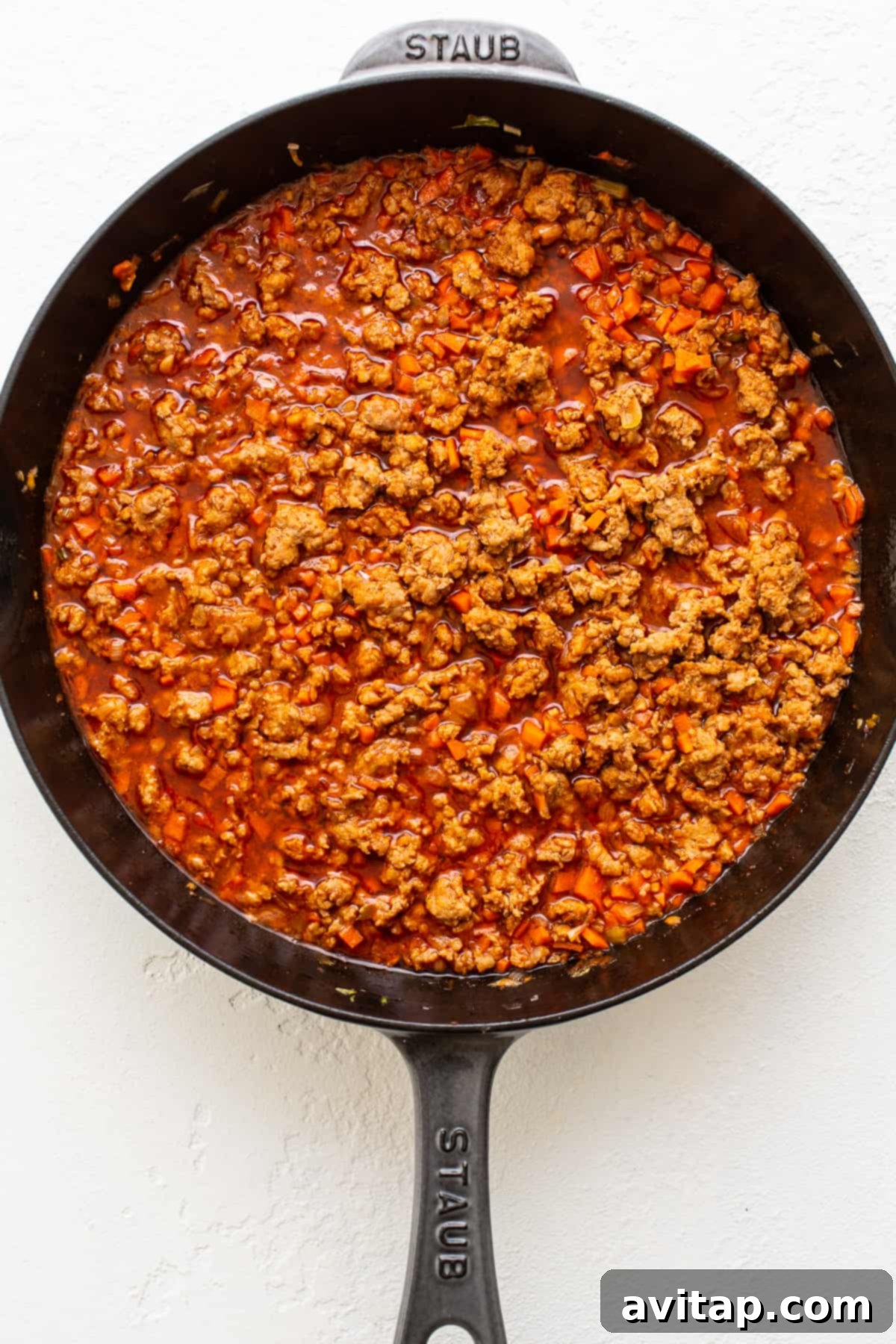
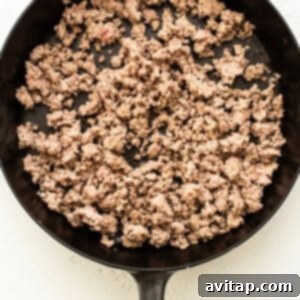
Heat a large skillet over medium-high heat. Add the ground pork to the pan and season with ½ teaspoon of salt. Break the pork into small pieces with a spoon and cook until it’s mostly browned, about 5 minutes, leaving a little pink still visible. Using a slotted spoon, remove the cooked pork from the pan and transfer it to a separate bowl, leaving the rendered drippings (about 1-2 tablespoons) in the skillet.
-
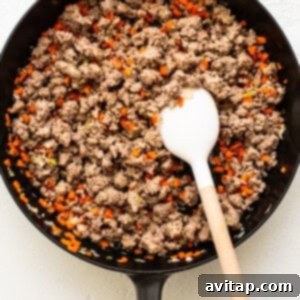
Add the remaining 1 tablespoon of sesame oil to the pan and reduce the heat to medium. Add the minced white parts of the green onion to the skillet and sprinkle with ¼ teaspoon of salt. Sauté the green onions for 2-3 minutes until softened, then add the minced garlic and cook for an additional minute until fragrant.
-
Stir the minced carrots and the remaining salt into the skillet. Sauté for 1 minute, then return the cooked ground pork to the pan. Toss all the ingredients together to combine.
-
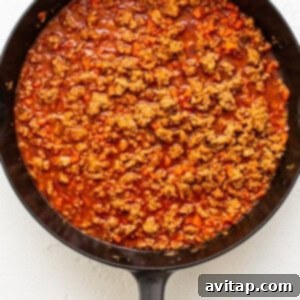
Pour the prepared gochujang sauce over the pork and vegetable mixture in the pan. Mix well until all ingredients are evenly coated. Remove the pan from the heat and set it aside while you prepare the noodles.
-
Bring a large pot of generously salted water to a rolling boil. Add your pappardelle or tagliatelle noodles and cook them according to package directions until they are just al dente, meaning they still have a slight bite. Before draining, reserve 1 to 1.5 cups of the starchy pasta water. Drain the noodles thoroughly.
-
Return the skillet with the pork and sauce mixture to the stove and heat over medium heat. Add ½ cup of the reserved starchy pasta water to the skillet and mix thoroughly to combine. Bring the sauce to a gentle simmer. Add another ½ cup of the starchy water to achieve your desired sauce consistency, letting it simmer for 1-2 minutes until slightly thickened.
-
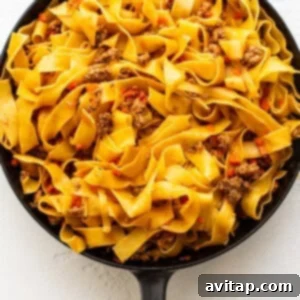
Add the warm, drained noodles directly to the skillet with the sauce. Toss everything together until the noodles are thoroughly coated in the rich gochujang sauce.
-
Serve the Gochujang Pork Noodles immediately, garnished with an extra sprinkle of sesame seeds and a generous topping of the refreshing green onion salad. Enjoy!
Tips & Notes
- If you prefer less spice, substitute 1 tablespoon of gochujang with an additional tablespoon of tomato paste. Do not remove all the gochujang as it provides the core flavor.
- Any type of long egg noodle can be used. Pappardelle and tagliatelle have been tested and work wonderfully.
- Always add noodles to the sauce while they are warm or hot for optimal mixing and flavor absorption.
Watch It
Nutrition
Calories: 607 kcal, Carbohydrates: 64 g, Protein: 24 g, Fat: 28 g, Fiber: 4 g, Sugar: 7 g
Nutrition information is automatically calculated, so should only be used as an approximation.
Don’t forget to tag your culinary creations on social media with the hashtag #fitfoodiefinds – we can’t wait to see your delicious results!
More Recipes with Gochujang
- Beef Bulgogi Bowls
- Gochujang Ground Chicken Bowls
- Air Fryer Tofu with Gochujang
- Spicy Garlic Prawns
Photography: Photos featured in this post are courtesy of Ashley McGlaughlin from The Edible Perspective.