
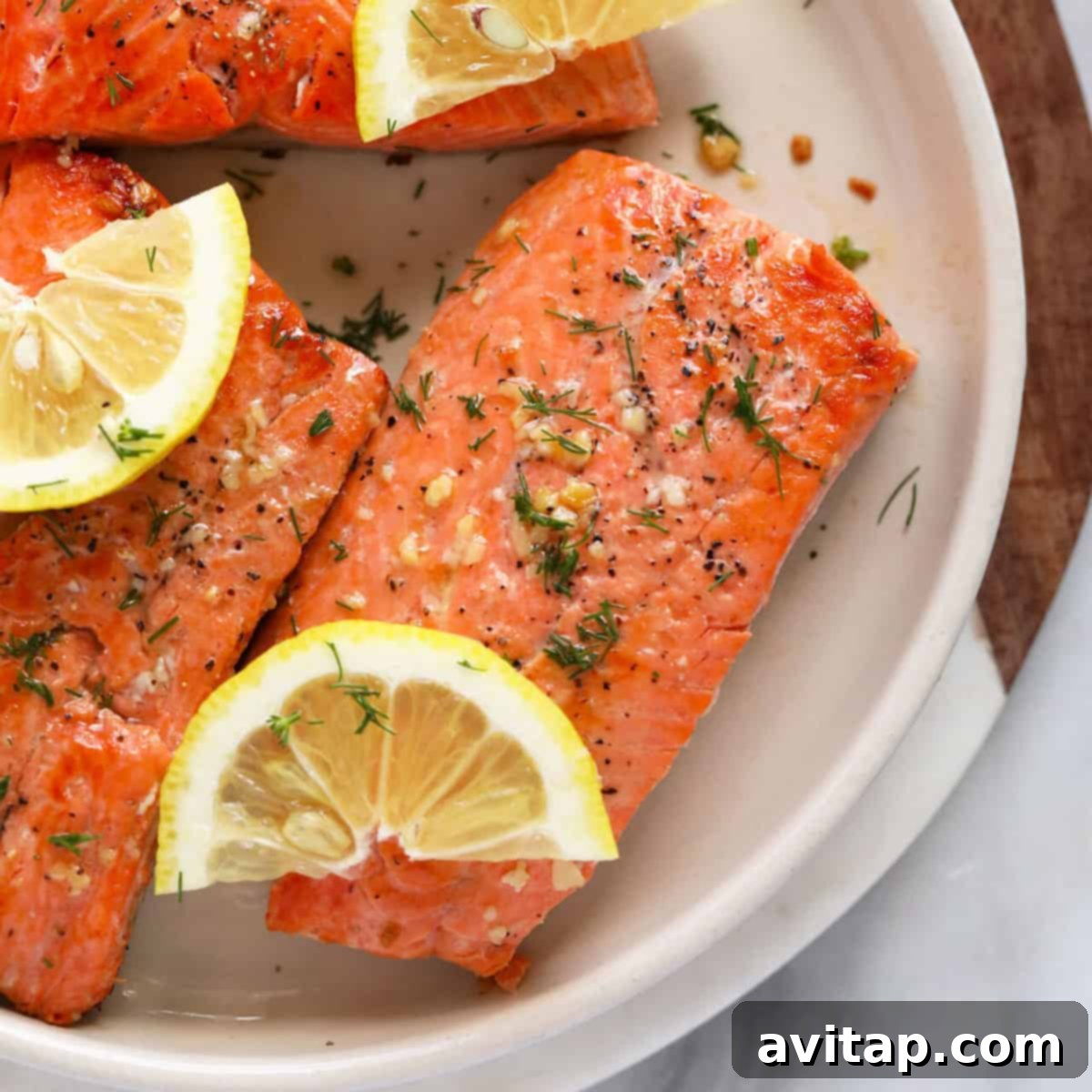
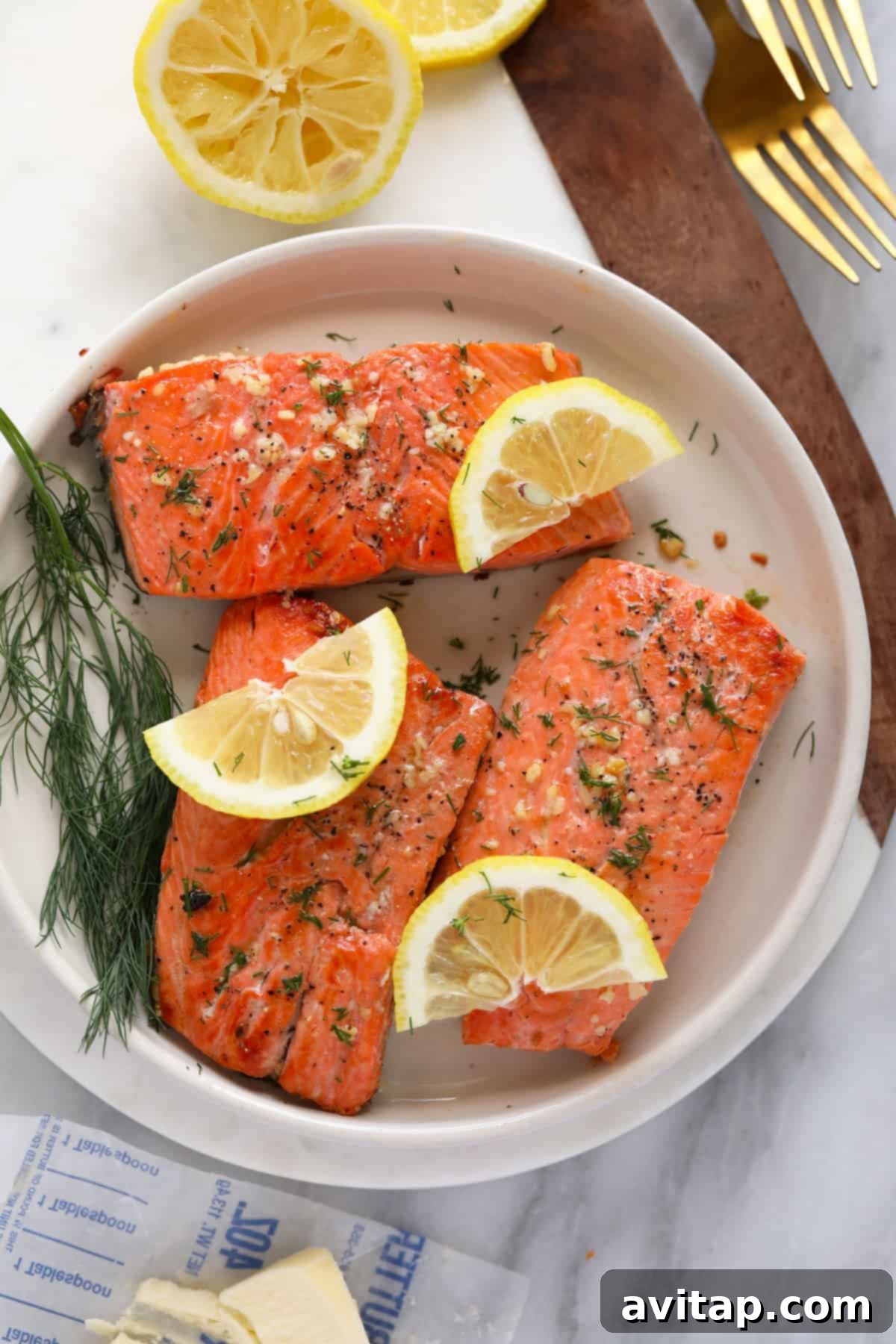
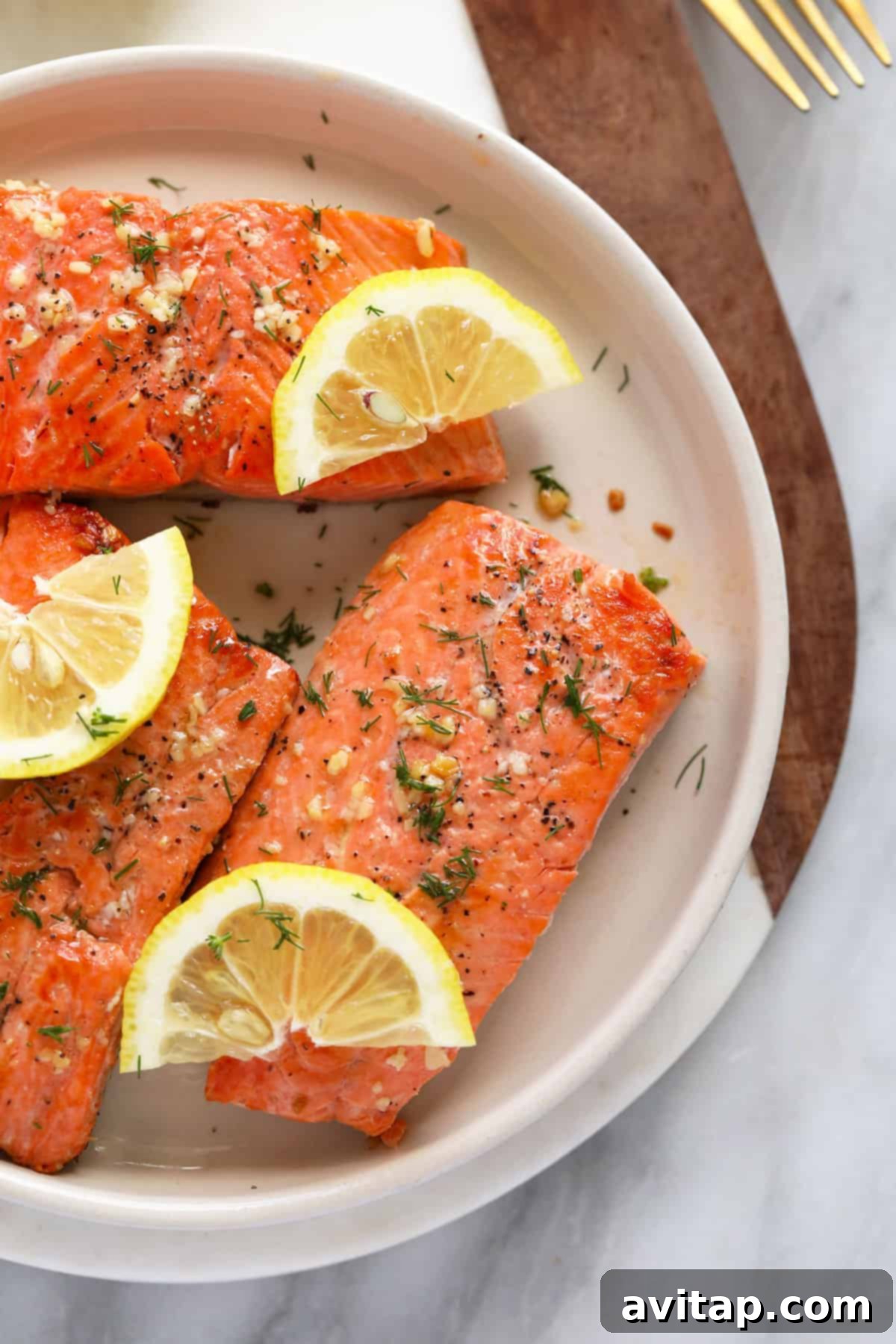
Unlock the secret to restaurant-quality pan-seared salmon right in your kitchen! This foolproof recipe delivers perfectly cooked salmon with irresistibly crispy skin and a tender, flaky interior, all infused with a vibrant blend of lemon, butter, garlic, and fresh dill. Best of all, it comes together in 30 minutes or less, making it an ideal choice for busy weeknights or special occasions.
Our method focuses on precision and technique, ensuring minimal fuss and maximum flavor. You’ll achieve those coveted crispy edges that perfectly complement the moist, delicate flesh within. It’s simpler than you think: sear the salmon skin-side-up over medium-high heat for about 4 minutes, then flip and finish cooking until its internal temperature reaches a safe and delicious 145ºF.
Featured Comment
“I love that there was none of the ugly white “curd” when I cooked salmon this way. This recipe is a keeper!.” – Debra
Salmon has become a staple in our kitchen, and for good reason! Its versatility and health benefits make it a favorite. From oven-baked salmon in foil and creative salmon patties, to flavorful salmon burgers and perfectly grilled salmon, we love exploring new ways to enjoy this incredible fish. Now, it’s time to master the elegant art of pan-searing!
This lemon-butter-garlic-dill infused salmon is incredibly versatile. We enjoy it topped with our zesty dill pickle sauce, or as a protein-packed addition to a vibrant, veggie-rich salad. It’s also fantastic for meal prep, making delicious leftovers like a hearty salmon scramble.
The Star of the Show: Choosing and Preparing Your Salmon
The foundation of a great pan-seared salmon dish starts with high-quality fillets. We typically opt for 4 individual 1/3-lb. fillets directly from a trusted butcher, ensuring freshness and consistent sizing. However, you can also purchase a larger fillet (around 1.33 lbs.) and slice it into equal portions yourself using a sharp knife.
If you’re using frozen, pre-portioned salmon, remember that proper thawing is crucial for successful pan-searing. Always ensure your fillets are fully thawed before you begin cooking to ensure even cooking and optimal texture.
Can I use a larger salmon fillet for this recipe?
Absolutely! If individual fillets are hard to come by, simply buy one large fillet that weighs approximately 1.33 lbs. and carefully cut it into four equal pieces. A sharp knife will make this task much easier and result in clean, even portions.
Can you cook pan-seared salmon directly from frozen?
While we always keep frozen salmon on hand for convenience, it’s essential to thaw it completely before pan-searing. Attempting to sear frozen salmon can lead to uneven cooking, a tough exterior, and a raw interior. The best method for thawing is overnight in the refrigerator, allowing the salmon to slowly and safely come to temperature.
Our Top Recommendation: Surrender Salmon!
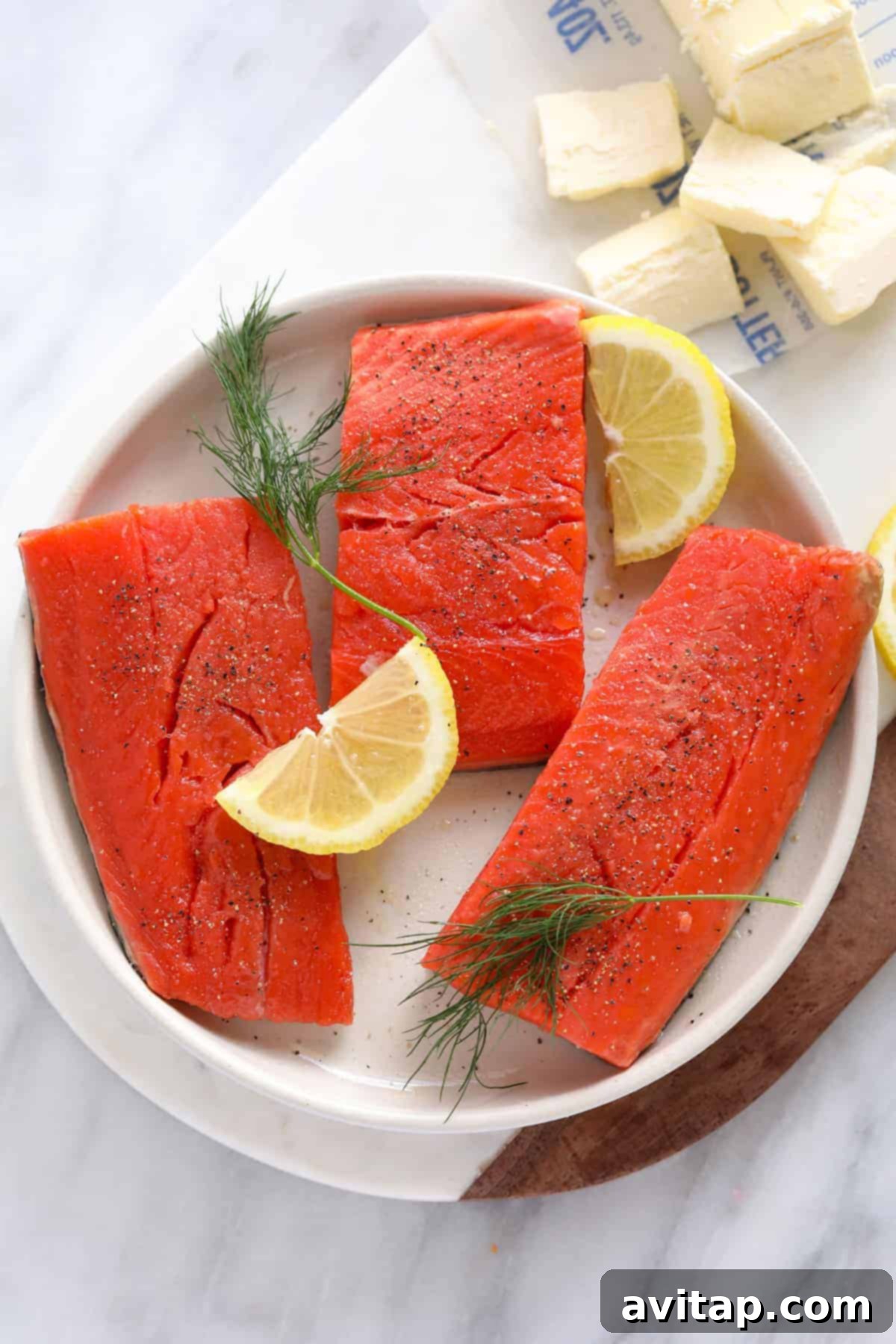
For an unparalleled salmon experience, we highly recommend Surrender Salmon. They sustainably catch wild Alaskan salmon off Bristol Bay, Alaska, known for producing some of the world’s finest fish. Their salmon boasts a vibrant orange hue, incredible flakiness, and a truly delicious flavor that stands out.
Surrender Salmon is a family-run company based right here in Minneapolis, and they are dear friends of ours! Supporting local businesses, especially those committed to quality and sustainability, is something we deeply value.
How long does it take to cook salmon on the stove?
The cooking time for salmon on the stovetop typically ranges from 7 to 10 minutes, largely depending on the thickness of your fillets. Thinner fillets will cook faster, while thicker cuts will require a bit more time. Always rely on internal temperature for the most accurate measure of doneness.
Which side of the salmon should you sear first for the best results?
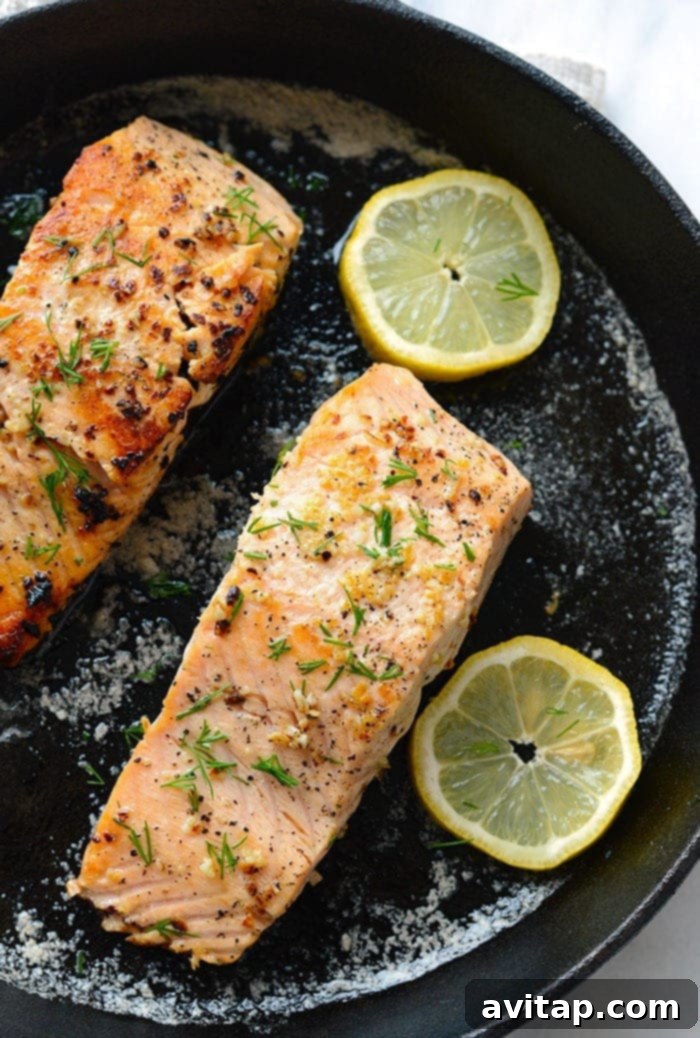
We highly recommend searing your salmon skin-side up first for approximately 4 minutes. This technique is key for achieving two things: a beautifully crispy skin and preventing the fish from sticking to the pan. When the skin is seared directly, it renders its fat, creating a natural non-stick layer and developing that desirable crisp texture. After the initial sear, flip the salmon over and continue cooking for another 3-4 minutes, or until it reaches your desired doneness.
Achieving Perfect Doneness: The Internal Temperature for Salmon
When preparing pan-seared salmon, a reliable meat thermometer is your best friend. For food safety, the internal temperature of your salmon should read no less than 145ºF to be considered safe for consumption, as recommended by the USDA. This ensures your salmon is not only safe but also cooked to a tender, moist perfection without being overdone.
How to tell if your pan-fried salmon is perfectly cooked?
Beyond checking the internal temperature with a thermometer, there are visual and textural cues to help you determine if your salmon is done. A perfectly cooked salmon fillet will feel firm to the touch but still be slightly yielding. Its color should transform from translucent to a light, opaque pink throughout. Most importantly, it should flake easily with a fork, indicating that the muscle fibers have cooked through and are tender.
Common Questions for Pan-Seared Salmon Success
How can I prevent my salmon from sticking to the pan?
Prevention is key! Ensure your pan is properly preheated before adding the salmon. A non-stick pan or a well-seasoned cast iron skillet (like our favorite, the Great Jones King Sear, which is definitely worth the splurge!) will also help. Make sure to pat the salmon skin dry very thoroughly with paper towels before seasoning. Moisture on the skin can create steam, which prevents browning and causes sticking. Searing skin-side up first also helps the skin release its natural oils, acting as a buffer.
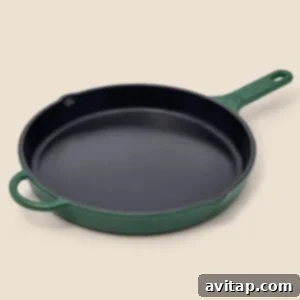
Great Jones
Cast Iron Pan
The Great Jones King Sear is our absolute favorite cast iron pan. It’s an investment, but its performance and durability make it a fantastic addition to any kitchen collection!
What causes the white “curd” on salmon, and how can I avoid it?
The white “curd” you sometimes see on cooked salmon is actually albumin, a protein that coagulates and gets pushed out of the fish’s muscle fibers as it cooks. While harmless, it can be aesthetically unappealing. To minimize it, avoid overcooking your salmon. Cooking at a slightly lower temperature (medium-high instead of high) and ensuring the fish isn’t subjected to sudden, intense heat can help keep more albumin inside the fillet. Also, patting the salmon dry before cooking helps, as excess moisture can contribute to the issue.
Can I use skinless salmon for this recipe?
Yes, you can absolutely use skinless salmon! The pan-searing method still works beautifully for skinless fillets. You won’t get the crispy skin benefit, but the technique will still yield a tender, juicy interior. If using skinless, we recommend a touch more oil or butter in the pan to prevent sticking, and be mindful not to overcook, as skinless fillets can sometimes cook a bit faster.
Creative Ideas for Leftover Pan-Seared Salmon
Got a little extra flakey fish after dinner? Don’t let it go to waste! Leftover pan-seared salmon is incredibly versatile and can be transformed into a variety of delicious meals:
- Salmon Patties: Flake the salmon and mix with breadcrumbs, egg, and herbs for quick and flavorful patties.
- Thai Salmon Salad: Combine flaked salmon with fresh greens, vibrant veggies, and a spicy-sweet Thai dressing.
- Salmon and Eggs Scramble: A protein-packed breakfast or brunch by scrambling eggs with flaked salmon and fresh dill.
- Easy Salmon Salad: A lighter, healthier take on tuna salad, perfect for sandwiches or lettuce wraps, especially with a Greek yogurt dill dressing.
More of our Favorite…
Delicious Salmon Recipes to Explore
If you’ve loved this pan-seared salmon, you’ll definitely want to explore these other fantastic salmon recipes from our collection. There’s a method and flavor profile for every craving!
- Smoked Salmon Breakfast Frittatas
- Maple Ginger Baked Salmon
- Sheet Pan Salmon Stir Fry
- Salmon Piccata
- Air Fryer Salmon Bites
- Smoked Salmon
- Air Fryer Salmon
- Sous Vide Salmon
How long does cooked salmon last in the fridge?
To safely store leftover pan-seared salmon, allow it to cool completely at room temperature first. Once cooled, transfer the fillets to an airtight container and refrigerate promptly. Cooked salmon can be stored in the fridge for up to 3-5 days, making it perfect for meal prepping and enjoying throughout the week.
What to Serve with Perfect Pan-Seared Salmon
This lemon-butter-dill pan-seared salmon pairs beautifully with a wide array of sides. Here are some of our favorite accompaniments to create a complete and satisfying meal:
- Greek Yogurt Dill Pickle Sauce: This creamy, tangy, and healthy dill pickle dip also doubles as an amazing sauce. It’s a huge hit in our house and incredibly versatile, whether with chips or draped over a salmon fillet.
- Roasted Red Potatoes: Crispy on the outside and wonderfully soft on the inside, these roasted red potatoes are fantastic for any meal. They’re ready in under an hour and make excellent meal prep.
- Arugula Salad: A simple yet incredibly flavorful arugula salad with dried fruit, fresh veggies, and a light dressing. It’s the perfect fresh and peppery side dish to complement rich salmon.
- Oven Roasted Asparagus: Cooked to perfection, oven-roasted asparagus is a healthy and delicious side that brings out the best in this salmon. It’s an effortless way to add a green vegetable to your plate.
Perfect Pan-Seared Salmon (with Lemon, Butter & Dill!)
Email Me This Recipe
Enter your email to receive this recipe directly in your inbox, plus weekly doses of recipe inspiration!
Ingredients
- 1.33 lbs. salmon, 4 1/3-lb. fillets
- salt and pepper, to taste
- 3-4 tablespoons butter
- 1 tablespoon minced garlic
- 1 medium lemon, juiced
- 1.5 tablespoons fresh dill
Instructions
-
First, prepare your salmon fillets by thoroughly patting them dry with a paper towel. This step is crucial for achieving crispy skin. Then, season both sides generously with salt and pepper to taste.
-
In a large, nonstick skillet (or well-seasoned cast iron pan), melt 3-4 tablespoons of butter with 1 tablespoon of minced garlic over medium-high heat. Allow the butter to shimmer, indicating the pan is hot enough.
-
Carefully place the salmon fillets skin-side up into the hot pan. Sear for approximately 4 minutes, allowing the skin to crisp beautifully. Then, flip the salmon and continue cooking for an additional 3-4 minutes, or until the fish is just barely pink in the middle and flakes easily with a fork.
-
Once the salmon is flaky and has reached an internal temperature of at least 145ºF, remove the fillets from the heat.
-
Squeeze fresh lemon juice over the cooked salmon and let it rest for 5 minutes before serving. Garnish with a sprinkle of fresh dill for a burst of herbaceous flavor. Enjoy!
Watch It
Nutrition
Nutrition information is automatically calculated and should be used as an approximation only.
Loved this recipe? Leave a comment below!
Don’t forget to tag your posts on social media with the hashtag #fitfoodiefinds – we’d love to see your delicious creations!