
There’s nothing quite like the start of a crisp morning, especially when it begins with an unexpected delight. Just recently, my friend Linley and I found ourselves at Penny’s Coffee Shop in the heart of downtown Minneapolis. The highlight? An incredibly delicious, homemade date-sweetened almond milk latte that instantly captivated my taste buds. It was a revelation, sparking a simple realization: despite enjoying various plant-based milks, I’d never actually crafted my own almond milk at home! This experience immediately planted a seed for future blog content, especially since the friendly baristas at Penny’s generously shared their secrets. So, get ready – a guide to making your own luscious almond milk is definitely on its way, promising to elevate your homemade coffee experiences.
Redefining Health: Beyond the Body Fat Percentage and Scale Numbers
Amidst the delightful coffee experience, a more profound topic has been occupying my thoughts lately: body fat and overall body composition. This contemplation stems from an invigorating 8-week challenge at Switch, where participants undergo initial and final body fat and muscle mass tests. My recent Saturday test with Linley yielded a 25% body fat result, which, to be honest, initially caught me off guard. For so long, society has conditioned us to believe that a lower body fat percentage and a reduced number on the scale are the ultimate indicators of health and fitness. But is this truly the case? Absolutely not. This deeply ingrained misconception often leads to unhealthy obsessions and a distorted view of what it means to be strong and healthy, often overlooking crucial aspects of well-being.
My personal fitness journey has taught me invaluable lessons about the complex relationship between body weight, muscle mass, and body fat. For instance, my weight has remained fairly stable over the past year, fluctuating between 147 and 153 pounds (I stand at 5’8″, for reference). However, I can distinctly observe that my body fat to muscle mass ratio undergoes frequent shifts. Interestingly, it’s often when I’m on the lower end of my weight range that my body fat percentage appears higher. This common phenomenon beautifully illustrates a fundamental principle: muscle tissue is denser and takes up less space than fat tissue, meaning muscle weighs more than fat. Therefore, relying solely on the number on a scale can be incredibly misleading and doesn’t paint a complete picture of one’s physical health or strength. Focusing purely on weight often obscures the significant progress made in building lean muscle, which is a far better indicator of metabolic health and functional strength.
Understanding Women’s Body Composition: A Natural and Empowering Perspective
It’s crucial to acknowledge that fluctuations in weight and body fat percentages are entirely normal, especially for women. Our bodies are incredibly dynamic, constantly adapting to hormonal cycles, lifestyle changes, and natural physiological processes. Furthermore, it’s perfectly normal for women to inherently carry a higher body fat percentage compared to men. This isn’t a flaw; it’s a biological advantage, as our bodies are naturally structured to support essential reproductive functions, including preparing for the possibility of childbearing. This essential body fat plays a vital role in hormone regulation, energy storage, and overall health. My own ratio, for example, clearly correlates with my menstrual cycle and even the time of year, influenced by seasonal activity levels and dietary habits, showcasing the natural rhythm of a woman’s body.
Genetics also play a significant role in shaping our physique. I naturally possess a more muscular build, which inevitably translates to a higher number on the scale compared to someone with less muscle mass at the same height. Additionally, factors like body morphology, such as having a larger bust, can contribute to a slightly elevated overall body fat percentage, as breast tissue is primarily composed of fat. Over the past year, I’ve also navigated several serious injuries, including a broken foot, tarsal coalition, and a sprained neck. These recovery periods undoubtedly impacted my body composition. Healing often necessitates reduced activity and can lead to a temporary decrease in muscle mass and a slight increase in body fat. This illustrates how our bodies adapt to life’s challenges, prioritizing recovery. The key takeaway here is profoundly simple: every body is unique, and a number on a scale or a body fat percentage is just one data point, not the definitive measure of worth or health. The true beauty of life lies in the incredible diversity of human forms, and our individual bodies deserve respect and understanding, not judgment based on arbitrary figures or societal ideals.
From Obsession to Contentment: My Personal Journey to Body Acceptance
Having spent years grappling with body image and an obsessive focus on numbers, reaching a point where I can undergo such a body composition test and feel genuinely content with the results is profoundly liberating. This journey to understanding and accepting my body has been extensive and, frankly, transformative. It has paralleled my quest for true happiness, a happiness that, for me, includes the simple joys of enjoying a beer and a slice of pizza without an ounce of guilt. I vividly remember being that person who meticulously restricted every single food item, labeling things as “good” or “bad,” constantly policing my intake. Did that make me happy? Absolutely not. It led to cycles of deprivation and guilt, a relentless mental battle that stole my joy. I wouldn’t trade the freedom and joy I now experience – the peace of mind that comes with intuitive eating and balance – for a hypothetical 10% body fat percentage any day.
It’s important to remember that I’m still human, navigating my own evolving relationship with my body, and self-acceptance is an ongoing process. Lately, for instance, I’ve felt a bit self-conscious about my breasts, which seem to be growing. I recently switched to an IUD with a higher hormone dosage, and I’m almost certain this, along with the lingering effects of my injuries and subsequent changes in activity levels, is a contributing factor. As my body fat shifts, my bust tends to be one of the first areas to reflect that change, a common experience for many women. These experiences serve as a powerful reminder that self-acceptance is an ongoing process, a continuous dialogue we have with ourselves, and it’s okay to have moments of vulnerability while still celebrating overall progress. True self-love acknowledges both our strengths and our insecurities, embracing the entire, beautifully imperfect package.
Energize Your Friday: Introducing The 2-3-2 Workout – A Dynamic Circuit for Strength and Cardio
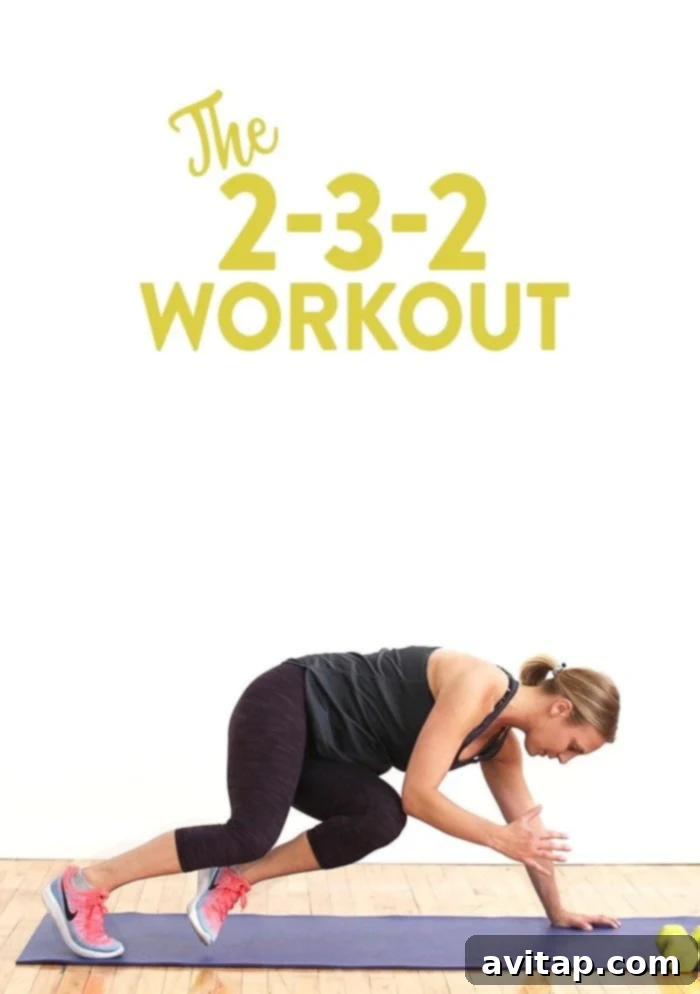
Now that we’ve delved into the intricacies of body image and self-acceptance, let’s shift gears to something truly energizing: it’s Workout Friday! Today, I’m thrilled to share a powerful and efficient circuit training format we frequently incorporate at Switch: The 2-3-2 Workout. This routine is designed to be a dynamic, full-body strength and cardio challenge, perfect for those looking to maximize their workout time. Circuit training, by nature, combines cardiovascular exercises with strength training, offering a comprehensive workout that boosts endurance, builds muscle, and improves overall fitness. The brilliance of the 2-3-2 format lies in its structured intensity, keeping your heart rate up and your muscles engaged through varied repetitions across three distinct circuits. It’s an excellent way to build functional strength, improve cardiovascular endurance, and boost your metabolism, all within a focused session that keeps boredom at bay.
To fully prepare your body for this energetic workout, always begin with a dynamic warm-up. Aim for 5-10 minutes of light cardio (like jumping jacks, marching in place, or a light jog) combined with dynamic stretches (arm circles, leg swings, torso twists). This prepares your muscles and joints, increasing blood flow, reducing the risk of injury, and optimizing your performance. Remember, listening to your body is paramount, and modifications are always encouraged to match your current fitness level. Whether you’re a beginner needing lighter weights or an advanced athlete looking for a greater challenge, this workout is adaptable.

The 2-3-2 Workout: Your Guide to Full Body Strength & Cardio Challenge
This invigorating workout is structured around three distinct circuits. You will complete Circuit 1 and Circuit 3 twice, and Circuit 2 three times. Focus on smooth transitions between exercises within each circuit to maintain an elevated heart rate and maximize the cardio benefit. Aim for minimal rest between exercises within a circuit, resting for 60-90 seconds only between full circuit completions.
Circuit #1 x 2 Sets
This circuit targets your upper body strength, particularly your back, shoulders, and biceps, while integrating a burst of cardio to keep your energy levels high and promote muscular endurance.
- 15 Renegade Rows: A fantastic compound exercise that engages your back, shoulders, and especially your core for stability, performed from a plank position with dumbbells.
- 15 Arnold Press: Work your shoulders from multiple angles, promoting comprehensive shoulder development and strength. This movement involves rotating the dumbbells as you press.
- 15 Concentration Curls (on each arm): Isolate and build bicep strength, focusing on peak contraction and muscle hypertrophy with controlled movements.
- 2 Minutes Jumping Jacks: A classic and effective cardio booster to elevate your heart rate, improve cardiovascular health, and burn calories.
Circuit #2 x 3 Sets
Prepare to challenge your core, obliques, and full-body endurance with this dynamic circuit, featuring compound movements that provide significant cardiovascular benefits and improve stability.
- 15 Punching Oblique Twists: Strengthen your abdominal muscles and improve rotational power, engaging your obliques with a dynamic punching motion.
- 15 Bear Crunches: A challenging core exercise that effectively engages the entire abdominal wall, along with the shoulders and hip flexors, from an all-fours position.
- 15 Flutter Kicks (on each side): Target your lower abs and hip flexors for improved core stability and endurance, performed by rapidly alternating leg movements while lying on your back.
- 1 Minute Burpees: The ultimate full-body, high-intensity exercise for maximum calorie burn, combining a squat, push-up, and jump for an explosive challenge.
Circuit #3 x 2 Sets
Focus on lower body strength, balance, and glute activation in this circuit, concluding with another powerful cardio burst to finish strong and ensure a comprehensive workout.
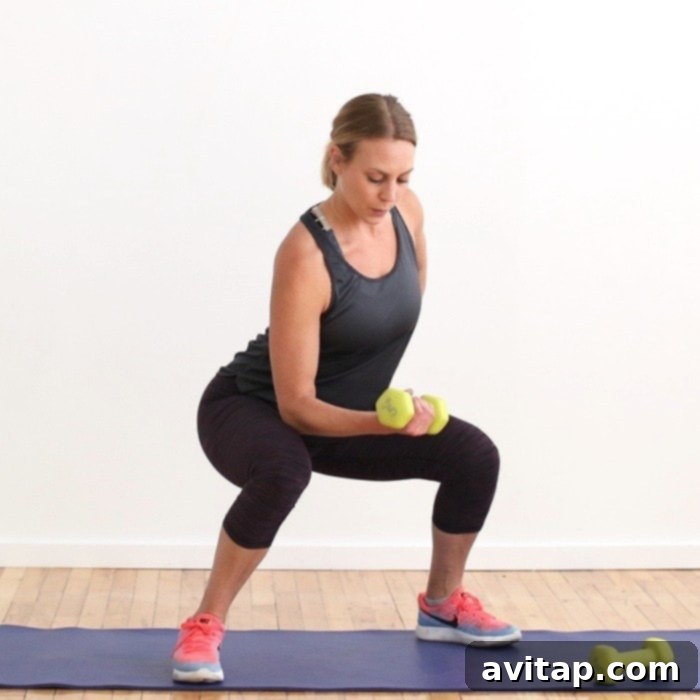
- 15 1.5 Squats: Enhance your traditional squat by adding an extra half-rep at the bottom of the movement for increased muscle time under tension and superior glute activation.
- 15 Single Leg Deadlifts (on each side): Improve balance, hamstring flexibility, and glute strength, requiring intense core engagement and unilateral control.
- 15 Single Leg Weighted Hip Thrusters (on each side): Powerfully activate your glutes and strengthen your posterior chain, focusing on hip extension and stability, often performed with one foot elevated.
- 2 Minutes Jumping Jacks: A final cardiovascular push to boost endurance, elevate your heart rate, and ensure you leave the workout feeling accomplished and energized.
After completing all circuits, dedicate 5-10 minutes to a cool-down, focusing on static stretches to improve flexibility and aid muscle recovery. Hold each stretch for 20-30 seconds, targeting the major muscle groups worked during the workout (legs, glutes, back, shoulders, chest, and arms). Deep breathing during your cool-down will also help to bring your heart rate down and promote relaxation.
Your Journey, Your Strength: Embracing a Holistic Approach to Fitness
This 2-3-2 workout is more than just a sequence of exercises; it’s an opportunity to connect with your body, challenge your limits, and celebrate your strength. Remember, fitness is a deeply personal journey, unique to each individual. It’s about how you feel, how strong you become, and the energy you cultivate, far more than any fleeting number on a scale or a percentage on a report. Embrace the process, listen to your body, and find joy in movement. Let go of restrictive mindsets and societal pressures, and instead, cultivate a healthy, balanced lifestyle that truly serves your well-being. Your strength, your happiness, and your contentment are the most valuable metrics of all. Take this workout as a step towards a more empowered and positive relationship with your body.
Fitness Disclaimer: I am not a certified personal trainer or medical professional. The information provided in this article, including the workout routine, is based on my personal experience and should not be considered professional medical or fitness advice. Please consult your doctor or a qualified healthcare provider before beginning any new fitness routine, making changes to your diet, or if you have any pre-existing health conditions. You participate in any suggested activities at your own risk. Always listen to your body, modify exercises as needed to suit your fitness level, and stop immediately if you experience any pain, discomfort, or dizziness.