
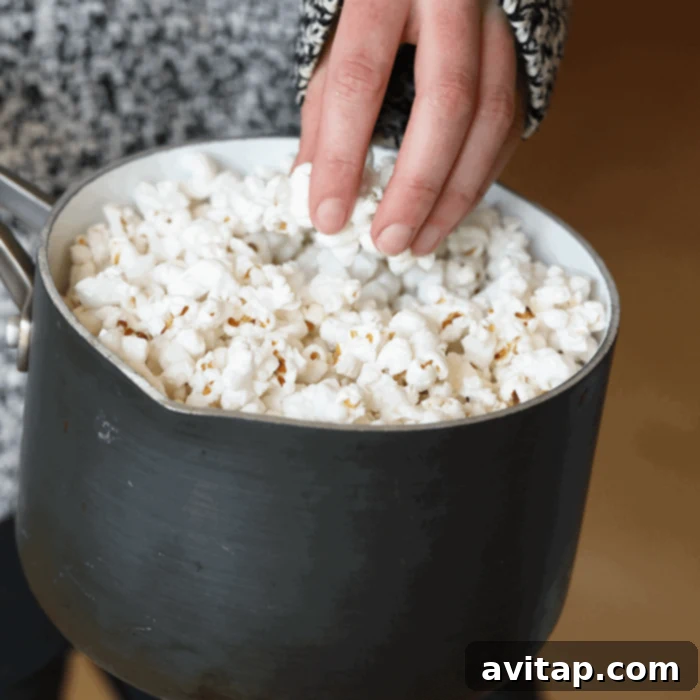
Mastering Stovetop Popcorn: Your Guide to Perfect Homemade Popping
Transform your snack time tonight with the irresistible aroma and taste of freshly made stovetop popcorn. Forget the microwave bags and embrace the simple joy of creating a light, airy, and perfectly seasoned treat right on your stove. In under 15 minutes, you can craft a delicious, customizable, and surprisingly healthy snack that’s far superior to any pre-packaged option. This comprehensive guide will walk you through every step, ensuring you achieve flawlessly popped kernels and a delightful crunch every single time. Get ready to elevate your snacking experience!
The Irresistible Charm of Homemade Stovetop Popcorn
For many, the idea of making popcorn on the stove can initially seem a little intimidating. The common fears of burnt kernels, an overflowing pot, or a batch riddled with unpopped “old maids” are valid concerns. Even experienced home cooks might feel a flicker of apprehension before starting. However, mastering stovetop popcorn is a kitchen skill that offers immense rewards. It’s not just about making a snack; it’s about creating a moment of simple pleasure. The process itself is incredibly satisfying, and the result offers unparalleled freshness, flavor, and complete control over the ingredients, making it a much healthier alternative to many store-bought options.
This tutorial aims to demystify the art of stovetop popcorn, providing you with all the knowledge and techniques needed to produce perfect, airy kernels with an optimal crunch. By following our detailed instructions, you’ll confidently pop a delicious batch every single time, turning what might have seemed daunting into a staple in your kitchen repertoire. Prepare to impress yourself and your family with truly exceptional homemade popcorn.
Essential Ingredients for Perfect Popcorn
Before you embark on your popcorn-making adventure, gathering the right components is key. High-quality ingredients are the foundation of a truly outstanding batch of homemade popcorn.
- Popcorn Kernels: The undeniable star of this culinary show. While any unpopped kernel can work, understanding the subtle differences between varieties can significantly enhance your popping experience.
- High Heat Oil: This is crucial for efficient, even popping and, importantly, for preventing kernels from burning. The right oil also contributes a subtle, pleasant flavor.
- Fine Sea Salt: A classic and essential seasoning. What would popcorn be without that satisfying, savory kick? Fine salt adheres beautifully to the fluffy popped kernels.
- Medium to Large Pot with a Lid: This is your primary cooking vessel. A tight-fitting lid is an absolute must for safety and successful popping.
What Kind of Popcorn Kernels Should You Buy?
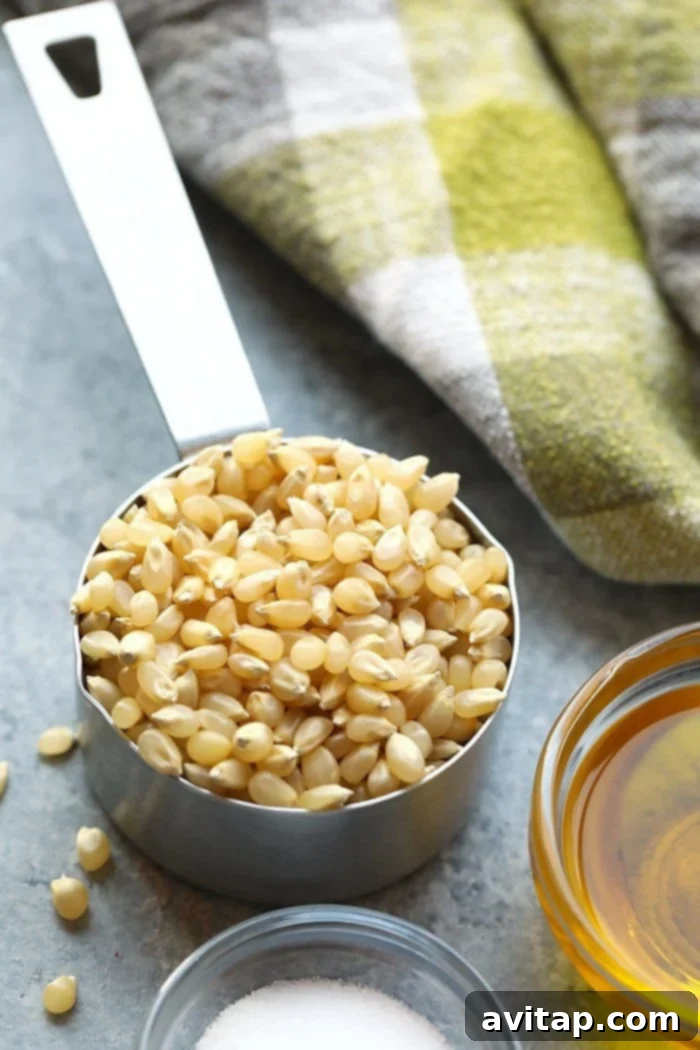
The world of popcorn kernels offers more diversity than many realize, though two main types dominate grocery store aisles: yellow and white kernels. Both are excellent choices for stovetop popping, and you can confidently use whichever is readily available or aligns with your preference.
- Yellow Popcorn Kernels: These are arguably the most ubiquitous variety, often associated with movie theater popcorn. When popped, they expand into large, robust, and characteristically “butterfly” shaped pieces. Their texture is generally fluffier and they possess a heartier, more pronounced corn flavor.
- White Popcorn Kernels: In contrast, white kernels pop into slightly smaller, more delicate, and often “mushroom” shaped pieces. They are known for their tender texture and a milder, more subtle flavor profile, which can serve as an excellent canvas for various toppings and seasonings.
Beyond these common types, you might encounter gourmet or heirloom varieties, which can introduce unique colors (like blue or red) and nuanced flavor differences. Regardless of your choice, always prioritize fresh kernels. Purchasing from the bulk section of your local grocery store is often an economical and sustainable option, allowing you to buy precisely the amount you need. For optimal freshness and popping reliability, store your kernels in an airtight container in a cool, dark pantry. While established brands like Orville Redenbacher’s and Jolly Time are consistent performers, don’t hesitate to explore store brands or bulk options to discover your personal favorite popcorn.
Choosing the Best Oil for Stovetop Popcorn
The type of oil you use is a critical factor in achieving evenly popped, richly flavored kernels without the dreaded burnt taste. When making popcorn on the stove, you need an oil with a high smoke point and ideally, a neutral or complementary flavor. Our top recommendations are olive oil and avocado oil, but other options also work beautifully.
Why are high-heat oils like olive and avocado ideal?
- High Smoke Point: Popcorn requires significant heat to pop efficiently. Oils with high smoke points (the temperature at which an oil starts to burn and smoke) can withstand these necessary high temperatures without breaking down, burning, or imparting a bitter, acrid taste to your popcorn.
- Light and Neutral Flavor: Both olive oil and avocado oil possess relatively light and unobtrusive flavors. This characteristic ensures they won’t overpower the natural taste of the popcorn, allowing your chosen seasonings to truly shine through.
Other excellent high-heat oil options that perform well include:
- Coconut Oil: A very popular choice among popcorn enthusiasts, coconut oil infuses your popcorn with a subtle, sweet, and nutty tropical flavor. It also boasts a commendably high smoke point, making it perfect for the job.
- Canola Oil: A widely available and economical option, canola oil is known for its neutral flavor profile and good smoke point, making it a reliable workhorse for popcorn.
- Sunflower or Grapeseed Oil: Both of these oils are excellent neutral-flavored alternatives, well-suited for high-heat cooking and perfect for letting the popcorn’s natural taste come forward.
Want to try making popcorn without oil? While not typically recommended for beginners, it is indeed possible to pop kernels without any oil. This method yields extremely light, fat-free popcorn, but it comes with a few caveats. It can be more challenging to get all kernels to pop evenly, and there’s a significantly higher risk of scorching the kernels if not constantly attended to. If you choose to go oil-free, ensure you use a truly non-stick pot and shake it almost continuously over the heat to prevent burning. While a touch of oil certainly adds flavor and promotes consistent popping, a well-executed oil-free batch can be a surprisingly satisfying, ultra-low-calorie snack.
Selecting the Best Pot for Stovetop Popcorn
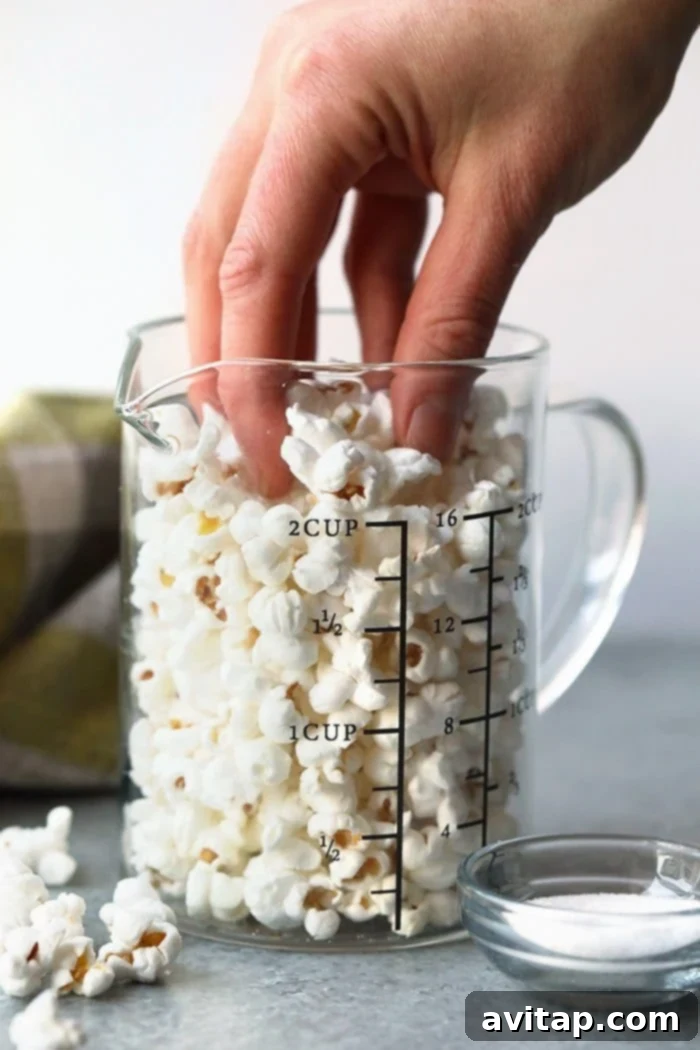
The pot you choose plays a pivotal role in the success and ease of making stovetop popcorn. You’ll need a medium to large-sized pot, with the exact dimensions depending on the quantity of popcorn you intend to make. For reference, a crucial guideline is that 2 tablespoons of unpopped popcorn kernels will typically yield approximately 5 cups of popped popcorn. Since this recipe generally produces around 10 cups, it’s vital to select a pot that is generously sized to comfortably accommodate the significant expansion of the kernels.
When selecting your ideal popping pot, look for the following characteristics:
- Heavy-Bottomed Construction: A pot with a thick, heavy base is paramount. This design ensures that heat is distributed much more evenly across the bottom surface, effectively minimizing hot spots that can lead to burnt kernels and uneven popping. Materials like heavy-gauge stainless steel or cast iron are excellent choices for their heat retention and distribution properties.
- Non-Stick Surface (Optional but Recommended): While not strictly essential, a non-stick coating can be a significant advantage. It not only makes cleanup considerably easier but also provides an extra layer of protection against kernels sticking and burning to the bottom of the pot.
- Equipped with a Tight-Fitting Lid: This is arguably the most critical feature of your popcorn pot. A snug lid serves multiple vital functions: it traps the heat and steam necessary for efficient and complete popping, and, crucially, it safely contains the kernels as they enthusiastically explode! A clear glass lid is particularly beneficial, allowing you to visually monitor the popping action without needing to lift the lid and release precious heat.
To prevent any unfortunate overflow incidents, ensure your pot has a capacity of at least 2.5 to 3 quarts for a standard batch (using 1/4 cup of kernels). An adequately sized pot ensures that every kernel has sufficient space to transform into a fluffy, perfectly popped cloud without being crushed or prematurely forced out of the pot.
Mastering the Art of Stovetop Popcorn: A Step-by-Step Guide
Making delicious, fresh homemade popcorn on the stove is surprisingly straightforward and remarkably quick. The entire process, from start to finish, typically takes less than 15 minutes, delivering a warm, crispy snack that consistently outshines any store-bought alternative. Follow these detailed steps to achieve perfect results every time.
Step 1: Prepare Your Pot and Oil
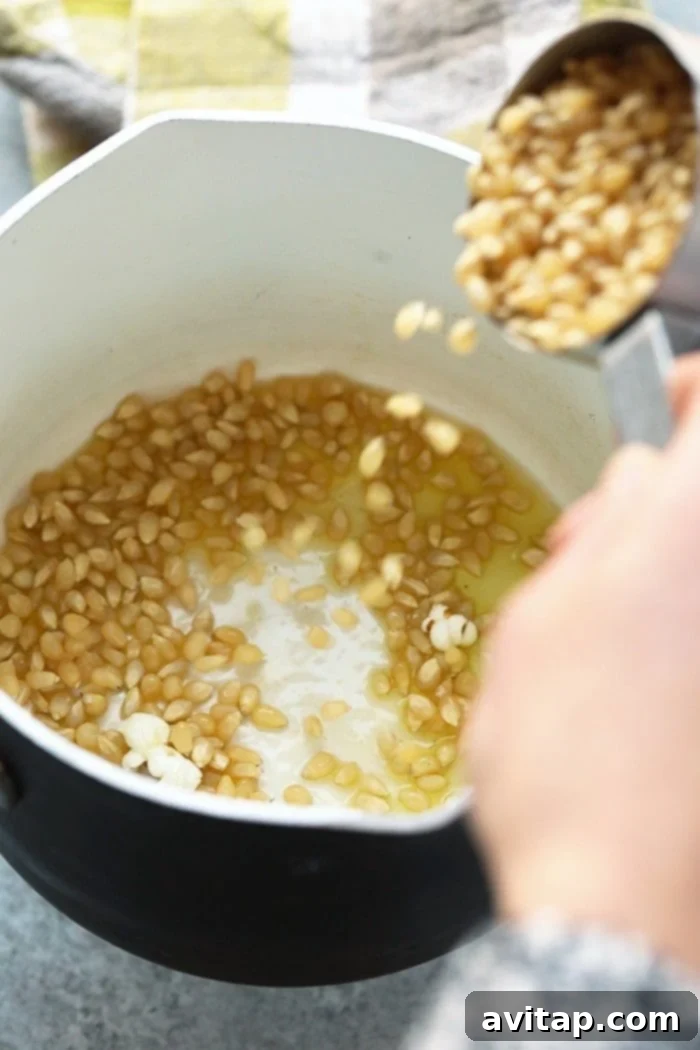
Begin by placing your chosen medium to large saucepan over medium-high heat. Drizzle in your preferred high-heat oil, such as olive or avocado oil, ensuring it creates a thin, even layer that lightly coats the entire bottom of the pot. This even distribution of oil is essential for consistent heat transfer to the kernels.
Step 2: The Test Kernel Method – Don’t Skip This!
This is a critical preliminary step to gauge your oil’s temperature accurately. Add just 2-3 unpopped popcorn kernels to the pot, then immediately cover it with the lid. Let these “test kernels” sit in the hot oil, shaking the pot gently every 15-20 seconds to move them around. The goal here is to patiently wait for these initial kernels to pop. Once they do, it’s a clear signal that your oil has reached the perfect popping temperature – hot enough to pop, but not so hot as to burn the oil or the kernels. This simple trick prevents premature popping (which can result in tough, chewy popcorn) and ensures optimal conditions for the rest of your batch.
Step 3: Add Remaining Kernels and Initial Seasoning
As soon as your test kernels pop (you can either remove them or leave them in), swiftly add the rest of your unpopped kernels to the hot pot. Immediately sprinkle a pinch of fine sea salt over them, then cover the pot securely with the lid. Give the pot a good, vigorous shake to ensure that all the fresh kernels are thoroughly coated in the hot oil and the initial salt. This even coating is key to consistent and successful popping throughout the batch.
Step 4: Consistent Shaking for Even Popping
Once the main batch of kernels is in, continue to shake the pot consistently, every 10-20 seconds or so, while it remains over the medium-high heat. This constant motion serves two vital purposes: it prevents the kernels from settling and burning on the bottom of the hot pot, and it ensures an even distribution of heat to all the kernels, promoting uniform popping. You’ll soon hear the exciting crescendo of popping sounds begin.
Step 5: Know When It’s Done (The Sound Test)
Continue shaking the pot as the popcorn pops. The popping will intensify into a rapid flurry, and then gradually begin to slow down. You’ll know your popcorn is perfectly done and ready to be removed from the heat when the popping sounds decrease to about 1 pop every 2-3 seconds. At this critical point, remove the pot from the heat immediately. This swift action is essential to prevent any unpopped kernels from burning and, more importantly, to keep your already popped popcorn from scorching. Exercise caution when removing the lid, as there will be a release of residual hot steam.
Step 6: Final Seasoning and Serving
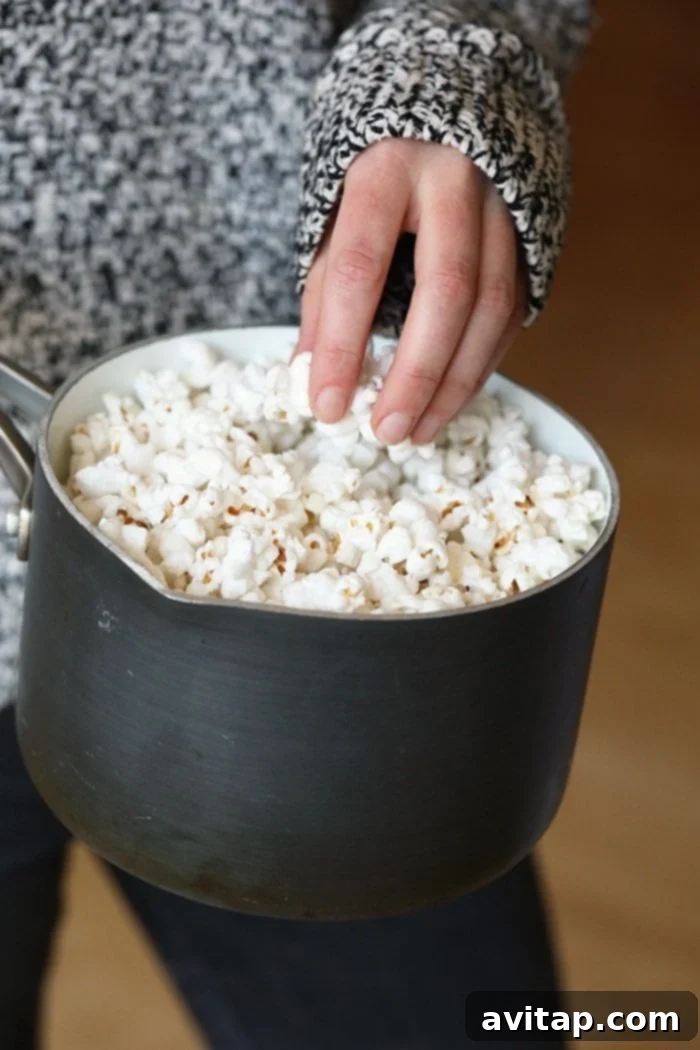
Carefully transfer your freshly popped stovetop popcorn into a large serving bowl. This is the moment to customize your snack! If you feel the initial salt wasn’t enough, or if you prefer to add all your seasonings after popping, now is the ideal time. Drizzle with melted butter, sprinkle with additional salt to taste, or unleash your creativity with any of the delicious seasoning ideas we’ve shared. Serve your warm, crispy, and perfectly seasoned popcorn immediately for the ultimate snacking pleasure!
Common Stovetop Popcorn FAQs
How much popcorn does 2 tablespoons of kernels make?
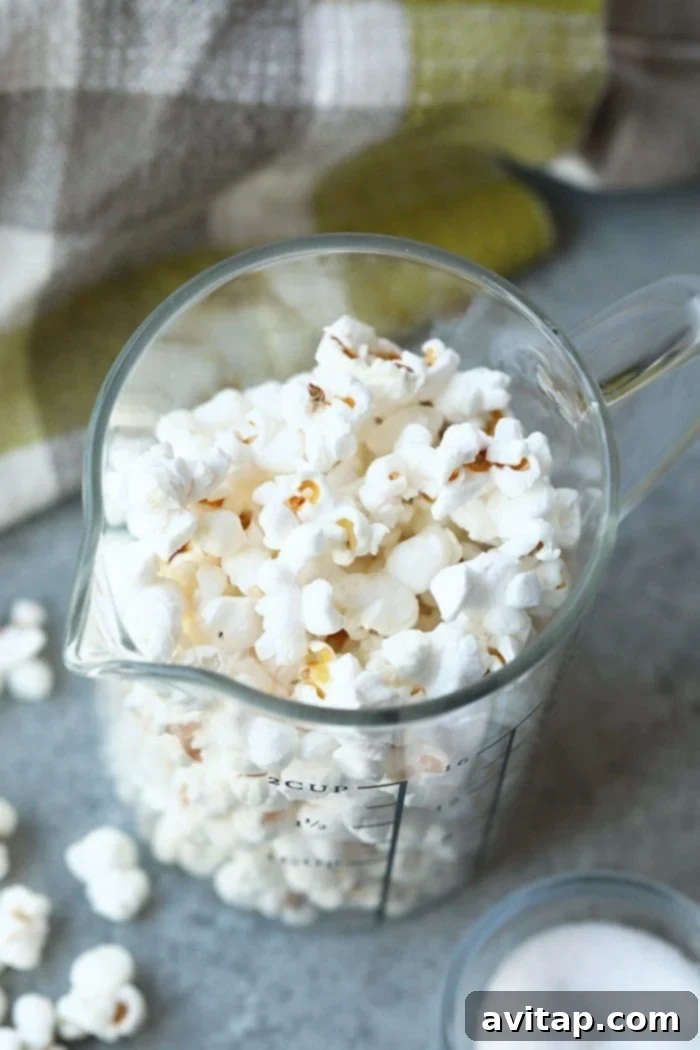
A single serving, typically measured as 2 tablespoons of unpopped popcorn kernels, will yield a generous volume of approximately 5 cups of popped popcorn. This makes popcorn an incredibly satisfying and voluminous snack option relative to its caloric content. For larger gatherings or movie nights, you can easily scale up the recipe; just ensure your pot is appropriately sized to accommodate the significantly increased volume of the popped kernels. It’s always better to have a slightly larger pot than one that might overflow.
Is popcorn healthy?
When prepared at home with minimal oil and judicious use of salt, popcorn is indeed a wonderfully healthy and nutritious snack suitable for both adults and children. It stands out as a 100% whole grain, naturally low in fat, and exceptionally rich in dietary fiber. In stark contrast to many highly processed snacks found on store shelves, homemade popcorn offers substantial beneficial nutrients without the hidden additives, artificial flavors, or excessive sugars. A typical single serving (equivalent to 2 tablespoons of unpopped kernels) provides approximately:
- 110 calories
- 2g fat
- 25g carbohydrates
- 5g fiber
- 0g sugar
- 3g protein
This impressive nutrient profile makes homemade popcorn an excellent choice for promoting satiety, supporting healthy digestion, and providing sustained energy.
Is popcorn gluten-free?
Yes, popcorn in its natural, unadulterated form is inherently gluten-free. Popcorn is simply a specific variety of corn, and corn itself is a gluten-free grain. However, for individuals with celiac disease or a severe gluten allergy, it is always a prudent practice to carefully scrutinize product labels, particularly for pre-packaged popcorn products or those with added flavorings. This is to ensure there is no risk of cross-contamination from shared processing facilities that also handle gluten-containing grains. The safest and most reliable way to guarantee a truly gluten-free snack is to purchase plain, unpopped kernels and prepare them yourself at home using this stovetop method.
What are the nutrition benefits of popcorn?
Beyond being a delightfully crunchy and versatile whole grain, homemade popcorn offers a host of impressive nutritional benefits that contribute to overall health:
- High in Fiber: With an impressive 5 grams of fiber per serving, popcorn significantly contributes to your daily fiber intake. Fiber is crucial for aiding digestion, promoting a healthy gut, fostering a feeling of fullness (which can assist with weight management), and helping to stabilize blood sugar levels.
- Excellent Source of Whole Grains: Regular consumption of whole grains like popcorn is strongly linked to a reduced risk of various chronic diseases, including heart disease, type 2 diabetes, and certain forms of cancer.
- Rich in Antioxidants: Popcorn contains significant levels of polyphenols, which are a type of antioxidant found abundantly in plants. These powerful compounds help protect your body’s cells from damage caused by free radicals, potentially reducing inflammation and the risk of various illnesses.
- Low Calorie, High Volume: One of popcorn’s most appealing attributes is its high volume relative to its relatively low-calorie count. This characteristic makes it an exceptional choice for weight management, allowing you to enjoy a substantial and satisfying snack without overeating.
- Provides Essential Protein: While not its primary nutritional contribution, the 3 grams of protein per serving in popcorn contribute positively to your overall daily protein intake, which is vital for muscle repair and general bodily functions.
Elevate Your Popcorn: Creative Seasoning Ideas
Say goodbye to boring, plain salted popcorn! While the classic combination of butter and salt is undeniably delicious, homemade popcorn serves as an ideal blank canvas for a vast world of flavors. Experiment with these homemade seasonings to transform your simple snack into a gourmet experience that tantalizes your taste buds:
- Chai Spice: This warm, aromatic blend features a comforting mix of cinnamon, cardamom, ginger, cloves, and a hint of black pepper. It imparts a delightful sweet and spicy kick, making it perfect for a cozy evening treat.
- Everything Bagel Seasoning: For those who love savory, this seasoning is an absolute winner. It’s packed with toasted sesame seeds, poppy seeds, dried garlic, dried onion, and flaky sea salt, offering an incredibly satisfying umami-rich snack reminiscent of your favorite bagel.
- Homemade Taco Seasoning: Bring the vibrant flavors of Tex-Mex to your popcorn bowl with a lively mix of chili powder, cumin, paprika, oregano, and garlic powder. It’s perfect for a themed movie night or a spicy snack craving.
- Nutritional Yeast: A fantastic option for achieving a rich, cheesy, and savory flavor without any dairy. Sprinkle it generously over your popcorn for a surprisingly delicious and healthy boost, often referred to as “vegan cheese.”
- Cinnamon Sugar: A timeless, simple, and comforting sweet classic. Easily made by mixing granulated sugar with a generous amount of ground cinnamon, this transforms your popcorn into a delightful dessert.
- Smoked Paprika & Chili Powder: For a bold and smoky flavor with a pleasant kick, a sprinkle of smoked paprika combined with chili powder works wonders. Adjust the amount of chili powder to match your desired level of heat.
- Herb & Garlic: A blend of dried parsley, oregano, garlic powder, and a touch of onion powder creates a fresh, savory, and aromatic popcorn experience.
Pro Tip for Seasoning Adherence: For the best results and to ensure your dry seasonings stick to every fluffy piece, lightly spray or drizzle your freshly popped popcorn with a tiny amount of additional oil (or melted butter) before sprinkling on your chosen spice blends. This creates a slightly tacky surface for the flavors to cling to.
Beyond Basic: More Popcorn-Inspired Recipes
Popcorn’s versatility extends far beyond just eating it plain; it serves as a fantastic foundation for creating exciting and elaborate snack mixes! If you’re eager to explore more fun and creative ways to enjoy popcorn, these inspired snack mixes are sure to spark your interest and tantalize your palate:
- Churro Popcorn: Indulge in a sweet, spiced, and crunchy sensation that beautifully mimics the beloved Spanish pastry. This mix typically involves a generous coating of cinnamon, sugar, and often a hint of vanilla for an authentic churro experience.
- Parmesan Garlic Popcorn: Prepare for a savory explosion with this Italian-inspired twist. It features a delightful combination of finely grated Parmesan cheese and aromatic garlic (either fresh, minced, or in powder form) for an incredibly flavorful and addictive snack.
- Peanut Butter Dark Chocolate Popcorn: This is the ultimate pairing of sweet and salty, perfect for those with a craving for decadence. It involves drizzling your popcorn with luscious melted peanut butter and rich dark chocolate, creating a truly irresistible treat.
- Ranch Popcorn: Bring the zesty, tangy, and wonderfully savory flavors of classic ranch dressing to your popcorn bowl. This mix typically uses a homemade or store-bought ranch seasoning blend, offering a creamy, herbaceous, and addictive snack.
These creative popcorn mixes are ideal for elevating movie nights, impressing guests at parties, or simply satisfying a craving for something a little extra special and flavorful.
How to Make Stovetop Popcorn: The Recipe
Achieve perfect, airy popcorn every time with this straightforward stovetop popcorn tutorial. All you need are basic ingredients: popcorn kernels, a high-heat cooking oil, and your choice of salt!
Prep time: 5 mins
Cook time: 10 mins
Total time: 15 mins
Servings: 2 (approx. 10 cups popped)
Recipe by: Lee Funke
Ingredients
- 1/4 cup popcorn kernels
- 1/2 tablespoon olive oil (or preferred high-heat oil like avocado or coconut)
- Salt, to taste (fine sea salt recommended)
Instructions
- Place 1/2 tablespoon of oil into a medium to large pot (ensure it’s at least 2.5 quarts to prevent overflow). Turn the heat to medium-high. Add two unpopped popcorn kernels to the oil, cover the pot, and let them sit, shaking periodically every 15-20 seconds.
- Once these two test kernels have popped, indicating the oil is at the correct temperature, add the rest of the unpopped popcorn kernels. Sprinkle with a pinch of salt, cover the pot again, and give it a good shake to ensure all kernels are evenly coated in the hot oil.
- Continue to shake the covered pot periodically (about every 10-20 seconds) to prevent the kernels from burning on the bottom and to promote even popping. You will soon hear the kernels begin to pop rapidly.
- Keep shaking the pot as the popcorn pops. The popping sounds will intensify and then gradually slow down. Once the popping slows to approximately 1 pop every 2-3 seconds, remove the pot from the heat immediately. The popcorn is now fully popped and ready! Be cautious of residual steam when opening the lid.
- Transfer the popcorn to a large bowl. At this stage, you have the option to add more salt or any other seasonings your heart desires for a personalized flavor experience!
Nutrition Information
Nutrition information is automatically calculated and should be used as an approximation.
- Calories: 170 kcal
- Carbohydrates: 26 g
- Protein: 4 g
- Fat: 8 g
- Fiber: 7 g
- Sugar: 0 g
We truly hope this comprehensive guide empowers you to confidently create perfect stovetop popcorn for all your snacking occasions. Don’t forget to share your delicious creations! Tag your posts on social media with the hashtag #fitfoodiefinds; we’d absolutely love to see what wonderful popcorn concoctions you come up with!