
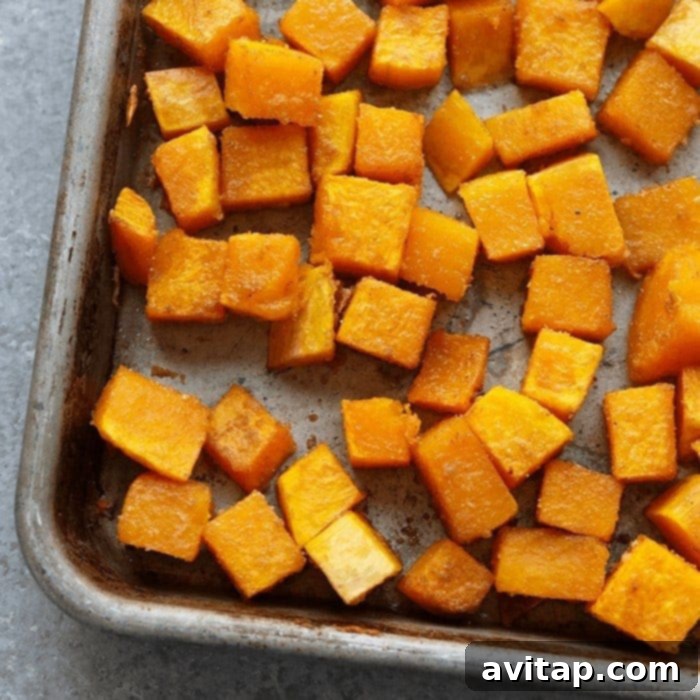
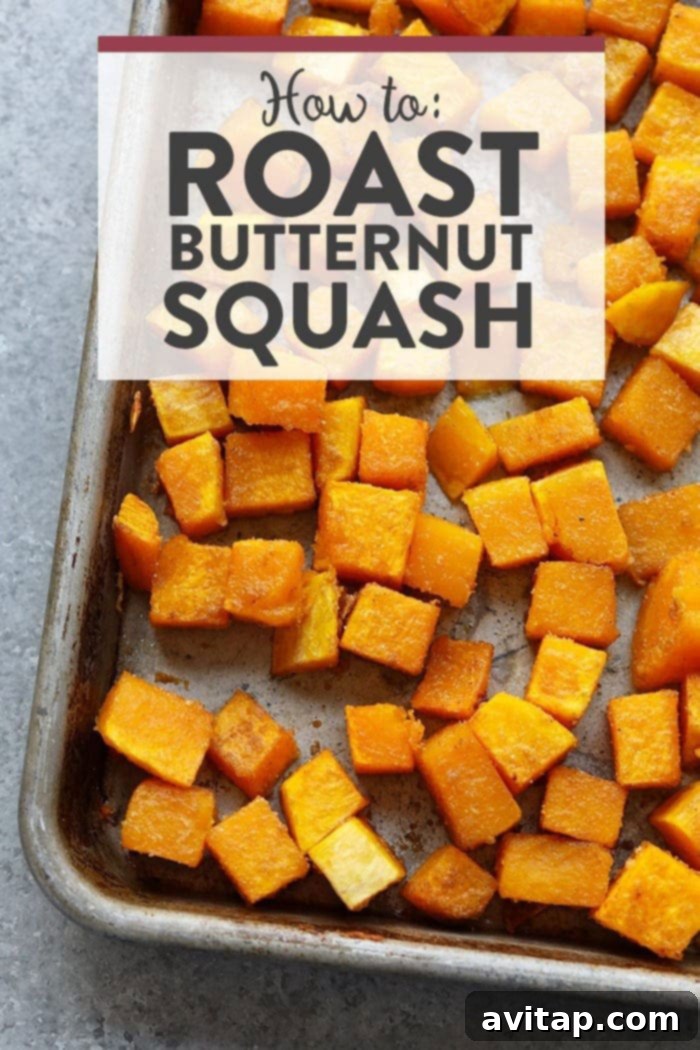
Mastering Roasted Butternut Squash: Your Guide to Perfectly Cooked Delight
Unlock the secrets to effortlessly cooking butternut squash, transforming this fall and winter favorite into a culinary masterpiece. This guide provides a simple, step-by-step method to peel, dice, season, and roast butternut squash to achieve a fork-tender texture and delightful caramelization every time. Prepare to savor its naturally sweet and savory flavors, making it an indispensable addition to your healthy meal repertoire.
Why Butternut Squash is a Seasonal Star
Butternut squash is a culinary gem, cherished for its unique balance of earthy sweetness and subtle savory notes. As an avid food blogger and recipe developer, I’ve experimented with countless methods over the years, consistently finding that a high-heat roasting technique yields the most exquisite results. This approach not only brings out its natural sugars, leading to beautiful caramelization, but also ensures a wonderfully tender interior.
Today, we’re diving deep into the art of roasting butternut squash. Forget any intimidation you might feel; our straightforward three-step process—peel, cube, and roast—guarantees perfectly cooked squash, ideal for enriching any meal. This guide will elevate your vegetable preparation skills and make butternut squash a regular feature in your kitchen.
Featured Comment
“I’ve roasted butternut squash before, but this recipe’s sweet and spicy combination, with cumin and cinnamon, was a game-changer for my Thanksgiving side. Absolutely loved it!” – Eliza
Essential Ingredients for Perfect Roasted Butternut Squash
Crafting delicious roasted butternut squash requires just a few simple ingredients. The beauty of this recipe lies in its minimalist approach, allowing the natural flavors of the squash to shine through.
- Butternut Squash: Opt for a firm, unblemished squash. Its natural sweetness is enhanced by roasting.
- Olive Oil: A good quality olive oil is crucial for achieving that desirable crispy exterior and for helping the seasonings adhere evenly.
- Salt & Pepper: These fundamental seasonings bring out the best in the squash, enhancing its inherent flavors. Feel free to adjust to your personal preference.
While these are the core ingredients, the versatility of butternut squash allows for endless customization with various spices and herbs, which we’ll explore further below.
The Flavor and Texture of Butternut Squash
If you’re new to butternut squash, you might wonder what culinary experience awaits you. Imagine the comforting texture of a perfectly roasted sweet potato, but with a slightly softer, creamier consistency. Flavor-wise, butternut squash offers a delightful medley of nutty undertones, a distinct earthy quality, and a natural sweetness that intensifies beautifully during roasting. This unique profile makes it an incredibly versatile ingredient, equally at home in savory dishes and subtly sweet preparations.
Elevate Your Roasted Butternut Squash with Flavor Variations
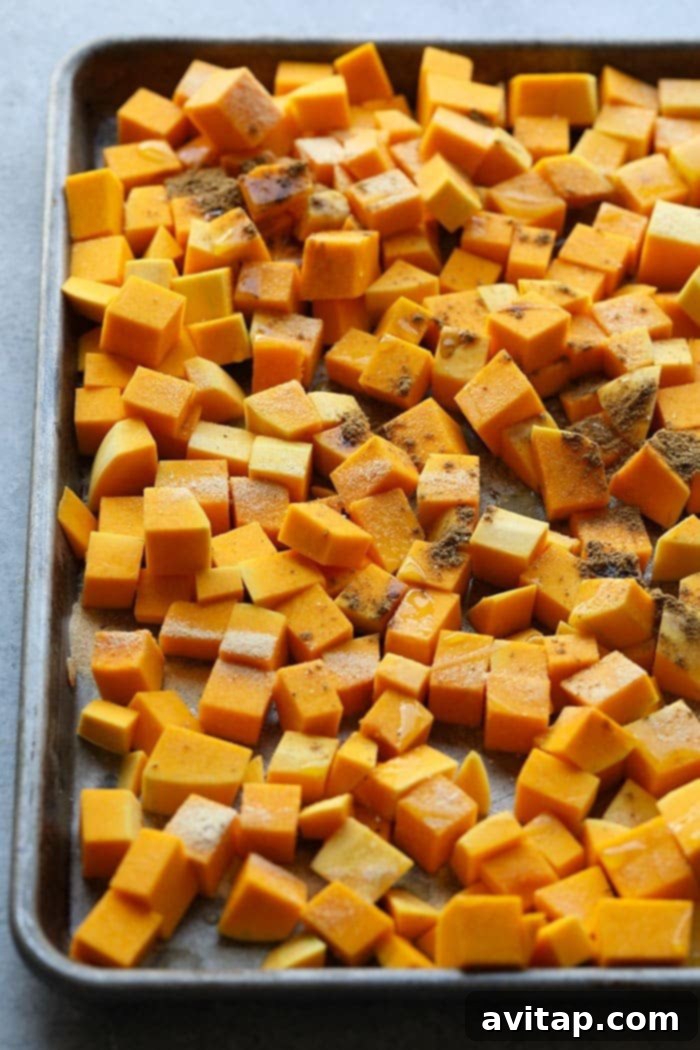
While a simple olive oil, salt, and pepper seasoning is delicious, one of the best ways to customize roasted butternut squash is through creative spice blends. The images in this guide showcase a wonderful combination of cumin and cinnamon, which adds warmth and a touch of exotic sweetness. Don’t hesitate to experiment with your favorite spices or explore some of these exciting mixes:
To apply any of these variations, simply toss the cubed squash with olive oil and your chosen spice blend before roasting.
- Spicy Kick: For those who love a bit of heat, a generous pinch of cayenne pepper or red pepper flakes will add a fiery dimension.
- Herbaceous Delight: Fresh or dried rosemary and thyme pair beautifully with the squash’s earthy notes.
- Sweet & Savory Blends:
- Homemade Fajita Seasoning: For a Tex-Mex inspired twist.
- Homemade Chili Seasoning: Adds depth and a mild kick.
- Homemade Old Bay Seasoning: Unexpectedly delicious with its complex seafood-inspired blend.
- Unique & Aromatic:
- Everything Bagel Seasoning: Provides a savory, garlicky, and oniony crunch.
- Pumpkin Pie Spice: For an extra cozy, autumnal flavor, perfect for holiday meals.
Frequently Asked Questions About Cooking Butternut Squash
Do you have to cut butternut squash before roasting it?
While you can certainly halve the squash and roast it whole (much like in an Instant Pot butternut squash recipe), we highly recommend chopping it into cubes before roasting. This allows for more surface area to caramelize, resulting in a richer flavor and a more consistent, tender cook throughout each piece. It also significantly reduces cooking time.
How big should the squash cubes be?
For optimal roasting and to ensure uniform cooking, we suggest cutting butternut squash into roughly 1-inch cubes. This size allows the squash to become beautifully tender and caramelized on the edges without turning mushy. The most important tip is to aim for consistency in size across all pieces, as this prevents some cubes from overcooking while others remain undercooked.
How do you know when butternut squash is done?
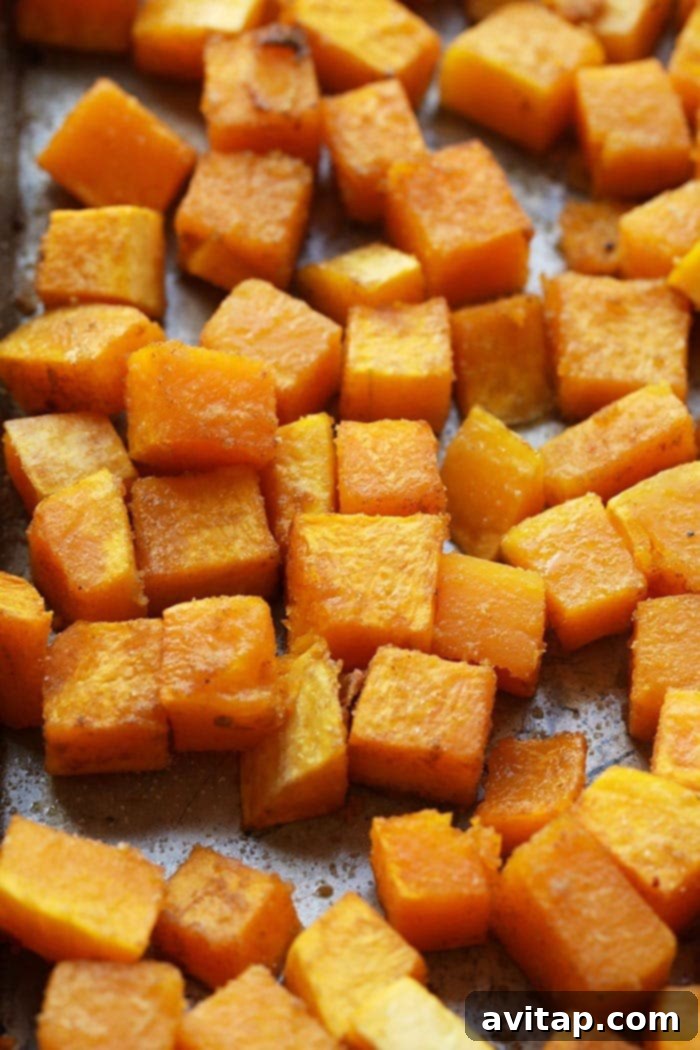
Perfectly roasted butternut squash will be fork-tender, meaning a fork can easily pierce through a cube with minimal resistance. Additionally, look for golden-brown edges, which indicate that the natural sugars have caramelized, creating a delicious crispy texture and enhanced flavor. The exact cooking time can vary slightly depending on your oven and the size of your squash pieces.
Can you use frozen butternut squash cubes for roasting?
We generally do not recommend using frozen butternut squash for this roasting recipe. Frozen squash contains a higher water content, which can lead to a mushy texture rather than the desired tender-crisp caramelization when roasted. However, frozen butternut squash is excellent for other applications, such as this butternut squash soup, where a softer texture is perfectly acceptable.
Preparing Butternut Squash: Peeling and Cutting Techniques
The initial preparation of butternut squash can seem daunting, but with the right tools and technique, it’s quite simple. Here’s a detailed guide to getting your squash ready for roasting:
1. Peeling the Butternut Squash
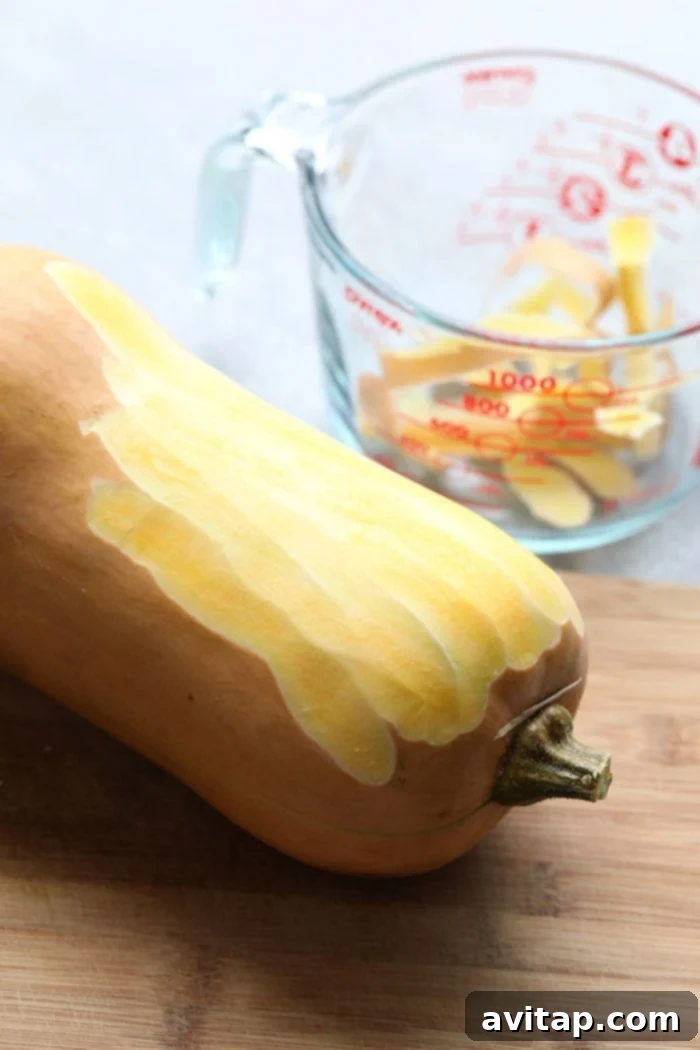
The skin of butternut squash is tough and inedible, so it needs to be removed. A sturdy vegetable peeler is your best friend here. For extra ease, you can microwave the whole squash for 1-2 minutes before peeling. This slightly softens the skin, making it easier to maneuver. Hold the squash firmly and peel from top to bottom, removing all the tough outer layer. Be mindful of its slippery surface once peeled.
2. Halving and Seeding the Squash
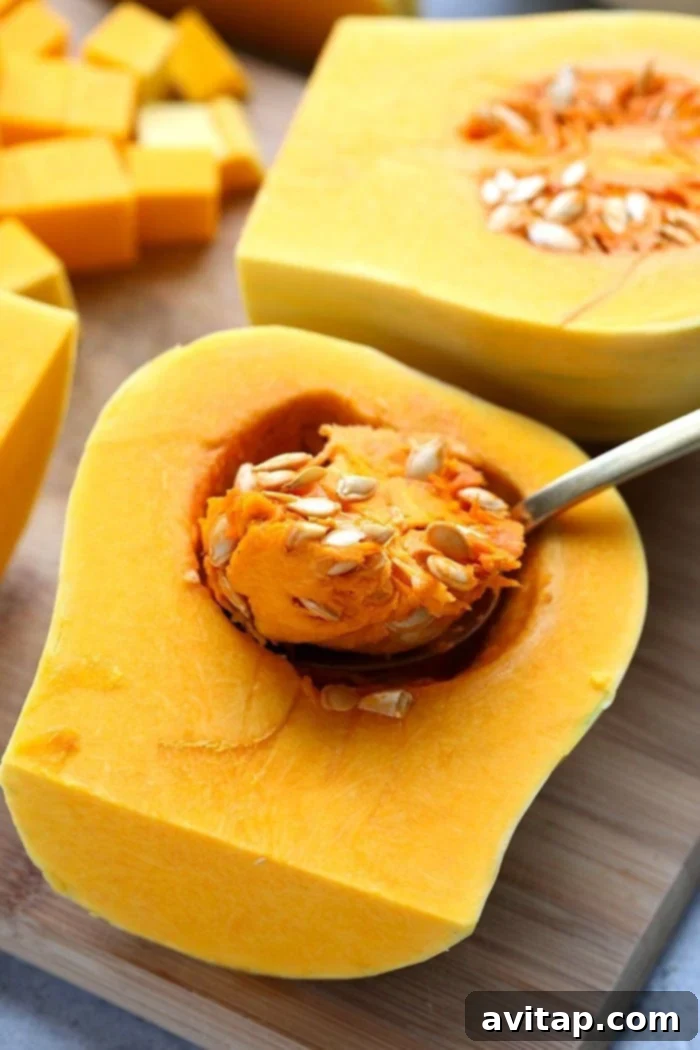
Once peeled, place the squash on a stable cutting board. Using a very sharp, heavy-duty chef’s knife, carefully cut the squash in half lengthwise, from top to bottom. Butternut squash is dense, so don’t be afraid to apply a little muscle, always cutting away from your body. After it’s halved, you’ll see the seeds and fibrous flesh in the bulbous end. Use a spoon (a sturdy metal spoon works best) to scoop out and discard these seeds and stringy bits, much like you would with a pumpkin.
3. Dicing for Roasting
Now that your squash is peeled and seeded, it’s time to dice it into uniform pieces. For roasting, we recommend cutting the squash into approximately 1-inch cubes. Start by slicing the neck portion into thick rounds, then stack and dice these rounds. For the bulbous end, cut it into manageable sections, then dice those. The key is to ensure all pieces are roughly the same size. This consistency is vital for even cooking, guaranteeing that every cube roasts at the same rate and achieves that perfect fork-tender texture and golden caramelization.
More of our Favorite…
Delectable Roasted Veggies
If you’re a fan of perfectly roasted butternut squash, you’ll love exploring these other simple yet incredibly flavorful roasted vegetable recipes:
- Honey Balsamic Roasted Carrots: Sweet, tangy, and incredibly tender.
- Oven Roasted Brussels Sprouts: Crispy on the outside, tender on the inside, with fantastic flavor.
- Roasted Root Vegetables: A colorful and hearty mix, perfect for any season.
- Roasted Sweet Potatoes: A classic side, naturally sweet and wonderfully comforting.
- Roasted Broccoli: Simple, healthy, and incredibly flavorful with crispy florets.
- Garlic Roasted Cauliflower: A savory delight, enhanced by aromatic garlic.
- Roasted Delicata Squash: A simpler squash to prepare, as its skin is edible!
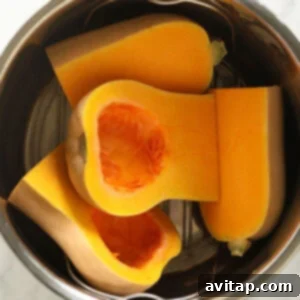
Instant Pot
Butternut Squash
Achieve perfectly cooked Instant Pot Butternut Squash in under 20 minutes! This alternative method is perfect when you need tender squash quickly for soups, purees, or mashes. Discover how to cook butternut squash in your Instant Pot using two easy ways!
Storing Roasted Butternut Squash: Tips for Freshness
Proper storage ensures your roasted butternut squash remains delicious for days, making it perfect for meal prep. After roasting, allow the squash cubes to cool completely to room temperature. This step is crucial to prevent condensation, which can make the squash soggy. Once cooled, transfer the roasted squash into an airtight container and refrigerate it for up to 5 days. You can enjoy the squash cold, straight from the fridge in salads, or gently warm it up before serving. Reheating in a skillet or oven can help restore some of its original texture.
We do not recommend freezing roasted butternut squash. When frozen, thawed, and reheated, the squash tends to develop a grainy or mushy texture, losing its delightful roasted quality. For freezing, it’s better to cook and puree butternut squash (e.g., for soup) rather than freezing the roasted cubes.
Make-Ahead Roasted Butternut Squash
To save time on busy days, you can prepare the butternut squash in advance. Peel and cube the squash up to 2 days before you plan to roast it. Store the cubed squash in an airtight container or a sealed bag in the refrigerator. When you’re ready to cook, simply proceed with the recipe as written, adding oil and seasonings, and then roasting.
Creative Serving Suggestions for Roasted Butternut Squash
Once you’ve mastered the art of roasting butternut squash, a world of culinary possibilities opens up! Its sweet and savory profile makes it incredibly versatile, pairing well with a variety of dishes. Here are some fantastic ways to incorporate your perfectly roasted butternut squash:
- Harvest Grain Bowl: Create a satisfying and nutritious meal by combining roasted butternut squash with wild rice, a vibrant Brussels sprout slaw, and your favorite protein. Its tender texture and sweet notes complement the grains beautifully.
- Butternut Squash Soup: Elevate your soup game by using roasted butternut squash as the base. Roasting prior to blending deepens the flavor profile, adding a rich, caramelized sweetness that makes for an exceptionally comforting and flavorful soup.
- Butternut Squash Lasagna: For a delightful vegetarian main course, layer roasted butternut squash with mushrooms, creamy ricotta, gooey mozzarella, and savory parmesan cheese. It’s a hearty and flavorful alternative to traditional lasagna.
- Butternut Squash Mac and Cheese: Introduce a healthy and flavorful twist to classic mac and cheese by pureeing roasted butternut squash into the cheese sauce. It adds a beautiful color, a touch of sweetness, and a boost of nutrients, making comfort food even better.
- Salad Topper: Add roasted butternut squash to your favorite green salads for extra texture, flavor, and nutrition. It pairs wonderfully with spinach, goat cheese, pecans, and a balsamic vinaigrette.
- Side Dish: Serve it simply as a standalone side dish alongside roasted chicken, pork loin, or a hearty vegetarian main.
Rated 4.93 out of 5 stars by 14 votes
How to Cook Butternut Squash in the Oven
This recipe for roasted butternut squash is incredibly simple: peel, dice, season, and roast at 400ºF for about 25-30 minutes for tender, caramelized perfection!
By: Emily Richter
Prep Time: 20 mins
Cook Time: 30 mins
Total Time: 50 mins
Servings: 4
Ingredients
- 1 large butternut squash*
- 2-4 tablespoons olive oil
- salt and pepper, to taste
Instructions
- Preheat your oven to 400ºF (200ºC). Prepare a large baking sheet by lining it with parchment paper or foil, then lightly spray with nonstick cooking spray. Alternatively, you can spray the baking sheet directly. Set aside.
- Using a sturdy vegetable peeler, carefully peel the butternut squash. Place the peeled squash on a cutting board and use an extremely sharp chef’s knife to cut it in half lengthwise. You may need to apply a little force due to the squash’s density.
- Once the squash is halved, use a spoon to scoop out and discard the seeds and any fibrous strands from the interior.
- Cut the prepared squash into bite-sized cubes, aiming for pieces that are roughly 1 inch in size. Ensure all pieces are approximately the same size to promote even cooking. Transfer the cubed squash to your prepared baking sheet.
- Drizzle the squash cubes with olive oil and season generously with salt and pepper. Use your hands to gently toss and massage the oil and spices into the squash, ensuring every piece is evenly coated.
- Spread the seasoned butternut squash onto the baking sheet in a single layer. It’s crucial that the cubes are not touching or overlapping; overcrowding the pan will steam the squash instead of roasting it, preventing proper caramelization. If necessary, use two baking sheets.
- Bake for 25-30 minutes, tossing the squash halfway through the cooking time to ensure all sides brown evenly. The squash is done when it’s fork-tender and the edges are beautifully golden brown and slightly crispy.
Tips & Notes
- Storage: Once completely cool, transfer roasted squash to an airtight container and refrigerate for up to 5 days.
- Make Ahead Instructions: Peel and cube butternut squash up to 2 days in advance. Store in an airtight container in the fridge until ready to roast.
- Squash Yield: One large butternut squash typically yields approximately 4 cups of cubed squash, perfect for 4 servings.
- Time-Saving Tip: For ultimate convenience, purchase pre-cut butternut squash from your grocery store’s produce section. Simply add oil, seasonings, and roast as directed!
Nutrition
Calories: 153 kcal, Carbohydrates: 16 g, Protein: 1 g, Fat: 10 g, Fiber: 3 g, Sugar: 3 g
Nutrition information is automatically calculated and should only be used as an approximation.
Shop This Post
Cutting Boards
Oversized Peeler
Don’t forget to tag your culinary creations on social media with the hashtag #fitfoodiefinds – we’d love to see what delicious dishes you’re whipping up!
We hope this comprehensive guide inspires you to make roasted butternut squash a staple in your kitchen. Its ease of preparation, incredible flavor, and versatility make it a fantastic choice for healthy eating throughout the cooler months. Happy roasting!