
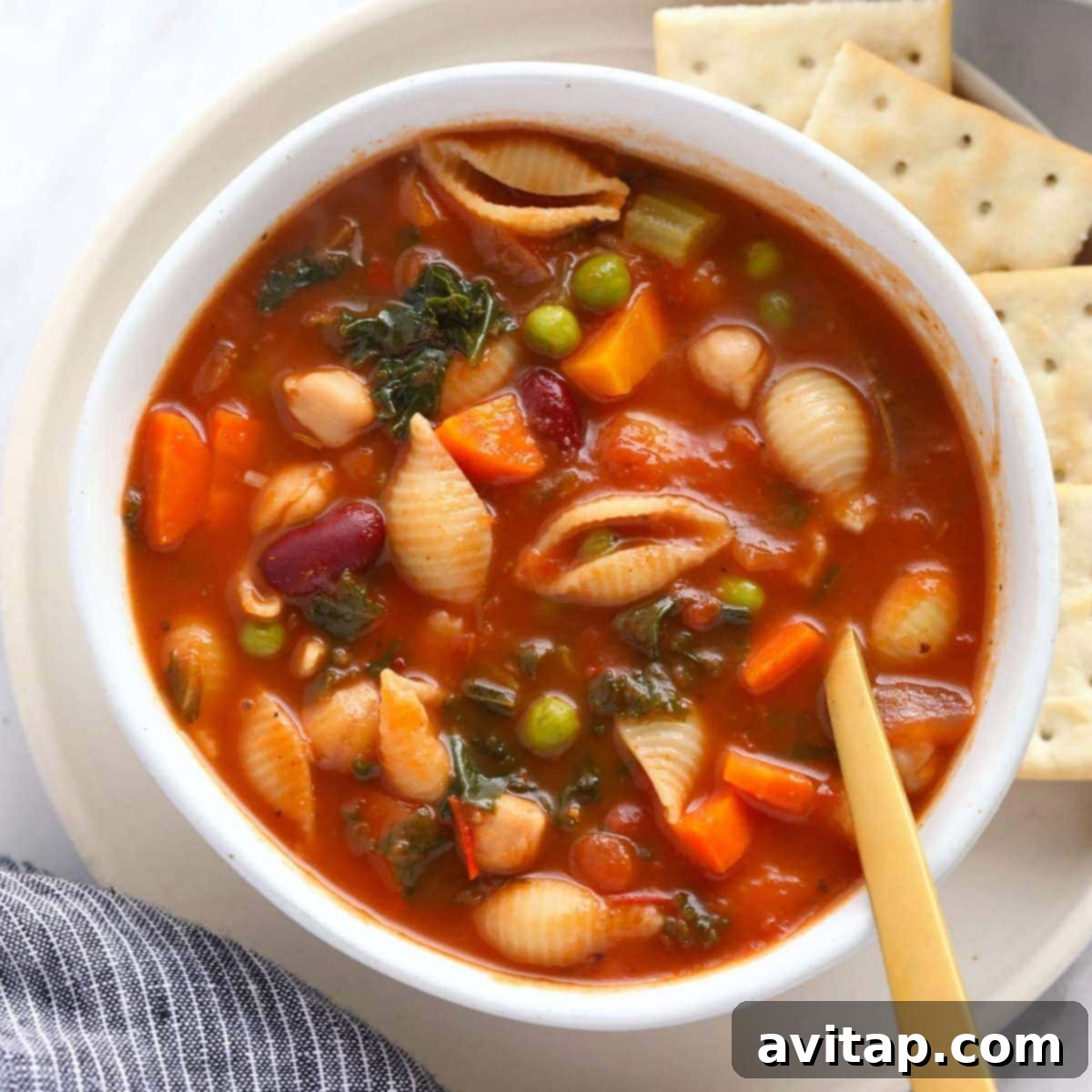
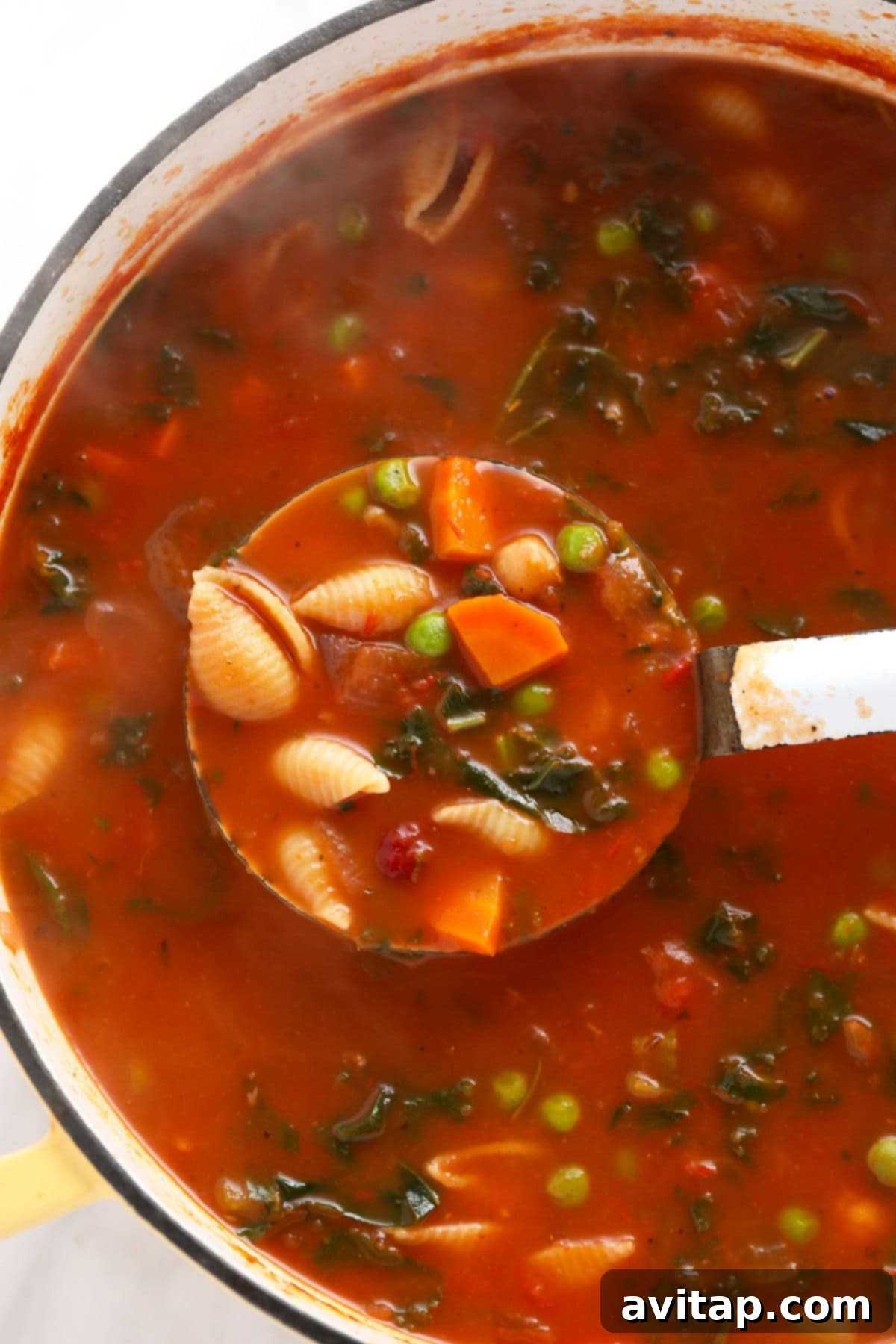
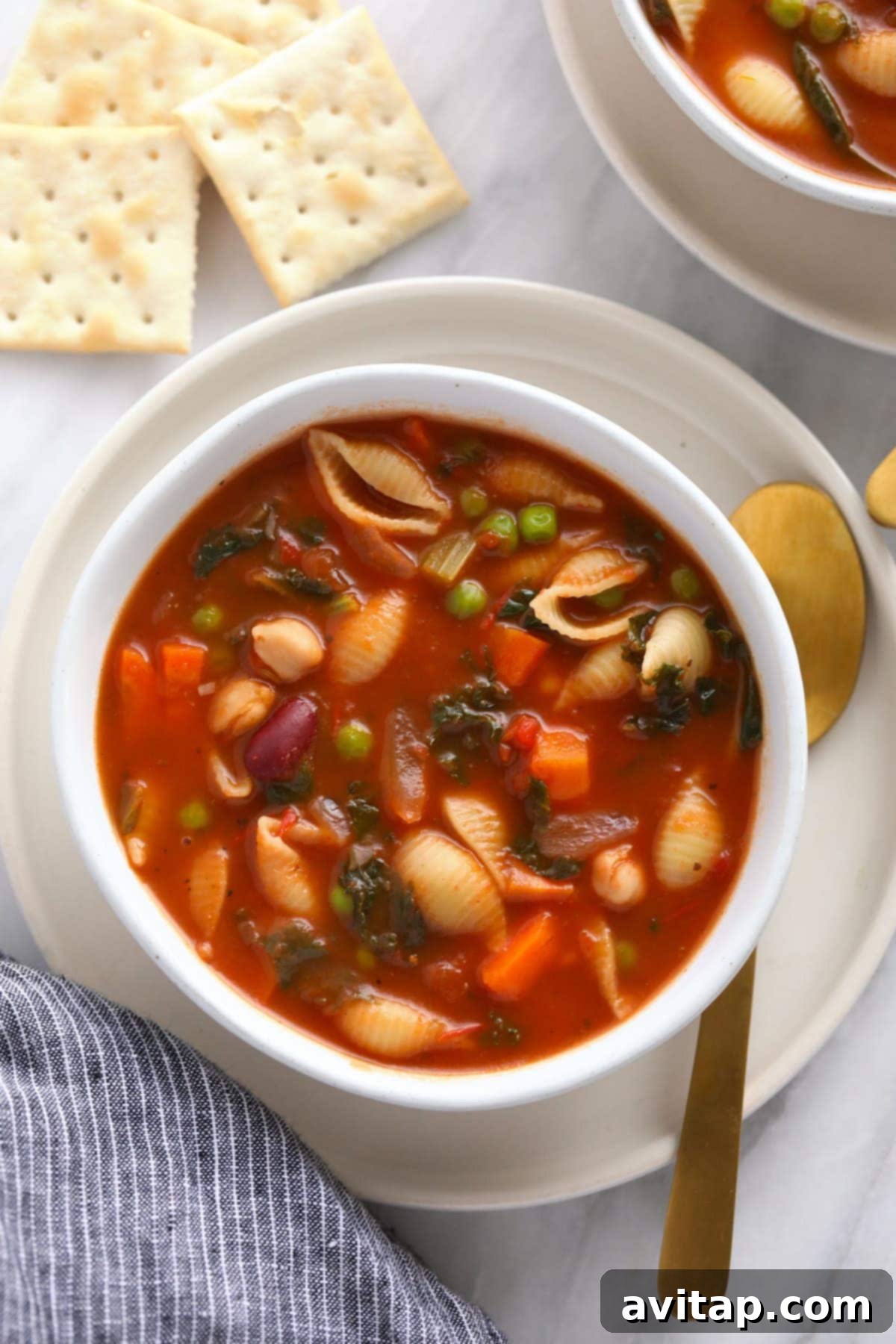
There’s nothing quite like a comforting bowl of homemade minestrone soup. This timeless Italian classic, brimming with a vibrant array of vegetables, beans, and pasta in a rich, flavorful tomato broth, offers a perfect blend of hearty satisfaction and nourishing goodness. Our recipe delivers all the delicious flavors you expect from an authentic minestrone, making it the best rendition you’ll find for a truly soul-satisfying meal.
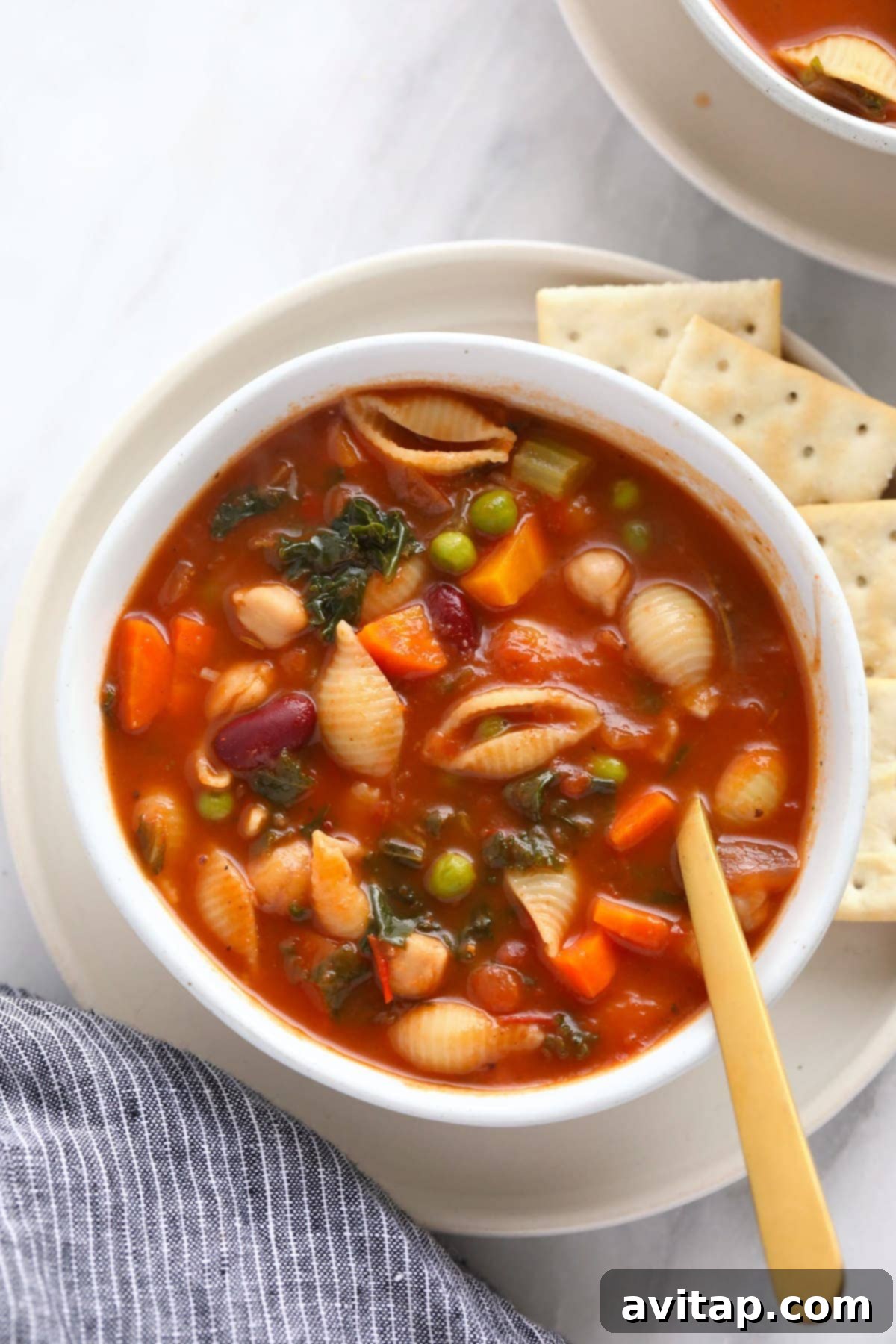
Authentic Classic Minestrone Soup Recipe: Your Go-To Comfort Meal
When you’re craving a meal that feels both wholesome and incredibly comforting, this classic minestrone soup is precisely what you need. Its robust tomato broth provides a creamy, deeply satisfying base, packed generously with tender vegetables, protein-rich beans, and al dente noodles. It’s the ideal choice for a quick yet substantial vegetable-loaded soup, perfect for busy weeknights or a cozy weekend lunch.
What defines a classic minestrone soup?
Minestrone is renowned for its flexibility, often incorporating seasonal vegetables, but a true classic adheres to a few foundational elements that give it its distinctive character:
- Aromatic Base: Classic minestrone typically starts with a “soffritto” – a foundational mixture of finely diced carrots, celery, and onions, sautéed to perfection. This trio creates a sweet, savory, and aromatic base that deepens the soup’s flavor profile.
- Diverse Beans: A hallmark of minestrone is the inclusion of various beans. While cannellini beans are common, a mix of garbanzo (chickpea), kidney, or borlotti beans adds significant texture, fiber, and plant-based protein, making the soup wonderfully filling.
- Pasta or Rice: To make it a truly hearty meal, classic minestrone often features small pasta shapes (like ditalini, shells, or elbow macaroni) or rice, added just before serving to prevent them from becoming overly soft and soaking up too much broth.
- Tomato-Rich Broth: The vibrant red-orange hue and tangy depth of minestrone often come from a tomato-based broth, usually incorporating crushed tomatoes and a touch of tomato paste for added richness and thickness.
- Seasonal Vegetables: While the base is consistent, minestrone is a celebration of whatever vegetables are in season. This recipe uses common, readily available vegetables, but allows for easy customization.
These elements combine to create a soup that is not only delicious but also incredibly nutritious and endlessly adaptable.
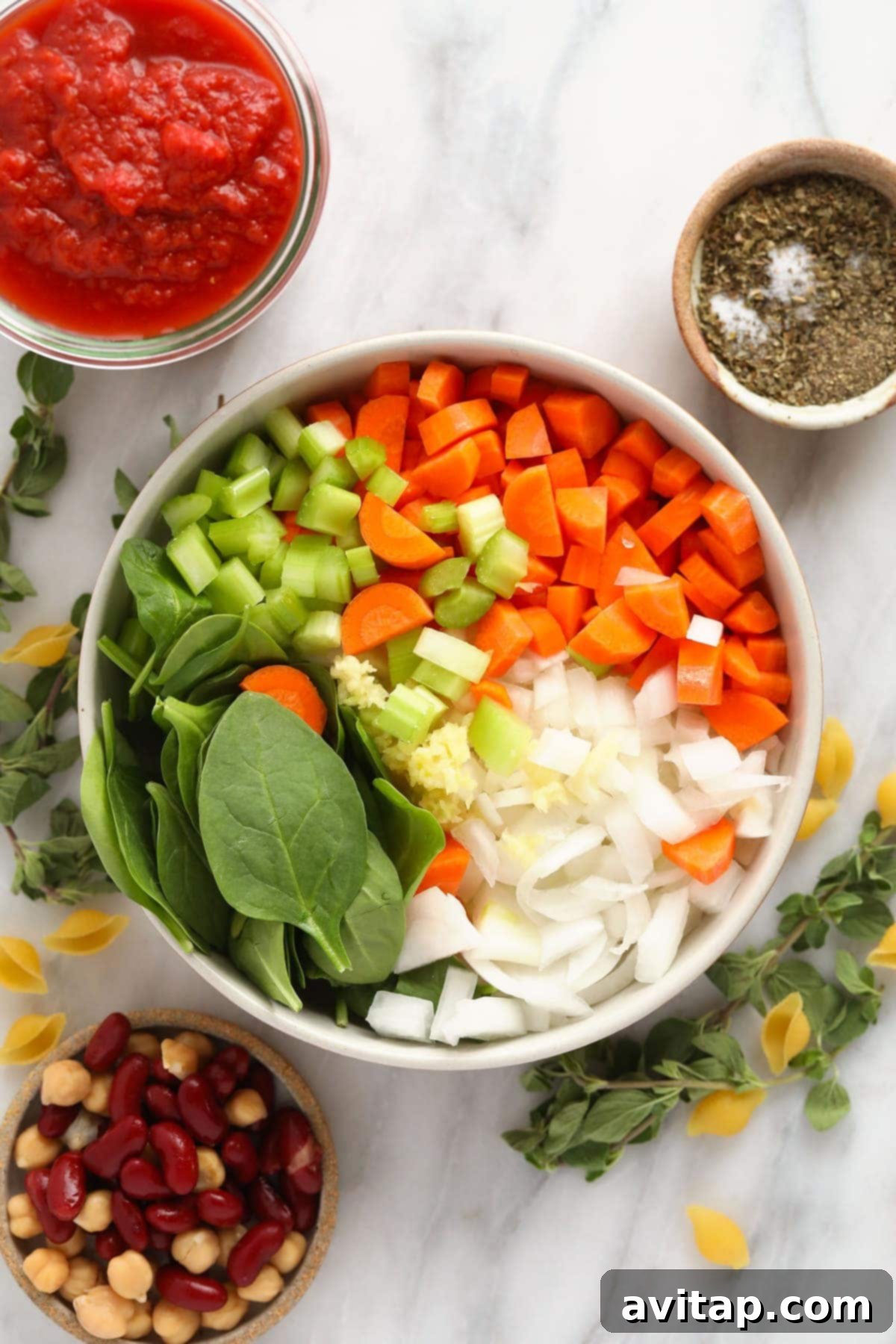
Essential Ingredients You’ll Need for the Best Minestrone
Despite being packed with an impressive array of delicious and healthy components, this minestrone soup recipe is remarkably straightforward to prepare. Each ingredient plays a crucial role in building the layered flavors that make this soup truly exceptional. Here’s a detailed list of what you’ll need:
- Extra Virgin Olive Oil: The foundation of our soffritto, essential for sautéing vegetables and building flavor.
- White Onion: Minced, it forms a key part of the aromatic base, adding a sweet and savory depth.
- Garlic: Freshly minced garlic is indispensable for its pungent aroma and flavor.
- Dry Red Wine: A secret weapon for deglazing the pot, lifting caramelized bits from the bottom and infusing the broth with incredible richness. If you prefer to avoid alcohol, a splash of vegetable broth can be used as an alternative for deglazing.
- Carrot: Diced carrots add natural sweetness and vibrant color to the soup.
- Celery: Diced celery contributes a subtle earthy flavor and essential texture to the soffritto.
- Crushed Tomatoes: The core of our rich, tomato-based broth, providing body and a tangy flavor.
- Tomato Paste: Don’t skip this! Tomato paste is concentrated tomato goodness that adds a deeper umami flavor and helps to naturally thicken the broth, creating a more luxurious texture.
- Vegetable Broth: The main liquid base for the soup. Choose a good quality broth for the best flavor.
- Apple Cider Vinegar: A touch of vinegar is a fantastic way to balance the richness of the soup, adding a subtle brightness and complexity. If apple cider vinegar isn’t on hand, red wine vinegar, a dash of Worcestershire sauce (ensure vegetarian/vegan if needed), or even a few drops of hot sauce can offer a similar acidic balance.
- Salt: Crucial for enhancing all the individual flavors and bringing the entire soup to life. We recommend tasting and adjusting as you go.
- Italian Seasoning: A convenient blend of dried herbs. If you don’t have it, a combination of dried basil, dried oregano, and dried parsley works beautifully.
- Red Pepper Flakes: For a subtle warmth and a gentle kick. Adjust the amount to your spice preference.
- Garlic Powder: Complements the fresh garlic, adding another layer of garlic flavor.
- Bay Leaves: Essential for infusing the broth with a subtle, aromatic background note. Remember to remove them before serving.
- Fresh Oregano: A bundle of fresh oregano sprigs adds a wonderfully fresh, herbaceous aroma that truly elevates the soup.
- Garbanzo Beans (Chickpeas): Drained and rinsed, these add creamy texture and plant-based protein.
- Kidney Beans: Also drained and rinsed, kidney beans contribute heartiness and a different texture to the bean mix.
- Spinach or Kale: Fresh greens are stirred in at the end, wilting beautifully and adding nutrients. Feel free to use either spinach or chopped kale.
- Peas: Frozen peas add a pop of color and sweetness, and cook quickly at the end.
- Shell Noodles: We use 8 ounces of small shell noodles, but any small pasta shape like ditalini, elbow macaroni, or even broken spaghetti can be used. Cook them separately for best results.
Enhancing Your Minestrone with More Protein
While this vegetarian minestrone is already packed with protein from the beans and noodles, you might want to boost its protein content further. This is incredibly easy to do without compromising flavor:
For Vegetarian & Vegan Options: Simply add another can or two of your favorite beans (such as cannellini, pinto, or black beans), ensuring they are drained and rinsed. You could also stir in cooked lentils at the end for an extra protein punch.
For Meat Lovers: This versatile minestrone soup welcomes the addition of ground turkey, ground beef, or ground chicken. It creates a heartier, more robust soup that’s perfect for a substantial meal.
To incorporate ground meat into this soup: In step 3 of the recipe, after sautéing the onion, add your chosen ground meat to the pot. Brown it partially, breaking it up with a spoon, until it’s no longer pink. Drain any excess fat if necessary, then continue with the rest of the steps in the recipe. The meat will simmer with the vegetables and broth, absorbing all the wonderful flavors.
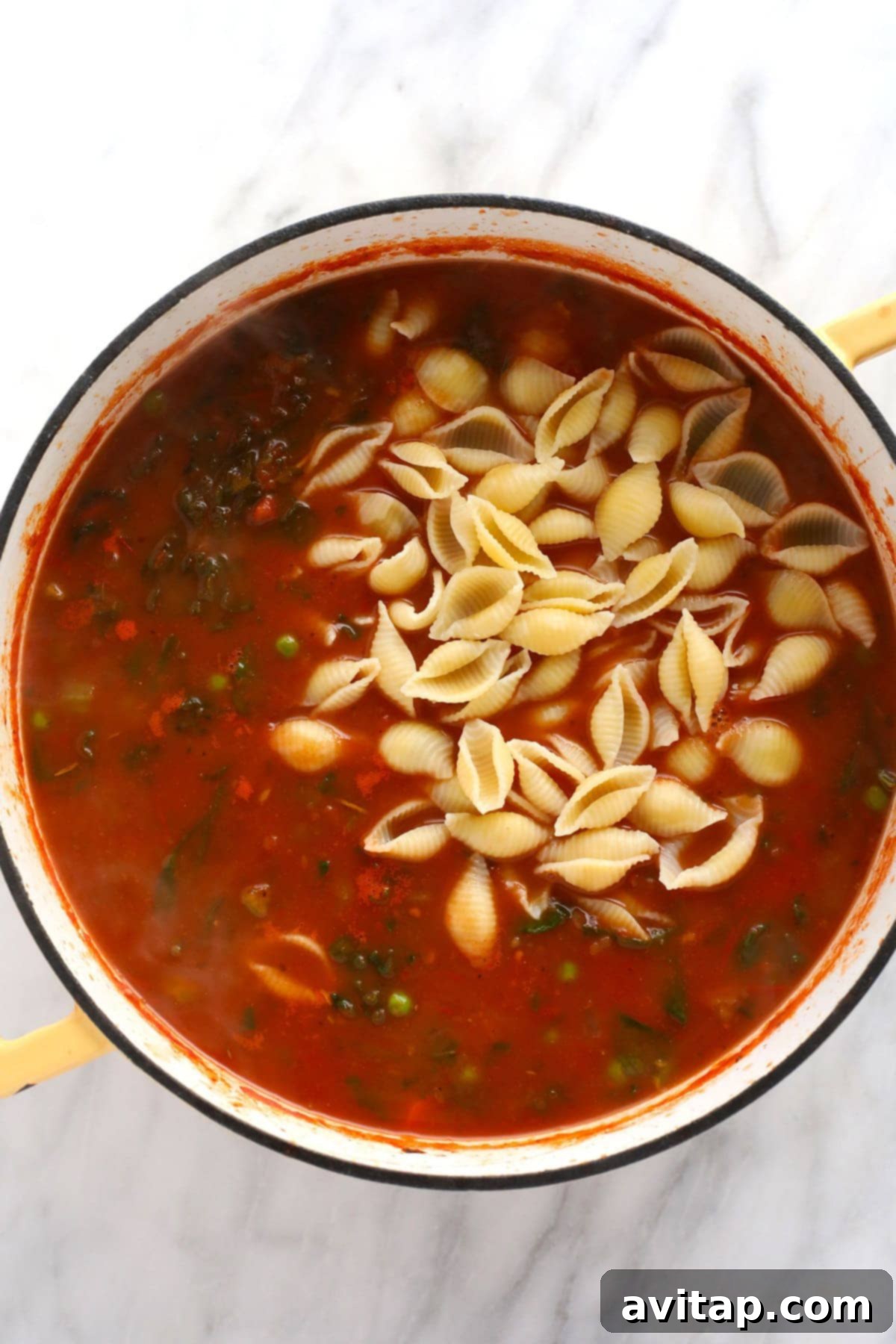
Mastering the Art of Making Minestrone Soup: Step-by-Step Guide
The secret to crafting a truly flavorful minestrone soup lies in building layers of flavor from the very beginning. Each step in this recipe is designed to contribute to a deeply savory and aromatic broth. Pay close attention, and critically, do not skip the salt – it’s paramount for enhancing every other ingredient!
- Prepare the Noodles First: Begin by cooking your chosen small shell noodles (or other pasta shape) according to package directions until they are al dente. This means they should still have a slight bite. Cooking them separately and adding them just before serving is crucial; it prevents them from overcooking, becoming mushy, and absorbing all your delicious broth. Once cooked, drain them and set them aside. This proactive step ensures you won’t be waiting for pasta while your soup is ready.
- Build the Flavor Base: Steps 2 through 5 are the cornerstone of your soup’s exquisite flavor. Heat the extra virgin olive oil in a large Dutch oven or a sturdy, heavy-bottomed pot over medium-high heat.
- Sauté the Onion: Add the minced white onion to the hot oil. Sauté for about 2-3 minutes, stirring occasionally, until it becomes translucent and softened. This initial step releases the onion’s sweetness. Feel free to add an extra pinch of salt here; salt helps draw out moisture and intensify the flavor.
- Add the Garlic: Once the onion is ready, stir in the minced garlic. Sauté for another minute or so until it becomes wonderfully fragrant. Be careful not to burn it, as burnt garlic can turn bitter. It’s perfectly fine if the onion and garlic start to lightly brown and stick to the bottom of the pot; these “fond” bits are flavor gold!
- Deglaze with Red Wine: This step is incredibly important for unlocking deep flavors. Pour the dry red wine into the pot. As it sizzles, use a wooden spoon or spatula to vigorously scrape up all those browned bits of onion and garlic that have stuck to the bottom of the pot. This process, known as deglazing, adds immense complexity and richness to your broth. Let the wine simmer for 1-2 minutes until it has mostly evaporated.
- Soften Carrots and Celery: Add the diced carrots and celery to the pot. Sauté them for approximately 2-3 minutes, allowing them to soften slightly and absorb some of the foundational flavors.
- Introduce the Broth and Seasonings: Now, add the crushed tomatoes, tomato paste, vegetable broth, apple cider vinegar, salt, Italian seasoning, red pepper flakes, garlic powder, bay leaves, and the bundle of fresh oregano to the pot. Stir everything thoroughly to combine.
- Bring to a Simmer: Increase the heat to high and bring the soup to a gentle boil. Once boiling, reduce the heat to low-medium and let the soup simmer for 15-20 minutes. This simmering time is crucial for the flavors to meld and deepen, and for the broth to thicken slightly. Stir periodically to prevent anything from sticking.
- Add Delicate Greens and Beans: After the initial simmer, add the spinach (or kale), frozen peas, garbanzo beans, and kidney beans to the pot. These ingredients are added later to prevent them from becoming overcooked and mushy. Stir them in and let the soup simmer for an additional 5 minutes, just until the greens have wilted and the beans and peas are heated through.
- The Grand Finale – Noodles: This is a crucial timing tip! Add the pre-cooked noodles to the soup right before serving, not a second sooner. This prevents the noodles from soaking up too much of the delicious broth and becoming soft and mushy.
- Serve and Savor: Ladle the steaming minestrone into bowls. Season with additional salt and freshly ground black pepper to taste. Garnish with a sprinkle of fresh parsley or a grating of Parmesan cheese if desired. Enjoy your homemade masterpiece!
Minestrone Mastery: Tips, Health Benefits, and Customizations
How do you enhance the flavor of minestrone soup?
If your minestrone tastes a little flat, the first and most effective step is to adjust the seasoning. Start by adding an 1/8 teaspoon of salt at a time, stirring and tasting after each addition, until all the flavors truly pop and sing. Salt is a powerful flavor enhancer that can dramatically improve the taste of any dish.
If you prefer to add flavor without relying on more salt, consider these options:
- Acid: Add an extra teaspoon of apple cider vinegar (or red wine vinegar/lemon juice) to brighten the flavors and add a pleasant tang.
- Umami: A dash of soy sauce (or tamari for gluten-free), a few drops of Worcestershire sauce, or even a small amount of nutritional yeast can add savory depth.
- Aromatics: Increase the amount of garlic powder or add a pinch more Italian seasoning. Fresh herbs, like a sprinkle of fresh basil or parsley just before serving, can also significantly boost the aroma and taste.
- Heat: A little more red pepper flakes can add warmth and excitement to the broth.
- Richness: A swirl of pesto or a spoonful of grated Parmesan cheese (if not vegan) stirred into individual bowls can add a final layer of robust flavor.
Is minestrone soup a healthy meal option?
Absolutely! Minestrone soup is an incredibly healthy and nourishing meal, offering a wealth of benefits. Here’s why it’s such a great choice:
- High in Protein: Each serving provides approximately 12 grams of protein, primarily from the beans and noodles, contributing to satiety and muscle health.
- Packed with Vegetables: This soup is a fantastic way to increase your daily vegetable intake, delivering essential vitamins, minerals, and antioxidants from carrots, celery, onions, spinach, and peas.
- Rich in Fiber: The abundance of vegetables and beans makes this soup high in dietary fiber, which aids digestion, helps regulate blood sugar, and promotes a feeling of fullness.
- Nutrient-Dense & Low-Calorie: Minestrone is a low-calorie soup that is incredibly nutrient-dense, meaning you get a lot of nutritional value for fewer calories, making it excellent for maintaining a balanced diet.
- Heart-Healthy: It’s naturally low in saturated fat and cholesterol, and rich in plant-based ingredients known to support cardiovascular health.
Can I add more vegetables to minestrone soup?
Yes, minestrone is famously adaptable, making it perfect for using up whatever vegetables you have on hand or simply boosting its nutritional content. Here are some fantastic options to consider:
- Red or Sweet Potatoes: Dice them into small cubes and add them along with the carrots and celery (step 6) to ensure they cook through until tender.
- Green or Red Bell Peppers: Chop them and add them in step 7, alongside the crushed tomatoes and broth, or even earlier with the carrots and celery for a softer texture.
- Chopped Broccoli or Cauliflower: Add florets when you incorporate the carrots and celery (step 6). They’ll become tender but retain a pleasant bite.
- Zucchini or Yellow Squash: Dice these and add them during the last 10 minutes of simmering (around step 8) to prevent them from becoming too soft.
- Green Beans: Trim and snap fresh green beans into bite-sized pieces and add them with the other beans and greens (step 9).
- Mushrooms: Sliced mushrooms can be sautéed with the onions and garlic to add an earthy, umami flavor.
Proper Storage for Your Minestrone Soup
To ensure your delicious minestrone soup stays fresh and maintains its optimal texture for enjoyment later, it’s crucial to store it correctly. The key tip is to store the soup and the cooked noodles in two separate airtight containers. This separation is vital because if the noodles are stored with the soup, they will continue to absorb liquid, resulting in mushy pasta and a diminished broth. Nobody wants a thick, starchy, and noodle-heavy soup when they’re expecting a vibrant minestrone!
When you’re ready to enjoy your leftover minestrone, simply warm the soup gently in a pot on the stovetop and heat the noodles separately (you can microwave them or quickly dunk them in hot water). Then, combine the warmed noodles with the hot soup right before serving to recreate that perfect al dente texture and rich broth.
Freezer Instructions for Long-Term Enjoyment
Yes, minestrone soup freezes beautifully, making it an excellent candidate for meal prepping and having healthy, homemade meals ready on demand. Follow these steps for successful freezing:
Allow the minestrone soup to cool completely to room temperature before freezing. This prevents ice crystals from forming and helps maintain the soup’s quality. Once cooled, transfer the soup (without the noodles) into freezer-safe bags or sturdy soup containers. If using bags, lay them flat in the freezer to save space. Label with the date. Your minestrone can be stored in the freezer for up to 3 months.
Helpful Tips for Freezing and Reheating Soup
Freezing soup is a fantastic way to save time and reduce food waste, but a few simple tips can make all the difference in preserving its quality. While these are general guidelines, for a more in-depth tutorial, you might find our comprehensive guide on how to freeze soup helpful.
- Cool Completely: Always ensure the soup is entirely cool before freezing. Freezing hot soup can lower the temperature of your freezer and potentially affect other foods.
- Prevent Freezer Burn: If you’re freezing soup in a glass or plastic container, place a piece of plastic wrap directly on the surface of the soup before sealing the lid. This creates an extra barrier against air, helping to prevent freezer burn and maintain freshness.
- Reheating from Frozen: For best results, allow the frozen soup to thaw completely in the refrigerator overnight before reheating. Once thawed, pour it into a pot and add 1-2 additional cups of vegetable broth or water. This helps to rehydrate the soup, especially as some liquid might evaporate or be absorbed during freezing and thawing. Heat the soup over medium-low heat, stirring occasionally, until it reaches your desired temperature. Add your freshly cooked noodles right before serving.
Discover More of Our Favorite…
Healthy & Delicious Soup Recipes
If you loved this classic minestrone, we’re sure you’ll enjoy exploring our other healthy and heartwarming soup recipes. There’s a perfect bowl for every palate!
- The Best Healthy Chicken Noodle Soup
- Quick & Easy Instant Pot Lentil Soup
- A Collection of Our Favorite Instant Pot Soup Recipes
- Simple Slow Cooker Chicken Noodle Soup
- A Hearty & Satisfying Vegetable Soup Recipe
- Our Top-Rated Kale Soup Recipe
Vegetarian Minestrone Soup
This classic vegetable-packed minestrone soup features a thick tomato broth and offers all the delicious flavors you crave. With approximately 12 grams of protein per bowl, it’s a truly satisfying and healthy meal.
Ingredients
- 2 tablespoons extra virgin olive oil
- 1 medium white onion, minced
- 3 cloves garlic, minced
- 1/3 cup dry red wine
- 2 large carrots, diced
- 2 stalks celery, diced
- 1 (28-oz.) can crushed tomatoes
- 1 tablespoon tomato paste
- 8 cups vegetable broth
- 2 teaspoons apple cider vinegar
- 1 teaspoon salt
- 2 teaspoons Italian seasoning
- 1/2 teaspoon red pepper flakes
- 1/2 teaspoon garlic powder
- 2 bay leaves
- 5 sprigs of fresh oregano, tied in a bundle
- 1 (15-oz.) can garbanzo beans, drained and rinsed
- 1 (15-oz.) can kidney beans, drained and rinsed
- 4 cups spinach or kale
- 1.5 cups frozen peas
- 8-oz. shell noodles (cooked separately)
Instructions
- First, cook 8-oz. of small shell noodles (or another small pasta) until al dente and set aside.
- Next, heat a large pot or Dutch oven over medium-high heat. Add olive oil.
- When the olive oil is shimmering, add minced onion and sauté for 2-3 minutes until translucent.
- Add the garlic and sauté until fragrant. Then, deglaze the pot with the red wine.
- Scrape any browned bits of garlic and onion from the bottom of the pot with a spatula; these add rich flavor.
- Then, add diced carrot and celery to the pot and sauté for an additional 2-3 minutes.
- Add the crushed tomatoes, tomato paste, vegetable broth, apple cider vinegar, salt, Italian seasoning, red pepper flakes, garlic powder, bay leaves, and the bundle of fresh oregano to the pot. Stir until well combined.
- Bring the soup to a boil over high heat.
- Reduce heat to low/medium and let it simmer for 15-20 minutes, allowing flavors to meld.
- Finally, add the spinach (or kale), peas, garbanzo beans, and kidney beans to the pot. Stir and let the soup simmer for an additional 5 minutes, until greens are wilted and beans are heated through.
- Serve over the pre-cooked shell noodles and season with additional salt and pepper to taste.
Tips & Notes
- For meal prep and leftovers, always store noodles and soup in separate containers to prevent soggy noodles.
- This recipe was last updated on January 13th, 2021.
Watch Our Recipe Video
Learn how to make this delicious minestrone soup by watching our step-by-step video guide.
(Video content not included in static HTML output)
Nutrition Facts (per serving)
Calories: 283 kcal
Carbohydrates: 47 g
Protein: 12 g
Fat: 7 g
Fiber: 2 g
Sugar: 8 g
Nutrition information is automatically calculated and should be used as an approximation.
Loved This Recipe? Leave a Comment!
We’d love to hear how your minestrone turned out! Don’t forget to tag your posts on social media with the hashtag #fitfoodiefinds. Your culinary creations inspire us!