
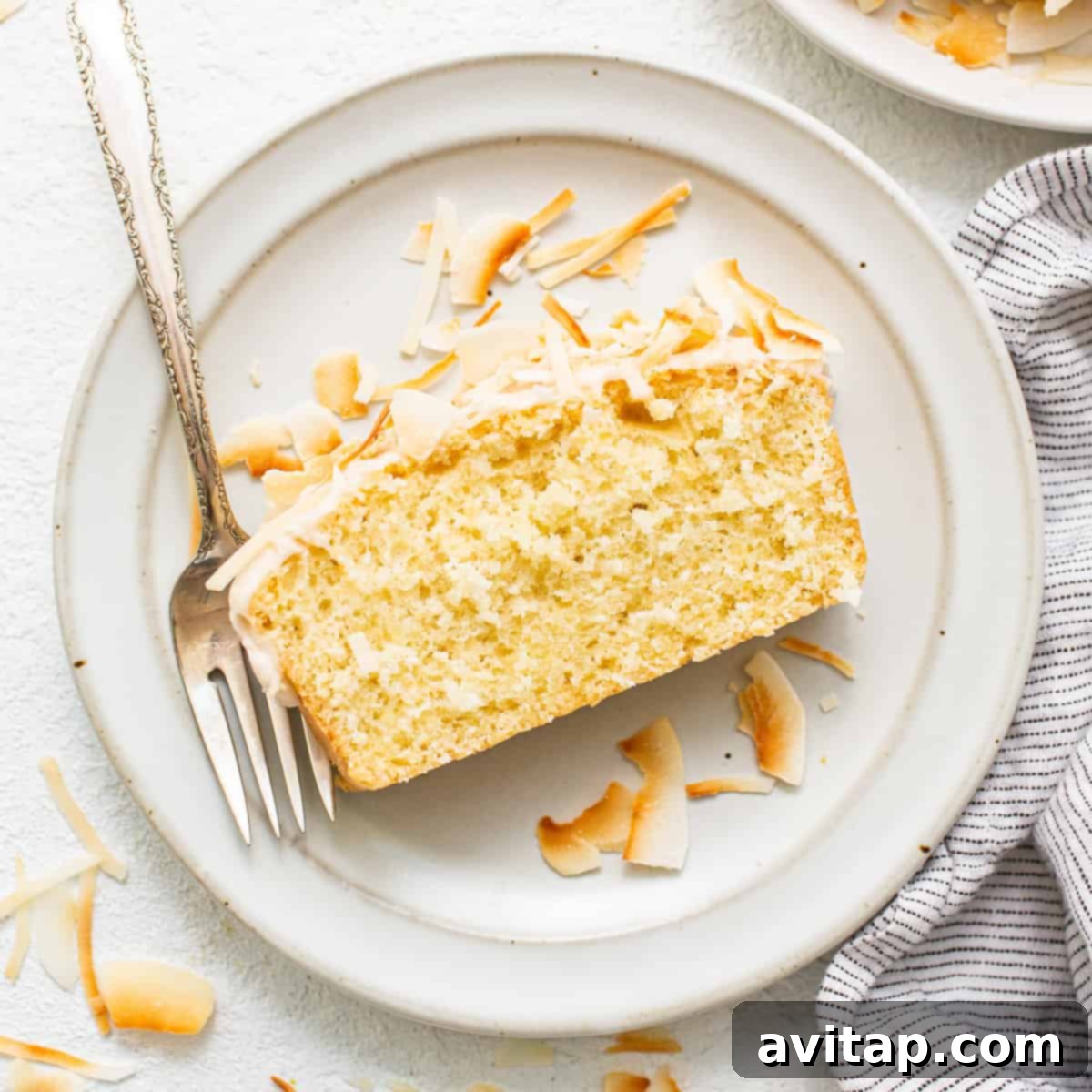
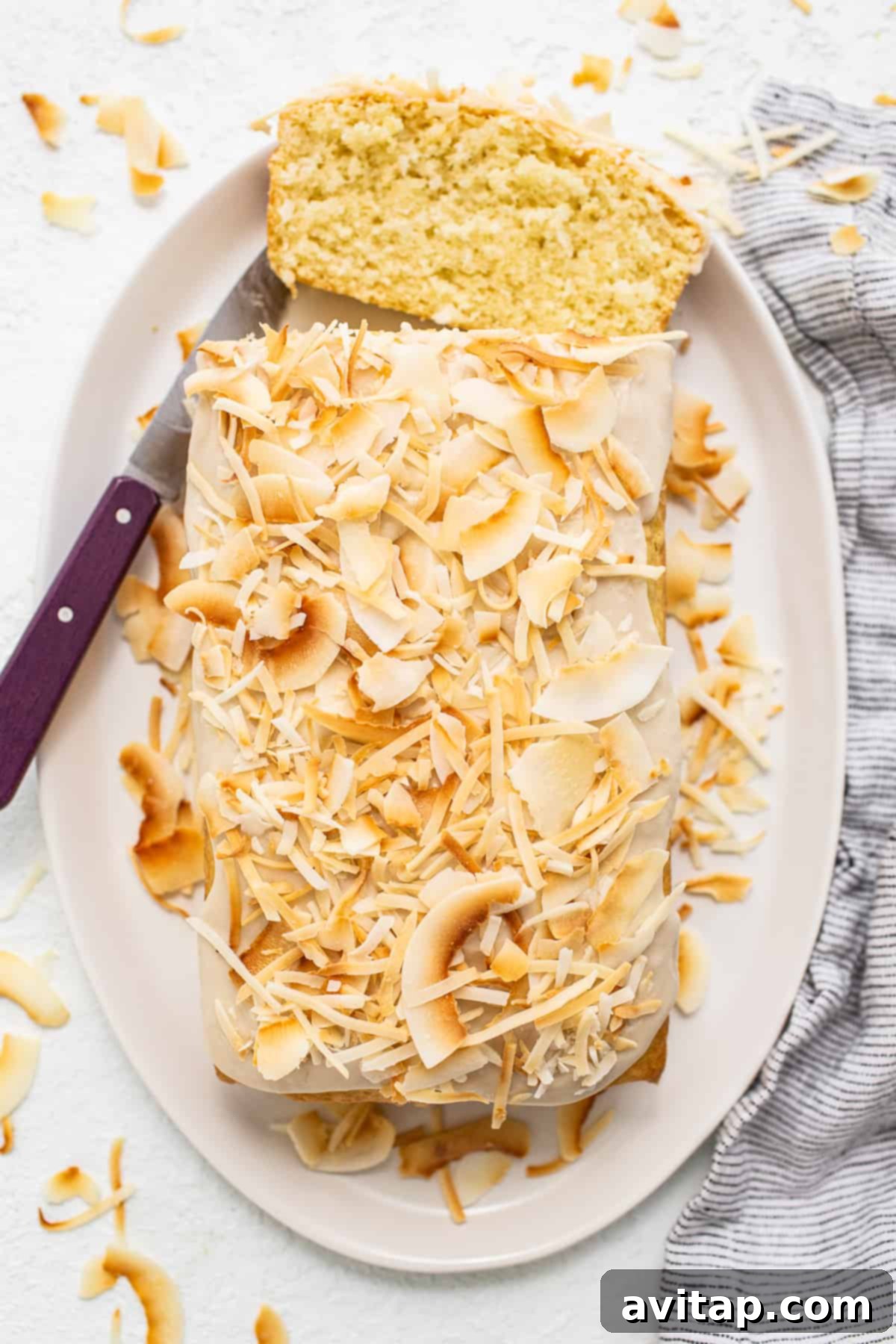
Welcome to the world of truly exceptional baking! This isn’t just any cake; it’s the most amazing coconut loaf cake you’ll ever taste. Imagine a slice of pure delight: incredibly airy, perfectly sweet, wonderfully moist, and bursting with rich coconut flavor. Crowned with a luscious coconut glaze and generously sprinkled with golden toasted coconut pieces, this loaf cake promises a blissful escape to a tropical paradise with every single bite.
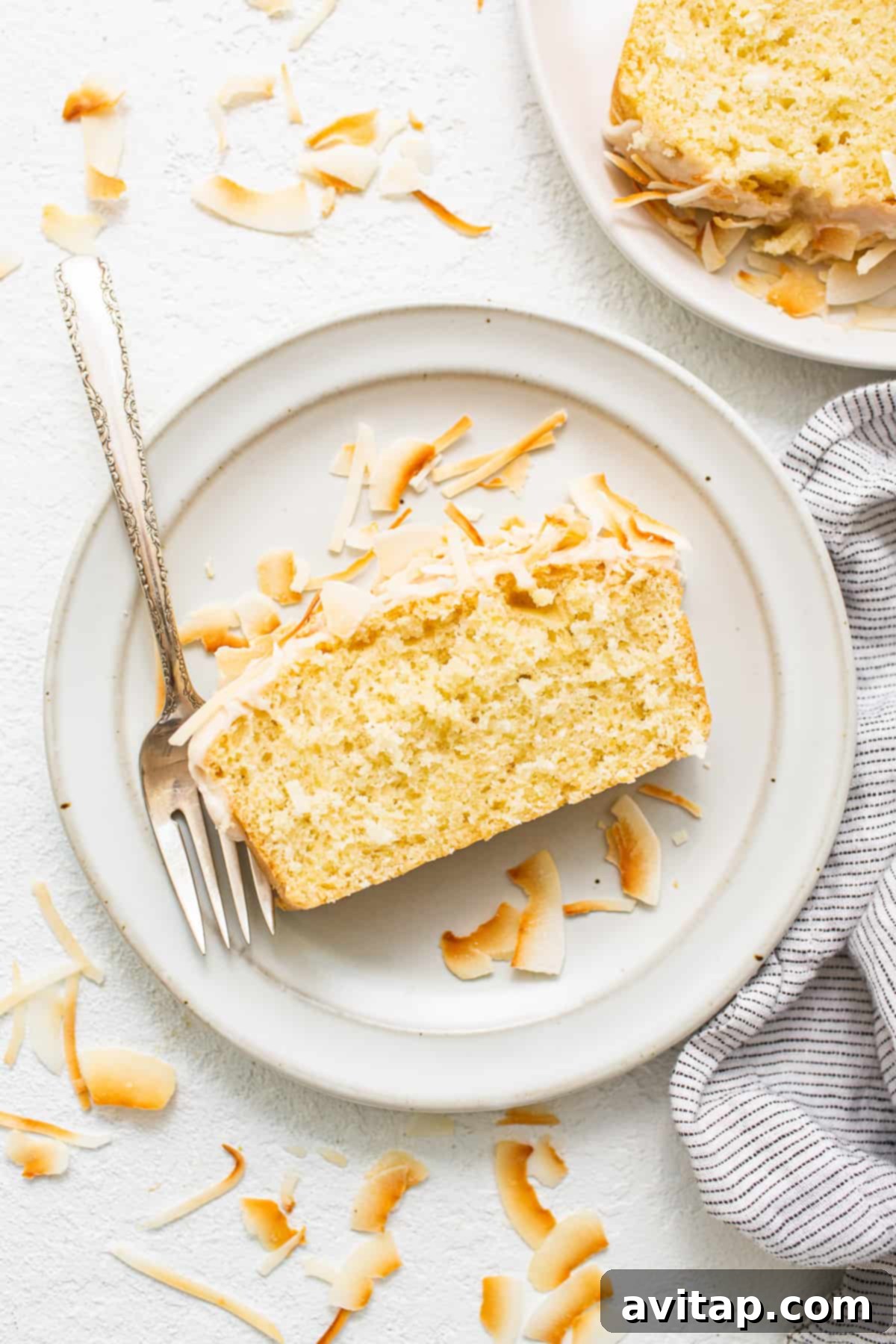
The Ultimate Moist Coconut Loaf Cake Recipe: A Tropical Delight
Prepare to elevate your dessert repertoire with this truly incredible coconut loaf cake. Whether it’s a casual family gathering, a festive holiday celebration, or simply an indulgent afternoon treat, this cake is destined to be the star of your table. Its light, airy texture, coupled with an ideal level of sweetness and an unmistakable coconut essence, makes it an absolute showstopper. It’s more than just a cake; it’s an experience crafted to bring joy with every forkful.
Our journey to perfecting this recipe involved countless tests and refinements by our dedicated head recipe developer, Linley. Her mission was clear: to create a coconut cake that achieves the perfect balance of intense, natural coconut flavor and an irresistibly spongy, moist texture. The result is a loaf cake that we confidently consider our new favorite – a masterpiece of baking that delivers on every promise of rich, tropical goodness.
What truly sets this coconut loaf cake apart is its harmonious combination of a tender, bouncy crumb and a sweet, dreamy frosting. These elements come together seamlessly to create an ultimate dessert that’s both comforting and exquisitely decadent. It’s a testament to how simple, quality ingredients, when combined with careful preparation, can be transformed into something truly extraordinary and memorable.
Why You’ll Fall in Love with This Coconut Loaf Cake
- Unapologetically Coconutty: Every element of this recipe, from the rich cake batter to the luscious glaze and the decorative topping, is generously infused with authentic coconut flavor. We’ve maximized the use of various coconut products to ensure a truly deep, immersive, and tropical taste that coconut lovers will adore.
- Super Moist and Tender: Thanks to carefully selected ingredients like full-fat coconut milk and the unique properties of coconut oil, this loaf cake boasts an exceptionally moist and tender crumb. Each slice practically melts in your mouth, leaving behind a delightful, smooth texture. Say goodbye to dry, crumbly cakes for good!
- The Best of Both Worlds – Loaf and Cake: Enjoy the comforting, easy-to-slice convenience of a classic loaf, combined with the elegant, decadent feel of a celebratory cake. This hybrid dessert is perfectly adaptable for any occasion, offering both simplicity and sophistication without requiring a fancy cake stand or intricate decorating skills.
- Effortlessly Delicious: Despite its impressive taste and beautiful appearance, this coconut loaf cake is surprisingly straightforward to make. Our clear, step-by-step instructions ensure a successful and enjoyable baking experience, even for novice bakers, making it an accessible treat for everyone.
- Visually Appealing Delight: Topped with a glistening, white glaze and beautifully toasted golden-brown coconut flakes, this cake isn’t just a treat for the taste buds; it’s also a feast for the eyes. Its rustic charm and tropical aesthetic make it an ideal centerpiece that will surely garner compliments at any gathering.
The Coconut Powerhouse: Ingredients for Deep Coconut Flavor
The secret to this loaf cake’s spectacular and authentic tropical flavor lies in its thoughtful and generous use of diverse coconut products. We’ve ensured that the exquisite taste of coconut permeates every layer of this dessert, providing a truly immersive experience. Here’s a closer look at the key coconut-centric ingredients that make this cake so incredibly special:
- Full-Fat Coconut Milk: This ingredient is a true game-changer for moisture and flavor. Unlike its lighter counterparts, full-fat coconut milk delivers a robust, creamy coconut flavor and contributes significantly to the cake’s exceptional moistness and rich texture. Remember to give the can a good stir or shake before measuring, as the thick cream often separates and settles at the top.
- Unsweetened Coconut Flakes: These larger, more substantial pieces of coconut are perfect for adding both textural interest and visual appeal to our loaf cake. When lightly toasted, they become wonderfully crunchy and develop a beautiful golden-brown hue, making them an ideal, aromatic garnish that enhances the overall experience.
- Unsweetened Shredded Coconut: Integrated directly into the cake batter, finely shredded coconut infuses the loaf with a subtle yet pervasive coconut essence throughout the crumb. We also utilize it as a part of the delicious topping, providing a delicate textural contrast. Opting for unsweetened varieties ensures you maintain precise control over the overall sweetness level of your finished cake.
- Coconut Oil: Stepping in for traditional butter, coconut oil is not just a healthier alternative; it actively enhances and deepens the inherent coconut flavor profile of the cake. Its unique molecular structure also contributes to the loaf’s exceptionally moist and tender crumb, especially when properly creamed, making it an indispensable component of this tropical-inspired recipe.
By thoughtfully incorporating these various forms of coconut – from the rich milk to the textured flakes and oil – we guarantee a multi-layered depth of flavor that will transport your taste buds straight to a sun-drenched beach with every delightful bite.
Baking Your Perfect Coconut Loaf: A Detailed Guide
Creating this delightful coconut loaf cake is a rewarding and relatively straightforward process. Here’s a comprehensive overview of the steps involved, designed to guide you through making this moist, flavorful, and truly impressive tropical treat:
- Prepare Your Baking Environment: Begin by preheating your oven to 350ºF (175ºC). Next, prepare a standard 9×5 inch loaf pan. Line the pan with parchment paper, allowing an overhang on the longer sides. This will create “handles” that make it incredibly easy to lift the baked cake out of the pan once it’s done.
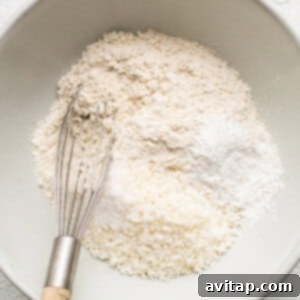
- Combine Dry Ingredients: In a spacious mixing bowl, add all your dry ingredients: the all-purpose flour, unsweetened shredded coconut, baking powder, and kosher salt. Whisk these ingredients together thoroughly for about 30 seconds to ensure they are evenly distributed, eliminating any clumps. Set this bowl aside for later use.

- Cream the Wet Ingredients (Part 1): In a separate large bowl, or the bowl of a stand mixer fitted with the paddle attachment, add the softened coconut oil. Beat the coconut oil on high speed until it achieves a smooth, creamy, and light consistency, usually taking 1-2 minutes. Gradually add the granulated sugar and almond extract to the coconut oil, continuing to beat on high until the mixture becomes wonderfully light, fluffy, and noticeably pale in color. This process incorporates air, which is crucial for the cake’s airy and tender texture.
- Incorporate Coconut Milk: With the mixer running on a low speed, slowly pour in the full-fat unsweetened canned coconut milk. Continue mixing just until all the coconut milk is fully incorporated into the oil and sugar mixture. Be careful not to overmix at this stage; overworking the batter can lead to a denser cake.
- Add Eggs Gradually: Introduce the large eggs one at a time. Mix each egg gently until it is just combined into the batter before adding the next. This ensures proper emulsification and prevents overmixing of the gluten in the flour, which could result in a tough texture.
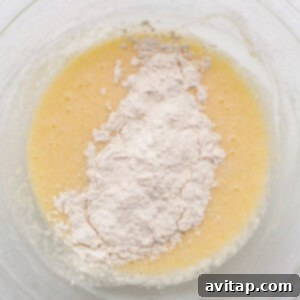
- Fold in Dry Ingredients: Slowly add the reserved dry ingredients to the wet mixture. Mix on the lowest speed possible, just until the dry ingredients are barely moistened and a cohesive batter forms. Use a rubber spatula to scrape down the sides of the mixing bowl several times to ensure all ingredients are thoroughly combined without overworking the batter. Stop mixing as soon as no dry streaks of flour remain.
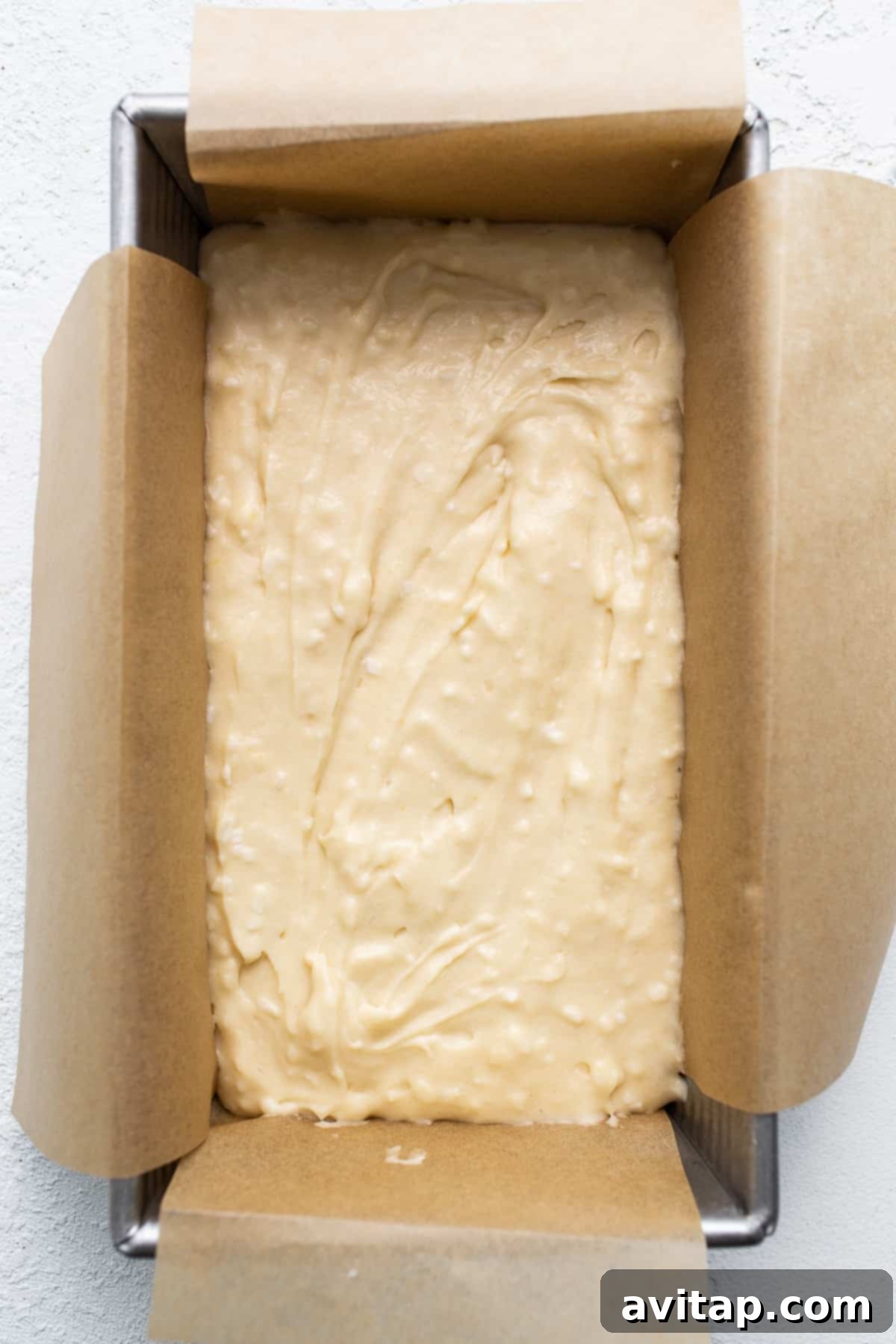
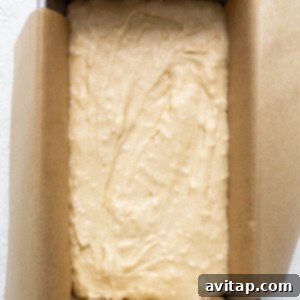
- Transfer and Bake the Loaf: Pour the prepared cake batter evenly into the parchment-lined loaf pan. Gently spread it to level the top. Bake the coconut cake in your preheated oven for an initial 20 minutes. After this time, carefully rotate the loaf pan 180 degrees for even baking, especially if your oven has hot spots. Continue to bake for another 15-25 minutes, or until a wooden toothpick inserted into the very center of the cake comes out clean, with no wet batter clinging to it.
- Cool the Cake: Once baked, remove the cake from the oven and let it rest in the loaf pan for 5-10 minutes. This allows the cake to firm up slightly before handling. Then, gently lift the cake out of the pan by holding the parchment paper overhangs. Transfer the cake to a wire cooling rack and allow it to cool completely before attempting to slice or apply the glaze. This step is crucial for the cake’s structural integrity and ensures the glaze sets properly without melting.
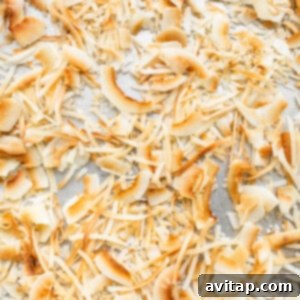
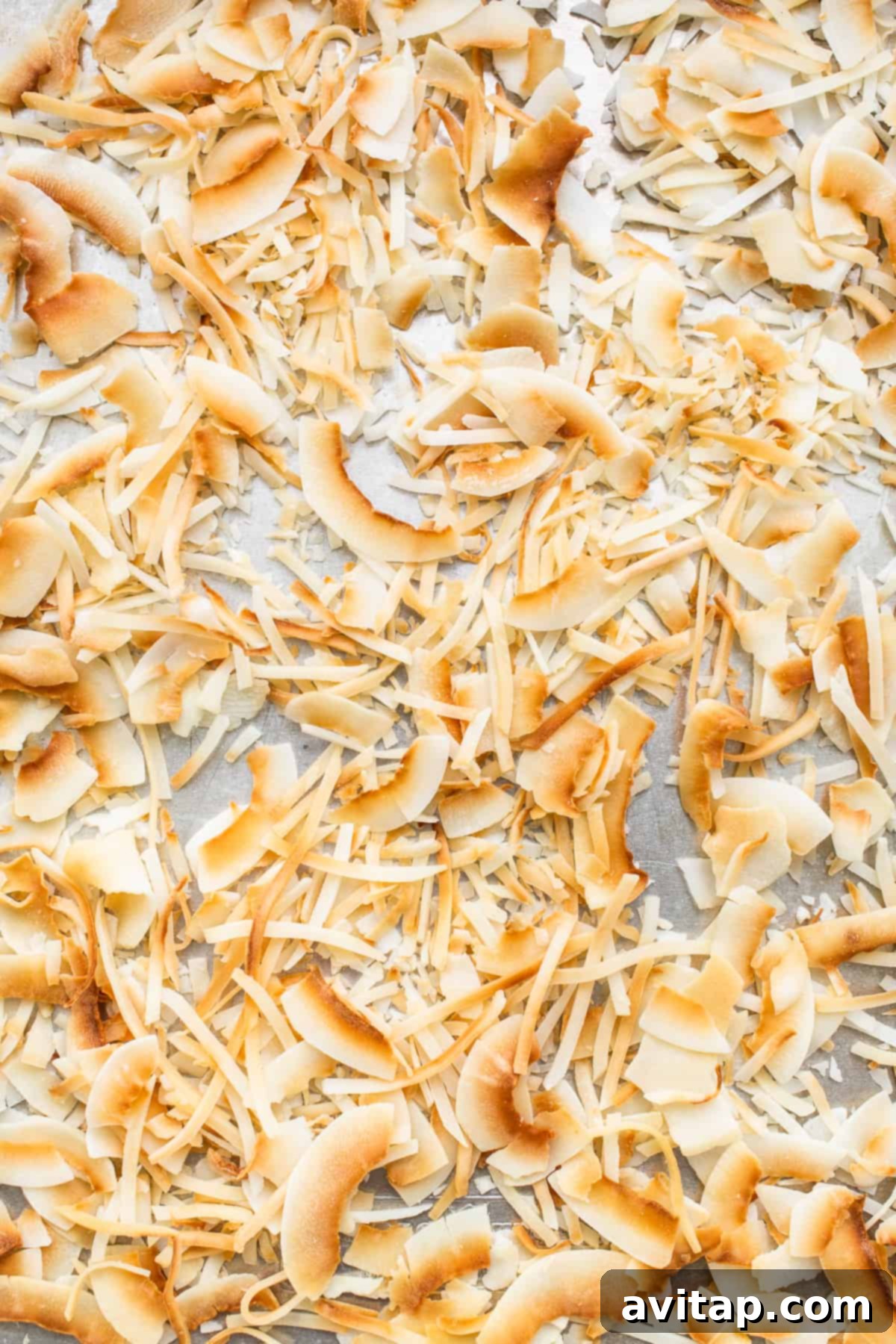
- Prepare Toasted Coconut Topping: While the cake is cooling, prepare your delicious toasted coconut topping. Spread the unsweetened shredded coconut and coconut flakes in a single, even layer on a baking sheet. Broil the coconut on the middle rack of your oven (it’s important not to use the top rack, as coconut burns very quickly!) for 1-3 minutes. **Crucially, watch the coconut continuously and do not walk away**, as it can go from golden to burnt in a matter of seconds. Remove from the oven as soon as it turns a beautiful, fragrant golden brown color. Set aside to cool completely.
- Mix the Coconut Glaze: For the irresistible glaze, in a small mixing bowl, whisk together the unsweetened canned coconut milk and almond extract. Gradually add the powdered sugar, one tablespoon at a time, whisking continuously until you reach a smooth, pourable, yet thick consistency, and the sugar is completely dissolved. If the glaze appears too thin, add a little more powdered sugar; if it’s too thick, add a tiny bit more coconut milk, a quarter teaspoon at a time, until the desired consistency is achieved.
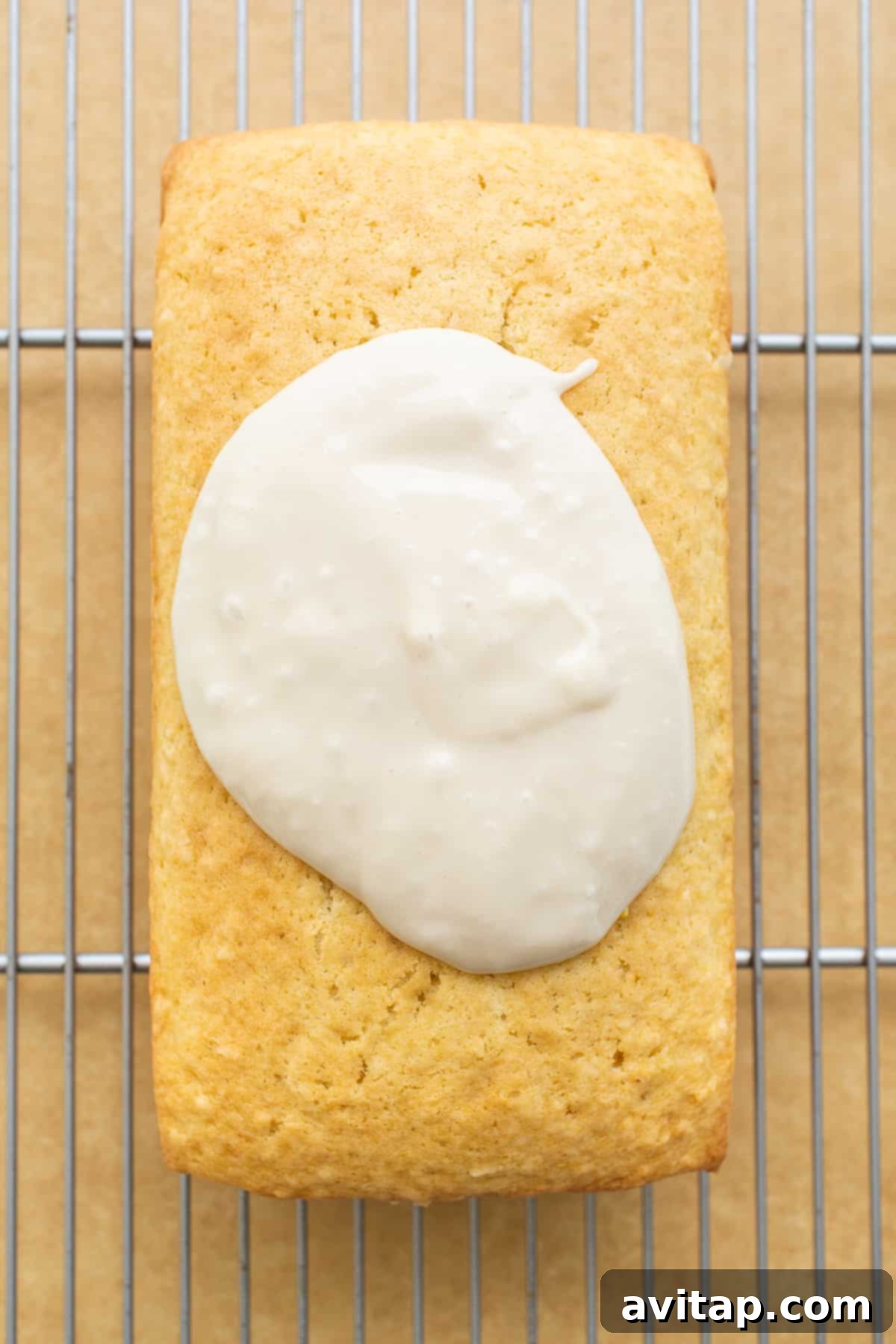
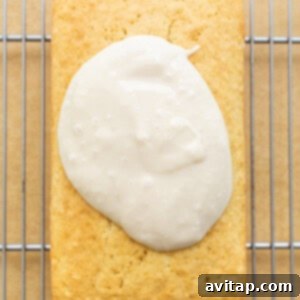
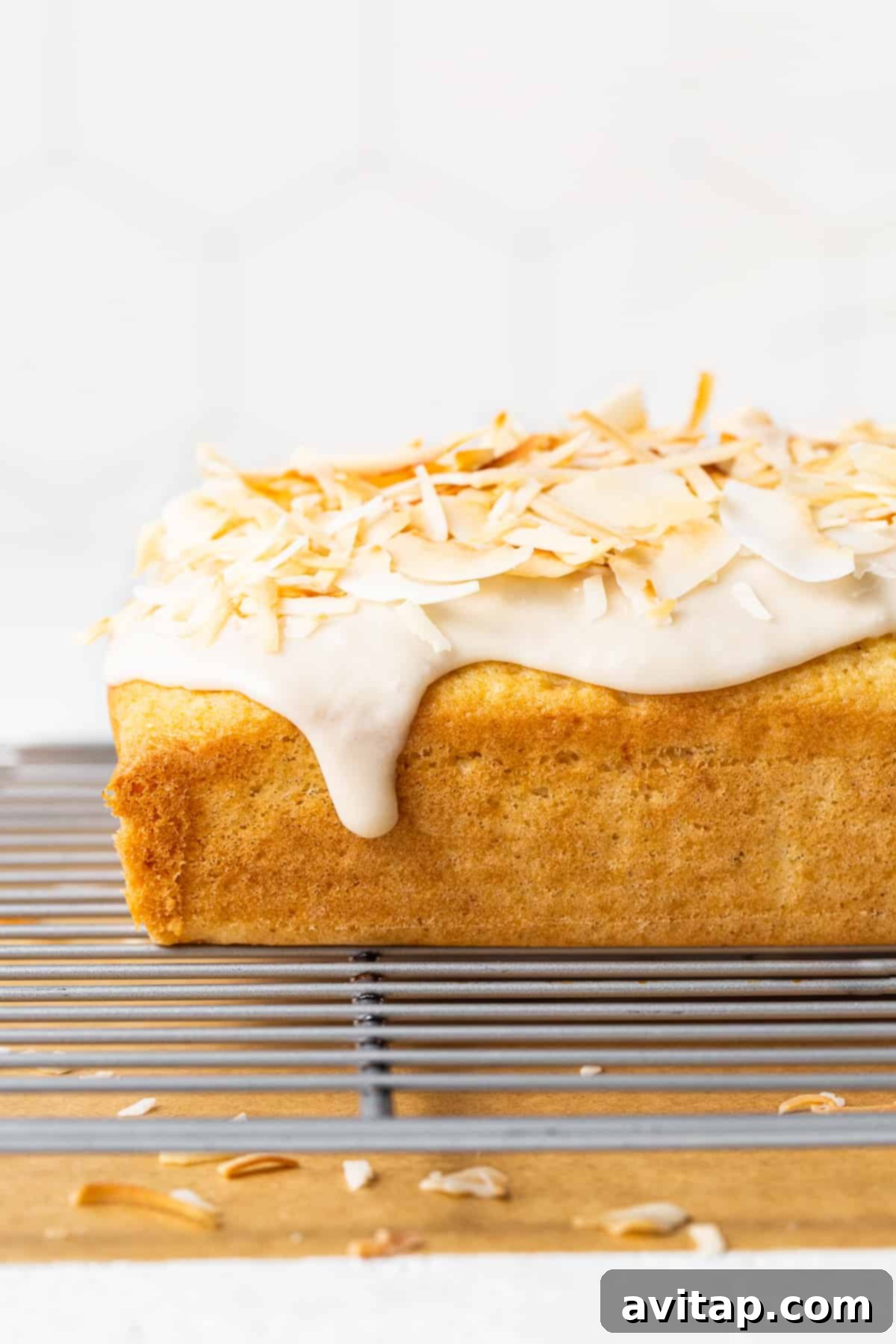
- Glaze the Cooled Loaf Cake: To glaze the completely cooled coconut loaf cake, place the wire cooling rack over a baking sheet or a piece of parchment paper (this will neatly catch any drips). Carefully pour the prepared glaze evenly over the top of the loaf cake, allowing some of it to elegantly drizzle down the sides for a rustic, appetizing look.
- Add Toasted Coconut and Set: Immediately after glazing, gently press the cooled toasted coconut (both shredded and flakes) onto the top of the glazed loaf. This creates a beautiful presentation and adds wonderful texture and aroma. For the glaze to set properly and firm up, transfer the loaf (still on its rack over the baking sheet) to the refrigerator for about 15-30 minutes.
- Serve and Enjoy: Once the glaze is set, remove the loaf cake from the refrigerator. Carefully transfer it to a cutting board. Slice into thick, generous pieces and serve this delightful tropical treat to your eager guests, or simply enjoy it yourself with a cup of coffee or tea!
Explore More Delicious Desserts
If you loved this coconut loaf cake, you might enjoy some of our other delightful dessert recipes. Click the links below to discover your next sweet treat!
Brown Butter Chai Rice Krispie Treats
Pumpkin Tiramisu (High-Protein Fall Dessert!)
Pumpkin Spice Protein Puppy Chow
Peanut Butter Chocolate Chip Protein Cinnamon Rolls (Small Batch)
Easy Homemade Cottage Cheese Donuts
View All Desserts
Crafting the Irresistible Coconut Glaze
No truly amazing cake is complete without its crowning glory: the frosting. Our coconut glaze is not just any topping; it’s a perfectly sweet, creamy, and delightful addition that beautifully complements the rich, tropical flavor of the loaf cake. It provides that extra layer of indulgence, a beautiful sheen, and acts as the perfect adhesive for our crunchy toasted coconut topping.
What You Need for the Glaze
Gathering these simple ingredients will help you create a smooth, flavorful, and perfectly pourable glaze:
- Shredded Coconut: While optional, a tiny bit of finely shredded coconut can be incorporated into the glaze itself for an extra textural hint of coconut.
- Coconut Flakes: These are primarily used for toasting and sprinkling on top of the finished glaze, adding a lovely crunch, visual appeal, and intensified flavor.
- Canned Coconut Milk: This forms the creamy base of our glaze, imparting a rich, authentic coconut flavor. For best results, use full-fat coconut milk and ensure it’s well-stirred before measuring.
- Almond Extract: This is our little secret ingredient! A subtle hint of almond extract beautifully enhances the coconut flavor, adding a sophisticated depth and aromatic complexity to the glaze that truly elevates the overall taste profile.
- Powdered Sugar: The essential ingredient for achieving the perfect sweet consistency and a silky-smooth texture for the glaze. It dissolves easily, creating a lump-free finish.
While we adore the nuanced hint of almond from the extract, as its delicate flavor pairs wonderfully with coconut, we understand personal preferences vary. If almond isn’t to your taste, or if you prefer a more straightforward flavor, feel free to substitute it with an equal amount of pure vanilla extract for a more classic approach. Both options will result in a truly delicious glaze that takes this coconut loaf cake to the next level of homemade perfection.
Storage Tips for Your Coconut Loaf Cake
To keep your delicious coconut loaf cake as fresh and enjoyable as possible, proper storage is absolutely key. Here are our best recommendations to ensure your tropical treat stays delightful:
Once your coconut loaf cake is baked, cooled, and glazed, store it in an airtight container at room temperature. Choose a cool, dark place in your kitchen, away from direct sunlight or heat sources. Under these conditions, the cake will remain fresh and delicious for up to 3 days. If you live in a particularly warm or humid climate, or if your kitchen tends to be on the warmer side, you might consider refrigerating the cake. This will help to prolong its freshness and prevent the glaze from becoming too soft or sticky. Always ensure it’s in an airtight container to protect it from drying out and absorbing other refrigerator odors.
Can I Freeze This Coconut Loaf?
Absolutely! Freezing is an excellent way to preserve your coconut loaf cake for longer enjoyment, allowing you to savor a taste of the tropics whenever a craving strikes. We highly recommend freezing the cake *before* applying the glaze. Here’s how to do it effectively to maintain its perfect texture and flavor:
- Cool Completely: First and foremost, ensure the baked cake is completely cool to the touch. Any residual warmth can create condensation inside the wrapping, leading to soggy spots and ice crystals when thawed, compromising the cake’s texture.
- Wrap Tightly: Once fully cooled, tightly wrap the loaf in a layer of plastic wrap. Make sure to cover all surfaces, pressing the wrap firmly against the cake to eliminate as much air as possible. This initial layer is crucial for protecting it from freezer burn.
- Double-Wrap for Protection: Follow the plastic wrap with a layer of heavy-duty aluminum foil, wrapping it securely around the entire loaf. This double-layer protection is essential for maintaining freshness, preventing freezer odors from permeating the cake, and adding an extra barrier against moisture loss.
- Label and Freeze: Label the wrapped loaf with the date it was frozen, then transfer it to the freezer. It can be safely stored for up to 3 months.
- Thawing Instructions: When you’re ready to enjoy your frozen coconut loaf, simply remove it from the freezer and let it thaw at room temperature, still wrapped, for several hours or overnight. Once completely thawed, you can then proceed to prepare and apply the fresh coconut glaze and toasted coconut topping, making it feel freshly baked all over again.
More of our Favorite…
Cake Recipes
If you’re looking for more delicious baking inspiration, explore some of our other beloved cake recipes:
- Delightful Apple Cake with Cream Cheese Frosting
- Lightened Carrot Cake: A Healthier Twist on a Classic
- Easy Pumpkin Sheet Cake Recipe for Warm Fall Flavors
- Quick Single-Serve Banana Mug Cake for Instant Craving Fixes
Coconut Loaf Cake – Full Recipe
This moist coconut loaf cake is perfect for any gathering or holiday. It has a delightful coconutty flavor and the perfect amount of sweetness, making it an irresistible treat.
By: Lee Funke
Prep Time: 30 mins
Cook Time: 45 mins
Total Time: 1 hr 15 mins
Servings: 9
Ingredients
Dry Ingredients
- 1.5 cups all-purpose flour (recommended product)
- 1/3 cup unsweetened shredded coconut (recommended product)
- 2 teaspoons baking powder (recommended product)
- ½ teaspoon kosher salt (recommended product)
Wet Ingredients
- 1/3 cup coconut oil (recommended product)
- ¾ cup granulated sugar (recommended product)
- 1 teaspoon almond extract (recommended product)
- 3/4 cup unsweetened canned coconut milk, stirred (recommended product)
- 2 large eggs, room temperature
Glaze Ingredients
- 1/3 cup unsweetened shredded coconut (recommended product)
- 1/3 cup unsweetened coconut flakes (we used Bob’s Red Mill) (recommended product)
- 1/3 cup unsweetened canned coconut milk (recommended product)
- 1/2 teaspoon almond extract (recommended product)
- 1/3 cup powdered sugar (recommended product)
Detailed Instructions
- Preheat your oven to 350ºF (175ºC). Line a 9×5 inch loaf pan with parchment paper, leaving an overhang on the longer sides to easily lift the cake out later.
- Add all of the dry ingredients to a large bowl: all-purpose flour, unsweetened shredded coconut, baking powder, and kosher salt. Whisk the ingredients together thoroughly until well combined. Set aside.
- Next, add the softened coconut oil to a large bowl or the bowl of a stand mixer. Beat it with an electric mixer or standing mixer on high speed until the coconut oil is smooth and creamy. Then, add the granulated sugar and almond extract and whip until the mixture is light and fluffy, about 2-3 minutes.
- Slowly pour the unsweetened canned coconut milk into the coconut oil and sugar mixture while mixing on low speed. Continue mixing just until combined.
- Add the large eggs one at a time, mixing only until each egg is just combined into the mixture before adding the next.
- Slowly add the whisked dry ingredients to the wet ingredients on low speed. Mix just until combined, scraping the sides of the mixing bowl a few times with a spatula to ensure all ingredients are incorporated without overworking the batter.
- Transfer the cake batter to the parchment-lined loaf pan. Spread it evenly. Bake the coconut cake in the preheated oven for 20 minutes. After 20 minutes, turn the loaf pan 180 degrees, and bake the cake for another 15-25 minutes, or until a toothpick inserted into the center comes out clean.
- Remove the cake from the oven and let it sit in the pan for 5-10 minutes. Gently lift the cake out of the pan by lifting the edges of the parchment paper. Place the cake on a wire cooling rack. Let the cake cool completely before slicing and glazing.
- Prepare the toasted coconut and glaze while the cake is cooling. Spread the unsweetened shredded coconut and coconut flakes out on a baking sheet in a single layer. Broil the coconut on the middle rack (not the top rack!) of the oven for 1-3 minutes. Be sure to watch the coconut very closely while broiling, as it can burn quickly. Remove the coconut from the oven when it begins to turn a beautiful golden brown color. Set aside to cool.
- For the glaze, add the unsweetened canned coconut milk to a bowl and whisk in the almond extract. Slowly add the powdered sugar, one tablespoon at a time, whisking continuously until it reaches a thicker, pourable consistency and the sugar is completely dissolved.
- To glaze the cooled coconut loaf cake, transfer the coconut loaf and cooling rack to a baking sheet (to catch drips). Carefully pour the glaze evenly over the top of the loaf cake. The glaze should mostly remain on the top of the loaf, but it’s perfectly fine if some glaze elegantly drizzles over onto the sides.
- Press the cooled toasted coconut (shredded and flakes) onto the top of the glazed loaf. Transfer the loaf (still on the rack) to the refrigerator for 15-30 minutes to allow the glaze to set.
- Once the glaze is set, remove the loaf cake from the refrigerator. Slice into generous pieces and serve this delightful tropical treat.
Baking Tips & Notes for Success
- Measuring Flour Accurately: For the most consistent baking results, we highly recommend using the “spoon and level” method for measuring flour. Spoon the flour into your measuring cup until it’s overflowing, then level it off with the flat side of a knife. This prevents compacting the flour, which can lead to a denser, heavier cake.
- Glaze Richness: We used the liquid portion of the full-fat coconut milk for our glaze. If you desire an even richer, thicker, and more decadent glaze, consider using the coconut cream (the thick, solid part that separates at the top of a chilled can of full-fat coconut milk) instead of the more liquid milk.
- Coconut Topping Variety: Our recipe uses a lovely mixture of both unsweetened shredded coconut and larger coconut flakes for the topping. This combination provides a varied texture and enhanced visual appeal. However, feel free to use just one type of unsweetened coconut if that’s your preference, ensuring it’s unsweetened to control the overall sugar levels.
- Room Temperature Eggs: Using room temperature eggs helps them incorporate more smoothly and evenly into the batter, leading to a lighter, more uniform cake texture. If you forget to take them out in advance, you can quickly bring them to room temperature by placing them in a bowl of warm (not hot) water for 5-10 minutes.
- Don’t Overmix: This is a crucial tip for most cakes! Overmixing the batter can overdevelop the gluten in the flour, resulting in a tough or rubbery cake rather than a tender one. Mix only until the ingredients are just combined and no dry streaks of flour remain.
Nutrition Information
(Approximate values per serving, based on 9 servings)
- Calories: 324 kcal
- Carbohydrates: 41 g
- Protein: 5 g
- Fat: 17 g
- Fiber: 2 g
- Sugar: 23 g
Note: Nutrition information is automatically calculated and should only be used as an approximation. Actual values may vary based on specific ingredients, portion sizes, and preparation methods.
We hope you thoroughly enjoy baking and savoring this magnificent coconut loaf cake. It’s truly a labor of love that brings tropical sunshine to any moment, perfect for sharing or indulging by yourself!
Don’t forget to tag your posts on social media with the hashtag #fitfoodiefinds – we’d absolutely love to see your delicious creations and how you bring this recipe to life!
Photography Credit: All beautiful photos featured in this post were skillfully taken by Ashley McGlaughlin from The Edible Perspective.