
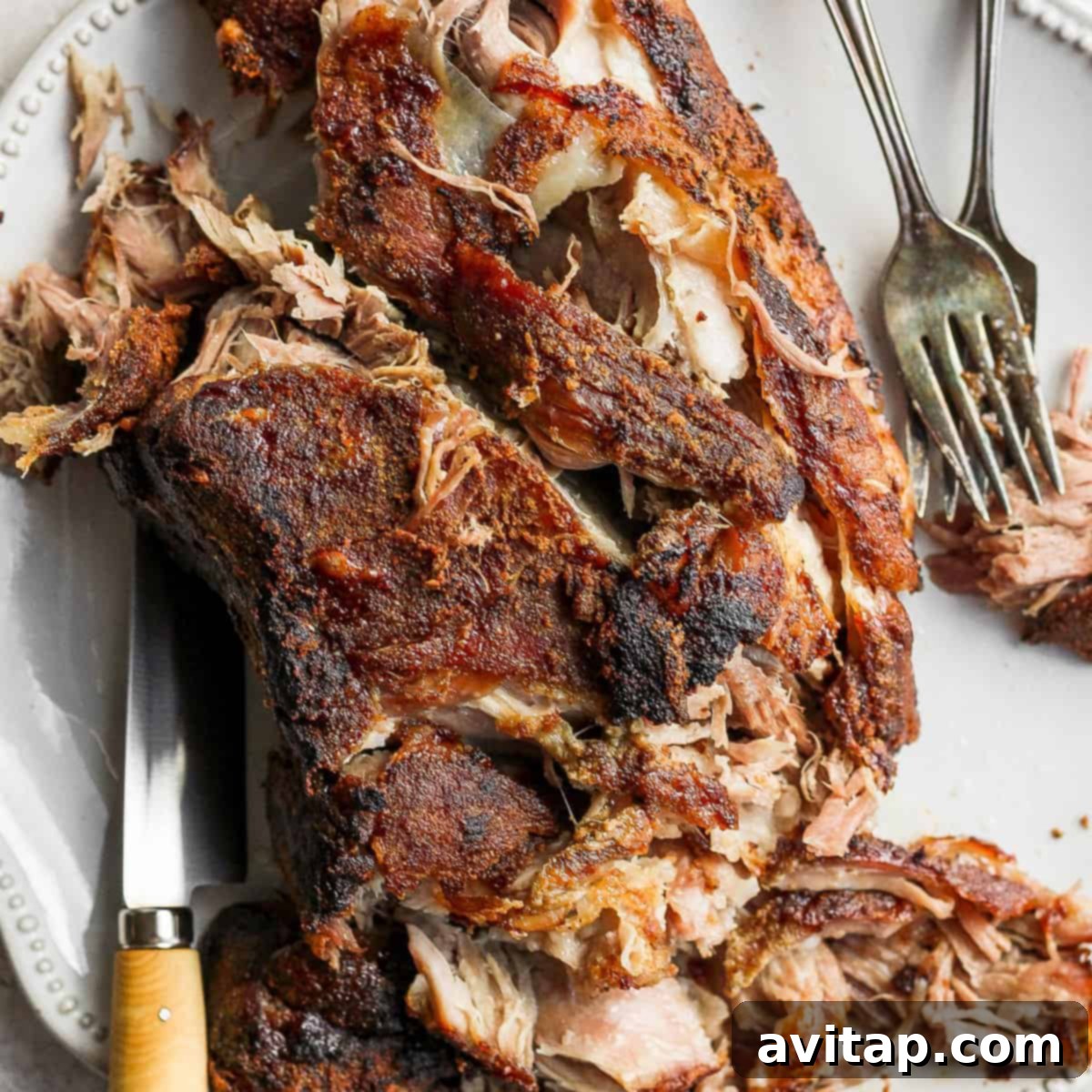
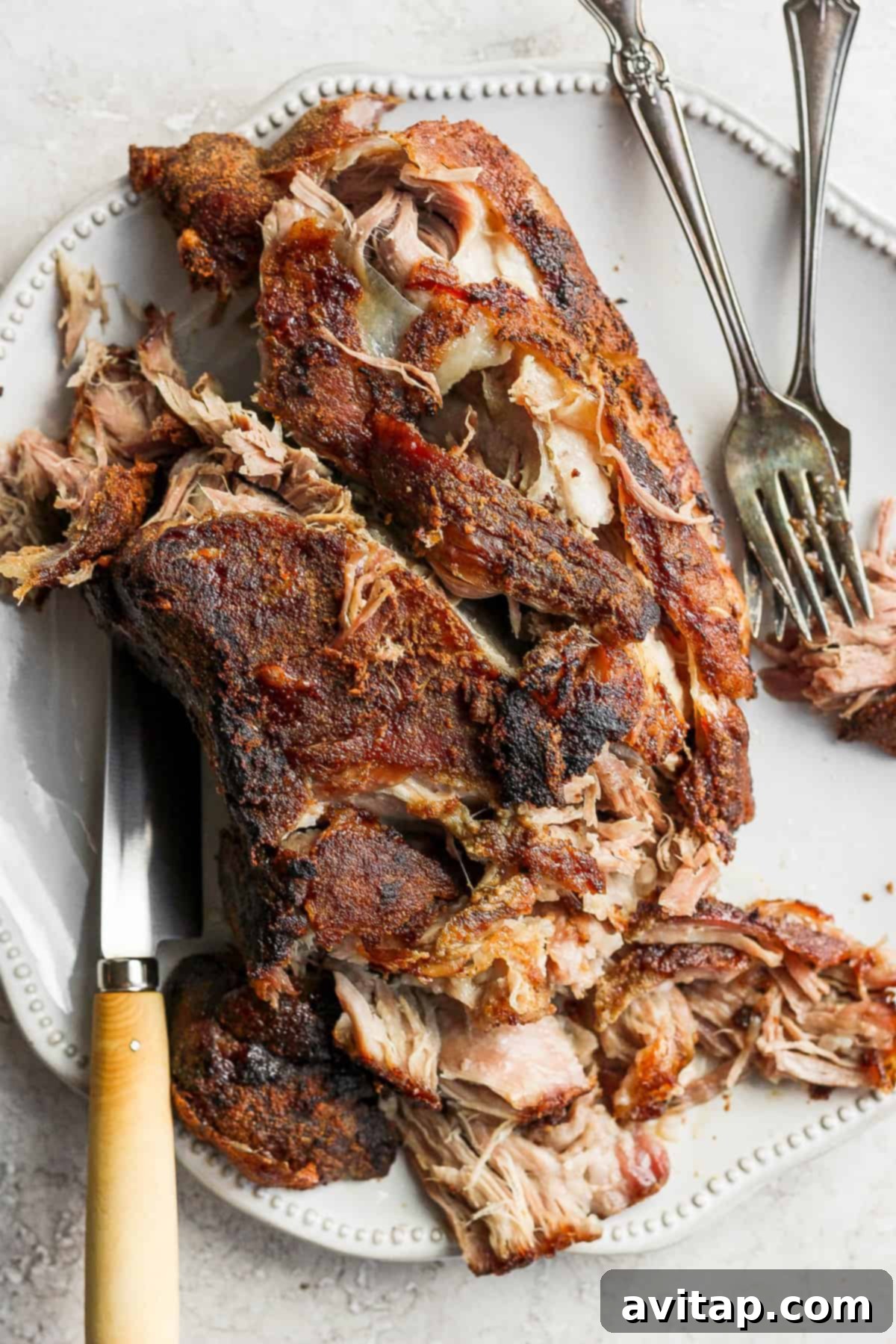
There’s nothing quite like the comforting aroma and incredible flavor of a perfectly cooked pork shoulder. This slow-roasted pork shoulder recipe is a true culinary triumph, promising a succulent, tender interior paired with an irresistibly crispy, crunchy crust. It’s a dish that masterfully blends sweet and savory notes, delivering a depth of flavor that tastes like it’s been smoked for hours, without needing an actual smoker! Ideal for feeding a crowd during holidays or gatherings, this robust roast ensures you’ll have delicious leftovers for days, making meal prep a breeze.
The secret to any truly exceptional pork shoulder lies in the “low and slow” cooking method. This technique transforms an often-overlooked cut of meat into a fork-tender masterpiece, allowing the flavors to meld beautifully and the collagen to break down into gelatin, resulting in that melt-in-your-mouth texture. Get ready to discover one of the best pork shoulder recipes you’ll ever encounter.
Featured Comment
“This was so delicious! Crispy on the outside and juicy on the inside. Absolutely simple way to turn an inexpensive cut of meat into a feast. I will make this again gladly. I loved how easy the prep was. I was able to leave it in the oven and go about my day. Worried that it might come out dry but it was absolutely perfect.” -Niki
The essence of this recipe is a simple yet effective process: the pork shoulder cooks slowly over many hours, developing an unbelievably beautiful, crunchy exterior while the inside becomes incredibly tender and flavorful. This method delivers a smoky depth that closely rivals a true smoked pork shoulder, all achieved right in your oven without the need for specialized smoking equipment.
Why Slow Roast Pork Shoulder? The Magic of Low and Slow
Slow roasting pork shoulder isn’t just a cooking method; it’s a culinary philosophy that unlocks unparalleled flavor and texture. This technique is particularly forgiving, making it perfect for both novice and experienced cooks. By cooking the pork at a low temperature for an extended period, several magical transformations occur:
- Incredible Tenderness: Pork shoulder is a tougher cut of meat, rich in collagen. Low and slow cooking allows this collagen to gradually break down into gelatin, resulting in exceptionally tender meat that practically falls apart.
- Maximum Flavor Development: The long cooking time allows the dry rub to deeply penetrate the meat, infusing it with complex flavors. The slow render of fat also self-bastes the roast, keeping it moist and adding richness.
- Crispy, Golden Crust: A key highlight of this recipe is the initial sear combined with the extended roasting. This combination creates a fantastic crust that’s both flavorful and texturally appealing, offering a delightful contrast to the soft interior.
- Perfect for Entertaining: A large pork shoulder roast is ideal for feeding a crowd. Its hands-off cooking nature means you can prepare it and then enjoy your guests without constantly checking on the oven. Plus, leftovers are abundant and versatile!
- “Smoky” Flavor Without a Smoker: Our special dry rub, particularly with the inclusion of smoked paprika, imparts a wonderfully smoky essence, mimicking the taste of a smoker without needing one.
Essential Ingredients for Your Perfect Pork Shoulder
Crafting this delicious slow-roasted pork shoulder requires just a few key ingredients. Each component plays a crucial role in achieving the desired flavor and texture:
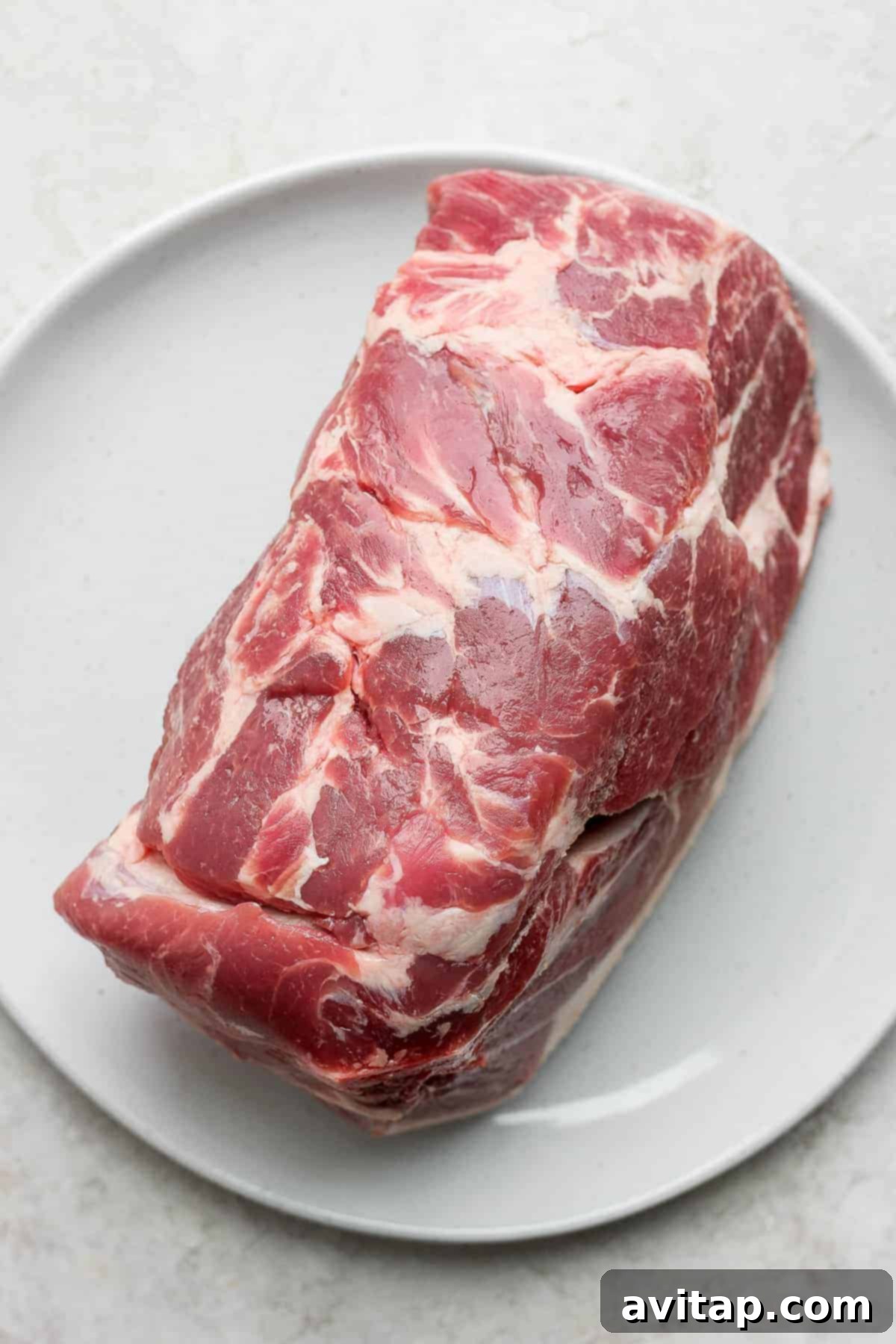
- 3-4 lb. Boneless Pork Shoulder Roast: The star of our show. It’s vital to select a boneless pork shoulder roast, typically weighing between 3 to 4 pounds. This cut, also known as a Boston butt or picnic roast, boasts an ideal fat content that renders beautifully during slow cooking, preventing dryness and contributing to its rich flavor. You’ll often find excellent quality cuts at your local butcher or in the pre-packaged meat section of most grocery stores.
- Butter: Used for searing, butter contributes a rich, nutty flavor that enhances the pork’s crust. It helps create a beautiful golden-brown exterior. If you need a dairy-free alternative, olive oil or avocado oil work perfectly well, providing similar searing benefits.
- Pork Dry Rub: This homemade spice blend is the heart of our flavor profile. It’s a carefully balanced mix that’s garlicky, subtly smoky, and perfectly sweet, designed to create that irresistible crust and permeate the meat with deliciousness. The core spices include:
- Garlic Powder: Provides a foundational savory aroma.
- Brown Sugar: Adds a touch of sweetness that caramelizes beautifully during roasting, contributing to the crispy crust and balancing the savory notes.
- Kosher Salt: Essential for seasoning and drawing out moisture from the surface to aid in crisping.
- Ground Pepper: Adds a classic, mild spice and aromatic depth.
- Smoked Paprika: This is the secret ingredient that imparts that fantastic smoky flavor without needing a smoker.
Elevate the Smoky Flavor: If you desire an even more pronounced smoky note, consider increasing the amount of smoked paprika in your dry rub. This simple adjustment can significantly deepen the overall profile.
Add a Spicy Kick: For those who enjoy a bit of heat, a dash of cayenne powder (start with 1/8 teaspoon and adjust to taste) can transform this roasted pork shoulder into a delightfully spicier dish.
What is Pork Shoulder? Demystifying the Cut
A pork shoulder roast, as its name suggests, originates from the shoulder of a pig. It’s a fantastic cut for slow cooking due to its generous marbling and higher fat content compared to leaner cuts like pork loin. This fat renders down over hours, keeping the meat incredibly moist and adding immense flavor. For this specific recipe, we recommend a 3-4 lb. boneless pork shoulder roast for optimal cooking time and serving size.
Other common names for pork shoulder you might encounter at the butcher shop include:
- Picnic shoulder
- Picnic roast
- Pork shoulder roast
- Boston butt (which, confusingly, comes from the upper part of the shoulder, not the rear of the pig!)

Cuts of Pork
Not sure where all the different cuts of pork come from on the pig? We made it easy. Check out more details on everything pork in our favorite pork recipes round up!
How to Cook a Pork Shoulder Roast to Perfection
While pork shoulder can be cooked in various ways—from the Instant Pot to a slow cooker or smoker—today, we’re focusing on the classic, deeply satisfying oven slow-roasting method. This technique consistently yields the best balance of tender meat and a glorious crispy crust. Follow these steps for an unforgettable pork roast:
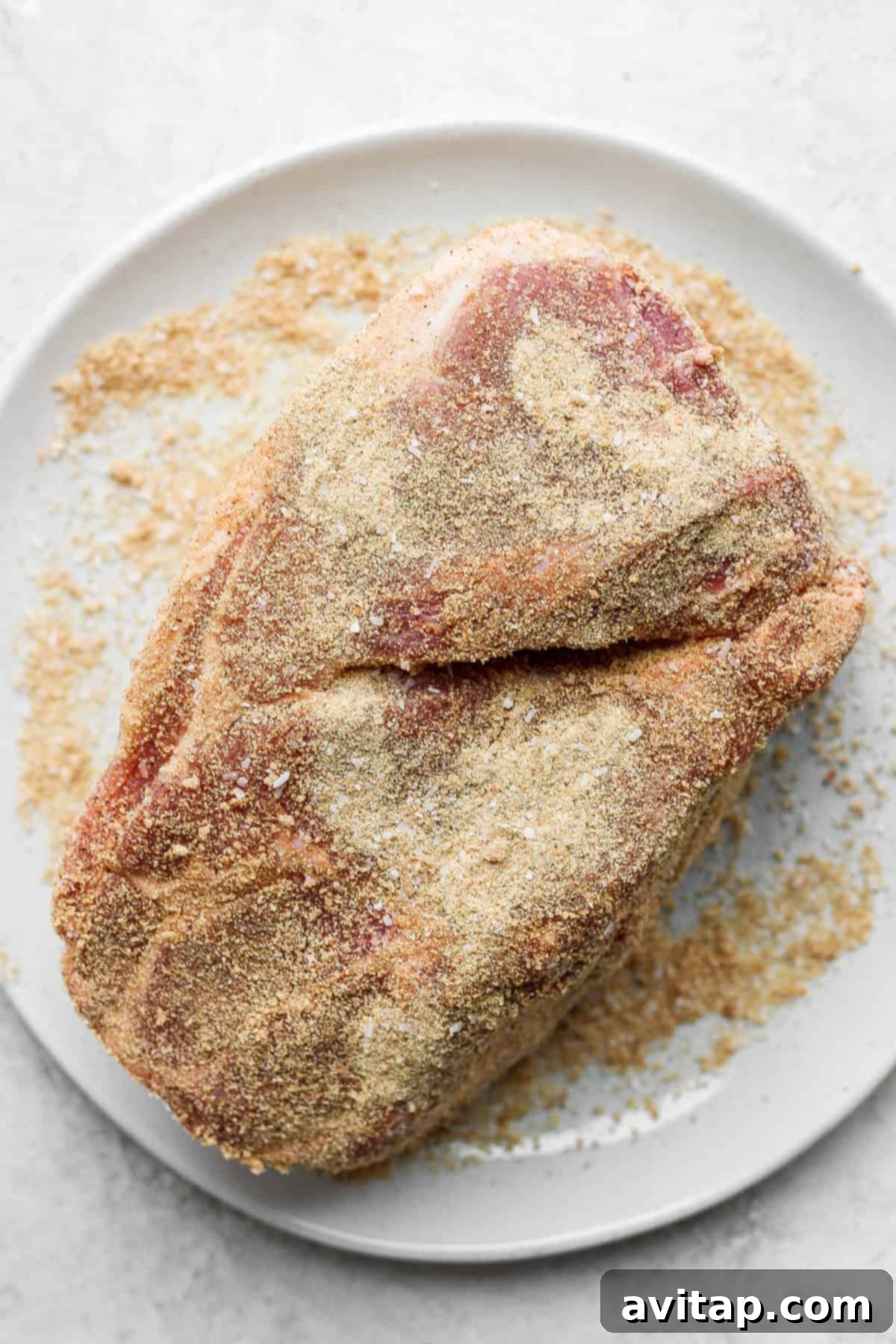
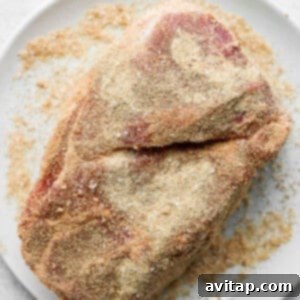
- Prepare the Dry Rub: Begin by combining all the spices for your dry rub in a small bowl: garlic powder, brown sugar, kosher salt, ground pepper, and smoked paprika. Mix them thoroughly to ensure an even distribution of flavors. Once mixed, generously sprinkle the dry rub over every surface of the pork shoulder roast, making sure to massage it into all cracks and crevices. Don’t be shy – a good coating is key to the crust and flavor.
- Achieve the Perfect Sear: Heat butter (or olive oil, if preferred) in a large, heavy-bottomed skillet, ideally cast iron, over medium-high heat until it’s melted, shimmering, and fragrant. Carefully place the seasoned pork shoulder into the hot skillet and sear each side for 2-3 minutes. The goal here is to develop a rich, golden-brown crust, which is crucial for building flavor through the Maillard reaction. This initial sear locks in juices and creates a foundation for that coveted crispy exterior.
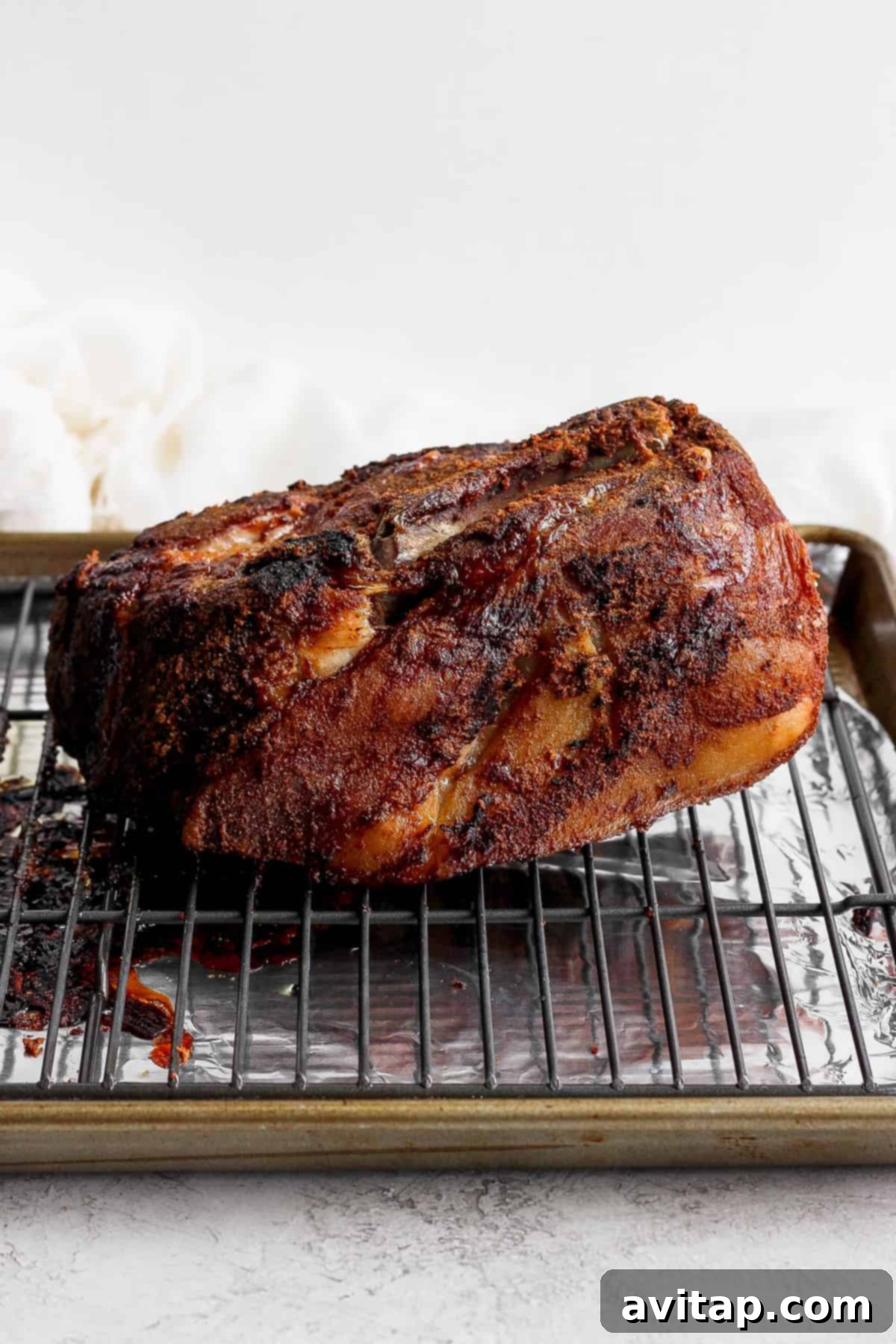
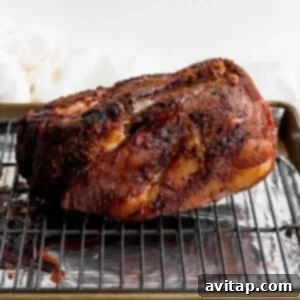
- The “Low and Slow” Roasting Phase: Prepare your roasting setup by lining a sturdy baking sheet or roasting pan with aluminum foil for easy cleanup. Place a wire rack directly on top of the foil. Transfer the beautifully seared pork shoulder roast onto the wire rack. This rack is essential as it allows air to circulate around the entire roast, ensuring all sides develop a crisp crust and allowing excess fat to drip away. Bake at a low temperature of 250ºF for 7-8 hours. The exact cooking time will vary depending on the size and shape of your roast, so the most important indicator is the internal temperature. Continue cooking until the internal temperature reaches 200ºF. This higher temperature, beyond the safe minimum, is what guarantees the meat is tender enough to shred effortlessly.
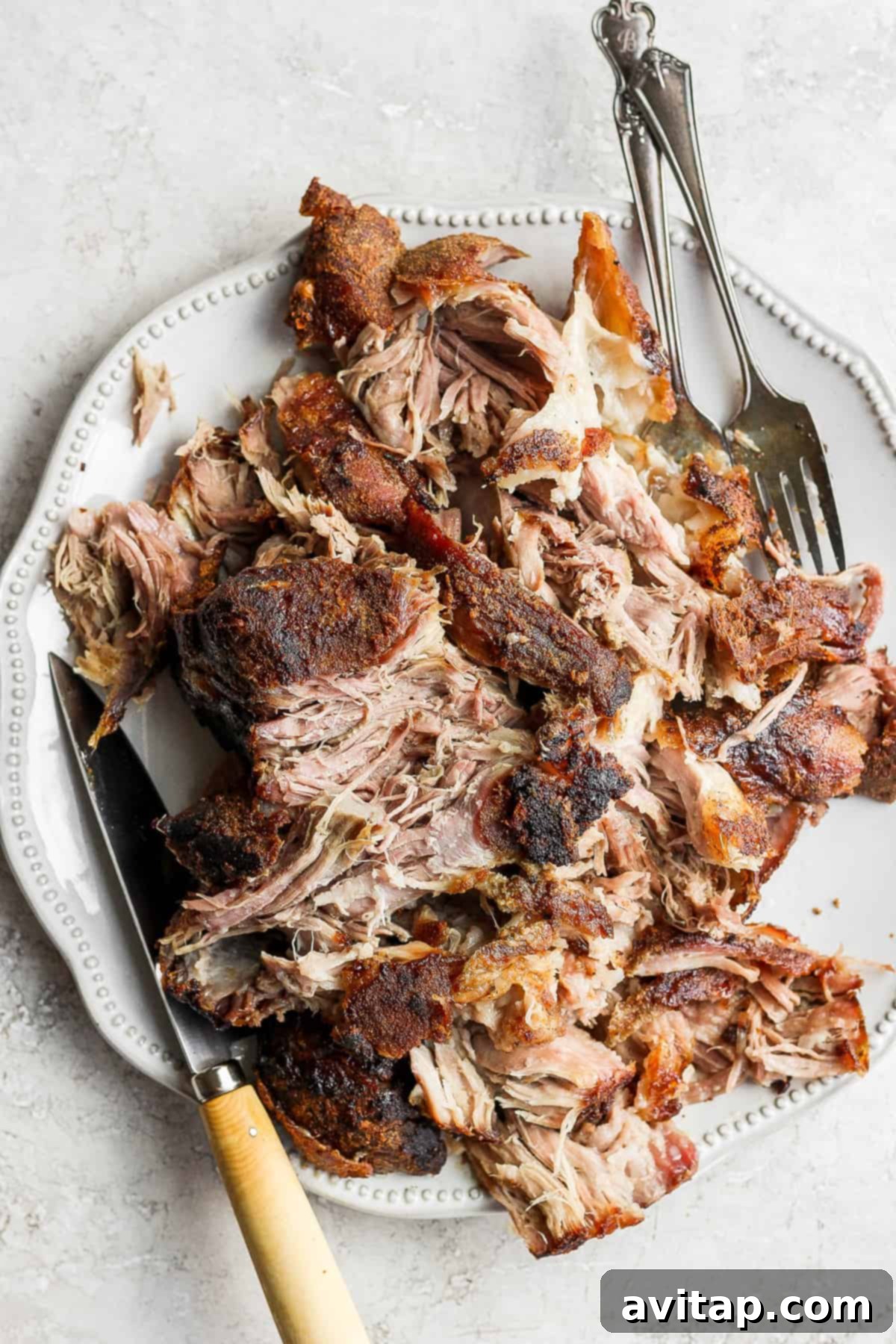
- Rest and Shred: Once the pork shoulder reaches 200ºF, carefully remove it from the oven. Resist the urge to shred it immediately! Allow the roast to rest for 5-10 minutes on the wire rack. This crucial resting period allows the juices to redistribute throughout the meat, resulting in a more tender and flavorful outcome. After resting, use two large forks to easily tear apart the pork into large, succulent, bite-sized pieces. It should be incredibly tender and practically fall apart with minimal effort.
Adjusting for Meat Size: Have a Bigger or Smaller Cut of Meat?
The beauty of “low and slow” roasting is its adaptability. If your pork shoulder roast is larger or smaller than the recommended 3-4 pounds, simply adjust the cooking time accordingly. A larger roast will naturally require more time in the oven, while a smaller one will cook faster. The most reliable way to ensure perfect doneness is to use an internal meat thermometer. Cook the pork until its internal temperature consistently reaches 200ºF. This temperature is key for achieving the easily shreddable texture we’re aiming for. Always trust your thermometer over the clock!
Can Pork Shoulder Be Pink? Food Safety Explained
It’s a common misconception that all pork must be cooked until it’s white throughout. Modern food safety guidelines state that pork can actually be a little pink in the center, provided it has reached an internal temperature of at least 145ºF. At this temperature, pork is safe to consume. However, for a slow-roasted pork shoulder specifically, we aim for a much higher internal temperature of 200ºF to achieve that signature fall-apart, shreddable texture. While 145ºF ensures safety, 200ºF ensures culinary perfection for this particular dish.
Can I Dry Rub and Sear the Night Before? Meal Prep Tips
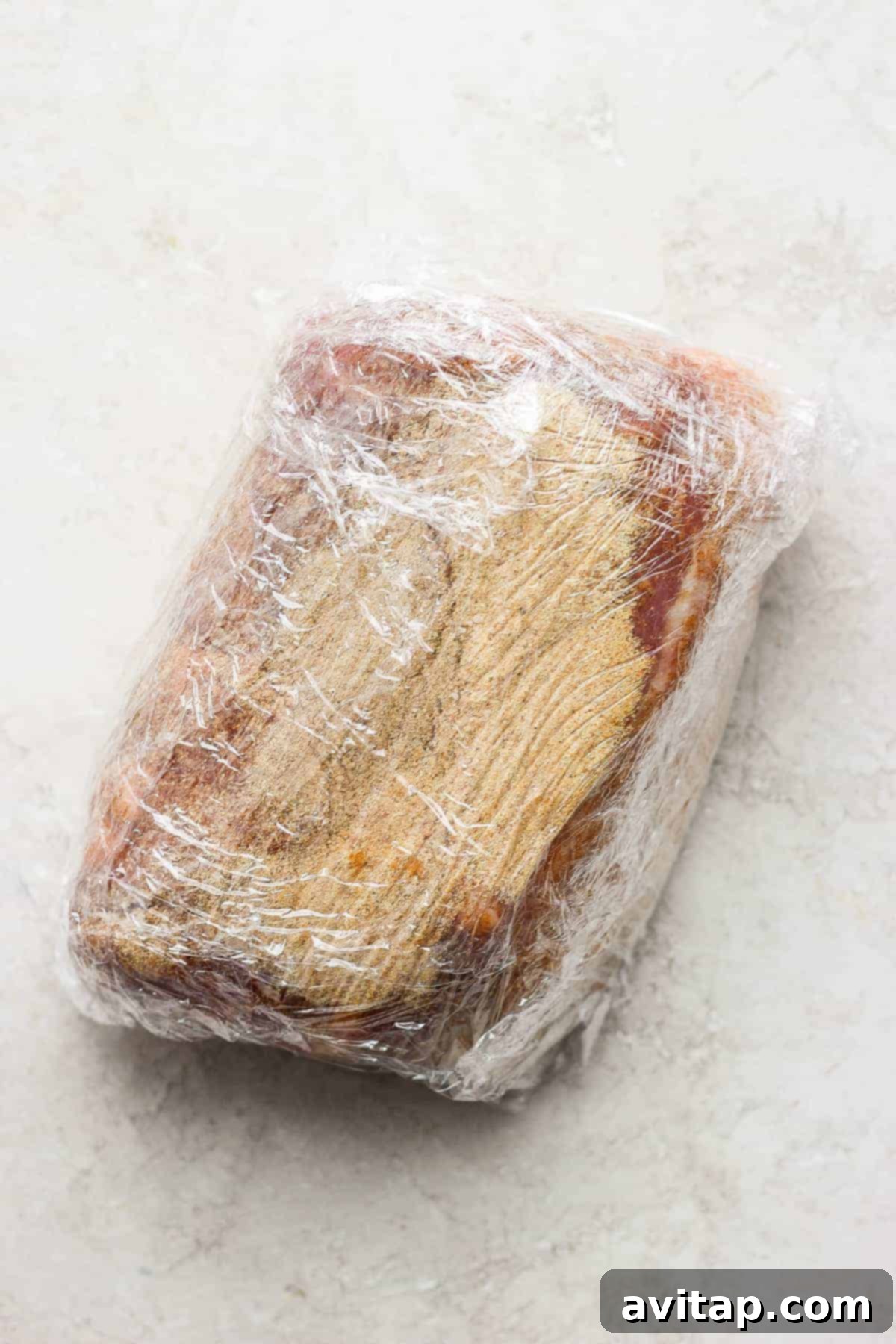
Prepping ahead can save valuable time, but it’s important to do it safely. You can absolutely dry rub your pork shoulder the night before. This allows the spices to penetrate deeper into the meat, enhancing the flavor even further. To do this, after applying the dry rub, wrap the pork tightly in a piece of plastic wrap or place it in an airtight container to prevent it from drying out, then refrigerate it overnight. When you’re ready to cook the next day, simply unwrap and proceed to the searing step.
However, it is crucial not to sear the pork the night before. Searing partially cooks the meat, and leaving partially cooked meat to sit in the refrigerator overnight significantly increases the risk of bacterial growth. For optimal safety and quality, always sear your pork immediately before you begin the slow roasting process.
The Importance of Pork Shoulder Internal Temperature
You’ll notice that this recipe strongly recommends cooking your pork shoulder roast until the internal temperature reaches 200ºF. This isn’t just an arbitrary number; it’s critical for achieving the desired texture.
While the USDA confirms that pork is safe to eat once it reaches an internal temperature of 145ºF (with a three-minute rest), our goal for slow-roasted pork shoulder is different. Because we are cooking it low and slow, we push the temperature higher to 200ºF. At this temperature, the tough connective tissues and collagen in the pork shoulder fully break down and convert into tender gelatin. This transformation is what makes the meat incredibly moist, succulent, and effortlessly shreddable, creating that signature “fall-off-the-bone” experience.
What is the Difference Between Pork Shoulder and Pork Butt?
Many people often use “pork butt” and “pork shoulder” interchangeably, but they are actually distinct cuts, even though they both come from the shoulder area of the pig. The term “butt” is historical, referring to the barrels (butts) used to store this cut in colonial New England.
- Pork Butt (Boston Butt): This cut comes from the upper part of the pig’s shoulder, specifically the area above the picnic shoulder. It is typically a rectangular cut, often contains a blade bone (though boneless versions are common), and has excellent marbling. Its higher fat content and dense muscle structure make it ideal for shredding, perfect for pulled pork.
- Pork Shoulder (Picnic Shoulder): This cut comes from the lower portion of the shoulder, extending down towards the pig’s leg. It often comes with the skin on and a bone in, though boneless, skinless versions are widely available. It’s a bit leaner than the butt but still has enough fat and connective tissue to become incredibly tender when slow-cooked. It’s excellent for roasting, stewing, or making into ground pork.
While both are suitable for slow cooking and shredding, the Boston butt generally yields a slightly fattier, richer pulled pork due to its superior marbling, whereas the picnic shoulder can be a bit more versatile for other preparations.
What is Pork Shoulder Used For? Versatile Culinary Applications
Pork shoulder is a remarkably versatile cut of meat, prized for its ability to become incredibly tender and flavorful when cooked slowly. It’s the foundation for a multitude of delicious dishes:
- Pork Roast Recipes: It’s most commonly used for hearty roasts, whether prepared in a slow cooker, providing hands-off convenience, or an oven-baked pork roast, like the recipe featured here, which develops a fantastic crust.
- Pulled Pork: Pork shoulder is the quintessential cut for pulled pork, whether made in an Instant Pot for speed or a slow cooker for classic flavor. Its high collagen content breaks down perfectly to create moist, shreddable strands.
- Carnitas: A popular Mexican dish, carnitas involves simmering pork shoulder in fat or lard until tender, then frying or broiling it until crispy, yielding a rich, savory, and textural delight.
- Stew and Chili: Cubed pork shoulder is excellent in hearty stews and chilis, where its connective tissues break down to thicken the sauce and infuse it with deep flavor.
- Tacos and Sandwiches: Shredded pork shoulder makes incredible fillings for tacos, burritos, and sandwiches, often tossed with BBQ sauce or other flavorful condiments.
Where Can I Buy Pork Shoulder? Finding the Right Cut
Pork shoulder is a widely available and popular cut of meat, making it easy to find in most grocery stores. You typically have two main options:
- Pre-packaged Meat Section: Many supermarkets offer boneless or bone-in pork shoulder roasts pre-packaged in various sizes. Look for cuts labeled “pork shoulder,” “picnic roast,” or “Boston butt.”
- Butcher Counter: For specific requests or if you prefer to discuss cuts with an expert, head to the butcher counter. A butcher can often trim the roast to your specifications, advise on the best cut for your needs, or provide a fresher option.
When selecting your pork shoulder, look for a piece with good marbling (streaks of fat within the lean meat), as this contributes significantly to moisture and flavor during the long cooking process. A solid, firm texture is also a good indicator of quality.
Pork Shoulder Nutrition Overview
Pork shoulder is a nutrient-dense cut of meat, offering a good balance of macronutrients. It’s particularly noted for its high protein content, moderate fat, and being naturally low in carbohydrates and sugar. Based on a standard serving size of approximately 3 to 4 ounces of cooked pork shoulder, here’s a general nutritional breakdown:
- Calories: Around 240-270 kcal
- Protein: Approximately 19-24g (excellent source for muscle building and satiety)
- Fat: Around 16-18g (includes both saturated and unsaturated fats, which contribute to flavor and energy)
- Carbohydrates: 0g (naturally carb-free)
- Fiber: 0g
- Sugar: 0g
Pork shoulder also provides essential micronutrients, including B vitamins (especially B6 and B12), zinc, selenium, and phosphorus, which are vital for energy metabolism, immune function, and bone health. While it has a moderate fat content, much of this renders out during the slow roasting process, and it can be a part of a balanced diet when consumed in appropriate portions.
How Much Pork Shoulder Per Person? Serving Guidelines
When planning a meal with slow-roasted pork shoulder, it’s helpful to estimate quantities accurately, especially for gatherings. I recommend planning for approximately 4 ounces (about 1/4 pound) of cooked pork shoulder per person. This allows for a hearty serving without excessive waste.
Using this guideline, a 3-pound boneless pork shoulder roast will typically yield enough cooked meat to serve around 8-12 people. Keep in mind that the exact yield can vary slightly based on how much fat is trimmed away, how densely the meat is packed, and the appetites of your guests. For a more generous estimate or for guests with larger appetites, you might lean towards 5-6 ounces per person. It’s always better to have a little extra for delicious leftovers!
How to Serve Your Versatile Pork Shoulder Roast
The beauty of this slow-roasted pork shoulder is its incredible versatility. Once shredded, it can be the star of countless meals. Here are some of our favorite ways to serve it:
As a Standalone Feast: Sometimes, simplicity is best. This rich and flavorful pork shoulder is so satisfying that it shines brightest when served alongside simple, hearty vegetables. Pair it with fluffy baked potatoes, tender roasted broccoli, or perfectly charred grilled asparagus for a comforting and complete meal.
Flavorful Tacos: Transform your shredded pork into incredible street-style tacos. Serve it warm in soft corn or flour tortillas with classic toppings like diced avocado, finely minced red onion, fresh salsa, a squeeze of lime, and a sprinkle of cilantro. It’s reminiscent of authentic carnitas tacos and always a crowd-pleaser.
Hearty Sandwiches: Create mouth-watering pulled pork sandwiches. Toss the shredded pork generously with your favorite BBQ sauce until well coated. Pile it high on a toasted brioche bun or a sturdy roll and top with a refreshing coleslaw for a delicious crunch. This is a classic combination that never disappoints.
More Creative Serving Suggestions
- Pork Bowls: Serve over rice or quinoa with roasted vegetables and a drizzle of a spicy aioli or a fresh chimichurri.
- Loaded Nachos: Use as a protein base for epic nachos, piled with cheese, jalapeños, beans, and all your favorite toppings.
- Breakfast Hash: Dice leftover pork and sauté with potatoes, onions, and bell peppers for a savory breakfast hash, topped with a fried egg.
- Quesadillas or Burritos: Incorporate into cheesy quesadillas or hearty burritos for a quick and satisfying meal.
- Pair with Fresh Salads: Serve alongside a vibrant Shaved Brussels Sprout Salad for a lighter contrast.
- Roasted Sides: Complements beautifully with Baked Zucchini or rich Roasted Root Vegetables.
- Classic Accompaniments: Enjoy with savory Instant Pot Baked Beans or a creamy Egg Salad (as a side, not mixed in!).
More of our Favorite…
Explore More Delicious Pork Shoulder Recipes
Pork shoulder is truly one of our favorite meats to cook with due to its rich flavor, incredible tenderness when slow-cooked, and versatility. If you love this slow-roasted version, you’ll definitely want to try these other top-rated pork shoulder recipes from our collection!
- Ultimate Pork Roast
- Instant Pot Pork Roast
- Slow Cooker Pulled Pork
- Carnitas Recipe
- Instant Pot Pork Chili
- Instant Pot Pulled Pork
- Slow Cooker Pork Roast
Creative Ideas for Leftover Pork Shoulder
One of the best things about cooking a large pork shoulder is the delightful abundance of leftovers! Don’t let them go to waste; repurpose your delicious shredded pork into exciting new meals. Here are some fun and easy ideas:
- Ultimate Nachos: Layer tortilla chips with your leftover pulled pork, then sprinkle generously with shredded cheese. Bake until melted and bubbly, then top with diced tomatoes, minced red onion, sliced olives, fresh guacamole, sour cream, and jalapeños for a hearty snack or meal.
- Freezer-Friendly Burritos: Our make-ahead freezer burritos are a lifesaver! Simply substitute the ground beef with your shredded pork shoulder. Add rice, beans, cheese, and any other fillings you love, roll them up, and freeze for quick, convenient meals on busy weeknights.
- Hearty Pork Chili: Transform your pork into a warming and flavorful chili. Use our Instant Pot Pork Chili recipe as a guide, but instead of cooking raw pork, stir in your already cooked, shredded pork towards the end of the cooking process to heat through and meld flavors.
- BBQ Pork Sliders: Toss with your favorite BBQ sauce and serve on mini buns with a side of coleslaw for quick and easy sliders.
- Pork Tostadas: Spread refried beans on crispy tostada shells, top with shredded pork, lettuce, cheese, and salsa for a delicious crunch.
- Shepherd’s Pie with Pork: Replace the traditional ground beef or lamb with shredded pork in your favorite shepherd’s pie recipe for a comforting twist.
Storage and Freezing Instructions
To maximize the freshness and flavor of your slow-roasted pork shoulder, proper storage is key:
- Refrigeration: Allow any leftover pork to cool completely to room temperature (within 2 hours of cooking). Then, transfer it to an airtight container. It will keep beautifully in the refrigerator for up to 5 days.
- Freezing: For longer storage, pork shoulder freezes exceptionally well. Once cooled, place the shredded pork in freezer-safe bags or airtight containers, removing as much air as possible to prevent freezer burn. It can be stored in the freezer for up to 3 months. Thaw overnight in the refrigerator before reheating.
- Reheating: To reheat, gently warm the pork in a skillet on the stovetop with a splash of broth or water to maintain moisture, or in the microwave until heated through. For a crispy texture, you can also spread it on a baking sheet and reheat in the oven at 300°F (150°C) for 10-15 minutes.
Slow Roasted Pork Shoulder Recipe
Lee Funke
20
8
8
20
10
Ingredients
Ingredients
- 3-4 lbs. boneless pork shoulder
- 3 tablespoons garlic powder
- 2 tablespoon brown sugar
- 2 teaspoons kosher salt
- 1 teaspoon ground pepper
- 1 teaspoon smoked paprika
- 3 tablespoons butter
Instructions
-
Preheat the oven to 250ºF and cover a baking sheet with tin foil. Then, set a wire rack on top of the tin foil.
-
Prepare the dry rub by adding the garlic powder, brown sugar, kosher salt, ground pepper, and paprika into a bowl and mix.
-
Next, sprinkle the dry rub over the pork shoulder and massage the dry rub into the meat. Be sure the whole pork shoulder is covered in dry rub.

-
Heat a large pan or cast-iron skillet over medium/high heat. Add butter. When the butter has melted and is sizzling add the pork shoulder to the pan and cook on each side of the pork shoulder for 2-3 minutes or until brown.
-
Carefully remove the pork shoulder from the pan and transfer it onto the wire rack on the baking sheet.
-
Bake pork shoulder at 250ºF for 7-8 hours or until the internal temperature reaches 200ºF*.
Tips & Notes
- We used a 3.5 lb. pork shoulder for testing, and it took approximately 8 hours to reach 200ºF. This is a good reference point, but always use a thermometer for accuracy.
- For advanced preparation, you can season the pork shoulder with the dry rub and then wrap it tightly in plastic wrap before refrigerating overnight. This helps the flavors meld. However, never season and sear the pork the night before and then refrigerate, as this can create a risk for bacterial growth in partially cooked meat.
- Reaching an internal temperature of 200ºF is crucial. While pork is safely cooked at 145ºF, this higher temperature ensures the collagen breaks down sufficiently, allowing the meat to be easily shredded to perfection.
- Nutrition information is provided for a 3.5 lb. pork roast, estimated per serving.
- Quick Sear: While some slow-roasted pork recipes suggest a high-heat initial roast (around 450ºF for 30 minutes) before lowering the temperature, we prefer a quick sear in a hot skillet. This method helps to jumpstart that incredibly crispy and flavorful crust without over-rendering fat too early.
- Cook Low and Slow: Patience is truly a virtue here! The “low and slow” approach is the cornerstone of perfect slow-roasted pork shoulder. Maintain your oven temperature precisely at 250ºF – resist the urge to increase it to speed up the process, as this can result in dry or tough meat.
- The Essential Wire Rack: Do not skip the wire rack! It’s absolutely essential for achieving that desirable crispy, crunchy crust on all sides of the pork. The rack elevates the meat, allowing hot air to circulate evenly and enabling excess fat to drip onto the pan below, preventing the bottom of the roast from becoming soggy.
Watch It
A video tutorial demonstrating the steps for this slow-roasted pork shoulder recipe is available to guide you through the process, ensuring perfect results every time.
Nutrition
Calories:
274
kcal
,
Carbohydrates:
9
g
,
Protein:
24
g
,
Fat:
16
g
,
Fiber:
0
g
,
Sugar:
2
g
Nutrition information is automatically calculated, so should only be used as an approximation.
love this? leave a comment below!
Don’t forget to tag your posts on social media with the hashtag #fitfoodiefinds, we’d love to see what you’re up to!
Photography by: The Wooden Skillet