

Transform your breakfast routine with these incredibly satisfying high-protein cottage cheese English muffins. Offering a robust 6 grams of protein per muffin, they perfectly capture the nostalgic flavor and airy, chewy texture of store-bought English muffins, all from the comfort of your kitchen. These homemade gems are not only delicious but also a healthier alternative, making them an ideal base for a hearty breakfast sandwich or a fulfilling snack on their own.
The secret to their impressive protein content lies in the inclusion of blended cottage cheese within the dough. This innovative ingredient not only boosts the nutritional profile but also contributes to the muffin’s soft and tender crumb, ensuring every bite is a delightful experience.

Why You’ll Love These High-Protein English Muffins ⤵️
These English muffins aren’t just a spin-off of our popular 2-ingredient high-protein dough; they elevate the classic breakfast staple to new heights. Here’s what makes this recipe truly exceptional:
- Unrivaled Protein Boost: With a significant protein content per serving, these muffins are designed to keep you feeling full and energized throughout your morning. Cottage cheese is a fantastic, underrated source of high-quality protein.
- Perfect Chewy and Airy Texture: Thanks to the active dry yeast, these English muffins achieve that characteristic airy interior and chewy bite that makes them so satisfying. They toast up beautifully, creating those coveted nooks and crannies.
- Wholesome and Homemade: You control the ingredients, avoiding unwanted preservatives or artificial flavors often found in store-bought versions. Enjoy a fresh, authentic taste with added nutritional benefits.
- Versatile Base: Beyond being a delightful snack, these muffins serve as an excellent foundation for a variety of meals. Think savory breakfast sandwiches piled high with eggs and bacon, or sweet treats adorned with your favorite jams and spreads.
- Simple to Master: While baking with yeast might seem intimidating, this recipe breaks down the process into easy-to-follow steps, making it accessible for home bakers of all skill levels.
Star Ingredients for the Perfect English Muffin
Each ingredient in this recipe plays a crucial role in achieving the ideal texture, flavor, and nutritional profile of these high-protein English muffins. Let’s delve into why these components are essential:
Cottage Cheese: This is the true hero of our recipe, delivering a powerful protein punch that sets these muffins apart. When blended until smooth, cottage cheese integrates seamlessly into the dough, contributing to its moisture and tenderness without imparting a strong “cheesy” flavor. For optimal results, I strongly recommend using 2% or 4% fat cottage cheese. Varieties with higher fat content typically have less water, which means you’ll need less additional flour to achieve the perfect dough consistency. This results in a lighter, more tender muffin. Full-fat cottage cheese also tends to blend more smoothly, preventing any grainy texture in your final product.
All-Purpose Flour: For that signature airy and light texture characteristic of traditional English muffins, all-purpose flour is my top choice. Its moderate protein content allows for good gluten development, providing structure and chewiness, while still keeping the muffins tender. Using too strong a flour (like bread flour) might result in a denser texture, while a weaker flour could lead to a crumbly muffin. AP flour strikes the perfect balance for this recipe.
Active Dry Yeast: Yeast is paramount for achieving the classic rise, open crumb, and slightly tangy flavor of a true English muffin. I’ve extensively tested versions both with and without yeast, and the difference is remarkable. Yeast ferments the sugars in the dough, producing carbon dioxide gas which creates those wonderful air pockets (the “nooks and crannies”) and contributes to a delightful chewy texture. It also adds a depth of flavor that baking powder alone cannot replicate. Don’t skip it if you want an authentic English muffin experience.
Granulated Sugar: A small amount of sugar isn’t just for sweetness; it serves as essential food for the yeast, helping it activate and thrive. This ensures a strong rise and a light, fluffy interior. It also contributes to the beautiful golden-brown crust during cooking.
Melted Unsalted Butter: Butter adds richness, flavor, and tenderness to the dough. Using unsalted butter allows you to control the overall salt content of the recipe. Ensure it’s melted and slightly cooled before adding to the wet ingredients to avoid overheating and killing the yeast.
Large Egg: The egg binds the ingredients, adds richness, and provides additional structure to the muffins. It contributes to a softer crumb and a slightly richer color.
Kosher Salt: Salt is vital for balancing the flavors and controlling yeast activity. It also strengthens the gluten network in the dough, leading to better structure and texture.
Fine Cornmeal: This ingredient is non-negotiable for achieving the classic English muffin look and feel. Before cooking, you’ll press the dough rounds into cornmeal on both sides. This coating not only prevents sticking to your pan but also provides a pleasant grittiness and crisp exterior that is iconic to English muffins. It’s a key textural element that truly defines the dish.
You’ll find the full list of ingredients with precise measurements in the comprehensive recipe section below.


How to Make High-Protein Cottage Cheese English Muffins: Step-by-Step Guide
Creating these delightful English muffins at home is a rewarding process. Follow these detailed steps to ensure perfectly airy, chewy, and protein-packed results every time.
- Bloom the Yeast: Begin by combining warm water (ideally between 100-110°F or 38-43°C), active dry yeast, and granulated sugar in the bowl of a stand mixer. Stir gently and allow this mixture to sit undisturbed for about 5 minutes. During this time, the yeast should activate, becoming foamy and fragrant. This “blooming” step confirms your yeast is alive and ready to leaven your dough.
- Add the Remaining Wet Ingredients: Once the yeast has bloomed, incorporate the smoothly blended cottage cheese, melted (and slightly cooled) unsalted butter, and the large egg into the mixer bowl. Mix until all these wet ingredients are well combined and uniform.
- Mix the Dry Ingredients: In a separate medium-sized bowl, whisk together the all-purpose flour and kosher salt. Ensuring the dry ingredients are thoroughly mixed prevents pockets of salt or flour in the final dough.
- Combine Wet and Dry Ingredients: With your stand mixer running on low speed (using the dough hook attachment if available), gradually add the dry flour mixture to the wet ingredients. Continue to mix for 3-4 minutes. The dough should come together, pull away from the sides of the bowl, and become elastic. Test for readiness by gently poking the dough; it should slowly spring back into place. If it’s too sticky, add flour one tablespoon at a time; if too dry, add water or a little more blended cottage cheese.
- First Rise (Proofing): Transfer the kneaded dough to a lightly oiled bowl, turning it once to coat all sides. Cover the bowl tightly with plastic wrap or a clean kitchen towel. Place the bowl in a warm, draft-free spot (such as a slightly warm oven that’s been turned off, or near a sunny window) and let the dough rise for approximately 1 hour, or until it has visibly doubled in size. This first rise is crucial for developing flavor and texture.
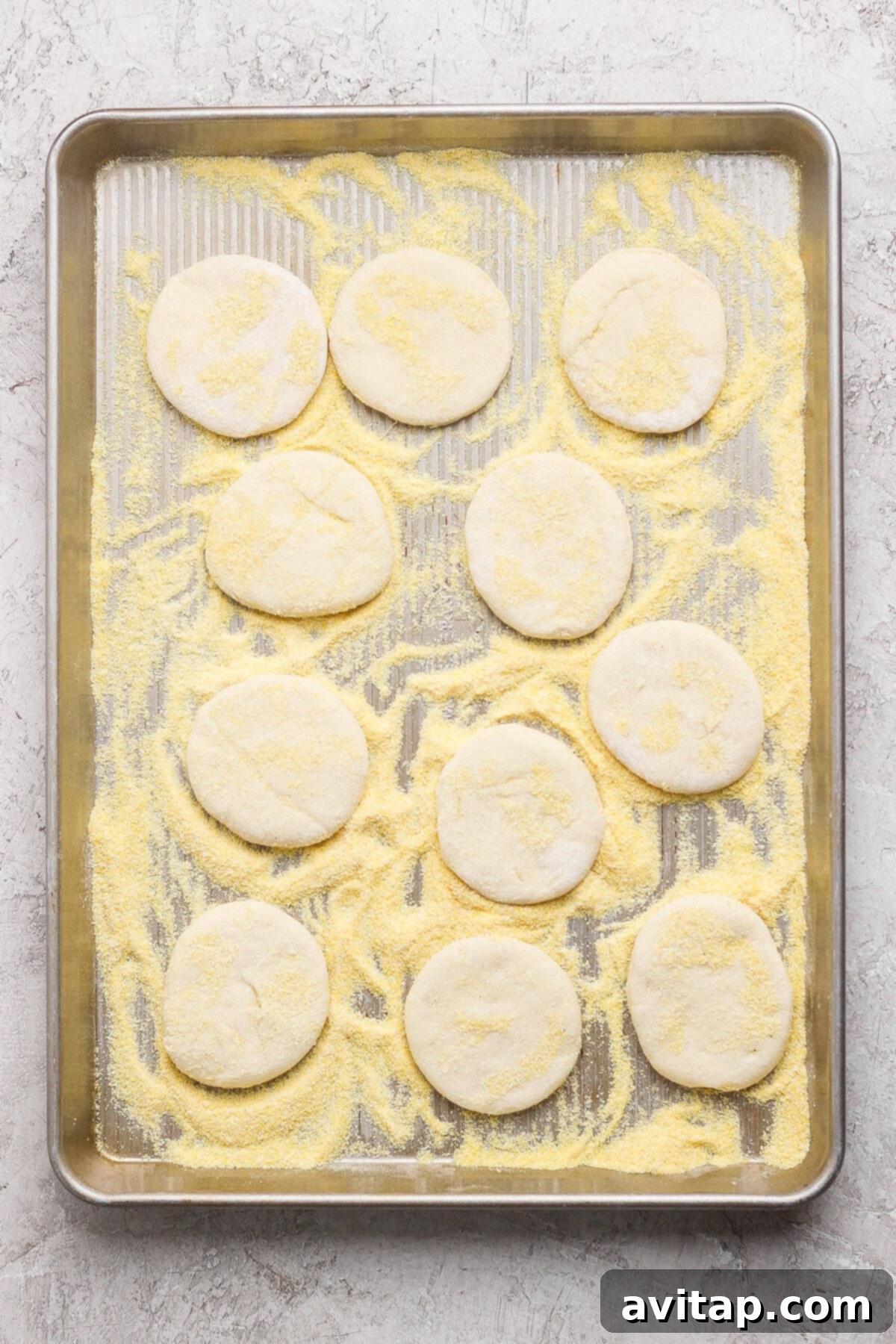
- Prepare for Cutting: While the dough rises, prepare a sheet pan by sprinkling it generously and evenly with fine cornmeal. This creates the non-stick, classic English muffin base.
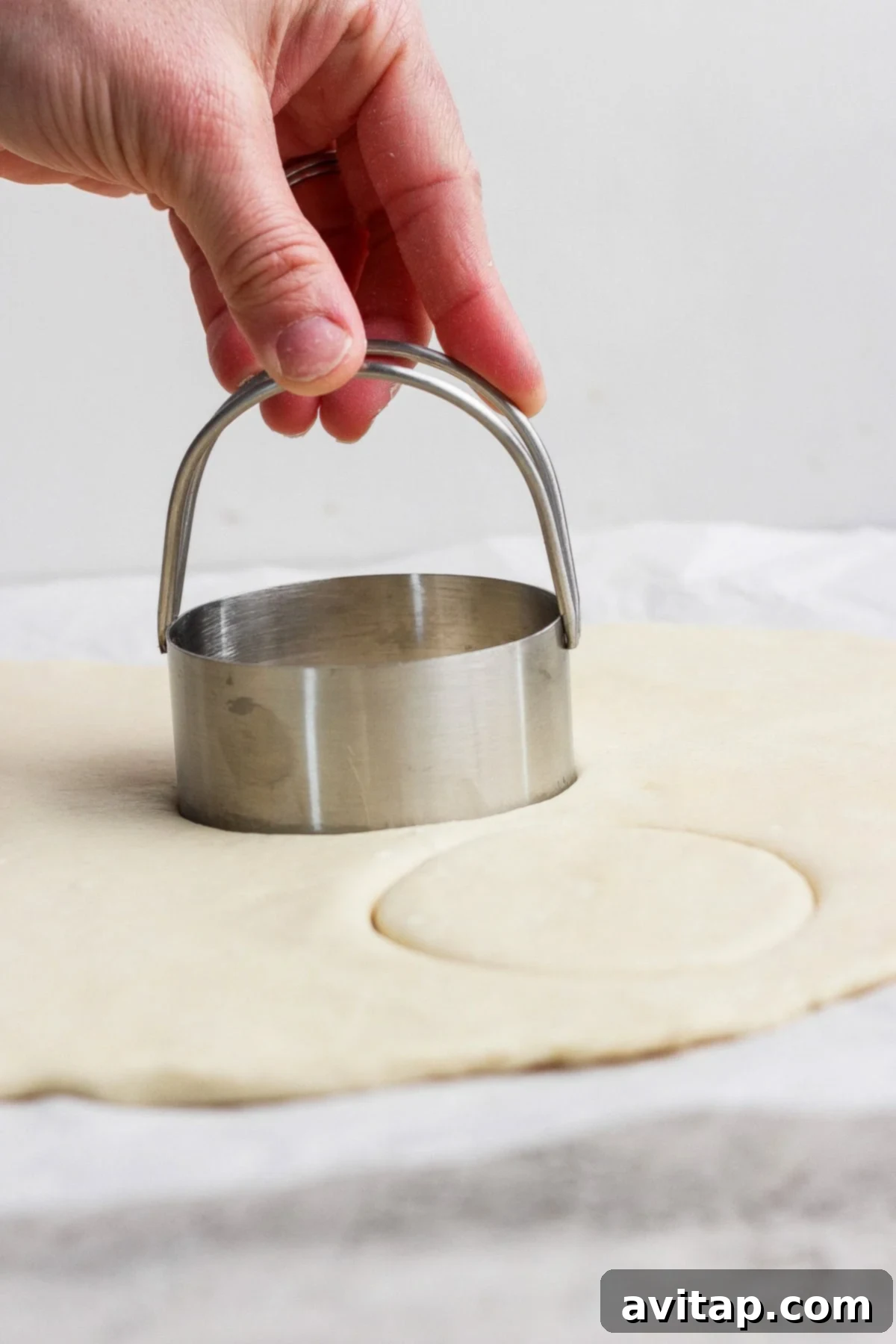
- Roll Out Dough: Once risen, gently punch down the dough to release the air. Turn the dough out onto a lightly floured surface. Using a rolling pin, roll the dough evenly to about ¼ inch thickness. Avoid rolling it too thin, as this will result in flat muffins.
- Cut Out English Muffins: Using a 2-3-inch round cookie cutter or biscuit cutter, cut out as many English muffins as possible from the rolled dough. Gather the scraps, gently re-knead them once or twice (don’t overwork), re-roll, and cut out additional muffins until all the dough is used.
- Cornmeal Coating & Second Rest: Carefully transfer each cut dough round onto the prepared sheet pan, placing them directly onto the layer of cornmeal. Flip each muffin over to coat both sides, gently pressing them into the cornmeal to ensure it adheres. Arrange them so they have a little space between each other.
- Second Rise (Rest): Cover the sheet pan with plastic wrap or a clean kitchen towel and let the cut muffins rest for another 30 minutes in a warm place. This second, shorter rise further lightens the texture and prepares them for cooking.
- Cook English Muffins on the Stovetop: Heat a large cast-iron skillet (or a heavy-bottomed non-stick pan) over medium heat. It’s important to use medium heat to ensure they cook through without burning the exterior. Place the rested English muffins in the hot pan, making sure not to overcrowd them; cook them in batches if necessary. Cook for approximately 6 minutes on the first side, until deep golden brown and slightly firm to the touch.
- Flip and Finish Cooking: Carefully flip each English muffin using a spatula. Reduce the heat slightly if they are browning too quickly. Cook for another 4 minutes on the second side, until both sides are golden brown and the muffins are cooked through. You can check for doneness by gently pressing the side of a muffin; it should feel springy and not raw.
- Serve and Enjoy: Transfer the cooked English muffins to a wire rack to cool slightly. Serve them warm, split in half, with your favorite toppings like butter, jam, or as the base for a savory breakfast sandwich. They are truly best enjoyed fresh!
Expert Tips for Perfect Homemade English Muffins
Achieving bakery-quality English muffins at home is easier than you think with a few key tricks up your sleeve. These pointers will help you navigate common baking challenges and ensure delicious results:
- Ensure Yeast is Active: The initial “blooming” step is critical. If your yeast mixture doesn’t become foamy after 5 minutes, your yeast might be old or the water temperature incorrect. Discard and start again with fresh yeast and properly warmed water (too hot will kill it, too cold won’t activate it).
- Adjusting Dough Consistency: Dough can be tricky, as environmental factors like humidity can affect its texture.
- If the dough is too sticky: After mixing, if the dough is overly sticky and difficult to handle, add more all-purpose flour, one tablespoon at a time, mixing well after each addition until it reaches a soft, pliable, and slightly tacky (but not sticky) consistency that pulls away from the sides of the bowl.
- If the dough is too dry: Conversely, if the dough appears too stiff, crumbly, or isn’t coming together, add water or a little more blended cottage cheese (depending on what you have on hand and prefer for moisture), one tablespoon at a time, until the dough is smooth and elastic.
- Cornmeal Adherence: The cornmeal coating is essential. If you find the fine cornmeal isn’t sticking well to your English muffins after cutting, lightly brush the surface of the dough rounds with a tiny bit of water before pressing them into the cornmeal. This slight dampness will help the cornmeal adhere beautifully.
- Consistent Thickness for Rolling: When rolling out the dough, aim for an even ¼-inch thickness. This consistency ensures that all your English muffins cook evenly and have a uniform height. Too thick, and they might be doughy in the middle; too thin, and they’ll be crisp rather than airy.
- Don’t Overcrowd the Pan: When cooking on the stovetop, give your English muffins enough space. Overcrowding the skillet can lower the pan’s temperature, leading to uneven cooking and less desirable browning. Cook in batches if necessary.
- Monitor Heat Closely: A medium heat setting is usually ideal for cooking English muffins. Too high, and the outsides will burn before the insides cook through. Too low, and they might dry out and become tough. Adjust the heat as needed to maintain a steady, gentle sizzle.
- Cooling is Key: While tempting to dive in immediately, allowing the English muffins to cool slightly on a wire rack after cooking helps them firm up and allows the internal moisture to redistribute, resulting in a better overall texture.
No Yeast? Alternative English Muffins
While I highly recommend using yeast for the authentic chewy texture and signature “nooks and crannies” of English muffins, I understand that sometimes yeast isn’t available or preferred. I have tested a yeast-free version, and while it does work and produces a tasty result, it’s important to manage expectations regarding texture.
The no-yeast English muffins will have a texture more akin to a dense bread or biscuit, lacking the characteristic airy pockets and distinct chewiness that yeast provides. They are still delicious and make a good substitute for a quick breakfast bread, but they won’t replicate the classic English muffin experience perfectly. If you prioritize speed and simplicity over the exact traditional texture, this variation is a solid option.
No-Yeast English Muffins Recipe Modification:
- Omit the active dry yeast entirely.
- Omit the granulated sugar (as its primary role here is to feed the yeast).
- Replace the yeast and sugar with 3 teaspoons of baking powder.
Follow the rest of the recipe instructions as written, adjusting only these ingredients. Remember, the rise times will be different or non-existent since baking powder reacts immediately with moisture and heat, rather than requiring fermentation time. You can typically skip the 1-hour rise, and only perform the 30-minute rest after cutting for the gluten to relax.
Can I Use Greek Yogurt Instead of Cottage Cheese?
Absolutely! I’ve experimented with substituting Greek yogurt for blended cottage cheese in this recipe, and the results were equally delicious. Greek yogurt offers a similar protein boost and can contribute to a wonderfully tender crumb. The key is to ensure you’re using a full-fat or at least 2% fat Greek yogurt. Lower-fat versions tend to have higher water content, which could make your dough too sticky and require more flour, potentially altering the final texture. Just swap out the blended cottage cheese with Greek yogurt in a 1:1 ratio. The slight tanginess of Greek yogurt also adds a lovely depth of flavor to the muffins.
Serving Suggestions and Creative Variations
These high-protein English muffins are incredibly versatile and can be enjoyed in countless ways. Here are some ideas to inspire your next breakfast or snack:
- Classic Toasted: Simply split, toast, and slather with butter and your favorite fruit jam or preserves. The warm, crispy edges and soft, airy interior are perfection.
- Breakfast Sandwich Supreme: The ultimate base for a protein-packed breakfast sandwich. Fill with scrambled or fried eggs, cheese, bacon, sausage, or even a slice of avocado.
- Sweet Delights: Drizzle with honey or maple syrup, sprinkle with cinnamon sugar, or spread with almond butter and banana slices for a wholesome sweet treat.
- Savory Spreads: Top with cream cheese and everything bagel seasoning, hummus, or even a dollop of tuna salad for a light lunch.
- Avocado Toast Reinvented: Skip the bread and use an English muffin as your base for creamy avocado toast, perhaps with a sprinkle of chili flakes and a squeeze of lime.
- Mini Pizzas: For a quick snack or light dinner, top with marinara sauce, mozzarella, and your favorite pizza toppings, then bake until bubbly.
- Garlic Bread Muffins: Brush with garlic butter and toast for a delicious side dish with pasta or soup.
Storage and Freezing Tips
To keep your homemade English muffins fresh and delicious, proper storage is essential:
- At Room Temperature: Once completely cooled, store the English muffins in an airtight container or a resealable plastic bag at room temperature for up to 3-4 days. For best quality, toast them lightly before serving.
- In the Refrigerator: If you plan to keep them longer, store them in an airtight container in the refrigerator for up to one week. Again, toast before eating for the best texture.
- Freezing for Longer Storage: English muffins freeze beautifully! Once fully cooled, place them in a single layer on a baking sheet and freeze until solid (about 1-2 hours). This prevents them from sticking together. Transfer the frozen muffins to a freezer-safe bag or airtight container, removing as much air as possible. They can be stored in the freezer for up to 2-3 months.
- Reheating Frozen Muffins: To reheat from frozen, you can simply slice them in half and toast them directly in a toaster or toaster oven until warmed through and crispy. No need to thaw beforehand! If you prefer them softer, you can microwave them briefly before toasting.

Explore More High-Protein Cottage Cheese Dough Recipes
If you’re loving the versatility and nutritional benefits of cottage cheese in baking, you’ll be thrilled to discover other creative ways to incorporate this super ingredient into your favorite dough-based recipes. Cottage cheese adds incredible moisture, tenderness, and a significant protein boost, making everyday comfort foods a little healthier without sacrificing flavor. Dive into these other fantastic high-protein dough creations:
- Best High-Protein Dough Recipes: A comprehensive guide to various doughs that use cottage cheese or other protein sources.
- High-Protein Air Fryer Dinner Rolls: Fluffy, savory rolls perfect for any meal, made easy in your air fryer.
- High-Protein Pizza Hot Pockets: A healthier, homemade take on a childhood favorite, packed with protein.
- Air Fryer Protein Bagels: Achieve chewy, delicious bagels with a great protein punch, all in the air fryer.
- Cottage Cheese Breakfast Biscuits: Another fantastic breakfast option that’s light, fluffy, and full of protein.
Cottage Cheese English Muffins Recipe
These high-protein cottage cheese English muffins bring the nostalgia, the flavor, and (close to!) the convenience of a store-bought English muffin to your own kitchen. They’re airy, chewy, and just so dang delicious!
By: Emily Richter
Prep Time: 20 mins
Cook Time: 16 mins
Resting Time: 1 hr 30 mins
Total Time: 2 hrs 6 mins
Yields: 14 muffins

Ingredients
- ½ cup warm water, ~warmed to 100-110℉ (38-43°C)
- 2.25 teaspoons active dry yeast (one standard packet)
- 1 tablespoon granulated sugar
- 1 cup blended 2% or 4% cottage cheese
- 3 tablespoons melted unsalted butter, slightly cooled
- 1 large egg
- 3 cups all-purpose flour
- 1 teaspoon kosher salt
- ½ cup fine cornmeal, for dusting
Instructions
- Bloom the Yeast: Add the warm water, yeast, and sugar to the bowl of a stand mixer. Let it sit undisturbed for about 5 minutes until foamy.
- Add Wet Ingredients: Once the yeast has bloomed, mix in the blended cottage cheese, melted butter, and egg until well combined.

- Mix Dry Ingredients: In a separate bowl, combine the all-purpose flour and salt.
- Combine Dough: With the mixer on low speed (using a dough hook), slowly add the dry ingredients to the wet. Mix for 3-4 minutes until the dough is elastic and bounces back when poked.
- First Rise: Transfer the dough to a lightly oiled bowl, cover with plastic wrap, and place in a warm spot to rise for 1 hour, or until doubled.
- Prepare Pan: Sprinkle a sheet pan generously with fine cornmeal.
- Roll Dough: Turn the dough out onto a lightly floured surface. Roll it evenly to ¼ inch thickness.
- Cut Muffins: Using a 2-3-inch round cookie cutter, cut out English muffins until all dough is used. Place them on the cornmeal-dusted sheet pan, flipping to coat both sides and gently pressing them into the cornmeal.
- Second Rest: Cover the cut muffins with plastic wrap and let them rest for 30 minutes.
- Cook on Stovetop: Heat a large cast-iron skillet over medium heat. Place the muffins in the pan, ensuring they don’t touch. Cook for 6 minutes on the first side. Flip and cook for an additional 4 minutes on the second side, until golden brown and cooked through. Cook in batches if necessary.
- Serve: Serve warm, split and toasted, with butter and jam, or your favorite toppings.





Tips & Notes
- If the cornmeal isn’t sticking to the muffins, lightly brush them with a small amount of water before pressing into the cornmeal.
- If the dough is too sticky, add more flour 1 tablespoon at a time until it’s manageable.
- If the dough is too dry, add water or more blended cottage cheese 1 tablespoon at a time until it reaches the right consistency.
- For an authentic “nooks and crannies” texture, make sure to use active dry yeast.
Nutrition Information (Approximate Per Serving)
- Calories: 165 kcal
- Carbohydrates: 26 g
- Protein: 6 g
- Fat: 4 g
- Fiber: 1 g
- Sugar: 1 g
Nutrition information is automatically calculated and should only be used as an approximation.
Photography by: The Wooden Skillet
I hope you thoroughly enjoy creating and savoring these delightful high-protein English muffins. They represent a perfect marriage of health-conscious eating and classic comfort food. Don’t forget to share your creations on social media using the hashtag #fitfoodiefinds – we’d love to see how you personalize this wonderful recipe!