
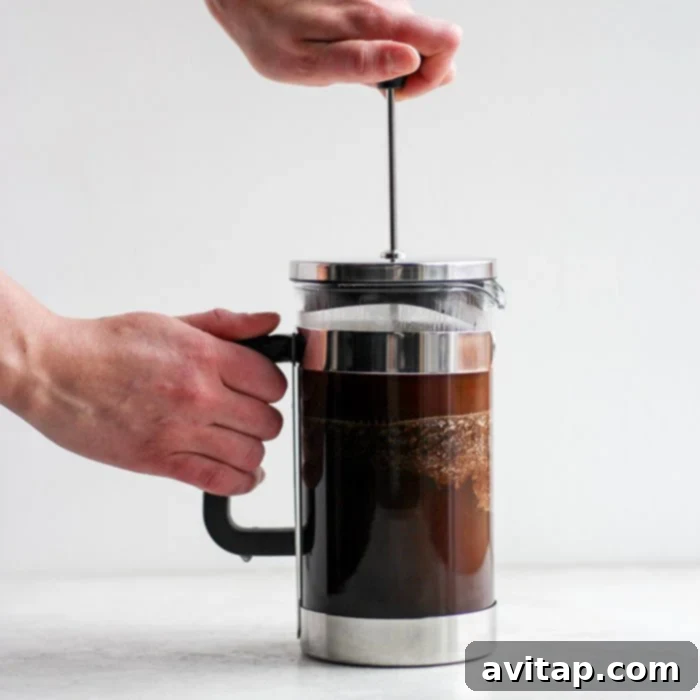
Start your day the right way with an exquisite cup of French press coffee! You don’t need to be a seasoned barista to craft a perfectly balanced and flavorful brew. In less than 15 minutes, you can transform simple ingredients into a rich, aromatic coffee that rivals your favorite cafe. We’re here to guide you through every step.
For years, the French press has been our go-to brewing method. It consistently delivers a strong, full-bodied coffee, and the entire process has become a cherished, calming part of our morning ritual. We wholeheartedly recommend mastering French press coffee in your own kitchen – it’s a truly rewarding experience.
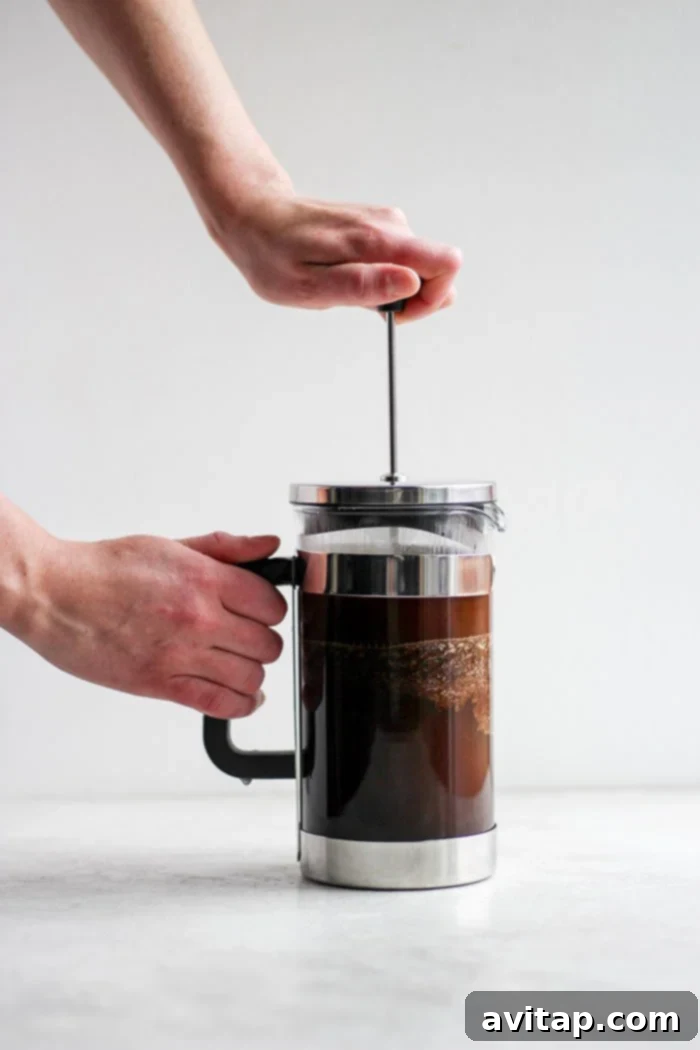
Few things compare to the comforting embrace of a robust cup of coffee in the morning. Utilizing a French press coffee maker is remarkably straightforward. All you need are a few key elements: quality coffee beans, hot water, and your French press device. With these in hand, you’re ready to embark on a delightful coffee-making journey.
Why the French Press is Our Favorite Brewing Method
There are numerous reasons why we consistently choose the French press over other brewing methods, including automatic drip machines. This classic technique offers unparalleled control and delivers a superior coffee experience. Here’s why we love it:
- Unmatched Flavor and Aroma: The French press immersion method allows coffee grounds to fully steep in hot water, extracting a broader spectrum of flavors and aromatic compounds. Unlike filtered methods, it retains natural coffee oils, resulting in a rich, full-bodied cup with a velvety texture.
- Superior Control: We have precise command over critical brewing variables. This includes the water temperature, ensuring optimal extraction without scorching or under-developing the coffee. We also dictate the exact brew time, allowing us to customize the coffee’s strength and bitterness profile to perfection.
- No Paper Filters Needed: A significant advantage is the elimination of paper filters. This means zero paper waste, making it an eco-friendlier option. Furthermore, the absence of paper filters ensures that no subtle paper taste interferes with your coffee’s natural flavor. The fine mesh filter effectively separates grounds from the liquid, letting those precious coffee oils pass through for a more robust and complex taste.
- Perfect for Small Batches: A French press is ideal for brewing just enough coffee for 2-4 people, making it perfect for couples, small families, or individuals who enjoy multiple cups. Our typical brewing method yields the perfect amount for a shared morning moment.
- Customizable Strength: Whether you prefer a bold, intense brew or a lighter, more delicate cup, the French press allows for easy customization. Adjusting the coffee-to-water ratio and brew time empowers you to create your ideal strength.
- Durability and Portability: Most French presses are built to last, often featuring durable glass carafes within sturdy metal frames or entirely stainless steel designs. Their simple, non-electric nature also makes them incredibly portable, perfect for camping trips, travel, or any setting where you want quality coffee without relying on electricity.
How to Use a French Press: A Comprehensive Guide
Achieving that coveted perfect cup of French press coffee hinges on understanding a few key variables. We’ve distilled the process into four fundamental pillars that will ensure a consistently excellent brew:
- Selecting the Right Coffee Beans
- Grinding to Perfection (The Right Size Grind)
- Optimizing Water Temperature
- Determining the Ideal Brew Time
By following these guidelines, you’re well on your way to a perfect pot of French press. However, remember that coffee brewing is also an art, and personal preference plays a huge role. Feel free to experiment with these parameters to fine-tune your French press to your exact liking. These are our expert tips for crafting the most delicious cup of French press joe:
Step 1: Selecting the Right Coffee Beans
The foundation of any great coffee is the bean itself. Our number one piece of advice for French press coffee is simple yet impactful: always use fresh, whole bean coffee whenever possible! The difference in flavor, aroma, and overall freshness between whole beans and pre-ground coffee is substantial. Whole beans retain their volatile aromatic compounds much longer, preventing oxidation that can quickly stale pre-ground coffee.
When choosing your beans, consider the origin, varietal (like Arabica for its complex flavors or Robusta for a stronger, higher-caffeine kick), and roast level. A medium to dark roast often shines in a French press, offering rich, bold flavors that stand up well to the brewing method. Experiment with different roasts and origins to discover your personal favorite.
No Coffee Scale? No Problem!
While coffee connoisseurs often advocate for precision weighing, we understand that not everyone has a kitchen scale readily available. For daily brewing, we often rely on simple measuring cups to achieve consistent results. Below are our recommended general measurements for French press using volume:
- For 2 servings: Use 1/4 cup of whole coffee beans + 2 cups of filtered water.
- For 4 servings: Use 1/2 cup of whole coffee beans + 4 cups of filtered water.
This ratio generally equates to about 1:15 or 1:16 coffee-to-water ratio by weight, providing a robust and satisfying brew. Once measured, your next step will be to grind these whole beans to the appropriate consistency.
Want Stronger Coffee? Tailoring Your Brew
Crafting French press coffee is an art form, and personal preference reigns supreme. If you desire a more intense, bolder cup, here are proven strategies to achieve it:
- Adjust the Coffee-to-Water Ratio: Instead of the standard ratio, you can either use less water with the same amount of ground coffee, or use the same amount of water with more ground coffee. Both methods increase the concentration of coffee solids in your final brew, leading to a stronger taste.
- Extend the Brew Time: While our standard recommendation is 5 minutes, allowing your coffee to brew for a longer duration, such as 6 to 7 minutes, will result in greater extraction and a more potent flavor. Be mindful not to over-extract, as this can introduce bitterness.
- Experiment with Grind Size (Carefully): A slightly finer grind can also increase extraction, but proceed with caution. Too fine, and you’ll end up with a muddy cup and difficulty pressing the plunger.
Step 2: Getting The Perfect Grind
The grind size of your coffee beans is arguably one of the most critical variables in preparing exceptional French press coffee. It directly impacts the extraction rate and, consequently, the flavor profile of your final cup.
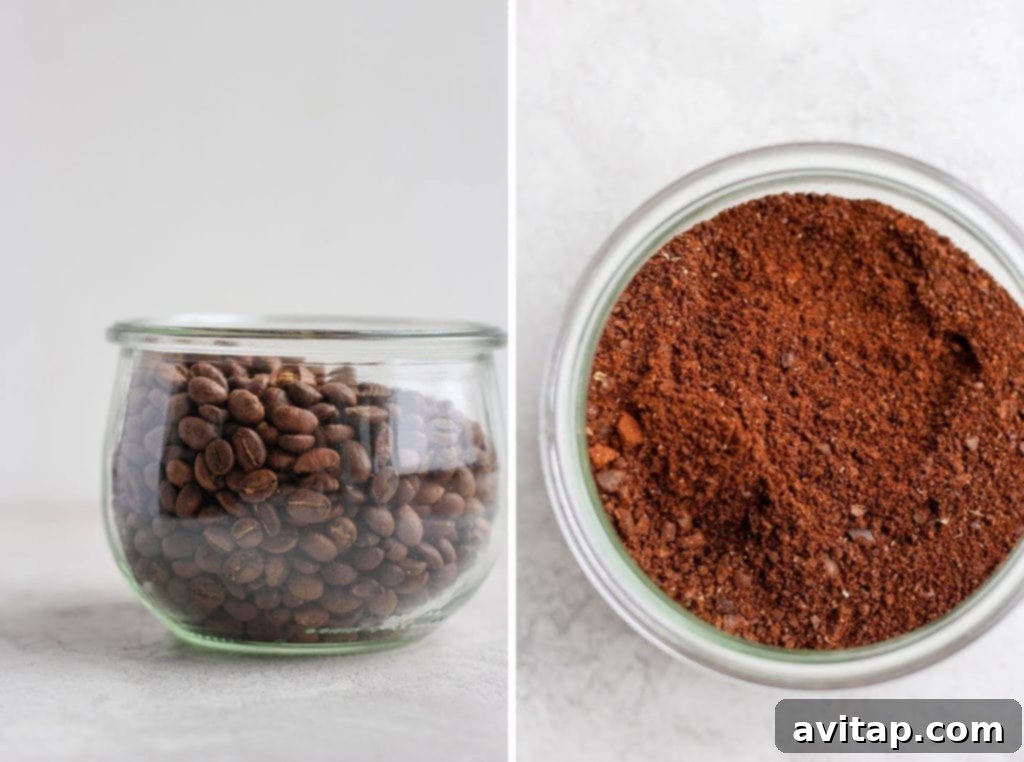
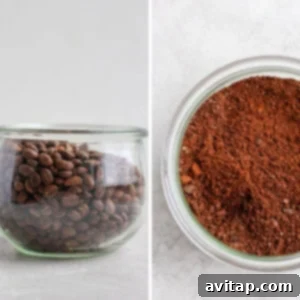
For French press, a coarse, uniform grind is essential. Imagine the consistency of large sea salt crystals or coarse sand. This specific grind size is crucial because the French press uses an immersion method where coffee grounds steep in water. A coarse grind prevents over-extraction, which would result in a bitter, astringent, and often muddy cup of coffee due to too many fine particles passing through the filter. Conversely, if your coffee beans aren’t ground enough (too coarse), the water won’t be able to extract sufficient flavor, leading to a weak, watery, and under-developed brew.
When it comes to grinding, you have two main options:
- Burr Grinders: These grinders use two abrasive surfaces (burrs) to crush coffee beans into uniform particles. They are the superior choice for French press because they produce a consistent grind size, which is key for even extraction. Burr grinders come in conical or flat burr varieties, both offering excellent results.
- Blade Grinders: These operate more like blenders, chopping beans with a spinning blade. While more affordable, they tend to produce an inconsistent grind with a mix of very fine powder and large chunks. This inconsistency can lead to both over and under-extraction simultaneously, resulting in a less desirable cup. If using a blade grinder, pulse the beans in short bursts and shake the grinder between pulses to minimize fines.
How to Set Your Coffee Grinder for French Press
- If you own a pre-programmed electric burr grinder, look for a “French Press” setting or simply set it to a “coarse” grind.
- When using a manual electric grinder or a hand grinder, grind your coffee until the particles are uniform in size, resembling large sand crystals or fine gravel. It might take a few tries to get it just right, but practice makes perfect!
Quick Tip on Using Pre-Ground Coffee Beans
If purchasing pre-ground coffee is your only option, look for bags specifically labeled “coarse ground” for French press. If not available, use a standard pre-ground coffee, but be aware it might produce more sediment and a slightly more bitter cup. For a four-serving French press, use a generous (heaping) 1/2 cup of pre-ground coffee. This is usually slightly more volume than 1/2 cup of whole beans once coarsely ground.
Step 3: Water Temperature Matters
The temperature of your water is a surprisingly critical factor in brewing French press coffee. It’s not just about heating water; it’s about hitting the sweet spot that allows for optimal flavor extraction without damaging the delicate coffee compounds.
If you pour water that is too hot – say, boiling at 212ºF (100ºC) – you risk scalding the coffee grounds. This can lead to an over-extracted, burnt, and excessively bitter taste, as the high temperature extracts undesirable flavors too quickly. On the other hand, if your water isn’t hot enough, it won’t effectively extract the complex flavors and aromas from the coffee grounds, resulting in a weak, under-extracted, and flavorless cup.
The universally agreed-upon perfect water temperature for French press coffee is between 195ºF and 205ºF (90ºC to 96ºC). Our preferred temperature is precisely 200ºF (93ºC).
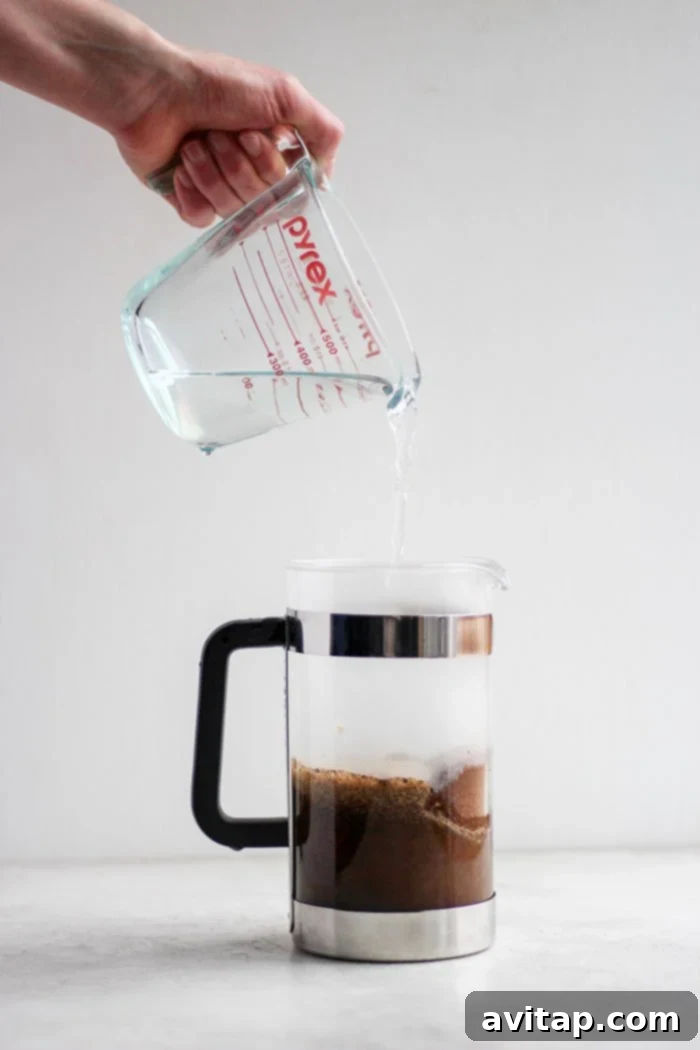
Many modern electric kettles offer precise temperature control, allowing you to set them to the exact desired temperature. If you don’t have a temperature-controlled kettle or a kitchen thermometer, here’s a reliable trick: bring a pot of filtered water to a rolling boil. Once it reaches a full boil, remove it immediately from the heat source and let it sit undisturbed for at least 1 minute (or even 1 minute and 30 seconds for higher altitudes). This brief cooling period will bring the water temperature down into the ideal 195-205ºF range, preventing scorching and ensuring a balanced extraction.
Step 4: How Long to Brew French Press Coffee
Once you’ve added your precisely ground coffee and perfectly heated water to the French press, a gentle stir to ensure all grounds are saturated is in order (this is often called the “bloom”). After this, it’s time to let the magic happen during the brewing phase.
The brew time is crucial for developing the coffee’s flavor and body. If you brew for too short a period, the coffee will be under-extracted, tasting weak, sour, or thin. The water simply hasn’t had enough time to dissolve the desirable compounds from the coffee grounds. Conversely, brewing for too long can lead to over-extraction, resulting in a bitter, astringent, and sometimes chalky taste, as undesirable compounds are released.
Through extensive testing, we have consistently found that the sweet spot for French press coffee is 5 minutes. This duration strikes the perfect balance, allowing for optimal flavor development without introducing bitterness. However, as discussed earlier, if you prefer a stronger cup, you can extend this by 30-60 seconds, but always taste test to ensure it doesn’t become overly bitter.
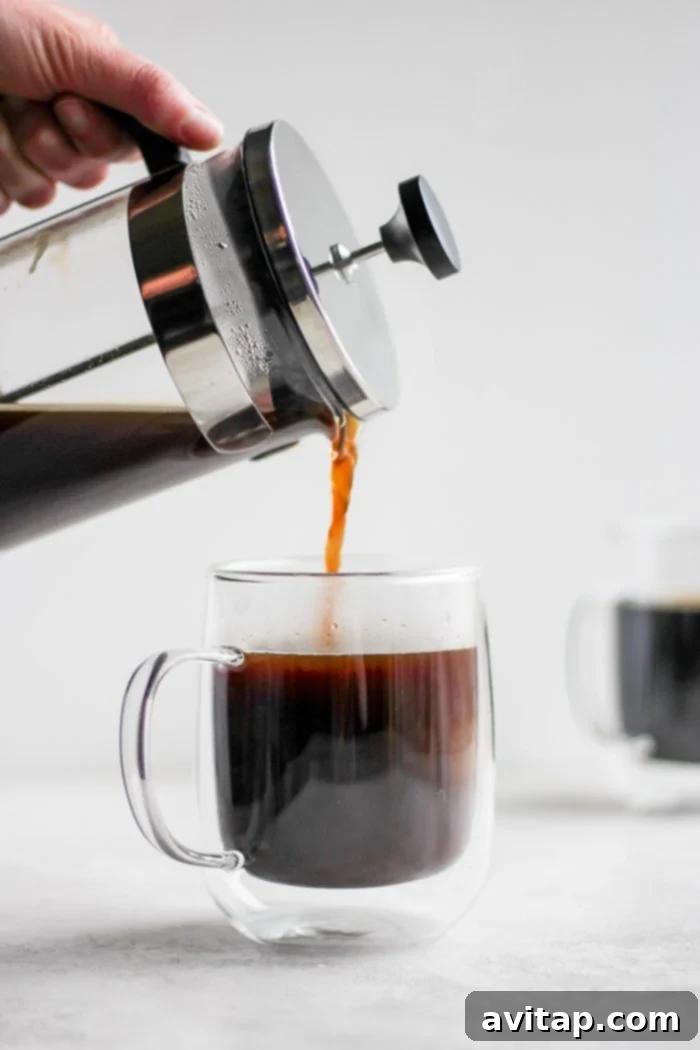
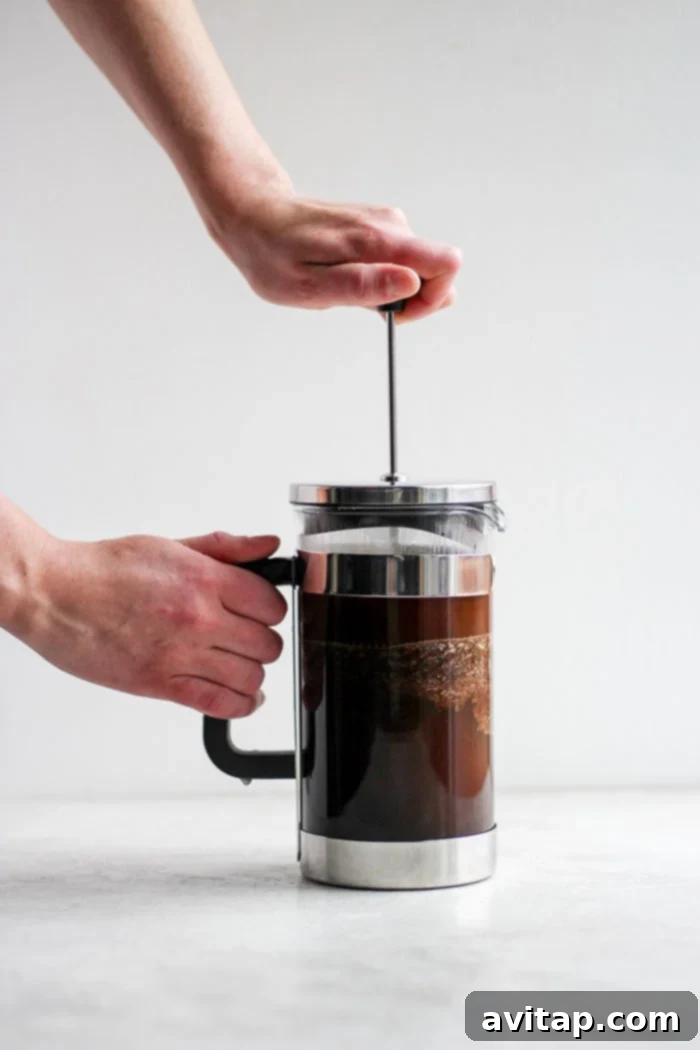
After your desired brew time has elapsed, slowly and steadily press the plunger all the way down. This action separates the coffee grounds from the liquid, stopping the brewing process. Pour your freshly brewed coffee immediately into your favorite mug and savor the rich, full-bodied flavors. Do not let the coffee sit in the French press with the grounds after plunging, as it will continue to extract and can become bitter.
Cleaning and Maintenance for Your French Press
Proper cleaning and maintenance are key to ensuring your French press continues to deliver delicious coffee for years to come. After each use, immediately empty the used grounds (compost them if possible!). Rinse the carafe and plunger thoroughly with warm water. For a deeper clean, especially if you notice coffee oils building up, disassemble the plunger mechanism and wash all parts with a mild dish soap and warm water. A soft brush can help remove stubborn residues. Ensure all parts are completely dry before reassembling to prevent mildew and extend the lifespan of your press. Avoid abrasive scrubbers that can scratch the glass or metal components.
More Ways to Brew Coffee: Exploring the World of Coffee Making
While the French press holds a special place in our hearts, the world of coffee brewing offers a diverse array of methods, each with its unique characteristics and appeal. We’ve experimented with many, and each provides a distinct experience perfect for different occasions:
- Pour Over: For those serene mornings when you need just one exceptional cup, pour over coffee is unparalleled. This method, often using devices like a Chemex or V60, involves slowly pouring hot water over a bed of coffee grounds in a cone-shaped filter. It produces a clean, bright, and nuanced cup, highlighting the delicate flavors of lighter roasts. We have a detailed tutorial on how to make the perfect cup of pour-over coffee.
- Machine Drip Coffee: The classic “Mr. Coffee” machine remains a staple for a reason. Machine drip coffee is all about convenience and efficiency, making it ideal for busy households or when you need to serve a larger group. While it may not offer the same level of control as a French press or pour over, modern drip machines with programmable settings and better showerhead designs can produce a very satisfying, consistent brew.
- AeroPress: A versatile and compact brewer, the AeroPress uses air pressure to extract coffee, resulting in a smooth, low-acid cup with a concentrated flavor. It’s incredibly fast and easy to clean, making it perfect for single servings. Its portability makes it an excellent companion for travel or camping, allowing you to enjoy quality coffee even in the great outdoors.
- Espresso Machines: For the ultimate convenience and speed, pod-based espresso machines like Nespresso and Keurig are fantastic options. They use pre-filled coffee pods to quickly produce a single serving of coffee or espresso, perfect for those rushed mornings. We particularly appreciate Nespresso machines for their commitment to sustainability through their excellent pod recycling program.
- Moka Pot (Percolator): Often mistakenly called a percolator, the Moka pot is a stovetop espresso maker that brews strong, concentrated coffee by forcing steam pressure through ground coffee. It produces a rich, intense brew that’s fantastic for making Americanos, lattes, or enjoying as a bold shot. It’s a timeless, economical choice for robust coffee lovers.
More of Our Favorite Beverages & Recipes…
Coffee and Beverage Recipes
- Almond Milk Chai Tea Latte
- Vegan Chai Hot Chocolate
- How to Make the Perfect Cup of Pour-Over Coffee
- Pour Over Coffee (Chemex Tutorial)
- How to Make Cold Brew Coffee
Rating: 4.60 out of 5 stars (5 votes)
How to Make French Press Coffee
Craft the perfect pot of rich, flavorful coffee using a French press. This simple method requires just hot water, coarse-ground coffee, and your French press device.
By: Linley Hanson
Prep: 10 mins
Cook: 5 mins
Total: 15 mins
Servings: 4
Print Recipe
Ingredients
- 4 cups filtered water
- 1/2 cup whole roasted coffee beans
Instructions
-
Bring 4 cups of filtered water to a boil.
-
While the water is heating, grind your whole coffee beans to a coarse consistency. The grounds should resemble large, uniform sand crystals – not too fine (which causes bitterness and sludge) and not too chunky (which leads to weak coffee).

-
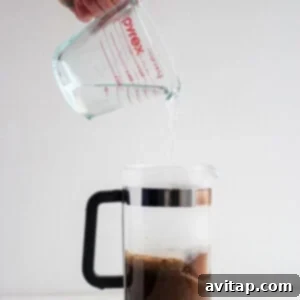
Once the water reaches a rolling boil, remove it from the heat source and let it rest for 1-2 minutes. This crucial step allows the water temperature to drop to the ideal 195-205ºF (90-96ºC) range, preventing your coffee grounds from scalding.
-
Place the coarse coffee grounds into the bottom of your French press. Slowly and evenly pour the hot water over the grounds. Use a long spoon to gently stir the mixture, ensuring all the grounds are fully saturated (this is known as the “bloom” and helps release trapped gases). Place the French press lid on top without pressing the plunger down, to retain heat. Let the coffee brew for 5 minutes (or slightly longer, up to 6-7 minutes, if you prefer a really strong coffee).
-
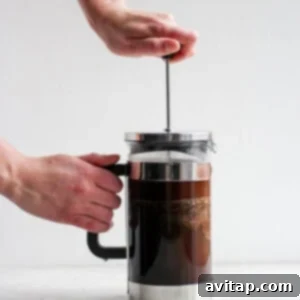
After the 5-minute brewing time, slowly and steadily press the plunger all the way down. This action separates the coffee grounds from the liquid, preventing further extraction.
-
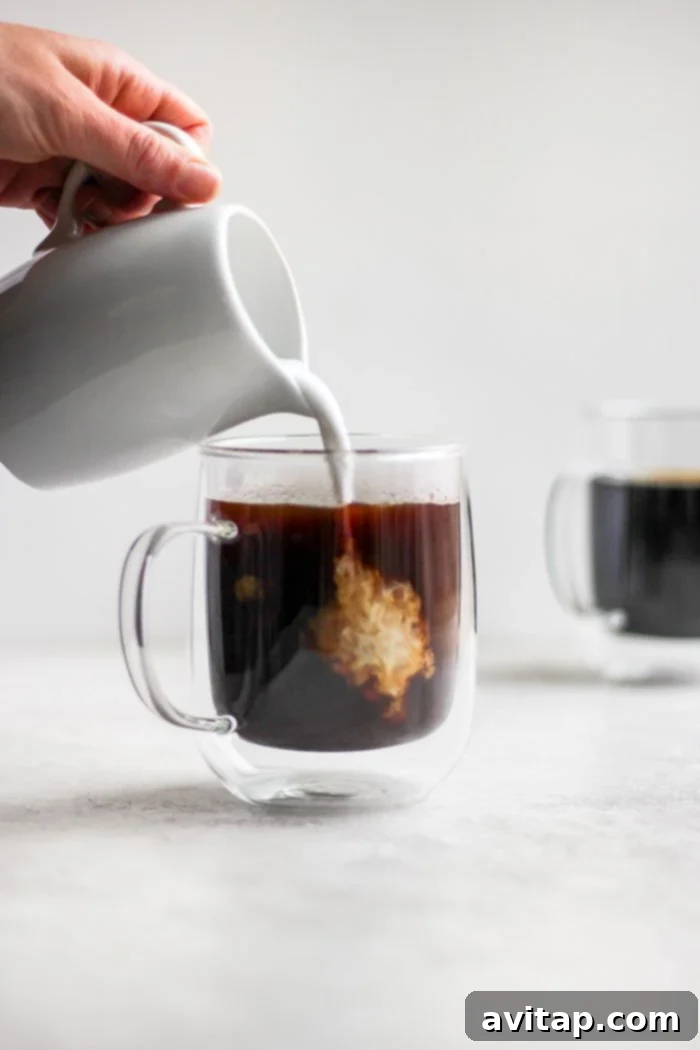
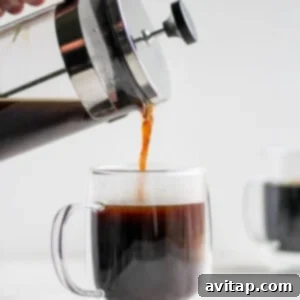
Serve immediately! Enjoy your French press coffee black to appreciate its full flavor, or enhance it with your favorite additions, such as a splash of milk or a homemade oat milk.
Watch It: French Press Coffee Tutorial
Nutrition Information (Approximate per serving)
Calories: 1 kcal
Carbohydrates: 0 g
Protein: 0 g
Fat: 0 g
Fiber: 0 g
Sugar: 0 g
Nutrition information is automatically calculated and should only be used as an approximation.
Don’t forget to tag your posts on social media with the hashtag #fitfoodiefinds – we’d love to see your delicious creations!
Photography by: The Wooden Skillet